Category Archives: people
Words Are the Root of All Violence
There are two national headlines gnawing at my brain right now.
The first is about the murder of three police officers in Baton Rouge.
The second is about WV State Delegate Michael Folk tweeting that Hillary Clinton should be hung on the National Mall.
Both are senseless acts of violence.
Both.
An expression of hate is the ammunition that fuels physical assaults and attacks. It turns the words and actions of someone who looks, thinks, acts, or believes differently into a significant threat to individuals who have been programmed to protect their own closed-minded fortresses of right, wrong, and justice.
Making a statement that any person deserves to be hurt at the hands of another does absolutely nothing to improve anyone’s circumstances. Yet this type of brutality is quickly becoming the norm in the United States.
As a country, we are sinking fast in the rising waters of spiteful words, and no one throwing us a life jacket.
Only we can get ourselves out of this mess, which means we have to hold the haters accountable.
I’m not encouraging censorship. Freedom of speech is a core value, and our nation can only improve when we listen to ideas and thoughts that are different from our own. But freedom of speech must be treated with the same respect that we give to anything that is fragile and prone to break when it is mishandled.
And, as a country, we are being anything but gentle with each other.
Having a right to say what you want and not being held accountable for your words are two entirely different issues.
When I was a child, I lived with the taste of soap in my mouth because I was constantly saying things that provoked my parents. There was no law against the words I used or the tone with which they were said. But my words were disrespectful and inappropriate, and I paid the price by becoming a connoisseur of a wide variety of soap brands.
The soap in the mouth punishment isn’t feasible with politicians, community leaders or others who choose to continue to pollute political events and social media with their hateful and violent words.
But the rest of us can ensure that there are consequences.
We can choose not to vote for them.
We can unfollow them on social media.
We can call other leaders and lawmakers and express our concerns.
We can write letters to the editor.
We can even write blogs about them.
Collectively, when each one of us speaks up, our voices are bound to drown out the nasty ones.
If Only

As a social worker, the most heart-breaking cases always walk through the door on a Friday afternoon when most social service organizations are closing for the weekend, all the organizations are out of funds, and everyone is both mentally and physically drained.
And there is absolutely nothing I can do to help.
So it was a few weeks ago when a woman with three children under the age of four walked through my door. And as the woman told her story, two words ran in a continuous loop in my brain: “if only.”
“If only” I lived in a community with more resources.
“If only” the woman and her children weren’t invisible, irrelevant or deemed undeserving by people who are more concerned about their next vacation or their social status.
But most of all, “if only” our social services system wasn’t so broken that we invest most of our resources into programs that are as effective as putting BAND-AIDS on wounds that need major surgery.
The details of the woman’s story varied only slightly from those I’d heard before.
She had stayed home to raise her three pre-school age children while her husband worked. Everything was fine until, one day, her husband decided he didn’t want to be married anymore. In fact, he didn’t even want to live in the same country she did. And so, he fled – leaving her with no work experience, no support system and three very young children entirely dependent on her.
Unlike me, the woman had never been supported or encouraged to ensure she could be financially independent. No one had even told her that furthering her education or skills was an option.
And so she did the best she could.
She went to the Department of Health and Human Resources and applied for benefits, including Temporary Assistance of Needy Families, or TANF. To receive those TANF benefits, she had to sign a personal responsibility contract that required her to make every effort to find employment. She did just that. The job she found was only part-time, and the limited hours were irregular. As the sole caretaker for three small children who got sick and had other emergencies, she was often late and sometimes missed work.
Unlike me, she hadn’t grown up in a home where steady employment was a top priority. No one taught her the importance of calling in or being on time.
So when her supervisor spoke to her about these issues, she quit.
Unlike me, no one had ever explained to her that the costs of quitting are greater than those of being fired. She just didn’t know. But she soon learned.
Her TANF benefits were sanctioned because she had broken her personal responsibility contract.
Without any income, she got a car title loan to pay the rent.
Unlike me, no one had ever taught her that the interest on such loans quickly grows out of control. And unlike me, she had no support system of individuals who could help her financially. The people she knew were facing similar crises.
Despite her efforts, she couldn’t afford her rent and was evicted. She and her three children went to live in a shelter with strict rules and little privacy. That’s why the apparent kindness of a new acquaintance was so tempting.
The man offered her a free place for her and her children to live.
But, unlike me, she had no role models for healthy relationships. She had no frame of reference that trust, one of the most essential elements of any relationship, takes time to develop. She was in crisis, and people in crisis want one thing: a way out.
And so she accepted the man’s offer even though shelter rules prohibited her from returning for 30 days if she left on her own accord.
Unlike me, she had never been provided with opportunities to reap the rewards of delaying gratification after weighing benefits and consequences. She had only been taught to act on instinct and in the moment.
But less than a week after leaving the shelter, she realized that the promises for a free home didn’t actually come without a cost. She escaped with only her children and a car that was being repossessed because of her failure to pay on the title loan.
And that’s when she landed in my office on a Friday afternoon
I wish I could say I helped her, but all I could do was encourage her to go to another town with a homeless shelter from which she hadn’t been banned for 3o days.
As she was leaving, one of her children asked her if they were finally going home, and her response was “I told you that home is wherever Mommy is.” My heart broke a little.
Her words along with my own words of “if only” have been reverberating in my brain for weeks now.
“If only” echoes every time I listen to representatives from social service organizations report, in an almost congratulatory manner, that they have increased the number of people to whom they have provided emergency assistance. Providing assistance to those in crisis is important, but when the numbers go up, we are reinforcing how little we are doing to improve the long-term circumstances of struggling families.
“If only” echoes every time I hear poverty defined in terms of a lack of money rather than as a lack of resources. We can’t eliminate poverty until we address all the resources people need to succeed – that type of resources that I was so fortunate to have growing up: ongoing support, positive relationships, skills, knowledge, encouragement and role models.
And “if only” echoes every time another desperate individual or family walks into my office on a Friday afternoon and there is nothing I can do to help.
“If only.” “If only.” “If only.”
An Overdose of Reality
 Last Monday night, family and friends celebrated as my son and 255 of his classmates received their high school diplomas
A week later, one of those students died.
My daughter was told about the death at school. My son found out via social media. My husband learned of it from my son. And I received a text message telling me the Spring Mills High School class of 2016 had already lost a member.
Within a few hours, the rumors were swirling through the neighborhood and on the internet. But there was element that never changed: the culprit was heroin
And while many are simply shocked that a kid with so much potential died from a drug overdose, I’m dealing with a range of emotions.
I’m saddened, and my heart breaks for my son’s classmates who are struggling to understand what happened. I’m overwhelmed with how this drug continues to gain strength in my community. And I’m frustrated with the political posturing that’s preventing real solutions to this horrible epidemic.
But, most of all, I’m angry.
I’m angry that so many people are expressing surprise that an athlete with decent grades could die from an overdose. This has been happening for years across the country, and pretending it couldn’t happen at our school was ridiculous.
I’m angry that my community has experienced dozens of overdose deaths since the beginning of 2016 and yet so many people want to blame the victims and their families instead of work toward a solution.
And most of all, I’m angry that drug dealing is yet another example of how money has become more important than human lives.
Nobody in the Class of 2016 can rewind the clock a week and get a do-over, and there is still plenty more heartache to come for everyone involved in this situation.
I can only hope that the members of my son’s graduating class, as well as the underclassmen who will follow in their footsteps, recognize that some of life’s most important lessons don’t happen in the classroom. Even more importantly, I hope they understand that those lessons mean nothing if they don’t use that knowledge in a meaningful way.
In a situation like this, turning those lessons into action is a matter of life and death.
What Mom Never Said
Here ar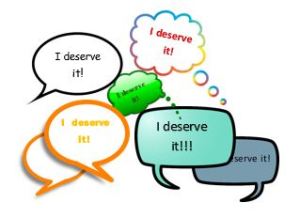 e three truths that guide my life:
1) Perfection is highly overrated. I’ve never met a perfect person, and I certainly wasn’t raised by anyone who met the criteria.
2) We learn more far more from our mistakes than we will ever learn from accomplishments.
3) The best advice we receive isn’t handed to us wrapped in words of wisdom. Instead, the most meaningful lessons are often hidden in what we observe, what we hear, and, in many cases, what we don’t hear.
My mom has spent more than 51 years trying to impart these nuggets of truth on my brother and me.
When I was young, she sometimes interspersed her acquired wisdom into our conversations, but what went unsaid was always more powerful.
For example, my mom never once told me I deserved anything. NEVER.
I was well into adulthood before I realized that.
No matter what I achieved, she never used the word deserve. Of course she encouraged me and told me that I’d earned my successes, but she implied that earning something is entirely different from deserving it.
She never explained this, and we never discussed the matter.
But by not speaking that one word, deserve, she said volumes.
In matters of every day life, human beings don’t have the right, or the ability, to decide who is deserving of something. Because, in doing so, we imply that others are not deserving.
Life is one big poker game in which the draw sometimes determines everything. Yes, some people are better at playing the game. Yes, some people use their cards to gain an advantage. Yes, some people avoid temptations and are able to improve their chances. And yes, some people are so charming and engaging that they can cloud reality to sway the beliefs of others.
But in the end, some people are simply luckier, and luck has nothing to do with their character, their abilities, their fortitude, their courage, or whether they are more “deserving” than others
So even though Mom never talked about why she threw “deserve” into her junk pile of words that are either misused or meaningless, she said everything through the life she’s led.
And for that, I will always be grateful.
Happy Mother’s Day, Mom.
When Silence Kills But Words Destroy
 I never thought I’d spend a Friday night waiting for a prescription drug to prevent someone from dying from heroin.
But then, I never thought heroin would be a part of life. I never gave it much thought at all.
When I did, it was only to shake my head in disbelief. I remember the day River Phoenix died. I was in New Orleans at the time, and I was watching the news in my hotel room as I wondered why he would use a drug that I associated with society’s outcasts.
But that was before heroin started creeping into my life. It made its stealthy entrance during conversations while friends shared their fear for family members who were using. It crept in when a co-worker mentioned the number of years she’d been in recovery.
And then, one day, I realized that it had simply arrived and taken up space as a constant, heartbreaking presence in my life.
Now, every time I hear about another overdose in my small community (as I write this, there have already been 20 this month, and it’s only March 5), I worry that I might know the person. I check the Facebook page that posts all of the overdoses and the location where they occur. Only then can I sit back in relief.
Only last weekend, I couldn’t sit back in relief. I knew one of the addresses and the person who lived there. He wasn’t the person who overdosed, but on Monday morning he admitted that he’d been using with the person who had.
And this sad epidemic has spawned something else in my community: virile hate.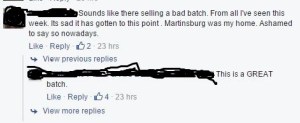
The administrators of the Facebook page that posts the overdose information also express disgust at efforts by emergency responders to save lives. They even encourage followers to post hateful comments.
I just don’t understand
How can the lives of others be so easily dismissed? How can some people fail to realize that addicts have friends, parents, children and others who care about them and might be reading those posts? Most of all, how can people be so cruel?
The individuals making comments on the Facebook page may not approve of the addicts behavior (who does?). But I don’t approve of the haters’ behavior nor their obvious ignorance about the nature of addiction.

While I’m also far from an expert, I do know a few thing these Facebook posters obviously don’t:
- Degrading other people will never make any situation better.
- Pointing fingers doesn’t make a problem disappear. It does make those involved more likely to hide in shame. We can never solve a problem when people are trying to hide it.
- Every single person has potential, even those who have hit rock bottom.
Just last week I was speaking with a former heroin addict who has been clean almost twenty years. She was telling me how her mother never knew she was an addict. She never even informed her mom when she overdosed and was revived by paramedics. “And now look at me,” she said. “Thank God someone thought I was worth saving.”
But because my friend is an addict, she also knows secrets.
“People think they know who addicts are,” she said. “But they really don’t. There are doctors and nurses who got clean and now are helping people every day. No one looks at them and says, they weren’t worth saving.”
Her words have resonated with me.
As my community, like so many others, continues to struggle with the heroin addiction, I have to believe that her voice and the voices of other caring people will continue to raise awareness and interest in solving the problem while simultaneously quieting the hateful voices.
Because silence about the problem will do nothing to stop the epidemic, and cruel voices can only make it worse.
Touched by an Angel
 For several years, National Public Radio ran a series called This I Believe that encouraged listeners to share short audio essays about core beliefs that defined who they were and how they lived their lives.
I always had a secret desire to submit my own essay, but I never did.
I just couldn’t identify only one belief that defines me.
I believe in karma.
I believe that the worst circumstances in our life are intended to teach us critical lessons that, in the end, will make us better people.
And I believe that angels show up in our lives when we need them most.
So it was last night when I got home from work in a foul mood. I was worn down by trying to do the right thing in a world often controlled by manipulative people. I was so angry that I had an almost physical need for everyone else to know exactly how I felt. I was already writing the words for this blog in my head,
But that was before I saw the package on my front steps.
My curiosity immediately overshadowed my anger. The return address was from my long ago babysitter, Carrie, in Oregon.
Growing up, I adored Carrie just as I had adored her mother, Ruby.
My childhood was spent living thousands of miles away from my own grandparents, and Ruby had stepped up and stepped into the role of foster grandmother.
Since Ruby had several daughters of her own, I never understood how someone as special as she was could possibly think I was special too. Not only was she was kind, gentle and loving, but she had the innate ability to draw into the light all the good in people while ignoring all that was ugly. When spending time with Ruby, you couldn’t be angry at the injustices in the world because you were too busy rejoicing in all its beauty.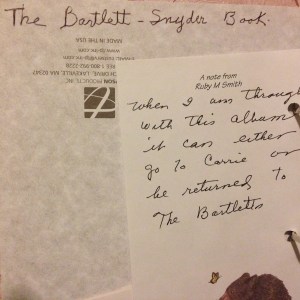
When Ruby died in January 2007 at the age of 92, I never thought I’d hear from her again.
I was wrong.
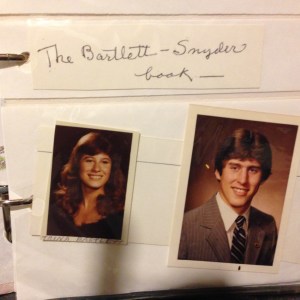
The package on my front steps contained a photo album with the letters, announcements and photographs that my mother and I had sent Ruby over two decades. It also included a note with instructions.
As I read the note from Ruby and flipped through the pages of my life since I’d left Oregon, tears streamed down my face and my anger disappeared.
I had been touched by an angel who was reminding me not to focus on the negative. There is just too much in life to celebrate instead.
And so, thanks to Ruby, that’s exactly what I did.
Beneath the Surface
 Earlier this week, a colleague stomped into my office expressing indignation about an injustice.
That unto itself wasn’t the least bit unusual. Someone is always stomping into my office to complain about something.
I work for a social service agency with a mission to alleviate poverty. My co-workers and I comprise a group of passionate people who won’t accept that the odds are simply stacked against some people. We try to change those odds.
Often, we feel as though we are tilting at windmills, and we even get discouraged.
But we don’t give up. After all, our heroes didn’t give up.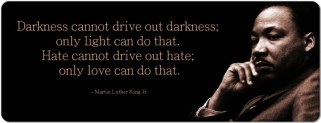
And the treatment of one of those heroes is the reason my co-worker was upset as she stormed into my office.
“I can’t believe that the Martin Luther King, Jr. holiday has become just another day for sales for some people,” she said. “The day is supposed to be about honoring of one of the greatest men in history. He changed the world.”
Indeed he did.
I was a just over a year old when Martin Luther King, Jr. was assassinated, so I never knew a world that hadn’t been impacted by his actions, his words and his ability to change the system. But for years, what I knew about him was limited:
- He was a Civil Rights leader.
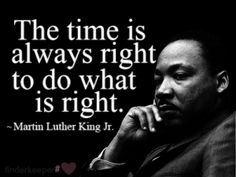
- He made a speech about having a dream that all people would someday be treated as equal.
- He believed in using peaceful tactics instead of violence.
- He was shot and killed at a hotel in Tennessee by a guy named James Earl Ray.
Those facts paint a picture of a great man who made a difference in the world. But those facts never really inspired me because I couldn’t relate to the charismatic leader. His ability to make such a huge difference in the lives of others had absolutely nothing to do with my potential.
At least, it wasn’t until I learned that he, like the rest of us, struggled with imperfections.
He apparently tried to commit suicide when he was 12 years old. His grandmother passed away after a heart attack while King was off disobeying his parents by going to watch a parade after they had prohibited it. When he got home and learned that his grandmother had died in his absence, he jumped out a second story window.
Martin Luther King, Jr., the man who delivered one of the most iconic speeches ever, received a C in a public speaking class during his first year in seminary.
King is rumored to have had numerous extra-marital affairs, which even resulted  in his becoming a target of the FBI.
On the day he was killed, King was out on that now famous hotel balcony because he was smoking. He tried to keep the fact that he was a smoker hidden, so he didn’t want cameras around when he had a cigarette in his hand. According to Rev. Kyles, after King was shot but before he was taken away by the ambulance, Kyles removed the package of cigarettes from King’s pocket and got rid of the cigarette butt. This was an attempt to hide the fact that King was smoking at the time he was shot.
None of these facts minimize the accomplishments of Martin Luther King, Jr. In fact, in my eyes, they make them even more impressive. Like all of us, Dr. King struggled with being imperfect. But despite that, he changed the world.
He is my hero not just because he acted on the same beliefs that I hold dear. He is my hero because he didn’t let his imperfections get in the way of taking action and changing the world.
This Monday, when the United States celebrates the federal holiday that honors Dr. Martin Luther King, Jr., that’s what I’ll be thinking about.
I’ll be remembering that ev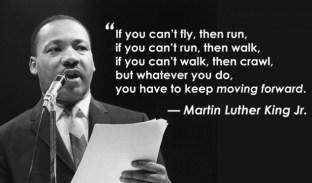 ery person who makes a difference in the lives of others has a personal story lying just beneath the surface. These are the stories that involve failing from time to time but persevering anyway. They involve making mistakes or saying the wrong thing while we still attempt to do the right thing. And even though many of us feel like we are trying to lead when no one is following, we have to keep trying to blaze trails anyway.
These stories sometimes aren’t visible to those around us because we try to hide them just beneath the surface. But these are the stories that make us strong enough to take on the world and try to make it a better place.
Just like our heroes did.
That Place You Belong
The senior high school student walked into the concession stand with tears in her eyes.
“This is my second to last football game ever,” she said. “It is all ending too fast.”
I empathized with her.
I too can sense time slipping away too quickly. It has the the strange ability to swiftly turn every moment into a mere memory regardless of our desire for meaningful moments to linger a little longer than normal.
Just last year, I openly cried as I watched my son’s friends and their parents march onto the football field for senior night. As they announcer said their names and their future plans, my chest tightened, my eyes watered and I felt a sense of dread. I knew that in exactly one year, I would be doing the same.
And I was.
This past Friday night, my husband and I stood on the edge of the high school football field, were handed flowers and given instructions to escort our son for recognition during the last home football game of his high school career.
Despite all of my concerns that my overly emotional tendencies would sabotage the moment, I didn’t get a bit nostalgic. I was too busy laughing.
I should have known my son wouldn ‘t take the moment too seriously, and my suspicions grew stronger when other parents were handed a sheet of paper with all of the information that the announcer was going to read about their child. My son snatched his paper out of my hands with a smirk on his face then stuffed it down his pants (his band uniform doesn’t have pockets). I had no opportunity to see his written words prior to their being proclaimed over the loudspeaker for hundreds of people.
My son’s best friend, who was directly behind us in line, started laughing.
“I can’t wait until they read yours,” he told my son.
Since we were lined up in alphabetical order and my husband and I decided not to complicate our children’s lives with hyphenated last names, we were near the end with the last name of Snyder.
That meant we had plenty of time to listen to the impressive future plans and meaningful expressions of support from my son’s classmates.
It also meant that, instead of feeling nostalgic or the least bit weepy, I was overwhelmed with a sense of curiosity about what my son had said.
Finally, his time in the limelight arrived.
At first, my son’s moment of recognition was similar to that of his classmates. He mentioned his future plans – or what he thinks they will be – and his appreciation of the friends, teachers and family for their support.
That’s when normal ended for him.
He also extended his appreciation to Goku from Dragon Ball Z (I have no idea) and the people who invented hot wing flavored-Doritos (I don’t understand).
While my initial reaction was to do a face palm, I soon realized that other people appreciated that at least one senior hadn’t said what was expected. The people in the stands were applauding and cheering as my son stepped away from my husband and me to take a bow.
The cheers and applause got louder.
At that moment, I realized that my son is in an incredibly different place than I was at his age.
While I was seeking the place where I belonged, my son simply creates his.
Not everyone appreciates his off-the-wall humor or his need to make light of every situation, but that doesn’t bother him.
He creates moments instead of waiting for them to happen or lamenting their loss.
He innately knows that for every milestone that passes, another one is on the horizon. He also knows that waiting for milestones isn’t enough. Every minute can be a moment if you decide to seize it rather than stand back and watch.
He is only three months into his senior year of high school. Between now and May, I have no doubt that there will be times when I get weepy and nostalgic as the final chapter of his childhood comes to an end.
But I also have no doubt that the laughter and smiles will outnumber the tears.
Because that’s what happens when you are in the place where you belong.

10 Things I Learned From Cats
 I don’t know what’s happened to me.
I’ve never been a cat person.
NEVER.
From the moment I was born, I was a dog person.
An entry in my baby book documents that. On one of my first trips to the local public library, I toddled across the floor, grabbed a book from the shelf, handed it to my mother and pointed at the picture on the cover.
Then I uttered one of my first words.
“Doogie.”
Not much has changed in 48 years. I still compelled to reach out to every dog I see. Since the time I was four when my first dog, Charlie Brown, came into my life, my best friends have always been dogs.
I’ve never felt the same unconditional love for cats.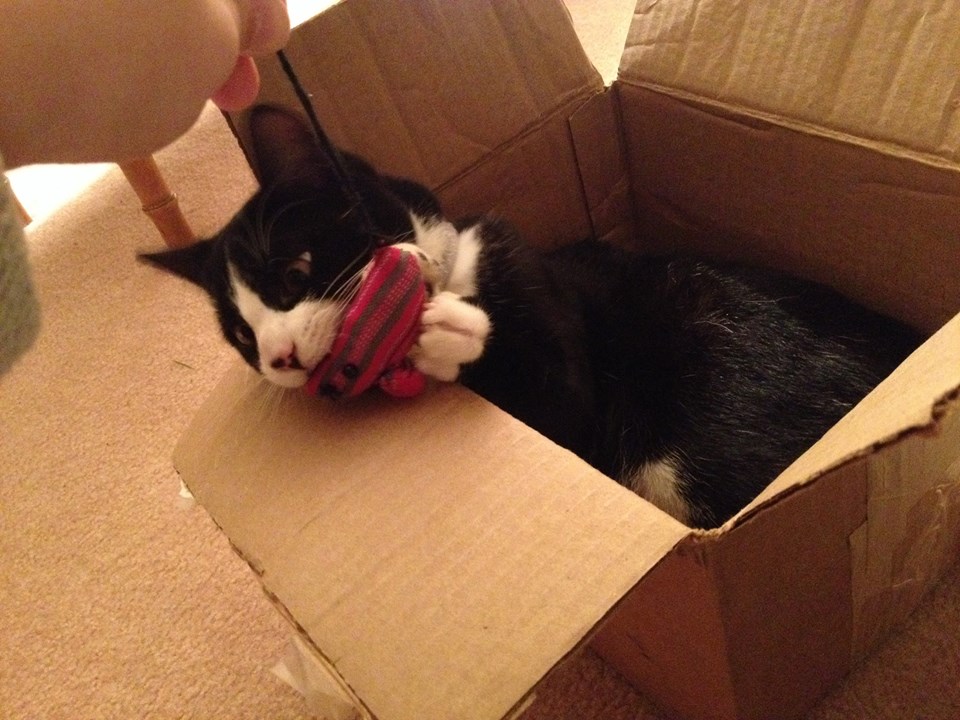
Yet, somehow the cats in my family now outnumber dogs.
I could blame my daughter and husband for their appreciation of the quiet and generally undemanding nature of cats, but I would be avoiding the truth. At some point, my heart grew a couple of sizes larger, and I let the cats in.
I don’t love them for the companionship and unconditional love that my canine bff’s have always provided.
I love them  because they make me think. In all honesty, they have actually provided me with ten important life lessons:
Number 10: If you need a nap, just take one. Period.
Number 9: Don’t spend time trying to get people
to like you. Some people will like you. Some people won’t. Spend your emotional energy doing what you like rather than trying to please anyone.
Number 8: Always let people know when they are creating circumstances that make you unhappy. If you don’t, nothing will every change.
Number 7: There is absolutely nothing wrong with small spaces. In fact, sometimes they are the best spaces.
Number 6: Al ways make people appreciate your time and attention.
Number 5: If the weather outside isn’t comfortable, come inside. Otherwise, spend your time outside exploring and enjoying nature.
Number 4: Always act as though you are in charge. Even when you have very little control, pretend you do.
Number 3: Embrace your curious side. That’s the only way you’ll ever experience something new.
Number 2: Sometimes, the box really can be the be part of the present, especially if you take into account the wrapping, the bow and the ribbon.

And the Number 1 lesson I learned from my cat?
Love is love. Don’t worry about what others think about whom you should or shouldn’t love. Love who you want.

A Double Life
 I lead a double life.
Every day, I straddle two very different worlds.
Last week, I spent time listening to a man in his mid-thirties who is a regular in the waiting area at my office. He comes not for services but because he feels safe there.
The man is a paranoid schizophrenic who has been disowned by his family, experienced bouts of homelessness, been the victim of street-wise individuals and sporadically stayed in psychiatric hospitals. On that particular morning, he had housing but wanted to complain about police harassment. He used “colorful” phrases as he expressed confusion as to why anyone thinks he could be violent or dangerous.
I gave him my sympathy while gently telling him that his rough language might put some people off. What I didn’t say was that I was pleased he was even talking to me. That meant he was taking his medication.
When he’s off his medications, he mumbles to himself and doesn’t make eye contact.
I take comfort in the fact that all of my co-workers keep tabs on him and worry when he appears to be off his medication.
Their concern doesn’t come from any work-related requirement. They care because they understand the tenuous line every person walks.
Some of us are fortunate enough to start life with a wide open road built by a strong support system. Taking a step forward to better circumstances is an expectation that is cheered, encouraged and made possible by multiple people.
Others are forced to walk a tightrope of poverty, violence and disinterest. Taking one step forward into better circumstances is a test of determination and the ability to navigate an obstacle course of mental and physical health problems, abuse and poor role models.
Which line we walk is often a stroke of luck, sometimes a matter of choices but always requires a safety net provided by our fellow human beings. The people I work with know their job is to increase the odds for everyone who walks through our doors.
But that’s my work life.
My personal life can be completely different.
Only a few hours after my conversation with the schizophrenic, I was selling hot dogs, hamburgers and nachos at the high school concession stand where the talk among the parents was all about the latest drama: “slushee gate.”
According to those in the know (not me), the band has total rights to all fall sports concession sales. The football parents (not the students) disagreed, sought and apparently received permission from one high level administrator to sell frozen lemonade slushees during games.
Drama, including public cussing by the wife of a football coach, ensued.
I care about supporting my son and the band, but I can’t understand getting so emotionally engaged in something that doesn’t actually affect anyone’s well-being.
There are too many parents who are struggling just to meet their family’s basic needs and are ill-equipped to deal with the complications of daily life. A battle over concessions at high school athletic competitions isn’t part of their world just as their issues aren’t on the radar of parents who can afford for their children to be involved in extracurricular activities.
Because of my career choice, I live in both worlds.
Which is why I had a recent conversation with a woman who was young enough to be my own daughter yet had three children. She was homeless and had made a poor decision that resulted in her eviction, and therefore her children’s eviction, from a local shelter. She talked to me about her “baby daddy” (her exact words) and their violent relationship.
There was nothing I could do but provide her with a few kind words and a bit of advice. She had made one critical error that couldn’t be fixed and didn’t have a support system of family or friends that could help. Because of that, she had no place to sleep other than in a tent.
Her situation was weighing on my mind when a well-to-do donor breezed through my office door.
I listened as she described the stress of downsizing her home to what she called “a retirement cottage.” Since I don’t live in her world – I just visit it – I thought the only small thing about her new big house is that it has less square footage than the estate where she used to live. I empathized with her concerns because she was feeling stressed.
At the same time, I couldn’t help but note that I was once again straddling not two but three worlds. The one where I live, the one where my clients live and the one where my donors live.
I appreciate our donors. They are caring people who know they are fortunate and wanted to help those who are not. They are the lifeblood of my organization. But they still live in a world that is very different from the one inhabited by the people my organization serves.
And I have to negotiate all those worlds. But that type of double life isn’t something about which I should be ashamed. Instead, I should consider it a gift that allows me to serve as a bridge that increases understanding and hope.
At least it increases my hope that one day, I’ll work myself out of a job and no one will have to lead a double life. That’s because we will all live in the same world.


 Just So You Know