Blog Archives
365 Reasons to Smile – Day 38
I was checking out at the grocery store the other day when the clerk’s head suddenly shot up. She seemed to attentively listen for a minute then broke into a broad grin.
“That sounds just like my grand baby,” she said.
Up to that point, I’d been oblivious to the high-pitched screech coming from one of the aisles.
“How old is your grandchild?” I asked.
“She’s turning two today,” the clerk said. “And she is quite the handful.”

I can’t believe more than 15 years have passed since this photo of my dad and my son was taken.
Despite her words, the smile on her face indicated that the little girl brought her nothing but joy, and her enthusiasm made me light up too.
There is absolutely nothing like witnessing people enjoy their grandchildren.
That always makes me smile.
Day 38: Proud Grandparents
Day 37: Chocolate Chip Cookies Day 36: Challenging Experiences that Make Great Stories
Day 35: You Can’t Always Get What You Want
Day 34: Accepting the Fog Day 33: I See the Moon
Day 32: The Stonehenge Scene from This is Spinal Tap
Day 30: Unlikely Friendships Day 29: Good Samaritans
Day 28: Am I a Man or Am I a Muppet? Day 27: Shadows
Day 26: Bike Riding on Country Roads
Day 24: Hibiscus Day 23: The Ice Cream Truck
Day 22: The Wonderful World of Disney Day 21: Puppy love
Day 20 Personal Theme Songs Day 19: Summer Clouds
Day 18: Bartholomew Cubbin’s Victory Day 17: A Royal Birth Day 16: Creative Kids Day 15: The Scent of Honeysuckle Day 14: Clip of Kevin Kline Exploring His Masculinity Day 13: Random Text Messages from My Daughter Day 12: Round Bales of Hay Day 11: Water Fountains for Dogs Day 10: The Rainier Beer Motorcycle Commercial Day 9: Four-Leaf Clovers Day 8: Great Teachers We Still Remember Day 7: Finding the missing sock Day 6: Children’s books that teach life-long lessons Day 5: The Perfect Photo at the Perfect Moment Day 4: Jumping in Puddles Day 3: The Ride Downhill after the Struggle Uphill Day 2: Old Photographs Day 1: The Martians on Sesame Street
365 Reasons to Smile – Day 25
If you ask me what my favorite movie is, you’ll get the same answer you’d get if you asked me my favorite song.
“That depends on my mood.”
But, I do have top ten lists, and When Harry Met Sally will always be near the top of my favorite movies list.
From the first time I saw the film in the theater when to the last time I saw it on television, the love story always makes me smile.
Day 25: When Harry Met Sally
Day 24: Hibiscus Day 23: The Ice Cream Truck
Day 22: The Wonderful World of Disney Day 21: Puppy Love
Day 20 Personal Theme Songs Day 19: Summer Clouds
Day 18: Bartholomew Cubbin’s Victory
Day 17: A Royal Birth Day 16: Creative Kids
Day 15: The Scent of Honeysuckle Day 14: Clip of Kevin Kline Exploring His Masculinity
Day 13: Random Text Messages from My Daughter Day 12: Round Bales of Hay
Day 11: Water Fountains for Dogs Day 10: The Rainier Beer Motorcycle Commercial
Day 9: Four-Leaf Clovers Day 8: Great Teachers We Still Remember
Day 7: Finding the missing sock Day 6: Children’s books that teach life-long lessons
Day 5: The Perfect Photo at the Perfect Moment Day 4: Jumping in Puddles
Day 3: The Ride Downhill after the Struggle Uphill Day 2: Old Photographs
The Starfish in the Greenhouse
My dad is a man of nature.
He has a degree in forestry, and even now, on the verge of 80-years-old, he still nurtures gardens full of flowers and vegetables.
 If I had only one word to describe him, that word would be green.
He had a green thumb and, when I was still a child, he even built his own green house. That ensured that when conditions didn’t cooperate with his plans, he could still grow the plants he wanted.
Because he was a man of dirt and seeds, I’ll never be able to think of my dad as a person of sea and surf.
But my mother is.
She’s loves to sit on cliffs over the ocean and watch waves crash into the rocks.
To this day, the only times I remember seeing my mom not being productive were the moments she spent watching the ocean.
Maybe that’s why my dad made sure she had that opportunity at least once a year.
On one of those trips to the Oregon Coast during my childhood, I found a starfish on the beach.
My dad, who was walking with me along the shore when I picked up the starfish, seemed less than delighted that I wanted to keep the starfish. But he let me take it home anyway. He even suggested I put it in the greenhouse so it would dry out.
I took him up on his suggestion, but I grew to regret it.
The starfish may have dried out, but it also stunk up the greenhouse.
For years it stunk up that greenhouse. And every time I entered it, I was reminded of that stinking starfish.
But my dad never mentioned it.
I doubt I’ll ever know why he didn’t, but I’m pretty sure the answer has something to do with love.
Love isn’t about having people in our life who find peace in the same place we do.
Love is about having people in our life who show us how to find joy in places we wouldn’t otherwise look.
365 Reasons to Smile – Day 20
For a man who has an extremely long commute to work, my husband doesn’t seem to mind spending time in his car.
He drives our kids crazy when he takes side roads rather than the interstate, which is generally the fastest way to get from here to there in our town.
He drives me crazy when he reaches our destination but leaves the engine running even after we’ve stopped.
And he drives all of crazy when he is so caught up in his own thoughts that he misses turns and exits.
He’s not just directionally challenged, he is one of the most unhurried people in the world.
I learned that lesson early in our relationship when I told him that he had his own theme song: “Take the Long Way Home” by Supertramp.
Almost two decades later, that song has stuck, and whenever I hear it, I think of him.
And that always makes me smile.
Day 20: Personal Theme Songs Day 19: Summer Clouds
Day 18: Bartholomew Cubbin’s Victory
Day 17: A Royal Birth Day 16: Creative Kids
Day 15: The Scent of Honeysuckle Day 14: Clip of Kevin Kline Exploring His Masculinity
Day 13: Random Text Messages from My Daughter Day 12: Round Bales of Hay
Day 11: Water Fountains for Dogs Day 10: The Rainier Beer Motorcycle Commercial
Day 9: Four-Leaf Clovers Day 8: Great Teachers We Still Remember
Day 7: Finding the missing sock Day 6: Children’s books that teach life-long lessons
Day 5: The Perfect Photo at the Perfect Moment Day 4: Jumping in Puddles
Day 3: The Ride Downhill after the Struggle Uphill Day 2: Old Photographs
Universal Questions
If popular culture is to be believed, all of our questions will ultimately be answered when we die.
I may be a bit impatient, but I’m not ready to find out if that’s true. I’m not even all that eager to have all my questions answered.
For the moment, I’m quite content to muddle along and think that wondering is the essence of living.
And wonder I do.
I know there are people who believe there is a master plan or that we just have to trust fate. But, in reality, there are more seven billion people on earth. If even one percent of those people are similar to me, they are constantly doing something random and unplanned that could change everything.
There are just no easy answers about how the universe works.
I first learned that during a summer in the late 1970’s.
My family was spending our summer vacation exploring Yellowstone National Park and the surrounding area.
Knowing my parents, the trip was well-planned. But even the best planning doesn’t take into account when little girls have to go to the bathroom.
My dad grumbled as he pulled our Oldsmobile 98 sedan into a parking spot at a visitors’ information center. As my mother and I headed to the women’s room, we paid little attention to the car with Michigan license place that nosed in next to us.
But my dad was paying attention.
Which is why he chose to watch a slide presentation about some geological event that had occurred at some point in history at our current location. I have no recollection of what the event was or when it occurred. All I know is that when my mom and I sought out my dad and brother, they were watching the presentation.
Or they were at least pretending to watch.
My dad was sitting in a metal folding chair wearing a foolish grin and pointing to the people in front of him.
Those people were my great-uncle Vilas and his new girlfriend, Betty.
Uncle Vilas, who was from the Detroit Michigan area, had visited us once in Oregon, but I really didn’t remember him. My parents didn’t even know he had a girlfriend, even though his wife had passed away years before.
All we knew was that, by some unbelievable coincidence, we had pulled into a visitors’ center in Montana at the exact same time.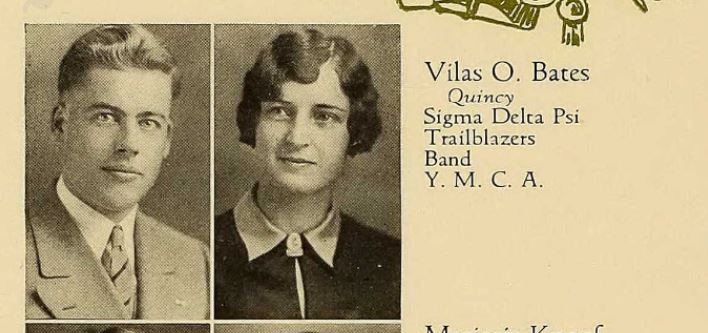
After the slide show ended, my mom tapped him on the shoulder. When he recognized her, he was initially shocked then broke into a wide grin. We spent time in that visitors’ center catching up. Then we went our separate ways.
That was the last time we saw my Uncle Vilas. He died a few years later in 1986, but my family always talked about the coincidence.
Then, just a few weeks ago, I was asked to judge a Boys and Girls Club state scholarship competition, and the national coordinator was from Adrian Michigan, where my mother was born. As we talked about the coincidence, I discovered that her parents had graduated from high school where and when my Uncle Vilas was principal.
My immediate reaction was “it’s a small world.” But sometimes, that’s just hard to believe,
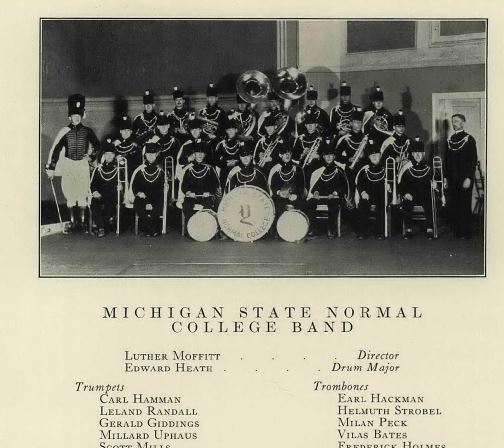 I began to a do a little more family research and discovered that Uncle Vilas, like my son, played a brass instrument in a band. I also discovered that he, like I have, spent his career in service to others rather than in the business world.
I’m still not sure if that means anything more than he seems to pop into my life at the most unexpected moments.
But I’m willing to wait for the answer.
The Bridge that Mrs. Henderson Built
Life speeds by as a changing tide of both small and big events that leaves in its wake only memories and eventual acceptance that nothing ever stays the same.
It also allows us to witness what others will someday study as history.

Mrs. Henderson and Trina 1979
When I was young, I truly believed that the distance between me and any historical events was immense. Even though I loved studying history and was a voracious reader of biographies, I still thought that events simply happened, were over and everyone moved on.
And then I met Mrs. Henderson.
Born on February 5, 1885, Blanche Henderson was literally a pioneer. In 1904, at the age of 19, she graduated from the Oregon Agricultural College (now Oregon State University) with a degree in pharmacy.
A few years later and on her own, she became a homesteader near Madras, Oregon. After she married fellow homesteader, Perry Henderson, she surprised herself by becoming a teacher.
As far as I know, she never had any of her own children, but she obviously loved kids. And she showed that love to me.
By the time I met her, she was a widow living alone in a small, two-bedroom house with minimal furniture. She was also well over 90 years old.
I have absolutely no recollection how our friendship began, although I’m guessing my mother, a journalist, introduced us.
Once those introductions were made, the unlikely relationship began. My mother would take me to visit Mrs. Henderson, and she would always serve me half-melted ice cream from a freezer that wasn’t keeping her food cold enough.
Neither of us cared.
What I did care about was listening to her stories, and what she cared about was sharing them.
As I thumbed through her coffee table book of Norman Rockwell prints, she told me about attending the 1905 World’s Fair in Portland. She even gave me a fan from it, a souvenir she’d kept all those years and that I still treasure.
She told me about witnessing a stagecoach robbery when she was a little girl. “I thought the men had dunce caps on their heads,” she said. “My father had to tell me they were holding their arms about their heads because they were being robbed.”
As Mrs. Henderson talked about her experiences and about how the world had changed, I began to recognize that, what was history to me, was simply life to her. And wanted me to be able to touch it too.
Mrs. Henderson died shortly after my family left Oregon, but the lesson she taught me has stayed with me: each person can be a bridge between the past and 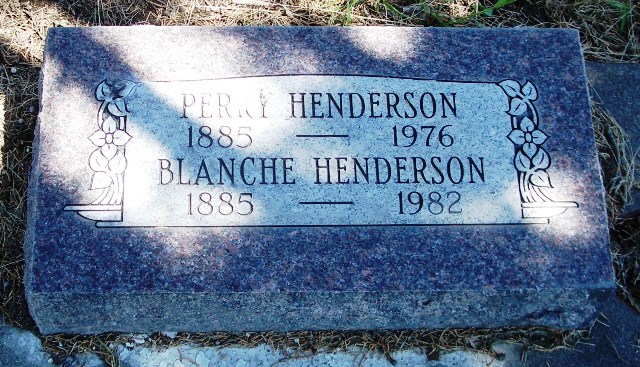 the future. But that only happens when we reach out to future generations and develop relationships with those whom we may think we have little in common.
Thanks to Mrs. Henderson, I’ve actually touched the historical 1800’s. If I stretch myself far enough, I might be able to reach the 2100’s too.
A Piece of Your Dad

Summer 1998
A message to my 15 year-old son:
The moment you were born, your dad grinned wider than I’ve ever seen. Then he said,”This is the best day of my life.”
And he meant it.
While my mind was spinning with worry, and I wasn’t even sure if I was even cut out to be a mother, your dad knew he had arrived at the place he was always meant to be – fatherhood.
Since then, he’s never left that place. Not even once. And that hasn’t always been an easy thing to do.
Not all men have the fortitude to be a father, and, and as you should well know, it is often a thankless job. It’s even harder when you grow up without much of a role model.
But your father has something a lot of men don’t – the ability to put his ego aside and focus on what he believes is most important – always being available for you and your sister.
From the moment you were born, you have been his priority. He’s never stopped believing in you or being your number one champion. Ever.
At those times when I’ve cried over your behavior or questioned what I did wrong, your dad always spoke up for you. And he was always the voice of reason.
On those days when I worried that you weren’t like other boys – that you weren’t particularly interested in playing sports or being overly social – he always praised you for being comfortable in your own skin and being true to yourself. And he was always right.

Summer 2013
And all those times when you were being the total and complete goof you are, he was proud of you and never hid his face in embarrassment.
Well, almost never.
I know we often joke about your blood line and about your genealogy, but, in all honesty, you should be proud of being your father’s son.
You may not have his brown eyes or his poker straight hair, but you have something much more important.
You have pieces of his heart and pieces of his soul.
Treasure them and make good use of them. Your dad sacrificed a great deal so you could have them.
Shame is Not a Form of Birth Control
I had to double-check my calendar this morning to assure myself that it was actually 2013 and I hadn’t been sucked into a time warp.
I hadn’t been.
Instead, I was sucked into reading news articles about a school assembly featuring an abstinence-only proponent whose only educational credential is a Psychology Degree from Jerry Falwell’s Liberty University.
See: http://www.dailymail.com/News/201304110267 and http://www.wvgazette.com/News/201304110229 .
I can’t emphasize enough how inappropriate the assembly was.
Almost 20 years ago, when I was working in the field of sex education, experts had already proven that abstinence-only and shame-based tactics don’t work. And promoting a particular religious philosophy in a public school is simply prohibited.
But self-righteous people, who believe they actually know what God is thinking, seem to find a way around these issues.
The speaker, Pam Stenzel, and her sponsors, a religious group called Believe in West Virginia, say her speech wasn’t faith-based. Instead they say it was just a warning about the dangers of sex before marriage.
Those few words should have been enough to keep this woman out of the public schools.
A real sex educator doesn’t pretend that a wedding ring can protect people from a sexually transmitted disease, an unplanned pregnancy or heartache.
A real sex educator doesn’t outright dismiss homosexuals, who are still fighting for the right to even be married.
And a real sex educator doesn’t condemn, judge or shame.
Instead, a real sex educator gives facts – not statistics that have been manipulated to fit a certain dogma.
A real sex educator will agree that sex is the only human behavior that has the potential to create life or to threaten a life. The educator’s job is to help individuals make decisions to prevent unwanted consequences.
And a real sex educator will spend time talking about healthy relationships and about treating others with respect – not condemnation.
Years ago, I was that person, and I will never forget making a presentation about AIDS and HIV in a middle school classroom. As I interacted with the students, the teacher, who was obviously not happy I was there, took out his Bible and placed it open on his desk. He pretended to read, and I pretended to ignore him.
A year later, I had the same assignment and found myself in the same classroom. But instead of taking out his Bible, the teacher made a point of welcoming me and telling his students they should listen. He then privately told me that “a really good person” from his church had been diagnosed with AIDS. Instead of noting that a lot of “really good people” had been diagnosed with AIDS, I was just grateful that he had become a bit more open and less judgmental.
Now, I am hoping the same for all those involved in permitting the recent school assembly at George Washington High School.
The Daisy Petal Deception
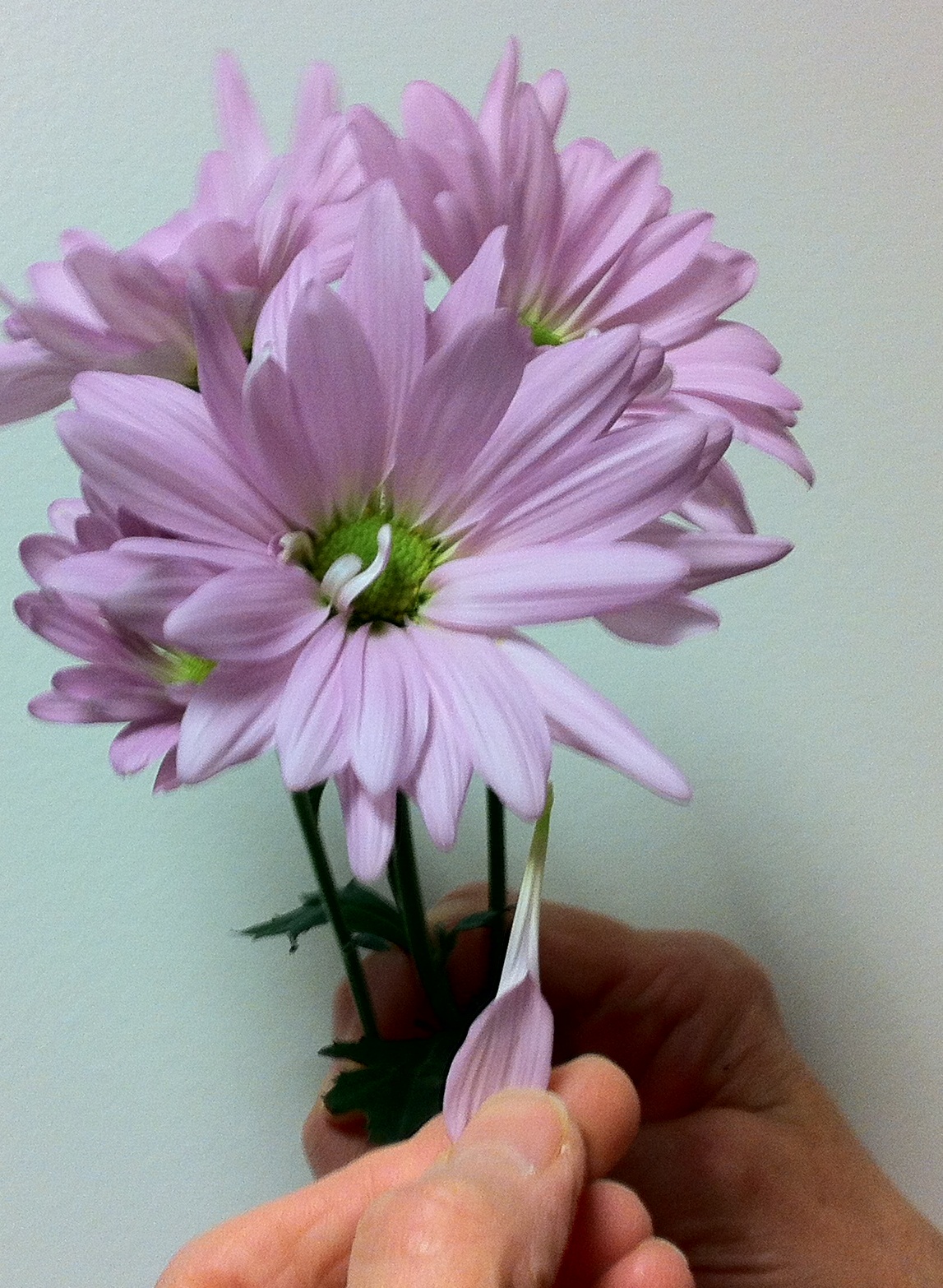 Even though people tell me I have a very good memory, I’m not so sure. For every story or incident I remember, I am constantly reminded of all those times about which I have no recollection. And I have no clue who taught me that plucking petals off a daisy is a reliable method of determining whether someone cares about me.
Pluck a petal – he loves me. Pluck another petal – he loves me not. Pluck another – he loves me. And the last petal will supposedly reveal the true nature of his feelings.
A rational person would recognize that the practice is not only ridiculous but that it also promotes the deliberate torture of innocent daisies. Apparently, I haven’t always been particularly rational.
I’m ashamed to admit that, thanks to a long-forgotten tutor, I’ve tortured a lot of daisies in my life.
Most were destroyed in the name of boys and men who never even knew that I cared. (I can only credit myself for the self-taught skill of acting disinterested when I was actually quite interested.) I even began plucking daisy petals for answers to questions that had nothing to do with relationships.
Pluck a petal – I will get what I want. Pluck another petal – I will be disappointed. Pluck a petal – I will get what I want.
Every time I got the answer I wanted, my appreciation for the practice grew. Not because the answer proved to be valid, but because it was an easy way to avoid the ambiguities of life and love.
Unfortunately, a lot of people like avoiding ambiguities. They like simplicity. They crave only two choices, so they can make a quick decision rather than think about alternatives and possibilities:
– They want one religion to be right and any other to be wrong.
– They want one political party to have all the answers and the other to only represent miscreants.
– They want people with a good-paying jobs to represent moral superiority and poverty to represent laziness.
Pluck a petal – you’re good. Pluck a petal – you’re bad.
The problem with plucking daisy petals is there is never a need for a real solution and there’s no call for action. If you don’t get the answer you want, you pick another daisy and try again. Either that, or you accept the answer but sulk and complain.
Sulking and complaining has never made anyone happy. Changing circumstances does, but that usually requires compromise and working with others. It requires putting down the daisies in our own hands, so we can join hands with others.
When we do that, the options grow, and opportunities really start to blossom.
Rockefeller’s Reminder
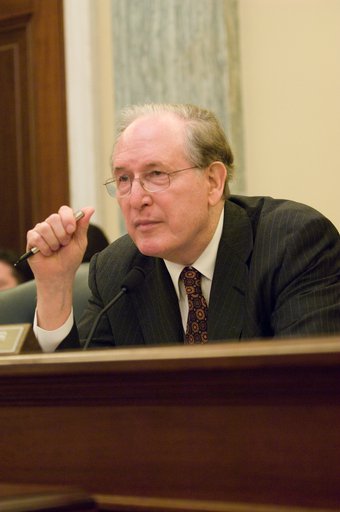 Last week, I had the privilege of attending a community meeting hosted by U.S. Senator Jay Rockefeller about the reauthorization of the Violence Against Women Act (VAWA). Since there was little doubt that our soon-to-retire senator was going to vote for VAWA, the event was really an opportunity to raise awareness about the issue of domestic violence.
Invited guests included survivors, social workers and advocates who work tirelessly to address the issue. A local police officer was the only man selected as a designated speaker for the round table discussion, but he received a great deal of Rockefeller’s attention.
While domestic violence survivors told heart-breaking stories, many of Rockefeller’s questions were directed to the police officer. The Senator seemed absolutely fascinated by the officer’s description of our local police department’s ride-along program, which provides an opportunity for community members to literally ride along with police officers during any shift. Those who participate have the opportunity to really understand what police face and learn about some of the biggest issues facing our community.
At the time, Rockefeller’s intense interest in the program seemed a little off topic. But in retrospect, I think the Senator was demonstrating what true wisdom is.
In a world where people are intentionally inflicting harm on others, where relationships are often about power struggles rather than support and where individuals are suffering on a daily basis, true wisdom is knowing that doing the right thing requires more than simply responding to the needs of others. Maybe because I’ve recently been watching too many people who think doing the right thing means doing things their way without considering all that others have or could contribute, Rockefeller’s reminder has stuck with me:
Doing the right thing means ensuring resources and services are available for those in need, but is also means focusing on what is positive and good.
Doing the right thing means reinforcing and promoting positive and healthy relationships among people and organizations.
And doing the right thing means really listening to others and acknowledging the power of what they are saying and all they are contributing.
That’s the wisdom Senator Rockefeller brought to the table. Unfortunately, he won’t be at the table much longer. Last month, he announced he will not be seeking a sixth term as U.S. Senator after his current term ends in 2014. West Virginia lost Senator Robert Byrd in 2010, and now we are losing Senator Jay Rockefeller. Regardless of political affiliation, all West Virginians should recognize the implications.
The cynical among us might say that caring about the poor was easy for Rockefeller, who was born into one of the richest families in America and never had to worry about money.
But I disagree.
Instead of choosing to live a life devoted to money rather than meaning, he chose to work on behalf of people who live in one of the poorest states in the nation. And even though I live closer to Washington D.C., Baltimore, Philadelphia, Pittsburgh and New York City than I do to our state capitol, I still care about what happens to this state.
And I’m hoping whoever steps into his position is someone who understands the importance of asking a local city police officer to explain a simple program that involves reaching out to others to develop stronger partnerships and healthy relationships.
That’s wisdom and a reminder about how we should all live our lives.
Thank you for your service and your wisdom, Senator Rockefeller.


 Just So You Know