Blog Archives
A Very Personal Perspective on Prejudice
 I don’t remember the name of the black man who came to eat dinner with my family in the early 1970’s, but I do remember an incident from that visit.
He was telling my parents about places where he hadn’t been allowed to go.
I couldn’t understand why, so I asked.
“It’s because I’m black,” he said.
I didn’t understand and I told him so.
“Some people don’t like black men and some people are just afraid of us,” he said.
I still didn’t understand, and neither he nor my parents could give me a good answer. Treating him based on the color of his skin made absolutely no sense to me.
I’m not telling this story to illustrate how children aren’t born prejudice. I’m telling this story because it’s not the story at all. Instead, it is the introduction to a more complex story about how children, just like adults, can fool themselves about their capacity for prejudice. It is a story that illustrates how blind some of us can be to the complexity of human beliefs and behaviors, particularly our own, I’m telling this story even though I hate what it says about me. I’m telling this story because it demonstrates how someone can claim not to understand discrimination and racism while they are in the process of developing their own prejudices.
In the early 1970’s, I was one of only a few white families living on an Indian reservation, and I knew I didn’t belong. My knowledge wasn’t a result of the fact that I looked different from most of my peers. They told me I didn’t belong, probably repeating the words they had heard their parents and other adults say.
That might explain why I cried on the first day of kindergarten when I was the only white child in my kindergarten class, even though my teacher was a white woman named Mrs. Short. My tears must have had an impact because schedules were manipulated so the only other white child my age was put in my class.
That was the year of increased concern that my peers were losing their cultural identity. To address this, members of the tribe came to class to teach us native language and traditions. That was the year we had to learn native dance and participate in a root feast. That was a year when I was taught that the white men were the bad guys. That was the year I was taunted, teased, bullied and chased home from school.
According to my parents, that was also the year I began to hate people of a certain skin and hair color. My mother says once we moved off the reservation, I insisted I never wanted to go back. We did, and I don’t remember being particularly upset. Of course, I also don’t remember ever having the disdain for an entire group of people based on the actions of a few.
I’ve spent most of my life trying to overcome this embarrassing piece of personal history. I like to think I don’t make rash judgments about people and that I treat everyone with the same fairness. But when I’m completely honest with myself, I have to admit that I can be as judgmental as anyone else.
But here’s the thing – I admit that to myself. Maybe that’s because I was raised by parents who expected me to be accountable for both my beliefs and my actions. Maybe it’s because I have personal experience being different, and therefore threatening, to others. And maybe, just maybe, it’s because the young child still in me would be disappointed with anything less.
Whatever the reason, I wish other people would take the time to look inward and realize that any words or posts on social media about an entire race or social class are always going to be wrong because they are based on limited experience.
Groups of people are not an experience or an incident. They are composed of individuals, and each individual is a complicated mix of good, bad, funny, sad, right, wrong and most of all humanity.
This holiday season, I encourage everyone to embrace that humanity and push aside the limited experience.
When we do, the child still in all of us will celebrate.
Of that, I have absolutely no doubt.
What I’ve Learned from “Difficult” People
A  few years ago, I would have complained that I had to deal almost daily with people who irritated me.
I had no concept of all the mean and completely self-centered people I would someday not only deal with on a regular basis but also come to accept. I would have thought I was too strong-willed and strong-minded to tolerate such people.
But a few years ago, I wouldn’t have recognized that, sometimes, being tolerant is not only the best way to deal with most difficult people, it is also a great learning experience.
That’s not to say I’ll ever accept bad or abusive behavior, but it does mean that one of the benefits of getting older is gaining perspective. And perspective has taught me that difficult people have done more to teach me about how to live my life than many of the kind and giving people I also encounter on a daily basis.
Difficult people have taught me that paying attention and listening to others is much more important than ensuring others listen to me.
Difficult people have taught me that a rude word will always being louder than a compliment that is shouted to the world.
Difficult people have taught me that being concerned with who gets credit for good deeds or successes tarnishes all that has been accomplished.
Difficult people have taught me that spreading lies and half-truths may garner immediate attention but will ultimately lead to a lack of credibility.
Difficult people have taught me that belittling, attempting to control or asserting power over others actually renders a person weak in the eyes of others.
And difficult people have taught me that refusal to adopt others’ ideas or accept constructive criticism stunts growth and limits possibilities.
I would be lying if I said difficult people no longer bother me or manage to get under skin. They do.
But I do find that the older I get, the less time and emotional energy I waste wishing I could change difficult people and the more time and energy I spend contemplating how to best apply their lessons to my own life.
In Between
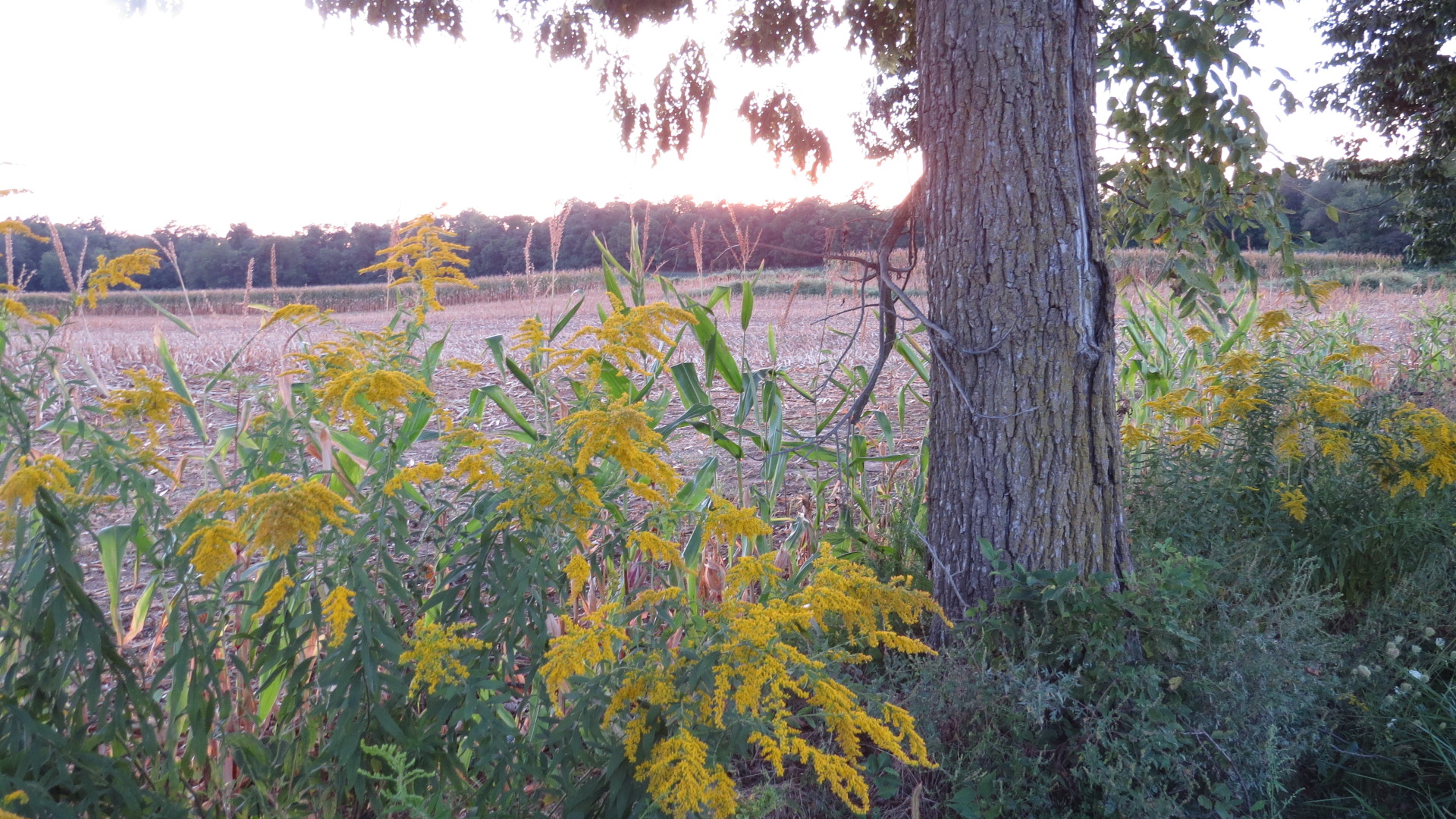 Little speaks more to my age than how quickly the seasons are passing.
Only yesterday, the crocus were starting to poke their heads through the frozen dirt, and now summer is quickly fading as autumn once again prepares for its annual debut.
I realized that the awkward stage between seasons had arrived as I was pedaling my bike 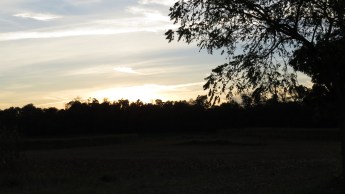 the other evening.
Only a few weeks before, I had been watching the sun rise on my daily bike rides.
Now, the sun is rising later each day and making an earlier and earlier farewell, so I am riding in the evenings instead of the mornings.
As I do, I’m observing the days are getting shorter and shorter but the leaves aren’t yet changing and the temperatures can’t decide whether I should be wearing flip-flops or boots.
We are officially at that “in-between stage.” And I am grateful.
A few years ag o, I would probably have tried holding on to what was slipping away while reaching out to what was just beyond my grasp on the horizon. In doing so, I would have lost the beauty and purpose of “in between.”
Now I appreciate it.

“In between” isn’t about wasting energy on mistakes or worrying about future decisions. Instead it is about accepting who we are and encouraging ourselves to do better.
“In between” isn’t about regretting all that we missed but is about appreciating all that currently surrounds us.

And ” in between” isn’t about hoping that the future holds more than the past. “In between” is about appreciating the present moment for exactly what it is.
“In between” is about recognizing the joy and potential in every minute regardless of our age, expectations or previous losses.
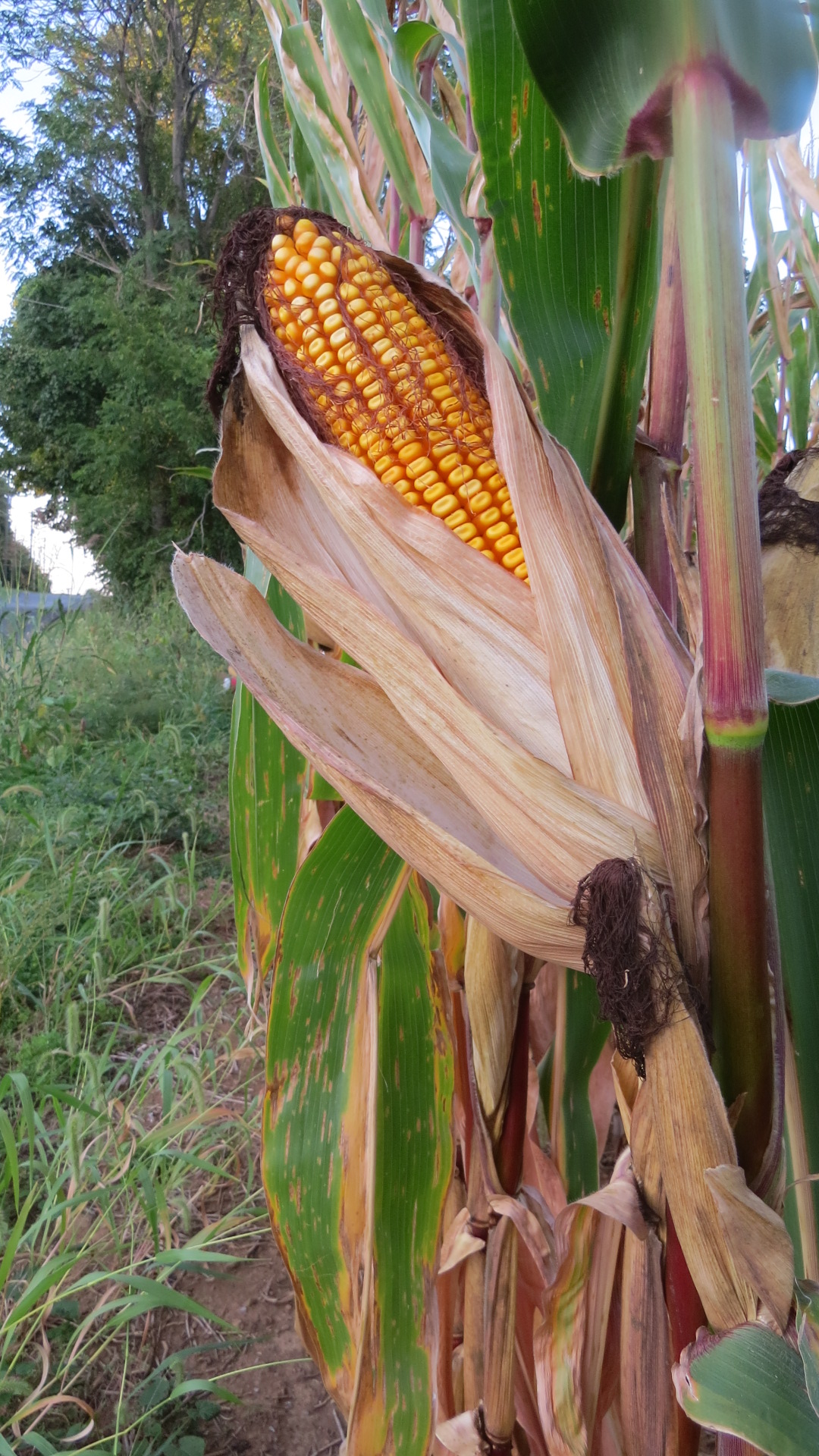
“In between” is about learning to appreciate the gift of the present while accepting that we can’t always control our current circumstances or our future.
And,most importantly, ” in between” is about paying attention to what others might dismiss as mundane but is actually miraculous.
Here is to “in between.”
The Earnest of Being Important
 Initially, I was at a loss for words when the woman on the other end of the phone asked “What kind of person do you find most difficult?”
Silence on my part isn’t common. I generally have a great deal to say, and my words are often delivered in a constant stream of thoughts and opinions.
But I wanted to ensure I didn’t make any missteps during this conversation. I was speaking with a woman whom I admire and respect for her experience, perspective and passion for serving others. Not only that, but I knew why she was asking, and I felt the need to be cautious.
But being cautious doesn’t mean avoiding the truth, so I finally said, “people who try to elevate their own importance by misusing positions that should really be about helping others.”
The woman on the other end of the line laughed, made reference to someone we both know and the rest of the conversation was incredibly meaningful.
But our discussion has stuck with me during this long weekend: one intended to honor those who gave all they had, including their lives, for something in which they believed. Most weren’t high-ranking members of the military who received respect because of their position. Some had no option but to serve while others were following a calling. But all were soldiers, and all were important.
I can’t compare the world in which I work to that of the military. With a few exceptions, nonprofit organizations aren’t dangerous. But the work is about serving others – not about getting applause or attention or accolades. It is also a world in which I belong. After stepping away from it for just over a year, I realized it is where I do my best work.
But that doesn’t mean it is perfect.
Every day I encounter people who don’t appreciate the work or see it as less valuable than money-making businesses. But they aren’t nearly as difficult as the people who actually work in the field but don’t really understand that it is a way of life – – not just a job. And I have little tolerance for people who complain that the work is too demanding.
Here’ the deal: serving others isn’t easy.
It means we have to let go of our egos and realize that we are no more important than anyone else.
As a former boss once said: everyone who walks through the front door of our organization should be treated with the same respect – whether they are a homeless person asking for help or a potential million dollar donor. Each one is God’s child and each one deserves kind words.
I wish I could say I always follow that principle, but there are times when I have a very difficult time showing respect for colleagues who are more earnest about feeling important than they are about helping others feel important.
But on days like today, when we honor those who gave everything for others, I have to put it all in perspective.
And I remember that life isn’t intended to be easy. It is intended to be a series of lessons about how to make the world a better place. Today, families across the United States are remembering those who did just that — made sacrifices to improve the lives of others.
And the rest of us simply need to say thank you for being so important.
Minimize This
Last week, WV Governor Earl Ray Tomblin signed a bill to raise the minimum wage from $7.25 an hour to $8.00 an hour in 2015 and to $8.75 in 2016.
Opponents of the new law have had multiple complaints:
Teenagers working part-time jobs will be making more money than they really need;
The amount employers will be forced to pay for overtime will increase significantly;
When minimum wage increases, everyone else’s income is worth a little less.
I’m not an economist nor am I a labor expert, so I really can’t disagree with any of these statements.
What I can do is provide a little bit of perspective.
Currently, a full-time minimum-wage employee making $7.25 earns $15,080 annually.
The poverty threshold in the United States for a single person is $11,670 annually. According to that, a person making minimum wage is rolling in the dough since he/she makes $3,410, or nearly 23%, above poverty guidelines. Never mind that this threshold is so low that most social service agencies use guidelines such as 138% or 150% of the poverty level to determine eligibility for services and emergency assistance.
Who couldn’t afford housing, utilities, transportation, groceries, medical bills and clothing with all that extra money? Granted, if there are two people in the household, the poverty guidelines increase to $15,730 a year. That means both people would have to work to keep the family above the poverty line, and one would only have to work part time at minimum wage to do so. Of course, if that household is comprised of one adult and one child, living above the poverty line becomes a bit more tricky.
In my job, I encounter people trying to navigate that tricky situation every day when they are seeking help keeping the electricity on or paying their rent.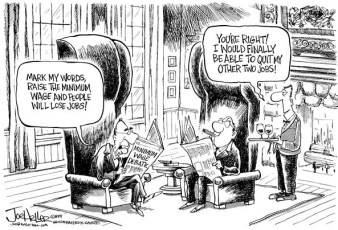
But here’s something you may not realize: you probably encounter them every day too.
They are the people providing services for you behind cash registers and brooms. They are the people caring for your children and you parents. And they are the people who are working long hours for the lowest legal pay and are still often called lazy when they can’t pay their bills.
During the recent debate over the minimum wage in West Virginia, I was reading arguments for and against the increase, and one exchange struck me more than any other.
An individual in favor of the increase stated that he was working two jobs to support his family and that the increase would help.
In response, someone else stated that this person wouldn’t have to work two jobs if he had gotten an education.
As a very educated person, I can personally attest to the fact that an education is not a ticket to a good salary. But even if I hadn’t had to personally struggle with low-paying jobs, I’ve still had many advantages.
I was blessed with a childhood during which my parents cared about my brain development and supported me in school. I was blessed by people who encouraged me when I pursued a higher education. And I’ve been blessed with circumstances that didn’t require me to support others when I was getting that education.
Not everyone has the opportunity or the aptitude to get an education. And even if they did, there would never be enough decent-paying jobs to support everyone who meets the educational requirements.
Besides, many of us depend on people who are willing to work for minimum wage to do the tasks that make our lives easier.
Instead of condemning them, we should thank them.
And a slight increase in their pay is just a start.
Simple Minded
 I used to believe that as we matured, we grew out of our need for simple story lines. The fairy tales we enjoyed as children generally featured characters who were all good or all bad.
As we got older and our brains matured from concrete to abstract thinking, we realized that people and situations are complicated and that life comes at us in a broad spectrum of colors – not just black and white.
That was the paradigm in which I used to believe.
Maybe that’s because I’ve surrounded myself with individuals who have complicated views of the world and I have yet to meet anyone who is even close to perfect. Maybe that’s because my own life and belief systems are complicated. Or maybe it’s because I’m a social worker, which means I see the best and worst in people almost every single day.
For whatever reason, I sometimes forget there are too many people who have unrealistically simple views of the world.
And then life hands me a great big dose of a reality and I am left dumbstruck at how people can justify being judgmental by painting human behavior with broad brushes of right and wrong, good or bad and deserving and undeserving,
Even worse are the people who think they have THE answer for eliminating such complicated issues as poverty and violence.
Just this past week, a colleague asked an individual who works at an organization that serves low-income families what these families need to help them improve their situation. Instead of thoughtful dialogue, the individual began to rant about all the families that “abuse the system.”
Then he suggested that we stop rewarding women for getting pregnant so they can access to benefits.
Call me naïve, but I am highly doubtful that most baby-making situations are the direct result of a female thinking she will be financially secure if she has a baby.
With that said, I’m equally sure that there are women who aren’t concerned about getting pregnant because someone, be it the system or a grandparent or perhaps the father, will step up to help with the situation.
There are women who get pregnant because they don’t think about consequences and there are those who are desperate for love and attention. And there are low-income women who get pregnant because, shocking as it may be, they want to have a family.
And not every mother was single or lacked income when she got pregnant. People lose their jobs, and finding child care is difficult for those who do shift work. People face financial problems because of mental or physical illness every day. Relationships fall apart. Some women are brave enough to leave an abusive relationship only to face financial hardships.
Do you see what I mean about being complicated?
But people who prefer simplistic answers don’t want to consider complicated. They want to devalue the worth of single mothers or low-income families who experience generational poverty.
But my complicated (or mature?) mind can’t understand that way of thinking. Instead, I believe that we are all imperfect humans who have a relatively short time on earth. Some of us are born into better circumstances than others. Some of us had parents who nurtured us and helped our brains develop appropriately. Some of us had role models and grew up in homes where chaos was unusual and unacceptable.
In other words, some of us were just plain lucky, and last I checked, lucky and worthy are two entirely different concepts.
Life is not fair, and instead of wasting precious time and energy trying to balance the scales of fairness (something even my children know will never happen), we should spend our time and energy cheering on and supporting our fellow humans.
That doesn’t mean we should accept that people live poverty or that they have no responsibility for trying to improve their situation – they do. But that does mean that we should provide opportunities to help them improve, and, more importantly, we shouldn’t judge.
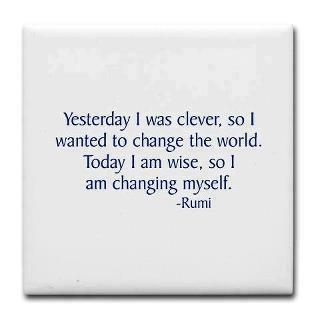
Often, that doesn’t involve changing circumstances or rules for other people. That involves changing ourselves.
That’s not easy. In fact, it’s rather… complicated.
The Cowboy Boots
 For years I’ve been told I have a strong personality and a reputation for saying what I think.
I’ve never known whether those comments are meant to be compliments or insults and whether those traits are strengths or weaknesses.
What I do know is that I can’t hide who I am. There was a time in my life when I did, and I was absolutely miserable.
We had recently moved from Oregon to West Virginia, and I was trying to understand and assimilate into a brand new culture.
I was failing miserably. No matter what I wore, it was wrong. No matter what I said, it was wrong. And no matter what I believed, it was wrong.
Conformity was the norm, and I had never learned to conform. But I tried, which is why I was excited when the theme one day during spirit week at school was “Western Day.”
That, I could do. My family had lived on an Indian reservation, so I could wear the jewelry. I’d been to more rodeos and roundups than I could count.
I chose to go with the cowboy hat and cowboy boots theme.
Only that too, was all wrong.
The other girls wore stylish cowboy boots with rounded toes. I wore pointed cowboy boots that had actually trudged through fields of cattle and horses and probably still had traces of manure clinging to them.
Needless to say, I was ridiculed all day for my pointy boots.
I think that’s the day I pushed the real Trina deep inside. That’s the day I started to nod at statements with which I didn’t agree and keep my mouth shut for fear of being ridiculed. That’s the day when I gave up being genuine for being accepted. That’s the day I became a follower rather than a leader.
Because of that, I hated those cowboys boots. Not only did they represent being a misfit and a nonconformist, they represented not how unhappy I was when I wasn’t true to myself.
Then something amazing happened.
I went to college, and I met people who didn’t need to conform and were happy to express their opinion regardless of what other people thought. And they still had friends.
I went to work and met people who shared my values and were confident in their beliefs. And they still enjoyed life.
And I started working with disenfranchised members of the community who believed in themselves and what they contributed to society no matter what others thought.
And the real me came back: the me that is opinionated and outspoken and who sometimes wears boots that aren’t in style.
But the boots I do wear are walking down a path that I really want to take. And even though that path may be rocky, this opinionated and outspoken woman couldn’t be happier.
She likes that path.
Public Indecency
 I’ve heard people say that writing is like going naked in public. If you write from the heart and are completely truthful, you are also completely exposing yourself. And even though my husband sometimes jokes that I have nudist tendencies, I really don’t.
Exposing my most private thoughts and experiences is incredibly scary. And yet, I still feel compelled to do so.
My need doesn’t come from my ego but rather from my heart. I have a deep-seated desire to make people think.
I won’t lie. Sometimes I fear how my words will be interpreted or that some people will twist them to meet their own needs. And sometimes they do. But, instead of worrying about the critics, I try to focus on all the people who express their appreciation that I am speaking up. And, ever once in a while, the power of my own voice surprises me.
Yesterday, I was talking to Angela, the mother of one of my son’s former classmates. She asked how Shepherd likes attending a brand new (as in newly constructed) high school.
I said he’s very happy, but that there are challenges in trying to establish all new programs, including music and sports. We joked about the football team, and I asked if she had seen a letter to the editor in our local newspaper.
In it, a parent complained that students in the northern end of the county got a brand new school when the students at Martinsburg High School should have one. Her reasoning was that the Martinsburg students deserve a new school because of their championship football and basketball teams.
Angela and I laughed about priorities, but then she said something that took me off guard.
“You are such a good writer, you should write a letter in response.”
I wasn’t just surprised that she knows I write. I was surprised that she thought my words are powerful enough to make a difference.
Instead of acknowledging those thoughts, I simply laughed and said, “That wouldn’t be worth the time.”
She agreed, and our conversation drifted. But my own words stayed with me.
I hadn’t said that writing such a letter wouldn’t be worth my time, I’d said the time. At some point during my journey as a writer, I stopped thinking about my blog as an individual activity and one that involves a community – other writers, readers, friends and colleagues. And in doing so, I also realized I’m not as alone or exposed as I felt when I first started writing.
And for that, I am very grateful.
A Bad Influence?
 If some people are to be believed, I grew up in an immoral home surrounded by bad influences.
My parents not only allowed me to read banned and challenged books, they actually encouraged it.
And look how I turned out.
I have a (fairly) open mind.
I don’t think people of a particular economic status or a particular religion are any better than anyone else.
I don’t believe you can judge other people or their circumstances.
I think that talking about tough and sometimes uncomfortable subjects always does more good than pretending they don’t exist.
And I encourage my own children to read banned and challenged books.
Even worse, I’m actually promoting Banned Books Week during this last full week of September, a time that frightens some people more than the last week of October.
That’s because some people are scared that their children, other children and even other adults might be exposed to books that challenge the way they think and their values. Some are even afraid their children might learn something new – usually about sex, or drugs or violence or mental illness.
And they are probably right.
When I was in sixth grade, the school administration decided to break students into different groups depending on our reading ability. I don’t remember any books my reading group was assigned. I do remember that on certain days, students in my group were allowed to read whatever we wanted.
And the book that everyone wanted to read that year was Forever by Judy Blume,
I have the distinct memory of a group of girls sitting on a pile of mattresses stacked in the corner of the school gym while a girl named Karen read passages out loud. I also remember being a bit shocked but also amazed. I had read hundreds of books, but that was the first time I had ever read a book that discussed sex.
I wasn’t sure what to think of that, and apparently the other girls didn’t either. The book didn’t condemn sex, but neither did it glamorize it. Instead, it laid out potential consequences and made all of us think.
Maybe that is what most scares people who promote censorship: thinking.
They fear that people will think rather than simply behave or believe as they are told.
Apparently, there’s a lot of fear in the United States.
According to the American Library Association, over the past ten years, more than 5,000 books have been challenged for the following reasons:
- 1,577 challenges due to “sexually explicit” material;
- 1,291 challenges due to “offensive language”;
- 989 challenges due to materials deemed “unsuited to age group”;
- 619 challenged due to “violence”‘ and
- 361 challenges due to “homosexuality.”
An additional 291 were challenged due to their “religious viewpoint,” and 119 because they were “anti-family.” (Some works are often challenged on more than one ground.)
Some of my favorite books are on the list of the most commonly banned or challenged books of the 21st Century:
- To Kill a Mockingbird by Harper Lee
- The Color Purple by Alice Walker
- Of Mice and Men by John Steinbeck
- Charlotte’s Web by E.B. White
- Heart of Darkness by Joseph Conrad
- The Wonderful Wizard of Oz by L. Frank Baum
- In Cold Blood by Truman Capote
- Rebecca by Daphne du Maurier
Now a few of my daughter’s favorite books are regularly appearing on the annual “most challenged” lists. including The Perks of Being a Wallflower by Stephen Chbosky, The Hunger Games by Suzanne Collins and Looking for Alaska by John Green.
But here’s the thing protesters don’t get: when my daughter is reading such books, she wants to talk to me about them, and the resulting discussions are incredibly rich. They provide an opportunity to talk about values and beliefs in a non-threatening way.
And those are discussions we’d never have if the books were banned.
I certainly don’t like every book my daughter reads or every idea that is presented in them. In fact, there are some I prefer she didn’t read.
But that doesn’t mean I have the right to say the author’s words don’t count or aren’t meaningful. Doing that is stepping into very scary territory.
Just ask anyone who witnessed the Holocaust.
I want more for our next generation, and because of that, I encourage everyone to go to a library, a bookstore (whether in a building or on the internet) or their own bookshelf this week.
And I want everyone to pick out, read and enjoy a banned book.
365 Reasons to Smile – Day 63
I was once told that members of Generation X don’t have any heroes.
The explanation as to why makes sense.
We are the first generation that experienced the real-time exposure and humiliation of preachers (Jim Baker) and politicians (Gary Hart).
We are the first generation that experienced around the clock media scrutiny, the paparazzi and the loss of privacy.
But I disagree that we don’t have heroes. Our heroes are just different.
My heroes are the women who fought for equal rights. My heroes are the women who shared their own struggles and believed in me. And my heroes are the women who cared more about the needs of others more than their own needs.
I am incredibly fortunate that I personally knew many of these women.
I am also fortunate that others wrote books.
To Kill a Mockingbird is one of those books.
Harper Lee never wrote another because she never had to.
She said everything that needed to be said in To Kill a Mockingbird, and each time you read it, you discover a new truth.
Her one masterpiece always makes me smile.
Day 63: To Kill a Mockingbird Day 62: Green Lights Day 61: My Canine Friends Day 60: Differences Day 59: A New Box of Crayons Day 58: Bookworms Day 57: Being Oblivious Day 56: Three-day Weekends Day 55: A Cat Purring Day 54: Being a Unique Individual Day 53: Children’s Artwork Day 52: Lefties Day 51: The Neighborhood Deer Day 50: Campfires Day 49: Childhood Crushes Day 48: The Words “Miss You” Day 47: Birthday Stories Day 46: Nature’s Hold on Us Day 45: Play-Doh Day 44: First Day of School Pictures Day 43: Calvin and Hobbes Day 42: Appreciative Readers Day 41: Marilyn Monroe’s Best Quote Day 40: Being Silly Day 39: Being Happy Exactly Where You Are Day 38: Proud Grandparents Day 37: Chocolate Chip Cookies Day 36: Challenging Experiences that Make Great Stories Day 35: You Can’t Always Get What You Want Day 34: Accepting the Fog Day 33: I See the Moon Day 32: The Stonehenge Scene from This is Spinal Tap Day 31: Perspective Day 30: Unlikely Friendships Day 29: Good Samaritans Day 28: Am I a Man or Am I a Muppet? Day 27: Shadows Day 26: Bike Riding on Country Roads Day 25: When Harry Met Sally Day 24: Hibiscus Day 23: The Ice Cream Truck Day 22: The Wonderful World of Disney Day 21: Puppy love Day 20 Personal Theme Songs Day 19: Summer Clouds Day 18: Bartholomew Cubbin’s Victory Day 17: A Royal Birth Day 16: Creative Kids Day 15: The Scent of Honeysuckle Day 14: Clip of Kevin Kline Exploring His Masculinity Day 13: Random Text Messages from My Daughter Day 12: Round Bales of Hay Day 11: Water Fountains for Dogs Day 10: The Rainier Beer Motorcycle Commercial Day 9: Four-Leaf Clovers Day 8: Great Teachers We Still Remember Day 7: Finding the missing sock Day 6: Children’s books that teach life-long lessons Day 5: The Perfect Photo at the Perfect Moment Day 4: Jumping in Puddles Day 3: The Ride Downhill after the Struggle Uphill Day 2: Old Photographs Day 1: The Martians on Sesame Street


 Just So You Know