Blog Archives
The Problem With Pretty

(Photo by Matt Cashore, USA TODAY Sports)
Not being much of a football fan, I wasn’t watching when the University of Alabama beat Notre Dame the other night. But being an avid news fan, I couldn’t miss the stories about how sportscaster Brent Musburger raved about Katherine Webb, the beauty queen girlfriend of Alabama quarterback AJ McCarron.
I really didn’t understand all the fuss. Men have been making comments about beautiful women as long as women have been making comments about good looking-men. I may be a feminist, but I also recognize that appreciating beauty is an essential element of human nature.
Initially, I didn’t perceive any problem. At least, I didn’t perceive a problem until I read a story about how Webb and her parents responded to all the fuss.
They weren’t bothered by Musburger’s comments. And why would they have been? Webb is a beauty queen. She struts around in a bikini in front of cameras. She obviously wants to be noticed for her appearance alone, and her subsequent reaction reflected that.
What bothered me was the importance Webb’s parents placed on her being beautiful.
Apparently (according to family), Katherine was once considered an ugly duckling because of a skin condition and her height. Her mother said that being in the Miss USA pageant helped build her daughter’s self-esteem. In other words, her mother believes Katherine’s self-esteem hinges on others’ perceptions of her appearance. And that’s what bothers me about this “news” story.
Self-esteem is complicated. Yet, like so many other issues, people try to simplify it. Several years ago when my children were in elementary school, they attended an assembly about self-esteem.
“What activities did you do? I asked. They looked at me puzzled.
“We didn’t do anything,” my son said. “Some lady just talked to us about how we should have self-esteem.”
We moved on to other subjects, but I was irritated with the school for wasting precious educational hours on some pointless presentation. You can’t teach or preach self-esteem. True and lasting self-esteem is achieved through experiences of success and through overcoming difficult situations. Our responsibility as adults is to provide children with those opportunities.
And self-esteem isn’t an “all or nothing” concept.
People don’t either have or not have self-esteem. Most of us feel confident in one aspect of our life while struggling in others. When I was younger, I had excellent self-esteem about my intelligence and ability to do well in school because I had volumes of success in academics. I had very poor self-esteem in regards to my appearance because I’d been told I looked like a monkey and was a four on a scale of one to ten.
Experience taught me that what others think of my appearance has absolute nothing to do with my value as a human, my capacity to be loved or my ability to be happy.
But those are lessons I learned from decades of life experience. Katherine Webb doesn’t have that yet.
Instead, she is surrounded by people who put an inordinate value on appearance. People who coach her that plastering on makeup to cover a skin condition is essential. People who have convinced her that fitness means being skinny enough to meet society’s standards for wearing a bikini. People who equate being called beautiful with being accepted.
Maybe I’m being a bit judgmental because I was raised to never rely on my appearances for anything. Sometimes that message was delivered in a subtle manner as my mother never bought fashion magazines nor wore makeup. At other times, the message was delivered loud and clear – like the time she told me that I was lucky to be smart rather than pretty. And even though those words hurt at the time, they also held a great deal of wisdom.
When you can’t rely on your appearance open doors for you, you develop other skill sets. And those achievements and successes are what truly build self-esteem.
There is nothing wrong with being beautiful, but there is everything wrong when women allow it to define them.
And that’s the problem with pretty.
When Tears Aren’t Enough
I’m rarely at a loss for words, yet I had nothing to say last week when my daughter asked me the simple question “why?”
Instead of answering, I stood silent as a single tear rolled down my cheek.
 We were visiting the United States Holocaust Memorial Museum.
I’d been there previously, but my daughter hadn’t. She’s been studying the Holocaust in school, so I thought she was mature enough to fully appreciate the exhibits and the message.
For the most part, she was, and we took our time going from floor to floor as the timeline of events leading up to the Holocaust unfolded. Then we got to the floor with evidence of the Holocaust and all its atrocities.
We stood inside one of the small, bare and unheated railroad cars that transported up to 100 people to the concentration camps. We stuck our heads into one of the actual bunks from Auschwitz. And we stood next to piles and piles of shoes that were taken from prisoners right before they were gassed.
But nothing affected my daughter more than a photograph of braids in a larger pile of hair the Nazis had collected. (They stuffed mattresses with the hair collected at concentration camps.)
Braids define my daughter. She almost always wears her long hair in one or two braids, and this month, she taught herself to french braid. That made the photo of the braids very personal.
The photo and her reaction struck me too. They reminded me of how incredibly precious my daughter is, and how incredibly precious all the daughters that died in the Holocaust were.
And because of that, I just couldn’t answer her question “why?”
How can you explain to an 11 year-old girl that some people need to point fingers and find someone to blame for difficult times? She lives in a world where that happens on a daily basis. People find it simpler to blame a person or a group of people than they to understand that situations are complicated and are rarely the fault of one person or group.
How can you explain to an 11 year-old girl that some people will simply accept what they read, see or hear when that message justifies their own belief system? She lives in a world where people spew “facts” that are completely inaccurate just because they were presented as the truth.
How can you explain to an 11 year-old girl that some people place their material possessions and personal bank accounts above the health and safety of others? She lives in a world in which people complain that their tax dollars are being used to help those in need.
How can you explain to an 11 year-old girl that some people are comforted by the belief that there is only one legitimate faith. She lives in a world were so-called Christians condemn other religions while claiming ownership of a morality.
How can you explain to an 11 year-old girl that people are comfortable condemning those with different political beliefs and world views? She lives in a world when people use nasty words to define anyone who thinks differently than they do.
And how can explain to an 11 year-old girl that people who loved each other were killed simply for who they loved? She lives in a world where people still claim that some love is an abomination and sinful.
Any explanation I could provide as to why the Holocaust occurred would simply reflect a world in which she lives. And I didn’t want to scare her.
Instead, I scared myself. And no matter how many tears I cry about the Holocaust, I know they aren’t enough to stop the hate that still exists in the world.
Buck Wild in a Beauty Salon
 If you’ve ever lived in West Virginia, you know all about MTV’s newest “reality show” premiering this Thursday night in the spot previously filled by Jersey Shore.
If you’ve never lived in West Virginia, all the drama surrounding Buckwild has probably either escaped you and/or seemed relatively unimportant. But here in the Mountain State, there is a great deal of concern about how the show will perpetuate negative stereotypes about those of us who live here.
When the first promos began airing last month, there were newspaper articles, editorials and online petitions criticizing Buckwild. Even our junior U.S. Senator and former Governor, Joe Manchin, wrote a letter to MTV asking that the show not be aired. Many argued that his subsequent appearances on national news and talk shows simply provided unpaid advertising.
To me, the show just looks stupid. I never watched Jersey Shore, and I have no plans to watch Buckwild. And yes, I even signed one of the online petitions asking that it not to be aired. But my reasons have nothing to do with how people might perceive West Virginians. There will always be those who believe stereotypes regardless of what they watch, hear or read.
To me, the show is actually more of a reflection on the entire nation than it is of West Virginia anyway. And while I deplore the concept of encouraging young people to do really stupid (and yes, mostly scripted) things for others’ entertainment, what I deplore even more is that there is obviously a large market for such shows. And yes, I know there are many who will tune it to watch Buckwild out of initial curiosity, but that’s not my issue. My issue is with people who watch this type of show for entertainment and for more people to ridicule. This includes television viewers such as the guy who was having his hair cut during my last hair appointment.
Until a few years ago, I never understood why any man would go to a beauty shop, but that was before I discovered the salon where I now go.
The place is more entertaining than anything on television because the people, the conversations and the emotions are genuine. I never complain that my appointments usually last more than two hours, because that time is more compelling than any reality show, particularly those featuring half-dressed young women and cocky young men whose vocabulary is rooted in George Carlin’s monologue about seven dirty words. And, when I think about it, I don’t recall hearing much, if any, cussing in the beauty salon.
Instead, I hear and participate in conversations about real people and real struggles that somehow turn into laughter and hope. The conversations range from cancer, to drug addiction to cross-country motorcycle rides. Everyone in town seems to know the owner and her husband, so there is a constant stream of local characters who come through her doors with their own dramas and issues. Discussions can turn from politics to childhood memories in a matter of seconds. And all of this occurs to some music soundtrack that almost always becomes part of the conversation.
The owner, and my stylist, strives to play just the right music, but she also always has technological difficulties. During my last appointment, she finally gave up when her latest gadget stopped working, and she was forced to turn on the radio to a classic rock station. Of course, the music brought back more memories and more stories.
And then, Manfred Mann’s Earth Band’s “Blinded by the Light” came on, and we all sang along. Sort of. The lyrics have always been unclear, so we all sang a different variations of “revved up like a deuce another runner in the night.” Some bordered on completely inappropriate. In order to resolve the debate, I took out my phone to search for accurate lyrics.
By the time I’d found them, the conversation had already moved on to Buckwild, and everyone was expressing an opinion. That’s when the clean-cut gentleman who had been sitting quietly while his hair was being trimmed said, “I think it looks entertaining, and I’m looking forward to watching it.”
For the first time, the shop went quiet except for Led Zeppelin playing in the background. Everything just seemed to stop. And then, just as quickly, the conversation resumed. Only no one said anything about Buckwild, instead the owner started telling a story about the recent Eddie Money concert.
No one acknowledged the man’s comment, and I don’t know whether he was oblivious to the slight or if he even cared. What I do know that everyone else’s reaction spoke volumes. And I don’t think the silence was so much an indictment on his opinion as it reflected a deep sadness that someone, surrounded by real characters, real conversation and an ongoing celebration of the reality of day-to-day life, would admit he wanted to simply observe the exact opposite.
Hours later, when I was thinking about the incident, I realized how we often lose sight of all that is meaningful around us because the media is trying to sell us a completely different definition of what makes life interesting.
I’m just glad there are people who still don’t buy that, and instead enjoy the simple pleasures of going a bit crazy, or buck wild, in a beauty salon.
Happiness Should Be Like a Dog With a Snowball
 The year 2012 ended with a white Christmas, which is fairly unusual here in the Eastern Panhandle of West Virginia. But then, Mother Nature hasn’t been very predictable, or even very kind, over the past twelve months. Her random and sometimes disruptive behavior was fitting for a year when too many people experienced upheaval and loss. But just like Mother Nature, 2012 also brought bright and sunny moments along with the storms. All serve as reminders of the lessons we need to learn and/or remember.
Lesson 1: We Should Experience Happiness Like a Dog with A Snowball My German Shepherd, Rodney, adores the snow. He loves bounding through it. He loves smelling it. He loves eating it. And most of all, he loves playing in it. As a true fanatic for all things that can be thrown and caught, when the white stuff is on the ground, he begs for someone to pack and throw a snowball.
This Christmas, I noted how thrilled he was with every snowball he caught, even though each fell apart or dissolved in his mouth. Instead of being disappointed when a snowball was gone, he was just as eager for another, which he enjoyed with no concern that it too would disappear.
We should all appreciate our happy moments just like my dog appreciates snowballs. They may be fleeting, but instead of worrying that they may not last, we should enjoy each moment and remain steadfast in our belief that there will always be more.
 Lesson 2: We Can’t Always Control Our Circumstances or Protect Those We Love, but Any Attempts To Do So Are Always Good for a Laugh At the end of June, the Eastern Panhandle, like the rest of West Virginia, was hit unexpectedly by a derecho, or a land hurricane. Most of us had never heard of such a storm prior to the event, and since there were no warnings, we didn’t initially realize the severity of what had happened. We discovered the extent of damage the next day when we saw the downed trees and power lines and when many people experienced a loss of electricity for weeks.
The event left its mark, so in October, when meteorologists called for the Eastern Panhandle to be in the path of Hurricane Sandy, most of us wanted to be prepared. Some of us over-prepared. And some of us even freaked out… a bit.
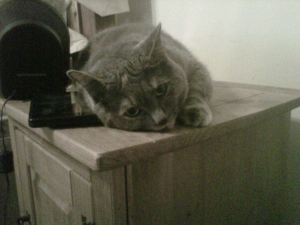
For my part, I decided my family should ride out Sandy in our basement to avoid the hazards of trees crashing through our roof. We were all safely downstairs when I realized that Skitty, our cat, wasn’t with us. Since Skitty has a tendency to hide in unusual and hard-to-find places, I immediately assigned all family members to search for her. As the wind howled and the trees creaked, we took turns calling her name and shaking a bag of cat food, which is usually the best way to get our over-weight feline out of hiding. This time it didn’t work, and I began to worry that my cat, who is generally too lazy to go outside, was battling the elements.
Just as my anxiety got the worst of me, my son, in his usual dry and sarcastic way, told me that the cat was safe. As it turns out, the only thing she was battling was her disdain for a family who didn’t realize that she’d taken shelter in the basement long before the rest of us. My cat had the sense to do what she needed to do and not be bothered by the drama that surrounded her. I should have done the same.
I hadn’t had enough warning to worry about the derecho, and we managed through the storm and the aftermath just fine. I had way too much warning about Sandy, and even though we also managed through that storm and aftermath just fine, my stress level had gotten so high that even my cat chose to ignore me.
Sometimes, we get so wrapped up in either avoiding a situation or in worrying about what might happen, we simply forget that we can only do so much, we must accept that some things are beyond our control and we should believe in the sound judgment and appropriate actions of others. The results won’t always be what we hope for, but too much worry is only good for providing memories that allow us to laugh at ourselves later. 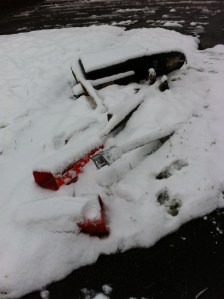
Lesson 3: Life Rarely Goes According to Plan, but When Bad Things Happen, We All Have a Great Capacity for Resiliency and Recovery No one in my family expected the snow that arrived on Christmas Eve, and, even after it began to fall, none of us expected it to last long. But last it did. And in the midst of final preparations for our Christmas celebration, the snow covered the grass and then it covered the roads.
When we realized we were going to have a white Christmas, we celebrated by taking a family walk with Rodney. Unfortunately, Rodney was more excited than all of us, and the jumping, the barking and the lunging, drove my husband crazy to the point he just wanted to go home. Instead of enjoying the beauty of the untouched snow, we were trying to control an overly enthusiastic dog. I worried that our Christmas Eve would become a battle over the dog.
As Rodney began to calm down, we began the climb up the hill on the far side of our neighborhood. When a truck came speeding down the snow-covered hill, we immediately jumped off the road and into a neighbor’s lawn. And then we heard loud thumps and bangs. We turned to see that the truck had gone off the road and taken out two mailboxes and multiple newspaper boxes. Packages littered the ground, and I was relieved that Rodney’s behavior was all but forgotten.
We empathized with the driver and the home owners that such an incident happened on Christmas Eve. But when put in perspective with the loss some families faced this Christmas, the event was far from tragic. For many, Christmas isn’t always just a reminder of family traditions and family warmth. It can also be a reminder of could-have-beens, might-have-beens and regrets. And yet, most of us still believe in the magic of the holidays.
Yesterday, as I was walking up that same hill with Rodney during yet another unexpected snow storm, I noticed the mailboxes were already back up. As is true with human nature, the owners were trying to get everything back to normal. Seeing the mailboxes standing so quickly after witnessing their near demise less than 36 hours earlier was a reminder that no holiday is ever perfect. But planning for perfection only leaves room for disappointment, and planning for disappointment only leaves room for anxiety. But planning to enjoy life’s imperfections only leaves room for joy.
I plan to carry that lesson with me forever and to look forward to whatever the weather, and life, have in store for 2013.
2 and 1/2 Foolish Wishes
 If I had a genie that granted three wishes, I would have almost wasted them this past week.
Instead I only hypothetically wasted two and came very close to wasting the third.
My preoccupation with genies and wishes began when my daughter told me about a recent in-class writing assignment. She and her fellow sixth grade students were given the scenario that they’d released a genie from a lamp and had three wishes to use in a week.
“The only rule,” my daughter explained as I was driving to her dance class, “was that we couldn’t wish for more wishes.”
“What about wishing for magical powers?” I asked.
She thought for a minute then said, “It depends on what kind of magic.” She didn’t elaborate, so we sat in silence for a few minutes.
Then I had to ask, “Well, what were your wishes?”
She turned and gave me an exasperated look. “You’re not going to write about this are you?” she asked.
I didn’t think I would, so I didn’t really lie. “Of course not,” I said.
“I wished for a rainbow-colored unicorn, a black Pegasus like Blackjack from the Percy Jackson books and telepathy,” she said.
At the time, I was simply amused by her choices, but then my imagination took hold and I began to pretend that I too had found a magic lamp with a genie who granted three wishes. I was sure my wishes would be much more meaningful and beneficial to society.
I was wrong. Despite what I thought were good intentions, my wishes were probably more foolish than my daughter’s.
My first was for everyone to see the true colors of a person I’m pretty sure has narcissistic personality disorder. Granted, my clinical training is limited to a few classes in graduate school, but he has most of the of the classic characteristics. He not only lies but also he believes his own lies. He manipulates yet does his best to convey that others are the ones being manipulative. He expects everyone else to go along with his plans, doesn’t listen to anyone he doesn’t deem worthy, takes advantage of others and exaggerates his skills and talents. This week, when I realized how many people either don’t recognize or don’t want to recognize this, I’d had enough. I wished everyone else could see through the bravado. But if that happened, I later realized, his gigantic ego would be injured but he’d still carry on with his life. Others could be hurt much more, and then I’d be as selfish as he is. That was an incredibly foolish wish.
My second wish came after looking at a Facebook news feed and witnessing what I deemed some incredibly stupid posts. Some people were sharing inappropriate details about their personal life and health. Others were posting photos of themselves that screamed “pay attention to me.” And then there were the completely inaccurate and misleading political posts. I wished that Facebook had an automatic editor that screened inane and inaccurate posts then provided genuine feedback as to why the edits were made. I smiled at the thought of opening up Facebook to a much more rationale, intelligent and genuinely humorous news feed. But then I realized what a damaging and self-righteous wish that was. What I was really asking for was a limit on free speech. And no matter how inaccurate, hurtful or stupid the information is that people are now putting on the internet, many Americans fought and even lost their lives for their right to do so. I had wasted another wish.
That’s why my third wish came very close to being a wish to get rid of mirrors.
Mirrors generally don’t benefit society. They either encourage vanity or dissatisfaction. After my first two wishes, I didn’t want to look in the mirror anyway. My avoidance of a mirror had nothing to do with my outward appearance and everything to with lifelong aversion to self-absorbed and self-righteous people. If I looked into the mirror after my first two wishes, I would have been face-to-face with just such a person. But maybe that’s why I wanted mirrors eliminated.
I was on the verge of making the mirror wish when I received an email that jerked me back to reality. The son of a friend had been very seriously injured, and all anyone could do is pray. In comparison, all my wishes seemed trivial and ridiculous. I realized we are all on this planet together and finding fault with each other really doesn’t do us any good in the end. Neither does thinking that we know better than others.
I’m still in the process of learning that lesson the hard way, but I also have one imaginary wish left. If it were real, I’d use it to wish we all had just a bit more patience and understanding. No matter how I look at it, I don’t see how this is foolish. It doesn’t break the rule of wanting more wishes, but it could be magical and transform humanity.
My File Cabinets Full of Men
 I completely appreciate why the internet is buzzing about Governor Romney’s claim during Tuesday’s presidential debate that he had “binders full of women.” But there’s also a part of me that identifies with his statement.
I, after all, have file cabinets full of men.
While Romney said he used the binders to identify qualified candidates for key positions in state government, my file cabinets serve an entirely different purpose.
I use them to store reminders of all the men that are NOT qualified to be in any part of my life.
I started my first file when I was a young girl and a boy told me that men were more important than women because they got to keep their last names when they got married. I was devastated, but I was also angry. As a result, that boy had the honor of being the first male I ever put in a file cabinet.
Over the decades, I’ve filled several file cabinets with men. Some of the most memorable include:
* The minister who insisted my friend keep the word “obey” in her wedding vows.
* The agency director who tried to prevent me from getting a management position because I breastfed my baby during a meeting that I graciously attended while on maternity leave.
* The community leader who always referred to me by using my husband’s last name, even though he knew I had never changed mine.
* The manager who issued a dress code that all female employees must wear pantyhose with skirts or dresses. (For the record, the dress code was issued during the summer when I was eight months pregnant.)
* The nonprofit executive who, with a staff of all women, refused to let mothers take sick leave when a child was ill or had a doctor’s appointment. At that time, we were all granted a set number of days for both vacation and sick leave, but vacation was much more limited. The director’s exact words were, “letting mothers take sick leave for their children isn’t fair to the employees who don’t have children.”
* The supervisor who blatantly promoted young, attractive females over more qualified, middle-aged women.
I’ve recently been considering adding another man to my file cabinets. While this man claims to support women, he’s never demonstrated any real understanding of the often life-long battle many of us have faced. He’s skirted around the issues of equal pay for equal work and reproductive rights. And even when he tries to express his appreciation about the need for equality in the workplace, he falls short by indicating that women don’t want to work long hours because they have to go home and fix dinner.
Yes, this week I’m definitely thinking about adding that man to my file cabinets. I’m just not sure if his binders will fit too.

Lessons in Trees from the View on a Bicycle Seat
 As a child, I always felt at home among the trees and full of exuberance on my bike.
As an adult, not much has changed.
While my father, a forester, no longer teaches me about the secrets hidden in the shape and color of a leaf or in the texture of bark, I am still enamored of trees. And riding a bike is still one of my favorite pastimes. Few things bring me greater joy than taking a lazy bike ride among the beauty and wisdom of the trees.
I had that opportunity this past Sunday when I took advantage of a gorgeous autumn afternoon to ride my bike and attend to the lessons of the trees.

Lesson 1: Sometimes when you blend in, you bring out the best in others. On Sunday, this tree next to the church across from my neighborhood had started to model its fall colors. It was amazingly beautiful, but its splendor didn’t lie simply in its appearance. Even though I drive by that church every day, I’ve never paid much attention to it. But the hue of the red leaves was a perfect match to the color of the bricks, and I was struck by the church’s design.

Lesson 2: Loss and suffering are the best reminders of all that we still have. The past year was a tough one for trees. Almost exactly a year ago, we were hit by a bizarre October snowstorm that knocked down trees still heavy with green leaves, including two in my own yard. In June, we lost even more trees to a land hurricane, also known as a derecho. For weeks, the sound of chainsaws in the morning was as common as the sound of crickets in the evening. I hated that sound. Every time a chainsaw revved up, I knew we were saying goodbye to another tree. But riding my bike on Sunday, I passed hundreds of trees that had never been knocked down, and I felt a deep sense of gratitude for all those still standing.

Lesson 3: Happiness comes from accepting your circumstances and recognizing that, at times, your place might simply be to support someone else. These two trees in an expansive cornfield have always seemed out-of-place to me, yet each year they grow stronger together. From some angles, they are two distinct trees that mirror each other. From other angles they appear to be one. But from all angles, they remind me of two people who hold each other up in a tough environment that could easily defeat someone left all alone.

Lesson 4: The greatest sense of belonging comes from owning your own style and surrounding yourself with people who appreciate differences. Every time I pass these three trees on the edge of a field, I imagine them as a group of women all throwing their arms up in laughter. Each is unique: one is flamboyant, one is plain with a toddler at her knee and one is aging rapidly. Despite their differences, I see them as a united group that delights in life’s simple pleasure of friendship.

Lesson 5: Everyone has scars, but we can choose to let them weigh us down or strengthen us. Several years ago, I fell in love with a magnificent tree that simply owned the landscape. When it was hit by lightning, I was sure it was damaged beyond repair. About half the tree was dead, and several branches hung black and leafless. But this tree didn’t give up and has slowly recovered. It’s now smaller and has a different shape, but in my eyes, this survivor is a giant.
Yesterday, I took the same bike ride that I did on Sunday. The trees had already changed dramatically. Some displayed brighter colors of red, orange and yellow while others were losing their leaves. Most shone in a different light. But these changes gave me one more lesson: savor every beautiful moment, because nothing will ever be exactly the same again.

My Brief Encounter With the Perfect Imperfection of Maya Angelou
I am an incredibly imperfect woman living in a society of people who hide their imperfections much better than I do.
Some are better able to hold their tongues. Others have achieved such brilliant success that it hides any inadequacies. And then there are the people who spend a great deal of time and energy covering up any deficiencies.
Since my tongue often seems to engage before my brain, my successes are nothing out of the ordinary and I choose to spend my time and energy just being me, I don’t mind that people know I’m far from perfect.
Despite that, I’m always striving to become a better person. For that, I need inspiration, which most often comes from other admittedly imperfect women.
These are the women who make me believe.
They make me believe that even those of us who are flawed can accomplish great things. They make me believe that past mistakes and missteps are the fundamental ingredients for a rich life. And they make me believe that, despite injustice and unfair odds, believing in possibilities can only result in magic.
My inspiration comes from women who have overcome barriers and have an honest compassion for those who are still struggling.
And, of course, my inspiration comes from women who can express all this in writing — women like Maya Angelou.
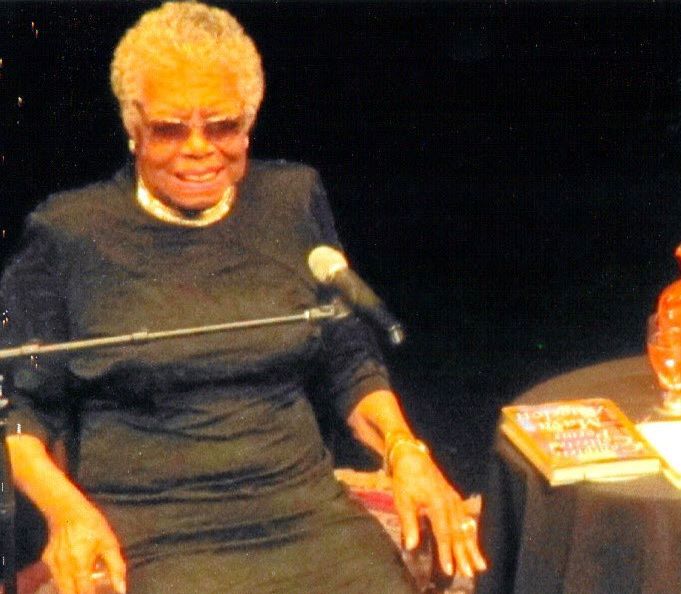
Despite her splendid poetry and prose, her insightful observations of human behavior and the reverence she must encounter everywhere she goes, Maya Angelou doesn’t deny who she is: an imperfect woman who has struggled but, through the support and encouragement of others, done the most she can with the gifts bestowed upon her.
Last week, she shared both her humility and her humor with an audience in Charleston, West Virginia at an event celebrating the 100th anniversary of the YWCA. Thanks to an invitation from a friend, I was fortunate to be in the audience as she poked fun at herself, challenged all of us to empathize with those who are different and encouraged us to think of possibilities.
She talked about her years of silence following the conviction and murder or the man who raped her as a young girl and how poetry freed her. She encouraged us to always find something to make us smile and, when we can’t, to write about something that does. And, she lectured about not blaming others for past injustices but rather thanking those who endured them and taking responsibility for future generations.
In short, she was amazing. I was either laughing or crying the entire time she was speaking.
And then she read her poem “A Brave and Startling Truth,” which she wrote in honor of the 50th anniversary of the United Nations. About halfway into the poem, she lost her place. She faltered, fumbled then regained her composure as she finished.
I know during those moments of silence while she searched for her place, all of us seated at the Clay Center for the Arts and Sciences were holding our breath. She had earlier reminded us that she is 84 years old, and that fact sunk into our brains and into our souls.
The moment was brief, and it passed. But it had still occurred.
Yet, at the end of the evening, Dr. Angelou held her head high, showed appreciation for the applause and ended her talk with dignity.
Some might think she was trying to cover her mistake, but I know she was simply demonstrating why she is so great. Instead of being defined by her mistakes and struggles, she soars through self acceptance and overcoming challenges.
If that’s not inspiration, I don’t know what is.
The Backside of a Bull and a Garden Full of Rodents
 I had an unexpected epiphany after spending time with a bronze bull and a garden full of rodents in the financial district of New York City last month.
The moment came at the end of a long weekend celebrating my daughter’s upcoming birthday. She, her best friend, her best friend’s mother and I packed a lot into 48 hours. By Sunday morning, when we were exploring Lower Manhattan, we had slowed considerably.
The city, on the other hand, wasn’t slowing down at all. People crowded narrow sidewalks under the watchful eyes of police officers on every corner. While the officers graciously responded to requests for photos with tourists, their ability to give good directions was questionable.
Despite their help, we were finally able to locate the Charging Bull on Wall Street. Since the bull had never been on my list of sites to see, I hadn’t expected the frenzy of people mobbing it for photos. Many were lined up behind the bull to touch its anatomically correct underside for good luck.
The eleven-foot-tall bronze sculpture is supposed to symbolize aggressive financial optimism and prosperity. Last year, when the Occupy Wall Street protests began, metal gates were set up around the bull to prevent it from harm. Now, the public can once again touch it, but judging by the police presence, there’s still concern about the safety of the more than 7,000 pound bull.
Personally, I think the concern about vandalism is a bit misplaced. I’m more worried about the almost worship-like reverence people demonstrate for an icon that represents an industry focused more on the value of money than the value of people.
Don’t get me wrong. I like money. I just think that, as a society, we’re too fixated on who has it and who doesn’t.
To me, the bull represents a culture rooted in money and the immense appeal that has. But when people go to great lengths to touch that lifestyle, they may miss seeing what’s really going on around them.
 For example, just feet from the Charging Bull, there’s a garden full of rodents living off the crumbs of others. The mice live among the vivid red flowers in the circular garden around the fountain in Bowling Green Park where we ate our lunch.
What seemed like a quiet public garden was actually teaming with dozens, if not hundreds, of mice. When bits of bread, meat, tomatoes and even cucumbers dropped, they would scurry out from under the blossoms, grab their feast then rush back for cover.
Many of the people intent on enjoying the beautiful, late morning sunshine didn’t even notice the mice. Others were completely disgusted by them. No one wanted to touch them, and very few people wanted to feed them.
But my daughter and I were fascinated.
Although seemingly dependent on others for their livelihood, the mice certainly weren’t lazy. In fact, the were quite industrious. And even when vying for the same crumbs, they seemed to respect each other’s efforts.
That’s when I had my epiphany.
The mice represent all the low-income people who live and work right alongside those who are more financially secure and influential. They represent all those people on Wall Street who clean bathrooms and pick up trash instead of buying and selling stocks and bonds.
And even though they live in the shadow of a bull that people fondle for good luck, they also represent a great deal of dignity.

A Leap From The Top Step
On May 14, 1972, I got my first real lesson in fear.
That’s the day my uncle, my mother’s only sibling, was killed in a plane crash.
That’s also the day I stopped leaping from the top step.
Before that day, I loved jumping off the front steps of our small rental house on the Indian Reservation where my father worked. The joy of the  jump was partly due to a sense of flying and partly due to the risk I was taking. More often than not, instead of landing on my feet, I’d land on my hands and knees. But the scraped knees and elbows were a small price to pay for bragging rights.
According to my brother and his friends, walking down the steps was a sign of weakness. Jumping was the only acceptable means of getting off the porch, and the jump had to be from the top step. Even jumping from one step down was considered cheating and a more egregious offense than forgetting to jump at all.
So, every time I walked out the front door, I would hurl my short, five-year old legs over five steps and land in various positions on the sidewalk. Then, I’d brush myself off and walk away with a sense of pride.
That all changed when my uncle crashed his twin-engine plane.
That Mother’s Day started in an ominous way. It began when my dad and mom, a burgeoning journalist, woke up my brother and me before dawn and bundled us into the back of our red, Ford pickup. There had been a train wreck, and we were going to the site. My dad, brother and I stayed in the truck while my mom, notepad in hand and camera around her neck, wandered off to interview people. Sitting in the truck, my imagination ran wild with thoughts of who and what Mom was encountering.
Hours after we had returned, the phone ran, and my mother disappeared for a long, long time, When she finally returned to our living room, she told us “Uncle Lowell was in a plane crash.”
My imagination, already quite stirred up from the morning’s adventure, envisioned all of the injuries he could have sustained. For some reason, I became fixed on the idea that he had, at a minimum, broken his leg. The possibility that he’d died never crossed my mind, and I don’t even remember how or when my mother finally told us. I do know that by the time she did, I’d so worked myself up about the horrors of broken bones that dying seemed like a great alternative.
I’d also decided that, based on my lack of coordination, the next time I jumped off the top step, I would most certainly break my leg.
That fear ate at me, and the next time I had to go down the steps, I couldn’t jump. I was frozen, and the ground seemed to be a long, long, long way down. I eventually jumped from the second step from the top, but I would never leap from that from the top step again.
Now, forty years later, a five year-old’s leap, or lack of a leap, seems insignificant. But it’s not.
That experience taught me about regret and about how inane decisions are made out of fear, limited information or both. It’s also taught me that sometimes we get so wrapped up in an imaginary fear that we are blinded from seeing the genuine and more critical facts.
I still fall into the trap of letting unfounded fear affect my decisions. But more often than not, I remind myself of the joy that comes from leaping off the top step and the pride that comes from going outside my comfort zone.
And then I jump.


 Just So You Know