Blog Archives
The Greatest Tragedy
My family had just celebrated my son’s first birthday when the nation’s attention focused on a high school in Colorado where two students killed 13 people.
My daughter was less than a month old when terrorists struck the Twin Towers .
I’ve been a mom for 17 years, and I have absolutely no concept how it feels like to know my children are safe.
I can only hope the odds that they are more likely to graduate than they are to be the victims of horrific crimes.
My children grew up in a world where violence is a constant. They’ve seen news footage of shootings in elementary schools, high schools, colleges and movie theaters. They only know a life in which such events are just another blip in an ongoing story about how unhappy, angry and unstable people resort to horrible acts to express their feelings. Phrases such as gun control and school shootings are a part of their every day vocabulary.
But despite practicing school lockdowns and opening their bags for inspection everywhere they go, my kids don’t focus on what others might do to them. My son is concerned about his SAT scores and my daughter is trying to decide what song she should sing for an upcoming audition. The threat of violence is just the constant white noise that constitutes the background of their lives.
But not so much for their parents.
On the same day that a television reporter and cameraman were shot during a live newscast, my son wore a blazer to school.
He is part of the morning news crew at his school television station, and he was going to be on air.
He left the house at about 6:45 preparing for a live broadcast while at the exact same time, another live newscast had just ended in violence.
White noise for him, another reason to worry for his parent, and another opportunity for pundits, politicians and every day people to argue about how to prevent another such incident.
By the end of the day, my Facebook feed was full of posts from people arguing for and against gun control and pontificating about mental illness and violence.
And I said nothing because I’ve come to realize my words wouldn’t matter.
People argued after Columbine. People argued after Virginia Tech. People argued after Sandy Hook.
And despite all that arguing, the shootings and violence continues.
I’m not writing this because I have a brilliant idea how to prevent such events.
I’m writing this because when my kids left for school this morning, the white noise in their lives was louder than usual and my concern for their safety was heightened.
I am writing this because I am tired of everyone talking at each other, disagreeing with each other and embracing their hatred and anger toward anyone who doesn’t think like they do.
And I am writing this because my children have grown up with such behavior and have come to accept it.
And that is the greatest tragedy of all.
The Soundtrack
I will never claim that I can sing well.
In fact, I’ve been told by numerous people on numerous occasions that I should probably limit my singing to the shower and the car – when I’m alone.
I’ve heard their complaints, but I can’t help constantly belting out whatever song comes to mind.
Sometimes, my outbursts are prompted by a conversation that contains the lyrics to a song. Sometimes they are prompted by a situation. And often, they are prompted by a memory or emotion.
Despite my lack of musical ability, I live as though my life has a soundtrack of songs that represent a moment or a person I can never forget. On occasion, I even append my soundtrack with a song that I haven’t heard in decades.
And so it was a few weeks ago when I was sitting around a campfire at a work retreat. Having been in both 4-H and Girl Scouts growing up, I thought everyone knew camp songs.
They don’t.
With apologies to no-one, a co-worker and I tried to lead the group. We failed miserably.
But I had fun as the memories associated with the songs came flooding back. Ironically, the one that made me feel most nostalgic was about appreciating the present.
As a teenager, I became life-long friends with a girl named Sandy from Wyoming. We met one summer when we were assigned the same host family during a Girl Scout Wider Opportunity. For whatever reason, we became fast friends. While I don’t remember if she was a better or worse singer than I was, I clearly remember the joy we had singing John Denver’s “Today.”
At the time, we realized that we had limited time to spend together and made “Today” our theme song.
And yet, I never added it to my soundtrack until this summer… a summer when I’ve thought a great deal about the passage of time.
Maybe that’s because next summer my son will leave for college.
Maybe it’s because my daughter, my youngest, has now started high school.
Or maybe it’s because I was already in college when my mom was my age, and, at the time, I thought she was well past her prime while I’m still wondering what I’ll be when I am a true adult.
For whatever reason, I’ve realized how incredibly precious today is.
The Beatles classic “Yesterday” may have been more popular than John Denver’s song, and “Tomorrow” is known by every little girl who dreamed of being on Broadway.
But life is really all about “Today.” We can’t change or go back to yesterday. We can plan and hope for tomorrow, but we certainly can’t enjoy it.
Which leaves us only with today to thoroughly experience all of the joy, sorrow, silliness, beauty, and complete randomness that life always provides.
My soundtrack may be my full of music from all of my yesterdays, but adding “Today” is a reminder of how to live right now.
All of My Lives
I felt a bit like a cat with nine lives as I glanced at my watch on Friday night.
I hadn’t recently escaped a serious accident or overcome a life-threatening illness.
I was just sitting in a high school auditorium watching my son and his friends turn what was intended to be a serious ceremony into something that more resembled a comedy routine. He and his fellow senior marching band members were supposed to be “jacketing” the freshman, which involved putting them into their uniforms for the first time.
As the antics on stage wrapped up, the band director made a short speech. He told the newly inducted band members that they now have a ready-made family as they start their high school journey.
At that point, I could feel my eyes begin to water and my chest tighten. What seemed like only yesterday, my son had been one of those freshmen. Now, in a few short months, he will be graduating from high school.
As I sat in that auditorium, I promised myself I would do all I can to treasure the next few months and the memories that have yet to be made.
That’s when I glanced at my watch and realized that more than 300 miles away, my 30 year high school reunion had just started.
As my son was animatedly and comically stepping into his last year of public education, my classmates from three decades earlier were reminiscing and remembering that time in our lives.
I had absolutely no regrets about choosing to celebrate my current life rather than a previous one.
At the same time, the poignant reminder of the quick passage of time is what made me feel a bit catlike.
My high school years are part of a past life.
I long ago left behind the girl I was in high school.
She existed in my life before college – a time when I learned to form my own opinions instead of parroting the most popular ones.
She existed in a life before I stumbled and failed at numerous adult relationships.
She existed before I learned to keep my mouth shut in order to survive horrible jobs with mean-spirited bosses because I needed a paycheck more than I needed to be happy.
And she existed before I became a wife, a mother and a person who strives to live a life of joy rather than one of fear, to speak out for compassion instead of accepting misunderstanding and to take risks rather than live with regrets.
I’ve only arrived here after surviving several lives during which I let fear win, silence overpower truth and safety override risks.
But I’m here now, and I’m sure my present-life friends and colleagues wouldn’t recognize or even believe whom I was in my life as an 18 year-old.
I can only hope the same for my own children. Although I love them dearly as they are today, I don’t want them to live the same life forever.
Last Friday, as I watched my incredibly goofy son on stage, I also knew that boy won’t always exist.
Life isn’t supposed to be static.
It’s about adapting to change. It’s about seeking out and enjoying as many experiences as possible. It’s about developing new relationships. Most of all, it’s about embracing the inevitable fact that, while nothing stays the same, each moment and life stage should be appreciated for what it can provide.
I wish I could give that advice to the me I used to be, but I can’t. All I can do is share it with my children.
Whether they choose to listen is up to them.
Something tells me that, in their current lives, they probably won’t listen or understand.
But someday, in one of their future lives, they’ll know exactly where their mom was coming from.
The Language of Our Fathers
The first time I truly understood why I had married my husband, we had already celebrated more than 15 wedding anniversaries.
The moment of my realization wasn’t romantic nor was it private.
In fact, we were surrounded by others at a neighborhood Halloween party.
 The dads were standing in a small circle talking, and I just happened to be nearby when one of them pulled out his phone and read a joke to the other dads. I can’t recall the punchline, but it had something to do with President Obama being black. As the other dads laughed, my husband turned his back on them and started to walk away.
“What’s wrong?” one of the other dads asked. “Do you support Obama?”
“This has nothing to do with politics,” he said. “It doesn’t matter if I support him or not. That was a racist joke and laughing at it was racist behavior.”
After their initial silence, they mumbled excuses mixed with denials.
My husband walked away anyway.
That is the exact moment when I realized why I decided he was “the one” all those years ago.
Despite our extreme personality differences, he speaks my language.
It is a language that embraces differences and dismisses labels. It’s a language that appreciates the incredible beauty of being unique and despises the use of violence.
Most of all, it is a language that conveys the perils of remaining silent at even the smallest acts of bigotry.
I was thinking of this lan guage when I woke up Thursday morning to the news that nine people had been slaughtered at a historical African-American church in Charleston South Carolina because of the color of their skin.
I couldn’t help but wonder if their killer had told racist jokes and if people who claim they are not racist had laughed at them.
My gut told me they had.
Apathy can be as dangerous as a gun, and yet it is something many of us use on a regular basis to help us “get along” and “not make waves.
It is also something that can be broken with only a few words, like those my husband spoke at a Halloween party years ago
On Father’s Day, as most of us take time to thank our dads for all they’ve done, I want to thank my husband for teaching my children his language.
It is a beautiful language because it is also full of hope. When all the voices who speak it join together, maybe, just maybe, they can begin to change the world.
The Thieves
For years, I allowed thieves to steal something precious from me.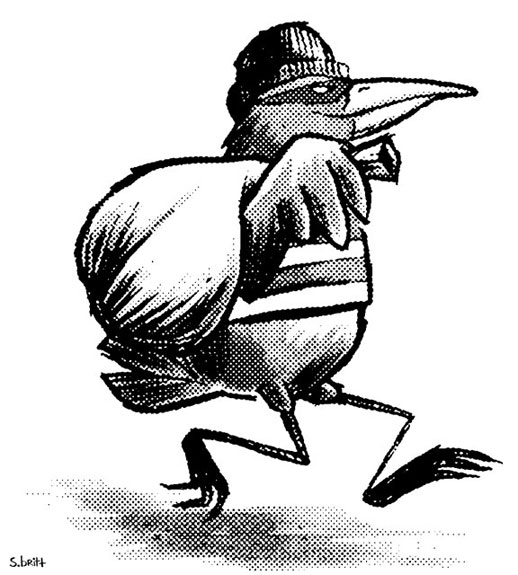
They didn’t take any material possessions. The thieves weren’t interested in those.
Instead, they wanted what I treasure most: my individuality and integrity.
I shouldn’t be bothered by people who want to steal something they have so little chance of getting.
But, for whatever reason, some people behave like crows who pick at whatever bright and shiny object they see. The more someone else shines, the more they pick.
And so they picked at me.
They picked at my efforts to change a system that is obviously broken but in which they feel comfortable. They picked at my tendency for being outspoken by claiming I try to be hurtful. Worst of all, they picked at my reputation by twisting, and sometimes completely changing, my words, actions and intentions.
Pick. Pick. Pick.
Thankfully, I have fairly thick skin so my individuality and integrity are still in tact despite their best efforts.
But that doesn’t mean they didn’t steal something, because they did.
They stole my time.
Even worse, they were able to take it because I let them.
I let them take my time when I worried if others would believe their stories.
I allowed them to take more of my time when I complained about them to others.
And I simply handed them my time while I wondered what I’d done to deserve such treatment.
In hindsight, I should not have given them a darn thing, especially something as precious as time.
I should have realized that there will always be people who don’t like me, what I stand for or what I hope to accomplish. And some of those people, like crows, try to find happiness by taking someone else’s.
Ironically, no one can find happiness by taking what doesn’t belong to them any more than we can find happiness worrying about what others think of us.
Life’s too short to worry about what the thieves might attempt to steal.
Instead, I’m going to enjoy all the thieves might covet while offering to share my happiness with anyone who cares to ask.
That’s a much better use of my time.
Anger Management
Despite all the warnings against doing so, I went to bed angry the other night.
I was mad that cancer had taken the life of a good friend. I was mad at a self-serving state legislature that is pandering to special, extreme interests rather than improving the lives of Mountain State residents. I was mad that years of previous hard work had been torn apart by people who care more about touting their own importance than about doing the right thing. I was even mad that I had spent the day fighting with my work computer, which was eventually diagnosed with having either a bad virus or a bad hard drive.
Most of all, I was mad that not one of those situations was within my control.
And so, I lay awake thinking that, since I couldn’t change the random nature of life or the priorities of other people, I could at expose the selfish nature and behavior of others.
But no matter what scenario I imagined, I was never satisfied.
My friend would still be dead. Constituents would still vote against their own self interest and politicians would still prey upon emotional rather than rational voters. All of my hard work would still lie in ruins at the hands of people who never really tried to understand my efforts, and my computer would still be on a shelf waiting for repair.
And I would still be angry.
My mood hadn’t improved by the time I arrived at work the next morning.
Knowing that I had to put my anger aside, I spent the first few minutes in my office repeating one of my favorite quotes, “Holding on to anger is like drinking poison and expecting the other person to die.”
Saying those words to myself wasn’t sufficient, so I started sharing them with others.
Then something miraculous happened.
The people with whom I shared that quote not only empathized with me, they also shared their own anger.
In doing so, we talked about our values and about not feeling valued. We talked about how difficult people are often doing their best and just don’t know or have the skills to do better. We talked about our own successes and all that we hope to achieve in the future.
And when we spoke, we didn’t use flowery language that made us sound noble. We spoke from the heart with words that are best left behind closed doors (they were) but are sometimes the best way to describe our feelings.
I hadn’t had a complete attitude adjustment by the end of the day, but I did gain something important: perspective.
No one goes through life untouched by anger, and pretending we are above it is ridiculous. Instead, if we share it in the right way with the right people, we can learn more from anger than we ever could from happiness.
With that said, I’m hoping to be much less studious in the next few weeks.
I can only take so much anger management.
The Drug Test
 O.K. I get it.
If you don’t know anything about “the welfare system,” then drug testing “people on welfare” makes sense.
After all, your hard-earned taxpayer dollars are being used to support “people on welfare.”
Even on days when you don’t want to go to work, you show up because that is what is required for you to bring home a regular paycheck. Obviously, “people on welfare” are looking for an easier way to get money.
And, because they aren’t working hard like you are, they must spend their time doing whatever they want – including watching television all day and doing drugs. Since they don’t have jobs, the money that “people on welfare” use to buy those drugs is obviously coming from their “welfare check” that we, the hard- working taxpayers, provide them. If they didn’t use the money from their “welfare check” to buy the drugs, then they don’t need a “welfare check” at all.
To ensure that no one “on welfare” is using our money to buy drugs, then we have to drug test them. That way we won’t be wasting taxes, right?
Wrong.
The seemingly ongoing demand and state jumping on the drug testing band wagon isn’t based on facts and statistics but rather on prejudice, stereotypes and misinformation about “the welfare system.”
It’s also a waste money. Requiring drug tests for individuals who receive social services benefits has consistently been shown to increase administrative costs with little else to show for the efforts.
When the State of Tennessee started testing individuals who applied for Temporary Assistance to Needy Families (TANF), only 37 out of more than 16,000 applicants failed drug tests during a six month period. Those results weren’t much different from those in other states, such as Utah and Florida.
I don’t know what the cost of administering those tests was, but I do know there is no way that those results can be spun to indicate cost-effectiveness. But then, the outcry for drug-testing people who receive TANF has never really been about cost-effectiveness or even helping families with drug addiction.
It has always been about pointing fingers at low-income people and blaming them for their circumstances.
Despite public perception that “people on welfare” are lazy and don’t do much to contribute to society, the life of people who receive TANF isn’t all that restful. First they have children to raise.
TANF, which was established during the Clinton administration, is only available to families with children. It also requires recipients to participate in programs that help them learn skills and gain employment. In West Virginia, TANF recipients are required to sign a personal responsibility contract which they have to follow or they will lose benefits.
Even if they do all that is required of them, federal law prohibits them from receiving more than 60 months of assistance during a lifetime.
For a small amount of cash assistance (in West Virginia, a family of four receives an average amount of about $385 each month), TANF recipients must go to classes, do volunteer work and actively seek employment. Studies show that the average time any individual receives TANF is 24 months, and that is usually the result of unfortunate circumstances like the loss of a job or divorce. Much like an insurance policy, TANF was available to these individuals who had been taxpayers but fell in tough times until they could once again be taxpayers.
I have many more friends who never used TANF not because they never had financial difficulties but because they had the resource friends and family to help them through the crisis. Not everyone is surrounded by people who have the resources to help.
But even when we look beyond the stereotypes about who receives TANF, there are even bigger issues.. For example,what happens when someone does test positive for drugs? What will happen to their children (since they must have children to even receive the assistance.) Just as critical, who will be responsible for treatment and recovery services? In my community, those services are usually unavailable and inaccessible to low-income and rural individuals. Advocates have been complaining for years about the lack of treatment programs. Before we focus on drug testing anyone, we must have the community capacity to help those who struggle with addiction.
The call for drug testing “people on welfare” only makes sense to those who either don’t understand the social services system or who don’t want to understand it. It only makes sense to people who don’t mind stereotyping low-income people or who don’t realize that’s what they are doing. And it only makes sense to those who think that subjecting people who are already struggling to additional accusations is more effective than subjecting them to a helping hand.
Conversations with Strangers Part 2 – The Phone Call
 Wallowing in self-pity never results in anything positive, and I’m generally annoyed by people who use it to gain attention.
At the same time, I’ve been told that sometimes the behaviors that annoy us most are the ones we revert to when we are at our worst.
I was at my worst this week.
Nothing horrible or life shattering happened. I just had to deal with some difficult and taxing situations at work. By the time I got home each night, I was too exhausted to do much more than complain about how tired and stressed I was.
I deal with people who struggle to meet their basic needs on a daily basis, so I should recognize how fortunate I am to have a warm and safe home to take shelter in each night. I have friends who are struggling with serious health issues, so I should wake up grateful for a (relatively) strong body and mind. I know people who go to jobs in which their only reward is a paycheck, and I should realize that being passionate about my work is more gratifying than any financial reward.
And yet, I forget.
This week I forgot so much and complained so much about my stress that I was even starting to annoy myself.
Which is why, when my cell phone rang at 6:30 on Friday night, I almost didn’t answer it. The caller i.d. showed that a volunteer from my office was trying to reach me, and I thought I had reached maximum capacity for anything work-related. At the same time, the responsible side of my personality (the stronger one that completing despises my whining and self-pitying side) had to answer the phone.
So I answered it, and the call served as a wonderful reminder of why I should be grateful for feeling overwhelmed at times.
The volunteer actually wanted me to speak with his wife, who was also interested in being a volunteer. The couple recently retired in another state and moved to my town to be nearer to their children and grandchildren.
I’d never met the woman who I spoke with on the phone, but on a cold evening in February, she was the only person who was able put my week in perspective.
I initially tried to hurry her off the phone. After confirming when she would come in to discuss volunteer opportunities, I said, “Have a good weekend.”
She wouldn’t let me go that quickly.
“I’m just hoping you can help me,” she said.
That shut me up.
“My mother is 94 years old,” she said. ” That means I likely have 30 years of retirement ahead of me. Everyone tells you that retirement is great. No one tells you that no one values your skills anymore.”
She went on. “I used to take pride in my work. I liked contributing something. I don’t feel as though I’m doing that now.”
I told her I understood.
And I did.
I may complain about all the stress in my life, but that stress means that I’m overwhelmed by demands on my time and talents. That stress means that others depend on me and need me. That stress means that I’m valued and that others recognize how important my contributions are.
In other words, the type of stress I experienced last week is a reflection of what I value most: the ability to make a difference to others.
The woman I talked to on Friday night may or may not decide to be a volunteer at my office. But whether she does or not, she’s already made a difference in my life.
Sometimes, strangers can do that.
Would Anyone Miss Mrs.?
 My co-worker stood in the doorway of my office with a book in her hand.
“Can I complain for a minute?” she asked.
“Sure,” I answered. And I meant it.
One of the reasons I love my job is that I work in an environment of open doors and open ears. Most of us have ever-growing “to do” lists, are trying to meet multiple demands from multiple people and are always aware that we may have to drop everything in order to meet the needs of the people we serve. Despite that, or maybe because of it, we always make time for each other.
And so it was when the immigration attorney in the office next to mine needed to air her grievances.
And when she did, I understood.
She was recently listed in a professional directory with a Miss in front of her name. “There’s nothing to indicate that I have a law degree or that I passed the bar exam,” she sighed. “Basically, the only thing people know from this publication is what my job title is and that I’m single.”
I glanced through the directory noting that all of the women were listed as either Miss or Mrs. Since I’m neither (I’m married but didn’t take my husband’s last name), I had to question why, in this day and age, the terms are even needed. I’ve been married 21 years, have two children and have never once felt that my life would be better if people called me Mrs.
As we discussed the issue, a male colleague chimed in.
“I understand the need to differentiate between male and female,” he said. “There are women that have my first name, and I want people to know I’m a guy. But my wife and I have had this conversation on numerous occasions, and she thinks Ms. and Mr. are is all we need”
I’m with him (and his wife).
With all the advances women have made, I don’t understand why we often still address them based on marital status (or questionable marital status) while we address all men the same, regardless of marital status.
I know the distinction is probably a result of days when men were in charge and women (supposedly) embraced marriage as the ultimate achievement. But those days are over (except for extremists like the Duggar clan.) Women who want to take the traditional path of changing their last name when they marry can and should.
But women who are listed in a professional directory should have the assurance that people are much more interested in their qualifications than with their marital status.
Besides, I doubt anyone under the age of 50 (other than the Duggars) would even notice if the term Mrs. goes missing.
The Observer
In a life that requires me to fully participate on an almost constant basis, I truly appreciate days when I can simply be the observer. At those moments, I have the luxury of recognizing how total strangers are always touching my life.
 Generally, we pass each other unnoticed – like the drivers and passengers in the vehicles on the roads and interstates that we travel on a regular basis.
Sometimes we barely brush against each other – like the shoppers in line at the grocery store or the other patients in the waiting room at the doctor’s office.
But every once in a while, when I have the opportunity to be more observant, complete strangers can provide insight, spark curiosity or simply remind me that sometimes the world is much less random than I generally think it is.
So it was last Saturday.
My son was spending the weekend playing music at a local university, and my husband was working. Recognizing the opportunity, my daughter suggested we “do something.”
What Kendall was really suggesting was that we “go shopping.” But having spent plenty of time and money shopping during the recent holiday season, I suggested we go into the city instead.
In our case, “the city” is Washington D.C., which offers plenty of opportunities to “do something” without having to “go shopping.”
She agreed, and, after dropping my son off for his music audition and subsequent day of practice, we headed to the Metro Station.
As we parked the car and headed toward the entrance, I noticed a young couple walking in front of us. I don’t know why I noticed them as they were quite ordinary. The boy (he looked like a boy to me although my daughter insisted he was at least 20) wore khaki pants and glasses. The girl, who was slightly taller than him, wore boots and a black coat. We lost sight of them as they punched in their SmarTrip cards while we had to purchase Metro farecards.
After changing trains once, our first stop was at the National Archives. As we crossed the street toward the ornate structure, Kendall poked me in the ribs and giggled.
The couple we had first seen as we left our car and headed toward the Metro Station was once again in front of us. I don’t know if I was more surprised that our destination had been the same or that my daughter had also noticed the pair.
Kendall and I soon forgot about them. As we went through security at the Archives, she was incredibly amused by the security guard who tried to put some humor into the “no photographs can be taken” rule.
Or, as he put it, “That also means no selfies, no me-sies, no we-sies, no you-sies.”
While Kendall was amused, his words made complete sense to me. In this day of constant access to cameras, you have to be as clear as possible. Even more importantly, people really understood and heeded his words.
They were also polite as we all patiently stood in line to see the most popular documents on display: the original Declaration of Independence and the U.S. Constitution. But that peaceful order was disrupted when a group of young beauty queens (they advertised this by wearing sashes inscribed with their titles) and their mothers entered the rotunda. The girls pushed their way through the patiently waiting crowd to see the prized displays. I was reminded of the spoiled Veruca Salt in Roald Dahl’s classic novel Charlie and the Chocolate Factory but kept my opinion to myself, even when one of the mothers encouraged her daughter to crowd her way to the glass cases that displayed the Constitution.
The woman behind me wasn’t as reserved and spoke up about their rudeness. “The people who try so hard to be important usually aren’t,” she said. “And the people who don’t try to be important usually are.”
She had a point, and her words made a lasting impression on me.
After getting our opportunity to see the documents (with no pushing involved), Kendall and I were debating where to go next when we noticed that the couple from the Metro were now patiently waiting in line to see our nation’s beloved documents.
Kendall gave me an amused look as we decided to head to the National Gallery of Art. Our short walk there wasn’t without incidence. As we approached the corner of Madison Drive and 7th Street, we heard yelling. The reason soon became obvious.
A man in a pink (yes pink) funnel cake truck was yelling at a security guard to let go of the handle on his truck door. “You are going to break the door!” he yelled. The guard had a bemused look on his face and a hand on holster.
“You need to move your truck” that security guard yelled back. I didn’t know how the driver could move his truck when the security guard was gripping the handle so tightly, but that was none of my business.
The yelling continued when the guard noticed all of us on the sidewalk.
“Civilians stand back!!!” he yelled.
We did. My heart was thumping as I willed the red hand on the crossing light change to white.
We had no such luck and were forced to watch the drama between the funnel cake vendor and the security guard escalate. The funnel cake man got out of his truck, and the security guard drew his gun.
And the crossing light did not change.
Then, out of nowhere, two police officers appeared and told the guard to put away his gun.
That’s when the crossing light finally changed. As we walked away, I could hear the funnel cake guy yelling, “He’s tripping! Did you see that? He’s tripping.”
“They’re all tripping,” Kendall said.
She had a point.Their anger and potential violence were totally unrelated to criminal activity and demonstrated the power struggles that so often precipitate violence.
As Kendall and I walked into the the National Art Gallery, my heart was still beating faster than normal. Fortunately, the peaceful halls soon calmed it. Unfortunately, we didn’t have enough time there. But then, we wouldn’t have had enough time even if we had arrived when the museum first opened. We were awed by the paintings by Leonardo da Vinci, Renoir, Monet and Manet.
We weren’t so awed by the work of Jackson Pollack.
“I just don’t get it,” I said as we stared at a painting that looked like paint dripping. I got as close as I could, staring at the paint and feeling a bit like Cameron staring at the painting in Ferris Bueller’s Day Off. The more I looked, the less I saw. I wasn’t the only person who didn’t “get it.”
Kendall and I were joined by two college-age women, one of whom who was questioning the artistic value. Her intellectually superior friend tried to put her straight.
“What is aesthetically pleasing isn’t the same as what is artistically lovely.”
I’m sure that meant something, I’m still not clear what. Maybe if I understood Jackson Pollock I would understand her words.
But while I didn’t get her point, I did appreciate that she sees the world in a totally different way than I do. Besides, I was more interested in the fact that the couple from the Metro Station was now in the same room in the art museum.
We stayed in the building until a guard announced that the museum would be closing in 2,000 seconds. Apparently, humor is part of the training for Washington D.C. museum security guards.
Kendall and I left, took the Metro to another destination for dinner then finally decided we needed to head home. Our energy level had dropped with temperature – or so we thought. As we got off the train and were headed to our car, Kendall challenged me to a race. Because I was so cold, I was all in. We giggled as we ran to the car.
Then, we both stopped abruptly.
There was a couple walking in front of us. The boy wore khaki pants and glasses. The girl, who was slightly taller than him, wore boots and a black coat. Kendall and I giggled and she took a picture on her phone.
That couple will forever be a part of our lives.
They serve as a reminder of all of the strangers we pass each day. Some go completely unnoticed. Some provide us with memorable quotes or life lessons. And some stay with us forever like the shadows in a photograph. Those are the ones that remind us that life’s best teachers aren’t always the most obvious. Instead, they are the ones that require us to take a backseat and observe all that life really has to offer.


 Just So You Know