Category Archives: Uncategorized
Twisted
Have you ever had one of those light bulb moments when something you haven’t been able to wrap your brain around suddenly comes into focus? You become so blinded by your realization that you’re convinced other people can actually see a cartoon light bulb floating above your head.
I experienced one of those moments this week.
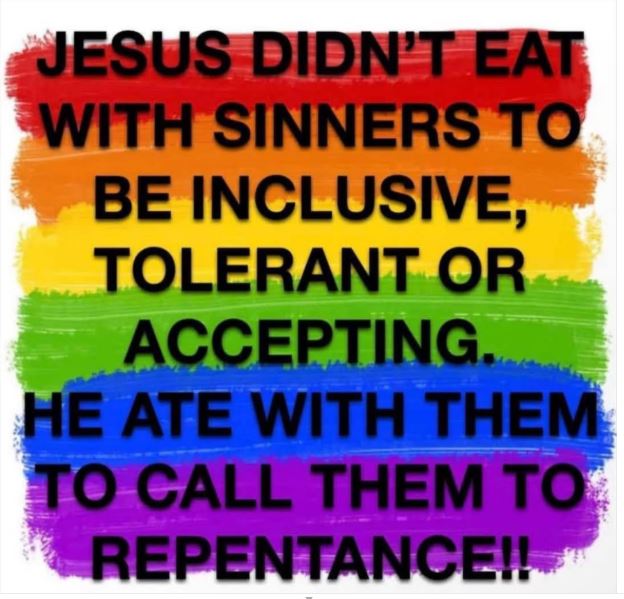
I was mindlessly scrolling through social media when I saw an absolutely disgusting post by an individual who calls themselves a “Christian.” And yes, I put Christian in quotes for a reason.
The crap this person was spouting was the exact opposite of what what I was taught about how Jesus wants us to behave, which is to care for our fellow human beings. Period.
But according to this “Christian,” the only thing Jesus cared about was that people repent for…well, I’m not sure for what. I mean, I’d say sin, but since their post was in rainbow colors and stated that Jesus didn’t believe in being inclusive, accepting, or tolerant, I’m fairly certain they were saying that being a member of the LGBTQ community is a sin.
Um.. no. How is loving another person, whether or not they are the same sex or the same color, a sin? So, what the post really was about was twisting the words of Jesus into the exact opposite of how he wanted us to live our lives.
And that was when the light bulb moment happened.
For years, I just couldn’t understand how people who call themselves Christians have embraced Donald Trump, a convicted felon, sex offender, and hate monger. But then I got it.
They have twisted the teachings of Jesus to validate their own hatred of and discomfort with anyone who is different than they are. They have turned Jesus into someone who had a clear definition of who a sinner is (anyone who believes in something they don’t or thinks differently than they do). They also believe Donald Trump was chosen by God because he validates their discomfort with anyone who challenges their belief system.
If Trump actually was chosen by God to be president, I prefer the perspective of a friend. I was struggling with a conflict that involved following social work ethics that are in direct opposition to a gubernatorial executive order. My friend, an attorney, said that the real challenge is choosing what is right or choosing what is safe.
“You know,” she said. “Maybe all of these “Christians” who think Trump was ordained by God have it right but for the wrong reason. Instead of God choosing Trump because he is following the teachings of Jesus – which he’s not – maybe it was to test Christians to see if they can actually do the right thing when they are challenged by someone who is so evil.”
I like that perspective, and it is one I need to hold onto tightly. Can I continue to do the right thing in the midst of so much wrong? I hope so. And I hope putting this in writing is the right thing to do.
There was a part of me that was nervous this post would offend someone. And then, I had another of those light bulb moments. If someone is offended that I am calling them out for their hateful beliefs, then I don’t care. I’m confident that Jesus would have called them out too.
Breaks and Scars
A piece of me broke a little this week. I’m not referring to the “segmental, comminuted, displaced fracture of the mid left clavicle” that my x-ray showed after yet another unfortunate accident involving me, my dog, a hill, and a bicyclist on Monday night. (And yes, I had to look up what that diagnosis meant because, as I told the doctor, “I’m not a doctor, I’m a social worker.”) That fracture means my collarbone is broken, but it will heal with time.
I’m not so optimistic about the other break, because the attack is ongoing.
A piece of my heart has been cracking a little bit every day since January 25. That’s when Americans who aren’t straight, able-bodied, white males saw the lights dimming on all of the progress they’ve made over the past decades. Now, I feel as though the lights are completely off and the circuit breaker is being guarded by a group of wealthy, self centered, and power hungry politicians who care more about their bank accounts than about other people or the health of our planet.
The crack turned into a break when I received a news alert from the New York Times. Ironically, I received it while attending a conference on abuse and trauma. It was ironic because the article was about words that are being taken out of federal policy and off of federal websites (Disappearing Words), and trauma and traumatic are on the list.
So are breast feed, advocacy, advocate, black, disabilities, socioeconomic, female, mental health, victim, women, systemic, health disparity, pollution, and pregnant people. You know what words aren’t on the list? Male, men, and white. As a woman, I felt as though my power was being erased. Talk about a punch to the gut.
I shared the list with the social worker who was sitting next to me. We were able to joke about some of the words, and when she asked “What are we supposed to say instead of sex (yes it is on the list), I joked, “Well the “f” word isn’t on the list, so I guess that’s just fine.” (For the record I didn’t say the “f” word I actually said THE “f” word, if you know what I mean.)
Then, the woman I was speaking with got serious. Her husband has worked for the federal government for decades, and like most federal employees, he’s scared. He is also a policy writer who has spent the last four weeks re-writing policy to ensure that the “forbidden” words are eliminated. I repeat. We, the taxpayers, are paying a federal employee to rewrite policies to eliminate words, many of which refer to ensuring all people are safe, instead of working on policies that will actually be beneficial. For an administration that has made eliminating government waste one of its top priorities, that seems, well, wasteful.
But it goes deeper than that. This is about ensuring that the balance of power is squarely in the hands of people who haven’t faced discrimination, who haven’t given birth, who haven’t lived in communities with unsafe water and air, who haven’t been assaulted, who haven’t been stopped by a police officer because of the way they look, and who haven’t been told that their identity isn’t valid.
A piece of me broke this week, and I’m not sure if it will simply heal with time like my collar bone. However, I do know it will leave a scar, and scars aren’t necessarily bad. They don’t just remind us of old wounds. They remind us of everything that we have survived and overcome. They show us how tough we can be.
Friends often joke that, based on the number of scars I’ve incurred over the years, I should probably be wrapped in bubble wrap. I laugh with them, but I know that bubble wrap is for things that are fragile, and that is one thing I will never be. I’m fierce, and the more you try to break me, the tougher I get.
Just watch.
Truth and Consequences
When I was twelve years old, these were some of my truths:

- Being a college graduate was not a life goal, it was a life requirement.
- If you were “on welfare,” you were lazy.
- People who never left their hometown were under achievers.
- Getting anything but an A on a test or a report card was a failure.
- A woman who isn’t employed outside the home isn’t living up to her potential
These weren’t really truths at all.
They were assumptions that I had formed based on a variety of circumstances. Both of my parents were college graduates, both had travelled widely before getting married, and both lived thousands of miles from their hometowns. My mom had always worked at least part time, and much of her identity was wrapped up in her job. My parents’ friends were also transplants from all over the country, and very few lived in the same community where they grew up.
They were also inferences based on my limited life experience. If I applied myself and studied, I was always rewarded with an A. My classmates who lived in public housing and came to school unprepared did poorly in school, and my parents always talked about where my brother and I would go to college not if we would.
They were opinions based on conversations I overheard when a group of adults got together. My young brain still thought that adults who were “successful” knew everything.
And so, I entered my adolescence armed with what I thought were life’s truth and with an attitude that anyone could get A’s, graduate from college, and earn a good salary if they just applied themselves.
That’s how I entered adolescence.
I left adolescence a much different person. I had sometimes done my best and failed anyway. I had been exposed people who had different ideas and different backgrounds but whom I respected. And, maybe most importantly, my simplistic ideas about right and wrong had been challenged by people who were smarter and more experienced than I was. My truths hadn’t been rooted in reality but in a warped sense of judgement that people who weren’t like me or my family were in the wrong.
On Wednesday, I was reminded about the importance of not only admitting you have been wrong, misinformed or just plain ignorant but of also being willing to change.
I was having a conversation with an acquaintance whose adult child had recently come out as transgender. We were talking about the challenge of accepting and loving our children while still trying to grasp the reality of who they are. We talked about how, when we were younger, our only exposure to people who were transgender was through pop culture when it was generally used as a device to generate humor. My most vivid memory is of the Bud Light guys who dressed up like women so they could get drink deals during ladies night at the local bar.
What we didn’t talk about was the vitriol, blame, and hate that was currently circulating on social media. Only two days earlier, an individual who was raised as a female and had recently started identifying as a male killed six people at a Christian school in Nashville Tennessee. This fact allowed judgmental, narrow-minded people with a reason to blame the transgender community. “It’s not about guns,” they screamed. “It’s about mental illness and a lack of morals.”
Last time I checked, a lot of very mentally healthy people are transgender. In fact, making the change has greatly improved their mental health. Also, the fact that I was born female and identify as female has absolutely nothing to do with my morals. Morals are about how we treat and provide positive opportunities for other people. That’s it. It’s that simple. And yet, for many people it’s not. They hold on tightly to what they know to be true: transgender people are sick, drag queens are a danger to children, and exposing young students to a statue of a naked man will create lasting damage to their psyche.
I know those aren’t truths at all. They are simply consequences of being misinformed and fearful of something that’s difficult for many to understand. It’s about being resistant to change and growth. It’s about thinking that the way you live and the choices you make are the best way to live rather than just one way to live.
I admit I get angry when I see and hear narrow-minded people making hateful comments about others’ sexual orientation, or gender identity. I struggle at not lashing back and saying “these are real people you are talking about. They are someone’s child, someone’s sibling, someone’s friend. You are the one with something morally wrong.” And then I remember who I used to be and that people can grow, change, and learn to accept our differences.
If I can change, so can others.
It’s a truth I have to hold on to tightly.
Superficial

I absolutely love when a fictional character says something that completely resonates with me to the extent that I’m still thinking about it days, or even years, later. For example, I don’t even remember which Scott Turow novel I was reading or which of his characters made the observation that teenage relationships teach you how to break up not how to stay together. The concept rang so true to me that I still reference it.
More recently, my husband and I were watching Three Pines, the television series based on Louise Penny’s books featuring Chief Inspector Armand Gamache. During one episode, the detective tells another character, “Grief is love that has nowhere to go.” That simple statement captured the essence of grief in such a meaningful way that I know I will remember it forever.
But no quote has ever rang as true as one in the most recent Peter Robinson novel when his character Detective Chief Inspector Alan Banks makes the observation that “Superficial people have superficial morals.”
(I’m going to make a brief side note here: Peter Robinson is one of my favorite authors, and I actually got to meet him at the National Book Festival in 2008. Unfortunately, he passed away just a few months ago, and his final novel will be released this spring.)
The statement about superficial people having superficial morals was a reaction to how some people are quick to judge other people’s relationships based on some shallow moral code. No truer statement could have ever been made. Shallow morality is a moral code rooted not in love and compassion but in judgement and fear. Ironically, most people who spout shallow morality don’t think they are superficial. Many think they are spouting a gospel that can not be questioned.
It can, and should, be. In fact, I suggest that everyone ask the following questions before dropping a judgement bomb:
- Do you believe that a relationship can be immoral even if both partners are of age and are not hurting each other? If so, you might have superficial morals.
- Do you use fear and scare tactics as a justification for judging others. For example, do you tell others that trans individuals are stalking potential prey in bathrooms or that gay men are more likely to be pedophiles. If so, you might have superficial morals.
- Do you spout passages from the Bible out of context or without considering that some passages even contradict each other. If so, you might have superficial morals.
- Do you think that you have to be a Christian to be a moral person? If so, you might have superficial morals.
- Do you blindly follow your brand of Christianity, its rituals and its dogma without question or challenge. If so, you might have superficial morals.
- Do you protect your own and circle the wagons to protect others who think like you even if you know they are hurting others? If so, you might have superficial morals.
- Do you make sweeping judgements about other people’s difficult decisions, such as whether to terminate a pregnancy, with no understanding why the decision was made or the consequences of other options. If so you might have superficial morals.
- And finally, do you believe that whole groups of people are less moral than you are and therefore need to be treated differently – whether it’s Muslims or Mexicans or African Americans or refugees or immigrants? If so, you definitely have superficial morals.
The bottom line is that morals should never be used to make us feel superior to other people. In fact, they should instead be used as an opportunity to learn about, care about and love people who are completely different than us. They should make our world and experiences bigger not smaller. They should be based on inclusivity not exclusivity. And most of all, we should recognize that they are subject to change as we have new experiences, meet new people and learn more about the science behind human behavior. To me, superficial morality isn’t moral at all.
I know not everyone will agree with me. I don’t care. As the late, great Leslie Jordan (who like Peter Robinson passed away in 2022) said, “What other people think about me is none of my business.” Thank you Leslie and thank you Peter for your moral guidance.
The Place You Belong

I hated feeling like a stranger in my own life.
Thankfully, I rarely experience that feeling anymore, but it used to creep into my psyche like an unwanted encounter with a mean girl from high school. I did my best to present as confident and competent, but I actually felt like a pretender and an invader in the lives of people who really belonged.
I have, after all, spent my entire life living in places where I don’t have a family connection. Or so I thought. Because sometimes, one tiny piece of information can change everything.
For me, that small shift was seeing a headstone at a park where I walk my dog on a regular basis. The last name on the marker is Mowen, which is my great-grandmother’s maiden name. Initially, I just thought this was interesting. After all, I live in the Eastern Panhandle of West Virginia, wedged between Northern Virginia and Maryland. My dad grew up in Massachusetts, my mom grew up in Michigan, and my family moved several times when I was a child. I didn’t grow up around any extended family.
This is probably why I embraced genealogy with a passion and became the family historian. When my grandparents passed away, the treasures I inherited might have had little value for many people, but to me the old photos, ledgers, deeds, and birth certificates are priceless. I’ve done a DNA test, convinced my parents to do a DNA test, and spent hours trying to figure out the puzzle of my family tree. What I never expected was to randomly stumble upon a headstone of a distant relative.
And yet, I did. After logging onto my laptop and doing some simple research, I determined that I was indeed related to the Mr. Earl C. Mowen, who is memorialized by a simple marker on a forest trail in Poor House Farm Park. Granted, the relationship is rather distant as Mr. Mowen and my great-grandmother had the same grandparents.
My great grandmother’s family is actually from Washington County, Maryland, which is only minutes from my house. I have ancestors buried in cemeteries in nearby Hagerstown, and a few geographic locations actually bear the last name of some of my ancestors.
While all of this is fascinating, it shone a light on something even more important: having a family connection to the area where I now live hasn’t affected my feelings about being a stranger in my life. I rarely feel that way anymore not because I have historical ties to this area but because I’ve been able to build my own life. Instead of being a stranger, I’m a main character surrounded by people who accept me, and care about me, and support me even though we don’t share the same DNA or childhood memories. I don’t have to pretend or feel like an invader.
I can create the place where I belong.
Getting Back Up
There is an anecdote in my baby book that explains so much. The brief notation is written in my mother’s perfect handwriting.
Christmas 1969 Trina was in the Sunday School program but kept falling backward.
That is all it says.
As a teenager, I remember asking my mom to elaborate. There really wasn’t much to tell. Apparently, nearly three-year-old me was one of several children singing Away In the Manger, but I could only get through a few lyrics before I’d fall backwards. Then I’d pick myself up, resume singing, and fall over again. And then I’d pick myself up again. And again. And again.
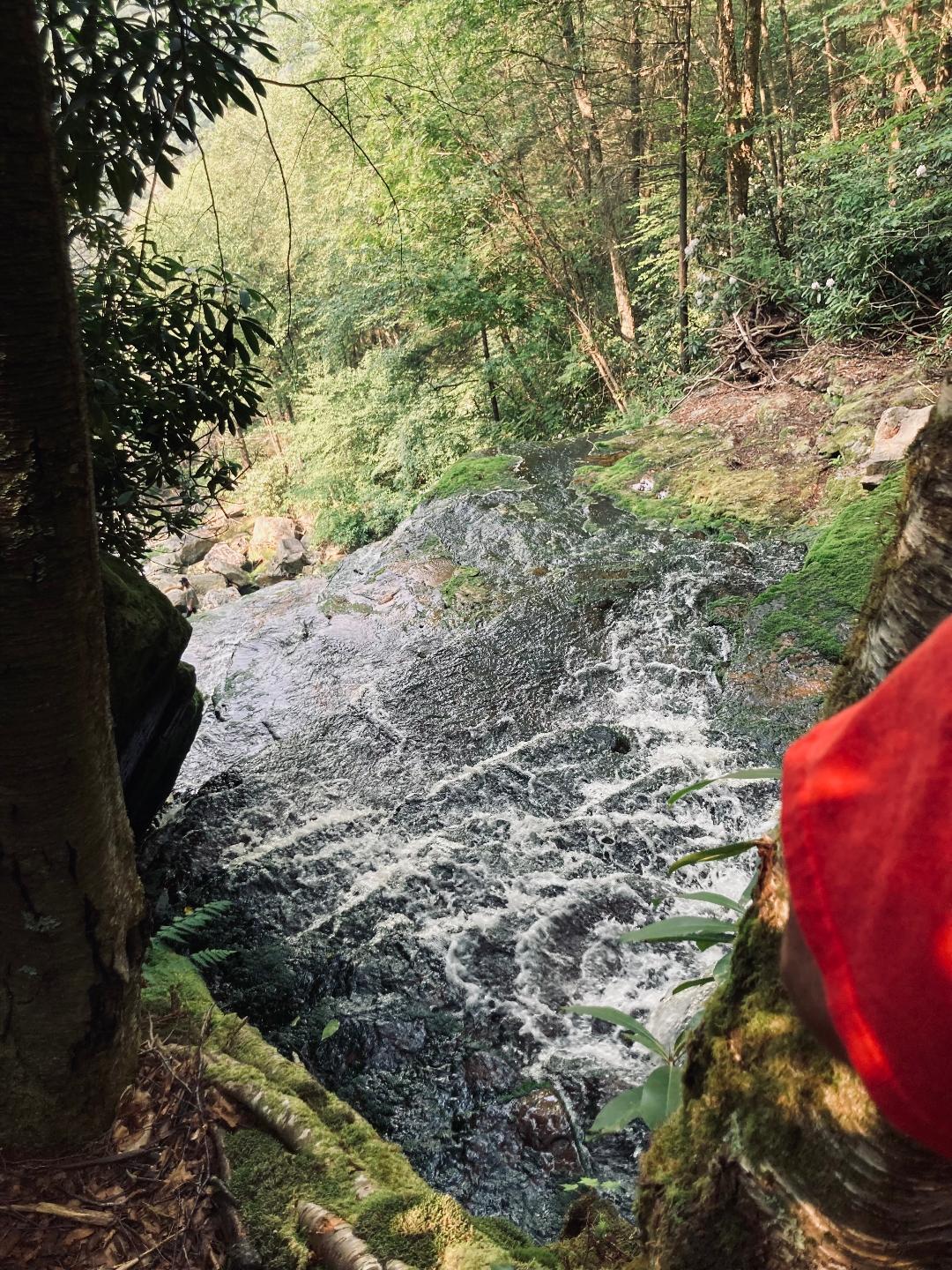
I hadn’t thought about that story in decades until this week when I was clinging to the root of a wild Rhododendron bush on the side of a cliff.
How could I have let myself get into this situation? I am the person who was once too uncoordinated to sing and stand up at the same time.
Being uncoordinated has shaped the person I am. I am the little girl who could never do a cartwheel and failed gymnastics. I am the kid who never once hit the ball during softball. I am the teenager who could run fast during a track meet but tripped at the finish line. I am the college student who sprained her ankle walking down the stairs of her dorm. I am the friend who got left behind on a ski trip because I just couldn’t get my feet to work correctly. I am the woman who shattered her wrist while walking her dog. I am the person who constantly has bruises and who everyone at work worries about every time they hear a crash or a loud bang.
My lack of grace generated a sense of fear in me at an early age. I wasn’t afraid of heights. I was afraid of what I might do to myself if I tried to do anything from a height: jumping downstairs, going off a diving board; springing off a swing in mid flight. I’d watch in awe as other kids did those things, but I avoided doing any of those them myself. And those decisions came with regrets. I once stood at the top of a fire pole willing myself to go down, but my feet refused. They felt as though they each weighed a thousand pounds.
My journalist mother was writing a feature story about a family that had installed the pole in their house as a fun way for their children to get from the second floor to the first floor. All of the kids in the house, their friends, and even my mother had gone down the pole. And yet, I stood in fear at the top unable to grab and go. The shame I felt from having to take the stairs stayed with me and inspired me to push through the fear.
Which is why, earlier this week, I found myself desperately hanging onto the side of the cliff.
My husband and I had taken the week off to spend time hiking and exploring state parks. He was on a mission to find a certain waterfall from a historical illustration, and his search took us to a series of falls that could only be accessed off the beaten path.
Off the beaten path turned out to be what I can only describe as an almost completely vertical cliff.
Getting to the first falls was fairly easy, but I took one look at the steep descent to the next one and said, “I can’t do it.” But then I did it anyway. The descent to the third waterfall, the one that plunges forty feet, was basically a forty foot vertical drop with vegetation and a few foot holes. “I can’t do this,” I said. And then I did it anyway. My forehead and back were dripping in sweat, but I did it anyway.
As my husband and I stood on a rock taking photos of the falls and basking in our success, he turned to me and said, “Now we have to do the hard part and go back up.”

“I’m not worried about that,” I replied. “Getting back up has always been the easy part for me.”
I wasn’t just referring to the fact that, to me, climbing uphill really is much easier than going down a hill, when I often feel unbalanced.
I was referring to the fact that life has demanded that I learn to turn my weaknesses into strengths. When I was almost three years old, I had a problem simultaneously singing and standing. But when I fell, I always got back up. And I eventually learned to sing and stand. And to ride a bike. And to climb trees. And to climb down cliffs. And to trust myself to take risks.
The secret to enjoying life isn’t just about finding those things at which we are innately good and pursuing them. It’s about finding joy in overcoming those things at which we sometimes fail.
It’s about getting back up.
People Who Don’t Like Dogs (And Other Warning Signs)
My husband told me to write this.
Well, he didn’t tell me to write these exact words.
I was complaining that I can’t relax because I can’t stop thinking, and he told me that I should write. When I said no one wants to read about what is currently going on in my head, he suggested I discuss the weather.
Since today is stormy and perfectly reflects the thoughts cycling around in my brain, his suggestion wasn’t very helpful.
Here’s the thing: the devil on my right shoulder wants me to write about the people who I prefer weren’t in my life right now. The angel on my left shoulder is telling me I can’t always control who is in my life nor can I control their behavior. I can only control my reaction to them.
And right smack dab between my right shoulder and my left shoulder is my head with all those thoughts blowing around like the gusts of wind currently rattling the windows. Since my brain is centrally located in the neutral position, I guess I should feel safe sharing some thoughts about the types of individuals who are currently setting me on edge – people I don’t trust.
 I don’t trust people who never challenge authority. History provides dozens of examples of what happens when people blindly follow the leader rather than do what is right. When people are more concerned about protecting their status than they are about protecting those who are most vulnerable, I will never be able to trust them,
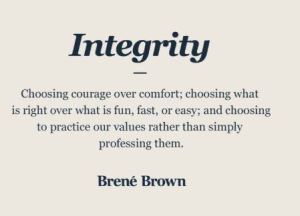
I don’t trust “suck ups” and “brown nosers.” Anyone who uses a significant amount of time and energy trying to impress those in power is doing a disservice to people who actually have integrity. If your words and behaviors don’t provide any evidence of your personal values, I can’t trust you.
I don’t trust people who don’t like dogs. According to my baby book,  one of my first words was “doggy.” When my mom took me to the library as a toddler, I gravitated to the books with pictures of dogs. The worst moments of my life have always improved when I’ve been able to wrap my arms around a nonjudgmental furry friend and sobbed uncontrollably. And yes, I do have human friends who don’t like dogs, but they’ve had to earn that friendship and my trust.
I don’t trust people who have college degrees but still don’t use proper grammar or punctuation. I understand language is learned, but going to college requires a lot of reading and writing. It should also involve professors who demand the use of correct grammar. If you leave college still using mismatched verb tenses and confusing “wonder” and “wander,” you either didn’t truly earn your degree or there is something significantly wrong with your education.
And finally, I don’t trust people who try to buy my friendship or my approval. I don’t need gifts or flowers or disingenuous compliments. If someone has to give me something in order to validate the relationship, it’s not valid at all.
As I was writing these stormy thoughts, I realized my husband’s suggestion was actually a good one. Because as I went through my list of the types of people I can’t trust, I realized something really important.
In all of the aspects of my life over which I have control, I have surrounded myself with people whom I do trust. My friends are social justice advocates who always question authority. They are the people who call me out when I say or do something stupid and allow me to do the same to them. They are the people who give me the gifts of time and understanding. They are people who want to build a better world for others rather than for themselves. And yes, for the most part, they are also people who love dogs.
When Silence Is NOT Golden

For months, I’ve had an ongoing debate with myself that goes something like this:
Me: I need to tell everyone exactly what I think about President Trump and the antics of the WV State Legislature because their rhetoric and decisions are pandering to hate, greed and hypocrisy.
Also Me: There’s no reason to write about my opinions. I’m not going to change anyone’s mind. It’s just a waste of time.
For a while now, “Also Me” has been winning.
Then two things happened. First, I was privy to a debate regarding whether or not an organization should issue a public statement about the egregious comments made by a state legislator. The second was a brief conversation with my neighbor.
The issue concerning remarks made by state legislator Eric Porterfield began a couple of weeks ago during a debate in a legislative committee about a bill to add protections for sexual orientation and gender identity. Not only did Porterfield make scathing comments about the LGBTQ community, but he subsequently defended those comments to the point of likening the LGBTQ community to the KKK. Much to the embarrassment of many West Virginians, the story went national, and individuals and groups from both sides of the political aisle condemned Porterfield’s comments.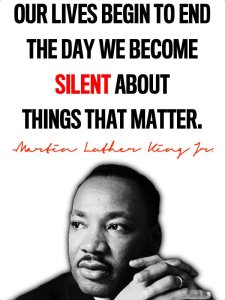
The organization with which I am affiliated also decided to publicly condemn his comments. The statements didn’t go without some internal debate. A few individuals believed that Porterfield shouldn’t be given any additional attention for his hate-filled rhetoric. To me, the public condemnation was important. While I didn’t like keeping Porterfield in the spotlight, I was more opposed to keeping silent about any form of hate speech, particularly against a community that has fought so hard for equal treatment.
And only a day after that realization, a neighbor stopped me to casually ask why I wasn’t writing my blog anymore. I hemmed and hawed about being too busy, but I didn’t say “because I started to feel like what I have to say doesn’t matter.”
I’m glad I didn’t, because her response was, “I miss it. It’s good to know that other people think like I do.”
And I realized she was right.
 So, even though I’m probably never going to change anyone’s mind about what matters, I can lend support to all like-minded souls about the current state of affairs in our country.
So this is for them:
- I don’t believe that Americans are superior to people from other countries, regardless of their country of origin, the color of their skin, the language they speak, their profession, or the amount of money the do or don’t have.
- I think building a wall is in opposition to everything America is supposed to be about.
- I don’t believe that people who have money work harder than people who don’t have money. In fact, I believe that wealth is usually (not always but usually) more a matter of good luck than an indicator of perseverance, intelligence, or stellar character.
- I believe that most privileged people don’t realize how privileged they are. (I’ll never forget last year having a friend show me a Facebook post by a middle-aged white guy. He was questioning the credibility of Congressman Joe Kennedy because he was “born with a silver spoon in his mouth.” The guy ridiculing Kennedy actually inherited his own family business. For most Americans, that is exactly what a silver spoon looks like.)
- I believe in public education. Period. I don’t think tax dollars should be used to pay for schools that include a curriculum based on religion or that teach a particular religious philosophy.
- I believe good teachers are our greatest hope for the future, and they should be treated with the same respect and pay as other professions.
- I believe in science. Period.
- I believe that allowing industries to buy off politicians is damaging our country, And I believe that only people, not businesses or industries, should have opinions.
- I believe too many people use religion as an excuse to hate and to feel superior to others.
- I believe that a person’s sexual orientation isn’t anyone’s else’s business. You should be allowed to love who you love.
- And to the Eric Porterfields of this world? I believe you are purposefully ignorant and use religion to hide all of your insecurities. Your missionary work is an excuse to share your hate with others. If you really understood Christianity and what Christ taught, you would be too busy caring for the marginalized to be concerned about whom they sleep with. And in doing so, you’d probably learn that they actually have a lot to teach you. So know this, my internal debate about sharing my opinions may have just ended, but my battle for the greater good is just getting started.
The Lecture
Last month, I was contacted by the Huffington Post about being a contributor after reading one of my previous blogs. Here’s my second post on the HuffPost.
The Graduate
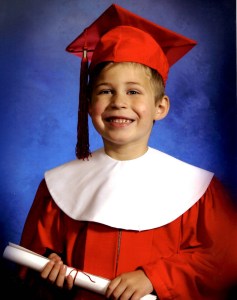
Thirteen years ago,”Pomp and Circumstance” played as my son wore a red cap and gown to accept his diploma.
Because his class was extremely small, the formal ceremony was short. As the post-graduation celebration began, my son led his friends in a unique rendition of the “Chicken Dance.”
Throughout the afternoon, there were several other moments when he grabbed, or attempted to grab, the limelight. At one point, his teacher pulled me aside and whispered “All the world is a stage for Shepherd. Just enjoy it.”
But I couldn’t.
The next 13 years, starting in kindergarten, weren’t easy.
I worried obsessively about my son.
Even though my son was very smart and very funny, I worried that he didn’t have the same interests as his peers.
I worried that he was awkward and uncoordinated and would never find the place where he belonged.
I worried that he often seemed oblivious to what others automatically understood.
I even worried that he didn’t care that I was worried.
But somewhere between kindergarten and twelfth grade, my son taught me more than algebra and English literature classes ever could.
He taught me that going out on a limb will always be more interesting than standing on the ground hugging the trunk.
He taught me that winning a dance contest doesn’t necessarily require the best moves. It simply requires the most guts.
He taught me that more people appreciate the sheep who wonders off to explore new pastures than the ones who stay with the herd.
And he taught me that grabbing a mic and singing in front of the entire student body can never be embarrassing if you get everyone to sing with you.
On Monday, I will listen to “Pomp and Circumstance” while my son wears a red cap and gown to accept his diploma.
I wish I could guarantee he won’t lead his entire graduating class in a rendition of “The Chicken Dance,” but I can’t. Neither can I guarantee he won’t pull off one final, ridiculous high school stunt.
But here’s what I can guarantee: I won’t be worried.
Because I know that my unique, gifted, funny, ridiculous, smart, sarcastic son already has plenty of experience in finding his way in the often rocky terrain of life.
I also know, that his preschool teacher wasn’t entirely right. All the world is not just a stage for my Shepherd. Instead, all the world is HIS stage.
And I can’t wait to see his upcoming performances.


 Just So You Know