Blog Archives
A Portrait of Jesus
This past week, while much of the news focused on Congress, the debt ceiling and the federal shutdown, another story caught my attention.
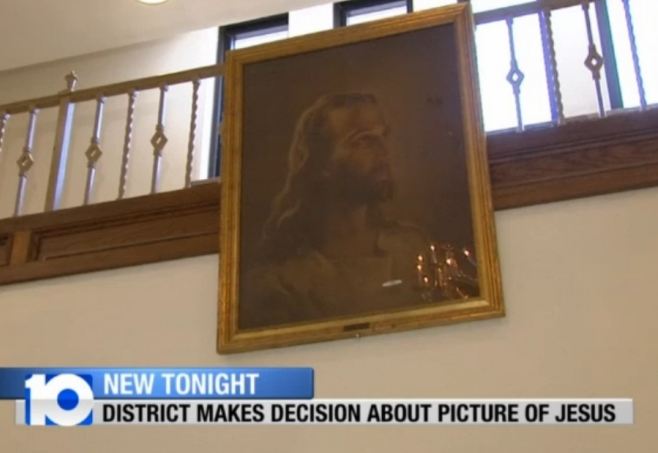
WBNS-10TV
A school district in Jackson, Ohio agreed to take down a portrait of Jesus that had been hanging in a school since 1947. The district is not removing the portrait because, after 66 years, it realized that the portrait might be a violation of separation of church and state. It’s removing it for financial reasons.
In February, the ACLU of Ohio and the Freedom From Religion Foundation sued the Jackson City School District for “endorsing one religion improperly.” The school attempted to argue that the portrait was part of a “limited public forum” but eventually agreed in court to remove it to avoid “risking taxpayer money.”
The actual story wasn’t what caught my attention. I’ve read about plenty of similar stories over the past couple of decades. What caught my attention was someone’s reaction to it.
“This is why are country is in trouble,” the person wrote. “We are turning our backs on Christianity.”
I couldn’t have agreed with that statement more. I just agreed for entirely different reasons.
I don’t believe many of our leaders or citizens are acting in a way that Jesus wanted.
From what I know about Jesus, he didn’t care about himself. He cared about everyone else. EVERYONE else – regardless of socioeconomic status, criminal status or religion. He simply cared about people and did all he could to help them while trying to teach all of us to do the same.
I can’t imagine the Jesus that I know would care whether or not his portrait was on a wall in a school. My guess is that he probably wouldn’t want it there. He didn’t want his image (or what a lot of people consider his image) to be worshiped.
The type of worship he wanted was for people to understand his words and behaviors and to practice them every day.
There are those who would argue that the portrait of Jesus in a school was just a reminder for students to listen to his words and to do their best to practice his behaviors. If that is what they believe, I applaud them. But if they are trying to promote Christianity as a religion in which all people should believe, then I do have an issue with that.
I don’t think whether or not someone is a Christian defines whether they are good or bad or worthy or unworthy. But I do believe that Christianity means that, instead of judging others, we love and care for them.
And that’s why I agree with the person who said we are turning our backs on Christianity. My agreement has nothing to do with the label and everything to do with the behavior.
Which is exactly the message Jesus was trying to teach us: it’s all about how we treat others.
A Sense of Power

John Darkow, Columbia Daily Tribune
My junior high social studies teacher, Mr. Bice, once stated, “The two most important jobs in the world don’t require a license: being a parent and being a citizen.”
No truer words were ever said.
Being a parent and being a citizen both require a great deal of responsibility: the responsibility to be knowledgeable and educated; the responsibility to hold others accountable and the responsibility to behave in a way that we want our children to behave.
Even though most American say they are fed up with our elected officials in Washington, I can’t say we are being particularly responsible citizens. And if members of the House of Representatives were in school rather than in Congress, the principal would already have made phone calls to their parents.
Unfortunately, the American public hasn’t been acting like good parents either.
Good parents don’t tolerate bullying and name calling.
Good parents don’t tolerate individuals putting their own wants and desires above those of others.
And most of all, good parents don’t teach their children that money and power are more important than being caring, compassionate and trustworthy.
But that is exactly what is happening. We are letting Corporate America buy politicians and public opinion. Take, for example, Citizens United, which legalized the concept that corporations have the same rights as people. That’s like the school’s giving their business partners the same status as parents.
Unfortunately, too many people equate money with power and power with being important. If we want to change politics, we have to change that perception. I don’t know why that is so difficult as I’m sure I’m not alone in saying that most important people in my life never bought my respect. They earned it by giving their time to help others. They earned it by giving up something they wanted so someone else who needed it more. And they earned it by making choices that weren’t self serving.
None of that requires money, but it does require a sense of being powerful.
There are those who would argue that we lose power when we give something away. But I, for one, am not buying that. I’m not buying it at all. I’m more than willing to give my vote to someone who stands up for what I believe and not for what they think will meet their own desires.
365 Reasons to Smile – Day 88
 In November 1995, I attended a conference in Phoenix, Arizona that also provided the opportunity for a mini-vacation. A friend and I arrived several days early so we could relax and do some sightseeing.
At the top of our list was a day trip to the Grand Canyon, but the day we arrived in Arizona all the national headlines warned that the federal government was going to shut down.
It did. And every national park was closed except for the Grand Canyon. Apparently, the Arizona governor wanted to keep tourism alive and battled to let the state take over park operations. My friend and I decided we shouldn’t wait to see what happened. We decided to make the trek as soon as possible and left early in the morning to make the unhurried journey north.
It was a very unhurried journey.
We wandered through Jerome and wondered at the beauty of Sedona.
We arrived at the Grand Canyon in late afternoon. There was no one at the entrance, so we didn’t have to pay a fee. Instead,  we quickly found parking and made our way to the edge of the canyon. Two men from France joined us as we snapped photos, including our feet hanging over the edge. And then we watched the sunset with splashes of pink and gold over the red rock.
That is probably the most beautiful sunset I have ever seen.

The next day, we woke to news that Grand Canyon National Park had officially been closed.
Sometimes, timing is everything.
And that always makes me smile.
Day 88: The Grand Canyon.
Day 87: Unanswered Prayers Day 86: Apples Fresh from the Orchard Day 85: Being Human Day 84: Captain Underpants Day 83: The Diary of Anne Frank Day 82: In Cold Blood Day 81: Roll of Thunder, Hear My Cry Day 80: The Outsiders Day 79: I Know Why the Caged Bird Sings Day 78: The First Amendment Day 77: People Who Touch Our Lives Day 76: The Rewards of Parenting Day 75: Improvements Day 74: Family Traditions Day 73: Learning From Our Mistakes Day 72: Live Music Day 71: Sleeping In Day 70: Grover Day 69: A Good Hair Day Day 68: A Sense of Community Day 67: Kindness Day 66: Living in a Place You Love Day 65: Gifts from the Heart Day 64: The Arrival of Fall Day 63: To Kill a Mockingbird Day 62: Green Lights Day 61: My Canine Friends Day 60: Differences Day 59: A New Box of Crayons Day 58: Bookworms Day 57: Being Oblivious Day 56: Three-day Weekends Day 55: A Cat Purring Day 54: Being a Unique Individual Day 53: Children’s Artwork Day 52: Lefties Day 51: The Neighborhood Deer Day 50: Campfires Day 49: Childhood Crushes Day 48: The Words “Miss You” Day 47: Birthday Stories Day 46: Nature’s Hold on Us Day 45: Play-Doh Day 44: First Day of School Pictures Day 43: Calvin and Hobbes Day 42: Appreciative Readers Day 41: Marilyn Monroe’s Best Quote Day 40: Being Silly Day 39: Being Happy Exactly Where You Are Day 38: Proud Grandparents Day 37: Chocolate Chip Cookies Day 36: Challenging Experiences that Make Great Stories Day 35: You Can’t Always Get What You Want Day 34: Accepting the Fog Day 33: I See the Moon Day 32: The Stonehenge Scene from This is Spinal Tap Day 31: Perspective Day 30: Unlikely Friendships Day 29: Good Samaritans Day 28: Am I a Man or Am I a Muppet? Day 27: Shadows Day 26: Bike Riding on Country Roads Day 25: When Harry Met Sally Day 24: Hibiscus Day 23: The Ice Cream Truck Day 22: The Wonderful World of Disney Day 21: Puppy love Day 20 Personal Theme Songs Day 19: Summer Clouds Day 18: Bartholomew Cubbin’s Victory Day 17: A Royal Birth Day 16: Creative Kids Day 15: The Scent of Honeysuckle Day 14: Clip of Kevin Kline Exploring His Masculinity Day 13: Random Text Messages from My Daughter Day 12: Round Bales of Hay Day 11: Water Fountains for Dogs Day 10: The Rainier Beer Motorcycle Commercial Day 9: Four-Leaf Clovers Day 8: Great Teachers We Still Remember Day 7: Finding the missing sock Day 6: Children’s books that teach life-long lessons Day 5: The Perfect Photo at the Perfect Moment Day 4: Jumping in Puddles Day 3: The Ride Downhill after the Struggle Uphill Day 2: Old Photographs Day 1: The Martians on Sesame Street
I Am a Product of Head Start
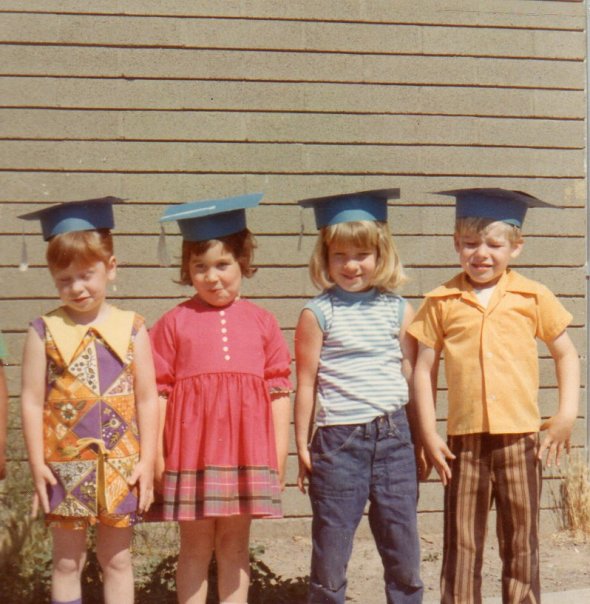
Head Start graduation
In second grade, I was told I should never brag, and I took that admonishment to heart.
I have no recollection why I was boasting, but I do remember Carla Shown looked at me with disdain and said, “No one likes people who brag.”
Her words have stayed with me, but there are times when we have to balance the lessons we learned in our childhood with our experience as adults.
Now is one of those times, and I am going to brag a bit.
I am a product of Head Start.
I feel an obligation to brag, because the voices of low-income children aren’t being heard above the clamor about Syria.
Head Start provides early childhood education, health and nutrition services as well as parent support for low-income children and their families. The services are designed to foster stable family relationships and address early childhood developmental needs.
Research tells us that children who have been through Head Start and Early Head Start are healthier, more academically accomplished, more likely to be employed, commit fewer crimes and contribute more to society.
Common sense tells us that the future of our country hinges on our children, and we should invest in our future.
Unfortunately, common sense often doesn’t prevail on Capitol Hill, and, as a result of sequestration, Head Start has eliminated services for more than 57,000 children this school year. The program is facing even more cuts in the future.
We are going backwards.
Head Start began in 1965, and, because of where I lived, I was enrolled in the program in the early 1970’s. I still have the report cards that documented my progress at mastering a list of tasks and skills and the photos from graduation ceremonies.
At first glance, the photos of my Head Start graduation don’t tell much of a story. There is no indication that the chubby little girl in the red dress would grow up to be the outspoken person I have become. Nor does it indicate that the little boy in the striped pants would someday graduate from Dartmouth.
But it does show what hope looks like, and if we don’t do something to meet the needs of our children now, we will be seeing fewer and fewer of such photos in the future.
The Rainbow Connection

June 29, 2013 Rainbow
Last night, I enjoyed the most beautiful and perfect rainbow I have ever seen.
It arrived exactly on the anniversary of last year’s June 29 derecho, the scariest storm I’ve ever experienced.
Ironically, the events of both evenings were similar.
Last year, I was supervising my daughter and her best friend as they swam. Last night, I was at a pool party where my daughter and her best friend were once again swimming.  And, last night, just like the year before, a sudden and unexpected storm blew in.
Unlike last year’s storm, which brought fallen trees, downed power lines and electrical outages, last night’s storm brought the perfect rainbow, and for a few minutes, a double rainbow.
It also brought a reminder.
Sometimes, the only thing we get from weathering life’s storms is the strength we find in our struggles. But sometimes we get a brief glimpse at all the beauty and hope that the world offers.
Standing in awe of nature last night, I was also reminded that in addition to symbolizing promise, the rainbow also symbolizes diversity and inclusiveness.
Not only did the rainbow shine bright on the anniversary of the derecho, it also served as the ending punctuation mark on a historical week.
On Wednesday, the United States Supreme Court delivered a victory for gay rights. It ruled that married same-sex couples were entitled to federal benefits and effectively allowed same-sex marriages in California.
The fight for equality may not be over, but those decisions, like the rainbows, hold promise.
Thinking of that, a song from my childhood has been stuck in my head all day. Unlike some songs, which can be rather annoying, “The Rainbow Connection” from The Muppet Movie is simply making me smile.
The Rainbow Connection by Paul Williams and Kenny Ascher
Why are there so many songs about rainbows
and what’s on the other side?
Rainbows are visions, but only illusions,
and rainbows have nothing to hide.
So we’ve been told and some choose to believe it.
I know they’re wrong, wait and see.
Someday we’ll find it, the rainbow connection.
The lovers, the dreamers and me.
Who said that every wish would be heard
and answered when wished on the morning star?
Somebody thought of that and someone believed it.
Look what it’s done so far.
What’s so amazing that keeps us star gazing
and what do we think we might see?
Someday we’ll find it, the rainbow connection.
The lovers, the dreamers and me.
All of us under its spell. We know that it’s probably magic.
Have you been half asleep and have you heard voices?
I’ve heard them calling my name.
Is this the sweet sound that called the young sailors.
The voice might be one and the same.
I’ve heard it too many times to ignore it.
It’s something that I’m supposed to be.
Someday we’ll find it, the rainbow connection.
The lovers, the dreamers and me.
A Letter to Abercrombie & Fitch CEO Mike Jeffries
Dear Mr. Jeffries,
Congratulations on recently making headlines with your strategy of only selling clothes to those whom you define as cool, pretty and thin: http://www.businessinsider.com/abercrombie-wants-thin-customers-2013-5#ixzz2SoRlwYlN.
You’ve certainly grabbed a lot of attention and clearly made your point.
As you said, “In every school there are the cool and popular kids, and then there are the not-so-cool kids. Candidly, we go after the cool kids. We go after the attractive all-American kid with a great attitude and a lot of friends. A lot of people don’t belong [in our clothes], and they can’t belong. Are we exclusionary? Absolutely.”
You have every right to your opinion and your business strategy. But here’s what you apparently don’t get: most of us (people who will never set foot in your store) don’t really care whom you define as cool, and we don’t care that you won’t sell us your over-priced clothes. We see you in the same light that we saw the “cool kids” in high school.
We didn’t actually think they were all that cool. Instead, we thought they were self-absorbed and incredibly superficial.
You (as they did) base coolness on appearance, access to money and whom you associate with. Ironically, the only people who hang out with your are also people who only care about superficial appearances.
There’s no depth. There’s no empathy or compassion for others. And there’s no understanding that life is so much bigger than your very small and limited materialistic world.
In the real world, where everyone else lives, life is so much more than what size you wear, how much you paid for your clothes or all the places where your wealth will take you.
It’s about knowing that you can never count on your looks for anything and building upon your other strengths instead.
It’s about walking into a room and being appreciated for what you can contribute to the conversation rather than for what clothes you wear.
And it’s about supporting others rather than rubbing disadvantages in their faces.
Enjoy your fortune while it lasts, Mr. Jeffries, but be warned.
I’ve got two children who won’t ever buy clothes in your store.
I know their current buying habits are of no interest to you (because neither fits your definition of cool), but I think you should know who they are.
They are both very smart and don’t care whether you or anyone else thinks they are popular or cool. They just care that they are happy and making the world a better place.
Such aspirations have never required buying and wearing a certain brand of clothes.
So watch out, Mr. Jeffries. My children represent the next generation of consumers, and they have loud voices.
Sincerely,
Trina Bartlett
Shame is Not a Form of Birth Control
I had to double-check my calendar this morning to assure myself that it was actually 2013 and I hadn’t been sucked into a time warp.
I hadn’t been.
Instead, I was sucked into reading news articles about a school assembly featuring an abstinence-only proponent whose only educational credential is a Psychology Degree from Jerry Falwell’s Liberty University.
See: http://www.dailymail.com/News/201304110267 and http://www.wvgazette.com/News/201304110229 .
I can’t emphasize enough how inappropriate the assembly was.
Almost 20 years ago, when I was working in the field of sex education, experts had already proven that abstinence-only and shame-based tactics don’t work. And promoting a particular religious philosophy in a public school is simply prohibited.
But self-righteous people, who believe they actually know what God is thinking, seem to find a way around these issues.
The speaker, Pam Stenzel, and her sponsors, a religious group called Believe in West Virginia, say her speech wasn’t faith-based. Instead they say it was just a warning about the dangers of sex before marriage.
Those few words should have been enough to keep this woman out of the public schools.
A real sex educator doesn’t pretend that a wedding ring can protect people from a sexually transmitted disease, an unplanned pregnancy or heartache.
A real sex educator doesn’t outright dismiss homosexuals, who are still fighting for the right to even be married.
And a real sex educator doesn’t condemn, judge or shame.
Instead, a real sex educator gives facts – not statistics that have been manipulated to fit a certain dogma.
A real sex educator will agree that sex is the only human behavior that has the potential to create life or to threaten a life. The educator’s job is to help individuals make decisions to prevent unwanted consequences.
And a real sex educator will spend time talking about healthy relationships and about treating others with respect – not condemnation.
Years ago, I was that person, and I will never forget making a presentation about AIDS and HIV in a middle school classroom. As I interacted with the students, the teacher, who was obviously not happy I was there, took out his Bible and placed it open on his desk. He pretended to read, and I pretended to ignore him.
A year later, I had the same assignment and found myself in the same classroom. But instead of taking out his Bible, the teacher made a point of welcoming me and telling his students they should listen. He then privately told me that “a really good person” from his church had been diagnosed with AIDS. Instead of noting that a lot of “really good people” had been diagnosed with AIDS, I was just grateful that he had become a bit more open and less judgmental.
Now, I am hoping the same for all those involved in permitting the recent school assembly at George Washington High School.
Rockefeller’s Reminder
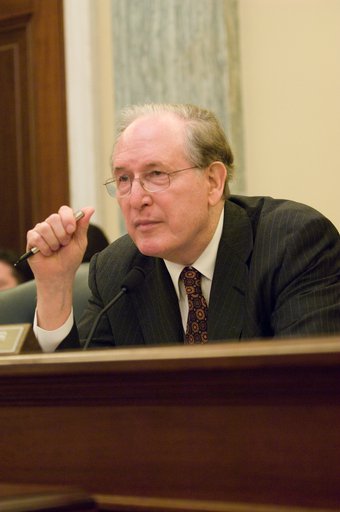 Last week, I had the privilege of attending a community meeting hosted by U.S. Senator Jay Rockefeller about the reauthorization of the Violence Against Women Act (VAWA). Since there was little doubt that our soon-to-retire senator was going to vote for VAWA, the event was really an opportunity to raise awareness about the issue of domestic violence.
Invited guests included survivors, social workers and advocates who work tirelessly to address the issue. A local police officer was the only man selected as a designated speaker for the round table discussion, but he received a great deal of Rockefeller’s attention.
While domestic violence survivors told heart-breaking stories, many of Rockefeller’s questions were directed to the police officer. The Senator seemed absolutely fascinated by the officer’s description of our local police department’s ride-along program, which provides an opportunity for community members to literally ride along with police officers during any shift. Those who participate have the opportunity to really understand what police face and learn about some of the biggest issues facing our community.
At the time, Rockefeller’s intense interest in the program seemed a little off topic. But in retrospect, I think the Senator was demonstrating what true wisdom is.
In a world where people are intentionally inflicting harm on others, where relationships are often about power struggles rather than support and where individuals are suffering on a daily basis, true wisdom is knowing that doing the right thing requires more than simply responding to the needs of others. Maybe because I’ve recently been watching too many people who think doing the right thing means doing things their way without considering all that others have or could contribute, Rockefeller’s reminder has stuck with me:
Doing the right thing means ensuring resources and services are available for those in need, but is also means focusing on what is positive and good.
Doing the right thing means reinforcing and promoting positive and healthy relationships among people and organizations.
And doing the right thing means really listening to others and acknowledging the power of what they are saying and all they are contributing.
That’s the wisdom Senator Rockefeller brought to the table. Unfortunately, he won’t be at the table much longer. Last month, he announced he will not be seeking a sixth term as U.S. Senator after his current term ends in 2014. West Virginia lost Senator Robert Byrd in 2010, and now we are losing Senator Jay Rockefeller. Regardless of political affiliation, all West Virginians should recognize the implications.
The cynical among us might say that caring about the poor was easy for Rockefeller, who was born into one of the richest families in America and never had to worry about money.
But I disagree.
Instead of choosing to live a life devoted to money rather than meaning, he chose to work on behalf of people who live in one of the poorest states in the nation. And even though I live closer to Washington D.C., Baltimore, Philadelphia, Pittsburgh and New York City than I do to our state capitol, I still care about what happens to this state.
And I’m hoping whoever steps into his position is someone who understands the importance of asking a local city police officer to explain a simple program that involves reaching out to others to develop stronger partnerships and healthy relationships.
That’s wisdom and a reminder about how we should all live our lives.
Thank you for your service and your wisdom, Senator Rockefeller.
All Good Superheroes Ask Questions, Don’t They?
 According to some people, I suffer from a very bad habit, and, if I knew what was good for me, I’d have given it up for Lent.
But I didn’t and I probably never will, so my friends and family are forced to deal with my habitual need to ask questions. Lots and lots of questions. About anything and everything.
My husband and kids call me “The Interrogator.”
I’d like to think that means they consider me a superhero who unveils misdeeds, liars and unacceptable behavior by eventually asking so many questions the truth is revealed.
Unfortunately, they aren’t paying me a compliment and instead are simply letting me know they find my all questions annoying. I’ve also been told that people who ask a lot of questions are subconsciously trying to take control of a situation.
There’s probably some truth to that, but I’d rather be annoying than to sit back and just allow people and organizations to get away with actions that affect and sometimes hurt others.

(UPI Photo/Roger L. Wollenberg)
I also like to think that, as an inquisitor, I’m in good company.
This week, at her first Banking, Housing and Urban Affairs Committee hearing, Senator Elizabeth Warren questioned bank regulators about why they hadn’t prosecuted a bank since the financial crisis. Her question seemed simple enough, “Tell me,” she requested “about the last few times you’ve taken the biggest financial institutions on Wall Street to trial. Anybody?”
Instead of simply responding “never,” the regulators tried to explain why there was no need to prosecute.
As with anything political, there are those who agree with Senator Warren and those who don’t.
But her actions, to me, were bigger than pointing out the double standard for big corporations versus average citizens or about ensuring that bank executives don’t continue to pass the repercussions of their behaviors onto the general public. Her actions were about her willingness to ask the tough questions and to not back down. Her actions were about repeating the same question over and over again until someone is forced to answer. And, to be honest, her actions were about validating my own behavior.
I’m not even close to being in Elizabeth Warren’s league much the less in the Justice League, but I do believe heroes have to ask the hard questions. If they don’t, silence persists, and nothing ever changes.
So even though my family insists on calling me “The Interrogator” to try to shut me up, it’s not working. Instead, I’m thinking of getting one of those t-shirts with a big question mark on the front. It may not be the fashion statement superheroes make when wearing their capes, but it just might be a start.
Because if no one questions the status quo, then nothing ever changes or improves. So, far all the
The Boy Scouts Are Misinterpreting the Meaning of Moral
Last year, a fourth grade teacher at my daughter’s intermediate school was arrested for soliciting a 13 year-old girl (or so he thought) online.
Also last year, a teacher at my son’s middle school was arrested for child abuse and identity theft. Two weeks ago, she pleaded guilty to the identify theft, but she is still awaiting trial on 11 counts of child abuse.
Other than the fact that both were teachers in Berkeley County Schools and neither is gay, I don’t think the two have much in common. Yet, they were both engaged in immoral activity because their behavior was harmful. They used their power to hurt, control or take advantage of others, which I think most people would agree is anything but moral. The definition isn’t that fuzzy, at least I’ve never thought it was.
Unfortunately, some people are trying to redefine the meaning in order to fit their own narrow and bigoted views.
This week, the Boy Scouts postponed a decision to “sort of” lift its ban on anyone who is openly gay. I say “sort of” because the potential policy change would simply allow local organizations make their own decisions.

Photo/Richard Rodriguez) NYTCREDIT: Richard W. Rodriguez/Associated Press
I was reading about the situation in the New York Times. While the content of the article bothered me, I was even more disturbed by the accompanying photo, which showed scouts and their parents holding signs that proclaimed “Keep Scouts Moral and Straight.”There was so much wrong with that photo, and I felt sorry for the young boys who are obviously being taught that discrimination is appropriate.
My kids are taught that discrimination is immoral:
Moral people don’t exclude but instead include.
Moral people don’t make broad judgments but instead ensure that every individual is given respect.
And moral people don’t define others by who they choose to love but rather by how they treat others.

Rex C. Curry for The New York Times
Just as important, national organizations that demonstrate moral leadership don’t waffle on potentially controversial issues and, instead of taking a stand, cower by relinquishing their decision-making authority to locals.
Even more importantly, they don’t bow to bigots who make unsubstantiated and untrue generalizations about any group of people. Yet, the decision to delay a decision on the ban on gays came after rallies like the one at the Boy Scout headquarters in Irvine, Texas where protesters claimed that prohibiting gay membership equates to protecting their children.
After the incidents last year at my children’s schools, no one rallied with signs asking the school system to protect my children.
But maybe that’s because there’s no organized effort to rally against straight people who commit immoral acts. But maybe there should be. After all, I’m pretty sure statistics would show that’s where the real “danger’ lies.


 Just So You Know