Blog Archives
The Day We Marched
On Saturday, some friends and I decided to make a trip into the city.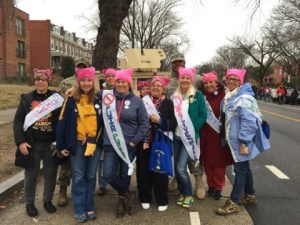
It was no ordinary outing, and it was no ordinary day.
We were going to Washington, D.C. to join the Women’s March on Washington and express our concerns about newly inaugurated President Trump.
I’m tired of people telling me that I might as well be wishing the pilot of the plane I’m on to fail. I’ve tried to explain that the pilot doesn’t even understand the control panel, that the ride is already quite bumpy, and that he’s threatening to throw some people off without a parachute. We need to find a way to steady the plane and correct the flight pattern. But that message seems to fall on deaf ears.
I’m saddened by people who belittled the march or claim that our country already ensures we have equal rights. This  march wasn’t about what some of us already have. It was about what so many individuals are at risk of losing. This was not a march about traditional women’s rights or even reproductive rights (although some people chose to advocate for these issues.) It was a march about human rights for all people – people of different skin colors, people of different sexual orientations, people of different religions, and people of different countries of origin.
Most of all, I’m frustrated with people who claimed the marchers were out of line and disrespectful to the office of the President. First, the Constitution gives us the right to protest – it is vital to a healthy democracy. Secondly, the new President ran a campaign based on disrespect and hate. I cannot respect an individual who has belittled women, put white supremacists and racists in positions of power, selected a vice president who threatens the rights of the LGBTQ community,  called Mexicans rapists, mocked a disabled reporter, spoke of grabbing a woman’s genitals, and called those who disagreed with him “enemies.”
And so, my friends and I put on our pussy hats, and we marched.
There is so much I can say about the experience. I could describe the signs of Dr. Martin Luther King, Jr. quotes that lined the streets where we walked from RFK Stadium to the U.S. Capitol. I could describe how march participants were constantly thanking the police assigned to keep everyone safe. 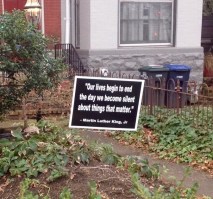 And I could describe how everyone was supportive, polite and loving to each other.
But there’s an old saying that pictures speak louder than words. And so, I share a few of the photos my friends and I took during the march and hope they not only show why we marched. It will show that this was not a self-serving protest proclaiming concerns about how polices will affect our bank accounts. It was about tolerance, acceptance and support for individuals and groups who are at risk of losing their dreams.


The Worm Farm, Freedom of the Press, and Journalistic Integrity
 I’ve never had a life when a pressing news story might not interrupt it.
When I was about four-years old, my mom would get me up before dawn and we’d walk to a kiosk-like structure (to this day I have no idea exactly where we went) so she could scrutinize a bunch of dials and jot numbers in her notebook. When we got back home, I would stand at her feet twirling the cord on the rotary dial phone that was attached to our kitchen wall as she called radio station KRCO with the local weather report.
That was the beginning of her journalism career, which would span more than four decades.
By the time I entered kindergarten, my mom didn’t go anywhere without a pen, a reporter’s notebook and her camera. She sought out anything and everything that could be meaningful in a small town: government meetings, human interest stories, horrific accidents and political issues. And I tagged along while she pursued that truth.
By the time I entered junior high school, I had been chastised for not shaking Senator Bob Packwood’s hand appropriately, had gained a more thorough knowledge of human behavior from a bunch of open-minded hippies at a commune, been a passenger in a small plane performing some scary dangerous aerobatics, and been the human subject in one-too many staged photos. Because if my mom wasn’t writing a story, she assumed the role of photographer for her friend Carolyn Grote.
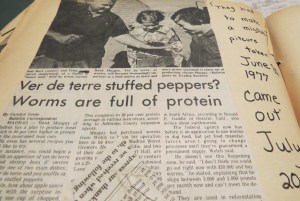
And that’s how my best friend and I ended up posing for a photo with a man who thought worm farms would be the wave of the future. And, to add insult to injury, the newspaper didn’t even get my name correct. Apparently, when my mom had submitted the photo in her usual forthright manner, she had noted that I was the photographer’s daughter. At some point in the pre-computer era of information transfer, I became the writer’s daughter and my last name changed.
I noted my anger in the scrapbook in which I documented everything I considered important in my life – from class photos to reading awards to wedding announcements. I obviously felt quite offended that a newspaper, an institution I had come to believe was all about the truth, would get my name wrong.
Forty years later, I am not only amused by my childhood indignation, but I still strongly believe in the integrity of institutions that are truly dedicated to pursuing the truth and sharing that truth with the rest of the world. I also know that there are wolves in sheep’s clothing who have built their business on the backs of genuine truth seekers.
There are businesses that market themselves as news organizations but have little, if no, interest in the truth. Instead they exist solely for profit or for political purposes.
There are people who market themselves as journalists but are really only peddlers of muck.
And there are citizens who will believe in anything that justifies their own belief system while dismissing anything else as fake. Even worse, they have begun to label journalists as dishonest or self-serving.
I am now married to a journalist and as a journalist’s wife, a journalist’s daughter, and as the mother of a journalism student, I am angered and frightened by the inability to distinguish between truth and lies. I also know that some people don’t believe I can make a non-biased case for journalistic integrity.
But for those who will listen, I can tell you the truth about real journalism.
Real journalism isn’t about making people happy – it’s about helping people better understand the world in which they live and to make the decisions accordingly.
Real journalism doesn’t fit easily into a family’s schedule. My husband keeps crazy hours, and my mother never knew when a breaking story would tear her away from her family.
Real journalism doesn’t involve turning information that comes from only one source into fact. Real journalism requires more than one source and documentation. Anything less is just a quote from someone who may or may not be telling the truth.
Real journalism doesn’t recognize holidays. Every year, I see the social media posts about stores that require employees to work on Thanksgiving or other holidays. No one ever suggests that journalists should ignore world events to eat turkey or open Christmas gifts. My mom and husband often worked on Christmas because, well, someone had to.
Real journalism is careful to distinguish between opinion pieces and news.
Real journalism is about accountability for those who deliver the news as well as those who read or hear it.
And real journalism is about uncovering the truth and sharing that truth with others no matter the implications.
And now, that pursuit of the truth is in jeopardy.
Last summer, I had the privilege of attending an event at the National Press Club. While I was there, I saw an announcement that then-presidential candidate Donald Trump had banned the Washington Post from having access to his campaign.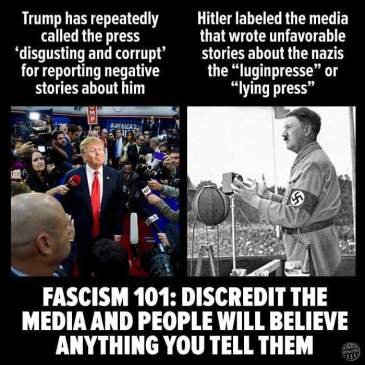
And that is the day I got really, really scared.
There is a huge difference between cracking down on fake news and cracking down on legitimate news sources. Those legitimate sources are what make the difference between living in freedom and living in oppression. And those who control the media control access to the truth.
It’s time we all begin to evaluate from where our information comes, arm ourselves with that truth, and defend those who share it with us.
Anything less is just not American.
The Gift in the Dead Man’s Email
 About ten years ago (before social media reconnected me with people who I never thought I’d hear from again), I received an unexpected email at work.
It was from a guy I’d known more than a decade earlier and who had faded into my memory like the vague shadows of a rear view mirror. He and I had once run in similar circles, but I’m fairly certain we never had a conversation that endured more than five-sentences. He’d certainly never occupied much, if any space, in my conscious or subconscious mind.
Which is why, when I’d received a chatty and rather lengthy email from him, I was more than just a little surprised.
He’d contacted me after reading a newspaper article in which I was quoted. He hadn’t known that I lived in the same town where his daughter and ex-wife resided, and seemed genuinely excited to re-connect.
I responded, and we exchanged a few more emails.
And then he died.
I learned about his death in the same way he’d found me – by reading about it in a newspaper article in the local paper. He had been in a head-on collision after apparently falling asleep at the wheel.
At a glance, there’s nothing particularly meaningful about this guy who was a small part of life, then wasn’t, then was again, then exited it completely.
We hadn’t been close nor do I imagine we ever would have been.
And yet, his random appearance after so many years then his abrupt disappearance after only a few days have stayed with me. Perhaps that’s partly because they serve as a reminder of how random and fragile life is. But they also suggest something more essential about how we live our lives.
We never know what the implications of our simplest interactions with others may lead. Acknowledging the presence of the quiet person in a group or sharing a smile don’t seem like grandiose gestures in a world overwhelmed by people who scream for, and often get, attention.
But then again, maybe they are actually bigger and more relevant than any action on a stage, or screen, or political platform can ever be.
Mark’s email all those years ago was a surprise because I never thought there was much worth remembering about me in those early days of my adult life. I certainly didn’t think someone I barely knew would reach out to me more than a decade later.
Yet he did. And even though our interactions were brief, he gave me something in return: a new-found understanding of my relevance in the past, in the present, and in the future.
As the Year 2016 ends and the Year 2017 arrives, the majority of my friends and acquaintances are glad to say goodbye to a year in which so many people died and the future of our democracy began to crack. Because of that, they are fearful of what 2017 may bring.
And yet, in truth, we can’t really live if we spend our energy in a soup of regrets, resentment and concerns about the behavior and actions of others.
All we can do is follow the Golden Rule and treat others in a manner that no one can criticize. And sometimes, when we do that, our actions may stay with others long after our own memories of them have faded.
A guy I once barely knew taught me that.
Rest in peace, Mark.
And rest in peace 2016.
Since I’m Not Catholic or a Lesbian…
On Sunday morning, I’ll be worshiping at a Catholic mass. I’ll also be briefly speaking about the Catholic  organization for which I work.
The Catholic Church has always been a part of my life during the Christmas season. My parents met on the campus of Notre Dame University back in 1961, and their annual Christmas cards from Father Theodore “Ted” Hesburgh always held a place of honor in their home.
Despite that, my parents aren’t Catholic, and I’m not Catholic.
Just learning to call their church service “mass” was an accomplishment for me. Less than a month after I started my current job, I made the mistake of walking into a Catholic Church on a Sunday morning and asking two women about “the service.” They looked at me blankly until one of them, with a note of disbelief, asked “do you mean the mass?”
I did. Since then, I’ve also discovered that a Catholic priest doesn’t deliver a sermon but instead gives a homily and that Catholics don’t say The Lord’s Prayer. Instead they say a shortened prayer called the Our Father. It has the exact same words as The Lord’s Prayer, but it ends sooner. Which means, if you are a Protestant (like me) in a Catholic Church, you quickly become the center of attention when you are still loudly reciting the end of the prayer you know while everyone around you is silent. That may actually be more embarrassing than loudly saying “Amen” at the end of the Pledge of Allegiance during a school program. Yeah – I did that once too.
But back to my original point: many people assume I’m Catholic because of my job (unless, of course, they get the opportunity to observe me during an actual Catholic mass.)
I had a similar experience back in the early 1990’s when I worked for the statewide AIDS Program. At that time, the popular belief was that AIDS was a gay disease. Therefore, many people assumed that I must be a lesbian, especially since my job required my going to some very interesting events at some very interesting places. Needless to say, I became quite familiar with the gay community.
But here’s the deal: not being Catholic doesn’t prevent me from doing my job or serving people in need any more than not being a lesbian prevented me from addressing the growing AIDS epidemic in the early 1990’s. And I’m fairly confident that the people who know me and have worked with me will agree.
What my work does require is that I accept people for who they are just as I hope they will accept me for who I am. In doing so, we can all work together for the common good.
During the last few months, I’ve witnessed too many individuals make negative comments about people who don’t share the same religion, the same sexual orientation or even the same skin color.
I just don’t get it.
Considering our differences as negative will never, ever allow us to work together. It certainly won’t help us identify and use our various strengths to build a better country. Most of all, it won’t help us eliminate hate, which is an enemy to all of us.
As a small child, one of the first Bible stories I learned was a parable that Jesus told in the Gospel of Luke. It went like this:
“A man was going down from Jerusalem to Jericho, when he was attacked by robbers. They stripped him of his clothes, beat him and went away, leaving him half dead. 31 A priest happened to be going down the same road, and when he saw the man, he passed by on the other side. 32 So too, a Levite, when he came to the place and saw him, passed by on the other side. 33 But a Samaritan, as he traveled, came where the man was; and when he saw him, he took pity on him. 34 He went to him and bandaged his wounds, pouring on oil and wine. Then he put the man on his own donkey, brought him to an inn and took care of him. 35 The next day he took out two denarii[c] and gave them to the innkeeper. ‘Look after him,’ he said, ‘and when I return, I will reimburse you for any extra expense you may have.’
36 “Which of these three do you think was a neighbor to the man who fell into the hands of robbers?”
37 The expert in the law replied, “The one who had mercy on him.”
Jesus told him, “Go and do likewise.” Luke 10:25 -37
I’m not a Biblical expert. Instead, I’m just a lowly social worker trying to do a small bit of good in a world that can be harsh, brutal and often downright cruel. But to make even the slightest difference, I have to work with and be a good neighbor to people who are extremely different to me.
I can only hope that this Christmas, all of you will “go and do likewise” as well.
Dear Daughter,
Dear Daughter,
Please humor me as I write this.
Even though you are as concerned as I am about the direction in which our country is headed, you are living your life with a positive attitude and a pocket full of possibilities.
At this very moment, you are out pursuing one of your many passions in a theater only a few miles away. That’s not difficult for you. Your love and enthusiasm for music, books, theater, science fiction, writing, art, and collecting odd and random pieces of information are inspiring and contagious.
But as your mom, I’m obligated to tell you that harnessing those passions is a challenge, and achieving your dreams won’t be easy.
As you’ve witnessed this past week, not everyone will agree with you or even want the best for you.
In other words, life can be tough. But so can you.
Which is why, even though I’m sure you’ve “got this” with or without your mom, I still have an obligation to share some incredibly important lessons that have taken me nearly five decades to figure out:
- Don’t believe all the hype about needing a relationship to make you complete. You are already complete. Relationships are great, but so are you. Gain your self-worth from doing anything and everything on your own. Carve your own space in the world instead of waiting or depending on someone else to help you create it.
- Never underestimate your abilities, your intelligence and your inner voice. Doubt is the enemy, and you can’t let it be part of your life.
- Ignore your critics. There will always be people who disagree with you, who are jealous of you or whom you might even intimidate. Don’t measure yourself by what they say about you. Measure yourself by how you treat them despite their efforts to undermine you.
- Surround yourself with people who are smarter than you, and let them inspire you strive to learn more and to be curious. Curiosity is incredibly underrated.
- Travel as much as you possibly can. You can’t make good decisions when you are making them from a limited world view.
- Study different religions. Faith shouldn’t be something you are spoon fed in order to make you feel better about your life. It should be something your embrace only after you explore other possibilities.
- Go with your gut. If you don’t, you will spend countless hours defending a decision out of guilt.
- Don’t use memes or trite quotes to express your opinions or feelings. No one will take you seriously if you steal the thoughts of others. Use your own words to share your most important thoughts and beliefs. If you can’t come up with your own words, then maybe you should question your own beliefs.
- Look directly at yourself in the mirror at least once a day and see only beauty and strength. Weakness only makes its way into the cracks of our lives if we let it. You are too strong for that.
- Spend at least one year of your life living by yourself. There is nothing more empowering than paying your own rent and your own electric bill while simultaneously answering to no one but yourself.
- Always have a back up plan and always make sure you are the hero in it.
- Never, ever stop learning and never, ever underestimate the power of a good education.
- Do as much as you can and go as many places as you can by yourself. Depending on others to go with you is a crutch that will always hold you back.
- Love your family but build a network of smart, strong women around you. Men are great, but they will never truly understand your struggles or perspective like other women can.
- Never forget that other people haven’t had the same opportunities as you. What some of us perceive to be weakness or ignorance might actually be a strength built out of struggles we will never truly understand.
So there you my amazing, wonderful, spirited, and talented 15-year-old daughter. I’ve handed you information that no one ever told me – I had to learn it all on my own.
So don’t take these words lightly. Treasure them, embrace them, and, most importantly, use them.
Our Country’s future depends on that.
Love,
Mom
Don’t You Dare Tell Me How To Feel
 I admit my emotions are still raw after Donald Trump’s election as President of the United States on Tuesday night. And yes, I’ve cycled through the stages of grief: disbelief to sadness to anger to acceptance then back to anger.
And then more anger.
I’m not angry with people who voted for Trump. Even though they voted for a man who used hate to garner much of his support, I understand they had various reasons for voting for him.
I’m angry because I am forced to accept their vote while most Trump supporters have shown absolutely no interest in understanding why I’m completely heartbroken for an America I thought existed. I truly believed that Americans could value the common good over money, dogma, single issues, self-interest and even the truth. And I was wrong.
I’m even more angry that I’ve been told to “just get over it,” “find something else to occupy your thoughts,” “accept God’s will,” and “stop being a tool of the liberal media,”
During my entire life, I have never, ever told anyone who was grieving to “suck it up and just get over it.”
Grief isn’t just about losing someone you love. It’s about losing something that you value and hold close to your heart. It’s about trying to get through a day in a fog when other people are acting as if nothing has changed. It’s about having to re-wire your brain to live in a different reality. Worst of all, grief harshly rips open old wounds and scars that some of us have spent decades trying to forget.
Which is why I was in tears this week when a friend asked the six women in the room “How many of us have been groped by a man we didn’t want?” Five of the six of us raised our hands. I was not the fortunate woman who didn’t raise her hand. I was the adolescent girl who had never even kissed a boy but was groped by a middle-aged man at church. I was wearing my favorite sweater on the Sunday when he grabbed my breast and told me I was developing nicely. I shoved that sweater to the back of closet and never wore it again.
That old scar tore open the day I heard the now infamous recording of Trump talking about “grabbing pussy.”
But grief isn’t just about the past, it’s also about losing hopes and dreams for the future. On Tuesday night, my hope for the future dimmed the second I received a text that my son, a college freshman, sent to his dad and me.
“Guys,” it read, “I’m terrified.”
And I knew exactly what he meant.
My son is a journalism major following in the footsteps of journalists on both sides of his family tree. His dad is a journalist. My mom was a journalist. His great-grandfather published a newspaper. And yet, my son’s professional aspirations were belittled and threatened by the future president of the United States. My son recognized this threat when, on the day his father and I visited the National Press Club, Donald Trump banned the Washington Post from covering his campaign.
Like me, my son completely understands that some media sources, both liberal and conservative, are truly biased. But he also knows that many journalists have dedicated their lives to uncovering and reporting the truth – whether or not they like or agree with it. All of their hard work is being completely disregarded and even threatened by a significant percentage of the American population. And he is scared.
I completely understand his fear.
A week before the election, I finished reading two books. The first, Lilac Girls, a historical novel by Martha Hall Kelly. Although it’s a work of fiction, the book follows real events, real people and the real tragedy of World War II when too many people were willing to blame, ridicule, persecute and ultimately kill people of a different faith because they believed in a leader who told them to hate.
In the second book, Sarah’s Key by Tatiana de Rosnay, a French Catholic girl is sent to a concentration camp because she has Jewish blood. Despite her prayers, her entire family is killed, and she begins to doubt the power of prayer.
That story is so fresh and so painful that I can’t believe this election is “God’s will” any more than I can believe the rise of Hitler was “God’s will.”
I will never believe that God favors one group of people or one set of beliefs over another. The God I know encourages love and acceptance.
And if you tell me I’m wrong, I’m going to get angry. Just like I’m going to get angry when you tell me that I simply need to “get over” this election.
I won’t hate. I won’t belittle. I won’t even tell people they are misguided or wrong.
But I won’t get over my anger.
And don’t you dare tell me I should.
The Meme I Hate the Most
 I regretfully admit that I was in my forties before I truly understood one of life’s most important tenets: being right will never feel as good as being kind. That’s why I almost didn’t write this.
I don’t want to shame or embarrass anyone who has shared or posted the meme that makes me cringe every time I see it.
I know that it was posted with the best of intentions by great people with good hearts, kind souls and a desire to make the world a better place.
But a statement suggesting that big homeless shelters are somehow better than big churches is, well, just wrong on so many levels.
Let’s start with the fact that we live in America, a nation founded by people seeking a right to worship in the way they wanted. Dismissing how others choose to worship is completely un-American.
Personally, I’m not a fan of churches with memberships larger than the population of the town in which I live. But that’s why I don’t attend one.
I understand concerns that the money used to build, maintain, and equip such large churches could be better used to pay for services to the disadvantaged, but couldn’t the same be said for almost any aspect of our own lives? If we had a smaller house or a less expensive cars, all of us would be able to give more to charity.
We should all spend less time judging and more time actually helping others.
Which brings me to the other reason I hate this meme.
Are there really people who think that building more and bigger homeless shelters is the answer to our homeless problems?
To me, that statement is like waving the white flag in surrender to all of the issues that cause homelessness. We are accepting that we are helpless in the face of the root causes, such as mental illness and social injustice. We are admitting that prevention doesn’t work and that people and systems can’t change.
And I’m not willing to accept that.
I work for a social service organization that fights poverty. Yet every day, I also fight a mentality that providing financial assistance and food to the poor is all we can do to help.
In reality, that’s doing people in poverty a disservice. It’s sending a message that they are not capable of doing more or being more. It’s telling them we’ve given up on the possibility that they are capable of helping themselves and helping others.
Addressing issues of poverty is hard work. It involves developing relationships with people who are often hard to love or don’t understand the manner in which middle class people live and interact. It’s our job to walk with them, teach them, and set expectations for them.
That’s not to say that there isn’t a place for emergency financial, food, and housing. There is. We can’t expect anyone to make big changes in their lives when they are in the middle of a crisis.
But if that’s all we do, then we are selling them, and ourselves, short.
So instead of calling for more homeless shelters, I want to hear a rallying cry for more preventive and support services. I want a united demand for better mental health and drug treatment programs. And, most of all, I want people to stop putting the band-aid of temporary shelter on gaping, life-long wounds created in part by the inference that some people should just accept their place in life.
How to Stay Sane Until November 8
 I’ve felt myself slowly sliding closer and closer to that proverbial deep end.
I made the mistake of reading social media posts from people who, for whatever reason, are incredibly afraid of the truth and therefore ignore facts, denounce credible news sources and cite dubious and/or biased sources to justify their own skewed beliefs. I’ve observed so-called Christians claiming that their version of Christianity is the only legitimate religion in the world. And I saw pictures of women making light of sexual assault.
My disgust hasn’t been limited to social media. My daily perusal of the Washington Post has provided regular reminders of the vitriol, misogyny, xenophobia, racism, disrespect and overall embarrassment of the 2016 presidential campaign.
I’ve wanted to close my eyes, put a finger in each of my ears and loudly yell, “La la la la la la la! Stop it! I’m not listening!” at the top of my lungs.
But I haven’t because I can’t. Of the billions of people on earth, I was lucky enough to be born in the United States and enjoy the rights provided to me in the 19th amendment (even though some avid Trump supporters are now in favor of repealing those rights).
So, despite how incredibly scary this election is or how history will some day portray it, I have a responsibility to use my rights (as they currently exist) to speak out.
But I can’t do that if I lose my sanity, so I must find a way to keep my grasp on it.
And to date, I have thanks to some bright moments as our nation faces such dark times.
For example:
- Staying up to watch Saturday Night Live has once again become worthwhile. Donald Trump can actually make me smile – when he’s played by Alec Baldwin that is.
- I’m rarely the smartest person in the room. I am surrounded by intelligent, well-educated people who amaze me with their breadth of knowledge and keen insights. As a plus, not only are they smart, but they are also very open-minded.
- Even though my man Jon Stewart is no longer on the Daily Show, my favorite acerbic political comedy hits the mark every single time. Each morning, I watch the first ten minutes from the previous night and am filled with appreciation that other people really do “get it.”
- The headlines about sexual assault and sexual harassment are increasing awareness of and support for survivors.
- There are a lot of men who are raising their voices in support of women and against white male privilege. I’ve loved spying on my son’s social media accounts, and, I have to say, I’m so proud of his acceptance of people of all genders, sexual orientation, race, religion and backgrounds (as long as they aren’t bullies and jerks of course.)
- Despite all the hate rhetoric, we ARE making progress toward being a more inclusive nation. On the day I was born, there was only one woman in the U.S. Senate and only eight in the House of Representatives. When I was a year old, Martin Luther King Jr. was slain. Just a year later, the Stonewall riot occurred in New York City, marking the beginning of the gay rights movement. Today, our president is a black man who has spent eight years in the oval office, gay couples have the right to marry, 104 women sit in Congress, and a woman is the Democratic nominee for President of the United States.
- History shows that good ALWAYS rises from the ashes. ALWAYS. No matter how horrible the circumstances, there will always be heroes and people who make history with their ability to not only rise above the fray but to make the world better for others.
And that is what I’m counting on to maintain my sanity after this election too.
For Just One Perfect Moment
 During all of my nearly 50 years, I can recall only one time that I literally stopped to think “This is one of the moments that I need to treasure. I need to store it in my memory right next to my heart so I can pull it out when times are tough. I need to remember how the sun feels on my skin and how I’m surrounded by people who only want the best for me. I need to capture the absolute essence of happiness that is permeating all of my pores so I can remember that life’s most important moments aren’t always big events but sometimes rather uneventful instances that actually mean everything.”
These thoughts came to me on a warm spring afternoon my senior year in college. My friends and I had skipped class to spend time at the lake at Strouds Run, a state park near the campus of Ohio University. My future was a complete unknown, and I had absolutely no idea where any of us would be in just a few short months. I had little if no money and no prospects for a job. And yet, I was completely happy to focus on enjoying an absolutely perfect moment.
It was so perfect that now, nearly 30 years later, I still remember how I wanted to hold on to it forever.
After that, life got more chaotic and often more serious. New people entered and exited my life. Circumstances changed often and significantly. And I changed.
Amid all that, I never again stopped long enough to recognize the importance of pausing to breathe in then hold on to a simply perfect moment.
That’s not to say I didn’t appreciate such moments. I did.
But there is a difference between appreciating something and treasuring it.
And lately, the person I used to be has been sending that reminder to the person I am now.
Maybe that’s because, with my son in college, I’m thinking more and more about that time in my life. Or maybe that’s because in two weeks I’ll be going to my college homecoming and reuniting with friends I haven’t seen in almost 30 years. Or maybe (and this is what I choose to believe), it’s because I’m tired of always worrying about what will happen when those perfect moments end and the complications, heartache and struggles return.
Because they always return.
But I’ve now lived long enough to know that the return of life’s problems provides even more reason to embrace those moments when all seems right with the world.
And I had one of those moments today.
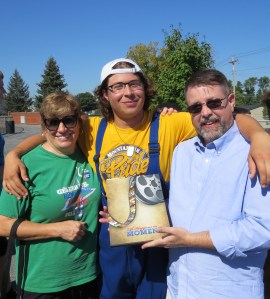
I hadn’t seen my son since the beginning of August when he left for band camp at West Virginia University. With the exception of a few texts and posts on social media, my husband and I haven’t heard much from him. But today, the Pride of West Virginia WVU marching band made a stop in our town in route to a game at Fed Ex Field.
We joined a handful of other local parents and fans as well as students from three schools to watch the band perform. When the show ended, we waited until the musicians had taken their instruments to the buses before coming back into the stadium for bag lunches.
And that’s when I saw my son for the first time in almost two months.
He broke into the same wide grin that he used to give me when I was picking him up at preschool. He doesn’t smile like that much anymore, and I don’t think it’s been captured on camera since he was a toddler. But he was looking right at me, broke into that wide smile and said “Hi Mom!”
And before I walked over to him for a hug and a photo opportunity, the me I used to be started whispering in my ear. She told me to treasure that moment. She told me I needed to store it in my memory and right next my heart so I can pull it out when times are tough. She told me I needed to remember how the sun felt on my skin and how I was fortunate to have people who care about me. And she told me that life’s most important moments aren’t always big events but sometimes rather uneventful instances that are measured by the smile on a child’s face and a love that is greater than any problem we will ever encounter.
And I listened to her.
Too Close For Comfort
 My 15 year-old daughter hates when I write anything without her approval and her editorial input. (For the record, she is an awesome editor.)
But sometimes she’s involved in something so much bigger than her or her editing skills that I am compelled to write without her approval.
This is one of those times.
To fully understand this story, you have to understand my daughter.
She is the girl who cares about every single living being and will always root for the underdog. She is the child who Googled how to provide emergency care for a baby squirrel and made me drive to the drug store to buy Pedialyte and a medicine dropper so she could save the one our cat dragged in.
She makes me buy tofu because it never breathed, can’t enjoy shrimp because they used to swim freely in the ocean and notes that every hamburger was once a cow.
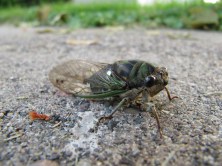
And that same love of every creature is why she saved a cicada that was struggling on the sidewalk.
We were walking our German Shepherd when I heard her gasp and tell me to stop.
“He’s struggling,” she said pointing at the cicada on its back with legs flailing helplessly in the air.”I need to help him.” (Personally, I have absolutely no idea how to tell a male cicada from a female cicada so I went with her assumption that the cicada was a guy.)
Kendall nudged “the guy” with her shoe so he could grab onto it.
And grab on he did.
Once he had flipped himself upright on her canvas shoe, he began to slowly make his way up toward the laces.
And that’s when the screaming started.
“Get him off!” my daughter screamed. “Get him off.”
The piercing quality of her screams gained urgency because I wasn’t acting quickly enough.
By the time the cicada’s tiny, spindly legs had begun to make their way up my daughter’s bare legs, I was convinced that one of the neighbors was calling 911 to report a murder in progress.
When I finally did locate a stick (because I didn’t want to actually touch the bug either), my daughter was almost in a state of panic. Thankfully, I was able to get the cicada onto the stick and then safely onto the grass.
Kendall almost immediately admitted her shame at not wanting to actually touch the bug she was trying to save.
I told her that was natural and she shouldn’t worry, but I couldn’t help but compare that situation to ones I witness almost every day.
I work at a social service organization with a mission of improving the lives of others, particularly those living in poverty.
On a regular basis, I see the generosity of others to help the less fortunate. And not a day goes by when I’m not in awe of individuals who don’t run screaming when they realize that a simple financial donation isn’t enough to raise people out of poverty.
Does the money help? Absolutely!
Is it the answer? Absolutely not!
While there will always be individuals in situational poverty who just need that one financial boost to get them back on the right track, most of the people who walk through my office doors aren’t on any track at all. Instead, they are stumbling through an obstacle course of life designed by people who live in a world that is foreign to them.
Some of them don’t understand the importance of education. Others were taught that arguing and fighting is the only way to get what they want. And some have never even experienced the security of being a priority to parents, caregivers or anyone else who wants nothing in return but their well-being.
Letting such individuals people into our lives can be difficult and frightening. As my daughter stated after the incident with the cicada “My screaming didn’t indicate I didn’t want to help, but I just freaked out when he actually touched me.”
I understand her sentiment, but that doesn’t mean we shouldn’t step outside of our comfort zones.
Saving a life – whether it is that of a bug or that of another human being – often requires us to do just that. It can get messy and dirty and sometimes even scary.
But if we really want to change the world, we have to touch the world we want to change.


 Just So You Know