Blog Archives
Fear and Self Doubt at the End of a Pointed Finger
 A few months after I moved to West Virginia from Oregon, a girl in my junior high gym class pushed me into a dark corner of an unused shower, got in my face and screamed at me for being too smart. As she pointed her finger into my chest, she told me that I had better stop acting like I was better than everyone else. She was joined by two other girls whose spittle sprayed across my face as they railed at me – screaming that every time I got a high score on a test or assignment, I ruined the curve for everyone else. They also told me that I talked funny, should accept I was in West Virginia and needed to start acting like it.
Even though the incident probably lasted only a few minutes, the repercussions have lasted my entire life. Yet I never told anyone about what happened, and, up until now, it’s been a secret between me and the three others involved.
But this week, with all of the negative comments and finger-pointing after the presidential election, the memory has come flooding back.
After the incident in the shower, I hated myself and believed I was somehow to blame for the situation. While I never purposely got a bad grade, I was still bullied into submission. I spent years locked in the prison of being a follower rather than an individual. Throughout my adolescence, most of the opinions or beliefs I espoused weren’t really my own. Instead, I was simply parroting what I had heard and what I thought would help me fit in.
Even worse, I was full of self-doubt about who I was and what I believed.
Thankfully, I grew up and I grew strong. I grew to be an independent woman who could think for herself, believe in her own intelligence and develop a conscience that extends far beyond her own wants and needs. I also grew into a woman who isn’t tolerant when people make judgments about or reject someone who acts or thinks differently than they do. I know all too well what that feels like.
That’s why some of the harsh comments and reactions to this week’s election took me right back to the shower where I was being bullied.
I understand why some people are angry and frustrated. I felt the same way after the 2000 and 2004 elections. But I didn’t to purposely make others feel bad about their beliefs and opinions. Yet that’s what I’ve been witnessing, and to me, the reactions mirror how the girls in the shower treated me.
People are angry at the election results and are trying to find someone else to blame. The girls were angry about their own grades and had to find a scapegoat, which was me.
Romney supporters are screaming that those who voted for Obama are idiots, morons, traitors and worse. The girls didn’t question my intelligence, but they did question my standards and integrity.
Some extremists are complaining that Obama rallied minorities and people on welfare to vote for him and, in those complaints, they are insinuating that these individuals don’t have the same status as “real” Americans. The girls complained that I, a newcomer to a community where they had lived their entire lives, should be conforming to their definition of normal.
The main difference between now and when I was a teenager is that I am not going to be quiet when I hear or witness such behavior. It’s wrong and people should be told it’s wrong. Neither do I feel bad about myself or my beliefs. I now recognize that anyone who points a finger is simply trying to transfer their own fear and self-doubt to someone else.
Instead of pointing fingers we should be joining hands so together we can tackle some of the tough issues we face. After, all, it’s’ hard to be angry, fearful or full of doubt when your fingers are touching someone else’s.
2 and 1/2 Foolish Wishes
 If I had a genie that granted three wishes, I would have almost wasted them this past week.
Instead I only hypothetically wasted two and came very close to wasting the third.
My preoccupation with genies and wishes began when my daughter told me about a recent in-class writing assignment. She and her fellow sixth grade students were given the scenario that they’d released a genie from a lamp and had three wishes to use in a week.
“The only rule,” my daughter explained as I was driving to her dance class, “was that we couldn’t wish for more wishes.”
“What about wishing for magical powers?” I asked.
She thought for a minute then said, “It depends on what kind of magic.” She didn’t elaborate, so we sat in silence for a few minutes.
Then I had to ask, “Well, what were your wishes?”
She turned and gave me an exasperated look. “You’re not going to write about this are you?” she asked.
I didn’t think I would, so I didn’t really lie. “Of course not,” I said.
“I wished for a rainbow-colored unicorn, a black Pegasus like Blackjack from the Percy Jackson books and telepathy,” she said.
At the time, I was simply amused by her choices, but then my imagination took hold and I began to pretend that I too had found a magic lamp with a genie who granted three wishes. I was sure my wishes would be much more meaningful and beneficial to society.
I was wrong. Despite what I thought were good intentions, my wishes were probably more foolish than my daughter’s.
My first was for everyone to see the true colors of a person I’m pretty sure has narcissistic personality disorder. Granted, my clinical training is limited to a few classes in graduate school, but he has most of the of the classic characteristics. He not only lies but also he believes his own lies. He manipulates yet does his best to convey that others are the ones being manipulative. He expects everyone else to go along with his plans, doesn’t listen to anyone he doesn’t deem worthy, takes advantage of others and exaggerates his skills and talents. This week, when I realized how many people either don’t recognize or don’t want to recognize this, I’d had enough. I wished everyone else could see through the bravado. But if that happened, I later realized, his gigantic ego would be injured but he’d still carry on with his life. Others could be hurt much more, and then I’d be as selfish as he is. That was an incredibly foolish wish.
My second wish came after looking at a Facebook news feed and witnessing what I deemed some incredibly stupid posts. Some people were sharing inappropriate details about their personal life and health. Others were posting photos of themselves that screamed “pay attention to me.” And then there were the completely inaccurate and misleading political posts. I wished that Facebook had an automatic editor that screened inane and inaccurate posts then provided genuine feedback as to why the edits were made. I smiled at the thought of opening up Facebook to a much more rationale, intelligent and genuinely humorous news feed. But then I realized what a damaging and self-righteous wish that was. What I was really asking for was a limit on free speech. And no matter how inaccurate, hurtful or stupid the information is that people are now putting on the internet, many Americans fought and even lost their lives for their right to do so. I had wasted another wish.
That’s why my third wish came very close to being a wish to get rid of mirrors.
Mirrors generally don’t benefit society. They either encourage vanity or dissatisfaction. After my first two wishes, I didn’t want to look in the mirror anyway. My avoidance of a mirror had nothing to do with my outward appearance and everything to with lifelong aversion to self-absorbed and self-righteous people. If I looked into the mirror after my first two wishes, I would have been face-to-face with just such a person. But maybe that’s why I wanted mirrors eliminated.
I was on the verge of making the mirror wish when I received an email that jerked me back to reality. The son of a friend had been very seriously injured, and all anyone could do is pray. In comparison, all my wishes seemed trivial and ridiculous. I realized we are all on this planet together and finding fault with each other really doesn’t do us any good in the end. Neither does thinking that we know better than others.
I’m still in the process of learning that lesson the hard way, but I also have one imaginary wish left. If it were real, I’d use it to wish we all had just a bit more patience and understanding. No matter how I look at it, I don’t see how this is foolish. It doesn’t break the rule of wanting more wishes, but it could be magical and transform humanity.

Lessons in Trees from the View on a Bicycle Seat
 As a child, I always felt at home among the trees and full of exuberance on my bike.
As an adult, not much has changed.
While my father, a forester, no longer teaches me about the secrets hidden in the shape and color of a leaf or in the texture of bark, I am still enamored of trees. And riding a bike is still one of my favorite pastimes. Few things bring me greater joy than taking a lazy bike ride among the beauty and wisdom of the trees.
I had that opportunity this past Sunday when I took advantage of a gorgeous autumn afternoon to ride my bike and attend to the lessons of the trees.

Lesson 1: Sometimes when you blend in, you bring out the best in others. On Sunday, this tree next to the church across from my neighborhood had started to model its fall colors. It was amazingly beautiful, but its splendor didn’t lie simply in its appearance. Even though I drive by that church every day, I’ve never paid much attention to it. But the hue of the red leaves was a perfect match to the color of the bricks, and I was struck by the church’s design.

Lesson 2: Loss and suffering are the best reminders of all that we still have. The past year was a tough one for trees. Almost exactly a year ago, we were hit by a bizarre October snowstorm that knocked down trees still heavy with green leaves, including two in my own yard. In June, we lost even more trees to a land hurricane, also known as a derecho. For weeks, the sound of chainsaws in the morning was as common as the sound of crickets in the evening. I hated that sound. Every time a chainsaw revved up, I knew we were saying goodbye to another tree. But riding my bike on Sunday, I passed hundreds of trees that had never been knocked down, and I felt a deep sense of gratitude for all those still standing.

Lesson 3: Happiness comes from accepting your circumstances and recognizing that, at times, your place might simply be to support someone else. These two trees in an expansive cornfield have always seemed out-of-place to me, yet each year they grow stronger together. From some angles, they are two distinct trees that mirror each other. From other angles they appear to be one. But from all angles, they remind me of two people who hold each other up in a tough environment that could easily defeat someone left all alone.

Lesson 4: The greatest sense of belonging comes from owning your own style and surrounding yourself with people who appreciate differences. Every time I pass these three trees on the edge of a field, I imagine them as a group of women all throwing their arms up in laughter. Each is unique: one is flamboyant, one is plain with a toddler at her knee and one is aging rapidly. Despite their differences, I see them as a united group that delights in life’s simple pleasure of friendship.
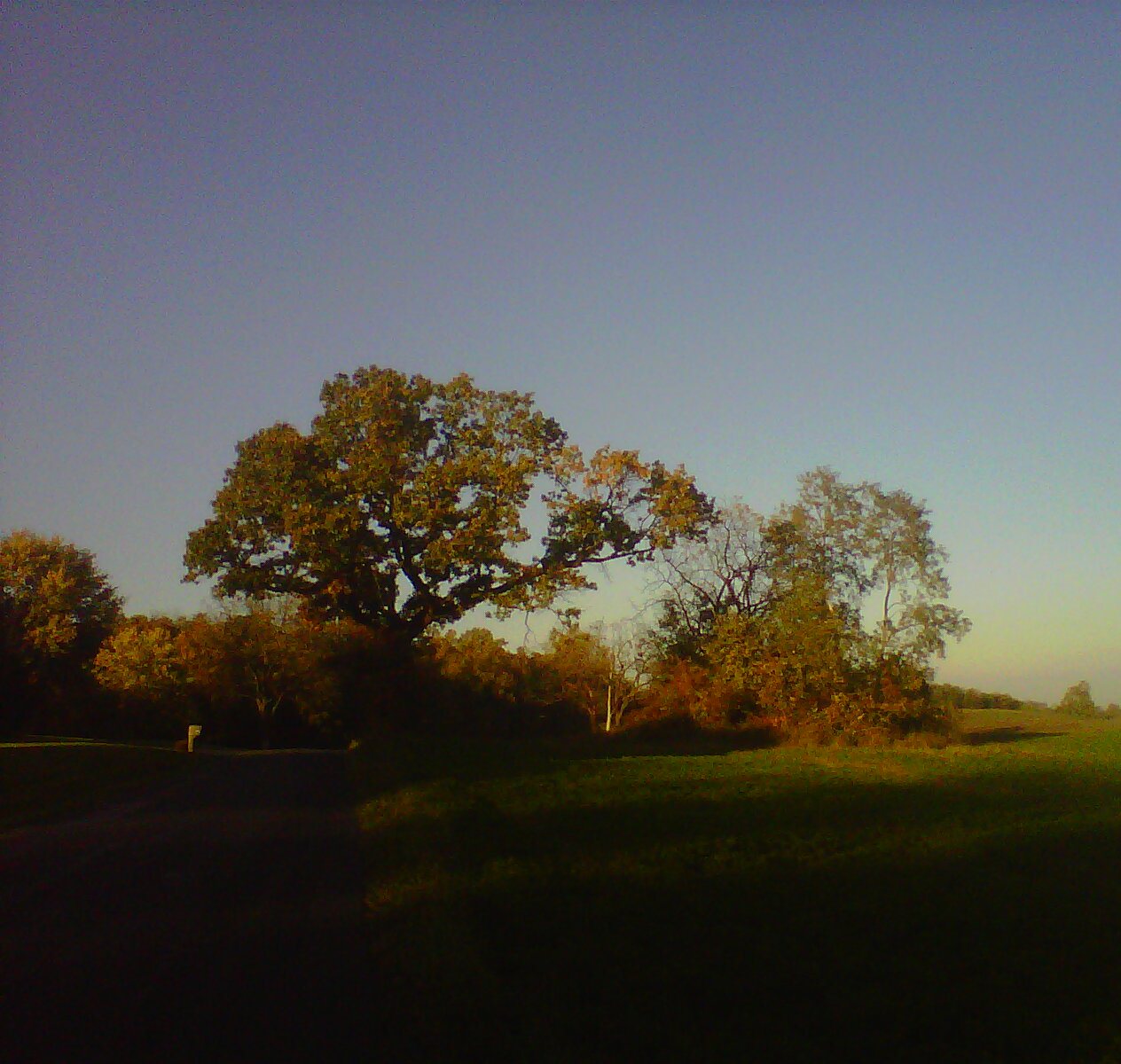
Lesson 5: Everyone has scars, but we can choose to let them weigh us down or strengthen us. Several years ago, I fell in love with a magnificent tree that simply owned the landscape. When it was hit by lightning, I was sure it was damaged beyond repair. About half the tree was dead, and several branches hung black and leafless. But this tree didn’t give up and has slowly recovered. It’s now smaller and has a different shape, but in my eyes, this survivor is a giant.
Yesterday, I took the same bike ride that I did on Sunday. The trees had already changed dramatically. Some displayed brighter colors of red, orange and yellow while others were losing their leaves. Most shone in a different light. But these changes gave me one more lesson: savor every beautiful moment, because nothing will ever be exactly the same again.
The Backside of a Bull and a Garden Full of Rodents
 I had an unexpected epiphany after spending time with a bronze bull and a garden full of rodents in the financial district of New York City last month.
The moment came at the end of a long weekend celebrating my daughter’s upcoming birthday. She, her best friend, her best friend’s mother and I packed a lot into 48 hours. By Sunday morning, when we were exploring Lower Manhattan, we had slowed considerably.
The city, on the other hand, wasn’t slowing down at all. People crowded narrow sidewalks under the watchful eyes of police officers on every corner. While the officers graciously responded to requests for photos with tourists, their ability to give good directions was questionable.
Despite their help, we were finally able to locate the Charging Bull on Wall Street. Since the bull had never been on my list of sites to see, I hadn’t expected the frenzy of people mobbing it for photos. Many were lined up behind the bull to touch its anatomically correct underside for good luck.
The eleven-foot-tall bronze sculpture is supposed to symbolize aggressive financial optimism and prosperity. Last year, when the Occupy Wall Street protests began, metal gates were set up around the bull to prevent it from harm. Now, the public can once again touch it, but judging by the police presence, there’s still concern about the safety of the more than 7,000 pound bull.
Personally, I think the concern about vandalism is a bit misplaced. I’m more worried about the almost worship-like reverence people demonstrate for an icon that represents an industry focused more on the value of money than the value of people.
Don’t get me wrong. I like money. I just think that, as a society, we’re too fixated on who has it and who doesn’t.
To me, the bull represents a culture rooted in money and the immense appeal that has. But when people go to great lengths to touch that lifestyle, they may miss seeing what’s really going on around them.
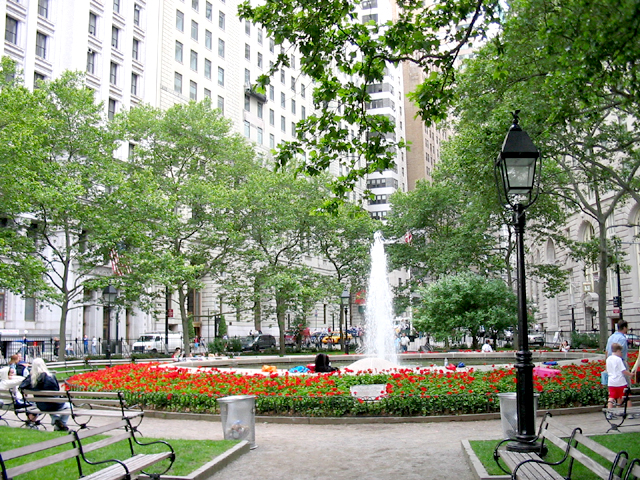 For example, just feet from the Charging Bull, there’s a garden full of rodents living off the crumbs of others. The mice live among the vivid red flowers in the circular garden around the fountain in Bowling Green Park where we ate our lunch.
What seemed like a quiet public garden was actually teaming with dozens, if not hundreds, of mice. When bits of bread, meat, tomatoes and even cucumbers dropped, they would scurry out from under the blossoms, grab their feast then rush back for cover.
Many of the people intent on enjoying the beautiful, late morning sunshine didn’t even notice the mice. Others were completely disgusted by them. No one wanted to touch them, and very few people wanted to feed them.
But my daughter and I were fascinated.
Although seemingly dependent on others for their livelihood, the mice certainly weren’t lazy. In fact, the were quite industrious. And even when vying for the same crumbs, they seemed to respect each other’s efforts.
That’s when I had my epiphany.
The mice represent all the low-income people who live and work right alongside those who are more financially secure and influential. They represent all those people on Wall Street who clean bathrooms and pick up trash instead of buying and selling stocks and bonds.
And even though they live in the shadow of a bull that people fondle for good luck, they also represent a great deal of dignity.
My Lifetime Battle with the Big, Yellow School Bus
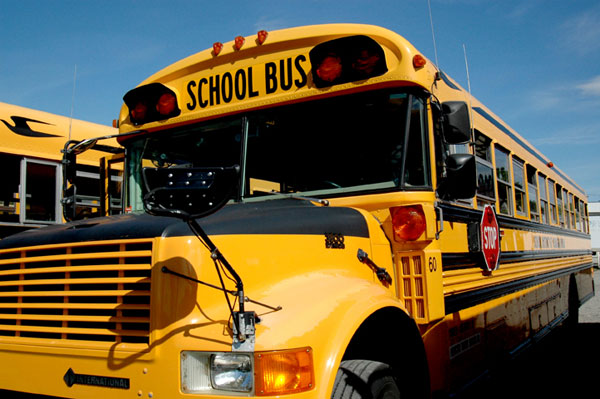 This Monday, my son starts high school and my daughter starts middle school.
I could grieve how quickly the years have flown. I could pull out baby pictures and wallow in nostalgia. I could reminisce about how, just yesterday, my son was starting kindergarten.
Or I could celebrate that, because both of my children are attending school out of district, my epic battle with the big, yellow school bus may just finally be over — permanently.
The battle began when I was in first grade. Having spent kindergarten walking to school, I was ecstatic that we had moved to a house that required riding a school bus.
My enthusiasm didn’t last long.
The problems started on the first day of school when I thought I could handle the bus ride all by myself. And I did. Going to school was simple. The bus picked me up in front of my house and dropped me off at school. My biggest challenge was getting to my classroom.
Going home proved a bit more difficult. I got on bus number 25, rode it to my street and rode it to my house. I then rode it past my house because my timid calls to stop weren’t heard over the din of bus chatter. Even though the bus failed to stop at my house, it did seem to stop at almost every other house in the county. When her route finally ended, the bus driver turned around, gave me a pointed look and asked me where I lived.
I proudly declared my well-memorized address “1910 Bean Drive.”
The bus driver did not look happy. “We went right past there. Why didn’t you get off?”
“Because you didn’t stop,” I replied.
Without a legitimate comeback, the bus driver had to make a decision. She’d take me home on her next run. Surrounded by kids two or three times my age and size, I finally made it home to an almost hysterical mother.
I wasn’t used to my mother being so worried. I was used to my mother being in control of every aspect of my life… including what I ate. And while I pined to have a lunch box with a bologna sandwich on white bread and ding dongs like all the other kids, my mom packed a very different lunch. Ever day I carried a brown bag (that she ask I bring home to be recycled) with a peanut butter (no added sugar) and honey sandwich on home-made wheat bread, carrot sticks, an apple and powdered milk in a square container with a lid (no thermos for me).
I hated that milk. I never drank that milk. But day after day, my mom packed it in a brown paper bag and day after day I carried the brown bag and the container still full of milk home from school.
Then, the inevitable happened, and I dropped the bag onto the floor of the school bus. The milk, which was already at room temperature, spilled everywhere. The bus driver was not at all pleased with me, so I should have known the situation would get even worse. And it did.
Only weeks later, my mother put her car in the shop near my school and needed a ride home. Being practical, she arrived at my school just as classes were ending and climbed onto bus number 25 with the first and second graders. At least she tried to climb on the bus, but the driver wouldn’t let her.
My mother insisted that there was plenty of room and the bus was going right to our house anyway. The driver told her no. After what seemed like the longest argument (and one of the most embarrassing moments of my life), the principal finally came over to settle the matter.
My mother had to find her own way home.
I’m pretty sure that was the day my name was officially added the national school bus “beware of this student” watch list. (That’s the list distributed nationwide to every single school bus driver.)
The list is the only explanation as to why, even after I moved across the country, the new school bus driver didn’t like me either.
In that case, the feeling was mutual. I had no respect for a woman who, instead of looking at the road, was constantly looking in the mirror to see what the kids were doing. After a few very close and dangerous calls on winding, West Virginia roads, my friend and I decided we’d had enough and organized a protest. We told everyone on the bus to duck down below the backs of the seats. The next time the driver looked in the mirror, her bus appeared empty.
We though this was hilarious. Our bus driver didn’t. In fact, she was so angry, she stopped the bus and marched up and down the aisle taking names and phone numbers Once she got mine, she seemed satisfied in learning that the girl on the national watch list was the culprit. What she didn’t expect was that my parents sided with me. They didn’t, however, think the incident warranted a life-time pass from riding the school bus, and I was still forced to ride for a couple more years.
But now, my days on the bus have come to an end, and, except for a few field trips, they have ended for my children as well.
Like so many other parts of childhood, all that is left are the memories and the lessons learned. Now it’s time to make more memories and learn something new. I’m just glad that neither is likely to involve a big, yellow school bus.

A Country Road, a Locked Gate and Barriers to Endless Possibilities
 I can be pretty slow at times, especially when I ride my bike. But that’s not necessarily a bad thing. As the only person actually peddling on a road where others are simply pushing a gas pedal, I notice a lot.
For the past couple years, I’ve been regularly riding on a country road that gives me a great deal to think about:
A plowed cornfield with only one stalk left standing;
A barn with what appears to be an old American flag I can’t identify;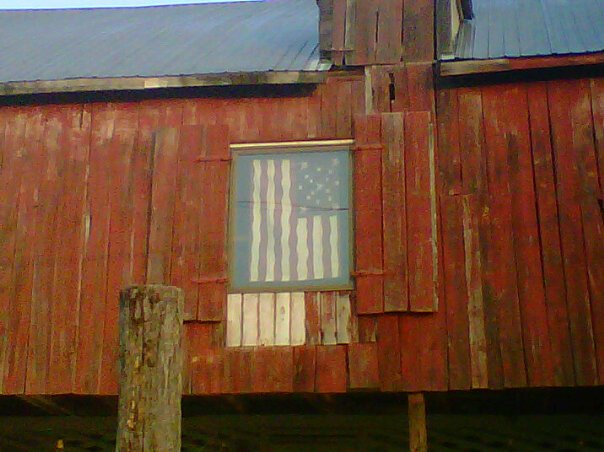
And a gate that, for all I can tell, is completely ineffective.
The gate crosses a gravel road that runs between two fields. Until this week, green stalks of corn filled one of the fields, while the other had no discernible crop. This week, both were plowed. So the road now runs, and eventually dead ends, between two muddy, empty fields.
Other than providing farm workers easy access to the fields, the road doesn’t serve much purpose. It certainly doesn’t lead anywhere interesting or provide enough privacy to be a lovers’ lane. Because of that, the importance of a locked gate with a fading private property sign eludes me. Since there is no fence on either side, the gate isn’t really preventing anyone from simply driving around it.
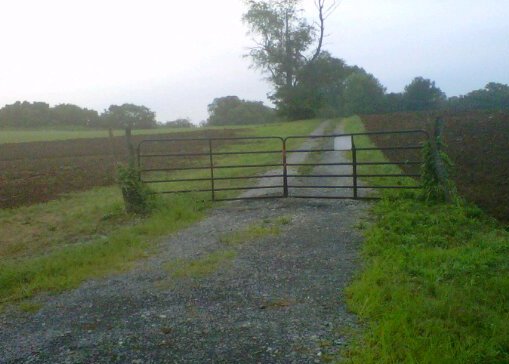 After passing the gate day after day, I finally took a picture and posted it on Facebook with a question about its purpose. I got a variety of responses ranging from people who took the question seriously to those who didn’t.
The general consensus was that there had probably been fences around the fields at some point. When they were torn down, the gate stayed to mark private property.
While this concept still puzzles me, it also reminds me of human behavior in general: we often tear down fences but leave gates standing.
We say we believe in equal rights and demonstrate this by tearing down barriers for others. Yet we still leave up gates to protect what we believe we earned or deserve and fear others may access or take away. Sometimes these gates are words. Sometimes they are the policies we support. And sometimes they are even religious beliefs.
But whatever the reason, the gates are there. And, just liked the locked gate I pass every day on my bike, they provide a false sense of security for some and serve as a challenge for others.
At times, I know I’ve protected my own gates. But the rebel in me also spends a lot of time thinking about how to get around gates. And I admit, there have been many times when riding my bike on the country road, I’ve been tempted to ride around the gate. The silliest thing is I would have no desire to ride on the gravel road if the gate weren’t there. I certainly don’t want to cause any problems or do any damage.
But then, I don’t think people who are seeking greater opportunities have any desire to trample on the achievements of others. They just know the possibilities would be endless if they weren’t constantly slowed down by so many locked gates.
Fools On An Artificial Ladder
 Even though I like to consider myself an open-minded and fairly accepting individual, I haven’t always behaved in a manner that demonstrates this. In fact, there are times when I’ve acted foolishly and treated people horribly.
One of my worst infractions occurred when I was a teenager in a place that was supposed to promote love and acceptance: church.
At the time, our church was predominantly middle class. Parishioners were well-groomed, nicely dressed and carefully coiffed when they arrived on Sunday morning. Most were neighbors or co-workers who socialized with the same general crowd and who shoveled their dirty laundry into the closet to either hide it or pretend it didn’t exist.
Their equilibrium was disrupted one Sunday when a family from a nearby trailer park came to church and then began attending services on a regular basis. The parents and children were certainly wearing their Sunday finest, but they were anything but well-groomed and carefully coiffed. I remember the other adults at church were a bit patronizing but outwardly nice. The kids weren’t. We did our best to exclude the children, and we made fun of them behind their backs.
Eventually, the family stopped coming to church, and until recently, I had forgotten about them.
But I was reminded of them again a couple of weeks ago when a young woman who works at a local restaurant told me about her Sunday regulars. Her customers’ routine is to go out to eat after Sunday service, but the dish they enjoy most isn’t on the menu. Instead, they loudly and openly share what everyone else did wrong during the church service. They complain about children who misbehaved, and they make fun of the appearance of some of the adults. Apparently, they are too busy judging others to hear the sermon.
What I can’t fathom is why, as older adults, they feel the need to act this way.
As an adolescent, I know my behavior was contrary to the way I was raised. But, I was insecure and believed that I wouldn’t be at the bottom of the social ladder if someone else were there instead. As an adult, I realize how inconsequential, meaningless and ridiculous that social construct is. I also realize that there are a lot of adults who still buy into it. They falsely believe some people are superior to others and that asserting their superiority will ensure their place on their senseless social ladder.
For the most part, their behavior isn’t nearly as blatant as the hypocritical, church-going restaurant patrons, but it is still based on their need to affirm their status. Take, for example, a local non-profit leader who complained about business people being asked to attend community meetings at the local Department of Health and Human Resources office. This individual, who also lays claim to being a good Christian, said that community and business leaders shouldn’t have to be in the waiting room with the people asking for help/welfare.
Not to be presumptuous, but I’m pretty sure Jesus would point out that the people in the waiting room are the same people the community leaders see every day at school functions, churches and grocery stores and that the people on the presumed top of the social ladder are no closer to God than the people on the bottom. That’s assuming he would even acknowledge such a foolish concept to begin with.
The Insanity of All This Violence is Driving Me Crazy
Just over two weeks ago, while families gathered to watch Fourth of July fireworks at a park less than a mile from my home, a gun was fired. In addition to shooting the intended victim, the gunman also shot and injured an eight year-old girl.
Just two days ago, a man opened fire in a crowded movie theater in Aurora, Colorado, He killed 12 people and injured dozens more.
While one incident was right down the street and the other was across the country, my initial reaction to both was the same. I wanted to hug my children and thank God they were safe. And then I wanted to scream about the insanity of it all: “Why does such senseless violence keep occurring and, even worse, why is it creeping into my world?”
In “my world,” the only violence we ever witness is in the form of entertainment: on television, in the movies and in video games. It’s not a place where people have to fear actual violence.
In “my world,” safe neighborhoods are easily defined, and we avoid violence by avoiding unsafe locations. It’s not a place where my daughter’s friends tell her “that shooting at the park was in my backyard.”
In “my world,” guns are used for hunting animals and shooting targets – not for shooting people. It’s not a place where people use violence to resolve a dispute or share their rage with the world.
In “my world,” when a horrible crime does occur, we rally around and pray for the victims and their families. It’s not a place where, only hours after a shooting, we try to turn a tragic event into a political advantage.
But I’ve come to realize that “my world” is a complete fantasy, but it’s a fantasy I also want my children to believe.
On July 5, I was driving by the park where the shooting had occurred only hours before. My daughter, sitting in the passenger seat, noticed all the people picnicking and swimming and asked “why are those people even at that park? Don’t they know it’s dangerous.?”
She was talking about a park that she has walked to and played in hundreds of times: a park where I walk my dog every day: a park that is the gathering place for most community events in my town.
And so, I told her that the shooting was an isolated incident and she shouldn’t worry or avoid the park.
What I didn’t tell her was that if we tried to avoid every place where there’s been gun violence, our options would be very limited. At the time, movie theaters weren’t even on my radar.
But theaters are creeping onto my worry list now.
Just last night, while my daughter was performing in a local production of “The Wizard of Oz,” the alarms in the theater unexpectedly went off.
No one in the audience moved, and the youth on the stage continued to perform. We were probably all hoping the same thing: that the smoke on the stage had tripped a fire alarm. We were also probably all just a little worried about the same thing: that someone with a gun had entered the building.
The alarm was turned off, my concerns ebbed and I went back to the fantasy of “my world.” It’s actually a very nice place, and I like living there. If I didn’t, I’d go crazy with worry.
Sadly, I’m having to leave it more and more often. And until we stop arguing about solutions and actually start working together, “my world” never will be a reality.
Revelations from a Former Republican
 During a recent conversation, I shocked a friend when I mentioned that, when I turned 18, I had registered to vote as a Republican.
“You were NOT a Republican,” she stated. “There is just no way.”
“Not just a Republican,” I replied. “I was actually heartbroken that, because of my age, I missed voting for Ronald Reagan by only three months in the 1984 election.”
Since I was talking to my friend on the phone, I can’t confirm that her mouth was actually hanging open, but I’m pretty sure it was.
“What happened?” she finally asked.
“I don’t know exactly,” I replied. “But by the time I graduated from college, I’d changed political parties.”
In all honesty, I do know what happened. I’d identified the core values that would guide the rest of my life, and they simply just didn’t align with the Republican Party.
I don’t think my friend, or anyone else, really cares about how I arrived at my decision. And, until this past week, I didn’t feel any need to explain.
But after witnessing one too many debates about how people who receive SNAP (more commonly known as food stamps) may be eligible for additional benefits if they were affected by the derecho (http://www.catholiccharitieswv.org/index.php?option=com_content&view=article&id=300%3Awv-long-term-disaster-recovery-derecho-storm-a-power-outage-disaster&catid=45%3Aannouncements&limitstart=1), I felt the need to say something.
On the surface, the gist of the conservatives’ argument against the additional benefits was that the government was once again frivolously spending taxpayers dollars.
But, as the arguments continued, a different, more self-centered concern actually emerged. Several people were turning the discussion into a conversation about fairness, or more particularly unfairness, in regards to their own lives: ” I lost all my food when the power went out, and no one is paying me to replace it.” “I have a lot of health care bills, and the government isn’t stepping in to help me.” “Basically, I’m being punished for having a job. ”
Sadly, I could relate to their complaints. That kind of thinking was the reason I had originally registered a Republican.
At the age of 18, I really did believe that everyone had an equal opportunity in this country, and if a person worked hard and persevered, they should be able to meet their own needs. If they couldn’t make ends meet, they needed to work harder or get a better education to get a better job. I believed in responsibility: if people made bad decisions then they, not I, should have to pay for those decisions. And I believed that our leaders had our, not their own, best interests at heart.
I held onto those beliefs because I was surrounded by people who believed the same thing. Then I went to college, and I was surrounded by people who didn’t.
I met too many people who had been denied equal opportunity through no fault of their own. I met too many people who had made poor decision after poor decision only to be bailed out by family while others fell into bad luck and had no one who could help. I learned more and more about greed, inequality and political corruption. And I learned more about myself.
At some point, I was confronted with the ultimate question: is life about what I can do for myself or is it about providing unconditional support for others, even when it sometimes costs me?
I chose the latter.
Don’t get me wrong. I can be very self-centered, and I know a lot of Republicans who are anything but selfish.
I just don’t think the core of my political beliefs should be about what makes my, or my family’s, life better or easier. I think public policy should be about ensuring the safety and well-being of all Americans, particularly those who haven’t had the same privileges that I’ve had: good parents, a good education, a decent I.Q. and a lack of any significant health problems.
When I look back on 18-year-old me, I still understand where I was coming from.
I still think people should do their best and be responsible for their behavior. I also think corporations and millionaires should do the same.
I still believe in hard work and self discipline. I also believe that too many people work very hard and still don’t get paid a fair wage so they can’t make ends meet.
I still wish life were fair. I also realize that making life more fair for everyone requires public policies that provide additional support for those who need it.
The difference between 18 year-old me and 45 year-old me is I don’t think the world owes me anything. Instead, I think I owe the world. The difference is I know some people put their own interests above the interests of others, even when it comes to the environment or safety or health. And I know that the most effective way to ensure such people do minimal damage is to implement and enforce regulation.The difference is that even though I don’t agree with wasteful spending, the wasteful spending I’ve seen isn’t for the programs intended to make the lives of most Americans better.
The difference is that I have enough life experience to know that life isn’t about being fair.
And that’s why I got so frustrated with the debate about additional SNAP/food stamp assistance. The debate wasn’t about whether people needed the assistance. Instead, it was a debate about fairness. I’m pretty sure if you asked the majority of people who were eligible to receive the help, they would be the first to tell you life isn’t fair. If it were, they’d be fortunate enough to afford to replace their own groceries while complaining about those who couldn’t.
Burning Down Our House With Debates About Health Care
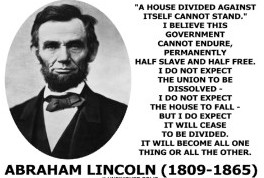 In 1858, Abraham Lincoln made his famous “A house divided cannot stand” speech.
He was debating Stephen Douglas about the issue of slavery. Douglas believed that each new territory or state should be allowed to decide whether it would permit slavery. Lincoln believed that the nation as a whole should take stand. At the time, a lot of people believed whites to be superior to blacks and that owning another person was justified based on skin color and bank account size.
We all know who eventually won that debate. But even after the slaves were free, too many people still believed in a superior race. And, for more than century, too many laws reflected their beliefs.
Now, more than 150 years later, I wonder how history will portray the politics of 2012 when the United States is once again a house divided.
Only this time, instead of being divided over slavery, we are divided about the purpose of government. But there is also an underlying debate very similar to the one being waged during the Civil War.
Too many people still believe that some individuals are superior to others. Only instead of color, they are claiming superiority based on the size of their bank account or their employment status. We have become a country that is debating whether we measure success in terms of dollars or in terms of human rights. We are debating whether accumulating possessions is more important than ensuring access to health care. And we are even debating whether or not poverty is a moral issue.
This has never been more apparent than with the reaction to the Supreme Court’s decision that the Affordable Health Care Act is Constitutional.
The fact that people have different opinions about the decision doesn’t bother me. I expect that. Different opinions are healthy. What bothers me is the judgmental comments and self-righteous outrage that some people expressed.
I was particularly struck by comments from a public school teacher who said the Supreme Court’s decision was immoral. She followed this by saying “I work for a living. I don’t want my hard-earned dollars to support people who depend on the government.”
Since a public school teacher depends on the government (i.e., taxpayer dollars) for her paycheck, I was dumbfounded. I wonder how she would react if the country engaged in a debate about the importance of education and whether we are infringing on taxpayers rights by requiring them to pay for education.
At some point, our country embraced the belief that education is a right that every child deserves. We even took that concept a step further and mandated that children stay in school until a certain age.
If the issue were being debated now, there’s no doubt some people would be screaming that requiring children to go to school is unconstitutional and that hard-working taxpayers shouldn’t be responsible for the education of others.
Thankfully, most people recognize the importance of education, the benefit it has on a person’s future and the positive impact on a community’s economy. The same benefits can be attributed to access to health care, so I’m not really sure why we are so divided about the issue.
But we are.
Instead of debating how to help people, we are debating whether or not we even should. Take, for example, the comments of the previously mentioned public school teacher who claimed the concept of the Affordable Care Act is immoral.
Last time I checked, helping others was the definition of morality, not immorality.
But logic isn’t everyone’s strong suit. Many of the same people advocating for personal responsibility are also outraged that the individual mandate is part of health care reform. As explained to me, the purpose of this mandate is to encourage responsibility by requiring people to either purchase health insurance or pay a penalty to help cover the government’s costs.
Don’t get me wrong. I don’t think the Affordable Care Act is perfect, but at least it’s a statement about what a lot of people think is important. Actually, most people probably think access to health care is important. The dividing issue is about whether it is important for all Americans or only those who have employers or bank accounts that can cover the costs.
The debate isn’t going to end anytime soon. And with the presidential election season getting into full swing, discussions will get even more discordant.
I just hope that whatever the outcome, Americans can look back at the repercussions of this time with pride rather than shame. I hope we can say this is a time we stood up for the rights of all rather than for the benefit of some. And most of all, I hope we don’t divide and even burn down our house with our heated differences.


 Just So You Know