Blog Archives
365 Reasons to Smile – Day 63
I was once told that members of Generation X don’t have any heroes.
The explanation as to why makes sense.
We are the first generation that experienced the real-time exposure and humiliation of preachers (Jim Baker) and politicians (Gary Hart).
We are the first generation that experienced around the clock media scrutiny, the paparazzi and the loss of privacy.
But I disagree that we don’t have heroes. Our heroes are just different.
My heroes are the women who fought for equal rights. My heroes are the women who shared their own struggles and believed in me. And my heroes are the women who cared more about the needs of others more than their own needs.
I am incredibly fortunate that I personally knew many of these women.
I am also fortunate that others wrote books.
To Kill a Mockingbird is one of those books.
Harper Lee never wrote another because she never had to.
She said everything that needed to be said in To Kill a Mockingbird, and each time you read it, you discover a new truth.
Her one masterpiece always makes me smile.
Day 63: To Kill a Mockingbird Day 62: Green Lights Day 61: My Canine Friends Day 60: Differences Day 59: A New Box of Crayons Day 58: Bookworms Day 57: Being Oblivious Day 56: Three-day Weekends Day 55: A Cat Purring Day 54: Being a Unique Individual Day 53: Children’s Artwork Day 52: Lefties Day 51: The Neighborhood Deer Day 50: Campfires Day 49: Childhood Crushes Day 48: The Words “Miss You” Day 47: Birthday Stories Day 46: Nature’s Hold on Us Day 45: Play-Doh Day 44: First Day of School Pictures Day 43: Calvin and Hobbes Day 42: Appreciative Readers Day 41: Marilyn Monroe’s Best Quote Day 40: Being Silly Day 39: Being Happy Exactly Where You Are Day 38: Proud Grandparents Day 37: Chocolate Chip Cookies Day 36: Challenging Experiences that Make Great Stories Day 35: You Can’t Always Get What You Want Day 34: Accepting the Fog Day 33: I See the Moon Day 32: The Stonehenge Scene from This is Spinal Tap Day 31: Perspective Day 30: Unlikely Friendships Day 29: Good Samaritans Day 28: Am I a Man or Am I a Muppet? Day 27: Shadows Day 26: Bike Riding on Country Roads Day 25: When Harry Met Sally Day 24: Hibiscus Day 23: The Ice Cream Truck Day 22: The Wonderful World of Disney Day 21: Puppy love Day 20 Personal Theme Songs Day 19: Summer Clouds Day 18: Bartholomew Cubbin’s Victory Day 17: A Royal Birth Day 16: Creative Kids Day 15: The Scent of Honeysuckle Day 14: Clip of Kevin Kline Exploring His Masculinity Day 13: Random Text Messages from My Daughter Day 12: Round Bales of Hay Day 11: Water Fountains for Dogs Day 10: The Rainier Beer Motorcycle Commercial Day 9: Four-Leaf Clovers Day 8: Great Teachers We Still Remember Day 7: Finding the missing sock Day 6: Children’s books that teach life-long lessons Day 5: The Perfect Photo at the Perfect Moment Day 4: Jumping in Puddles Day 3: The Ride Downhill after the Struggle Uphill Day 2: Old Photographs Day 1: The Martians on Sesame Street
Universal Questions
If popular culture is to be believed, all of our questions will ultimately be answered when we die.
I may be a bit impatient, but I’m not ready to find out if that’s true. I’m not even all that eager to have all my questions answered.
For the moment, I’m quite content to muddle along and think that wondering is the essence of living.
And wonder I do.
I know there are people who believe there is a master plan or that we just have to trust fate. But, in reality, there are more seven billion people on earth. If even one percent of those people are similar to me, they are constantly doing something random and unplanned that could change everything.
There are just no easy answers about how the universe works.
I first learned that during a summer in the late 1970’s.
My family was spending our summer vacation exploring Yellowstone National Park and the surrounding area.
Knowing my parents, the trip was well-planned. But even the best planning doesn’t take into account when little girls have to go to the bathroom.
My dad grumbled as he pulled our Oldsmobile 98 sedan into a parking spot at a visitors’ information center. As my mother and I headed to the women’s room, we paid little attention to the car with Michigan license place that nosed in next to us.
But my dad was paying attention.
Which is why he chose to watch a slide presentation about some geological event that had occurred at some point in history at our current location. I have no recollection of what the event was or when it occurred. All I know is that when my mom and I sought out my dad and brother, they were watching the presentation.
Or they were at least pretending to watch.
My dad was sitting in a metal folding chair wearing a foolish grin and pointing to the people in front of him.
Those people were my great-uncle Vilas and his new girlfriend, Betty.
Uncle Vilas, who was from the Detroit Michigan area, had visited us once in Oregon, but I really didn’t remember him. My parents didn’t even know he had a girlfriend, even though his wife had passed away years before.
All we knew was that, by some unbelievable coincidence, we had pulled into a visitors’ center in Montana at the exact same time.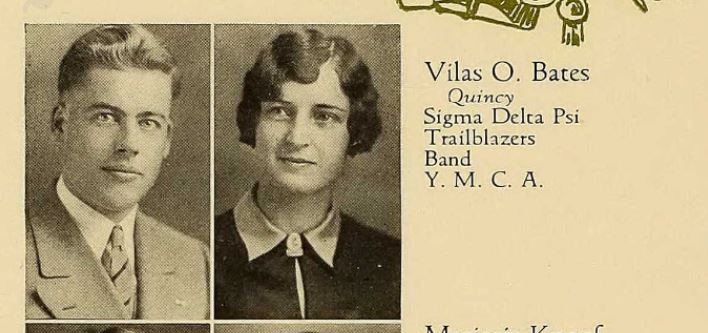
After the slide show ended, my mom tapped him on the shoulder. When he recognized her, he was initially shocked then broke into a wide grin. We spent time in that visitors’ center catching up. Then we went our separate ways.
That was the last time we saw my Uncle Vilas. He died a few years later in 1986, but my family always talked about the coincidence.
Then, just a few weeks ago, I was asked to judge a Boys and Girls Club state scholarship competition, and the national coordinator was from Adrian Michigan, where my mother was born. As we talked about the coincidence, I discovered that her parents had graduated from high school where and when my Uncle Vilas was principal.
My immediate reaction was “it’s a small world.” But sometimes, that’s just hard to believe,
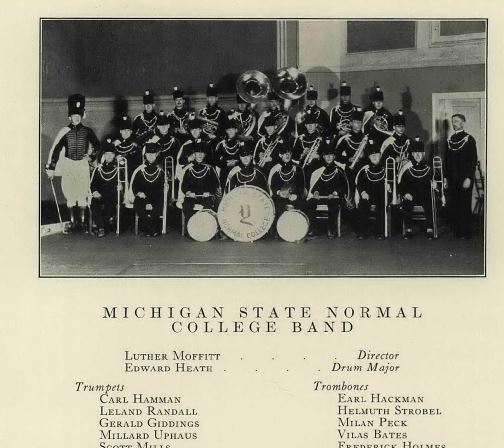 I began to a do a little more family research and discovered that Uncle Vilas, like my son, played a brass instrument in a band. I also discovered that he, like I have, spent his career in service to others rather than in the business world.
I’m still not sure if that means anything more than he seems to pop into my life at the most unexpected moments.
But I’m willing to wait for the answer.
The Bridge that Mrs. Henderson Built
Life speeds by as a changing tide of both small and big events that leaves in its wake only memories and eventual acceptance that nothing ever stays the same.
It also allows us to witness what others will someday study as history.

Mrs. Henderson and Trina 1979
When I was young, I truly believed that the distance between me and any historical events was immense. Even though I loved studying history and was a voracious reader of biographies, I still thought that events simply happened, were over and everyone moved on.
And then I met Mrs. Henderson.
Born on February 5, 1885, Blanche Henderson was literally a pioneer. In 1904, at the age of 19, she graduated from the Oregon Agricultural College (now Oregon State University) with a degree in pharmacy.
A few years later and on her own, she became a homesteader near Madras, Oregon. After she married fellow homesteader, Perry Henderson, she surprised herself by becoming a teacher.
As far as I know, she never had any of her own children, but she obviously loved kids. And she showed that love to me.
By the time I met her, she was a widow living alone in a small, two-bedroom house with minimal furniture. She was also well over 90 years old.
I have absolutely no recollection how our friendship began, although I’m guessing my mother, a journalist, introduced us.
Once those introductions were made, the unlikely relationship began. My mother would take me to visit Mrs. Henderson, and she would always serve me half-melted ice cream from a freezer that wasn’t keeping her food cold enough.
Neither of us cared.
What I did care about was listening to her stories, and what she cared about was sharing them.
As I thumbed through her coffee table book of Norman Rockwell prints, she told me about attending the 1905 World’s Fair in Portland. She even gave me a fan from it, a souvenir she’d kept all those years and that I still treasure.
She told me about witnessing a stagecoach robbery when she was a little girl. “I thought the men had dunce caps on their heads,” she said. “My father had to tell me they were holding their arms about their heads because they were being robbed.”
As Mrs. Henderson talked about her experiences and about how the world had changed, I began to recognize that, what was history to me, was simply life to her. And wanted me to be able to touch it too.
Mrs. Henderson died shortly after my family left Oregon, but the lesson she taught me has stayed with me: each person can be a bridge between the past and 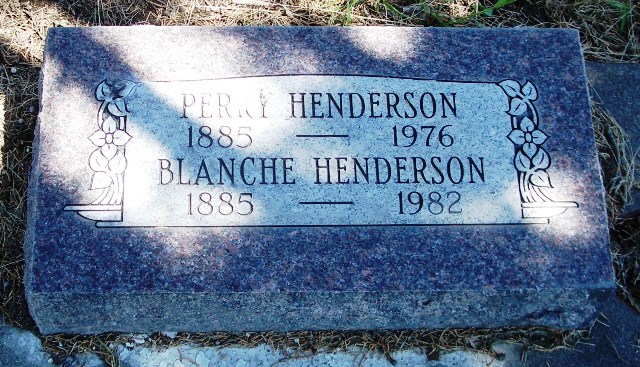 the future. But that only happens when we reach out to future generations and develop relationships with those whom we may think we have little in common.
Thanks to Mrs. Henderson, I’ve actually touched the historical 1800’s. If I stretch myself far enough, I might be able to reach the 2100’s too.
The Cost of My Opinion
The bloodiest single-day battle in American history occurred approximately 15 miles from my house. Nearly 23,000 soldiers died, were wounded or went missing after twelve hours of combat on September 17, 1862 at the Battle of Antietam during the Civil War. The lingering echoes and impact of that battle are still felt more than 150 years later.
Both the Union and the Confederacy experienced devastating losses, and historians have never declared a true winner. But for me, my family won. My great, great-grandfather James F. Bartlett (his biography and obituary are on this website right below Edward Bartlett’s) fought with the Massachusetts Infantry and survived. although he did sustain injuries on May 6, 1864, at the Battle of the Wilderness.

John Snyder gravestone Elmwood Cemetery
Ironically, my husband’s great, great-grandfather, John Snyder, died in June 1864 of wounds he sustained at the Battle of the Wilderness while fighting with the Stonewall Brigade.
Years ago, a local historian gave my husband and me a tour of John Snyder’s town and legacy. The tour ended at Elmwood Cemetery in Shepherdstown, where he is buried.
Newly married, I was actually interested in John Snyder until our volunteer tour guide pulled out a Confederate flag for my husband to place on his great, great-grandfather’s grave.
I loudly proclaimed that the Confederate flag had a very specific meaning, and my husband was not allowed to touch it. He tried to explain the flag was meant to honor his great, great grandfather, but I declared that the Confederate flag had nothing to do with honoring anyone. My husband placed the flag on the grave anyway.
Years later, I recognize my words were nothing but rude, and I had absolutely no right to be indignant.
I’ve never put my life on the line for my beliefs, and I have no right to judge those who did. All I can be is thankful.
The passage of time can change perspective and opinion about what is best and sometimes even what is moral, but it will never change what is honorable.
My children carry the blood of two honorable men who fought for what they believed during a time when our nation was completely divided. They also carry the last name of a man who lost his life fighting for what he thought would be a better life for them.
On Memorial Day, I have no right to argue about putting a Confederate flag on a soldier’s grave. Instead, I should simply be grateful that I have the freedom to make those arguments.
That freedom didn’t come without a price, and today we honor those who paid it.
When Tears Aren’t Enough
I’m rarely at a loss for words, yet I had nothing to say last week when my daughter asked me the simple question “why?”
Instead of answering, I stood silent as a single tear rolled down my cheek.
 We were visiting the United States Holocaust Memorial Museum.
I’d been there previously, but my daughter hadn’t. She’s been studying the Holocaust in school, so I thought she was mature enough to fully appreciate the exhibits and the message.
For the most part, she was, and we took our time going from floor to floor as the timeline of events leading up to the Holocaust unfolded. Then we got to the floor with evidence of the Holocaust and all its atrocities.
We stood inside one of the small, bare and unheated railroad cars that transported up to 100 people to the concentration camps. We stuck our heads into one of the actual bunks from Auschwitz. And we stood next to piles and piles of shoes that were taken from prisoners right before they were gassed.
But nothing affected my daughter more than a photograph of braids in a larger pile of hair the Nazis had collected. (They stuffed mattresses with the hair collected at concentration camps.)
Braids define my daughter. She almost always wears her long hair in one or two braids, and this month, she taught herself to french braid. That made the photo of the braids very personal.
The photo and her reaction struck me too. They reminded me of how incredibly precious my daughter is, and how incredibly precious all the daughters that died in the Holocaust were.
And because of that, I just couldn’t answer her question “why?”
How can you explain to an 11 year-old girl that some people need to point fingers and find someone to blame for difficult times? She lives in a world where that happens on a daily basis. People find it simpler to blame a person or a group of people than they to understand that situations are complicated and are rarely the fault of one person or group.
How can you explain to an 11 year-old girl that some people will simply accept what they read, see or hear when that message justifies their own belief system? She lives in a world where people spew “facts” that are completely inaccurate just because they were presented as the truth.
How can you explain to an 11 year-old girl that some people place their material possessions and personal bank accounts above the health and safety of others? She lives in a world in which people complain that their tax dollars are being used to help those in need.
How can you explain to an 11 year-old girl that some people are comforted by the belief that there is only one legitimate faith. She lives in a world were so-called Christians condemn other religions while claiming ownership of a morality.
How can you explain to an 11 year-old girl that people are comfortable condemning those with different political beliefs and world views? She lives in a world when people use nasty words to define anyone who thinks differently than they do.
And how can explain to an 11 year-old girl that people who loved each other were killed simply for who they loved? She lives in a world where people still claim that some love is an abomination and sinful.
Any explanation I could provide as to why the Holocaust occurred would simply reflect a world in which she lives. And I didn’t want to scare her.
Instead, I scared myself. And no matter how many tears I cry about the Holocaust, I know they aren’t enough to stop the hate that still exists in the world.
60 Years, 3 Couples, 1 Anniversary and Immeasurable Memories
 From the diary of Letha Bates Smith: “Nov. 29, 1933 Wed. Finished cleaning at the house this morning. Met Sylvia at 3:25. Morden, she & I met Martin in E. Lansing and had the knot tied at 8:30. Home then to Vilas and Evelyn’s for the nite.”
That’s how my grandmother described the day she married my grandfather, Morden, in the chapel at the People’s Church in East Lansing, Michigan with her sister Sylvia and her brothers Martin and Vilas in attendance.
Exactly 30 years later, my mother married my father in the same chapel. Unlike my grandmother, she didn’t keep a diary, but, just like my grandmother, she had a very practical wedding.
Exactly thirty years after that, at age 26, I was a completely different person than both these women. I was definitely less conservative and more reckless. Yet all three of us would be forever connected not just by blood but by our sensibilities and our belief that a strong marriage, just like a strong woman, is defined by substance not glamour.
And so, on November 29, 1993, my grandparents celebrated their 60th anniversary and my parents celebrated their 30th by attending my wedding.
 Letha and Morden
My grandparents met on a blind date while they were both students at Michigan State College (later University) during the Great Depression. My grandmother was one of four children from a farming family in Quincy Michigan who were all determined to go to college. Despite the odds and through their own perseverance, all four obtained college degrees.
My grandfather, the youngest of seven children, grew up in a family that had an uneven financial history – sometimes they had a lot, sometimes they didn’t. My grandfather’s older brother, Carl, had died when he contracted smallpox working in a lab while in medical school. The money from his insurance policy allowed my grandfather to pursue a degree in electrical engineering.
I know little about my grandparents’ college romance. My grandmother wasn’t a talkative or an emotional woman. But for decades, she documented her life in diaries. The one or two sentence entries she diligently recorded provide some insight into the often hidden thoughts of a woman who, on the surface, was practical to the bone. The grandmother I knew had one dress that she wore to every special occasion (including my wedding) for decades. But, that didn’t mean she never cared about a new dress.
“Oct. 30, 1932 Sunday. My sweetheart down today. And what did he bring me – Um does it sparkle? Simply gorgeous delightful! The dear boy.”
“Nov. 1, 1932 Tuesday Met Sylvia downtown this P.M. spent the nite with me. The ring fixed – lovely now – more thrilled than ever. A new dress.”
Even after my grandmother died, we never found picture of her wedding or her wedding dress. At the time of their marriage, my grandfather was a relatively new employee at Citizens Gas Fuel Company. My grandparents chose to get married the evening before Thanksgiving because my grandfather would have a four-day weekend.
My grandparents’ marriage ended when my grandfather died in 1998, just shy of their 65th wedding anniversary. My grandmother would live for another seven years.
The words in her diary will be passed on to future generations.
Evadna and Ken
Following in the footsteps of her parents and her older brother, my mother attended Michigan State University. After graduation, she moved to Manistee, Michigan, but neither her job nor her location were exotic or adventurous enough for her. She wanted to see the world and submitted an application to join the newly established Peace Corps.
After he graduated from Idaho State University, my dad, a Massachusetts native who had already seen a great deal of the world while in the Navy, also applied to join the Peace Corps.
They were among the first individuals ever selected and were in the third group deployed. Before they left for Chile, my parents attended training at Notre Dame University, where they spent days in Spanish class. My father excelled with his ability to speak the words perfectly in his loud, booming voice while my mother shot him dirty looks while she struggled.
Her irritation didn’t last long. Before they returned to the United States, my parents were engaged. Instead of a diamond, my mother wore a simple gold band on her right hand that she would transfer to her left hand when she was married. The only diamond I’ve ever seen my mother wear is her mother’s engagement ring, the one that sparkled so brilliantly in 1932.
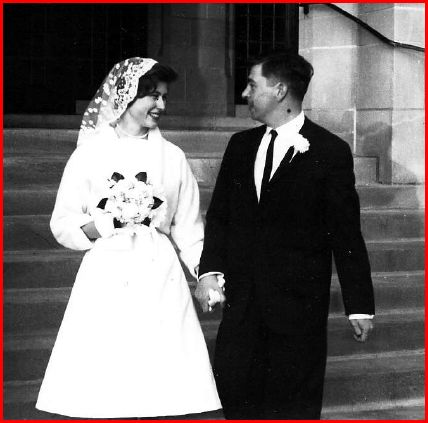
After returning to the United States, my father, a forester, got a job in Montana. He hadn’t accumulated any leave, but he was allowed to take a few days for Thanksgiving. And so, a wedding the day after Thanksgiving made sense, and my parents spent their honeymoon driving west to their new home.
They’ve spent the rest of their lives sharing stories of their adventures with their children and grandchildren.
Trina and Giles
Ironically, I met my husband on a November night.
On November 8, 1988, I was a college intern helping cover election results in the newsroom at West Virginia Public Radio. Giles was reporting for his first night of work. He thought I had an attitude, and I thought I had work to do. No sparks flew, and I didn’t give him a second thought.
But after I graduated from Ohio University, our paths continued to cross and our circle of friends became one in the same. Over time and shots of Jagermeister, we eventually ended up together.
Our relationship was nothing like I imagined everlasting love was supposed to be and everything my mother had told me it would be. (She’d told me on multiple occasions that common values and compromise, not romance, were the key to a successful relationship.)
In the beginning, our schedules were very different, and we accommodated. Our schedules are still very different, and we still accommodate. In the beginning, we watched a lot of Star Trek. Giles still watches a lot of Star Trek, and sometimes our kids even watch with him. And in the beginning, we laughed at my intensity and his lack of it. Now, we work around our differences… and we still laugh a lot.
Giles and I didn’t get engaged out of some romantic notion of marriage. We got engaged because his roommate bought a house, and logistically, our moving in together just made sense. And when we realized the significance of the year, we picked a very significant wedding date.
Unlike the two couples before us, we didn’t marry over Thanksgiving weekend nor did we get married in Michigan, Instead, our ceremony took place the Monday after Thanksgiving in Charleston, WV. And yes, our wedding was also simple and practical (my mother made my dress), but it was also a bit quirky. We received gifts of Star Trek dinnerware and had Star Trek action figures on top of our cake.
Our children look at the photographs and simply roll their eyes.
The Present
This Thursday marks my 19th wedding anniversary and my parent’s 49th. If they were still alive, my grandparents would be celebrating their 79th.
Those aren’t generally noteworthy numbers, but they are to me. Life and marriage are both fragile, and every day, month and year of marriage should be treasured.
I am under no illusions that future generations will marry on November 29. But I do hope that the stories from all three couples will serve as a reminder that weddings are not about a fancy show or an exotic honeymoon. They are about two people deciding to move forward together and create memories that can bond families together for generations.


 Just So You Know