Category Archives: Uncategorized
Five Words I’d Like to Ban From Any Political Discussion
This week, Michigan State Representative Lisa Brown was banned from the House floor for uttering the name of a body part.
She, unlike her male colleagues, actually has that body part.
Personally, I’ve said the word countless times. I’ve taught my kids that it’s an appropriate word, unlike the slang terms that are often used. I’ve even attended a play that features the word in the title and in the script.
But I don’t want to get banned from writing or labeled an extremist, so I’m not going to actually include it here.
I know that’s sad.
But sadder still is that, in 2012, a woman was reprimanded for saying it.
I shouldn’t be surprised. This has been an especially bad year for women.
Access to birth control has been threatened. Equal pay for equal work is being discounted. Ridiculous and invasive medical procedures (procedures that actually include the banned word) have been considered for legislation.
And women who stand up for their rights have been called sluts (because that is apparently not as offensive as a the name of a body part) on a nationally syndicated radio show.
I’m not just feeling belittled and a bit angry, I’m feeling frustrated.
I thought women were making progress. I thought the country was making progress. I thought individuals were important regardless of how much money they make, where they were born, what their sexual orientation is or, most important to me, what sex organs they were born with.
Silly me.
But since we are now engaged in a debate about what words are and are not appropriate to say during a political debate, I’d like to propose five that shouldn’t be part of any discussion.
1. Socialism. In recent years, this term has been used to perpetuate divisiveness and bitterness. It is being used to suggest that it is not American to believe those who have more resources have a responsibility to help those who are struggling.
2. Obamacare. I don’t believe that access to health care should be the responsibility (or fault) of one particular party or individual. It’s about all of us. Health care reform is complicated and hard to understand. But quality, affordable health care is also critical (and currently not accessible) to too many Americans. I have family and friends who have had cancer, high blood pressure and chronic sinus conditions. These are all pre-existing conditions that can drive personal health-care costs sky high. Most of my professional life I’ve been in jobs that either didn’t offer health insurance or offered it at an incredibly high price. I’m a very hard-working person, and I take extreme offense at being told that I don’t deserve the same access to health care as some one who has a different employer. Let’s be rational and talk about the issue rather than about specific politicians and leaders.
3. Christian. Anyone who knows me, knows that I have the greatest respect for God, religion and faith. But America was established on religious freedom, and we are going backward when we make any one religion the basis for laws. Of course our laws should be based on moral and ethical principles, but most religions are based on strong values. Let’s not marginalize people of different faith by holding up Christians as the only religion that counts.
4. Undeserving. This word makes my heart hurt. By using it to broadly describe any group of people is unfair and incredibly biased. It is also very effective. It allows some people to pat themselves on the back for being deserving while belittling people who are different. People hit hard times for a wide variety of reasons, many of which are beyond their control or rooted in a childhood that never gave them a chance. I’m not saying that we shouldn’t set expectations for people or encourage them to take care of their own needs. But lets provide them with skills and opportunities rather than blame and labels.
5. Penis. If vagina isn’t allowed, then we shouldn’t be allowed to say penis either.
Whoops. Did I just say vagina? There go any hopes of a political career.
Hopefully, I will still be allowed to share my thoughts and opinions. And hopefully this post doesn’t get deleted as a result of actually naming a body part.
The Reason I Never Forgot Eddie Pee Pants
 On a beautiful spring day several weeks ago, my kids and I were heading to lunch a few blocks from my husband’s office on the crowded streets of Washington D.C . Dressed in only shorts and t-shirts, we didn’t really fit in with the men and women in business attire who were walking with a great deal more purpose.
But we had one thing in common: we all pretended we didn’t see the homeless person still wrapped in a blanket and sleeping in a doorway on a busy sidewalk.
I saw both of my kids glance over at him, but neither said anything. I didn’t either. Soon, the homeless person was forgotten.
Almost.
Because somewhere in the back of my mind, he stayed with me.
He’s still there.
It’s not that I’ve never seen homeless people before. I see them every day. I even have a semi-relationship with the guy who hangs out at the park where I walk my dog. If I don’t at least wave at him, he coughs or makes some other noise until I acknowledge him.
But the homeless guy sleeping on the steps was different, because he might as well have been invisible. Everyone, including me, blatantly ignored his existence.
I understand why the business people ignored him: they probably see him everyday. He’s as much a part of their daily landscape as the traffic lights, the street signs and the blur of faces they regularly encounter.
But I didn’t have any excuse, and I couldn’t figure out why I didn’t even talk to my kids about him. That’s just not like me at all. If anything, I usually talk way too much about such things.
The only explanation I could find is one I don’t like: I was going along with the crowd. It was just easier.
It’s not the first time I’ve had to make that admission.
When I was in elementary school, I didn’t even know the full name of the boy who rode the school bus. I just knew everyone called him Eddie Pee Pants. You don’t need to be a genius to figure out how he got the name.
I don’t remember calling him that to his face, but that’s the name I used when my peers and I were discussing how to avoid him. No one wanted to have to sit with Eddie Pee Pants on the bus. If you did, you’d not only have to smell him, but you would get “Eddie Pee Pants germs.”
I knew what we were doing was wrong, but I justified my behavior by telling myself that I was never actually mean to his face. But the guilt got worse when Eddie’s life got worse.
One Saturday morning, I joined my dad at the top of our driveway to watch the drama unfold on a hill about a mile from our house. A dilapidated mobile home was on fire. Flames were shooting out the roof, and smoke was turning the sky black.
“That’s a total loss,” my dad commented.
I didn’t know until Monday that the old, junky trailor everyone said was an eyesore was Eddie’s house.
I have no recollection of what happened to him after his house burned. I just know he never rode the bus again, and I don’t remember ever seeing him at school again. I don’t even remember if there were any injuries or fatalities in that fire.
What I do remember is wondering why I wasn’t nicer to Eddie and feeling horrible that I’d never have an opportunity to undo my misdeeds.
Eddie isn’t the only person I’ve ever discounted or belittled. But he’s the first person who taught me three essential life lessons:
1. Treating someone poorly never makes you feel better about yourself.
2. Sometimes you don’t get a second chance to do the right thing.
3. Issues such as poverty, child abuse and homelessness are actually about individuals — people who, regardless of the reason for their circumstances, still have value.
I’ve taken that third lesson to heart. Eddie, like the homeless person in the doorway, gave me something priceless. They taught me to look beyond the unkempt appearances, poor hygiene or odd behavior. They’ve taught me that sometimes the person who needs to change their attitude or perception is me. And they’ve taught me that speaking up feels a lot better than putting someone down.
They were priceless gifts in my life, and I hope I can pass their lessons on to my children. And that, if nothing else, is what makes their lives so valuable to me.
There’s a Reason This Mom’s Brain is a Hot Mess

There’s no doubt I love my children.
But at times, when I’m completely honest with myself, I wonder what the heck I was thinking when I decided to become a mom.
It’s not because I regret having children. Not for a minute.
And it’s not because I think my life would be more interesting or exciting if motherhood didn’t require I put their needs above mine. Being a parent puts a whole new spin on interesting or exciting.
And it’s certainly not out of guilt that as a girl, teenager and even as a young woman, being a mom wasn’t on my list of life goals. Having children helped me recognize what’s really important in life.
It’s because there are times when I think my kids could have done better with another mother – a mom who isn’t as emotional or head strong or outspoken as the one they got. A mom who never purposefully ignores parenting magazines, workshops or other sources of standard parenting advice. A mom who always enjoys her children’s activities instead of attending out of a sense of obligation.
And just when I’ve convinced myself that my kids would be better off with any mom but me, I come face to face with parents who don’t understand what an incredible gift – and responsibility –being a parent is. I witness moms behaving as though they are still adolescents with all the same drama and self-absorption. I have to listen to parents who always blame someone else when their child behaves poorly, gets a bad grade or is fighting with other children. Worst of all, I know of parents who put their children’s welfare and safety in jeopardy.
I may be imperfect, but those situations make me feel better about my own parenting skills. At least for a little while… until my kids do or say something embarrassing or completely inappropriate. Then I’m back to thinking that if they had a different mother, their behavior would be stellar.
Such thoughts bounce around in my brain on a daily basis… sometimes at such incredible speed that I fear an impending brain explosion.
The requirements of my profession haven’t helped.
Because I have a social work license, I’m required to take continuing education. Usually, I seek work-related education. Because I recently changed jobs, I’ve been seeking education that is more closely aligned with parenting issues, which I usually avoid.
I’m not sure the plan has worked for me.
In a workshop on bullying, the presenter disparaged parents who tell their daughters that, when a boy teases her, he actually likes her. According to the presenter, that’s putting her on the path to domestic violence. Having said those exact words to my daughter, I was convinced that, at worst, I was creating a victim. At a minimum, I was teaching her that abusive behavior is a sign of affection.
I was back to being a horrible mom.
But then, a couple of weeks later I attended a workshop on child abuse. The workshop emphasized the need for children to feel comfortable questioning and saying no to adults. Now that is something my children have NO problem doing. Could it actually be good that my children are following in their mother’s footsteps by requiring more than just a command as a reason to follow orders?
My internal confusion isn’t necessarily a bad thing, but it does highlight the reason I’ve avoided reading all those articles about parenting. Once my children started developing their unique personalities, I had to treat them uniquely. And no expert could tell me how to do that.
So while no parenting magazine will ever put me on its cover, that’s not important to me.
What is important is that someday in the distance future, when I’m not the complete embarrassment or the clueless person that my children currently think I am, I will be featured in their life scrapbook .
I don’t even expect to make the cover, but I do want to be featured.
I’m pretty sure I can fill that role quite well… a long as my brain doesn’t explode in the meantime.
Remember When Mother’s Day Was Considered a “Gay” Holiday? Maybe It Still Is.
 As a child, I adored Mother’s Day. Just like Halloween and Christmas, it held the purposiveness of preparation and the excitement of anticipation.
I was incredibly intent the year I had to make a corsage for my mom out of tissue paper. While my fellow students curled the colorful paper around their pencil erasers then glued it to cardboard to resemble bright flowers, I felt the need to put order to chaos. The result was a smiling face that, in retrospect, bore a striking likeness to the Wal-Mart smiley face.
My mother never hesitated to wear the hideous yellow corsage. In fact, she wore it all day on Mother’s Day, even though it thoroughly clashed with her dress.
I was incredibly proud the year I played Mary Poppins in the Mother’s Day program. Families were required to provide the props, and because my frugal family didn’t have a normal umbrella, I twirled a hideous clear, plastic one shaped like a mushroom as I danced through boxes painted like chimneys. I resembled Mary Poppins about as much as I resembled Grace Kelly.
I was incredibly naive when I bought my mother a card that described Mother’s Day as a “gay” holiday.
I’m a lot older now, and I’m a lot less naive.
But I still don’t have a problem describing Mother’s Day as a gay holiday, especially this year.
That’s because, as I’ve aged, Mother’s Day has come to mean more than simply honoring and thanking my own mom. It’s also become a day to reflect on what being a good mother is.
While my experience is limited to 14 years, I’ve come to recognize three primary truths about being a parent:
1. A mother’s primary responsibility is to ensure that her children grow up to be responsible adults;
2. Every child is different, so there is no “right” way to be a parent;
3. Teaching our children to defend and stand up for those who are different is much more important than teaching them how to be popular or stylish.
This week, our President served as a parent to our entire nation when he publicly declared his support of gay marriage. I know the motivations behind his statements can be disputed, but I choose to believe that he was guided by his sense of morality and his need to set an example for all of us.
I heard his message loud and clear; if we tolerate hate and intolerance wrapped in religion then we are acting in direct opposition to the principles on which our country was established: a country in which all people are supposed to be treated equally.
So, while I seriously doubt my children will ever used their hard-earned allowance to buy a card that describes Mother’s Day as gay, I know that if they do, I would be honored to receive it. After all, it might be describing a holiday that looks beyond stereotypes and bias and unites us with a purpose of increasing tolerance for the next generation.
I can certainly hope.
It’s Hard to Get Respect When Your Shoes Are Worn Out

I love shoes.
Unfortunately, I wear out shoes quickly. Very quickly. And, I’ve found that when my shoes are worn out, I have to fight even harder to get respect.
I’m not sure that people who work in the for-profit world will understand, but anyone who works for a community-based nonprofit organization will – especially those who work for social service agencies. Our shoes , just like us, are often worked and worn to the bone.
We are a unique breed that must band together. Our biggest battles aren’t necessarily a result of working directly with the people who need help or of the perception that they are undeserving, lazy or simply crazy.
Sometimes, our biggest battles are with people who support our organization, a cause or a specific project.
I should know.
For almost twenty years, I’ve worked for community-based nonprofit organizations. And while the work is exhausting, it’s also meaningful and educational.
But now, my career path is about to change slightly, so before I leave my comrades, I feel the need to share a few words of wisdom with our board members, our volunteers and our donors:
1. We greatly appreciate you. We know the work we do wouldn’t be possible without you. We know you care, and we know you are compassionate.
2. Your compassion doesn’t mean you are qualified to do our jobs.
3. We do our jobs because we are both compassionate AND skilled.
4. Your bank account doesn’t mean that you know more about the issues than we do. Not only do we have the training and the work experience, many of us work in the trenches because we have ” been there.” Sometimes, because of our salaries, we are still there. Please listen to us.
5. Don’t assume you are more educated than we are. Most nonprofit and social services jobs require, at a minimum, a bachelor’s degree for a position that often doesn’t pay as much as an entry-level, administrative assistant job in the business world.
6. Don’t assume that our ONLY motivation is helping people. That’s a primary motivation, but we still need to pay the bills. Keeping agency administrative costs low is important, but keeping them too low may be hurting the people who are trying to do the most good. It may also limit your pool for people who can fill key leadership positions.
7. Don’t assume that staff doesn’t care about salary and benefits (or lack thereof) because we have spouses/partners who, in your eyes, have”a real job.” The work we do is “ a real job.” Many of our jobs require a license. The helping profession is bound by ethical, legal and professional practices that have been put in place for a reason.
8. Don’t assume that just because we don’t get personally involved with clients that we don’t care. We probably care more than you will ever know. But because we are educated in our field and because we often hold a license, we have to behave in a professional manner that will limit liability while improving outcomes for the client.
9. We know that when you work with our organizations you are volunteering, and we appreciate your time more than you will ever know. But don’t assume we are lazy or not committed to the cause because, at the end of the work day, we don’t have the energy to volunteer to do the same thing we do day in and day out.
10. Disregarding staff in times of key leadership decisions only leads to poor morale. When a key staff person is leaving, other staff members should be consulted as to what skills and leadership style would fit with the team before the selection process even begins. Staff should even be consulted about their interest in a leadership position.
11. The nonprofit and social service sector is composed primarily of females. Falling back on the “good old boys” network for leadership is taking a step backwards, not forwards. It doesn’t sit well with female staff, donors or volunteers.
12. Board members have to play an active role and not simply serve as a rubber stamp for decisions that may have been presented by someone with an agenda. You can always go back to the drawing board – don’t feel like your options are limited to what is presented to you at a board meeting.
These words of advice are based on my long-term work for community nonprofits. That work will end when I walk out the door of my current employer this Friday and into the door of my new employer the following Monday.
As would be expected, my departure has led to an appreciation I never knew existed (see suggestions Number 10 and 11).
So for all the people who, over the past few weeks, have told me that I’m leaving some really big shoes to fill, I apologize if I haven’t accepted the compliment with grace.
It’s not that I don’t appreciate the sentiments. I just know my shoes are really worn out.
Whoever takes my job not only needs to put on their own pair of shoes, they also have the opportunity to point those shoes in their own direction.
And I’m sure that direction will lead to a lot of great accomplishments.
Rocks on the Road and Rocks in Our Heads
 Some of life’s toughest lessons are the ones we learn the hard way.
Some of life’s most important lessons are the ones we sometimes never learn at all.
And some of life’s simplest lessons are the ones we often just ignore – like the problem with rocks in the road.
As a bicyclist, I ride an average of at least 10 miles a day. Because of that, I ride over a lot of rocks. For the most part, I don’t even realize the rocks are there. But every once in a while, my tire hits a rock and – due to speed or angle – I get knocked off course and sometimes even knocked down. Getting knocked down hurts, and sometimes the resulting injuries even leave scars.
Because of that, when I do notice a rock, I try to avoid it. And when there are a lot of rocks, I might even change course.
That’s life on my bike.
But I’ve noticed a lot of “rocks on the road” in the rest of my life too.
These rocks are often comments or actions that people believe are completely normal and appropriate. But to the nearby traveler on the road of life, those same words or actions may be slightly offensive or, at worst, hurtful. Sometimes they can also cause people to change course or fall down.
Just the other day, I was having coffee with a colleague who told me that years ago she had come to my office to talk about the possibility of interning with me. When she dropped by for the unscheduled visit, she was told I was in a meeting but that I was just with my intern and could be interrupted.
That one word “just” was enough to make her turn around and walk out the door. She didn’t want to be “just an intern.”
To be honest, I think I might have been the person who told her not to worry, and she changed the story to make me feel better. I don’t remember, but regardless of who said it, the word “just” became a rock in her life’s road.
Fortunately, for my colleague, her change of course is working for her. But she also had the advantage of already having several life successes under her belt. She could handle that rock.
I worry more about people who have so many rocks in their road that they can’t avoid them: people who have been knocked down so many times that they don’t trust that the road ahead gets any easier. Sometimes they’ve fallen so much, they have permanent scars.
Instead of helping clear the road, many of us are busy putting more rocks in their way. Sometimes those rocks are too big to move or go around. 
For the most part, I don’t think we are doing this on purpose. But, at times, I think we are, especially when we make judgments about people whose circumstances we know nothing about. That’s when we become victim of the rocks in our heads.
I’ve noticed a trend of people posting comments online that belittle others who are “on welfare” or “on food stamps” or that make assumptions about people based on appearance. I don’t know which is the bigger rock: those comments or the bitter ones about people with expensive shoes, phones or cars who are receiving some sort of government assistance.
Here’s the deal. I, like most people I know, don’t believe that government assistance should be a permanent way of life. I also don’t believe that government assistance should be used for anything but basic needs. And I don’t believe smart phones and SUV’s are basic needs. I also agree that some people manipulate the system, and that we need to be diligent about stopping such abuse.
However, I also know that most people who receive assistance have fallen on hard times. Some may have previously afforded a lifestyle that included expensive clothes and cars. But then they lost their job or faced another crisis that caused them to deplete all their available resources, including help from friends and family. After that, they were forced to seek public assistance. That expensive car may be all they have left after losing their home, a spouse or a way of life.
Instead of assuming the rocks in their road are their own fault, maybe we should think about how we can pick some up, roll them out of the way or help these individuals navigate a new course.
Doing this follows the simplest life lesson: do unto others as we wish them to do to us. I know if and when I hit tough times, I don’t want to ridiculed and/or blamed.
But this lesson is so simple that a lot of us ignore it when convenient. Or until there’s a rock in our own road. Or until we get the judgmental rocks out of heads.
Unfortunately, sometimes those rocks in our heads are harder to get rid of than the rocks in our roads.
The Misadventures of Mr. Muffet, My Chronically Confused Cat
 Mr. Muffet was never destined for greatness, dignity or even a long life.
Quite the opposite in fact.
The moment he joined our family, his fate was sealed.
I was too young to remember how Mr. Muffet arrived at our house or even when his name changed.
All I know is that Mr. Muffet was Miss Muffet until my cat-loving grandmother from Massachusetts visited our Oregon home. All things considered, my grandmother probably thought my parents were trying to make some kind of statement about gender stereotypes, but she wasn’t going to have any of it. She told them in no uncertain terms that Miss Muffet was just not an appropriate name for a male cat.
My father, who had previously tried unsuccessfully to breed rabbits, (he was unsuccessful because they were all female) heeded her advice, and Mr. Muffet’s name was modified accordingly. But his status as a full-fledged member of the family never changed.
Which, apparently, is why he went with us on a family vacation to the Oregon Coast.
I was recently reminded of the trip during a conversation with a couple of co-workers. Both were discussing the trauma of having to ship their cats overseas.
“I’ve never shipped a cat,” I said. “But I do remember the time my family took our cat to the beach.”
They both looked at me in disbelief.
“Why,” they wanted to know, “would you take your cat to the beach?”
I couldn’t answer their question. But since cats were the topic, curiosity got the best of me. I had to call my mom and ask why.
“I don’t remember,” she told me.
“But we did take the cat to the beach, didn’t we?” I asked.
“Yes, we did,” she answered. “I just don’t remember why. Probably because cats are easy, and we didn’t want to travel an hour to have him boarded.”
I didn’t even ask why a neighbor couldn’t have taken care of Mr. Muffet. Instead, I pressed on with the bigger issue. “And he pooped in the car, right?”
“Yes,” she sighed. “Yes, your memory is correct. He pooped in the car.”
She was obviously done with the conversation, so I didn’t push the issue. But I did tell my co-workers that I wasn’t imagining the trip.
Not only did we take Mr. Muffet on vacation with us, but we didn’t even have a carrier for him. (Were cat carriers even around in the early 1970’s?) Because of that, he was simply free to move around the cabin. But he didn’t. He stayed on the vent behind the back seat where my brother and I were riding.
That was either his favorite spot or he was too terrified to move, even when he had to poop. As a result, he pooped in the vent right behind my head.
There is no way to describe 1) the smell, or 2) how determined my mother was to get the mess cleaned up.
My mom was determined for a long, long time.
The good news for Mr. Muffet was that he soon had a lot more places to poop.
Always an equal member of the Bartlett family, Mr. Muffet accompanied us on our first walk on the beach (a beach comprised mostly of sand dunes.) He probably thought he’d landed in the world’s largest litter box.
He did his best to take advantage of the situation, but after an hour of running through the dunes, scratching in the sand and doing his business, the poor cat was simply exhausted.
Fortunately, our trip home was much less memorable than the one to the coast. Unfortunately, I don’t have many more memories of Mr. Muffet.
He disappeared shortly after the infamous vacation.
For years, I was convinced that a less adventurous family had found and adopted him. I was equally sure that he was quite relieved that he didn’t have to live with my crazy family anymore.
I was well into adulthood before I learned the truth: Mr. Muffet had been hit by a truck on the highway near our home.
I appreciate that my parents tried to protect me from the facts, but I also think they were trying to protect themselves. I’m certain that the adventures with Mr. Muffet had a significant impact on them.
He was, after all, my only cat growing up. After he “disappeared,” we only had dogs. And, I must say, dogs travel a lot better.
Philosophical Thoughts From a Feminist in High Heels

There are times when I wish I could be one of those women content to accept that the world is unfair and that some people are more important than others.
If I could actually believe that, life would be so much simpler.
The problem is that simple bores me and unfairness angers me, especially when it’s perpetuated by people who use inequality to meet their own need for influence, power and/or sense of security.
Even though I hate discrimination of any type, my personal experiences are limited to dealing with sexism. And lately, we seem to be moving backwards on that issue.
Women are facing more sexist attitudes than we did when I was in my twenties. At least it feels that way. Maybe because when I was younger, I attributed personal slights to my being inexperienced. But now, I’ve got a whole lot more experience yet the attitudes and behaviors persist. And women are having to fight battles I thought we’d won years before.
Admittedly, I’ve been more passive than I should be.
Perhaps it’s because protecting myself has sometimes outweighed standing up for what’s right. Or perhaps it’s because sexism can be so subtle that people have made an art form of camouflaging it. Or perhaps it’s because the issues are just too confusing.
Take, for example, shoes.
I recently heard that a woman who wears high heels (but not too high) is taken more seriously in the workplace than a woman who wears flats.
As someone who would sleep in high heels if it were feasible, you’d think I’d find this piece of information encouraging. Not at all.
The whole issue is absurd. The height of a woman’s shoe shouldn’t matter at all as long as she can do her job. But apparently it does. And since women have a lot more choices than men when it comes to footwear, we are also more likely to make decisions that can distract from our skills and abilities.
The same can be said for words we use to describe ourselves. Take, for example, the word feminist.
There are those people who picture a feminist as a woman who hates men, doesn’t shave her legs, dresses like a hippy and has extreme points of view about reproduction.
Umm.. no. As a feminist, that doesn’t describe me at all.
I love men. I shave my legs. I wear make-up. I’m not an extremist on any subject, and I even let my daughter play with Barbie.
Being a feminist has nothing to do with how I dress or who I love.
It’s about taking time to question how women are being treated. It’s about ensuring that, when other factors are equal, women are given the same opportunities as men. It’s about pushing people to think about how fair they are being.
Would the salary be the same if a man had the job? Does a woman really have the same opportunity to break into the “good old boys’ network? Is the spouse’s employment relevant?
Ironically, as I was writing this, my daughter looked over my shoulder and asked, “What exactly is a feminist?”
“It’s someone who believes women should have the same opportunities as men,” I said.
“Duh,” she said in a voice and manner that only 10 year-old girls can get away with.
“Exactly,” I said. “Duh.”
And hearing that one word come out of my daughter’s mouth put the fight right back in me.
Watch out world, this feminist in high heels is on a mission to ensure life is more fair for her daughter.
Good Books, Bad Endings, and Why I Never Had a Genuine Relationship with Nancy Drew
 Sometimes, finishing a good book feels similar to ending a tragic love affair. From the beginning, I know it’s going to end, but I dive in anyway believing the pleasure between the covers will be worth all the pain of separation later.
My obsession with a really good book is often like being in the throes of a passionate affair: I think about it all the time, I ignore responsibilities so I can spend time with it, and almost every conversation reminds me of it.
That’s not surprising. My relationships with books have often mirrored my relationships with people.
While I have a lot of acquaintances, I’ve found that when I truly need support I generally fall back on the same trusted few people again and again.Similarly, I fall back on the same book or a favorite author when I just want to escape with a good read.
A good read, to me, isn’t an implausible plot that is moved forward with simple sentences and a lot of action. Just as I prefer complex, yet genuine, people, I prefer complex stories that can make me believe the unbelievable.
In other words, content is more important than showmanship, and flawed characters are more interesting than heroes who always say and do the right thing.
That’s probably why, as a girl, I just could never relate to Nancy Drew. As a lifelong mystery lover, I don’t recall having much issue with the plots of her books, but I definitely remember having issues with Nancy herself. She was too one-dimensional, and I could never relate to a girl who had it all: good looks, a boyfriend, a chic wardrobe, and popularity.
As an awkward kid who struggled with getting through each day without too much turmoil, I don’t know what bothered me more – the ease with which she went through life or that her perfection was incredibly boring.
I still don’t do boring or predictable well. And because of that, I’ve been known to play the field with a lot of books. I’ve even developed a reputation for dumping many before I make it past the fifth chapter.
But at least those books didn’t suck me in before it was too late. There is absolutely nothing worse than a book that gets me all excited throughout only to fail to deliver at the very end. I don’t know if the authors just don’t plan well, get bored with the writing process, or have to meet a deadline, but they seem to be meeting their own needs rather than that of their reader.
I’ve been encountering more and more such books lately. They start off with a well-developed plot and characters that capture me completely through most of the pages. But then, they end quickly by tying up all the loose ends in a neat package that leaves me feeling disappointed and unsatisfied.
Such books used to leave me doubting my own judgement. But not anymore. Just as we grow with both our successful and our failed relationships, I’ve come to believe we can also grow with each book we read no matter how it ends.
At least that’s what I’m telling myself as I find myself completely immersed in my latest book. And just as with the start of any relationship, I have high hopes that it will be both satisfying and leave me wanting more.
Ten Lessons about Love for My Ten Year-old Daughter
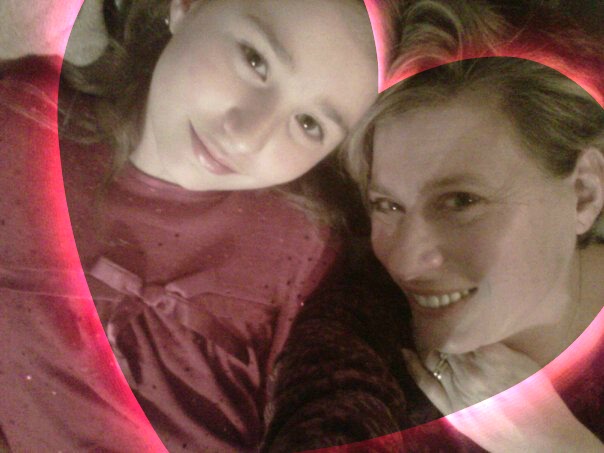 Being a very practical person, I’m extremely fortunate to have a pragmatic daughter. Unlike many of her peers, she’s shown little concern about romance and relationships. Other than incessantly listening to Taylor Swift songs and keeping tabs on Taylor’s love life, she just doesn’t seem to care.
And while I hope that doesn’t change, I also know that, eventually, it will.
I can’t imagine that she’ll ever be the type of person who feels incomplete without a significant other, but I do know that she will start dating at some point.
And that also means she’ll have her heart broken.
But before that happens, I feel obligated to share ten lessons I’ve learned (sometimes the hard way) about love:
1. You can’t truly love someone else unless you love who you are. And who you are is an imperfect person who makes mistakes, gets mad and will sometimes say and do very stupid things. Love yourself anyone. How you handle your mistakes and flaws is more important than trying to hide them.
2. Love is only genuine when you are being true to yourself. Don’t pretend to enjoy something when you don’t. That doesn’t mean you shouldn’t compromise. You should. Love requires a great deal of compromise. But compromise doesn’t mean you should pretend to be someone you’re not. If you do, you’ll wind up being miserable.
3. Love isn’t a competition, and you can’t make someone love you. You will always be loved for being the unique person you are and not because you are prettier, smarter, funnier, sexier or nicer than someone else. Therefore, you should never worry about what others are doing to attract attention or affection. Being yourself is enough.
4. You don’t fall in love. That indescribable feeling of “falling in love'” is usually a combination of infatuation and physical attraction. Love is something that is grounded in mutual respect, grows slowly and doesn’t necessarily bloom as much as it thrives.
5. Love isn’t about romance. It’s about experiencing someone at their very worst and realizing that walking away would still be more devastating than dealing with a tough situation.
6. Love is about having passion in your life – but not necessarily in the way you might think. Never invest so much of yourself in a relationship that you don’t have time for everything else you love. Be passionate about a hobby. Be passionate about a cause. Be passionate about your family and friends. And also be passionate about your love.
7. True love means you aren’t worried about what other people think about your relationship. If you spend time worrying about what others are thinking or saying, you likely have concerns yourself. If you’re confident about your relationship and the integrity of your significant other, you won’t care what others say. Always stay in tune with your inner voice and be honest with yourself.
8. Love means saying you’re sorry. Unlike the quote “love means never having to say you’re sorry” made popular in the 1970’s movie “Love Story,” love means that you’re willing to let go of your ego. Admit when you are wrong or when you’ve said or done something hurtful. And when you are in a relationship, you will say and do hurtful things at times.
9. Don’t expect love to always feel exciting and new. Just like life, love can sometimes be dull and boring and predictable. Relationships are like roller coasters: sometimes they can be difficult and sometimes they can be easy and fun. But being able to work together during the uphill battles is what makes the downhill ride so enjoyable.
10. People do change, and that can affect your relationship. Our experiences shape who we become. The person who you fell in love with several years ago will probably be different from the person you know today. And you will be different too. Many times, you can join hands while you grow. Sometimes, you drop your hands and grow apart. Often, the decision is yours, but sometimes it isn’t.
As I share these lessons with my daughter, I realize that I could add so many more. But I figure one for every year of her life is enough for now. Besides, she often doesn’t listen to me anyway. Despite that, I do want her to hear one message loud and clear: even though she will ALWAYS have her mother’s heart, I hope she is also able to follow her own.


 Just So You Know