Blog Archives
Rockefeller’s Reminder
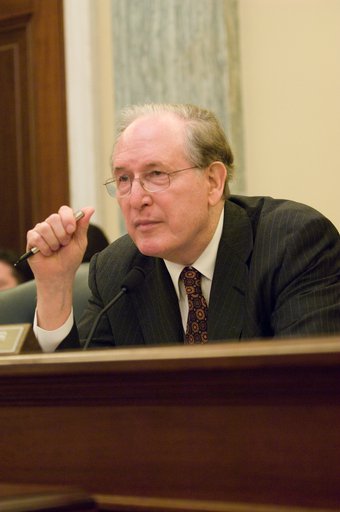 Last week, I had the privilege of attending a community meeting hosted by U.S. Senator Jay Rockefeller about the reauthorization of the Violence Against Women Act (VAWA). Since there was little doubt that our soon-to-retire senator was going to vote for VAWA, the event was really an opportunity to raise awareness about the issue of domestic violence.
Invited guests included survivors, social workers and advocates who work tirelessly to address the issue. A local police officer was the only man selected as a designated speaker for the round table discussion, but he received a great deal of Rockefeller’s attention.
While domestic violence survivors told heart-breaking stories, many of Rockefeller’s questions were directed to the police officer. The Senator seemed absolutely fascinated by the officer’s description of our local police department’s ride-along program, which provides an opportunity for community members to literally ride along with police officers during any shift. Those who participate have the opportunity to really understand what police face and learn about some of the biggest issues facing our community.
At the time, Rockefeller’s intense interest in the program seemed a little off topic. But in retrospect, I think the Senator was demonstrating what true wisdom is.
In a world where people are intentionally inflicting harm on others, where relationships are often about power struggles rather than support and where individuals are suffering on a daily basis, true wisdom is knowing that doing the right thing requires more than simply responding to the needs of others. Maybe because I’ve recently been watching too many people who think doing the right thing means doing things their way without considering all that others have or could contribute, Rockefeller’s reminder has stuck with me:
Doing the right thing means ensuring resources and services are available for those in need, but is also means focusing on what is positive and good.
Doing the right thing means reinforcing and promoting positive and healthy relationships among people and organizations.
And doing the right thing means really listening to others and acknowledging the power of what they are saying and all they are contributing.
That’s the wisdom Senator Rockefeller brought to the table. Unfortunately, he won’t be at the table much longer. Last month, he announced he will not be seeking a sixth term as U.S. Senator after his current term ends in 2014. West Virginia lost Senator Robert Byrd in 2010, and now we are losing Senator Jay Rockefeller. Regardless of political affiliation, all West Virginians should recognize the implications.
The cynical among us might say that caring about the poor was easy for Rockefeller, who was born into one of the richest families in America and never had to worry about money.
But I disagree.
Instead of choosing to live a life devoted to money rather than meaning, he chose to work on behalf of people who live in one of the poorest states in the nation. And even though I live closer to Washington D.C., Baltimore, Philadelphia, Pittsburgh and New York City than I do to our state capitol, I still care about what happens to this state.
And I’m hoping whoever steps into his position is someone who understands the importance of asking a local city police officer to explain a simple program that involves reaching out to others to develop stronger partnerships and healthy relationships.
That’s wisdom and a reminder about how we should all live our lives.
Thank you for your service and your wisdom, Senator Rockefeller.
When Tears Aren’t Enough
I’m rarely at a loss for words, yet I had nothing to say last week when my daughter asked me the simple question “why?”
Instead of answering, I stood silent as a single tear rolled down my cheek.
 We were visiting the United States Holocaust Memorial Museum.
I’d been there previously, but my daughter hadn’t. She’s been studying the Holocaust in school, so I thought she was mature enough to fully appreciate the exhibits and the message.
For the most part, she was, and we took our time going from floor to floor as the timeline of events leading up to the Holocaust unfolded. Then we got to the floor with evidence of the Holocaust and all its atrocities.
We stood inside one of the small, bare and unheated railroad cars that transported up to 100 people to the concentration camps. We stuck our heads into one of the actual bunks from Auschwitz. And we stood next to piles and piles of shoes that were taken from prisoners right before they were gassed.
But nothing affected my daughter more than a photograph of braids in a larger pile of hair the Nazis had collected. (They stuffed mattresses with the hair collected at concentration camps.)
Braids define my daughter. She almost always wears her long hair in one or two braids, and this month, she taught herself to french braid. That made the photo of the braids very personal.
The photo and her reaction struck me too. They reminded me of how incredibly precious my daughter is, and how incredibly precious all the daughters that died in the Holocaust were.
And because of that, I just couldn’t answer her question “why?”
How can you explain to an 11 year-old girl that some people need to point fingers and find someone to blame for difficult times? She lives in a world where that happens on a daily basis. People find it simpler to blame a person or a group of people than they to understand that situations are complicated and are rarely the fault of one person or group.
How can you explain to an 11 year-old girl that some people will simply accept what they read, see or hear when that message justifies their own belief system? She lives in a world where people spew “facts” that are completely inaccurate just because they were presented as the truth.
How can you explain to an 11 year-old girl that some people place their material possessions and personal bank accounts above the health and safety of others? She lives in a world in which people complain that their tax dollars are being used to help those in need.
How can you explain to an 11 year-old girl that some people are comforted by the belief that there is only one legitimate faith. She lives in a world were so-called Christians condemn other religions while claiming ownership of a morality.
How can you explain to an 11 year-old girl that people are comfortable condemning those with different political beliefs and world views? She lives in a world when people use nasty words to define anyone who thinks differently than they do.
And how can explain to an 11 year-old girl that people who loved each other were killed simply for who they loved? She lives in a world where people still claim that some love is an abomination and sinful.
Any explanation I could provide as to why the Holocaust occurred would simply reflect a world in which she lives. And I didn’t want to scare her.
Instead, I scared myself. And no matter how many tears I cry about the Holocaust, I know they aren’t enough to stop the hate that still exists in the world.
My Gut Reaction to Senseless Tragedy
 On an intellectual level, I have absolutely no idea why I’m writing this particular blog entry.
On an emotional level, I have to write it.
Over the next few weeks, volumes will be written about the shooting that occurred at Sandy Hook Elementary School in Newtown, Connecticut. My own thoughts will be just a mere drop in a sea of ideas and opinions.
And since I usually write to inform, persuade or sometimes to simply vent, having my voice heard should matter.
But there are times when I write just to get my thoughts in order. This is one of those times.
I, like so many Americans, am overcome with grief and frustration about an event that involved no one I know yet affected everyone I know.
I am also filled with guilt because, initially, I didn’t even take notice of the shootings. I was logging into my email account to send a message about my children’s latest accomplishments when I saw a headline that there had been a shooting at a Connecticut school. Absorbed in my own life, my only thought was, “Here we go again.” And then I forgot about headline until later in the day.
How sad is that?
Shootings have become such common events that I, a person who hates violence, wasn’t initially shocked or curious.
There is something fundamentally wrong with a society in which many of us don’t even pay attention to violence until multiple people are shot to death. We should be upset with every violent word, gesture and action. Instead, we are immune to all but the most heinous of events.
And when such events do occur, we turn to each other and ask, “how could this happen?”
In reality, we already know the reasons. We just fear addressing them because anything we say might turn into a political debate rather than a rational discussion.
The time has come for rational discussion.
We know that too many people suffer from undiagnosed, untreated or mismanaged mental illness. Sometimes the families dealing with such an illness don’t know how to cope or where to get help. Sometimes they can’t get the help anyway. Services are expensive, and waiting lists far exceed the need. Often, mental health services aren’t even integrated with other health and social services. And then there are the people complaining about their tax dollars being used to pay for services for people who can’t hold down a job. Guess what? People with mental health issues often have a very difficult time maintaining employment, and, as a society, we lack a comprehensive system to deal with the complicated issues. Time and time again, the warning signs are obvious, but we either don’t know what to do, don’t know where to turn or realize there simply is no place to turn.
We know that too many people who should never have access to guns obtain them anyway. Yes, sometimes people will find ways to access guns even when barriers are in place to prevent it. Sometimes, there is no way of determining who will use guns inappropriately. And sometimes guns can be used to prevent, rather than commit, a crime. But that doesn’t excuse us from identifying more effective ways to better prevent gun violence.
The bottom line is that gun violence involves two things: people and guns.
Guns are material possessions that can be manufactured, sold and replaced.
People can’t be manufactured, shouldn’t be sold and can never be replaced.
Americans need to make a choice about our priorities and how to balance them. Only then can genuine discussion about preventing future tragedies realistically begin.
If we don’t have those discussions, we won’t develop effective solutions and will continue to believe that our only common ground is providing prayer and support for victims, their families and first responders.
If we continue down the path we are on, we might as well start praying right now for all the future victims who could have been protected.
Fear and Self Doubt at the End of a Pointed Finger
 A few months after I moved to West Virginia from Oregon, a girl in my junior high gym class pushed me into a dark corner of an unused shower, got in my face and screamed at me for being too smart. As she pointed her finger into my chest, she told me that I had better stop acting like I was better than everyone else. She was joined by two other girls whose spittle sprayed across my face as they railed at me – screaming that every time I got a high score on a test or assignment, I ruined the curve for everyone else. They also told me that I talked funny, should accept I was in West Virginia and needed to start acting like it.
Even though the incident probably lasted only a few minutes, the repercussions have lasted my entire life. Yet I never told anyone about what happened, and, up until now, it’s been a secret between me and the three others involved.
But this week, with all of the negative comments and finger-pointing after the presidential election, the memory has come flooding back.
After the incident in the shower, I hated myself and believed I was somehow to blame for the situation. While I never purposely got a bad grade, I was still bullied into submission. I spent years locked in the prison of being a follower rather than an individual. Throughout my adolescence, most of the opinions or beliefs I espoused weren’t really my own. Instead, I was simply parroting what I had heard and what I thought would help me fit in.
Even worse, I was full of self-doubt about who I was and what I believed.
Thankfully, I grew up and I grew strong. I grew to be an independent woman who could think for herself, believe in her own intelligence and develop a conscience that extends far beyond her own wants and needs. I also grew into a woman who isn’t tolerant when people make judgments about or reject someone who acts or thinks differently than they do. I know all too well what that feels like.
That’s why some of the harsh comments and reactions to this week’s election took me right back to the shower where I was being bullied.
I understand why some people are angry and frustrated. I felt the same way after the 2000 and 2004 elections. But I didn’t to purposely make others feel bad about their beliefs and opinions. Yet that’s what I’ve been witnessing, and to me, the reactions mirror how the girls in the shower treated me.
People are angry at the election results and are trying to find someone else to blame. The girls were angry about their own grades and had to find a scapegoat, which was me.
Romney supporters are screaming that those who voted for Obama are idiots, morons, traitors and worse. The girls didn’t question my intelligence, but they did question my standards and integrity.
Some extremists are complaining that Obama rallied minorities and people on welfare to vote for him and, in those complaints, they are insinuating that these individuals don’t have the same status as “real” Americans. The girls complained that I, a newcomer to a community where they had lived their entire lives, should be conforming to their definition of normal.
The main difference between now and when I was a teenager is that I am not going to be quiet when I hear or witness such behavior. It’s wrong and people should be told it’s wrong. Neither do I feel bad about myself or my beliefs. I now recognize that anyone who points a finger is simply trying to transfer their own fear and self-doubt to someone else.
Instead of pointing fingers we should be joining hands so together we can tackle some of the tough issues we face. After, all, it’s’ hard to be angry, fearful or full of doubt when your fingers are touching someone else’s.
My File Cabinets Full of Men
 I completely appreciate why the internet is buzzing about Governor Romney’s claim during Tuesday’s presidential debate that he had “binders full of women.” But there’s also a part of me that identifies with his statement.
I, after all, have file cabinets full of men.
While Romney said he used the binders to identify qualified candidates for key positions in state government, my file cabinets serve an entirely different purpose.
I use them to store reminders of all the men that are NOT qualified to be in any part of my life.
I started my first file when I was a young girl and a boy told me that men were more important than women because they got to keep their last names when they got married. I was devastated, but I was also angry. As a result, that boy had the honor of being the first male I ever put in a file cabinet.
Over the decades, I’ve filled several file cabinets with men. Some of the most memorable include:
* The minister who insisted my friend keep the word “obey” in her wedding vows.
* The agency director who tried to prevent me from getting a management position because I breastfed my baby during a meeting that I graciously attended while on maternity leave.
* The community leader who always referred to me by using my husband’s last name, even though he knew I had never changed mine.
* The manager who issued a dress code that all female employees must wear pantyhose with skirts or dresses. (For the record, the dress code was issued during the summer when I was eight months pregnant.)
* The nonprofit executive who, with a staff of all women, refused to let mothers take sick leave when a child was ill or had a doctor’s appointment. At that time, we were all granted a set number of days for both vacation and sick leave, but vacation was much more limited. The director’s exact words were, “letting mothers take sick leave for their children isn’t fair to the employees who don’t have children.”
* The supervisor who blatantly promoted young, attractive females over more qualified, middle-aged women.
I’ve recently been considering adding another man to my file cabinets. While this man claims to support women, he’s never demonstrated any real understanding of the often life-long battle many of us have faced. He’s skirted around the issues of equal pay for equal work and reproductive rights. And even when he tries to express his appreciation about the need for equality in the workplace, he falls short by indicating that women don’t want to work long hours because they have to go home and fix dinner.
Yes, this week I’m definitely thinking about adding that man to my file cabinets. I’m just not sure if his binders will fit too.

Will You Sound Bite This?
Being married to a national journalist has its advantages. For example, when I’m feeling completely uninformed or confused about national or international events, I have a readily available source to answer my questions.
There are also disadvantages. The news never takes a vacation, so my husband works weekends and odd hours. He can’t express any public opinions about politics (really, he’s not allowed), and even though he and his co-workers are held to very high standards, when people criticize the media as an industry, they are also criticizing his professional integrity.
Regardless, I credit broadcast journalism for giving me a great life. It’s how I met my husband, it pays the bills and it’s how I started my career.
And while my career in broadcast journalism was extremely short-lived, the lessons it taught me have served me well over the past couple  decades. For example:
1) There will always be people who lie or mislead in order to protect their own self-interest. Being able to separate fact from fiction, determine what’s relevant and ensure the truth prevails requires perseverance and a Teflon shield.
2) Well-known people in the public eye generally aren’t making the biggest difference in the lives of others. There are always exceptions, but many are more intent on advancing their own agenda than they are with furthering the common good. Most often, the people behind the scenes are the ones who do the work and really know what’s happening.
3) There are always two sides to every sound bite.
From most people’s perspective, a sound bite is simply a very short clip of a much larger conversation. But for people on both sides of the microphone, it is much, much more.
A simple statement can inspire, inform or be blown completely out of proportion when taken out of context. A few words are often louder than the most heartfelt speech.
Just ask Mitt Romney or President Obama. During this campaign season, Romney’s comment “I like being able to fire people” wasn’t referring to his record at Bain Capital, but his opponents seized the opportunity to use those words against him. A few months later, President Obama had a similar experience when he said, “You didn’t build that.”
You would think both men would more carefully choose the exact words and phrases that come out of their mouths, but they are human. And a good sound bite is irresistible to a reporter. I should know.
I’ve been on both sides of the microphone many times, and I thought I had the sound bite mastered. And then I fell into the trap myself.
My daughter was just under a year old when I took her and her four-year old brother to a public pool. My mother had joined us, and we were enjoying a sunny, summer Saturday afternoon when a muffled announcement came over the speakers: “We apologize for the inconvenience, but the pool will be closing for the rest of the day. Please exit the pool area immediately.”
Since there wasn’t a cloud in the sky, the announcement made no sense. Fortunately, one of the teenager lifeguards was my neighbor, so I asked her what was happening.
Apparently, there was a dispute between management and the lifeguards. The lifeguards were insisting that the chemical levels in the pool weren’t safe, and they were walking off the job. With no lifeguards, the pool had to close. As other people packed up their towels and exited in mass, my mother and I decided there was no hurry and waited by the baby pool until the crowd cleared.
Just as we were finally leaving, a news van pulled into the parking lot. Since very few swimmers were left and I had a cute baby in my arms, the female reporter immediately zeroed in on me.
“Can I ask you a few questions?” she inquired breathlessly as she shoved a microphone in my face.
I agreed, and she began peppering me with questions about unsafe chemicals in the pool. Since I wasn’t really concerned and saw no reason to panic, I carefully avoided her efforts to bait me into saying anything that blew the situation out of proportion. She was obviously getting frustrated that my answers weren’t heightening the drama. Finally, she asked, “Aren’t you concerned about the health of your baby?”
I stepped into her trap when I answered, “Of course I’m concerned about the health of my baby, I just don’t think this particular situation is going to harm her.”
 A few hours later, I turned on the television news to see a lead story about how panicked parents evacuated a local pool. The story featured a carefully edited clip of me holding my daughter and saying, “I’m concerned about the health of my baby.”
I was mortified.
For the rest of the weekend, the clip played over and over again during news promos and broadcasts. My embarrassment grew when further investigation revealed that the chemical levels were fine, and that the situation had been overblown by a handful of teenage lifeguards.
For days, I was teased, even though I tried to explain that I had NOT panicked.
Years later, this story is rather funny, but it is also a cautionary tale.
Drama and conflict can be used as marketing tools and political weapons. And yes, some reporters take words out of context to create the story they want. This is especially true during an election year. No one should accept a few words at face value. We all need to do our research, determine what message was actually intended and take time to learn all the facts before making judgments and leaping to conclusions.
Take the paragraph above. Someone could easily turn it into a sound bite: Trina Bartlett says “reporters take words out of context to create the story they want.” That would likely stir up trouble with my husband of 19 years as well as my friends in the news industry, who all do their best to maintain journalistic integrity.
The problem is too many people prefer hearing words that support their own beliefs rather than knowing the truth, and many media sources have lost the once distinct line between news and opinion. Unfortunately, many people can’t tell the difference.
Every time someone spreads false information or shares quotes that have been taken out of context, the collective integrity and intelligence of our country drops.
And yes, I would love for someone to sound bite that.
How I’d Shake Up the Presidential Debates
 This Wednesday, when President Barack Obama and former Massachusetts Governor Mitt Romney square off in the first in a series of three debates, I’ll be watching for entertainment purposes only.
Despite all the hype, I have absolutely no expectation that anything either candidate says will sway my opinion. They will both be so scripted, so practiced and so focused on performing that their potential to impact my life will seem irrelevant. And even after they stop talking, the pundits will step in to add their spin.
The debates, like so many other events that used to be newsworthy, have become staged productions with limited genuine content.
What I need is honesty. I don’t need platitudes or great sound bites. I need heartfelt discussion and genuine opinions.
If only I were in charge of the debates.
If I were, both candidates would be injected with truth serum before they could answer even one question. I’d also be asking my own questions. I already have a list:
1. If your household income were $50,502 (the median household income in the United States in 2011), describe how you would budget your money to pay for housing and health care, ensure your children received an excellence education and save for emergencies.
2. Describe a situation when you “pulled yourself up by your bootstraps” when the odds were against you, if anyone helped you and what resources you used.
3. Who really influences your political decisions?
4. Do you think there are deserving and undeserving people? If you think there are undeserving people, who are they?
5. What is the biggest lie you or your party has told about the other candidate?
6. What do you think are the biggest differences between men and women? (The ability to give birth doesn’t count.)
7. How would you ensure that every child in America actually received a comparable education?
8. Describe what’s wrong with Congress and how you would attempt to fix it.
9. Describe your understanding of a typical week for an average American.
10. Why do you really want to be President of the United States?
I realize that my questions aren’t particularly politically savvy or intellectually stimulating, but when answered truthfully, they would definitely shine light on which candidate could best lead America.

People Are Not Measuring Devices
I’ve been feeling rather sorry for Condoleezza Rice lately, and my sympathy has nothing to do with the fact that she will be forever associated with the George W. Bush administration.
I feel sorry for her because so many people want to turn her into a measuring device.
 After her speech this past Wednesday at the Republican National Convention, the rhetoric started:
“How can the Democrats claim there is a war on women? Condoleezza Rice proves that’s just propaganda manufactured by liberals who are pandering for women’s votes.”
“Condoleezza Rice demonstrates that any woman can succeed if, instead of relying on the government, she just applies herself.”
While I take issue with those statements, I have no problem with the woman who inspired them. I admire Condoleezza Rice. She’s a smart, accomplished and successful woman. Even though I may not always agree with her politics, I do believe she is a fantastic role model for young woman across our nation.
I just don’t believe that she’s a yardstick .
 The notion that all women should measure themselves against Condoleezza Rice, or any other woman, is ridiculous and damaging.
I’ve spent most of my life trying to break my innate tendency to compare myself to other women. I’ve compared my looks, my body, my talents, my personality, my lifestyle and my parenting skills to others. Instead of embracing my unique blend of strengths, weaknesses, quirks and experiences, I simply saw my flaws and failures. I don’t want that for my daughter or for any other female. And I don’t want them to judge women who don’t possess the talent, intelligence or opportunities to achieve what others may define as success.
Yet they are hearing that, because some women have reached the top, all others have to do is simply “try harder.”
That was certainly the message from those who opposed the Lilly Ledbetter Fair Pay Act.
If only working hard were a guarantee of an adequate paycheck and the appropriate recognition. In reality, the workplace is a harsh and very unfair place. I’ve worked hard only to watch those who didn’t zoom right by me. I’ve seen pretty women take advantage of their assets and maneuver their way past others into better jobs and higher paychecks. And I’ve seen the “good old boy” network benefit those who already had the advantage.
While great strides have been made for women in the workplace, the dollars still tell the story. In 2010, the U.S. Census American Factfinder indicates that 17.9% of families with children were living below the poverty level. That number jumped to 39.6 for families with a female head of household. Despite the increase in the number of men who are taking on active parenting and caregiving roles, nothing will ever change the fact that women are the ones who get pregnant and give birth. And now, their ability to even make decisions about that has been under fire by people such as Missouri Congressman Todd Akin, who doesn’t even understand the biology of conception.
Condoleezza Rice has never married nor had children. I have no idea–nor is it any of my business– whether this was a conscious decision or just the result of the many choices she made throughout her life. I do know that she never had to make arrangements for child care, leave work early to pick up her child at school or miss important meetings when a child was sick.
And I’ve never heard anyone claim that she was an underachiever or compare her to women who have careers and children.
But maybe that’s because some yardsticks are defective and only measure what the user wants them to show.
Revelations from a Former Republican
 During a recent conversation, I shocked a friend when I mentioned that, when I turned 18, I had registered to vote as a Republican.
“You were NOT a Republican,” she stated. “There is just no way.”
“Not just a Republican,” I replied. “I was actually heartbroken that, because of my age, I missed voting for Ronald Reagan by only three months in the 1984 election.”
Since I was talking to my friend on the phone, I can’t confirm that her mouth was actually hanging open, but I’m pretty sure it was.
“What happened?” she finally asked.
“I don’t know exactly,” I replied. “But by the time I graduated from college, I’d changed political parties.”
In all honesty, I do know what happened. I’d identified the core values that would guide the rest of my life, and they simply just didn’t align with the Republican Party.
I don’t think my friend, or anyone else, really cares about how I arrived at my decision. And, until this past week, I didn’t feel any need to explain.
But after witnessing one too many debates about how people who receive SNAP (more commonly known as food stamps) may be eligible for additional benefits if they were affected by the derecho (http://www.catholiccharitieswv.org/index.php?option=com_content&view=article&id=300%3Awv-long-term-disaster-recovery-derecho-storm-a-power-outage-disaster&catid=45%3Aannouncements&limitstart=1), I felt the need to say something.
On the surface, the gist of the conservatives’ argument against the additional benefits was that the government was once again frivolously spending taxpayers dollars.
But, as the arguments continued, a different, more self-centered concern actually emerged. Several people were turning the discussion into a conversation about fairness, or more particularly unfairness, in regards to their own lives: ” I lost all my food when the power went out, and no one is paying me to replace it.” “I have a lot of health care bills, and the government isn’t stepping in to help me.” “Basically, I’m being punished for having a job. ”
Sadly, I could relate to their complaints. That kind of thinking was the reason I had originally registered a Republican.
At the age of 18, I really did believe that everyone had an equal opportunity in this country, and if a person worked hard and persevered, they should be able to meet their own needs. If they couldn’t make ends meet, they needed to work harder or get a better education to get a better job. I believed in responsibility: if people made bad decisions then they, not I, should have to pay for those decisions. And I believed that our leaders had our, not their own, best interests at heart.
I held onto those beliefs because I was surrounded by people who believed the same thing. Then I went to college, and I was surrounded by people who didn’t.
I met too many people who had been denied equal opportunity through no fault of their own. I met too many people who had made poor decision after poor decision only to be bailed out by family while others fell into bad luck and had no one who could help. I learned more and more about greed, inequality and political corruption. And I learned more about myself.
At some point, I was confronted with the ultimate question: is life about what I can do for myself or is it about providing unconditional support for others, even when it sometimes costs me?
I chose the latter.
Don’t get me wrong. I can be very self-centered, and I know a lot of Republicans who are anything but selfish.
I just don’t think the core of my political beliefs should be about what makes my, or my family’s, life better or easier. I think public policy should be about ensuring the safety and well-being of all Americans, particularly those who haven’t had the same privileges that I’ve had: good parents, a good education, a decent I.Q. and a lack of any significant health problems.
When I look back on 18-year-old me, I still understand where I was coming from.
I still think people should do their best and be responsible for their behavior. I also think corporations and millionaires should do the same.
I still believe in hard work and self discipline. I also believe that too many people work very hard and still don’t get paid a fair wage so they can’t make ends meet.
I still wish life were fair. I also realize that making life more fair for everyone requires public policies that provide additional support for those who need it.
The difference between 18 year-old me and 45 year-old me is I don’t think the world owes me anything. Instead, I think I owe the world. The difference is I know some people put their own interests above the interests of others, even when it comes to the environment or safety or health. And I know that the most effective way to ensure such people do minimal damage is to implement and enforce regulation.The difference is that even though I don’t agree with wasteful spending, the wasteful spending I’ve seen isn’t for the programs intended to make the lives of most Americans better.
The difference is that I have enough life experience to know that life isn’t about being fair.
And that’s why I got so frustrated with the debate about additional SNAP/food stamp assistance. The debate wasn’t about whether people needed the assistance. Instead, it was a debate about fairness. I’m pretty sure if you asked the majority of people who were eligible to receive the help, they would be the first to tell you life isn’t fair. If it were, they’d be fortunate enough to afford to replace their own groceries while complaining about those who couldn’t.
Burning Down Our House With Debates About Health Care
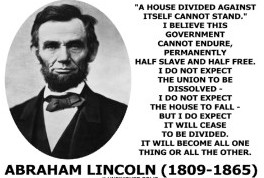 In 1858, Abraham Lincoln made his famous “A house divided cannot stand” speech.
He was debating Stephen Douglas about the issue of slavery. Douglas believed that each new territory or state should be allowed to decide whether it would permit slavery. Lincoln believed that the nation as a whole should take stand. At the time, a lot of people believed whites to be superior to blacks and that owning another person was justified based on skin color and bank account size.
We all know who eventually won that debate. But even after the slaves were free, too many people still believed in a superior race. And, for more than century, too many laws reflected their beliefs.
Now, more than 150 years later, I wonder how history will portray the politics of 2012 when the United States is once again a house divided.
Only this time, instead of being divided over slavery, we are divided about the purpose of government. But there is also an underlying debate very similar to the one being waged during the Civil War.
Too many people still believe that some individuals are superior to others. Only instead of color, they are claiming superiority based on the size of their bank account or their employment status. We have become a country that is debating whether we measure success in terms of dollars or in terms of human rights. We are debating whether accumulating possessions is more important than ensuring access to health care. And we are even debating whether or not poverty is a moral issue.
This has never been more apparent than with the reaction to the Supreme Court’s decision that the Affordable Health Care Act is Constitutional.
The fact that people have different opinions about the decision doesn’t bother me. I expect that. Different opinions are healthy. What bothers me is the judgmental comments and self-righteous outrage that some people expressed.
I was particularly struck by comments from a public school teacher who said the Supreme Court’s decision was immoral. She followed this by saying “I work for a living. I don’t want my hard-earned dollars to support people who depend on the government.”
Since a public school teacher depends on the government (i.e., taxpayer dollars) for her paycheck, I was dumbfounded. I wonder how she would react if the country engaged in a debate about the importance of education and whether we are infringing on taxpayers rights by requiring them to pay for education.
At some point, our country embraced the belief that education is a right that every child deserves. We even took that concept a step further and mandated that children stay in school until a certain age.
If the issue were being debated now, there’s no doubt some people would be screaming that requiring children to go to school is unconstitutional and that hard-working taxpayers shouldn’t be responsible for the education of others.
Thankfully, most people recognize the importance of education, the benefit it has on a person’s future and the positive impact on a community’s economy. The same benefits can be attributed to access to health care, so I’m not really sure why we are so divided about the issue.
But we are.
Instead of debating how to help people, we are debating whether or not we even should. Take, for example, the comments of the previously mentioned public school teacher who claimed the concept of the Affordable Care Act is immoral.
Last time I checked, helping others was the definition of morality, not immorality.
But logic isn’t everyone’s strong suit. Many of the same people advocating for personal responsibility are also outraged that the individual mandate is part of health care reform. As explained to me, the purpose of this mandate is to encourage responsibility by requiring people to either purchase health insurance or pay a penalty to help cover the government’s costs.
Don’t get me wrong. I don’t think the Affordable Care Act is perfect, but at least it’s a statement about what a lot of people think is important. Actually, most people probably think access to health care is important. The dividing issue is about whether it is important for all Americans or only those who have employers or bank accounts that can cover the costs.
The debate isn’t going to end anytime soon. And with the presidential election season getting into full swing, discussions will get even more discordant.
I just hope that whatever the outcome, Americans can look back at the repercussions of this time with pride rather than shame. I hope we can say this is a time we stood up for the rights of all rather than for the benefit of some. And most of all, I hope we don’t divide and even burn down our house with our heated differences.


 Just So You Know