Blog Archives
If Only

As a social worker, the most heart-breaking cases always walk through the door on a Friday afternoon when most social service organizations are closing for the weekend, all the organizations are out of funds, and everyone is both mentally and physically drained.
And there is absolutely nothing I can do to help.
So it was a few weeks ago when a woman with three children under the age of four walked through my door. And as the woman told her story, two words ran in a continuous loop in my brain: “if only.”
“If only” I lived in a community with more resources.
“If only” the woman and her children weren’t invisible, irrelevant or deemed undeserving by people who are more concerned about their next vacation or their social status.
But most of all, “if only” our social services system wasn’t so broken that we invest most of our resources into programs that are as effective as putting BAND-AIDS on wounds that need major surgery.
The details of the woman’s story varied only slightly from those I’d heard before.
She had stayed home to raise her three pre-school age children while her husband worked. Everything was fine until, one day, her husband decided he didn’t want to be married anymore. In fact, he didn’t even want to live in the same country she did. And so, he fled – leaving her with no work experience, no support system and three very young children entirely dependent on her.
Unlike me, the woman had never been supported or encouraged to ensure she could be financially independent. No one had even told her that furthering her education or skills was an option.
And so she did the best she could.
She went to the Department of Health and Human Resources and applied for benefits, including Temporary Assistance of Needy Families, or TANF. To receive those TANF benefits, she had to sign a personal responsibility contract that required her to make every effort to find employment. She did just that. The job she found was only part-time, and the limited hours were irregular. As the sole caretaker for three small children who got sick and had other emergencies, she was often late and sometimes missed work.
Unlike me, she hadn’t grown up in a home where steady employment was a top priority. No one taught her the importance of calling in or being on time.
So when her supervisor spoke to her about these issues, she quit.
Unlike me, no one had ever explained to her that the costs of quitting are greater than those of being fired. She just didn’t know. But she soon learned.
Her TANF benefits were sanctioned because she had broken her personal responsibility contract.
Without any income, she got a car title loan to pay the rent.
Unlike me, no one had ever taught her that the interest on such loans quickly grows out of control. And unlike me, she had no support system of individuals who could help her financially. The people she knew were facing similar crises.
Despite her efforts, she couldn’t afford her rent and was evicted. She and her three children went to live in a shelter with strict rules and little privacy. That’s why the apparent kindness of a new acquaintance was so tempting.
The man offered her a free place for her and her children to live.
But, unlike me, she had no role models for healthy relationships. She had no frame of reference that trust, one of the most essential elements of any relationship, takes time to develop. She was in crisis, and people in crisis want one thing: a way out.
And so she accepted the man’s offer even though shelter rules prohibited her from returning for 30 days if she left on her own accord.
Unlike me, she had never been provided with opportunities to reap the rewards of delaying gratification after weighing benefits and consequences. She had only been taught to act on instinct and in the moment.
But less than a week after leaving the shelter, she realized that the promises for a free home didn’t actually come without a cost. She escaped with only her children and a car that was being repossessed because of her failure to pay on the title loan.
And that’s when she landed in my office on a Friday afternoon
I wish I could say I helped her, but all I could do was encourage her to go to another town with a homeless shelter from which she hadn’t been banned for 3o days.
As she was leaving, one of her children asked her if they were finally going home, and her response was “I told you that home is wherever Mommy is.” My heart broke a little.
Her words along with my own words of “if only” have been reverberating in my brain for weeks now.
“If only” echoes every time I listen to representatives from social service organizations report, in an almost congratulatory manner, that they have increased the number of people to whom they have provided emergency assistance. Providing assistance to those in crisis is important, but when the numbers go up, we are reinforcing how little we are doing to improve the long-term circumstances of struggling families.
“If only” echoes every time I hear poverty defined in terms of a lack of money rather than as a lack of resources. We can’t eliminate poverty until we address all the resources people need to succeed – that type of resources that I was so fortunate to have growing up: ongoing support, positive relationships, skills, knowledge, encouragement and role models.
And “if only” echoes every time another desperate individual or family walks into my office on a Friday afternoon and there is nothing I can do to help.
“If only.” “If only.” “If only.”
The Graduate

Thirteen years ago,”Pomp and Circumstance” played as my son wore a red cap and gown to accept his diploma.
Because his class was extremely small, the formal ceremony was short. As the post-graduation celebration began, my son led his friends in a unique rendition of the “Chicken Dance.”
Throughout the afternoon, there were several other moments when he grabbed, or attempted to grab, the limelight. At one point, his teacher pulled me aside and whispered “All the world is a stage for Shepherd. Just enjoy it.”
But I couldn’t.
The next 13 years, starting in kindergarten, weren’t easy.
I worried obsessively about my son.
Even though my son was very smart and very funny, I worried that he didn’t have the same interests as his peers.
I worried that he was awkward and uncoordinated and would never find the place where he belonged.
I worried that he often seemed oblivious to what others automatically understood.
I even worried that he didn’t care that I was worried.
But somewhere between kindergarten and twelfth grade, my son taught me more than algebra and English literature classes ever could.
He taught me that going out on a limb will always be more interesting than standing on the ground hugging the trunk.
He taught me that winning a dance contest doesn’t necessarily require the best moves. It simply requires the most guts.
He taught me that more people appreciate the sheep who wonders off to explore new pastures than the ones who stay with the herd.
And he taught me that grabbing a mic and singing in front of the entire student body can never be embarrassing if you get everyone to sing with you.
On Monday, I will listen to “Pomp and Circumstance” while my son wears a red cap and gown to accept his diploma.
I wish I could guarantee he won’t lead his entire graduating class in a rendition of “The Chicken Dance,” but I can’t. Neither can I guarantee he won’t pull off one final, ridiculous high school stunt.
But here’s what I can guarantee: I won’t be worried.
Because I know that my unique, gifted, funny, ridiculous, smart, sarcastic son already has plenty of experience in finding his way in the often rocky terrain of life.
I also know, that his preschool teacher wasn’t entirely right. All the world is not just a stage for my Shepherd. Instead, all the world is HIS stage.
And I can’t wait to see his upcoming performances.
Donald Trump and the Gritters
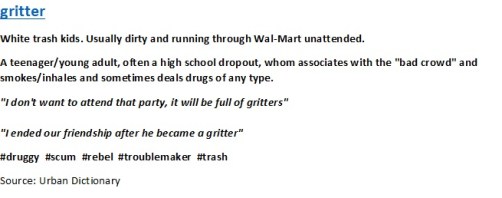
“Gritter.” It was such a completely foreign and wrong word, yet it was also very powerful.
Until I moved to West Virginia as an awkward adolescent, I never knew such words even existed. I was aware that some people used negative words to describe different races, but I didn’t know that there were also words to describe people by their social status. I had certainly witnessed my share of ridicule of the poor and outcast, but I didn’t know there were actual labels for such individuals.
What I did know was that associating with people who wore such labels was social suicide and defending them could be just as dangerous.
I was already teetering on the edge of not belonging, and I was worried that even the slightest mistake would send me hurtling over the edge. I was already considered weird because I had transferred from a state that was thousands of miles away. Then I had made a near fatal error of comparing my old life to my new one. In other words, in the eyes of my peers, I thought I was better than they were.
Nothing was farther from the truth. Maybe, if we hadn’t all been so wrapped up in the complexity of adolescence, my classmates might have recognized how completely alone and alien I felt.
But, they didn’t. Or, if they did, they didn’t care.
And so, I felt a complete urgency to assimilate into a new culture and to adopt a new language, even when it went in the face of everything in which I believed.
I made the mistake of trying out my newly acquired word “gritter” on my family during dinner.
“What does that mean?” my mom asked
I tried my best to explain about the kids on the bus that were gritters and how they wore the same clothes over and over again, lived in the mobile home park and were generally unacceptable.
My parents got really, really angry.
More than 30 years later, I don’t remember much of what my parents said, but I do remember the look on my dad’s face when he said that he would have been a “gritter” in high school. And I remember my ambivalence.
To the depths of my soul, I knew how wrong judging and labeling other people was. But I also knew that I had absolutely no social footing, so standing up against what was a social norm would just further alienate me. My peers had a pecking order, and I wasn’t about to question it.
Until this past week, I’d completely forgotten all about gritters and my parents complete outrage at the ease with which I had used the word.
But then the West Virginia primary election brought it all back.
Donald Trump easily won West Virginia’s nod for President of the United States. While this wasn’t a surprise, the political pundits immediately began analyzing how one of the nation’s poorest states could engage in a love affair with a man who has nothing in common with the people, the culture and, of course, the lack of resources.
And even though I’m personally frustrated by the whole situation, I kind of get it.
West Virginians have been ridiculed for decades. The entire population is often stereotyped as poor, uneducated hillbillies whose culture is defined as being on par with the dueling banjos in the movie Deliverance.
No one wants to be called the equivalent of a gritter. We want people to believe we are better than that, even if that means we point our fingers at other people and blame them, not ourselves, for our problems.
That is Donald Trump’s schtick.
He builds himself up while tearing others down – the poor, the undocumented, women, people with disabilities, people with accents, etc. Basically, he has taken license to belittle anyone who isn’t exactly like him.
No wonder West Virginians are buying it. If elected, they will have a leader who gives them license to call their neighbors gritters and blame others for their problems.
I am only grateful that I am no longer that awkward adolescent that was afraid to speak out or embrace the wisdom of her parents. Now, I’m willing to yell at the top of my lungs “Putting other people down doesn’t make you a leader or a better person. In fact, it does the exact opposite.”
Maybe Donald Trump will never hear me, but at least I know someone will.
And that’s a start.
What Mom Never Said
Here ar e three truths that guide my life:
1) Perfection is highly overrated. I’ve never met a perfect person, and I certainly wasn’t raised by anyone who met the criteria.
2) We learn more far more from our mistakes than we will ever learn from accomplishments.
3) The best advice we receive isn’t handed to us wrapped in words of wisdom. Instead, the most meaningful lessons are often hidden in what we observe, what we hear, and, in many cases, what we don’t hear.
My mom has spent more than 51 years trying to impart these nuggets of truth on my brother and me.
When I was young, she sometimes interspersed her acquired wisdom into our conversations, but what went unsaid was always more powerful.
For example, my mom never once told me I deserved anything. NEVER.
I was well into adulthood before I realized that.
No matter what I achieved, she never used the word deserve. Of course she encouraged me and told me that I’d earned my successes, but she implied that earning something is entirely different from deserving it.
She never explained this, and we never discussed the matter.
But by not speaking that one word, deserve, she said volumes.
In matters of every day life, human beings don’t have the right, or the ability, to decide who is deserving of something. Because, in doing so, we imply that others are not deserving.
Life is one big poker game in which the draw sometimes determines everything. Yes, some people are better at playing the game. Yes, some people use their cards to gain an advantage. Yes, some people avoid temptations and are able to improve their chances. And yes, some people are so charming and engaging that they can cloud reality to sway the beliefs of others.
But in the end, some people are simply luckier, and luck has nothing to do with their character, their abilities, their fortitude, their courage, or whether they are more “deserving” than others
So even though Mom never talked about why she threw “deserve” into her junk pile of words that are either misused or meaningless, she said everything through the life she’s led.
And for that, I will always be grateful.
Happy Mother’s Day, Mom.
A Grown Up Question
Shortly before I graduated from college, I sat in a friend’s apartment listening to the song “I’m an Adult Now” by the Pursuit of Happiness and thinking it would soon be included on the soundtrack of my life. (Back in those days, life soundtracks were limited to 60 or 90 minute cassette tapes.)
I was 22 years old, and I had absolutely no idea what being a grown up really meant. But I was convinced that once I had my college diploma in hand, I would quickly learn.
I didn’t.
Now, more than a quarter of a century later, I’m still trying on various hats in hopes of discovering the one that will officially make me feel like a grown up. So far, none have worked.
Yes, I lived on my own and paid my own bills. Yes, I dealt with mortgages and debt and the IRS. Yes, I got married. Yes, I gave birth and became a parent. And yes, I even discovered that I can sound more like my mother than I ever imagined.
But despite all of that, I’ve never felt like an authentic adult. Instead, I feel as though I’m pretending to be an adult when I’m actually more like that 22 year-old still trying to decide which songs should be on my life’s soundtrack.
Maybe that’s because I’ve never been able to answer that one question that so many adults think is incredibly important. It’s a question that was asked of me hundreds of times from the time I was a toddler all the way through high school.
“What do you want to be when you grow up?”
Ironically, the younger I was, the more easily I could answer the question.
When I was five, I wanted to be a trapeze artist. That dream was short-lived when my dad hung a wooden trapeze from a tree in a backyard and I made him lower it because its height five feet off the ground scared me. By the time I was ten, I had my heart set on being a best-selling author which, by the time I was 15, and evolved into a desire to be a journalist. And, at what I considered to be the mature age of 20, I truly believed I was destined to produce documentaries that would change the world.
With the exception of a few months I spent as a radio news reporter, I never achieved any of those goals. I could consider myself a failure, but that would discount all my accomplishments never on my “I want to” list. Nor would it take into account how the experience of living life to its fullest sometimes gets in the way of the expectations we think we are supposed to meet.
I don’t think I could have known, at the age of 22, how life’s river of circumstances has a generally steady and sometimes ferociously rapid current that can easily sweep us away from where we thought we belonged to the places we are needed most.
I was thinking about that river this week when my son celebrated his eighteenth birthday. In only a few months, he’ll be starting college, so he’s regularly being asked what he’ll be studying. To me, that’s the more mature equivalent of the question “what do you want to be when you grow up?”
 And, even though I understand why everyone feels compelled to ask, I think the more meaningful question is “are you keeping your heart and your mind open to making adjustments to your plan with each new opportunity and complication?”
If my son does that, he faces the danger of ending up like his mother – nearly 50 years old and not entirely sure what he wants to be when he grows up. At the same time, he might also learn that being an adult isn’t about reaching a certain age or about achieving a certain status. And he might figure out that making mature decisions doesn’t mean letting go of the child within.
Instead, getting older should be about learning to adjust to the currents of life even when you aren’t confident you are headed in the direction you had originally planned.
For All I Do Wrong
I felt like a child on the verge of a temper tantrum. I wanted to put my hands over my ears, stomp my feet and tell  everyone to be quiet.
But, I couldn’t. I was attending a meeting in a professional capacity.
And so, I could only throw an internal temper tantrum during which I raged about how easily people can point fingers.
Maybe, I had just reached my capacity for simplistic thinking. Maybe I was exhausted by all of the people who expend all of their energy finding fault rather than solutions. Maybe I was tired of putting labels on people without taking into consideration all of the external forces that helped shape them. And maybe, just maybe, I was too aware of all of the mistakes I’ve made in my own life.
And so, when I was forced to listen to people make a blanket statement that all homeless people are drug addicts and criminals, I twitched.
Here’s the truth: not all homeless people are criminals or drug addicts and very few drug addicts and criminals are homeless.
Here’s a greater truth: no person arrives at rock bottom on purpose. No one makes decisions with the sole purpose of destroying all of the good things around them. Most important of all, no person can be described by one or two simple adjectives like addict or homeless or loser.
I’m not just saying this because my work involves individuals who struggle with those labels so I have the opportunity to see how complicated people and situations are.
I’m saying this because I make mistakes EVERY SINGLE DAY. Sometimes the mistakes are small and easily forgotten. Sometimes they are significant enough to hurt others, and I carry the guilt and regret with me as though they were an actual physical presence. And, more often than not, I’ve hurt myself with a pattern of wrong decisions that have left scars on both on my body and my soul.
And yet, few, if any people, label me by mistakes. Maybe that’s because I’m able to hide them behind a shield of respectable friends, family and job. Maybe it’s because I am surrounded by people who are not so weighed down by their own mistakes that they still have the energy and ability to help me when I fall. And maybe it’s because I was raised by parents who, even as they reached out a hand to help pick me up, never allowed me to escape the consequences of my mistakes.
But if I ever discovered that, instead of being identified as a unique individual, I was being forced to wear my mistakes as a label, I would not just feel shame. I would also feel less than human. And when I feel bad about myself, I am much more likely to make bad decisions.
Which is why, as I sat in that meeting where blame was being thrown around like baseballs at spring training, I wanted to  remind people of that old saying “when you point a finger at someone, remember there are three pointing back at you.”
In other words, we can’t expect the world to change until each of us changes too. That starts with spending less time finding blame, more time trying to understand the complex issues that cause our biggest community problems, and, most importantly, relying on ourselves rather than others to be part of the solution.
Touched by an Angel
 For several years, National Public Radio ran a series called This I Believe that encouraged listeners to share short audio essays about core beliefs that defined who they were and how they lived their lives.
I always had a secret desire to submit my own essay, but I never did.
I just couldn’t identify only one belief that defines me.
I believe in karma.
I believe that the worst circumstances in our life are intended to teach us critical lessons that, in the end, will make us better people.
And I believe that angels show up in our lives when we need them most.
So it was last night when I got home from work in a foul mood. I was worn down by trying to do the right thing in a world often controlled by manipulative people. I was so angry that I had an almost physical need for everyone else to know exactly how I felt. I was already writing the words for this blog in my head,
But that was before I saw the package on my front steps.
My curiosity immediately overshadowed my anger. The return address was from my long ago babysitter, Carrie, in Oregon.
Growing up, I adored Carrie just as I had adored her mother, Ruby.
My childhood was spent living thousands of miles away from my own grandparents, and Ruby had stepped up and stepped into the role of foster grandmother.
Since Ruby had several daughters of her own, I never understood how someone as special as she was could possibly think I was special too. Not only was she was kind, gentle and loving, but she had the innate ability to draw into the light all the good in people while ignoring all that was ugly. When spending time with Ruby, you couldn’t be angry at the injustices in the world because you were too busy rejoicing in all its beauty.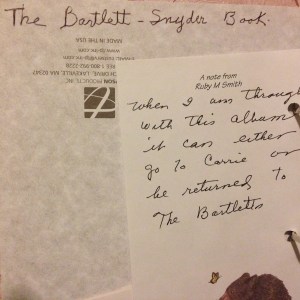
When Ruby died in January 2007 at the age of 92, I never thought I’d hear from her again.
I was wrong.
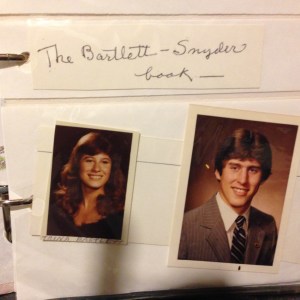
The package on my front steps contained a photo album with the letters, announcements and photographs that my mother and I had sent Ruby over two decades. It also included a note with instructions.
As I read the note from Ruby and flipped through the pages of my life since I’d left Oregon, tears streamed down my face and my anger disappeared.
I had been touched by an angel who was reminding me not to focus on the negative. There is just too much in life to celebrate instead.
And so, thanks to Ruby, that’s exactly what I did.
Beneath the Surface
 Earlier this week, a colleague stomped into my office expressing indignation about an injustice.
That unto itself wasn’t the least bit unusual. Someone is always stomping into my office to complain about something.
I work for a social service agency with a mission to alleviate poverty. My co-workers and I comprise a group of passionate people who won’t accept that the odds are simply stacked against some people. We try to change those odds.
Often, we feel as though we are tilting at windmills, and we even get discouraged.
But we don’t give up. After all, our heroes didn’t give up.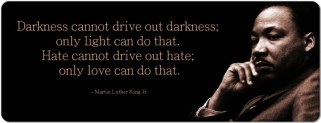
And the treatment of one of those heroes is the reason my co-worker was upset as she stormed into my office.
“I can’t believe that the Martin Luther King, Jr. holiday has become just another day for sales for some people,” she said. “The day is supposed to be about honoring of one of the greatest men in history. He changed the world.”
Indeed he did.
I was a just over a year old when Martin Luther King, Jr. was assassinated, so I never knew a world that hadn’t been impacted by his actions, his words and his ability to change the system. But for years, what I knew about him was limited:
- He was a Civil Rights leader.
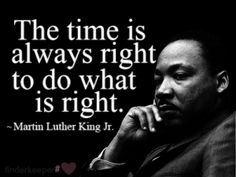
- He made a speech about having a dream that all people would someday be treated as equal.
- He believed in using peaceful tactics instead of violence.
- He was shot and killed at a hotel in Tennessee by a guy named James Earl Ray.
Those facts paint a picture of a great man who made a difference in the world. But those facts never really inspired me because I couldn’t relate to the charismatic leader. His ability to make such a huge difference in the lives of others had absolutely nothing to do with my potential.
At least, it wasn’t until I learned that he, like the rest of us, struggled with imperfections.
He apparently tried to commit suicide when he was 12 years old. His grandmother passed away after a heart attack while King was off disobeying his parents by going to watch a parade after they had prohibited it. When he got home and learned that his grandmother had died in his absence, he jumped out a second story window.
Martin Luther King, Jr., the man who delivered one of the most iconic speeches ever, received a C in a public speaking class during his first year in seminary.
King is rumored to have had numerous extra-marital affairs, which even resulted  in his becoming a target of the FBI.
On the day he was killed, King was out on that now famous hotel balcony because he was smoking. He tried to keep the fact that he was a smoker hidden, so he didn’t want cameras around when he had a cigarette in his hand. According to Rev. Kyles, after King was shot but before he was taken away by the ambulance, Kyles removed the package of cigarettes from King’s pocket and got rid of the cigarette butt. This was an attempt to hide the fact that King was smoking at the time he was shot.
None of these facts minimize the accomplishments of Martin Luther King, Jr. In fact, in my eyes, they make them even more impressive. Like all of us, Dr. King struggled with being imperfect. But despite that, he changed the world.
He is my hero not just because he acted on the same beliefs that I hold dear. He is my hero because he didn’t let his imperfections get in the way of taking action and changing the world.
This Monday, when the United States celebrates the federal holiday that honors Dr. Martin Luther King, Jr., that’s what I’ll be thinking about.
I’ll be remembering that ev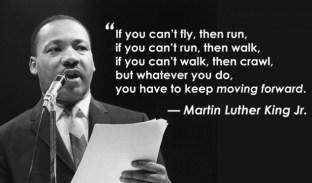 ery person who makes a difference in the lives of others has a personal story lying just beneath the surface. These are the stories that involve failing from time to time but persevering anyway. They involve making mistakes or saying the wrong thing while we still attempt to do the right thing. And even though many of us feel like we are trying to lead when no one is following, we have to keep trying to blaze trails anyway.
These stories sometimes aren’t visible to those around us because we try to hide them just beneath the surface. But these are the stories that make us strong enough to take on the world and try to make it a better place.
Just like our heroes did.
The Antidote
 I try to be a nice person. I really do.
But sometimes, the person I strive to be and the one in my head couldn’t be more different.
O.K. – not some of the time. Most of the time.
In fact, I’ve often wondered if the first verse of “Cell Block Tango” in the musical Chicago was written with me in mind. In it, a young woman explains how the habits of other people can “get you down.” She complains about Bernie, who popped his gum when she was having a bad day. Her bad day turned into his bad day when she shot and killed him.
I can’t say I’ve ever come close to killing another person, but my mind is often plotting revenge. I just don’t act on these thoughts.
But when I’m in a funk, like I was last week, people or situations that are normally just irritating suddenly proliferate as though purposefully torturing me.
The moms who have known each other for years and don’t make an effort to include me in their conversations, even when I try to insert myself, morph into that pack of mean girls from high school.
The people who talk about updating the living room paint to “this year’s color” make me feel completely incompetent and out of touch. (Up until this year, I never even knew that some shades of beige are “in” and some are “out.” I generally feel accomplished when the old, faded living room carpet at my house gets vacuumed a couple of times each month.)
The grocery store clerks who make comments about the food I’m buying completely annoy me. Even though I tend to be a chatty person with almost everyone, I don’t need complete strangers talking to me about my eating habits.
Parents who make sure that they drop a list of their children’s accomplishments into every conversation seem to taunt me for my less accomplished (in their eyes) kids.
And those are just the people who irritate me. I haven’t even mentioned the ones who make me really angry:
- Individuals who don’t take pride in their job. I just don’t get that. If you are being paid to do something, you should never, ever expect other people to compensate and clean up your messes.
- People who compensate and clean up the messes for individuals who don’t take pride in their job. When that happens, the lazy people never learn.
- People who post derogatory comments in social media about low-income people who receive government benefits. No one in this world goes without the help of others. Some people are just fortunate to have family, friends, intellectual gifts and opportunities that helped them overcome difficult situations.
- Individuals who don’t take time to listen to others who may be less educated, less beautiful, less wealthy, less accomplished or less socially connected. We are all on this planet together, and I’m fairly confident that God doesn’t care more about some than others.
- Those same people who flaunt all they have by dropping snide comments or making off-hand remarks that are actually intended to put down others.
- Anyone who makes decisions that hurt my children and cause them to question their abilities or their dreams.
Generally, my antidote for this anger is to make up and play out entire scenes in my head. In them, I say just the right words or take just the right actions to cut down the offenders and put them in their place.
And then I pray to be a kind person and pretend to be the nice person I wish I were.
Usually, that’s enough, and the anger and irritation subside.
Usually.
But when the irritation and anger continue to linger and the notes from “Cell Block Tango” become an ear worm, I have to do something a littler more dramatic and employ a stronger antidote.
That’s when I write about the people I annoy me. And sometimes, I even make those written words public.
Star Woes
In the summer of 1977, my family made the hour-long car trip to the town of Bend, Oregon see the movie Star Wars.
I was ten years old, and I had been waiting for what seemed an eternity to see the movie. In retrospect, I didn’t care so much about Star Wars as I did about fitting in.
By the time I actually got to see it, I was still stinging from the shame I’d experienced when Alice Cannon insisted we play Star Wars in the basement of my house. I knew Alice’s older brother Calvin was a big fan of science fiction, but I hadn’t expected the same from her. In the past, we had spent our time together in a totally different way – such as secretly playing her parents Carpenters albums on the record player so we could lip sync to songs like “Yesterday Once More.”
But that summer, the Carpenters were out and Star Wars was in. And, even though I had no frame of reference, when Alice wanted to play Star Wars, I agreed.
I shouldn’t have.
Despite her best efforts to engage me in playing the role of various characters, she finally gave up in disgust when I couldn’t even figure out what she meant when she said “just act like R2-D2.”
So when my parents announced we were finally going to see Star Wars, I couldn’t have been happier. Despite the long car ride, the longer ticket line and our seats in the very back of the theater, I thought my needs had finally been met.
That only lasted until the movie started.
I didn’t get the plot. I didn’t understand how I was apparently the only person in the entire world that didn’t like the movie. And, most critical of all, I still didn’t understand how I could have acted like R2-D2, who didn’t say anything but instead spoke in mechanical beeps.
What I did understand was that the Carpenters had probably been correct when they had sung “We’ve only just begun.” I knew that this Star Wars thing was going to last much longer than I wanted.
My dad confirmed my fears as the credits rolled when he said, “Well, it’s obvious they are going to make a sequel.”
Which is why, during the long, dark car ride home, I curled into a ball in the back seat and tried to reassure myself that at least I liked the theme music. (For the record, I got the sheet music and played it over and over again on the piano that fall.)
All of this is why I found myself sighing loudly this past October when my husband asked me at least three times if I wanted a ticket to the Star Wars: The Force Awakens on opening night.
He seemed so hurt and confused when I told him that I had no idea what I would be doing on December 18 and that buying tickets that far in advance was ridiculous.
Neither he, my children or millions of others thought it ridiculous at all. To them, it was an event for which to plan accordingly. And they did.
To me, the new Star Wars is something else entirely.
It is a reminder that. sometimes, the things we think we want the most aren’t what will make us happy. What does make us happy is discovering and pursuing our own interests and passions.
As the Carpenters would say, that’s what puts me at “The Top of the World.”


 Just So You Know