Blog Archives
What Mom Never Said
Here ar e three truths that guide my life:
1) Perfection is highly overrated. I’ve never met a perfect person, and I certainly wasn’t raised by anyone who met the criteria.
2) We learn more far more from our mistakes than we will ever learn from accomplishments.
3) The best advice we receive isn’t handed to us wrapped in words of wisdom. Instead, the most meaningful lessons are often hidden in what we observe, what we hear, and, in many cases, what we don’t hear.
My mom has spent more than 51 years trying to impart these nuggets of truth on my brother and me.
When I was young, she sometimes interspersed her acquired wisdom into our conversations, but what went unsaid was always more powerful.
For example, my mom never once told me I deserved anything. NEVER.
I was well into adulthood before I realized that.
No matter what I achieved, she never used the word deserve. Of course she encouraged me and told me that I’d earned my successes, but she implied that earning something is entirely different from deserving it.
She never explained this, and we never discussed the matter.
But by not speaking that one word, deserve, she said volumes.
In matters of every day life, human beings don’t have the right, or the ability, to decide who is deserving of something. Because, in doing so, we imply that others are not deserving.
Life is one big poker game in which the draw sometimes determines everything. Yes, some people are better at playing the game. Yes, some people use their cards to gain an advantage. Yes, some people avoid temptations and are able to improve their chances. And yes, some people are so charming and engaging that they can cloud reality to sway the beliefs of others.
But in the end, some people are simply luckier, and luck has nothing to do with their character, their abilities, their fortitude, their courage, or whether they are more “deserving” than others
So even though Mom never talked about why she threw “deserve” into her junk pile of words that are either misused or meaningless, she said everything through the life she’s led.
And for that, I will always be grateful.
Happy Mother’s Day, Mom.
Touched by an Angel
 For several years, National Public Radio ran a series called This I Believe that encouraged listeners to share short audio essays about core beliefs that defined who they were and how they lived their lives.
I always had a secret desire to submit my own essay, but I never did.
I just couldn’t identify only one belief that defines me.
I believe in karma.
I believe that the worst circumstances in our life are intended to teach us critical lessons that, in the end, will make us better people.
And I believe that angels show up in our lives when we need them most.
So it was last night when I got home from work in a foul mood. I was worn down by trying to do the right thing in a world often controlled by manipulative people. I was so angry that I had an almost physical need for everyone else to know exactly how I felt. I was already writing the words for this blog in my head,
But that was before I saw the package on my front steps.
My curiosity immediately overshadowed my anger. The return address was from my long ago babysitter, Carrie, in Oregon.
Growing up, I adored Carrie just as I had adored her mother, Ruby.
My childhood was spent living thousands of miles away from my own grandparents, and Ruby had stepped up and stepped into the role of foster grandmother.
Since Ruby had several daughters of her own, I never understood how someone as special as she was could possibly think I was special too. Not only was she was kind, gentle and loving, but she had the innate ability to draw into the light all the good in people while ignoring all that was ugly. When spending time with Ruby, you couldn’t be angry at the injustices in the world because you were too busy rejoicing in all its beauty.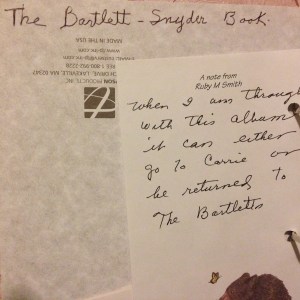
When Ruby died in January 2007 at the age of 92, I never thought I’d hear from her again.
I was wrong.
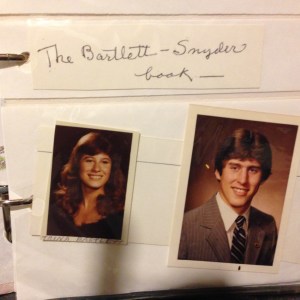
The package on my front steps contained a photo album with the letters, announcements and photographs that my mother and I had sent Ruby over two decades. It also included a note with instructions.
As I read the note from Ruby and flipped through the pages of my life since I’d left Oregon, tears streamed down my face and my anger disappeared.
I had been touched by an angel who was reminding me not to focus on the negative. There is just too much in life to celebrate instead.
And so, thanks to Ruby, that’s exactly what I did.
Falling Out of Bed
 When I was a little girl, I fell out of bed on a regular basis.
Sometimes, I’d pick myself up off the floor and climb back under the covers. Sometimes, my father, who must have heard the thud, would come into my bedroom, scoop me up, and tuck me back into my bed.
I don’t remember being particularly concerned or afraid of falling out of bed, nor do I remember my parents worrying about it.
It was just something I did until, one day, I didn’t do it anymore.
Like so many childhood memories, my habit of falling out of bed was locked away in a part of my brain that only opens with the right key. Sometimes that key is a piece of music, sometimes it’s a smell, and sometimes it’s a conversation. But there are times when I have no idea what key unleashed a memory. It just pops into my mind, and I can’t shake it. Those are the moments when I realize my memories have come out of hiding and dusted themselves off because they are trying to teach me something.
And so it was last week with my memories of falling out of bed.
As I thought back to those nights decades ago, I realized they represent all of life’s struggles. Those times I fell out of bed were only a fraction of all the tumbles I’ve taken. And yet, I only remember a very small percentage of them – the ones that left behind scars and a good story.
But almost every time I stumbled or even completely fell, I had the choice to wallow in the pain and humiliation or to pick myself back up. Those few times when my struggles were so great that I couldn’t just pick myself back up, I was fortunate to have someone nearby who heard the thud and immediately responded with a helping hand.
There are so many individuals with no such people nearby. On almost a daily basis, I watch the stream of people coming through my office doors for financial assistance or other social services. I realize that most of them had very few, if any, people nearby listening for their thuds. And I wonder if it’s harder to pick yourself back up when you know that no one else is paying attention to your struggles.
I also wonder if knowing that you are safe and that someone has your back makes it easier to teach yourself not to fall. When you trust that people care and realize that falls are part of the learning process, it’s easier to have the fortitude and the ability to prevent self-inflicted bruises.
My memories were reminding me that I, like everyone else, needs to pay more attention and react to the thuds when someone nearby, no matter who they are, falls.
Star Woes
In the summer of 1977, my family made the hour-long car trip to the town of Bend, Oregon see the movie Star Wars.
I was ten years old, and I had been waiting for what seemed an eternity to see the movie. In retrospect, I didn’t care so much about Star Wars as I did about fitting in.
By the time I actually got to see it, I was still stinging from the shame I’d experienced when Alice Cannon insisted we play Star Wars in the basement of my house. I knew Alice’s older brother Calvin was a big fan of science fiction, but I hadn’t expected the same from her. In the past, we had spent our time together in a totally different way – such as secretly playing her parents Carpenters albums on the record player so we could lip sync to songs like “Yesterday Once More.”
But that summer, the Carpenters were out and Star Wars was in. And, even though I had no frame of reference, when Alice wanted to play Star Wars, I agreed.
I shouldn’t have.
Despite her best efforts to engage me in playing the role of various characters, she finally gave up in disgust when I couldn’t even figure out what she meant when she said “just act like R2-D2.”
So when my parents announced we were finally going to see Star Wars, I couldn’t have been happier. Despite the long car ride, the longer ticket line and our seats in the very back of the theater, I thought my needs had finally been met.
That only lasted until the movie started.
I didn’t get the plot. I didn’t understand how I was apparently the only person in the entire world that didn’t like the movie. And, most critical of all, I still didn’t understand how I could have acted like R2-D2, who didn’t say anything but instead spoke in mechanical beeps.
What I did understand was that the Carpenters had probably been correct when they had sung “We’ve only just begun.” I knew that this Star Wars thing was going to last much longer than I wanted.
My dad confirmed my fears as the credits rolled when he said, “Well, it’s obvious they are going to make a sequel.”
Which is why, during the long, dark car ride home, I curled into a ball in the back seat and tried to reassure myself that at least I liked the theme music. (For the record, I got the sheet music and played it over and over again on the piano that fall.)
All of this is why I found myself sighing loudly this past October when my husband asked me at least three times if I wanted a ticket to the Star Wars: The Force Awakens on opening night.
He seemed so hurt and confused when I told him that I had no idea what I would be doing on December 18 and that buying tickets that far in advance was ridiculous.
Neither he, my children or millions of others thought it ridiculous at all. To them, it was an event for which to plan accordingly. And they did.
To me, the new Star Wars is something else entirely.
It is a reminder that. sometimes, the things we think we want the most aren’t what will make us happy. What does make us happy is discovering and pursuing our own interests and passions.
As the Carpenters would say, that’s what puts me at “The Top of the World.”
Without Clock or Calendar
For the last f ew months, something has been missing from my life. Its disappearance is particularly unnerving because I am given a sufficient supply of the missing element every day. But when I go to bed each night, I am left wondering what happened.
Time is that common yet mysterious element that belongs to everyone, plays favorites to no one, speeds up and slows down at the most inopportune moments and steals the occasions we treasure most while gifting us with memories.
When I was young, 24 hours per days seemed more than sufficient. Now, it’s anything but.
but.
Which is why, on Christmas Eve, I felt as though I’d won the lottery. I had 11
days, or approximately 264 hours, without any significant appointments or commitments. And even though I had a long list of projects I wanted to tackle, part of me that just wanted to escape life as I know it.
Which is exactly what I did on Christmas Day.
After the presents were opened and the Christmas dinner was prepared, I escaped to find evidence that life is more than a series of events or accomplishments that are documented with time stamps and dates to remember.
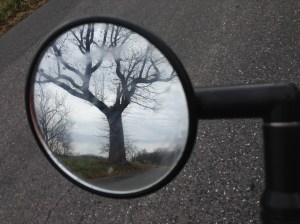 I took my bicycle out on an unseasonably warm day, and, for the first time in a long time, I didn’t pedal to
cover a specific number of miles in a specified number of minutes.
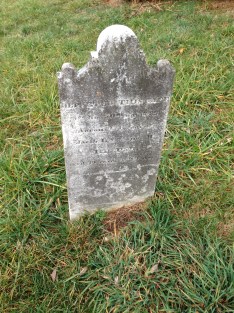
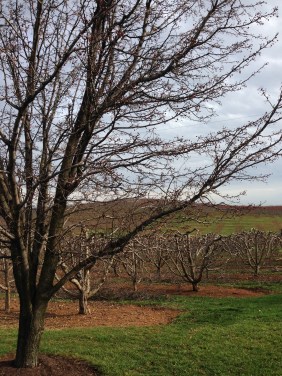
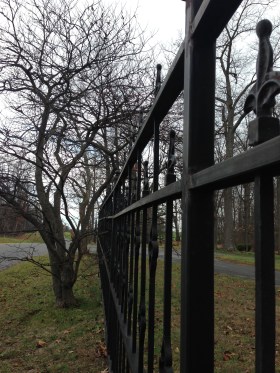
In fact, I often didn’t pedal at all. Instead, I stopped to investigate. I stopped to listen. I stopped to breathe. Most of all, I stopped to take photos on my phone and to simply appreciate life without the constraints of deadlines or appointments or expectations.
And what I discovered was that, unlike people, most of the world pays no attention to clocks or calendars. While everything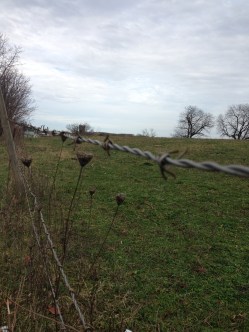 is affected by time, only people give it power.
The rest of the world just exists in the moment, adapts to the elements, accepts changes and stays committed to survival.
In other words, the rest of the world can teach us humans a thing or two.
And I’m ready to learn.


That Place You Belong
The senior high school student walked into the concession stand with tears in her eyes.
“This is my second to last football game ever,” she said. “It is all ending too fast.”
I empathized with her.
I too can sense time slipping away too quickly. It has the the strange ability to swiftly turn every moment into a mere memory regardless of our desire for meaningful moments to linger a little longer than normal.
Just last year, I openly cried as I watched my son’s friends and their parents march onto the football field for senior night. As they announcer said their names and their future plans, my chest tightened, my eyes watered and I felt a sense of dread. I knew that in exactly one year, I would be doing the same.
And I was.
This past Friday night, my husband and I stood on the edge of the high school football field, were handed flowers and given instructions to escort our son for recognition during the last home football game of his high school career.
Despite all of my concerns that my overly emotional tendencies would sabotage the moment, I didn’t get a bit nostalgic. I was too busy laughing.
I should have known my son wouldn ‘t take the moment too seriously, and my suspicions grew stronger when other parents were handed a sheet of paper with all of the information that the announcer was going to read about their child. My son snatched his paper out of my hands with a smirk on his face then stuffed it down his pants (his band uniform doesn’t have pockets). I had no opportunity to see his written words prior to their being proclaimed over the loudspeaker for hundreds of people.
My son’s best friend, who was directly behind us in line, started laughing.
“I can’t wait until they read yours,” he told my son.
Since we were lined up in alphabetical order and my husband and I decided not to complicate our children’s lives with hyphenated last names, we were near the end with the last name of Snyder.
That meant we had plenty of time to listen to the impressive future plans and meaningful expressions of support from my son’s classmates.
It also meant that, instead of feeling nostalgic or the least bit weepy, I was overwhelmed with a sense of curiosity about what my son had said.
Finally, his time in the limelight arrived.
At first, my son’s moment of recognition was similar to that of his classmates. He mentioned his future plans – or what he thinks they will be – and his appreciation of the friends, teachers and family for their support.
That’s when normal ended for him.
He also extended his appreciation to Goku from Dragon Ball Z (I have no idea) and the people who invented hot wing flavored-Doritos (I don’t understand).
While my initial reaction was to do a face palm, I soon realized that other people appreciated that at least one senior hadn’t said what was expected. The people in the stands were applauding and cheering as my son stepped away from my husband and me to take a bow.
The cheers and applause got louder.
At that moment, I realized that my son is in an incredibly different place than I was at his age.
While I was seeking the place where I belonged, my son simply creates his.
Not everyone appreciates his off-the-wall humor or his need to make light of every situation, but that doesn’t bother him.
He creates moments instead of waiting for them to happen or lamenting their loss.
He innately knows that for every milestone that passes, another one is on the horizon. He also knows that waiting for milestones isn’t enough. Every minute can be a moment if you decide to seize it rather than stand back and watch.
He is only three months into his senior year of high school. Between now and May, I have no doubt that there will be times when I get weepy and nostalgic as the final chapter of his childhood comes to an end.
But I also have no doubt that the laughter and smiles will outnumber the tears.
Because that’s what happens when you are in the place where you belong.
The Dance
Every year, at least one news source releases a list of everything that the latest class of incoming college freshmen have never experienced. The articles are often written under the guise of reminding professors that they are teaching to a group of students whose life perspective is completely different from theirs.
That’s the “supposed” reason for the release of these articles.
I think they are really intended to remind people like me how old we are.
Generally, I can feel old without being told that River Phoenix died before this year’s college freshmen were born, that Ferris Bueller would be old enough to be their father or that they have always been able to download music from the internet.
I don’t need the news stories because I have teenagers who constantly remind me that, if I were a car, I’d be a categorized as a “classic.”
Despite my best efforts to be hip, my kids let me know that just using that word dates me. To them, hips are a part of a body and the word “cool” is to describe something that is getting cold. They deem things they like as “chill.”
And while “chill” has yet to make it into my vocabulary, I feel fortunate to even understanding what my kids are saying when they use that word. At least it is a word.
Much of what they communicate is in a code that grew out of their love of text messaging. I once thought I was keeping up with the times (I actually did Laugh Out Loud when my former boss, a retired Army Colonel, expressed confusion that a male colleague was responding to his emails with Lots Of Love), but those days are over.
Now, I find myself constantly googling random groups of letters that mean something to my kids and their friends.
But there are many things that I can’t Google – like the nuances of the high school culture in which my kids spend most of their waking hours.
Take, for example, the dynamics of the homecoming dance.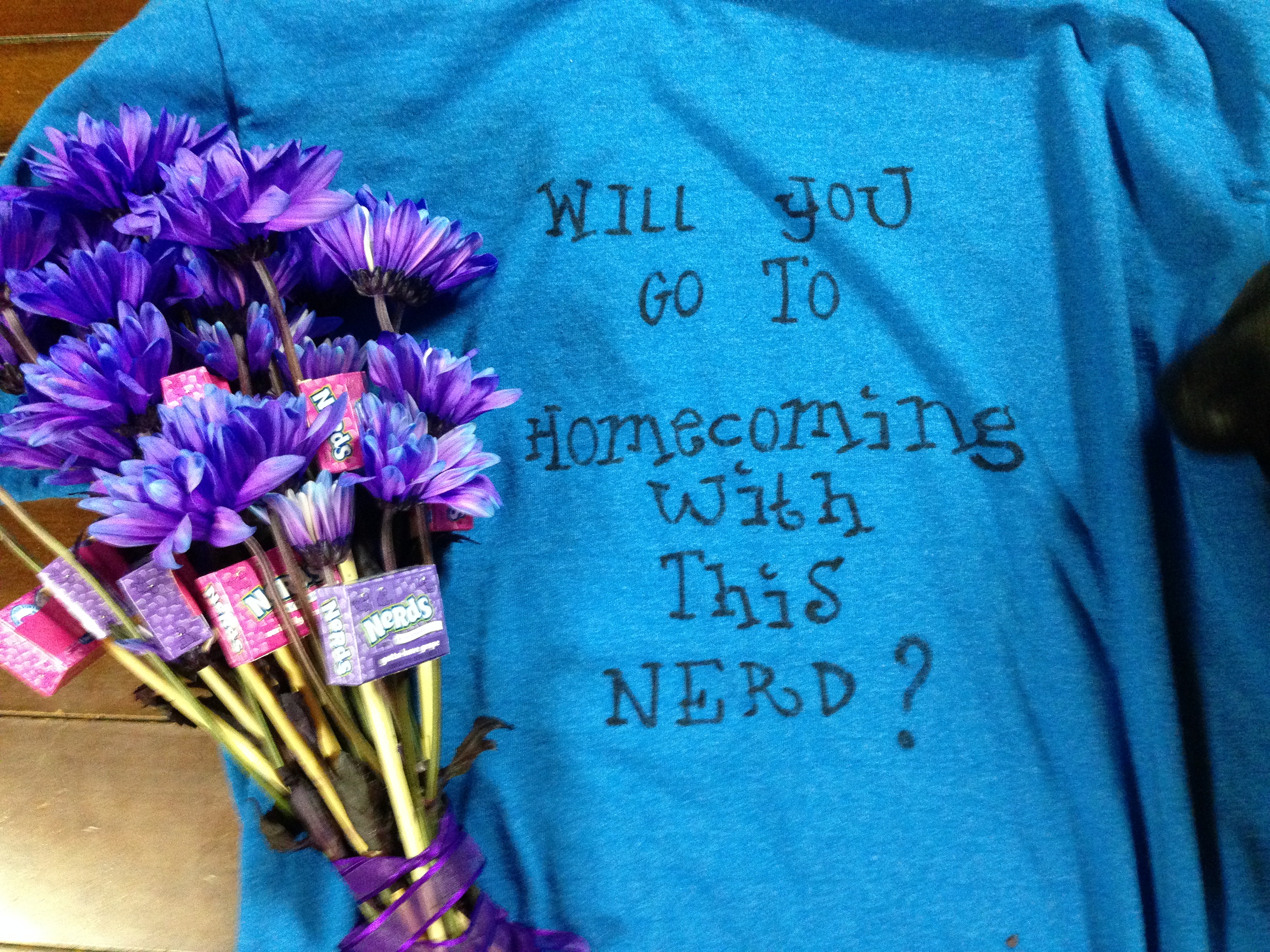
When I was in high school, there were only two options for attending the homecoming dance. The first was that you went with your significant other, and that significant had to be a member of the opposite sex. Thankfully, that tradition has been kicked out the door and down the street. People can go as best friends, as same-sex couples or by themselves. That’s cool, or uh, make that “chill.”
Also back in my day, if you didn’t have a significant other, you hoped that someone (always a member of the opposite sex) would ask you to the dance. If not, you knew you were destined to sit at home on the night of the dance watching the latest episodes of The Love Boat and Fantasy Island.
Now that no one has to have a date to the homecoming dance and students can attend with whomever they like, I thought the issue of the homecoming dance is a simple one. You either go or you don’t go.
I was wrong.
Asking someone to the homecoming dance now requires a creative and/or romantic proposal that is social media worthy. This is even more critical when you are already dating someone – the ask has to be huge.
If you don’t have teenagers in your life or you’re not keeping an eye on Instagram, you haven’t had to endure the onslaught of photos showing just how creative adolescents can be regarding the “big ask.” The whole trend makes me roll my eyes. On one hand, it’s cute. On the other hand, it’s completely ridiculous.
But then, most of our most treasured memories grow out of ridiculous moments.
I may be old (according to my kids) and I may have a great deal of life experience (according to the annual list about the experiences of college freshmen), but I am still young enough to appreciate the need to seek joy wherever we can find it.
So much of life doesn’t follow the script we attempt to write for ourselves. Life can be complicated and disappointing, and teenagers today understand this more than my generation ever did. They have to because the world is literally at their fingertips
But instead of simply accepting that life can be difficult, they are finding ways to enjoy it whenever and however possible.
If that means making a big deal out of asking someone to a dance, then I shouldn’t roll my eyes.
Instead, I should be using my eyes for something else – looking at the list of all things my kids have never experienced from a different angle.
I shouldn’t be seeing how old I am and how young they are. Instead, I should be looking at all of the possibilities my children still have in front of them. Even more importantly, I should be looking at all the opportunities they have to make their dance through this life as joyous and memorable as they want it to be.
All of My Lives
I felt a bit like a cat with nine lives as I glanced at my watch on Friday night.
I hadn’t recently escaped a serious accident or overcome a life-threatening illness.
I was just sitting in a high school auditorium watching my son and his friends turn what was intended to be a serious ceremony into something that more resembled a comedy routine. He and his fellow senior marching band members were supposed to be “jacketing” the freshman, which involved putting them into their uniforms for the first time.
As the antics on stage wrapped up, the band director made a short speech. He told the newly inducted band members that they now have a ready-made family as they start their high school journey.
At that point, I could feel my eyes begin to water and my chest tighten. What seemed like only yesterday, my son had been one of those freshmen. Now, in a few short months, he will be graduating from high school.
As I sat in that auditorium, I promised myself I would do all I can to treasure the next few months and the memories that have yet to be made.
That’s when I glanced at my watch and realized that more than 300 miles away, my 30 year high school reunion had just started.
As my son was animatedly and comically stepping into his last year of public education, my classmates from three decades earlier were reminiscing and remembering that time in our lives.
I had absolutely no regrets about choosing to celebrate my current life rather than a previous one.
At the same time, the poignant reminder of the quick passage of time is what made me feel a bit catlike.
My high school years are part of a past life.
I long ago left behind the girl I was in high school.
She existed in my life before college – a time when I learned to form my own opinions instead of parroting the most popular ones.
She existed in a life before I stumbled and failed at numerous adult relationships.
She existed before I learned to keep my mouth shut in order to survive horrible jobs with mean-spirited bosses because I needed a paycheck more than I needed to be happy.
And she existed before I became a wife, a mother and a person who strives to live a life of joy rather than one of fear, to speak out for compassion instead of accepting misunderstanding and to take risks rather than live with regrets.
I’ve only arrived here after surviving several lives during which I let fear win, silence overpower truth and safety override risks.
But I’m here now, and I’m sure my present-life friends and colleagues wouldn’t recognize or even believe whom I was in my life as an 18 year-old.
I can only hope the same for my own children. Although I love them dearly as they are today, I don’t want them to live the same life forever.
Last Friday, as I watched my incredibly goofy son on stage, I also knew that boy won’t always exist.
Life isn’t supposed to be static.
It’s about adapting to change. It’s about seeking out and enjoying as many experiences as possible. It’s about developing new relationships. Most of all, it’s about embracing the inevitable fact that, while nothing stays the same, each moment and life stage should be appreciated for what it can provide.
I wish I could give that advice to the me I used to be, but I can’t. All I can do is share it with my children.
Whether they choose to listen is up to them.
Something tells me that, in their current lives, they probably won’t listen or understand.
But someday, in one of their future lives, they’ll know exactly where their mom was coming from.
Saying Goodbye
I debated writing this post.
These are probably the most personal words I have ever written, yet I feel guilty about writing them.
My friend is dying of cancer. She has been given only hours to live.
Despite the tears making wet trails down my cheeks, I feel guilty about the enormity of my grief. Her husband, children, parents and even other friends are losing someone who occupied a much bigger space in their lives.
I feel guilty because they value their privacy and my friend’s privacy, and I don’t want to violate that.
And yet, as always, I feel the incredible need to write something about the situation. I feel as though putting my thoughts into a concrete form will somehow make sense of an incredibly unfair situation.
If my friend, the lawyer by education and the social worker by heart, could read these words, I know exactly what she’d say.
She’d tilt her head ever so slightly, give me a sidelong glance and say “curious.”
My friend never understood why I wrote.
I remember one particular conversation that occurred while we sat drinking margaritas as we looked out over Pamlico Sound in the Outer Banks of North Carolina.
“You write for pleasure?” she asked in her trademark flat yet completely expressive voice.
We were discussing a possible career change for me, and she was trying to make sense of what she considered a completely ridiculous notion that being creative could actually be a profession.
“But who would read what you wrote?” she asked.
“You already do,” I replied.
“Yeah, but I don’t pay for it,” she said.
That ended the conversation but not our friendship.
Now, on an extremely cold February night, I’m grieving the loss of that friendship while simultaneously trying to remember how it even began.
I remember how we met, but I can’t remember how we grew from being acquaintances to being friends. I can’t remember when she became THE person I texted when I was most pissed off because I knew she would respond with some sardonic comment that would make me feel better.
Just today, despite a final visit to her hospital room yesterday, I found myself picking up my phone to tell her about a completely ridiculous situation.
That was the bittersweet moment when I realized that her diagnosis of cancer had gifted me with a reminder about the value of time, of enjoying completely inane moments and of appreciating the sometimes random events of life that bring people together.
Cancer completely sucks, but it also has the amazing ability to remind us of how beautiful life can be.
As my friend would say, “curious.”
I’ll miss hearing her say those words, but I’ll never forget how they always made me smile.
This final goodbye would be much more difficult if she hadn’t given me so many of those smiles.
Thank you my friend.
Thank you so very, very much.
Patterson’s
 Sometimes, the history that captivates us most isn’t the one that has shaped who we are but instead is the one that has shaped others.
I didn’t grow up in the town where I now live, and no significant life events have occurred here (yet). Despite that, I can’t shake the nostalgia that often hits me at the oddest times.
Take, for example, my daily mail run during the work week.
My office is located two blocks from Patterson’s Pharmacy, where a mailbox sits just outside of the picture windows.
Almost every day, when I am dropping off the office mail, I glance in at the patrons sitting at the old-fashion soda fountain.
For the most part, these individuals are, at a minimum, a couple of decades older than I am. Most are at least 30 years older.
Sometimes they wave at me, but often they don’t because they are too engrossed in conversation. Despite their general camaraderie, there is always at least one person who hides behind the daily newspaper, with his head stuck in so far that I’m not sure he’s reading or using the paper as a shelter from the outside world.
I’ve never noticed what or whether people are eating or drinking, but my guess is they are generally sipping cups of coffee rather than the homemade milkshakes, malts and sodas that interest the younger generation. These are the treats that my children and friends enjoy despite, or maybe because of, the old-fashion counter, historic photos and the general slow pace of the place.
Last Friday, my daughter and her friend asked me to take them to Patterson’s. We took our seats on the soda fountain stools, even though no one was behind counter.
The old woman next to me in the knitted cap didn’t say anything. The two elderly gentleman on the stools at the end of the counter were quiet for about five minutes until I asked the girls if they were willing to wait or wanted to go elsewhere.
“She’s at the bank to get some cash,” the one man told me. “She’ll be back soon.”
No one said who “she” was. Everyone knew it was Ginny, whom I also see daily and has worked at Patterson’s since I moved to town.
No one seemed concern about Ginny’s absence. That’s the slow pace of business at a place like Patterson’s.
No one is worried about following the rules of corporate America in which money is often more important than people. Patterson’s is a local business in a small town. It caters to older people as well as 13 year-old girls who want a genuine root beer float and are more than willing to spend time chatting with each other at a old-fashion soda fountain rather than demand that their drinks are available immediately
At Patterson’s, people are important.
I know this because they are one of very few pharmacies that provide services to the people whom Catholic Charities, where I work, helps. These are people who often can’t even afford the $1.00 co-pay needed for a prescription. But Patterson’s works with us to ensure that people who need help get help.
And sometimes that help doesn’t come in a bottle but instead comes in the form of a safe place.
Last Friday, as my daughter, her friend and I waited for Ginny, the old woman in the knit cap on the stool next to me finally began talking.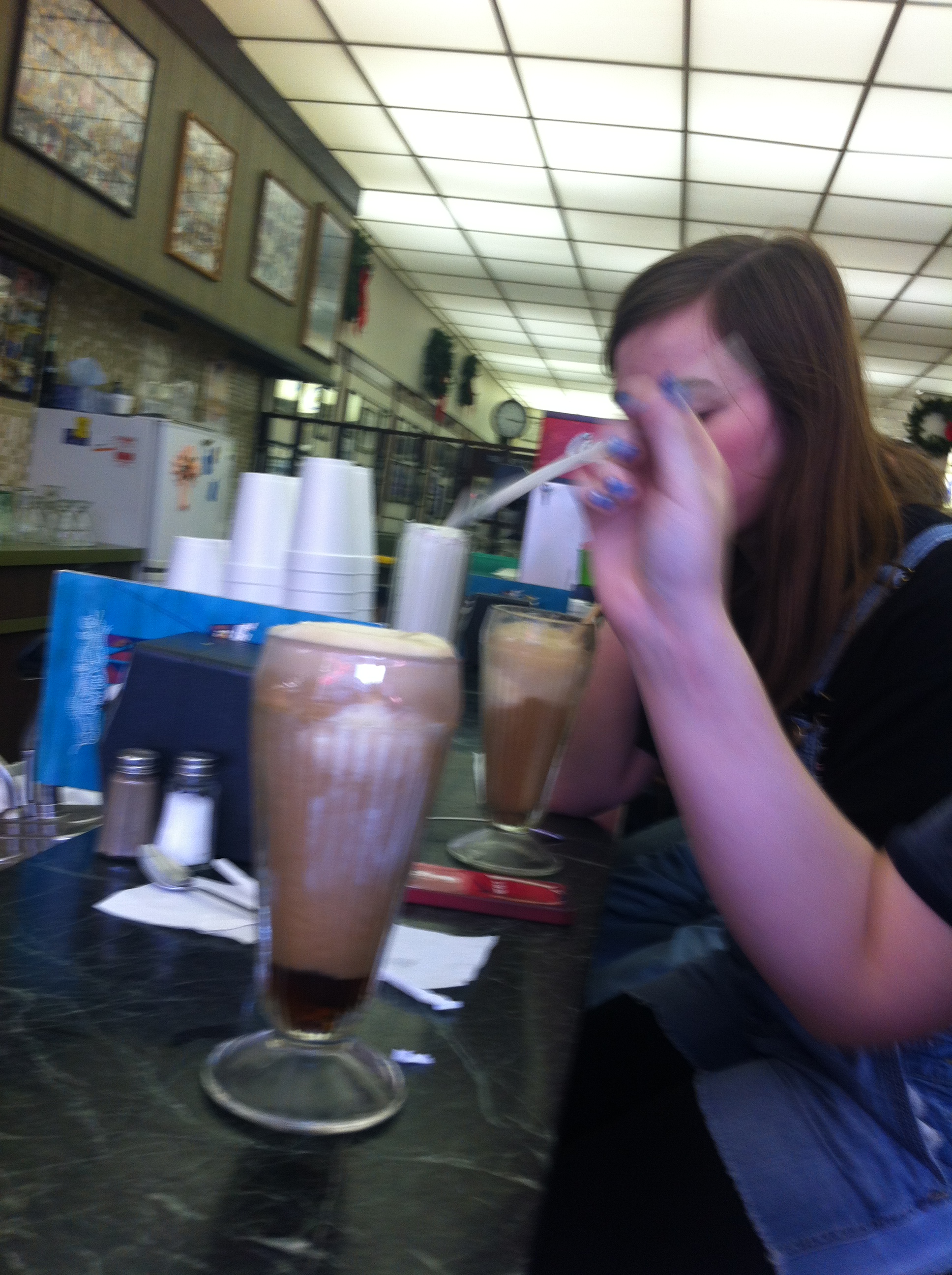
“How old are your girls?” she asked me.
“Thirteen,” I said.
“Thirteen? They are awful big for 13!”
I looked at my daughter and her friend. Neither was wearing makeup and both were wearing t-shirts and Converse tennis shoes. To me, they looked exactly 13.
“In my day, kids were a lot smaller,” she said.
“When was that?” I asked.
“Back in the 1950’s,” she said, “I had kids in the 1950’s when Martinsburg was still Martinsburg.”
“Hmmm,” I responded. Ginny was back, and I ordered the root beer floats.
“I grew up here,” the woman in the knit cap said, “but you wouldn’t know it. I don’t know anyone here now. I don’t even know what happened to the bars. Back in my day, there were bars here but there wasn’t the traffic we have today. There’s too much traffic now.”
“Hmmm,” I said as Ginny filled glasses with root beer and added a scoops of ice cream.
“What is that?” the woman asked looking at a glass with a bit of suspicion.
“A root beer float,” I answered.
“I can’t drink that anymore,” the woman said. “It does something to my stomach.”
“Hmmm,” I said.
“I don’t like this town anymore,” the woman in the knit cap said. “It’s full of people I don’t know doing things they shouldn’t do.”
She shrugged then looked at my daughter and her friend.
“What are they drinking?” she asked.
“Root beer floats,” I answered.
“I can’t drink those anymore,” the woman said again. “It does something to my stomach.”
And so are conversation went. She asked me the same questions and when I answered, she gave me the same responses and the same complaints.
When the root beer floats were gone and the girls were ready to go, the woman said goodbye then struck up a conversation with Ginny behind the counter.
“How are you feeling today, Shirley?” Ginny asked.
“Not good,” said Shirley. “I don’t know anyone in this town anymore.”
“But they know you,” I thought as my daughter and her friend smiled at her and said goodbye as we walked out the door.
“Sometimes, the history that captivates us most isn’t the one that has shaped who we are,” I thought. “Instead is the one that has shaped and is shaping others. And sometimes there is noting more magical than watching it shape very different generations at the same time.”


 Just So You Know