Blog Archives
Beneath the Surface
 Earlier this week, a colleague stomped into my office expressing indignation about an injustice.
That unto itself wasn’t the least bit unusual. Someone is always stomping into my office to complain about something.
I work for a social service agency with a mission to alleviate poverty. My co-workers and I comprise a group of passionate people who won’t accept that the odds are simply stacked against some people. We try to change those odds.
Often, we feel as though we are tilting at windmills, and we even get discouraged.
But we don’t give up. After all, our heroes didn’t give up.
And the treatment of one of those heroes is the reason my co-worker was upset as she stormed into my office.
“I can’t believe that the Martin Luther King, Jr. holiday has become just another day for sales for some people,” she said. “The day is supposed to be about honoring of one of the greatest men in history. He changed the world.”
Indeed he did.
I was a just over a year old when Martin Luther King, Jr. was assassinated, so I never knew a world that hadn’t been impacted by his actions, his words and his ability to change the system. But for years, what I knew about him was limited:
- He was a Civil Rights leader.
- He made a speech about having a dream that all people would someday be treated as equal.
- He believed in using peaceful tactics instead of violence.
- He was shot and killed at a hotel in Tennessee by a guy named James Earl Ray.
Those facts paint a picture of a great man who made a difference in the world. But those facts never really inspired me because I couldn’t relate to the charismatic leader. His ability to make such a huge difference in the lives of others had absolutely nothing to do with my potential.
At least, it wasn’t until I learned that he, like the rest of us, struggled with imperfections.
He apparently tried to commit suicide when he was 12 years old. His grandmother passed away after a heart attack while King was off disobeying his parents by going to watch a parade after they had prohibited it. When he got home and learned that his grandmother had died in his absence, he jumped out a second story window.
Martin Luther King, Jr., the man who delivered one of the most iconic speeches ever, received a C in a public speaking class during his first year in seminary.
King is rumored to have had numerous extra-marital affairs, which even resulted  in his becoming a target of the FBI.
On the day he was killed, King was out on that now famous hotel balcony because he was smoking. He tried to keep the fact that he was a smoker hidden, so he didn’t want cameras around when he had a cigarette in his hand. According to Rev. Kyles, after King was shot but before he was taken away by the ambulance, Kyles removed the package of cigarettes from King’s pocket and got rid of the cigarette butt. This was an attempt to hide the fact that King was smoking at the time he was shot.
None of these facts minimize the accomplishments of Martin Luther King, Jr. In fact, in my eyes, they make them even more impressive. Like all of us, Dr. King struggled with being imperfect. But despite that, he changed the world.
He is my hero not just because he acted on the same beliefs that I hold dear. He is my hero because he didn’t let his imperfections get in the way of taking action and changing the world.
This Monday, when the United States celebrates the federal holiday that honors Dr. Martin Luther King, Jr., that’s what I’ll be thinking about.
I’ll be remembering that ev ery person who makes a difference in the lives of others has a personal story lying just beneath the surface. These are the stories that involve failing from time to time but persevering anyway. They involve making mistakes or saying the wrong thing while we still attempt to do the right thing. And even though many of us feel like we are trying to lead when no one is following, we have to keep trying to blaze trails anyway.
These stories sometimes aren’t visible to those around us because we try to hide them just beneath the surface. But these are the stories that make us strong enough to take on the world and try to make it a better place.
Just like our heroes did.
It’s Cliche’, but…
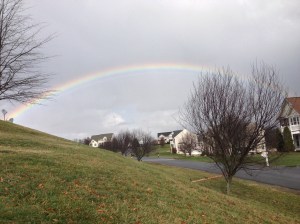 I hadn’t been out on my bicycle in a week, so I was determined to get in at least one ride over the weekend. Before heading out, I checked the hourly weather report for the third time. The skies were clear, and I calculated that I had time to get in a 15-mile ride before the wind picked up and the temperatures began to drop.
I forgot that weather reports aren’t always accurate.
The first ten miles of my ride were perfect, but just as I reached the top of the steepest and most dreaded hill, the sky went suddenly dark. Within moments, the rain pelted down while the wind almost knocked me off my bike. Since there was no option but to keep pedaling, that’s what I did.
But it was a struggle.
Fighting the elements, I climbed another hill. While it wasn’t as steep as the last, it was more difficult than usual because of the weather conditions. Then, just as I reached the top, the sky lightened, the rain stopped and a one of the brightest rainbows I’ve ever seen spread across the sky.
I stopped to look at it in wonder. I don’t think I’ve ever seen such clear and brilliant colors in a rainbow, and I regretted that I couldn’t capture the beauty of the moment in a photograph.
But I could capture it in my heart and soul, which is where it needed to be.
That rainbow was the exact reminder I needed after a week full of more downs than ups.
The rainbow’s message was simple: life is rough. Sometimes, just when we think we are facing our toughest battle, the fight gets even harder. Despite that, our only option is to just keep going. If we stop trying, we won’t be any less miserable while we don’t get anywhere. And so, we must persevere. And when we do, life eventually gets better, and the moments of beauty it provides are even more precious.
I know the rainbow and the message may seem a bit cliché. But sometimes? A cliché is the exact reminder I need to remind me that life isn’t perfect but that some moments are. We have to treasure those moments.
The Antidote
 I try to be a nice person. I really do.
But sometimes, the person I strive to be and the one in my head couldn’t be more different.
O.K. – not some of the time. Most of the time.
In fact, I’ve often wondered if the first verse of “Cell Block Tango” in the musical Chicago was written with me in mind. In it, a young woman explains how the habits of other people can “get you down.” She complains about Bernie, who popped his gum when she was having a bad day. Her bad day turned into his bad day when she shot and killed him.
I can’t say I’ve ever come close to killing another person, but my mind is often plotting revenge. I just don’t act on these thoughts.
But when I’m in a funk, like I was last week, people or situations that are normally just irritating suddenly proliferate as though purposefully torturing me.
The moms who have known each other for years and don’t make an effort to include me in their conversations, even when I try to insert myself, morph into that pack of mean girls from high school.
The people who talk about updating the living room paint to “this year’s color” make me feel completely incompetent and out of touch. (Up until this year, I never even knew that some shades of beige are “in” and some are “out.” I generally feel accomplished when the old, faded living room carpet at my house gets vacuumed a couple of times each month.)
The grocery store clerks who make comments about the food I’m buying completely annoy me. Even though I tend to be a chatty person with almost everyone, I don’t need complete strangers talking to me about my eating habits.
Parents who make sure that they drop a list of their children’s accomplishments into every conversation seem to taunt me for my less accomplished (in their eyes) kids.
And those are just the people who irritate me. I haven’t even mentioned the ones who make me really angry:
- Individuals who don’t take pride in their job. I just don’t get that. If you are being paid to do something, you should never, ever expect other people to compensate and clean up your messes.
- People who compensate and clean up the messes for individuals who don’t take pride in their job. When that happens, the lazy people never learn.
- People who post derogatory comments in social media about low-income people who receive government benefits. No one in this world goes without the help of others. Some people are just fortunate to have family, friends, intellectual gifts and opportunities that helped them overcome difficult situations.
- Individuals who don’t take time to listen to others who may be less educated, less beautiful, less wealthy, less accomplished or less socially connected. We are all on this planet together, and I’m fairly confident that God doesn’t care more about some than others.
- Those same people who flaunt all they have by dropping snide comments or making off-hand remarks that are actually intended to put down others.
- Anyone who makes decisions that hurt my children and cause them to question their abilities or their dreams.
Generally, my antidote for this anger is to make up and play out entire scenes in my head. In them, I say just the right words or take just the right actions to cut down the offenders and put them in their place.
And then I pray to be a kind person and pretend to be the nice person I wish I were.
Usually, that’s enough, and the anger and irritation subside.
Usually.
But when the irritation and anger continue to linger and the notes from “Cell Block Tango” become an ear worm, I have to do something a littler more dramatic and employ a stronger antidote.
That’s when I write about the people I annoy me. And sometimes, I even make those written words public.
Star Woes
In the summer of 1977, my family made the hour-long car trip to the town of Bend, Oregon see the movie Star Wars.
I was ten years old, and I had been waiting for what seemed an eternity to see the movie. In retrospect, I didn’t care so much about Star Wars as I did about fitting in.
By the time I actually got to see it, I was still stinging from the shame I’d experienced when Alice Cannon insisted we play Star Wars in the basement of my house. I knew Alice’s older brother Calvin was a big fan of science fiction, but I hadn’t expected the same from her. In the past, we had spent our time together in a totally different way – such as secretly playing her parents Carpenters albums on the record player so we could lip sync to songs like “Yesterday Once More.”
But that summer, the Carpenters were out and Star Wars was in. And, even though I had no frame of reference, when Alice wanted to play Star Wars, I agreed.
I shouldn’t have.
Despite her best efforts to engage me in playing the role of various characters, she finally gave up in disgust when I couldn’t even figure out what she meant when she said “just act like R2-D2.”
So when my parents announced we were finally going to see Star Wars, I couldn’t have been happier. Despite the long car ride, the longer ticket line and our seats in the very back of the theater, I thought my needs had finally been met.
That only lasted until the movie started.
I didn’t get the plot. I didn’t understand how I was apparently the only person in the entire world that didn’t like the movie. And, most critical of all, I still didn’t understand how I could have acted like R2-D2, who didn’t say anything but instead spoke in mechanical beeps.
What I did understand was that the Carpenters had probably been correct when they had sung “We’ve only just begun.” I knew that this Star Wars thing was going to last much longer than I wanted.
My dad confirmed my fears as the credits rolled when he said, “Well, it’s obvious they are going to make a sequel.”
Which is why, during the long, dark car ride home, I curled into a ball in the back seat and tried to reassure myself that at least I liked the theme music. (For the record, I got the sheet music and played it over and over again on the piano that fall.)
All of this is why I found myself sighing loudly this past October when my husband asked me at least three times if I wanted a ticket to the Star Wars: The Force Awakens on opening night.
He seemed so hurt and confused when I told him that I had no idea what I would be doing on December 18 and that buying tickets that far in advance was ridiculous.
Neither he, my children or millions of others thought it ridiculous at all. To them, it was an event for which to plan accordingly. And they did.
To me, the new Star Wars is something else entirely.
It is a reminder that. sometimes, the things we think we want the most aren’t what will make us happy. What does make us happy is discovering and pursuing our own interests and passions.
As the Carpenters would say, that’s what puts me at “The Top of the World.”
Without Clock or Calendar
For the last f ew months, something has been missing from my life. Its disappearance is particularly unnerving because I am given a sufficient supply of the missing element every day. But when I go to bed each night, I am left wondering what happened.
Time is that common yet mysterious element that belongs to everyone, plays favorites to no one, speeds up and slows down at the most inopportune moments and steals the occasions we treasure most while gifting us with memories.
When I was young, 24 hours per days seemed more than sufficient. Now, it’s anything but.
but.
Which is why, on Christmas Eve, I felt as though I’d won the lottery. I had 11
days, or approximately 264 hours, without any significant appointments or commitments. And even though I had a long list of projects I wanted to tackle, part of me that just wanted to escape life as I know it.
Which is exactly what I did on Christmas Day.
After the presents were opened and the Christmas dinner was prepared, I escaped to find evidence that life is more than a series of events or accomplishments that are documented with time stamps and dates to remember.
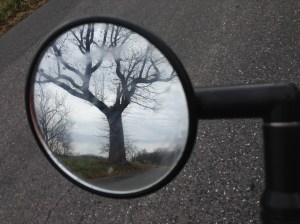 I took my bicycle out on an unseasonably warm day, and, for the first time in a long time, I didn’t pedal to
cover a specific number of miles in a specified number of minutes.
In fact, I often didn’t pedal at all. Instead, I stopped to investigate. I stopped to listen. I stopped to breathe. Most of all, I stopped to take photos on my phone and to simply appreciate life without the constraints of deadlines or appointments or expectations.
And what I discovered was that, unlike people, most of the world pays no attention to clocks or calendars. While everything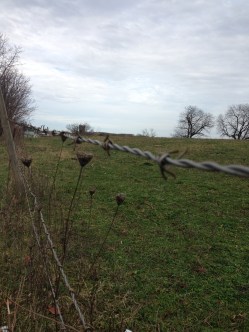 is affected by time, only people give it power.
The rest of the world just exists in the moment, adapts to the elements, accepts changes and stays committed to survival.
In other words, the rest of the world can teach us humans a thing or two.
And I’m ready to learn.





That Place You Belong
The senior high school student walked into the concession stand with tears in her eyes.
“This is my second to last football game ever,” she said. “It is all ending too fast.”
I empathized with her.
I too can sense time slipping away too quickly. It has the the strange ability to swiftly turn every moment into a mere memory regardless of our desire for meaningful moments to linger a little longer than normal.
Just last year, I openly cried as I watched my son’s friends and their parents march onto the football field for senior night. As they announcer said their names and their future plans, my chest tightened, my eyes watered and I felt a sense of dread. I knew that in exactly one year, I would be doing the same.
And I was.
This past Friday night, my husband and I stood on the edge of the high school football field, were handed flowers and given instructions to escort our son for recognition during the last home football game of his high school career.
Despite all of my concerns that my overly emotional tendencies would sabotage the moment, I didn’t get a bit nostalgic. I was too busy laughing.
I should have known my son wouldn ‘t take the moment too seriously, and my suspicions grew stronger when other parents were handed a sheet of paper with all of the information that the announcer was going to read about their child. My son snatched his paper out of my hands with a smirk on his face then stuffed it down his pants (his band uniform doesn’t have pockets). I had no opportunity to see his written words prior to their being proclaimed over the loudspeaker for hundreds of people.
My son’s best friend, who was directly behind us in line, started laughing.
“I can’t wait until they read yours,” he told my son.
Since we were lined up in alphabetical order and my husband and I decided not to complicate our children’s lives with hyphenated last names, we were near the end with the last name of Snyder.
That meant we had plenty of time to listen to the impressive future plans and meaningful expressions of support from my son’s classmates.
It also meant that, instead of feeling nostalgic or the least bit weepy, I was overwhelmed with a sense of curiosity about what my son had said.
Finally, his time in the limelight arrived.
At first, my son’s moment of recognition was similar to that of his classmates. He mentioned his future plans – or what he thinks they will be – and his appreciation of the friends, teachers and family for their support.
That’s when normal ended for him.
He also extended his appreciation to Goku from Dragon Ball Z (I have no idea) and the people who invented hot wing flavored-Doritos (I don’t understand).
While my initial reaction was to do a face palm, I soon realized that other people appreciated that at least one senior hadn’t said what was expected. The people in the stands were applauding and cheering as my son stepped away from my husband and me to take a bow.
The cheers and applause got louder.
At that moment, I realized that my son is in an incredibly different place than I was at his age.
While I was seeking the place where I belonged, my son simply creates his.
Not everyone appreciates his off-the-wall humor or his need to make light of every situation, but that doesn’t bother him.
He creates moments instead of waiting for them to happen or lamenting their loss.
He innately knows that for every milestone that passes, another one is on the horizon. He also knows that waiting for milestones isn’t enough. Every minute can be a moment if you decide to seize it rather than stand back and watch.
He is only three months into his senior year of high school. Between now and May, I have no doubt that there will be times when I get weepy and nostalgic as the final chapter of his childhood comes to an end.
But I also have no doubt that the laughter and smiles will outnumber the tears.
Because that’s what happens when you are in the place where you belong.
The Update
 When I was a child, I gave little thought to 50-year old people. Why would I? On the rare occasion when I did consider them, my thoughts were limited to the idea that they were really old and knew all they needed.
In just over a year, I will be 50, and most of my friends have either reached that milestone or are very close.
I no longer think that people in their fifties are particularly old, and I am quite aware that everyone needs to learn more.
Personally, I am still seeking answers to those things I’ve never been able to understand. For example:
- Why does the trip home always take half the time as the trip to get there?
- Why do the people who hurt us the most also teach us the most?
- Why does life speed up just as we begin to truly appreciate it?
- Why do we cry when we are happy?
- Why are we are the most comfortable in our own bodies at a time when our bodies are starting to fall apart?
But none of these is nearly as pressing as the question that has recently been consuming my thoughts: “What is the purpose of Windows Updates and why do they always occur when I most need my computer?”
Last week at work, I was using my laptop during a meeting when I lost access to it.
The reason? I had postponed installing the Windows Updates far too long, and Microsoft had decided that my time was up. The updates took control of my computer with absolutely no consideration of my needs.
I should have known better since, just the night before, my personal lap had done the exact same thing.
But this was work and the meeting was my first obligation of the morning. I turned on my laptop, started the meeting, and then the updates began.
For almost an hour, I muddled through while my computer processed “essential updates.”
I have absolutely no idea what these updates were because when laptop finally began functioning again, everything seemed exactly the same. Exactly.
Maybe that’s the whole point of these updates – they are some kind of digital Botox so the operating system appears immune to the effects of aging.
Or maybe the updates are a gimmick intended to convince Microsoft users that they are using the most up-to-date software when nothing is really changing.
Or maybe I don’t understand technology.
None of this mattered, though, when I was stuck in a meeting without access to my computer.
Instead of hiding being the screen while tapping on keys, I was forced to pay close attention to what everyone said and take notes the old-fashioned way: with pen and paper.
Which got me thinking about all of the updates in my life.
At times they may seem intrusive and unwanted, but sometimes they are absolutely necessary.
Sometimes they make us stop and think.
Sometimes they make us do things a bit differently.
And sometimes they make us appreciate those things we usually take for granted.

10 Things I Learned From Cats
 I don’t know what’s happened to me.
I’ve never been a cat person.
NEVER.
From the moment I was born, I was a dog person.
An entry in my baby book documents that. On one of my first trips to the local public library, I toddled across the floor, grabbed a book from the shelf, handed it to my mother and pointed at the picture on the cover.
Then I uttered one of my first words.
“Doogie.”
Not much has changed in 48 years. I still compelled to reach out to every dog I see. Since the time I was four when my first dog, Charlie Brown, came into my life, my best friends have always been dogs.
I’ve never felt the same unconditional love for cats.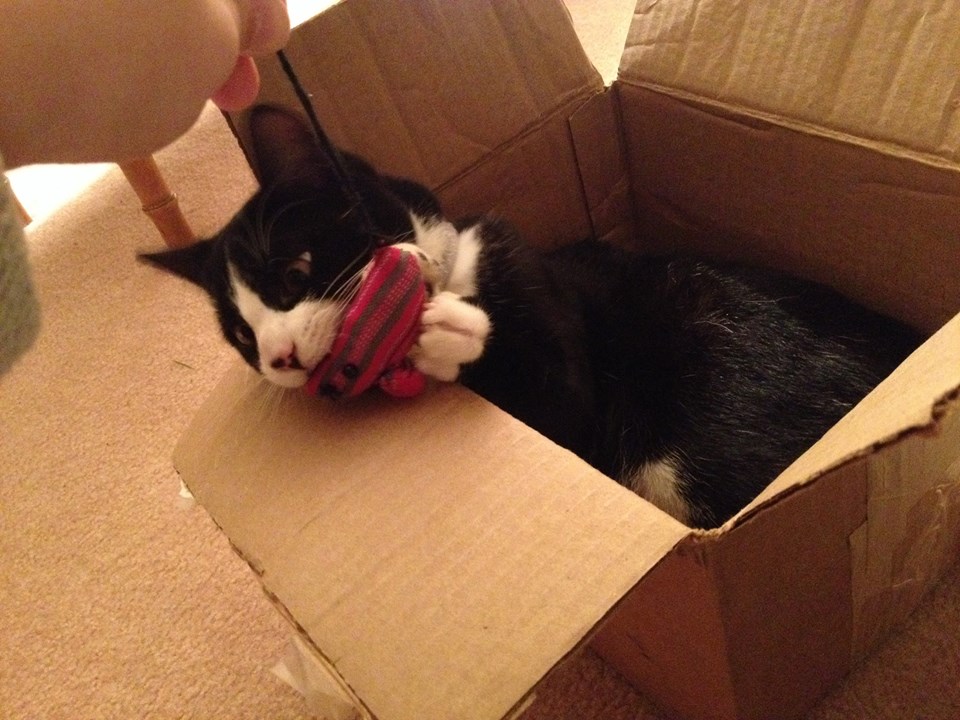
Yet, somehow the cats in my family now outnumber dogs.
I could blame my daughter and husband for their appreciation of the quiet and generally undemanding nature of cats, but I would be avoiding the truth. At some point, my heart grew a couple of sizes larger, and I let the cats in.
I don’t love them for the companionship and unconditional love that my canine bff’s have always provided.
I love them  because they make me think. In all honesty, they have actually provided me with ten important life lessons:
Number 10: If you need a nap, just take one. Period.
Number 9: Don’t spend time trying to get people
to like you. Some people will like you. Some people won’t. Spend your emotional energy doing what you like rather than trying to please anyone.
Number 8: Always let people know when they are creating circumstances that make you unhappy. If you don’t, nothing will every change.
Number 7: There is absolutely nothing wrong with small spaces. In fact, sometimes they are the best spaces.
Number 6: Al ways make people appreciate your time and attention.
Number 5: If the weather outside isn’t comfortable, come inside. Otherwise, spend your time outside exploring and enjoying nature.
Number 4: Always act as though you are in charge. Even when you have very little control, pretend you do.
Number 3: Embrace your curious side. That’s the only way you’ll ever experience something new.
Number 2: Sometimes, the box really can be the be part of the present, especially if you take into account the wrapping, the bow and the ribbon.

And the Number 1 lesson I learned from my cat?
Love is love. Don’t worry about what others think about whom you should or shouldn’t love. Love who you want.

The Dance
Every year, at least one news source releases a list of everything that the latest class of incoming college freshmen have never experienced. The articles are often written under the guise of reminding professors that they are teaching to a group of students whose life perspective is completely different from theirs.
That’s the “supposed” reason for the release of these articles.
I think they are really intended to remind people like me how old we are.
Generally, I can feel old without being told that River Phoenix died before this year’s college freshmen were born, that Ferris Bueller would be old enough to be their father or that they have always been able to download music from the internet.
I don’t need the news stories because I have teenagers who constantly remind me that, if I were a car, I’d be a categorized as a “classic.”
Despite my best efforts to be hip, my kids let me know that just using that word dates me. To them, hips are a part of a body and the word “cool” is to describe something that is getting cold. They deem things they like as “chill.”
And while “chill” has yet to make it into my vocabulary, I feel fortunate to even understanding what my kids are saying when they use that word. At least it is a word.
Much of what they communicate is in a code that grew out of their love of text messaging. I once thought I was keeping up with the times (I actually did Laugh Out Loud when my former boss, a retired Army Colonel, expressed confusion that a male colleague was responding to his emails with Lots Of Love), but those days are over.
Now, I find myself constantly googling random groups of letters that mean something to my kids and their friends.
But there are many things that I can’t Google – like the nuances of the high school culture in which my kids spend most of their waking hours.
Take, for example, the dynamics of the homecoming dance.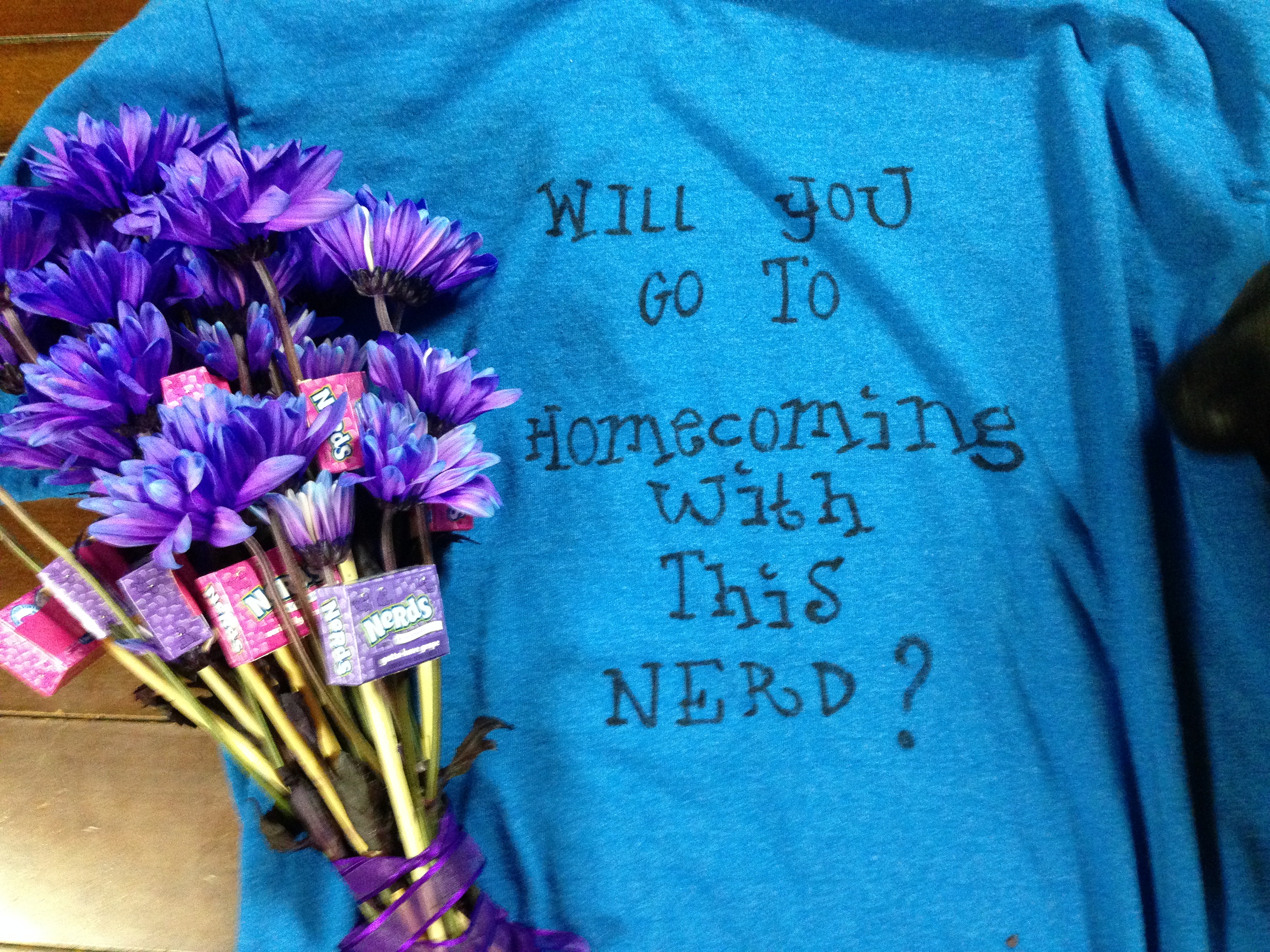
When I was in high school, there were only two options for attending the homecoming dance. The first was that you went with your significant other, and that significant had to be a member of the opposite sex. Thankfully, that tradition has been kicked out the door and down the street. People can go as best friends, as same-sex couples or by themselves. That’s cool, or uh, make that “chill.”
Also back in my day, if you didn’t have a significant other, you hoped that someone (always a member of the opposite sex) would ask you to the dance. If not, you knew you were destined to sit at home on the night of the dance watching the latest episodes of The Love Boat and Fantasy Island.
Now that no one has to have a date to the homecoming dance and students can attend with whomever they like, I thought the issue of the homecoming dance is a simple one. You either go or you don’t go.
I was wrong.
Asking someone to the homecoming dance now requires a creative and/or romantic proposal that is social media worthy. This is even more critical when you are already dating someone – the ask has to be huge.
If you don’t have teenagers in your life or you’re not keeping an eye on Instagram, you haven’t had to endure the onslaught of photos showing just how creative adolescents can be regarding the “big ask.” The whole trend makes me roll my eyes. On one hand, it’s cute. On the other hand, it’s completely ridiculous.
But then, most of our most treasured memories grow out of ridiculous moments.
I may be old (according to my kids) and I may have a great deal of life experience (according to the annual list about the experiences of college freshmen), but I am still young enough to appreciate the need to seek joy wherever we can find it.
So much of life doesn’t follow the script we attempt to write for ourselves. Life can be complicated and disappointing, and teenagers today understand this more than my generation ever did. They have to because the world is literally at their fingertips
But instead of simply accepting that life can be difficult, they are finding ways to enjoy it whenever and however possible.
If that means making a big deal out of asking someone to a dance, then I shouldn’t roll my eyes.
Instead, I should be using my eyes for something else – looking at the list of all things my kids have never experienced from a different angle.
I shouldn’t be seeing how old I am and how young they are. Instead, I should be looking at all of the possibilities my children still have in front of them. Even more importantly, I should be looking at all the opportunities they have to make their dance through this life as joyous and memorable as they want it to be.
A Double Life
 I lead a double life.
Every day, I straddle two very different worlds.
Last week, I spent time listening to a man in his mid-thirties who is a regular in the waiting area at my office. He comes not for services but because he feels safe there.
The man is a paranoid schizophrenic who has been disowned by his family, experienced bouts of homelessness, been the victim of street-wise individuals and sporadically stayed in psychiatric hospitals. On that particular morning, he had housing but wanted to complain about police harassment. He used “colorful” phrases as he expressed confusion as to why anyone thinks he could be violent or dangerous.
I gave him my sympathy while gently telling him that his rough language might put some people off. What I didn’t say was that I was pleased he was even talking to me. That meant he was taking his medication.
When he’s off his medications, he mumbles to himself and doesn’t make eye contact.
I take comfort in the fact that all of my co-workers keep tabs on him and worry when he appears to be off his medication.
Their concern doesn’t come from any work-related requirement. They care because they understand the tenuous line every person walks.
Some of us are fortunate enough to start life with a wide open road built by a strong support system. Taking a step forward to better circumstances is an expectation that is cheered, encouraged and made possible by multiple people.
Others are forced to walk a tightrope of poverty, violence and disinterest. Taking one step forward into better circumstances is a test of determination and the ability to navigate an obstacle course of mental and physical health problems, abuse and poor role models.
Which line we walk is often a stroke of luck, sometimes a matter of choices but always requires a safety net provided by our fellow human beings. The people I work with know their job is to increase the odds for everyone who walks through our doors.
But that’s my work life.
My personal life can be completely different.
Only a few hours after my conversation with the schizophrenic, I was selling hot dogs, hamburgers and nachos at the high school concession stand where the talk among the parents was all about the latest drama: “slushee gate.”
According to those in the know (not me), the band has total rights to all fall sports concession sales. The football parents (not the students) disagreed, sought and apparently received permission from one high level administrator to sell frozen lemonade slushees during games.
Drama, including public cussing by the wife of a football coach, ensued.
I care about supporting my son and the band, but I can’t understand getting so emotionally engaged in something that doesn’t actually affect anyone’s well-being.
There are too many parents who are struggling just to meet their family’s basic needs and are ill-equipped to deal with the complications of daily life. A battle over concessions at high school athletic competitions isn’t part of their world just as their issues aren’t on the radar of parents who can afford for their children to be involved in extracurricular activities.
Because of my career choice, I live in both worlds.
Which is why I had a recent conversation with a woman who was young enough to be my own daughter yet had three children. She was homeless and had made a poor decision that resulted in her eviction, and therefore her children’s eviction, from a local shelter. She talked to me about her “baby daddy” (her exact words) and their violent relationship.
There was nothing I could do but provide her with a few kind words and a bit of advice. She had made one critical error that couldn’t be fixed and didn’t have a support system of family or friends that could help. Because of that, she had no place to sleep other than in a tent.
Her situation was weighing on my mind when a well-to-do donor breezed through my office door.
I listened as she described the stress of downsizing her home to what she called “a retirement cottage.” Since I don’t live in her world – I just visit it – I thought the only small thing about her new big house is that it has less square footage than the estate where she used to live. I empathized with her concerns because she was feeling stressed.
At the same time, I couldn’t help but note that I was once again straddling not two but three worlds. The one where I live, the one where my clients live and the one where my donors live.
I appreciate our donors. They are caring people who know they are fortunate and wanted to help those who are not. They are the lifeblood of my organization. But they still live in a world that is very different from the one inhabited by the people my organization serves.
And I have to negotiate all those worlds. But that type of double life isn’t something about which I should be ashamed. Instead, I should consider it a gift that allows me to serve as a bridge that increases understanding and hope.
At least it increases my hope that one day, I’ll work myself out of a job and no one will have to lead a double life. That’s because we will all live in the same world.


 Just So You Know