Blog Archives
Patterson’s
 Sometimes, the history that captivates us most isn’t the one that has shaped who we are but instead is the one that has shaped others.
I didn’t grow up in the town where I now live, and no significant life events have occurred here (yet). Despite that, I can’t shake the nostalgia that often hits me at the oddest times.
Take, for example, my daily mail run during the work week.
My office is located two blocks from Patterson’s Pharmacy, where a mailbox sits just outside of the picture windows.
Almost every day, when I am dropping off the office mail, I glance in at the patrons sitting at the old-fashion soda fountain.
For the most part, these individuals are, at a minimum, a couple of decades older than I am. Most are at least 30 years older.
Sometimes they wave at me, but often they don’t because they are too engrossed in conversation. Despite their general camaraderie, there is always at least one person who hides behind the daily newspaper, with his head stuck in so far that I’m not sure he’s reading or using the paper as a shelter from the outside world.
I’ve never noticed what or whether people are eating or drinking, but my guess is they are generally sipping cups of coffee rather than the homemade milkshakes, malts and sodas that interest the younger generation. These are the treats that my children and friends enjoy despite, or maybe because of, the old-fashion counter, historic photos and the general slow pace of the place.
Last Friday, my daughter and her friend asked me to take them to Patterson’s. We took our seats on the soda fountain stools, even though no one was behind counter.
The old woman next to me in the knitted cap didn’t say anything. The two elderly gentleman on the stools at the end of the counter were quiet for about five minutes until I asked the girls if they were willing to wait or wanted to go elsewhere.
“She’s at the bank to get some cash,” the one man told me. “She’ll be back soon.”
No one said who “she” was. Everyone knew it was Ginny, whom I also see daily and has worked at Patterson’s since I moved to town.
No one seemed concern about Ginny’s absence. That’s the slow pace of business at a place like Patterson’s.
No one is worried about following the rules of corporate America in which money is often more important than people. Patterson’s is a local business in a small town. It caters to older people as well as 13 year-old girls who want a genuine root beer float and are more than willing to spend time chatting with each other at a old-fashion soda fountain rather than demand that their drinks are available immediately
At Patterson’s, people are important.
I know this because they are one of very few pharmacies that provide services to the people whom Catholic Charities, where I work, helps. These are people who often can’t even afford the $1.00 co-pay needed for a prescription. But Patterson’s works with us to ensure that people who need help get help.
And sometimes that help doesn’t come in a bottle but instead comes in the form of a safe place.
Last Friday, as my daughter, her friend and I waited for Ginny, the old woman in the knit cap on the stool next to me finally began talking.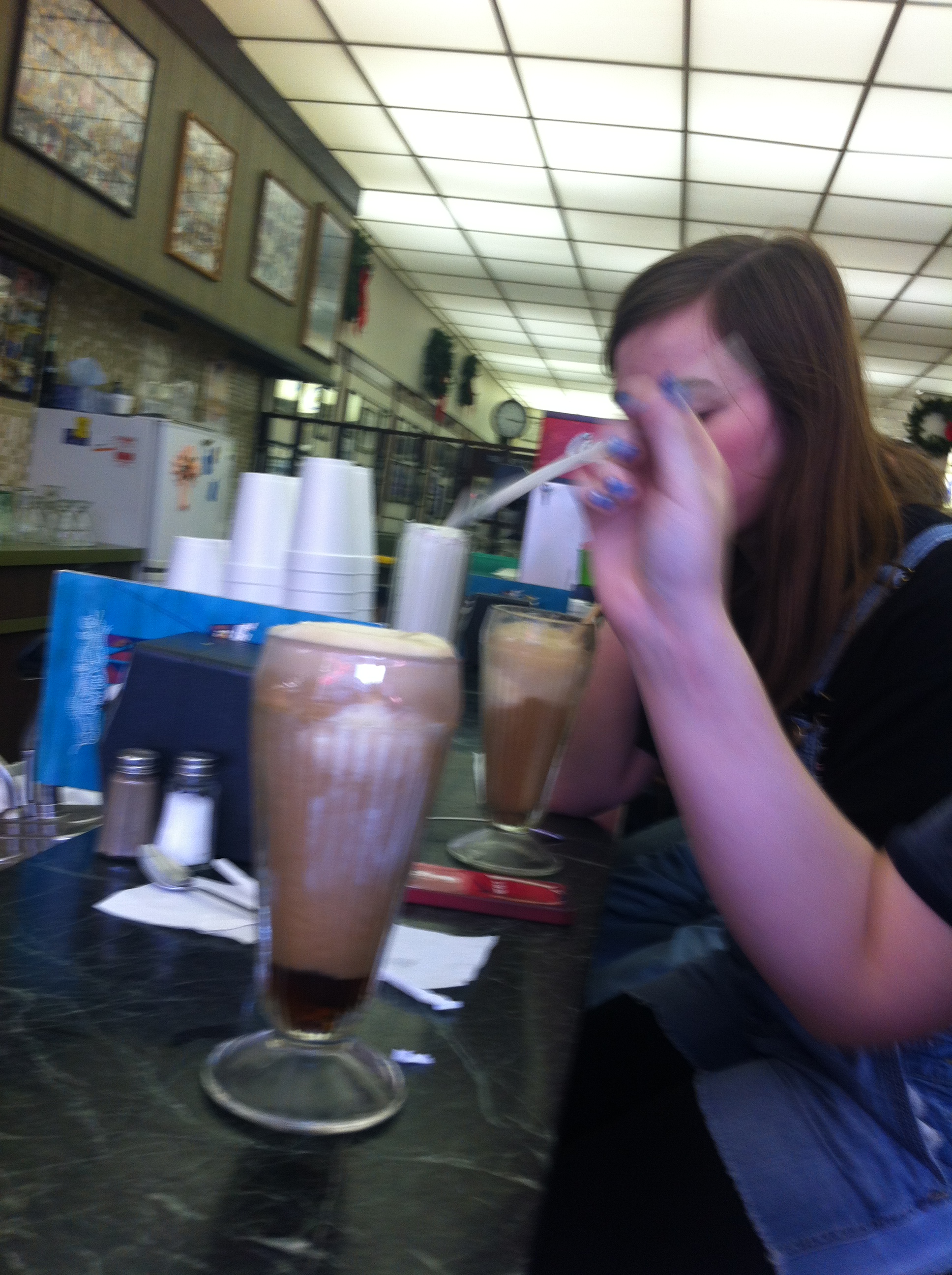
“How old are your girls?” she asked me.
“Thirteen,” I said.
“Thirteen? They are awful big for 13!”
I looked at my daughter and her friend. Neither was wearing makeup and both were wearing t-shirts and Converse tennis shoes. To me, they looked exactly 13.
“In my day, kids were a lot smaller,” she said.
“When was that?” I asked.
“Back in the 1950’s,” she said, “I had kids in the 1950’s when Martinsburg was still Martinsburg.”
“Hmmm,” I responded. Ginny was back, and I ordered the root beer floats.
“I grew up here,” the woman in the knit cap said, “but you wouldn’t know it. I don’t know anyone here now. I don’t even know what happened to the bars. Back in my day, there were bars here but there wasn’t the traffic we have today. There’s too much traffic now.”
“Hmmm,” I said as Ginny filled glasses with root beer and added a scoops of ice cream.
“What is that?” the woman asked looking at a glass with a bit of suspicion.
“A root beer float,” I answered.
“I can’t drink that anymore,” the woman said. “It does something to my stomach.”
“Hmmm,” I said.
“I don’t like this town anymore,” the woman in the knit cap said. “It’s full of people I don’t know doing things they shouldn’t do.”
She shrugged then looked at my daughter and her friend.
“What are they drinking?” she asked.
“Root beer floats,” I answered.
“I can’t drink those anymore,” the woman said again. “It does something to my stomach.”
And so are conversation went. She asked me the same questions and when I answered, she gave me the same responses and the same complaints.
When the root beer floats were gone and the girls were ready to go, the woman said goodbye then struck up a conversation with Ginny behind the counter.
“How are you feeling today, Shirley?” Ginny asked.
“Not good,” said Shirley. “I don’t know anyone in this town anymore.”
“But they know you,” I thought as my daughter and her friend smiled at her and said goodbye as we walked out the door.
“Sometimes, the history that captivates us most isn’t the one that has shaped who we are,” I thought. “Instead is the one that has shaped and is shaping others. And sometimes there is noting more magical than watching it shape very different generations at the same time.”
The Wise Women
 This time of year, wise men get a great deal of attention – as they should.
But as I look back on the past year, I find myself appreciating all of the wise women who were a part of it.
These are the women that may not have made a loud splash in my life but instead helped me quietly navigate both rough waters as well as the still waters of day-to day living.
Their experience, intelligence, kindness, humor and support refilled my toolbox with gems I will treasure for the rest of my life.
And just as the following gems have helped me deal with difficult people and tough circumstances, I have no doubt that the wise women in my life would want me to share them with others.
And so I will:
“The older you get, the less and less you care about what others think. That’s the beauty of getting older and the reason we can take joy in embarrassing our children on a regular basis.”
“Sometimes we just have to sit back and watch other people implode when their desire for importance exceeds their ability to actually be important to anyone else.”
“Men will never laugh so hard they pee their pants. That’s kind of sad.”
“Some people are intimidated by a strong woman, but that doesn’t mean you should stop lifting your intellectual weights. Take pride in the fact that they can’t win an arm wrestling contest with your mental muscles.”
“Keeping your mouth shut is sometimes much more powerful than saying anything at all.”
“We rub elbows with delusional people every day. These are people who think they are leaders but never turn around to see that not only is no one is following them, but many are running as far as possible in the opposite direction.”
“Being honest in a resume is far more important to the soul than getting a job based on half-truths.”
“There’s absolutely nothing wrong with sleeping in a pretty dress if it makes you feel good about yourself.”
“Mean and angry people are actually very sad, broken people who don’t realize how unhappy they are until they are standing by themselves yelling at an empty room or, even worse, standing silent in an empty room because there is no one left to listen.”
“Life is one big choice. Choose to embrace those things you love, forgive the people you don’t love and let go of everything in between. In the end, all that matters is that you weren’t hateful.”
As I review these gems, I can only look forward to yet another year with wise women who can once again fill my tool box.
Broken Plans
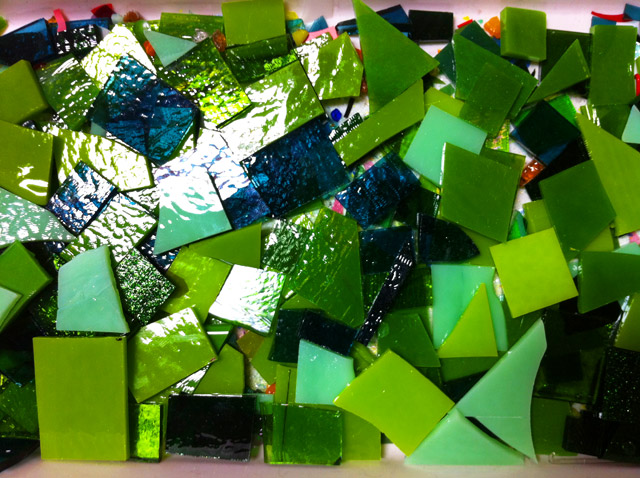 Life has a way of ensuring we recognize just how ridiculous we can be.
When that happens, our only choices are to get mad or to laugh at ourselves.
I choose to laugh.
I laugh a lot.
I have to. If I didn’t, I’d constantly be mad.
But that doesn’t mean I wouldn’t say and do things differently if I could turn back time, or at a minimum, give just one piece of advice to the young woman I once was – a young woman with a college degree in her hand and ridiculous ideas about life in her head.
If I could give that advice, I know exactly what I’d say.
“Don’t make plans without the expectation they should sometimes be broken.”
That’s it. Those words might seem trite, but after spending nearly 27 years as an official adult, they are extremely meaningful. They would have saved me from hours of worrying that I hadn’t lived up to my own expectations and have greatly expedited my understanding that life generally happens as life is supposed to happen. Sometimes our missteps are our greatest teachers and sometimes they lead us in a direction we would never have chosen when left to our own devices.
For example, just over two years ago I wrote a blog about how I was leaving the nonprofit world. I had worked for nonprofit organizations for nearly 20 years and was feeling both frustrated and under appreciated. I wasn’t happy with how decisions were being made and felt I had to spread my wings.
I may have spread my wings, but I certainly didn’t soar. In fact, I flapped around for over a year until finally landed exactly where I belong – in a nonprofit organization.
I can’t say my current job is easy. It’s not. In fact, it’s hectic, demanding and challenging. I also have some of the same complaints I had over two years ago regarding how others don’t appreciate the skills, education and competence that are required to work in a social service organization.
Yet I couldn’t be happier.
Sometimes, going down the wrong path is exactly what we need to show us the path we need to be taking.
Sometimes experiencing where we don’t belong is exactly what we need to recognize where we truly do belong.
And sometimes, not getting what we want is exactly what we need to recognize that God gave us a specific set of skills and gifts for a reason. That reason generally isn’t to continue down the path we want but instead it is to make the world a better place in our own unique way.
As I think back to the 22 year-old woman I once was, I know I had a strong sense of where I wanted to go in life. That makes me laugh, but that laugh is full of joy.
Most of the plans I made have been shattered, but picking up the pieces and rearranging them has been an adventure. It has allowed me to create something even more beautiful than I could have ever imagined.
A Very Personal Perspective on Prejudice
 I don’t remember the name of the black man who came to eat dinner with my family in the early 1970’s, but I do remember an incident from that visit.
He was telling my parents about places where he hadn’t been allowed to go.
I couldn’t understand why, so I asked.
“It’s because I’m black,” he said.
I didn’t understand and I told him so.
“Some people don’t like black men and some people are just afraid of us,” he said.
I still didn’t understand, and neither he nor my parents could give me a good answer. Treating him based on the color of his skin made absolutely no sense to me.
I’m not telling this story to illustrate how children aren’t born prejudice. I’m telling this story because it’s not the story at all. Instead, it is the introduction to a more complex story about how children, just like adults, can fool themselves about their capacity for prejudice. It is a story that illustrates how blind some of us can be to the complexity of human beliefs and behaviors, particularly our own, I’m telling this story even though I hate what it says about me. I’m telling this story because it demonstrates how someone can claim not to understand discrimination and racism while they are in the process of developing their own prejudices.
In the early 1970’s, I was one of only a few white families living on an Indian reservation, and I knew I didn’t belong. My knowledge wasn’t a result of the fact that I looked different from most of my peers. They told me I didn’t belong, probably repeating the words they had heard their parents and other adults say.
That might explain why I cried on the first day of kindergarten when I was the only white child in my kindergarten class, even though my teacher was a white woman named Mrs. Short. My tears must have had an impact because schedules were manipulated so the only other white child my age was put in my class.
That was the year of increased concern that my peers were losing their cultural identity. To address this, members of the tribe came to class to teach us native language and traditions. That was the year we had to learn native dance and participate in a root feast. That was a year when I was taught that the white men were the bad guys. That was the year I was taunted, teased, bullied and chased home from school.
According to my parents, that was also the year I began to hate people of a certain skin and hair color. My mother says once we moved off the reservation, I insisted I never wanted to go back. We did, and I don’t remember being particularly upset. Of course, I also don’t remember ever having the disdain for an entire group of people based on the actions of a few.
I’ve spent most of my life trying to overcome this embarrassing piece of personal history. I like to think I don’t make rash judgments about people and that I treat everyone with the same fairness. But when I’m completely honest with myself, I have to admit that I can be as judgmental as anyone else.
But here’s the thing – I admit that to myself. Maybe that’s because I was raised by parents who expected me to be accountable for both my beliefs and my actions. Maybe it’s because I have personal experience being different, and therefore threatening, to others. And maybe, just maybe, it’s because the young child still in me would be disappointed with anything less.
Whatever the reason, I wish other people would take the time to look inward and realize that any words or posts on social media about an entire race or social class are always going to be wrong because they are based on limited experience.
Groups of people are not an experience or an incident. They are composed of individuals, and each individual is a complicated mix of good, bad, funny, sad, right, wrong and most of all humanity.
This holiday season, I encourage everyone to embrace that humanity and push aside the limited experience.
When we do, the child still in all of us will celebrate.
Of that, I have absolutely no doubt.
Getting Real About Giving Thanks
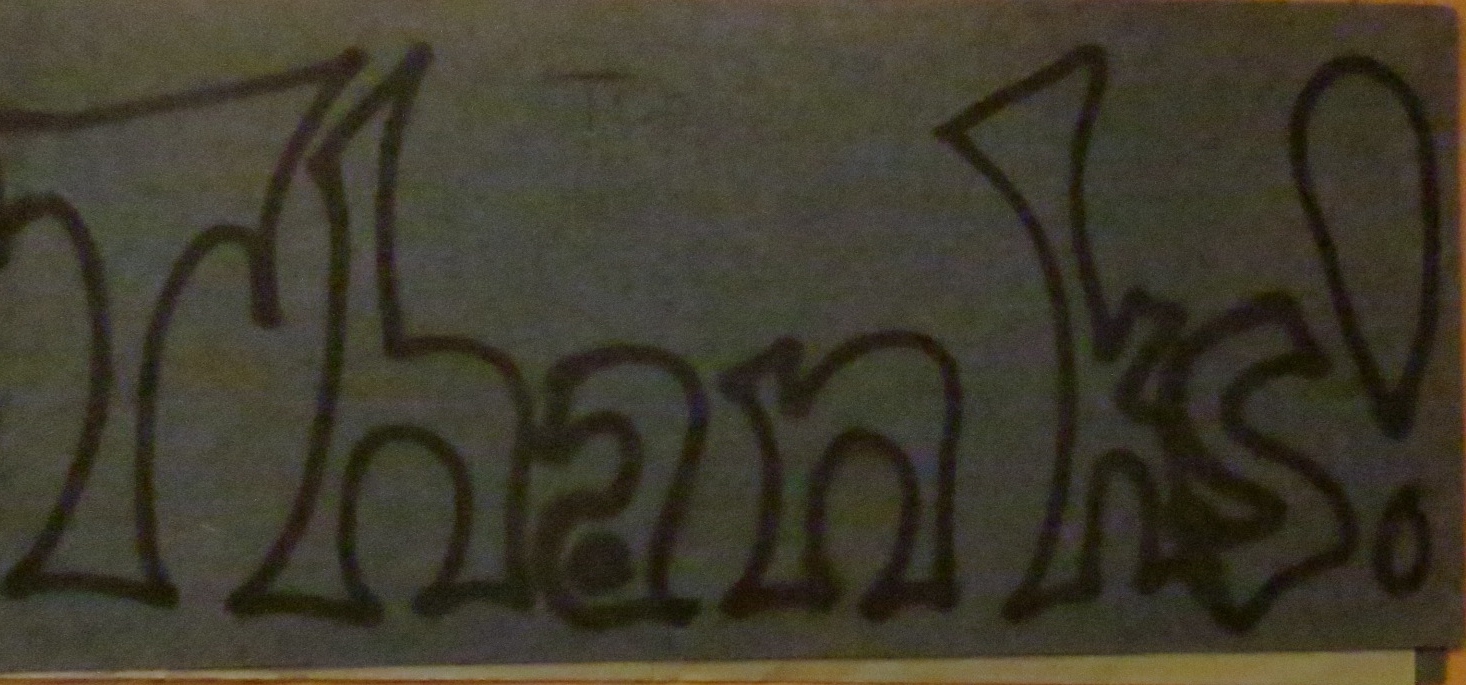 This Thursday will be my 47th Thanksgiving, which means I’ve had a great deal of experience hearing people give thanks for family and health and God.
I’m not questioning their gratitude.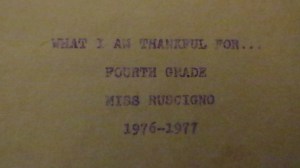
I too am thankful for those gifts.
I’m also thankful for hot showers, coffee, the internet, my car’s heated seats, wine, Netflix and a husband who sends me roses when he knows he’s made me mad. And I’m not going to feel selfish for saying so.
There is, after all, something to be said for heartfelt thanks, such as that expressed by my fourth grade classmates in November 1976.
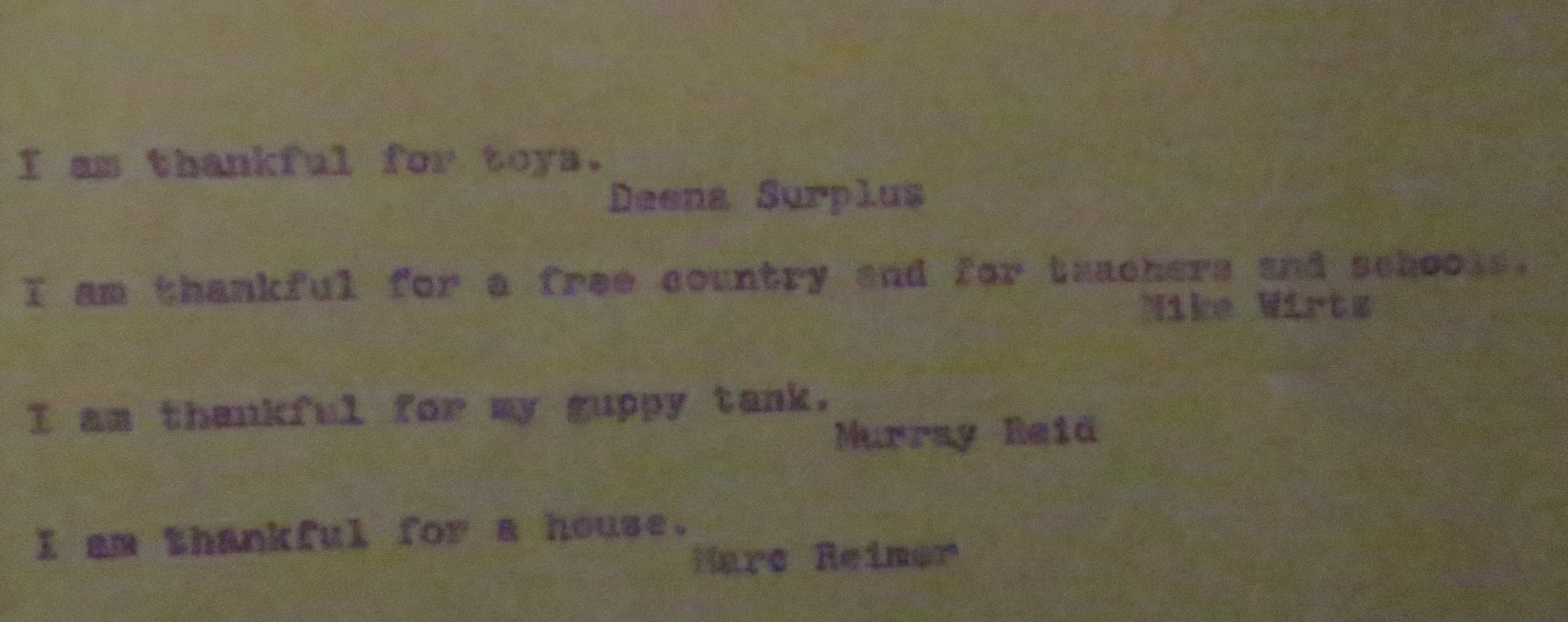 I re-discovered their gratitude recently when I flipped through a childhood scrapbook and found a booklet from that year.
In those days before word processing, personal computers and printers, my teacher typed her students’ responses to the question “What are you grateful for this Thanksgiving?” Later, she gave each of us a mimeographed copy of our responses.
In reviewing the gratitude in that booklet, I am completely in awe of the wisdom of a group of fourth grade students in a rural community in 1976.
We knew to be thankful for our bicycles and birthdays and toys.
We knew to be thankful for teachers and doctors and friends.
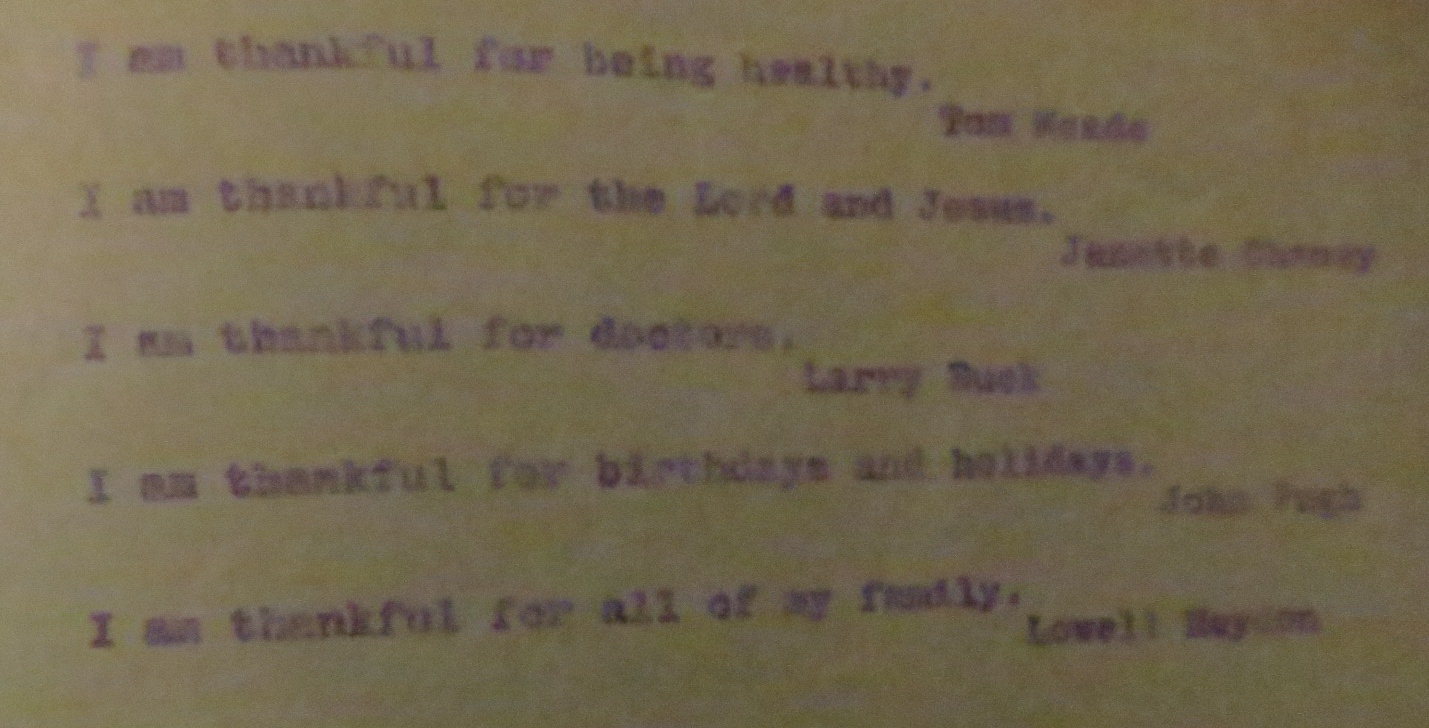 And we even knew to appreciate beauty in the world, the support we gave each other and even ourselves.
Reading the words of a group of children who are now middle-aged adults marked by the scars of experience, I can’t help but smile and recognize something else for which I am extremely grateful.
I will forever be thankful for memories , the people who helped create them and the people who helped preserve them.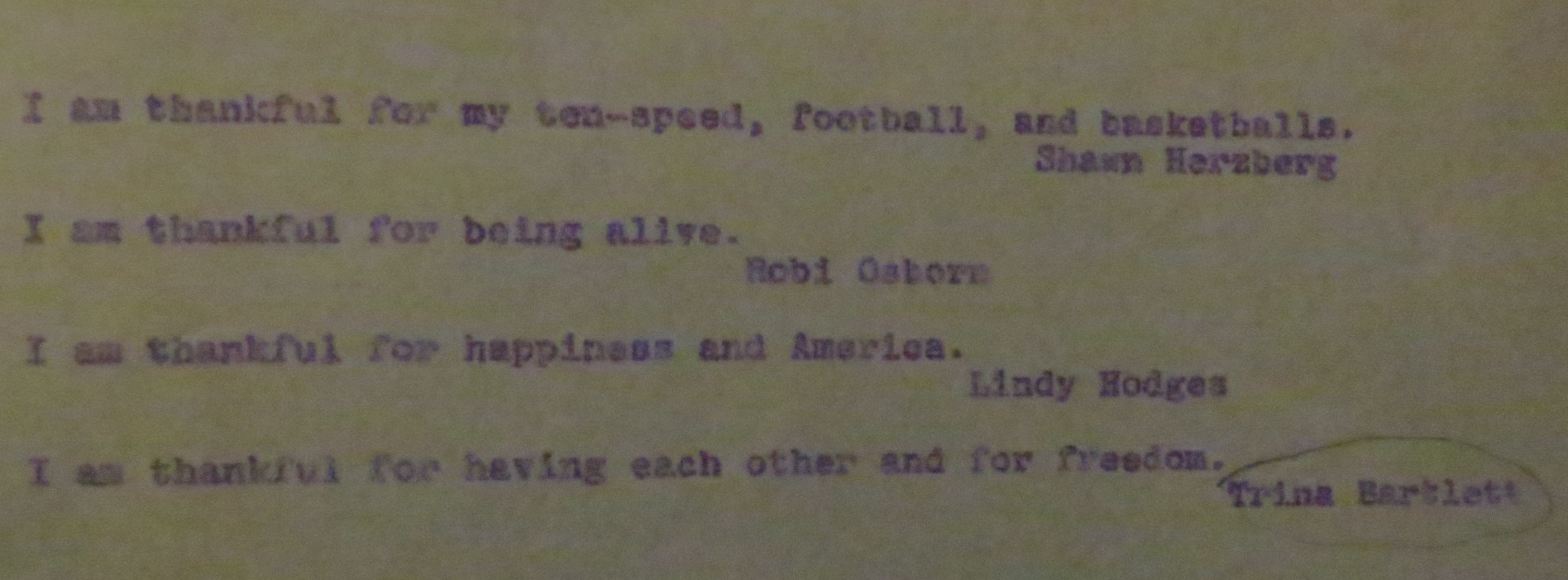
Happy Thanksgiving!

Making the Most of a Crappy Situation
 I love my job, but it’s not an easy one.
That’s actually why I love it. Every day is different, and I’m always tackling new challenges. A normal work day can include dealing with personnel issues, fundraising, administration, bookkeeping, programming, marketing and volunteer development.
That’s not to mention the constant decisions I have to make that impact the lives of the people we serve.
So, while I’m generally harried and stressed, I’m also generally happy to be at work – with one exception.
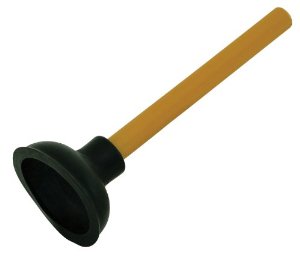
I hate being the one responsible when something goes wrong with the building. I’ve dealt with roof leaks, security alarm issues and, worst of all, plumbing problems. I’ve dealt with so many plumbing problems this past year that I’ve become quite the expert with the plunger.
Of all of my accomplishments, that’s not one in which I take any pride. It’s also one I wish I could avoid.
That’s why, when I was called into the intake office on Friday afternoon, I ignored a rather loud gurgling sound coming from the downstairs bathroom – the ones our clients use.
Instead, I chose to focus on the homeless couple seeking help. After speaking with the two individuals for a few minutes, I went upstairs to make phone calls on their half.
I was on the verge of resolving their predicament when I got an urgent call from the intake office.
“The bathroom is flooding. There is water all over the floor and there is poop floating in it!”
I looked down at my feet and my cute open-toed shoes.
This was not the time to display my mad plunger skills, but, as the person in charge, I still had to deal with the situation.
My shoe excuse didn’t impress the rest of the staff, who looked down at their feet with the same forlorn look that I had given mine.
Finally, the social worker, who was wearing tennis shoes, sighed and waded into the bathroom to get the plunger.
That’s when the young homeless man spoke up. “I can help,” he said. “I’ve done worse jobs.”
I couldn’t imagine a worse job than cleaning up the waste of a complete stranger, but he was true to his word.
He unclogged the toilet, mopped the floor and disinfected the bathroom.
And he never once complained.
While he cleaned, the social worker did an intake and an assessment with his partner, and we were able to find temporary solution.
After the couple left and I had asked staff to put the mop, bucket and gloves in the garbage can outside, I reflected on the incident.
The homeless guy hadn’t thought twice about helping out because he recognized what he could contribute to a really crappy situation.
And, regardless of the toilet situation, I was just able to help him out with his own very different, but just as crappy, situation.
And that is why I really, really love my job.
What I’ve Learned from “Difficult” People
A  few years ago, I would have complained that I had to deal almost daily with people who irritated me.
I had no concept of all the mean and completely self-centered people I would someday not only deal with on a regular basis but also come to accept. I would have thought I was too strong-willed and strong-minded to tolerate such people.
But a few years ago, I wouldn’t have recognized that, sometimes, being tolerant is not only the best way to deal with most difficult people, it is also a great learning experience.
That’s not to say I’ll ever accept bad or abusive behavior, but it does mean that one of the benefits of getting older is gaining perspective. And perspective has taught me that difficult people have done more to teach me about how to live my life than many of the kind and giving people I also encounter on a daily basis.
Difficult people have taught me that paying attention and listening to others is much more important than ensuring others listen to me.
Difficult people have taught me that a rude word will always being louder than a compliment that is shouted to the world.
Difficult people have taught me that being concerned with who gets credit for good deeds or successes tarnishes all that has been accomplished.
Difficult people have taught me that spreading lies and half-truths may garner immediate attention but will ultimately lead to a lack of credibility.
Difficult people have taught me that belittling, attempting to control or asserting power over others actually renders a person weak in the eyes of others.
And difficult people have taught me that refusal to adopt others’ ideas or accept constructive criticism stunts growth and limits possibilities.
I would be lying if I said difficult people no longer bother me or manage to get under skin. They do.
But I do find that the older I get, the less time and emotional energy I waste wishing I could change difficult people and the more time and energy I spend contemplating how to best apply their lessons to my own life.
In Respect of The Walnut
My stand-off with a red fox across a small meadow should have been the highlight of my evening bike ride, but it wasn’t.
My highlight was holding a walnut that had fallen from a tree onto a road. I picked it up after my encounter with the fox.
The fox stood very still in his tracks as I walked my bike a few feet closer to get a better look at the beautiful animal. I got my opportunity as he inspected me just as I inspected him. He then decided he didn’t like what it saw and turned to trot into the woods.
I got back on my bike and pedaled a few more miles when my tire hit something and skidded a bit. I stopped to determine what had almost caused my accident.
It was a round walnut still in its green husk.
 I picked up the walnut and squeezed it to not only reveal the nut beneath but a flood of memories as well.
A walnut tree provided shade over the house where I lived as a child so young that my memories are scattered and limited. I remember spending a great deal of time in the yard with the tree, a wood fence that was built by horizontal, rather than vertical, pieces of wood and a picnic table.
I would sit under that tree pulling apart walnut husks to reveal the nuts buried beneath while I waited for my father to make his short walk home from his office building.
Years later, I learned that my mother had completely different memories of that time. She dreaded the walnuts falling as they were not gems to be uncovered, as my brother and I thought, but were instead dirty objects that left stains upon whomever and whatever touched them. I don’t remember the stains at all.
What I do remember is the beautiful antique furniture in our home that my parents said was made of walnut.
I also remember that my parents had an annual holiday tradition of offering an unending supply of nuts, still in their shells, with a nutcracker. That bowl always contained walnuts.
Those walnuts bore little resemblance to the black ones that had left my hands caked in a dirt and grime, but they did serve as a reminder.
Sometimes we have to look beyond what we initially observe – the inconvenience and messiness that most people carry with them – to discover all they have to offer. Sometimes, the greatest rewards come when we permit ourselves to take on situations that require us to get our hands dirty. And almost all of the time, people and situations aren’t all good or all bad but simply an untidy mix of both.
Our responsibility as people is to train ourselves to always look for the good.
In Between
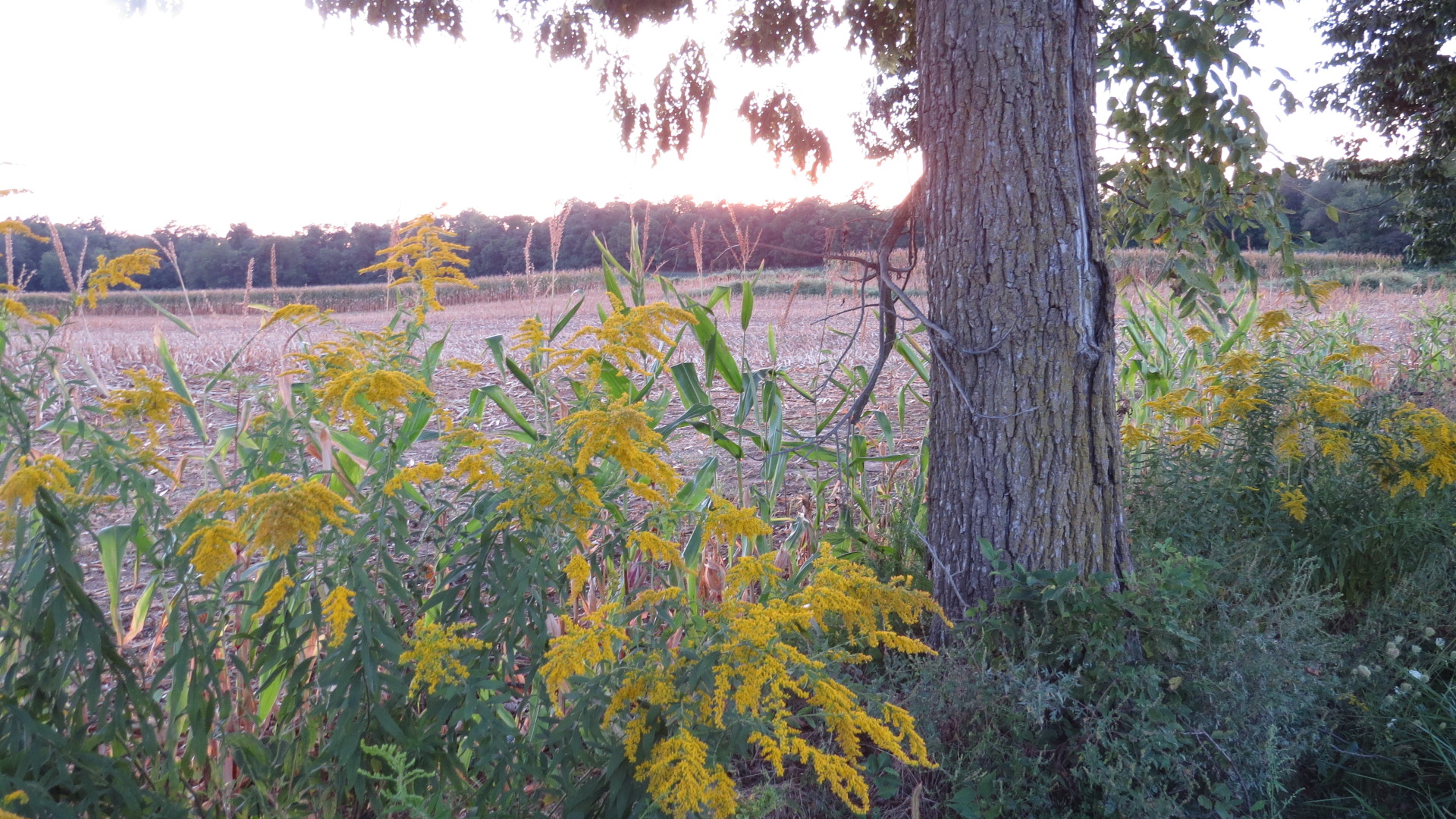 Little speaks more to my age than how quickly the seasons are passing.
Only yesterday, the crocus were starting to poke their heads through the frozen dirt, and now summer is quickly fading as autumn once again prepares for its annual debut.
I realized that the awkward stage between seasons had arrived as I was pedaling my bike 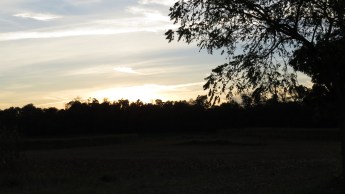 the other evening.
Only a few weeks before, I had been watching the sun rise on my daily bike rides.
Now, the sun is rising later each day and making an earlier and earlier farewell, so I am riding in the evenings instead of the mornings.
As I do, I’m observing the days are getting shorter and shorter but the leaves aren’t yet changing and the temperatures can’t decide whether I should be wearing flip-flops or boots.
We are officially at that “in-between stage.” And I am grateful.
A few years ag o, I would probably have tried holding on to what was slipping away while reaching out to what was just beyond my grasp on the horizon. In doing so, I would have lost the beauty and purpose of “in between.”
Now I appreciate it.

“In between” isn’t about wasting energy on mistakes or worrying about future decisions. Instead it is about accepting who we are and encouraging ourselves to do better.
“In between” isn’t about regretting all that we missed but is about appreciating all that currently surrounds us.

And ” in between” isn’t about hoping that the future holds more than the past. “In between” is about appreciating the present moment for exactly what it is.
“In between” is about recognizing the joy and potential in every minute regardless of our age, expectations or previous losses.
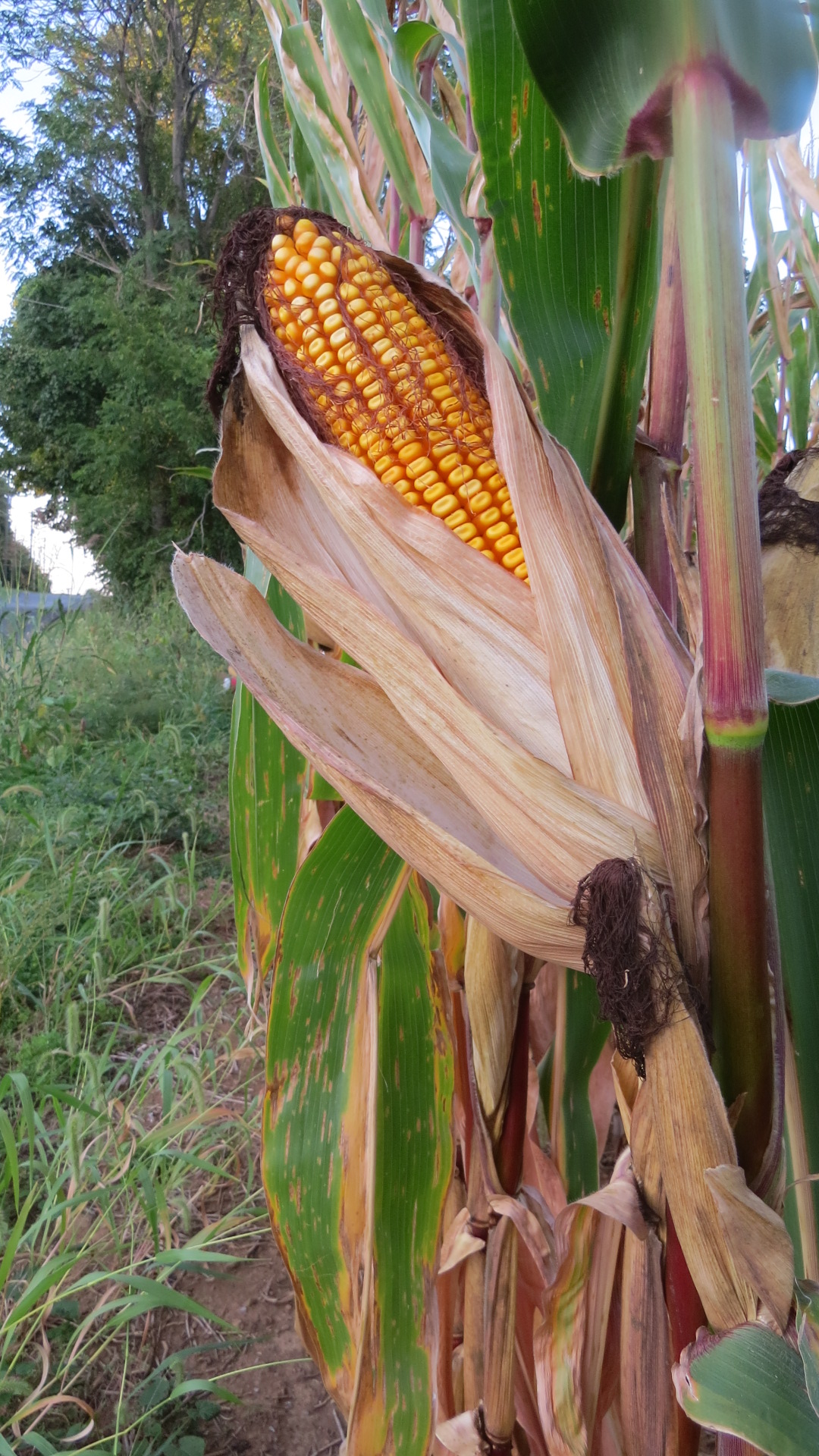
“In between” is about learning to appreciate the gift of the present while accepting that we can’t always control our current circumstances or our future.
And,most importantly, ” in between” is about paying attention to what others might dismiss as mundane but is actually miraculous.
Here is to “in between.”
The Crap Shoot
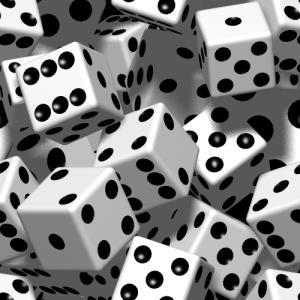 I am fortunate to have a job in which I am constantly reminded that I won the lottery of life and which gifts me with examples of my luck on a daily basis.
Recently, my co-worker rushed to clean the seat of a chair where a schizophrenic homeless man sat unaware that his pants were so low they were no longer covering what should have been covered. When she gently told him to pull up his pants, he apologized and pulled the up. My organization’s ability to serve this young man is limited, and he walks the street every night. Several people are working with him to try to find adequate services that will address his needs and provide him with a safe place to sleep. In the meantime, he has nothing more than what he can carry in his arms.
At the beginning of the month, I spent hours trying to find a way to get a young man back to his family. He had lost his job and with it the income that allowed him to pay rent or buy food. While on the phone with his mother, the operator broke into the conversation with a call from a prison. The prisoner was the young man’s father, who proceeded to tell me what a loser his son was. He also told the woman with whom I was talking that she should not travel the hour to pick up her son because he didn’t deserve it. Sadly, the mother listened, and the young man remained stranded with no support system or resources.
This week, a woman with six children called our offices asking for help. The electricity at her house, a run-down shack, had been shut off, and she had no hot water for baths or showers and no way to cook or heat up food. Her husband, who had lost his job a few months ago, had recently found employment but wouldn’t be receiving a paycheck for several weeks. Since the family had no electricity, and therefore no fans or air conditioning, they leave their windows open in hopes of a breeze. Because of that, the children’s bodies are covered in mosquito bites.
Every day, I hear conversations I cannot understand. My office is right next to that of our immigration attorney, so I listen daily to conversations in foreign language. Occasionally, I understand what is being said, and it is never heartwarming. I listen to families who came to the United States for political or humanitarian reasons and have no place to go. Just the other day, I witnessed a six-year-old child translating for her mother. She was telling our outreach worker about the eviction notice her family had received. At the age of six years, this little girl should be playing with dolls, taking dance lessons and swimming with her friends. Instead, she is doing all she can to prevent her family from being homeless.
Perhaps most controversial and yet most heartbreaking among the clients I encounter daily are the hundreds of people who live in generational poverty in the United States. Of these individuals, some were raised in families in which violence was a norm. Others lived in homes in which education wasn’t a value and in which routines such as dinner and bedtimes were foreign concepts. Some were born to parents who abused drugs and who neglected their children during the most crucial years.
Even though I come face to face with such poverty very day, I am also reminded that for every person who walks through our offices seeking assistance, there is another person who is pointing fingers and placing blame. I’ve heard it all:
“If people tried harder, they would have an education and a job.”
“Our country already has too many problems. Why should we help people from other countries?”
“If I can make it, anyone can make it.”
“I’m tired of my hard-earned dollars going to support woman who had kids just so they could live off the system.”
What many people don’t realize is that, as my co-worker says, “Life is one big crap shot.”
We don’t get to choose who are parents will be or where we will be born. We don’t get to choose how intelligent we will be or whether we will inherit a mental illness. And we certainly don’t get to choose whether we will be raised in an environment that values good judgement or in one where children are just lucky to get through childhood alive.
There are days when I wish I could yell to the world. I want to say that I completely agree we should all do our best and we should all make good decisions. But I also want to yell that some of us are fortunate to have been raise to understand cause, effect and consequences. Some of use are lucky to have been raised with values on which we make good decisions. Some of us were raised to think about the future rather than just the moment at hand. And some of us were raised with people who want us to excel rather than pull us down.
If life is truly a crap shoot, then I was lucky enough to roll a good deal. I may not have a lot of money or the biggest house on the block, but I am an intelligent woman surrounded by people who support me. Even better, I am surrounded by people who will do the same for a stranger who was never handed the same odds that I was.
My real fortune comes not just from having a job but from having a job that allows me to witness people who truly understand that their skills, knowledge, education and general good fortune aren’t just good luck. They received these gifts so they could use them to help and provide for others.
Getting to witness such acts to benefit the less fortunate on a daily basis makes me one of the luckiest woman in the world.


 Just So You Know