Blog Archives
365 Reasons to Smile – Day 33
 One of my first memories is of sitting with my family watching a moon landing on the screen of our only television, a black and white Sony with dials with very few channels.
I don’t know which moon landing we were watching, but I do remember thinking that the event had to be much more interesting in live color.
I put on the hand-knitted brown sweater, which I had always wished was pink, and told my parents I was going out in the front yard.
I marched my chubby legs down the front porch steps and stared up at the moon expectantly. I was sure at any moment I would see a couple of ant-sized specks jumping around on it just as I had seen the astronauts jumping on the larger moon on television.
But no matter how hard I stared, I never saw anything moving on the moon.
Eventually, I trudged back up the stairs, removed my ugly brown sweater and rejoined my family.
I never told anyone why I had gone outside, but I think my mom instinctively knew.
She also knew I much I loved singing a song about the moon with her.
“I see the moon and the moon sees me. The moon sees somebody I want to see. So God bless the moon and God bless me. And God bless the somebody I want to see.”
I had to pass that on.
From the moment she was born, I sang that song to my daughter. Since she was singing before she could talk, she was soon singing the song with me.
And to this day, that song always makes me smile.
Day 33: I See the Moon
Day 32: The Stonehenge Scene from This is Spinal Tap
Day 30: Unlikely Friendships Day 29: Good Samaritans
Day 28: Am I a Man or Am I a Muppet? Day 27: Shadows
Day 26: Bike Riding on Country Roads
Day 24: Hibiscus Day 23: The Ice Cream Truck
Day 22: The Wonderful World of Disney Day 21: Puppy love
Day 20 Personal Theme Songs Day 19: Summer Clouds
Day 18: Bartholomew Cubbin’s Victory
Day 17: A Royal Birth Day 16: Creative Kids
Day 15: The Scent of Honeysuckle Day 14: Clip of Kevin Kline Exploring His Masculinity
Day 13: Random Text Messages from My Daughter Day 12: Round Bales of Hay
Day 11: Water Fountains for Dogs Day 10: The Rainier Beer Motorcycle Commercial
Day 9: Four-Leaf Clovers Day 8: Great Teachers We Still Remember
Day 7: Finding the missing sock Day 6: Children’s books that teach life-long lessons
Day 5: The Perfect Photo at the Perfect Moment Day 4: Jumping in Puddles
Day 3: The Ride Downhill after the Struggle Uphill Day 2: Old Photographs
Picking My Battles Part 2: Validation, Lessons Learned and Being a Role Model
 Yesterday evening, I walked my dog through a section of the public park near my house. Children screamed with joy as they chased each other and played on playground equipment. Youth shot basketballs as parents watched from benches, and individuals waded in the creek. A young man with an accent rested his bike against the pavilion and joked with me about my dog.
And I smiled.
Had I not followed my gut and taken a risk of making a lot of people mad at me, none of those individuals would have had the opportunity to enjoy their evening in the same way. They would have been prevented from entering that part of the park by caution tape and overly eager volunteers.
But because I instinctively knew that no one had a right to prevent the public from enjoying that space, these people enjoyed a beautiful Friday evening.
But they didn’t enjoy it without a price – a price I paid.
There’s no need to recap my story of the Boy Scouts telling me I couldn’t walk in a public park since I’ve already written about that (see blog here). But if anyone is interested in the epilogue to the story, here’s a condensed version:
After being told by a staff person with our local parks and recreation office that the Boy Scouts had not received permission to section off and prevent others from entering that area of the park, I once again attempted to take my dog for his usual evening walk. And I was once again confronted and told I wasn’t allowed. After basically being accused of being a liar, I walked through the marked off section of the park anyway. And (shocker), I didn’t bother anyone or provoke any tragedy. In fact, the only tragedy that occurred that evening was all of the people who were once again chased away.
I later ran into the director of Parks and Recreation who apologized and reinforced that the group had not been given permission to close off that section of the park. In fact, groups were never allowed to be close that section of the park. In other words, my instincts were correct, and my resistance was justified.
When I told the director that the caution tape was still up and that bright orange signs proclaiming the area to be off-limits had been added, he promised he would address the issue with the group.
Unfortunately, the whole situation was a result of miscommunication. The local parks and recreation office had booked the Boy Scouts for the wrong park, and, because of that, the Boy Scouts really did think they had permission to seize control of that area of the park.
But, despite that, I have to question where the common sense was in this whole situation. Why would anyone think that particular section of the park was appropriate for an event that the organizers believed required a great deal of security? And why hadn’t other people who had been chased off spoken up? (I’ve since heard from plenty of other people who were angry but didn’t question anyone.)
If I hadn’t asked the tough questions and pursued the matter, the people I saw enjoying the park last night wouldn’t have been enjoying it.
The situation is resolved, and I finally received an email from the Boy Scout executive with whom I had been trying to communicate. He didn’t apologize but neither was he rude, and since I was becoming increasingly rude with the group, he deserves credit for that. He did emphasise that safety of their scouts was a top priority.
I understand that. Over the years, I’ve had responsibility for thousands of young people. I just didn’t bully others to ensure their safety.
Which goes back to my question about why a group so concerned about the safety of young people would hold an event in such a well-used and public section of the park.
I, and many others, use that part of the park as a point of entry, and hundreds of others enjoy it every day. It is also the only area that provides access to a public stream (although the stream wasn’t roped off by the Boy Scouts, and people could still use it if they walked around the park to get to it.)
The bottom line is, if security were such a concern at the park, the Boy Scouts should not have chosen that particular location for the event unless they had another purpose, such as training volunteers to be guard dogs. The only other obvious benefit was the visibility of their recruitment signs.
But, regardless, the whole situation is now behind all of us, and the boys who were participating in the event weren’t hurt or prevented from enjoying their activities. In fact, as I walked my dog by (not through) their new and much more appropriate spot in the park last night, I was stopped by one young camper. (Just for clarification, he was outside the roped off area.)
“Is that your dog?” he asked. “He’s really big.”
“He is,” I said. “He also gets really excited so you don’t want to get too close because he jumps.”
“O.K.” the boy said, and then he changed subjects. “Hey, do you know what I’m doing here?”
“No,” I responded. “What are you doing?”
“I’m at Twilight Camp. And the Webelos get to spend the night.”
“That’s awesome,” I replied as the woman with the boy looked at me skeptically, as though I were lying and really didn’t want the boy to have fun.
‘Yeah,” the boy said. “It is awesome.”
“Well, have fun and be safe,” I said.
“I will,” he responded, then he and the woman in the orange vest walked away. But I was fortunate to hear the rest of the conversation.
“Do you want to know who that was?” the boy asked.
“Yes, I do,” the woman in the orange vest responded.
“That,” he said with obvious pride, “Was my Sunday school teacher.”
And I couldn’t help but smile. In the same week I had been labeled a security risk, a young boy was proud that I was his Sunday School teacher.
And that made all the trouble of the week completely disappear. It also reminded me that I am a role model, and sometimes being a role model doesn’t mean succumbing to the pressure or demands of others. It also doesn’t mean I have to be perfect or always use the exact right words.
Sometimes it simply means following my heart and doing what I know is for the greater good, even when people get angry with me or question my methods.
In the end, the smile and respect of a child is simply worth it.
365 Reasons to Smile – Day 23
 The reaction kids have to the sound of the ice cream truck winding its way through our neighborhood is comparable to Pavlov’s dog. Only instead of drooling, they head for the closest source of cash.
Even though I think the quality of the available frozen treats isn’t what it was when I was young, I too love tinny music of the ice cream truck.
It’s a reminder of summer and youthful enthusiasm.
And that always make me smile.
Day 23: The Ice Cream Truck
Day 22: The Wonderful World of Disney Day 21: Puppy Love
Day 20: Personal Theme Songs Day 19: Summer Clouds
Day 18: Bartholomew Cubbin’s Victory
Day 17: A Royal Birth Day 16: Creative Kids
Day 15: The Scent of Honeysuckle Day 14: Clip of Kevin Kline Exploring His Masculinity
Day 13: Random Text Messages from My Daughter Day 12: Round Bales of Hay
Day 11: Water Fountains for Dogs Day 10: The Rainier Beer Motorcycle Commercial
Day 9: Four-Leaf Clovers Day 8: Great Teachers We Still Remember
Day 7: Finding the missing sock Day 6: Children’s books that teach life-long lessons
Day 5: The Perfect Photo at the Perfect Moment Day 4: Jumping in Puddles
Day 3: The Ride Downhill after the Struggle Uphill Day 2: Old Photographs
365 Reasons to Smile – Day 21
I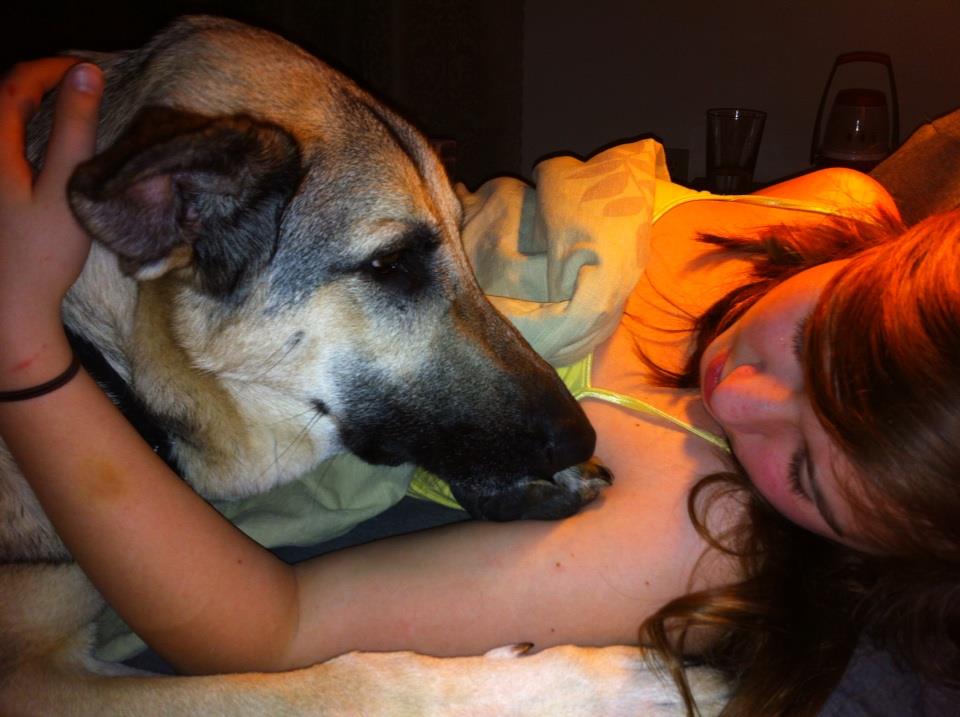 f someone were to ask me what is needed to live a happy life, having a dog would be at the top of my list.
Even when I was young, I knew I could never marry a man who didn’t love dogs and consider them important family members.
But that never guaranteed I would have children who love dogs.
Thank goodness they do, and that always makes me smile.
Day 21: Puppy Love
Day 20: Personal Theme Songs Day 19: Summer Clouds
Day 18: Bartholomew Cubbin’s Victory
Day 17: A Royal Birth Day 16: Creative Kids
Day 15: The Scent of Honeysuckle Day 14: Clip of Kevin Kline Exploring His Masculinity
Day 13: Random Text Messages from My Daughter Day 12: Round Bales of Hay
Day 11: Water Fountains for Dogs Day 10: The Rainier Beer Motorcycle Commercial
Day 9: Four-Leaf Clovers Day 8: Great Teachers We Still Remember
Day 7: Finding the missing sock Day 6: Children’s books that teach life-long lessons
Day 5: The Perfect Photo at the Perfect Moment Day 4: Jumping in Puddles
Day 3: The Ride Downhill after the Struggle Uphill Day 2: Old Photographs
365 Reasons to Smile – Day 16
 I came home from work on Friday bone-weary tired.
My daughter was in a local theater production this past weekend, which means the previous week was “tech week.”
When I volunteered in community theater, we adults called it “hell week.” And there’s a reason.
The rehearsals go late and tempers run short. I still haven’t caught up on my lost sleep, and even though I love the joy my daughter has for performing, I’ve definitely been off my game.
But when I came home Friday, my son was playing piano. When I left to take the dog for a walk, he was still playing piano.
When I came back from walking the dog, he was practicing his trumpet.
And even though the sound wasn’t exactly pacifying, it definitely made me happy.
Because listening to my son pursue his passion always makes me smile.
Day 16: Creative Kids
Day 15: The Scent of Honeysuckle Day 14: Clip of Kevin Kline Exploring His Masculinity
Day 13: Random Text Messages from My Daughter Day 12: Round Bales of Hay
Day 11: Water Fountains for Dogs Day 10: The Rainier Beer Motorcycle Commercial
Day 9: Four-Leaf Clovers Day 8: Great Teachers We Still Remember
Day 7: Finding the missing sock Day 6: Children’s books that teach life-long lessons
Day 5: The Perfect Photo at the Perfect Moment Day 4: Jumping in Puddles
Day 3: The Ride Downhill after the Struggle Uphill Day 2: Old Photographs
A Piece of Your Dad

Summer 1998
A message to my 15 year-old son:
The moment you were born, your dad grinned wider than I’ve ever seen. Then he said,”This is the best day of my life.”
And he meant it.
While my mind was spinning with worry, and I wasn’t even sure if I was even cut out to be a mother, your dad knew he had arrived at the place he was always meant to be – fatherhood.
Since then, he’s never left that place. Not even once. And that hasn’t always been an easy thing to do.
Not all men have the fortitude to be a father, and, and as you should well know, it is often a thankless job. It’s even harder when you grow up without much of a role model.
But your father has something a lot of men don’t – the ability to put his ego aside and focus on what he believes is most important – always being available for you and your sister.
From the moment you were born, you have been his priority. He’s never stopped believing in you or being your number one champion. Ever.
At those times when I’ve cried over your behavior or questioned what I did wrong, your dad always spoke up for you. And he was always the voice of reason.
On those days when I worried that you weren’t like other boys – that you weren’t particularly interested in playing sports or being overly social – he always praised you for being comfortable in your own skin and being true to yourself. And he was always right.

Summer 2013
And all those times when you were being the total and complete goof you are, he was proud of you and never hid his face in embarrassment.
Well, almost never.
I know we often joke about your blood line and about your genealogy, but, in all honesty, you should be proud of being your father’s son.
You may not have his brown eyes or his poker straight hair, but you have something much more important.
You have pieces of his heart and pieces of his soul.
Treasure them and make good use of them. Your dad sacrificed a great deal so you could have them.
A Letter to Abercrombie & Fitch CEO Mike Jeffries
Dear Mr. Jeffries,
Congratulations on recently making headlines with your strategy of only selling clothes to those whom you define as cool, pretty and thin: http://www.businessinsider.com/abercrombie-wants-thin-customers-2013-5#ixzz2SoRlwYlN.
You’ve certainly grabbed a lot of attention and clearly made your point.
As you said, “In every school there are the cool and popular kids, and then there are the not-so-cool kids. Candidly, we go after the cool kids. We go after the attractive all-American kid with a great attitude and a lot of friends. A lot of people don’t belong [in our clothes], and they can’t belong. Are we exclusionary? Absolutely.”
You have every right to your opinion and your business strategy. But here’s what you apparently don’t get: most of us (people who will never set foot in your store) don’t really care whom you define as cool, and we don’t care that you won’t sell us your over-priced clothes. We see you in the same light that we saw the “cool kids” in high school.
We didn’t actually think they were all that cool. Instead, we thought they were self-absorbed and incredibly superficial.
You (as they did) base coolness on appearance, access to money and whom you associate with. Ironically, the only people who hang out with your are also people who only care about superficial appearances.
There’s no depth. There’s no empathy or compassion for others. And there’s no understanding that life is so much bigger than your very small and limited materialistic world.
In the real world, where everyone else lives, life is so much more than what size you wear, how much you paid for your clothes or all the places where your wealth will take you.
It’s about knowing that you can never count on your looks for anything and building upon your other strengths instead.
It’s about walking into a room and being appreciated for what you can contribute to the conversation rather than for what clothes you wear.
And it’s about supporting others rather than rubbing disadvantages in their faces.
Enjoy your fortune while it lasts, Mr. Jeffries, but be warned.
I’ve got two children who won’t ever buy clothes in your store.
I know their current buying habits are of no interest to you (because neither fits your definition of cool), but I think you should know who they are.
They are both very smart and don’t care whether you or anyone else thinks they are popular or cool. They just care that they are happy and making the world a better place.
Such aspirations have never required buying and wearing a certain brand of clothes.
So watch out, Mr. Jeffries. My children represent the next generation of consumers, and they have loud voices.
Sincerely,
Trina Bartlett
A Poor Perspective on Poverty
When I was in elementary school, my mom made most of my clothes. As a child, I loved picking out the patterns and fabric to help design something uniquely for me. And when I outgrew those clothes, we donated them to what my parents called “the needy.”
I had a vague understanding of who “the needy” were. They were the kids who came to school dirty and sometimes smelly. They were the kids whose parents didn’t socialize with our parents. They were the kids that lived in neighborhoods where we were told not to go.
I thought that giving my clothes to “the needy” was some kind of measure of moral superiority.
Then one day, a girl in my class came to school wearing one of the outfits my mother had made.
I was shocked.
She was needy? I talked to her. I played with her at recess. I even sat with her at lunch sometimes.
I was even more shocked when someone asked her about her new clothes, and she described a shopping trip she’d made to Portland with her mother. At that age, I was just as unfamiliar with lying as I was with “the needy.”
I made the mistake of calling her out on her lie, but she didn’t relent and insisted she had bought the outfit at a store in Portland.
After that, I didn’t talk to her, play with her at recess or sit with her at lunch. I started equating “being needy” with being a liar.
Decades later, I still feel guilty about calling the girl out. I wish I could go back in time and go along with her fantasy about clothes shopping at fancy stores. She simply wanted to fit in, and I understand that now.
We live in a society that equates products with social status and success. Just carrying an off-brand purse gets me looks from women who pride themselves on carrying name brands.
And the extent to which our children are buying into that materialistic culture even surprises me. I’m usually not at a loss for words, but there is an exception to everything.
My exception came in the form of a ten-year old boy who lives in a house much larger than mine. His parents drive newer and more expensive cars than my husband and I do. His family seems to be on vacation every time school is out while my family rules the staycation. In other words, I think of his family as being “well-off.”
The boy, however, told me his family is poor.
I didn’t know what to say. Even with money out of the picture, I can’t begin to describe his family as poor.
His parents are attentive and loving to each other and their children, who are involved in numerous extracurricular activities. The family worships together and is actively engaged in community service. Simply put, the family lacks for nothing.
The boy, however, was adamant that his family is of limited means. He was sure because he has friends who not only live in a bigger houses but also have beach houses. Their cars are even more expensive, and their vacations even more extravagant. In his eyes, his family really doesn’t have enough.
I understand how this boy reached his conclusion. It’s called perspective. But that’s not an excuse for him or for all the adults who look into that same short lens that distorts everything.
Recently, a local official asked me why the percentage of children living in poverty had grown while the median household income in his county grew by more than $18,000 during the same ten-year period. Before I could answer, his colleague responded.
“There are more poor people, because the poverty level goes up every year. A family can make more money and still be considered poor.”
I was proud of my reaction. I was appropriate, and I didn’t even make a face. Instead, I noted that the local numbers simply reflect national data that show a growing income gap between the rich and the poor. Then I asked, “have you actually looked at the poverty level?”
When I didn’t get a response, I added, “This year, the poverty level for a family of four is $23,500. Personally, I don’t know how I could live within that.”
The topic quickly changed, and I’m not sure if the discussion had really ended or if a genuine conversation about poverty was just too uncomfortable, as it often is. Instead, we misdirect by categorizing the poor as deserving or undeserving. We dress up and attend charity events that make us feel good about helping. And we pride ourselves in giving to “the needy.”
But there are times when I try to change my perspective and look at how we treat the poor from the eyes of my former classmate. I’m pretty sure she’d tell us to stop pretending that poverty is something that happens to other people. I also think she’d say that we should stop pretending that name brand clothes or a big house reflect on our character or our importance. And I’m positive she’d say that we shouldn’t pretend that charitable giving is more meaningful than really listening to someone who is struggling.
And in return for her opinion, I’d tell her that I think she’s right.
Slaying the Lizard of Oz
 When my daughter was in preschool, she discovered The Wizard of Oz, and even though she absolutely loved the story, she just couldn’t get the title quite right. She called the classic story “The Lizard of Oz.”
Initially, my husband and I tried to correct her, but nothing worked.
My son, on other hand, never even attempted to point out that a lizard is very different from a wizard. He simply chose to make fun of his sister, and since she didn’t understand his ridicule, she wasn’t really bothered.
Trying to teach my daughter the difference seemed futile. Instead, we decided that allowing her to happily promote the concept of a giant lizard ruling over the Land of Oz made our lives more peaceful.
At least, it was more peaceful until that day she came home dismayed that her parents made her look foolish by allowing her to publicly talk about “The Lizard of Oz.”
I can’t tell this story without thinking of all the adults who also believe in the Lizard of Oz.
These are people who make up their minds about something and only listen to those who validate their beliefs: the politicians who believe that they speak for “all Americans” or the old white guys with money who only listen to other old white guys with money (or to those who pander to them). They, like the Scarecrow in the Wizard of Oz, could easily gain wisdom. All they’d have to do is listen to people who better understand the real issues.
These are the people who only make decisions based on their own paradigm. They ignore that the world is changing, which means their way of doing things should change too. Instead, they, like the Tin Man, appear heartless because of their refusal to adapt with little regard for others.
These are the people who are self-absorbed. Like the Wicked Witch of the East, they believe those seeking help are the problem, and they care more about feeding their own egos than feeding the hungry.
But no matter how hurtful or destructive these people are, they get away with their behavior because there are even more of us who enable it. We act like the Cowardly Lion, who is afraid of everything. We fear calling out those who are wrong. We fear making ourselves look bad. We fear causing too many problems. We fear repercussions. And we fear failure.
But being the Cowardly Lion is outside of my comfort zone. I’m not the type to sit back because trying to change misperceptions and outright mistakes is too difficult.
I’m off to slay the lizard, the problematic Lizard of Oz.
Some People Should Just Shut Up
 Being a parent sometimes means being a hypocrite. If you don’t believe that you are either a) not a parent or b) incredibly (and unbelievably) perfect.
I can provide hundreds of examples of times I’ve behaved in a manner that directly opposes what I’ve told my children. Apparently, my husband is a few steps higher on the parenting evolution ladder than I am. He doesn’t always behave better than I do (although he probably does most of the time), but he’s generally less verbal about certain expectations for our children. That way, his behavior doesn’t seem quite as hypocritical.
I, on the other hand, am constantly setting standards that I can’t even begin to meet myself.
For example, ever since our children started talking, I insisted they use the words “please be quiet” instead of “shut up.”
Yet, I don’t do at all well with that particular language skill.
Recently, I was enduring a painful meeting during which a self-important person was holding forth as though his words were actually meaningful or of interest to anyone but himself. To survive the ordeal, I pretended to take notes while actually scrawling page after page of the words “Shut up. Just shut up.” A few times, I even added a less than flattering description of the person I wanted to be quiet.
But the words “please be quiet” are often inadequate. Quiet means hushed tones and soft voices. Quiet shows a lack of passion or emotion. And quiet doesn’t indicate disagreement when someone else’s words are hurtful or rude or simply pointless.
That’s why I haven’t been thinking “please be quiet” lately when people try to disguise their hate and prejudice with self-righteous statements and stupid jokes. Instead, I want to scream “just shut up” every time someone equates being poor with being lazy. But I haven’t.
I’ve held my tongue as tightly as the man gripping a snow shovel while he rode his bike through my neighborhood on Wednesday.
Wednesday we were supposed to get a blizzard. Schools closed. Government shut down. Businesses even changed their hours of operation. And even though all we got were a few inches of snowy slush, a lot of people with steady jobs and stable employment had a snow day.
The man on the bike didn’t have a day off.
He was looking for work shoveling driveways and sidewalks. He was offering his services to people who most likely judged him on his ragged appearance and his lack of a car. He didn’t have a truck to which he could attach a plow. All he had was a shovel and some muscle.
I’ve seen him selling his shoveling services on other snow days, but this past Wednesday was different.
I was leaving the neighborhood when he rode by me. He didn’t know where I lived or whether I was even a potential customer. I was simply some lady walking a German Shepherd on a cold and windy afternoon.
But, even though I had nothing to offer him, he slowed, gave me a wide smile and told me to enjoy my day. And then, balancing his snow shovel while pedaling his bike, he quickened his pace and was off.
That’s the exact instance I realized that maybe, instead of teaching my children to always say “please be quiet,” I should have been teaching them that sometimes standing up for those without a voice means shutting down those who speak against them. I should have been teaching them that there are times that polite isn’t as important as human rights. And I should have been teaching them that there are times when some people really do need to “just shut up.”


 Just So You Know