Category Archives: Uncategorized
Shame is Not a Form of Birth Control
I had to double-check my calendar this morning to assure myself that it was actually 2013 and I hadn’t been sucked into a time warp.
I hadn’t been.
Instead, I was sucked into reading news articles about a school assembly featuring an abstinence-only proponent whose only educational credential is a Psychology Degree from Jerry Falwell’s Liberty University.
See: http://www.dailymail.com/News/201304110267 and http://www.wvgazette.com/News/201304110229 .
I can’t emphasize enough how inappropriate the assembly was.
Almost 20 years ago, when I was working in the field of sex education, experts had already proven that abstinence-only and shame-based tactics don’t work. And promoting a particular religious philosophy in a public school is simply prohibited.
But self-righteous people, who believe they actually know what God is thinking, seem to find a way around these issues.
The speaker, Pam Stenzel, and her sponsors, a religious group called Believe in West Virginia, say her speech wasn’t faith-based. Instead they say it was just a warning about the dangers of sex before marriage.
Those few words should have been enough to keep this woman out of the public schools.
A real sex educator doesn’t pretend that a wedding ring can protect people from a sexually transmitted disease, an unplanned pregnancy or heartache.
A real sex educator doesn’t outright dismiss homosexuals, who are still fighting for the right to even be married.
And a real sex educator doesn’t condemn, judge or shame.
Instead, a real sex educator gives facts – not statistics that have been manipulated to fit a certain dogma.
A real sex educator will agree that sex is the only human behavior that has the potential to create life or to threaten a life. The educator’s job is to help individuals make decisions to prevent unwanted consequences.
And a real sex educator will spend time talking about healthy relationships and about treating others with respect – not condemnation.
Years ago, I was that person, and I will never forget making a presentation about AIDS and HIV in a middle school classroom. As I interacted with the students, the teacher, who was obviously not happy I was there, took out his Bible and placed it open on his desk. He pretended to read, and I pretended to ignore him.
A year later, I had the same assignment and found myself in the same classroom. But instead of taking out his Bible, the teacher made a point of welcoming me and telling his students they should listen. He then privately told me that “a really good person” from his church had been diagnosed with AIDS. Instead of noting that a lot of “really good people” had been diagnosed with AIDS, I was just grateful that he had become a bit more open and less judgmental.
Now, I am hoping the same for all those involved in permitting the recent school assembly at George Washington High School.
The Permanent Mark of Bad Behavior
 There are times I feel as though mean and difficult people are the masterminds behind a sinister plot to take over the world. They know they’ll eventually just wear out the rest of us with their rude comments and insensitive behavior.
But then I come to my senses and realize if they were actually smart enough to carry out such a plot, they’d have more sense than a second grader. That’s when you learn some of life’s most important lessons. For example, I learned that a poor decision or a mean word will stay on your permanent record card forever, and a blemish on that card is never going to help you succeed.
Of course, I learned that lesson the hard way. I got the first black mark on my permanent record card when I was in second grade. I’ve had countless since then, but that’s the one that taught me about consequences and guilt.
The exact details of my crime are rather fuzzy, but the guilt is forever etched in my conscience.
The problems started because I was a bus rider.
In second grade, we didn’t have cliques, but there were two distinct groups: bus riders and walkers. (In those days, only the children of teachers came to school in cars.)
I perceived the walkers as privileged. They didn’t have to wait for anyone or abide by any schedule other than the ring of the bell. They didn’t have to arrive at school until the very last minute, and they could leave as soon as the bell rang at the end of the day.
I was jealous.
Those of us who rode the bus were just stuck. Since my bus ran earlier than others, there was a group of us who arrived at school much earlier than we actually needed to be there. In order for school officials to maintain order, they required us to immediately go to the cafeteria and sit quietly until given permission to go to our classrooms.
The wait was long and boring, especially since we were always being told to “quiet down.” Even now, almost 40 years later, I find that difficult. In second grade, it seemed impossible.
I don’t remember who came up with the scheme or how we executed it, but a group of friends and I decided we were going to escape the prison in the cafeteria. We didn’t make it far and were soon discovered hiding in the bathroom. After yelling at us, a teacher escorted my fellow criminals and me to the principal’s office.
The only thing I knew about the principal’s office was that it was where the really bad kids went. I was pretty sure there was a jail cell in there, where we would be handcuffed and chained to the bars as punishment for our crime. My worries grew as we were told to sit outside Mr. Mitchell’s office and “think about what we had done.”
By the time Mr. Mitchell opened his door and told us to come in, I was shaking.
Mr. Mitchell sat behind the desk and lectured us and lectured us and lectured us. As he talked, his face got redder and redder and redder. The only words I remember were “your permanent record card.”
I gulped.
I was supposed to go to college and get a job. I had no idea how I was going to tell my parents that all their hopes and dreams for me had been erased with one stupid decision. (Yes, I really did worry about such things as a young child.)
For years, I worried about my permanent record card and that time in the principal’s office. Many nights, I would lie in bed thinking about the implications. My concerns finally began to fade when I was an adolescent and transferred to a different school district. As my records were being reviewed, no one mentioned my criminal past.
I had been granted a pardon, and I was grateful. But, now, I find myself getting tired of passing on the gift of a pardon to others.
This week I am especially tired. I wrote in another blog about the death of a young West Virginian. While most of the feedback was positive, there were also individuals who left comments that belittled the individual and his way of life. The comments were hurtful and rude and pointless.
They were also permanent. Even if they are deleted, others have already read them, including friends and family members.
The situation bothered me to the point I couldn’t sleep at night worrying whether or not I should even have written about the young man’s death.
But then I remembered another important lesson from second grade: most people are mean to others because they don’t feel good about themselves, so you should try to be nice to them anyway.
I guess I’ll keep trying. Even though the marks made by negative behavior (by both me and by other people) may be permanent, marks for positive behaviors can be permanent too. I just have to keep reminding myself of that.
My Lazy, Cheating Blog
Just over two years ago, my husband convinced me that I should write a blog. Initially, I was hesitant, but he was persuasive and I decided to take the plunge. I wrote my first entry.
Then, something happened.
People actually read what I wrote. And they commented on my words. And they encouraged me.
They changed everything.
My Type A personality kicked in, and I felt compelled to write regularly. For the most part, this has been a pleasure because I generally have a lot to say. Actually, most of the time I have a lot to say. There are also times when I’m tired, or busy or just not inspired, so finding the motivation to write my blog at least once a week can be difficult. But I tend to be very obsessive, so I write anyway.
Until this week.
This week, I’m cheating.
I’m cheating because I’m spending four days with an amazing group of women in Hatteras, North Carolina. I just want to be lazy and laugh with my friends. I also want to meet my compulsive need to blog every week. So, I’m linking to two of my recent posts for the Charleston Daily Mail:
http://blogs.dailymail.com/mommyhood/2013/03/20/when-homework-goes-to-the-dark-side/
http://blogs.dailymail.com/mommyhood/2013/03/13/advice-from-the-mother-of-a-heroin-addict/
Next week, I’ll be back. This week, I’m not going to feel guilty about my lazy, cheating blog.
Rockefeller’s Reminder
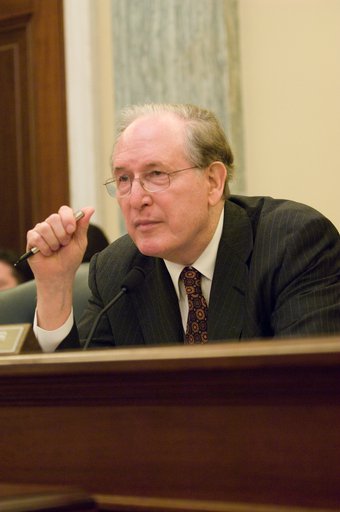 Last week, I had the privilege of attending a community meeting hosted by U.S. Senator Jay Rockefeller about the reauthorization of the Violence Against Women Act (VAWA). Since there was little doubt that our soon-to-retire senator was going to vote for VAWA, the event was really an opportunity to raise awareness about the issue of domestic violence.
Invited guests included survivors, social workers and advocates who work tirelessly to address the issue. A local police officer was the only man selected as a designated speaker for the round table discussion, but he received a great deal of Rockefeller’s attention.
While domestic violence survivors told heart-breaking stories, many of Rockefeller’s questions were directed to the police officer. The Senator seemed absolutely fascinated by the officer’s description of our local police department’s ride-along program, which provides an opportunity for community members to literally ride along with police officers during any shift. Those who participate have the opportunity to really understand what police face and learn about some of the biggest issues facing our community.
At the time, Rockefeller’s intense interest in the program seemed a little off topic. But in retrospect, I think the Senator was demonstrating what true wisdom is.
In a world where people are intentionally inflicting harm on others, where relationships are often about power struggles rather than support and where individuals are suffering on a daily basis, true wisdom is knowing that doing the right thing requires more than simply responding to the needs of others. Maybe because I’ve recently been watching too many people who think doing the right thing means doing things their way without considering all that others have or could contribute, Rockefeller’s reminder has stuck with me:
Doing the right thing means ensuring resources and services are available for those in need, but is also means focusing on what is positive and good.
Doing the right thing means reinforcing and promoting positive and healthy relationships among people and organizations.
And doing the right thing means really listening to others and acknowledging the power of what they are saying and all they are contributing.
That’s the wisdom Senator Rockefeller brought to the table. Unfortunately, he won’t be at the table much longer. Last month, he announced he will not be seeking a sixth term as U.S. Senator after his current term ends in 2014. West Virginia lost Senator Robert Byrd in 2010, and now we are losing Senator Jay Rockefeller. Regardless of political affiliation, all West Virginians should recognize the implications.
The cynical among us might say that caring about the poor was easy for Rockefeller, who was born into one of the richest families in America and never had to worry about money.
But I disagree.
Instead of choosing to live a life devoted to money rather than meaning, he chose to work on behalf of people who live in one of the poorest states in the nation. And even though I live closer to Washington D.C., Baltimore, Philadelphia, Pittsburgh and New York City than I do to our state capitol, I still care about what happens to this state.
And I’m hoping whoever steps into his position is someone who understands the importance of asking a local city police officer to explain a simple program that involves reaching out to others to develop stronger partnerships and healthy relationships.
That’s wisdom and a reminder about how we should all live our lives.
Thank you for your service and your wisdom, Senator Rockefeller.
Everything I Need to Know About Valentine’s Day, I learned in First Grade
 I always liked school, but I absolutely hated first grade. That’s because I had a very, very, very mean teacher.
Even forty years later, I’m still traumatized by memories of Mrs. Gladwill.
Normally, I’d feel really guilty calling someone out by name but 1) I’m not the only who has scars inflicted by Mrs. Gladwill and, 2) She’s dead. She died in 2008 at the age of 94. I know this because my mother sent me a link to her obituary. My mother, who is a very wise woman, knew I needed closure.
There’s no need to go into all the details of why first grade was difficult. There are just too many of those details, such as:
Watching fellow students have their ears twisted;
Sitting in class in fear of having “accidents” because, instead of giving permission to use the bathroom, Mrs. Gladwill gave lectures about “not planning accordingly”;
Having my desk put in the corner of the room so others couldn’t cheat from my papers.
But my worst memory, by far, is Valentine’s Day.
Back in the early 1970’s, before there were strict dietary guidelines in schools, Valentine’s Day parties were one of the celebrated days of the school year. Preparation began well before the actual day. By the beginning of February, letters were sent home with both the names of classmates and a list of snacks, such as cookies, cupcakes and candy, that parents were asked to contribute. We used that list of names to painstakingly address a card for every single classmate – whether we liked the person or not. But we did pick out “the best” cards and candy (every card had to have candy) for our friends.
In school, we decorated mailboxes (shoeboxes covered with construction paper) in which our Valentine’s Day cards were to be delivered. The actual celebration was to be a festival of sugar and giggles.
The day before the big Valentine’s Day party, I could no longer hide the fact I couldn’t swallow. I’d begun to worry the day before at school when eating lunch was a painful challenge. At breakfast, while I was trying to somehow swallow a spoonful of Cheerios, my mother took one look at me, told me I looked like a chipmunk and declared I had the mumps.
I wasn’t just devastated. I was horrified.
Mrs. Gladwill simply did not tolerate illness. Every day, after she took attendance, she would take a piece of chalk and scrawl the names of the absent on the blackboard. In the eyes of first graders, having your name on the blackboard was equivalent to the adult version of being forced to wear a scarlet letter. Walking into the classroom and seeing your name on the blackboard was the ultimate walk of shame.
Being diagnosed with mumps was not only a sentence to take that walk of shame, but it also meant I was going to miss the Valentine’s Day party. In the eyes of a six-year-old, life couldn’t have been much worse.
That Valentine’s Day was probably one of the longest days of my life as I spent every minute imagining all I was missing. Finally, sometime after 3:00, I heard the squeal of the school bus’ brakes as it stopped in front of my house. When my brother came into the house, he didn’t call me chipmunk or tease me for missing all the festivities. Instead, he handed me the shoebox I had so painstakingly decorated only a few days earlier. But now, it was full of Valentine’s and candy. I spent hours reading and treasuring all of the cards, even the ones I knew weren’t heartfelt.
A few days later when I returned to class, my name was one of many written in dark chalk on the blackboard. Apparently, some nameless person (me?) had come to school with the mumps and shared the virus with everyone else.
Eventually, attendance went back up and our class returned to the same, miserable status quo. But I didn’t. That Valentine’s Day taught me a lot about love:
1. Love is about the memories we treasure because, even though they sometimes grow out of difficult situations, they remind us of people and challenges we’ve overcome.
2.Love is about finding a song that will mean something to you at any age. For me, the Rolling Stones got it exactly right. “You can’t always get what you want, but if you try sometimes, well you just might find, you get what you need.”
3. Love is about having a family whose support will always make the worst day a little bit brighter.
4. Love is learning to treasure all the small gifts, even ones from people who may not realize that they were giving anything of importance.
5. Love is about taking care yourself, even when others will try to make you feel as though their needs should come first.
Most of all, I learned that Valentine’s Day is much more complicated than cards, or candy or having just one special person in your life. It’s about recognizing and acknowledge everything that makes you happy.
And, over the past 40 years, I’ve been immensely blessed with people, memories and circumstances that make me happy.
Which, is why, even though I may not entirely succumb to the sappiness of Valentine’s Day, I certainly embrace the sentiments, and the lessons, it’s taught me.
When Tears Aren’t Enough
I’m rarely at a loss for words, yet I had nothing to say last week when my daughter asked me the simple question “why?”
Instead of answering, I stood silent as a single tear rolled down my cheek.
 We were visiting the United States Holocaust Memorial Museum.
I’d been there previously, but my daughter hadn’t. She’s been studying the Holocaust in school, so I thought she was mature enough to fully appreciate the exhibits and the message.
For the most part, she was, and we took our time going from floor to floor as the timeline of events leading up to the Holocaust unfolded. Then we got to the floor with evidence of the Holocaust and all its atrocities.
We stood inside one of the small, bare and unheated railroad cars that transported up to 100 people to the concentration camps. We stuck our heads into one of the actual bunks from Auschwitz. And we stood next to piles and piles of shoes that were taken from prisoners right before they were gassed.
But nothing affected my daughter more than a photograph of braids in a larger pile of hair the Nazis had collected. (They stuffed mattresses with the hair collected at concentration camps.)
Braids define my daughter. She almost always wears her long hair in one or two braids, and this month, she taught herself to french braid. That made the photo of the braids very personal.
The photo and her reaction struck me too. They reminded me of how incredibly precious my daughter is, and how incredibly precious all the daughters that died in the Holocaust were.
And because of that, I just couldn’t answer her question “why?”
How can you explain to an 11 year-old girl that some people need to point fingers and find someone to blame for difficult times? She lives in a world where that happens on a daily basis. People find it simpler to blame a person or a group of people than they to understand that situations are complicated and are rarely the fault of one person or group.
How can you explain to an 11 year-old girl that some people will simply accept what they read, see or hear when that message justifies their own belief system? She lives in a world where people spew “facts” that are completely inaccurate just because they were presented as the truth.
How can you explain to an 11 year-old girl that some people place their material possessions and personal bank accounts above the health and safety of others? She lives in a world in which people complain that their tax dollars are being used to help those in need.
How can you explain to an 11 year-old girl that some people are comforted by the belief that there is only one legitimate faith. She lives in a world were so-called Christians condemn other religions while claiming ownership of a morality.
How can you explain to an 11 year-old girl that people are comfortable condemning those with different political beliefs and world views? She lives in a world when people use nasty words to define anyone who thinks differently than they do.
And how can explain to an 11 year-old girl that people who loved each other were killed simply for who they loved? She lives in a world where people still claim that some love is an abomination and sinful.
Any explanation I could provide as to why the Holocaust occurred would simply reflect a world in which she lives. And I didn’t want to scare her.
Instead, I scared myself. And no matter how many tears I cry about the Holocaust, I know they aren’t enough to stop the hate that still exists in the world.
Buck Wild in a Beauty Salon
 If you’ve ever lived in West Virginia, you know all about MTV’s newest “reality show” premiering this Thursday night in the spot previously filled by Jersey Shore.
If you’ve never lived in West Virginia, all the drama surrounding Buckwild has probably either escaped you and/or seemed relatively unimportant. But here in the Mountain State, there is a great deal of concern about how the show will perpetuate negative stereotypes about those of us who live here.
When the first promos began airing last month, there were newspaper articles, editorials and online petitions criticizing Buckwild. Even our junior U.S. Senator and former Governor, Joe Manchin, wrote a letter to MTV asking that the show not be aired. Many argued that his subsequent appearances on national news and talk shows simply provided unpaid advertising.
To me, the show just looks stupid. I never watched Jersey Shore, and I have no plans to watch Buckwild. And yes, I even signed one of the online petitions asking that it not to be aired. But my reasons have nothing to do with how people might perceive West Virginians. There will always be those who believe stereotypes regardless of what they watch, hear or read.
To me, the show is actually more of a reflection on the entire nation than it is of West Virginia anyway. And while I deplore the concept of encouraging young people to do really stupid (and yes, mostly scripted) things for others’ entertainment, what I deplore even more is that there is obviously a large market for such shows. And yes, I know there are many who will tune it to watch Buckwild out of initial curiosity, but that’s not my issue. My issue is with people who watch this type of show for entertainment and for more people to ridicule. This includes television viewers such as the guy who was having his hair cut during my last hair appointment.
Until a few years ago, I never understood why any man would go to a beauty shop, but that was before I discovered the salon where I now go.
The place is more entertaining than anything on television because the people, the conversations and the emotions are genuine. I never complain that my appointments usually last more than two hours, because that time is more compelling than any reality show, particularly those featuring half-dressed young women and cocky young men whose vocabulary is rooted in George Carlin’s monologue about seven dirty words. And, when I think about it, I don’t recall hearing much, if any, cussing in the beauty salon.
Instead, I hear and participate in conversations about real people and real struggles that somehow turn into laughter and hope. The conversations range from cancer, to drug addiction to cross-country motorcycle rides. Everyone in town seems to know the owner and her husband, so there is a constant stream of local characters who come through her doors with their own dramas and issues. Discussions can turn from politics to childhood memories in a matter of seconds. And all of this occurs to some music soundtrack that almost always becomes part of the conversation.
The owner, and my stylist, strives to play just the right music, but she also always has technological difficulties. During my last appointment, she finally gave up when her latest gadget stopped working, and she was forced to turn on the radio to a classic rock station. Of course, the music brought back more memories and more stories.
And then, Manfred Mann’s Earth Band’s “Blinded by the Light” came on, and we all sang along. Sort of. The lyrics have always been unclear, so we all sang a different variations of “revved up like a deuce another runner in the night.” Some bordered on completely inappropriate. In order to resolve the debate, I took out my phone to search for accurate lyrics.
By the time I’d found them, the conversation had already moved on to Buckwild, and everyone was expressing an opinion. That’s when the clean-cut gentleman who had been sitting quietly while his hair was being trimmed said, “I think it looks entertaining, and I’m looking forward to watching it.”
For the first time, the shop went quiet except for Led Zeppelin playing in the background. Everything just seemed to stop. And then, just as quickly, the conversation resumed. Only no one said anything about Buckwild, instead the owner started telling a story about the recent Eddie Money concert.
No one acknowledged the man’s comment, and I don’t know whether he was oblivious to the slight or if he even cared. What I do know that everyone else’s reaction spoke volumes. And I don’t think the silence was so much an indictment on his opinion as it reflected a deep sadness that someone, surrounded by real characters, real conversation and an ongoing celebration of the reality of day-to-day life, would admit he wanted to simply observe the exact opposite.
Hours later, when I was thinking about the incident, I realized how we often lose sight of all that is meaningful around us because the media is trying to sell us a completely different definition of what makes life interesting.
I’m just glad there are people who still don’t buy that, and instead enjoy the simple pleasures of going a bit crazy, or buck wild, in a beauty salon.
Happiness Should Be Like a Dog With a Snowball
 The year 2012 ended with a white Christmas, which is fairly unusual here in the Eastern Panhandle of West Virginia. But then, Mother Nature hasn’t been very predictable, or even very kind, over the past twelve months. Her random and sometimes disruptive behavior was fitting for a year when too many people experienced upheaval and loss. But just like Mother Nature, 2012 also brought bright and sunny moments along with the storms. All serve as reminders of the lessons we need to learn and/or remember.
Lesson 1: We Should Experience Happiness Like a Dog with A Snowball My German Shepherd, Rodney, adores the snow. He loves bounding through it. He loves smelling it. He loves eating it. And most of all, he loves playing in it. As a true fanatic for all things that can be thrown and caught, when the white stuff is on the ground, he begs for someone to pack and throw a snowball.
This Christmas, I noted how thrilled he was with every snowball he caught, even though each fell apart or dissolved in his mouth. Instead of being disappointed when a snowball was gone, he was just as eager for another, which he enjoyed with no concern that it too would disappear.
We should all appreciate our happy moments just like my dog appreciates snowballs. They may be fleeting, but instead of worrying that they may not last, we should enjoy each moment and remain steadfast in our belief that there will always be more.
 Lesson 2: We Can’t Always Control Our Circumstances or Protect Those We Love, but Any Attempts To Do So Are Always Good for a Laugh At the end of June, the Eastern Panhandle, like the rest of West Virginia, was hit unexpectedly by a derecho, or a land hurricane. Most of us had never heard of such a storm prior to the event, and since there were no warnings, we didn’t initially realize the severity of what had happened. We discovered the extent of damage the next day when we saw the downed trees and power lines and when many people experienced a loss of electricity for weeks.
The event left its mark, so in October, when meteorologists called for the Eastern Panhandle to be in the path of Hurricane Sandy, most of us wanted to be prepared. Some of us over-prepared. And some of us even freaked out… a bit.
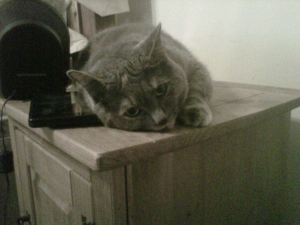
For my part, I decided my family should ride out Sandy in our basement to avoid the hazards of trees crashing through our roof. We were all safely downstairs when I realized that Skitty, our cat, wasn’t with us. Since Skitty has a tendency to hide in unusual and hard-to-find places, I immediately assigned all family members to search for her. As the wind howled and the trees creaked, we took turns calling her name and shaking a bag of cat food, which is usually the best way to get our over-weight feline out of hiding. This time it didn’t work, and I began to worry that my cat, who is generally too lazy to go outside, was battling the elements.
Just as my anxiety got the worst of me, my son, in his usual dry and sarcastic way, told me that the cat was safe. As it turns out, the only thing she was battling was her disdain for a family who didn’t realize that she’d taken shelter in the basement long before the rest of us. My cat had the sense to do what she needed to do and not be bothered by the drama that surrounded her. I should have done the same.
I hadn’t had enough warning to worry about the derecho, and we managed through the storm and the aftermath just fine. I had way too much warning about Sandy, and even though we also managed through that storm and aftermath just fine, my stress level had gotten so high that even my cat chose to ignore me.
Sometimes, we get so wrapped up in either avoiding a situation or in worrying about what might happen, we simply forget that we can only do so much, we must accept that some things are beyond our control and we should believe in the sound judgment and appropriate actions of others. The results won’t always be what we hope for, but too much worry is only good for providing memories that allow us to laugh at ourselves later. 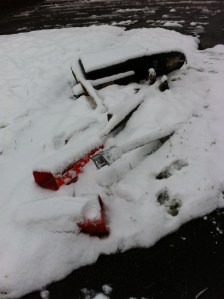
Lesson 3: Life Rarely Goes According to Plan, but When Bad Things Happen, We All Have a Great Capacity for Resiliency and Recovery No one in my family expected the snow that arrived on Christmas Eve, and, even after it began to fall, none of us expected it to last long. But last it did. And in the midst of final preparations for our Christmas celebration, the snow covered the grass and then it covered the roads.
When we realized we were going to have a white Christmas, we celebrated by taking a family walk with Rodney. Unfortunately, Rodney was more excited than all of us, and the jumping, the barking and the lunging, drove my husband crazy to the point he just wanted to go home. Instead of enjoying the beauty of the untouched snow, we were trying to control an overly enthusiastic dog. I worried that our Christmas Eve would become a battle over the dog.
As Rodney began to calm down, we began the climb up the hill on the far side of our neighborhood. When a truck came speeding down the snow-covered hill, we immediately jumped off the road and into a neighbor’s lawn. And then we heard loud thumps and bangs. We turned to see that the truck had gone off the road and taken out two mailboxes and multiple newspaper boxes. Packages littered the ground, and I was relieved that Rodney’s behavior was all but forgotten.
We empathized with the driver and the home owners that such an incident happened on Christmas Eve. But when put in perspective with the loss some families faced this Christmas, the event was far from tragic. For many, Christmas isn’t always just a reminder of family traditions and family warmth. It can also be a reminder of could-have-beens, might-have-beens and regrets. And yet, most of us still believe in the magic of the holidays.
Yesterday, as I was walking up that same hill with Rodney during yet another unexpected snow storm, I noticed the mailboxes were already back up. As is true with human nature, the owners were trying to get everything back to normal. Seeing the mailboxes standing so quickly after witnessing their near demise less than 36 hours earlier was a reminder that no holiday is ever perfect. But planning for perfection only leaves room for disappointment, and planning for disappointment only leaves room for anxiety. But planning to enjoy life’s imperfections only leaves room for joy.
I plan to carry that lesson with me forever and to look forward to whatever the weather, and life, have in store for 2013.
Another Excuse for Bigotry
Over the past couple years, I’ve been doing my best to hold my tongue and tolerate people who use social networking sites to post rude and mean-spirited comments about specific groups of people. But this week, I finally snapped.
I’m calling out these people for what they are: bigots.
According to the dictionary, a bigot is someone who is obstinately or intolerantly devoted to his or her own opinions and prejudices, especially in regards to members of a group.
As America grows more and more diverse, such attitudes against people of different colors or nationalities has become less and less acceptable.
But bigots are haters and, as my kids tell me on a regular basis, haters hate.
So, the haters have set their sights on poor people, particularly those who have had to depend on government assistance when they face tough times.
I’m not the only person whose been noticing this trend.
This week, a colleague stepped into my office, and during a casual conversation, broke into tears.
“I’m sorry,” she said. “I’m just so angry. I had a relative post the meanest thing on Facebook.”

The post she was referring to was a meme that compared people on welfare to a dog: lazy, unemployed, with no known father.
“I wanted to give her the facts,” she said, “but I know that won’t matter. She just won’t listen.”
I know how she feels. For years, I’ve been trying to share the facts with those who demonize people “on welfare.”
In July 2011, I tried to educate them: my rant about people who rant about welfare. People continued to make judgmental comments.
Last Thanksgiving, when people bragged that they never asked for handouts and didn’t want their tax dollars going to those who aren’t willing to help themselves, I tried to explain that very few people succeed on their own: I’m thankful for the handouts I’ve received. The people who should have read that blog obviously didn’t.
Over time, I’ve come to believe that efforts to educate people who wrap themselves in indignation and self-righteousness are simply ineffective.
And yet I still try.
So, for all those people who continue to point fingers and won’t listen to facts, at least listen to this:
When you are making judgmental comments about any group, you are actually referring to individuals who comprise that group. Unlike skin color and despite your preconceived notions about how people on welfare look, you don’t always know who is part of that group. Some of your friends and acquaintances may have, at some point in their life, depended on social services.
These individuals have feelings. When you laugh at people on welfare, you are doing absolutely nothing to encourage them. When you blame them for taking your hard-earned money, you are doing nothing to help them succeed. And when you call them lazy, you are questioning their integrity and intentions. You are simply making them feel worse than they probably already do.
I am under no illusion that people will change their political opinions or their values based on what I write. But what I am asking is for more kindness and understanding. I’m also making a final plea that people get the facts before they make comments about anyone.
I know there’s a platitude that ignorance is bliss, but given the ignorance I’ve observed recently, I disagree. Instead, I think ignorance is just another excuse for bigotry. And that’s just not acceptable.

My Brief Encounter With the Perfect Imperfection of Maya Angelou
I am an incredibly imperfect woman living in a society of people who hide their imperfections much better than I do.
Some are better able to hold their tongues. Others have achieved such brilliant success that it hides any inadequacies. And then there are the people who spend a great deal of time and energy covering up any deficiencies.
Since my tongue often seems to engage before my brain, my successes are nothing out of the ordinary and I choose to spend my time and energy just being me, I don’t mind that people know I’m far from perfect.
Despite that, I’m always striving to become a better person. For that, I need inspiration, which most often comes from other admittedly imperfect women.
These are the women who make me believe.
They make me believe that even those of us who are flawed can accomplish great things. They make me believe that past mistakes and missteps are the fundamental ingredients for a rich life. And they make me believe that, despite injustice and unfair odds, believing in possibilities can only result in magic.
My inspiration comes from women who have overcome barriers and have an honest compassion for those who are still struggling.
And, of course, my inspiration comes from women who can express all this in writing — women like Maya Angelou.
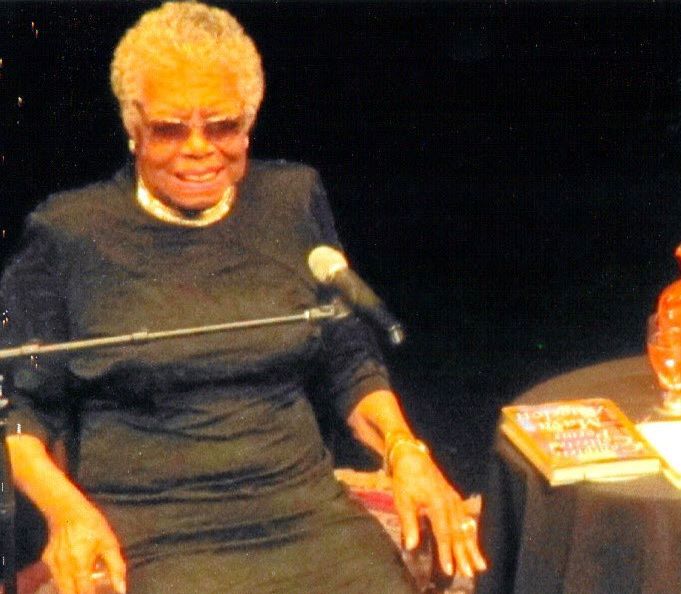
Despite her splendid poetry and prose, her insightful observations of human behavior and the reverence she must encounter everywhere she goes, Maya Angelou doesn’t deny who she is: an imperfect woman who has struggled but, through the support and encouragement of others, done the most she can with the gifts bestowed upon her.
Last week, she shared both her humility and her humor with an audience in Charleston, West Virginia at an event celebrating the 100th anniversary of the YWCA. Thanks to an invitation from a friend, I was fortunate to be in the audience as she poked fun at herself, challenged all of us to empathize with those who are different and encouraged us to think of possibilities.
She talked about her years of silence following the conviction and murder or the man who raped her as a young girl and how poetry freed her. She encouraged us to always find something to make us smile and, when we can’t, to write about something that does. And, she lectured about not blaming others for past injustices but rather thanking those who endured them and taking responsibility for future generations.
In short, she was amazing. I was either laughing or crying the entire time she was speaking.
And then she read her poem “A Brave and Startling Truth,” which she wrote in honor of the 50th anniversary of the United Nations. About halfway into the poem, she lost her place. She faltered, fumbled then regained her composure as she finished.
I know during those moments of silence while she searched for her place, all of us seated at the Clay Center for the Arts and Sciences were holding our breath. She had earlier reminded us that she is 84 years old, and that fact sunk into our brains and into our souls.
The moment was brief, and it passed. But it had still occurred.
Yet, at the end of the evening, Dr. Angelou held her head high, showed appreciation for the applause and ended her talk with dignity.
Some might think she was trying to cover her mistake, but I know she was simply demonstrating why she is so great. Instead of being defined by her mistakes and struggles, she soars through self acceptance and overcoming challenges.
If that’s not inspiration, I don’t know what is.


 Just So You Know