Category Archives: Politics
Words Are the Root of All Violence
There are two national headlines gnawing at my brain right now.
The first is about the murder of three police officers in Baton Rouge.
The second is about WV State Delegate Michael Folk tweeting that Hillary Clinton should be hung on the National Mall.
Both are senseless acts of violence.
Both.
An expression of hate is the ammunition that fuels physical assaults and attacks. It turns the words and actions of someone who looks, thinks, acts, or believes differently into a significant threat to individuals who have been programmed to protect their own closed-minded fortresses of right, wrong, and justice.
Making a statement that any person deserves to be hurt at the hands of another does absolutely nothing to improve anyone’s circumstances. Yet this type of brutality is quickly becoming the norm in the United States.
As a country, we are sinking fast in the rising waters of spiteful words, and no one throwing us a life jacket.
Only we can get ourselves out of this mess, which means we have to hold the haters accountable.
I’m not encouraging censorship. Freedom of speech is a core value, and our nation can only improve when we listen to ideas and thoughts that are different from our own. But freedom of speech must be treated with the same respect that we give to anything that is fragile and prone to break when it is mishandled.
And, as a country, we are being anything but gentle with each other.
Having a right to say what you want and not being held accountable for your words are two entirely different issues.
When I was a child, I lived with the taste of soap in my mouth because I was constantly saying things that provoked my parents. There was no law against the words I used or the tone with which they were said. But my words were disrespectful and inappropriate, and I paid the price by becoming a connoisseur of a wide variety of soap brands.
The soap in the mouth punishment isn’t feasible with politicians, community leaders or others who choose to continue to pollute political events and social media with their hateful and violent words.
But the rest of us can ensure that there are consequences.
We can choose not to vote for them.
We can unfollow them on social media.
We can call other leaders and lawmakers and express our concerns.
We can write letters to the editor.
We can even write blogs about them.
Collectively, when each one of us speaks up, our voices are bound to drown out the nasty ones.
Donald Trump and the Gritters
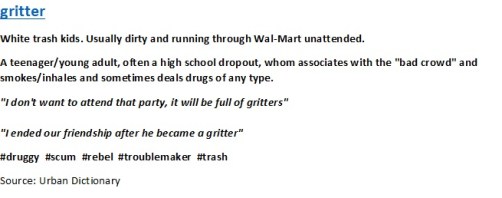
“Gritter.” It was such a completely foreign and wrong word, yet it was also very powerful.
Until I moved to West Virginia as an awkward adolescent, I never knew such words even existed. I was aware that some people used negative words to describe different races, but I didn’t know that there were also words to describe people by their social status. I had certainly witnessed my share of ridicule of the poor and outcast, but I didn’t know there were actual labels for such individuals.
What I did know was that associating with people who wore such labels was social suicide and defending them could be just as dangerous.
I was already teetering on the edge of not belonging, and I was worried that even the slightest mistake would send me hurtling over the edge. I was already considered weird because I had transferred from a state that was thousands of miles away. Then I had made a near fatal error of comparing my old life to my new one. In other words, in the eyes of my peers, I thought I was better than they were.
Nothing was farther from the truth. Maybe, if we hadn’t all been so wrapped up in the complexity of adolescence, my classmates might have recognized how completely alone and alien I felt.
But, they didn’t. Or, if they did, they didn’t care.
And so, I felt a complete urgency to assimilate into a new culture and to adopt a new language, even when it went in the face of everything in which I believed.
I made the mistake of trying out my newly acquired word “gritter” on my family during dinner.
“What does that mean?” my mom asked
I tried my best to explain about the kids on the bus that were gritters and how they wore the same clothes over and over again, lived in the mobile home park and were generally unacceptable.
My parents got really, really angry.
More than 30 years later, I don’t remember much of what my parents said, but I do remember the look on my dad’s face when he said that he would have been a “gritter” in high school. And I remember my ambivalence.
To the depths of my soul, I knew how wrong judging and labeling other people was. But I also knew that I had absolutely no social footing, so standing up against what was a social norm would just further alienate me. My peers had a pecking order, and I wasn’t about to question it.
Until this past week, I’d completely forgotten all about gritters and my parents complete outrage at the ease with which I had used the word.
But then the West Virginia primary election brought it all back.
Donald Trump easily won West Virginia’s nod for President of the United States. While this wasn’t a surprise, the political pundits immediately began analyzing how one of the nation’s poorest states could engage in a love affair with a man who has nothing in common with the people, the culture and, of course, the lack of resources.
And even though I’m personally frustrated by the whole situation, I kind of get it.
West Virginians have been ridiculed for decades. The entire population is often stereotyped as poor, uneducated hillbillies whose culture is defined as being on par with the dueling banjos in the movie Deliverance.
No one wants to be called the equivalent of a gritter. We want people to believe we are better than that, even if that means we point our fingers at other people and blame them, not ourselves, for our problems.
That is Donald Trump’s schtick.
He builds himself up while tearing others down – the poor, the undocumented, women, people with disabilities, people with accents, etc. Basically, he has taken license to belittle anyone who isn’t exactly like him.
No wonder West Virginians are buying it. If elected, they will have a leader who gives them license to call their neighbors gritters and blame others for their problems.
I am only grateful that I am no longer that awkward adolescent that was afraid to speak out or embrace the wisdom of her parents. Now, I’m willing to yell at the top of my lungs “Putting other people down doesn’t make you a leader or a better person. In fact, it does the exact opposite.”
Maybe Donald Trump will never hear me, but at least I know someone will.
And that’s a start.
In the Bathroom
 I am a worrier.
I worry about my kids, the decisions they make and if they are happy.
I worry about having enough money to meet my family budget and having enough money to meet my office budget.
I worry about whom our country will select for our next president.
I worry about drugs and crime in our community, individuals who are homeless and people are being abused by a family member or by the system.
And I worry about people who are too self-centered or narrow-minded to care about anything or anyone but themselves and their own self-righteous and generally misguided opinions.
But I have never once worried about the person in the bathroom stall next to me.
Until this year, I never even considered that a birth certificate could prove or disprove whether that person in the next stall posed a risk to me or my children.
Birth certificates are just pieces of paper that capture information provided during one single moment in time and reflect societal norms of the past.
Heck, my own birth certificate isn’t even accurate. My mother’s name is misspelled. Apparently, in the excitement of my arrival, she didn’t put her professional proof reading skills to use.
Even worse, my birth certificate lists my mother’s profession as a housewife. My mother was never married to a house. Neither did she spend the majority of her adult life staying at home cleaning, cooking and caring for kids. She was an extension agent, a Peace Corps volunteer, a substitute teacher, a journalist, an editor and even a librarian.
But, at that time I was born, she was not an earning an income outside the home. At that ONE point in time. So, even though my birth certificate states my mother was married to a house, which I find a frightening thought, I can’t find any information on my birth certificate that indicates whether or not I pose a danger to others. The information on my birth certificate is so irrelevant that I’ve never even considered carrying it with me.
In the past 30 years, the only time I’ve even taken it out of a safe deposit box was when I needed it for proof of identification. If I ever need it to get into a public restroom, I’m out of luck because it stays locked away in a box that won’t burn.
This whole debate over which sex can use which public bathroom seems as ridiculous as the dress code a former employer tried to implement years ago. The man was getting ready to retire and was trying, for one last time, to impose his prehistoric beliefs on those who would be left behind.
(This is the same man who insisted I should never be put in a position of authority because I breastfed during a work-related meeting. He never considered that I attended the meeting while on maternity leave because I was just that committed to my job.)
To provide some perspective about just how prehistoric his dress code was, it required women wear hose with skirts or dresses. It also required women wear appropriate underwear and noted that thongs were not appropriate undergarments for the workplace.
When I read the dress code (which, by the way, I fought against and eventually had overturned) , my first question was how it would be monitored and enforced.
I feel exactly the same about a law that require people to use the public restroom that corresponds with the sex on their birth certificate.
It is, in two words, absolutely ridiculous.
Of Dice and Women
 I try not to take politics too personally.
That’s not to say that I don’t feel strongly about specific issues or specific politicians or that I don’t take my role as a citizen and my right to vote seriously. I do.
But years ago I realized that too many people consider politics to be a game of Monopoly in which the political party, the politician, the political action committee or the corporation are more concerned about securing as much for themselves as possible than they are about anyone else. They seem to believe that a roll of the dice is a fair way to determine the success and/or comfort of an individual or family.
Sometimes, they spout a few words intended to convince people they care about those who aren’t as fortunate or as wealthy or as beautiful, but their words often aren’t consistent with their behavior, lifestyle or relationships.
As someone who received a great roll of the dice on the day I was born and encounter people everyday who didn’t get such a great roll, I can see right through their facade.
And just when I feel as though I’m becoming completely cynical, I encounter individuals who step into politics because they truly care about others.
My friend Layne Diehl is one of those people.
Layne never thought she could go to college, but through the support of people who cared about her, she not only went to college but also to law school. She is a true role model for young women whose roll of the dice doesn’t afford them the security of knowing they can go to college.
Layne didn’t grow up in a family that was always safe and secure. She learned to survive and thrive because she had a mother who garnered all of her strength, skills and resources to take care of her children when the world around her family was collapsing. Layne’s mom passed those skills onto her daughter, who understands the importance of reaching out to help others who were never given the opportunity to roll the dice.
Layne has a strong sense of purpose and self. When she realized that her personal values no longer fit with her career, she took a chance and decided to roll her own dice instead. In doing so, she found a path that fits with both her values and to give back to the community.
I wouldn’t know any of this information if Layne weren’t my friend. That’s because Layne, who is running for the WV House of Delegates, isn’t making her campaign about her.
When Layne took the risk of running for the House of Delegates, she didn’t do it so she could build her resume or her ego. She did it because she truly cares about others and understands the impact legislative issues can have on the lives of the small business owner, the single parent family, the working poor and the economy of small communities.
During her campaign, Layne never said a negative word about her opponent nor allowed anyone else to do so (even when her opponent was garnering national attention as a teenage candidate). Instead, Layne chose to praise her opponent for inspiring other young people to get involved then focused on real issues affecting real people.
Layne didn’t pander to people who want elections to be about one or two issues. Instead, she adopted a platform that speaks to those who see beyond party lines to the complexity of issues.
I do have one complaint about Layne’s campaign. I can t vote for her because I don’t live in her district.
All I can do is publicly express my support and let others know how much I appreciate that she wants to improve the odds for everyone.
Minimize This
Last week, WV Governor Earl Ray Tomblin signed a bill to raise the minimum wage from $7.25 an hour to $8.00 an hour in 2015 and to $8.75 in 2016.
Opponents of the new law have had multiple complaints:
Teenagers working part-time jobs will be making more money than they really need;
The amount employers will be forced to pay for overtime will increase significantly;
When minimum wage increases, everyone else’s income is worth a little less.
I’m not an economist nor am I a labor expert, so I really can’t disagree with any of these statements.
What I can do is provide a little bit of perspective.
Currently, a full-time minimum-wage employee making $7.25 earns $15,080 annually.
The poverty threshold in the United States for a single person is $11,670 annually. According to that, a person making minimum wage is rolling in the dough since he/she makes $3,410, or nearly 23%, above poverty guidelines. Never mind that this threshold is so low that most social service agencies use guidelines such as 138% or 150% of the poverty level to determine eligibility for services and emergency assistance.
Who couldn’t afford housing, utilities, transportation, groceries, medical bills and clothing with all that extra money? Granted, if there are two people in the household, the poverty guidelines increase to $15,730 a year. That means both people would have to work to keep the family above the poverty line, and one would only have to work part time at minimum wage to do so. Of course, if that household is comprised of one adult and one child, living above the poverty line becomes a bit more tricky.
In my job, I encounter people trying to navigate that tricky situation every day when they are seeking help keeping the electricity on or paying their rent.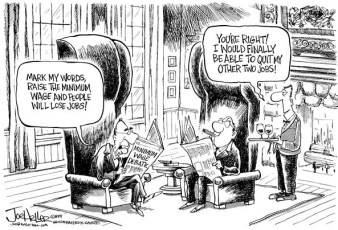
But here’s something you may not realize: you probably encounter them every day too.
They are the people providing services for you behind cash registers and brooms. They are the people caring for your children and you parents. And they are the people who are working long hours for the lowest legal pay and are still often called lazy when they can’t pay their bills.
During the recent debate over the minimum wage in West Virginia, I was reading arguments for and against the increase, and one exchange struck me more than any other.
An individual in favor of the increase stated that he was working two jobs to support his family and that the increase would help.
In response, someone else stated that this person wouldn’t have to work two jobs if he had gotten an education.
As a very educated person, I can personally attest to the fact that an education is not a ticket to a good salary. But even if I hadn’t had to personally struggle with low-paying jobs, I’ve still had many advantages.
I was blessed with a childhood during which my parents cared about my brain development and supported me in school. I was blessed by people who encouraged me when I pursued a higher education. And I’ve been blessed with circumstances that didn’t require me to support others when I was getting that education.
Not everyone has the opportunity or the aptitude to get an education. And even if they did, there would never be enough decent-paying jobs to support everyone who meets the educational requirements.
Besides, many of us depend on people who are willing to work for minimum wage to do the tasks that make our lives easier.
Instead of condemning them, we should thank them.
And a slight increase in their pay is just a start.
A Sense of Power

John Darkow, Columbia Daily Tribune
My junior high social studies teacher, Mr. Bice, once stated, “The two most important jobs in the world don’t require a license: being a parent and being a citizen.”
No truer words were ever said.
Being a parent and being a citizen both require a great deal of responsibility: the responsibility to be knowledgeable and educated; the responsibility to hold others accountable and the responsibility to behave in a way that we want our children to behave.
Even though most American say they are fed up with our elected officials in Washington, I can’t say we are being particularly responsible citizens. And if members of the House of Representatives were in school rather than in Congress, the principal would already have made phone calls to their parents.
Unfortunately, the American public hasn’t been acting like good parents either.
Good parents don’t tolerate bullying and name calling.
Good parents don’t tolerate individuals putting their own wants and desires above those of others.
And most of all, good parents don’t teach their children that money and power are more important than being caring, compassionate and trustworthy.
But that is exactly what is happening. We are letting Corporate America buy politicians and public opinion. Take, for example, Citizens United, which legalized the concept that corporations have the same rights as people. That’s like the school’s giving their business partners the same status as parents.
Unfortunately, too many people equate money with power and power with being important. If we want to change politics, we have to change that perception. I don’t know why that is so difficult as I’m sure I’m not alone in saying that most important people in my life never bought my respect. They earned it by giving their time to help others. They earned it by giving up something they wanted so someone else who needed it more. And they earned it by making choices that weren’t self serving.
None of that requires money, but it does require a sense of being powerful.
There are those who would argue that we lose power when we give something away. But I, for one, am not buying that. I’m not buying it at all. I’m more than willing to give my vote to someone who stands up for what I believe and not for what they think will meet their own desires.
I Am a Product of Head Start
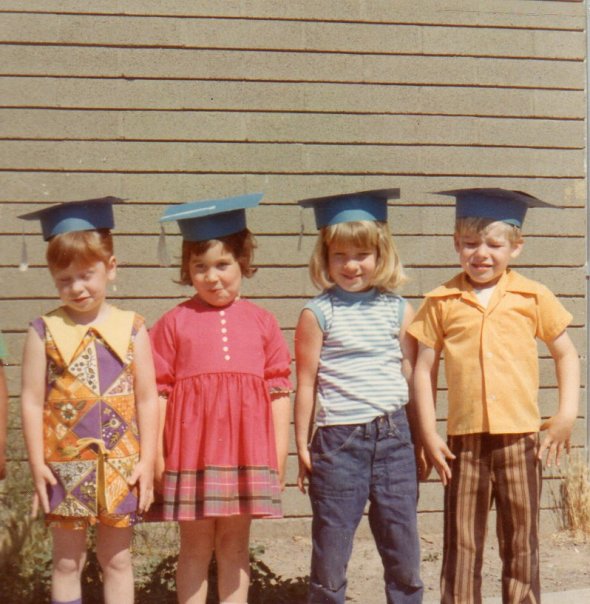
Head Start graduation
In second grade, I was told I should never brag, and I took that admonishment to heart.
I have no recollection why I was boasting, but I do remember Carla Shown looked at me with disdain and said, “No one likes people who brag.”
Her words have stayed with me, but there are times when we have to balance the lessons we learned in our childhood with our experience as adults.
Now is one of those times, and I am going to brag a bit.
I am a product of Head Start.
I feel an obligation to brag, because the voices of low-income children aren’t being heard above the clamor about Syria.
Head Start provides early childhood education, health and nutrition services as well as parent support for low-income children and their families. The services are designed to foster stable family relationships and address early childhood developmental needs.
Research tells us that children who have been through Head Start and Early Head Start are healthier, more academically accomplished, more likely to be employed, commit fewer crimes and contribute more to society.
Common sense tells us that the future of our country hinges on our children, and we should invest in our future.
Unfortunately, common sense often doesn’t prevail on Capitol Hill, and, as a result of sequestration, Head Start has eliminated services for more than 57,000 children this school year. The program is facing even more cuts in the future.
We are going backwards.
Head Start began in 1965, and, because of where I lived, I was enrolled in the program in the early 1970’s. I still have the report cards that documented my progress at mastering a list of tasks and skills and the photos from graduation ceremonies.
At first glance, the photos of my Head Start graduation don’t tell much of a story. There is no indication that the chubby little girl in the red dress would grow up to be the outspoken person I have become. Nor does it indicate that the little boy in the striped pants would someday graduate from Dartmouth.
But it does show what hope looks like, and if we don’t do something to meet the needs of our children now, we will be seeing fewer and fewer of such photos in the future.
Despicable
Last  Tuesday was a V E R Y L O N G day.
I left my parents’ rural home and drove more than an hour to a day-long meeting. When that meeting was over, I drove five more hours home.
The drive got longer after a received then ruminated about a phone call from an angry friend.
“Trina,” she said. “I have to talk to you, because I know you’ll understand.”
Even though I’d been talking to people all day, anyone who strokes my ego always has my attention.
“What’s going on?” I asked.
“I just got the worst phone call I have ever received. It was absolutely horrible.”
At first, I was really concerned for my friend, but as she continued to talk, my concern turned to anger.
The Sheriff’s Association had called asking her to donate to a program to conduct drug education in the schools. Since my friend and her husband had previously supported the organization, she let the man on the other end of the phone talk.
What he said was absolutely despicable.
“We have all these kids whose parents don’t care about them,” the voice said. “All they want to do is sit at home and collect their welfare check. They don’t want to talk to their kids about drugs. They just don’t care enough. That’s why we have such a drug problem.”
According to my friend, she pulled a Trina Bartlett. (I have to give myself a little credit in this story).
She asked the man on the phone if he knew whom he was talking with, gave him an earful and then hung up.
‘I don’t know if he was following a script or if he was just expressing his own opinions,” my friend said. “But either way, the fact that he was trying to raise money by blaming people on welfare for drug abuse was absolutely offensive.”
I agreed.
I was not only offended by the sweeping judgments about anyone who receives public assistance but also by the fact that he was literally preying on the prejudices of other people. Public servants shouldn’t be perpetuating stereotypes. The should be countering them.
Ironically, the man making the fundraising call targeted the wrong person.
She is a parent who knows drug abuse is not an income nor a class issue. She knows that no matter how much parents care, their children sometimes still make poor choices. And she also knows that blaming people is not the best way to approach drug prevention.
The day after she received the fundraising call, my friend called the county sheriff, whom she knows personally.
He has yet to return her call, and something tells me he probably never will.
Yet that’s not the end of this story.
This story only ends when other people also call him and complain. It only ends when other people have the guts to stand up to stereotypes and prejudice. And it only ends when people stopping blaming and simply join together to help and support each other.
I can only hope this story ends sooner rather than later.
Swimming in a Dress
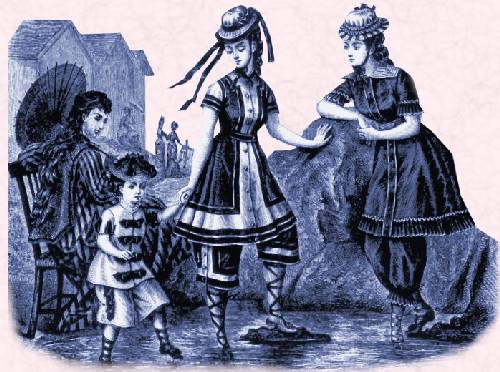
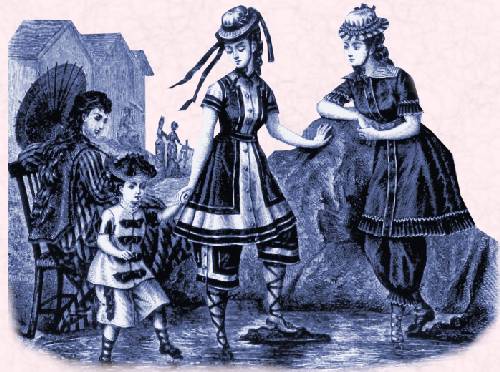
Victoria swim wear – http://www.fashion-era.com/images/SocialHistory/swimpad500.jpg
This week, I had two conversations that morphed into one question about how we live our lives.
The first conversation was with a friend who told me about home-schooled children who were on a field trip at the Shepherd University pool. They were affiliated with a religious group that prohibits females from wearing pants, and, apparently prohibits swimming suits as well. My friend’s son watched astounded as the girls jumped into the pool still in their dresses.
The second conversation occurred on the phone with my mother, who wanted to know if my son had received his birthday check. After telling her yes, I added, “I know, he hasn’t sent a thank you note to acknowledge it. I’m a bad mom.”
My mother disagreed. “No, you aren’t. You are a much better mom than I was.”
Her comment shocked me, because I’m not even close to the type of mother she was.
My mom always made sure we sent thank you notes immediately. She planned menus that met every dietary guideline. And she ensured we did our Saturday chores, our beds were always made and that our laundry was always put away.
Not only do I fail to do all of those things on a regular basis. but my life is a chaotic mess compared to the structure in which I grew up. I told this to my mother in fewer words, but she responded, “You have fun with your kids. You know how to relax and just enjoy them. I never did.”
Not to belabor the point, but she WAS always wound quite tightly, and I’m generally not wound nearly that tight.
But getting unwound wasn’t easy. As I recently told a friend, “I spent the first 15 years of my life being a nerd trying to follow all the rules, and I spent the next 15 years trying to prove I was a rebel. Then I became a mom and had to find a happy medium.”

swimsuits in 1919 – http://old-photos.blogspot.com/2008_01_01_archive.html
In short, I had to break free of restrictive expectations and learn balance so I could enjoy life.
Which brings me back to the girls who jumped into the swimming pool in their dresses and to my question.
“Can anyone really enjoy life fully when they are restricted by a rigid belief system?”
Being in a pool with a dress is probably more fun than not being the pool at all, but I can’t imagine it was all that enjoyable. The water-logged clothing had to make movement difficult and exhausting.
I have absolutely no right to question or judge the beliefs and choices of the girls or their families. If they choose to swim in a dress, they have every right to do so.
But I have every right to question my own choices and the self-imposed restraints I’ve often put on myself – those that prohibit me from enjoying life. Sometimes these have been thinking a work deadline is more important than a few hours with my children. Sometimes they have been my obsession with gaining weight. And sometimes they’ve been my concerns that I will fail when I try something new.
I’ve definitely done my share of swimming in a dress.
But both times and people evolve, and as I’ve aged, I’ve become better and better at shedding my dress. That doesn’t mean I’m going out in public in a string bikini, but it does mean I can enjoy a good swim in a modest tankini.
Rockefeller’s Reminder
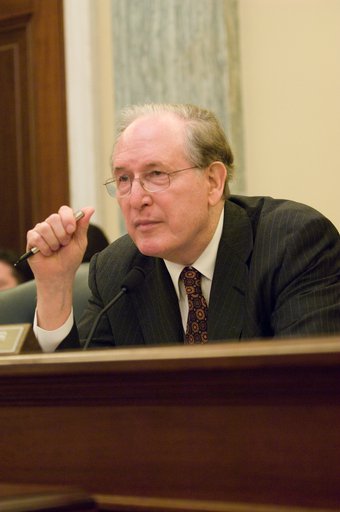 Last week, I had the privilege of attending a community meeting hosted by U.S. Senator Jay Rockefeller about the reauthorization of the Violence Against Women Act (VAWA). Since there was little doubt that our soon-to-retire senator was going to vote for VAWA, the event was really an opportunity to raise awareness about the issue of domestic violence.
Invited guests included survivors, social workers and advocates who work tirelessly to address the issue. A local police officer was the only man selected as a designated speaker for the round table discussion, but he received a great deal of Rockefeller’s attention.
While domestic violence survivors told heart-breaking stories, many of Rockefeller’s questions were directed to the police officer. The Senator seemed absolutely fascinated by the officer’s description of our local police department’s ride-along program, which provides an opportunity for community members to literally ride along with police officers during any shift. Those who participate have the opportunity to really understand what police face and learn about some of the biggest issues facing our community.
At the time, Rockefeller’s intense interest in the program seemed a little off topic. But in retrospect, I think the Senator was demonstrating what true wisdom is.
In a world where people are intentionally inflicting harm on others, where relationships are often about power struggles rather than support and where individuals are suffering on a daily basis, true wisdom is knowing that doing the right thing requires more than simply responding to the needs of others. Maybe because I’ve recently been watching too many people who think doing the right thing means doing things their way without considering all that others have or could contribute, Rockefeller’s reminder has stuck with me:
Doing the right thing means ensuring resources and services are available for those in need, but is also means focusing on what is positive and good.
Doing the right thing means reinforcing and promoting positive and healthy relationships among people and organizations.
And doing the right thing means really listening to others and acknowledging the power of what they are saying and all they are contributing.
That’s the wisdom Senator Rockefeller brought to the table. Unfortunately, he won’t be at the table much longer. Last month, he announced he will not be seeking a sixth term as U.S. Senator after his current term ends in 2014. West Virginia lost Senator Robert Byrd in 2010, and now we are losing Senator Jay Rockefeller. Regardless of political affiliation, all West Virginians should recognize the implications.
The cynical among us might say that caring about the poor was easy for Rockefeller, who was born into one of the richest families in America and never had to worry about money.
But I disagree.
Instead of choosing to live a life devoted to money rather than meaning, he chose to work on behalf of people who live in one of the poorest states in the nation. And even though I live closer to Washington D.C., Baltimore, Philadelphia, Pittsburgh and New York City than I do to our state capitol, I still care about what happens to this state.
And I’m hoping whoever steps into his position is someone who understands the importance of asking a local city police officer to explain a simple program that involves reaching out to others to develop stronger partnerships and healthy relationships.
That’s wisdom and a reminder about how we should all live our lives.
Thank you for your service and your wisdom, Senator Rockefeller.


 Just So You Know