Category Archives: perspective
The Smell of Guilt and Regret
 When I was about ten years old, I found a starfish lying on the beach and somehow convinced my parents to let me bring it home. I have no idea how I managed that, but I do remember my dad suggesting that we let the starfish “dry out” in his greenhouse.
Dad’s greenhouse was the latest in a series of projects he’d undertaken to pursue his avid love of gardening.
I don’t know why he thought putting the starfish in there was a good idea, but I’m sure he was thrilled with my interest in something involving nature. I’m just as sure that he regretted his decision.
I can’t remember if the starfish ever did “dry out.” What I do remember is the horrible smell that permeated the greenhouse only a few short days after the starfish arrived. I also remember being confused as to why my dad would make such a horrible recommendation.
When the smell was no longer bearable, my dad convinced me that the starfish didn’t belong in the greenhouse, in our yard or even anywhere in Central Oregon. We eventually discarded it, but the stench remained until the greenhouse was torn down. I hadn’t thought of the starfish or the greenhouse for decades until last week when I was out riding my bike and the hot, summer breeze brought with it the whiff of something horrid.
The memory came flooding back.
I shouldn’t have been surprised.
Science has proven that smell is the sense most closely linked to memory and the most likely to elicit strong emotions.
In this case, that emotion was guilt.
I felt guilty about bringing the starfish home. I felt guilty about the horrible stench it created in my father’s greenhouse. And most of all, I felt guilty for questioning my dad’s judgement or good intentions.
But the guilt didn’t last long. I was so very young when the starfish incident occurred. I’ve since made many more and much greater mistakes, all of which have taught me the importance of forgiving myself.
But even more importantly, I’m a mom. I now understand that parenting isn’t necessarily about trying to be perfect in the eyes of our children or about living a life with no regrets. Instead, it’s about teaching our kids that life is one big experiment. And, when things don’t go as planned, we all have to live with and learn from the consequences.
Even when they really stink.
Words Are the Root of All Violence
There are two national headlines gnawing at my brain right now.
The first is about the murder of three police officers in Baton Rouge.
The second is about WV State Delegate Michael Folk tweeting that Hillary Clinton should be hung on the National Mall.
Both are senseless acts of violence.
Both.
An expression of hate is the ammunition that fuels physical assaults and attacks. It turns the words and actions of someone who looks, thinks, acts, or believes differently into a significant threat to individuals who have been programmed to protect their own closed-minded fortresses of right, wrong, and justice.
Making a statement that any person deserves to be hurt at the hands of another does absolutely nothing to improve anyone’s circumstances. Yet this type of brutality is quickly becoming the norm in the United States.
As a country, we are sinking fast in the rising waters of spiteful words, and no one throwing us a life jacket.
Only we can get ourselves out of this mess, which means we have to hold the haters accountable.
I’m not encouraging censorship. Freedom of speech is a core value, and our nation can only improve when we listen to ideas and thoughts that are different from our own. But freedom of speech must be treated with the same respect that we give to anything that is fragile and prone to break when it is mishandled.
And, as a country, we are being anything but gentle with each other.
Having a right to say what you want and not being held accountable for your words are two entirely different issues.
When I was a child, I lived with the taste of soap in my mouth because I was constantly saying things that provoked my parents. There was no law against the words I used or the tone with which they were said. But my words were disrespectful and inappropriate, and I paid the price by becoming a connoisseur of a wide variety of soap brands.
The soap in the mouth punishment isn’t feasible with politicians, community leaders or others who choose to continue to pollute political events and social media with their hateful and violent words.
But the rest of us can ensure that there are consequences.
We can choose not to vote for them.
We can unfollow them on social media.
We can call other leaders and lawmakers and express our concerns.
We can write letters to the editor.
We can even write blogs about them.
Collectively, when each one of us speaks up, our voices are bound to drown out the nasty ones.
If Only

As a social worker, the most heart-breaking cases always walk through the door on a Friday afternoon when most social service organizations are closing for the weekend, all the organizations are out of funds, and everyone is both mentally and physically drained.
And there is absolutely nothing I can do to help.
So it was a few weeks ago when a woman with three children under the age of four walked through my door. And as the woman told her story, two words ran in a continuous loop in my brain: “if only.”
“If only” I lived in a community with more resources.
“If only” the woman and her children weren’t invisible, irrelevant or deemed undeserving by people who are more concerned about their next vacation or their social status.
But most of all, “if only” our social services system wasn’t so broken that we invest most of our resources into programs that are as effective as putting BAND-AIDS on wounds that need major surgery.
The details of the woman’s story varied only slightly from those I’d heard before.
She had stayed home to raise her three pre-school age children while her husband worked. Everything was fine until, one day, her husband decided he didn’t want to be married anymore. In fact, he didn’t even want to live in the same country she did. And so, he fled – leaving her with no work experience, no support system and three very young children entirely dependent on her.
Unlike me, the woman had never been supported or encouraged to ensure she could be financially independent. No one had even told her that furthering her education or skills was an option.
And so she did the best she could.
She went to the Department of Health and Human Resources and applied for benefits, including Temporary Assistance of Needy Families, or TANF. To receive those TANF benefits, she had to sign a personal responsibility contract that required her to make every effort to find employment. She did just that. The job she found was only part-time, and the limited hours were irregular. As the sole caretaker for three small children who got sick and had other emergencies, she was often late and sometimes missed work.
Unlike me, she hadn’t grown up in a home where steady employment was a top priority. No one taught her the importance of calling in or being on time.
So when her supervisor spoke to her about these issues, she quit.
Unlike me, no one had ever explained to her that the costs of quitting are greater than those of being fired. She just didn’t know. But she soon learned.
Her TANF benefits were sanctioned because she had broken her personal responsibility contract.
Without any income, she got a car title loan to pay the rent.
Unlike me, no one had ever taught her that the interest on such loans quickly grows out of control. And unlike me, she had no support system of individuals who could help her financially. The people she knew were facing similar crises.
Despite her efforts, she couldn’t afford her rent and was evicted. She and her three children went to live in a shelter with strict rules and little privacy. That’s why the apparent kindness of a new acquaintance was so tempting.
The man offered her a free place for her and her children to live.
But, unlike me, she had no role models for healthy relationships. She had no frame of reference that trust, one of the most essential elements of any relationship, takes time to develop. She was in crisis, and people in crisis want one thing: a way out.
And so she accepted the man’s offer even though shelter rules prohibited her from returning for 30 days if she left on her own accord.
Unlike me, she had never been provided with opportunities to reap the rewards of delaying gratification after weighing benefits and consequences. She had only been taught to act on instinct and in the moment.
But less than a week after leaving the shelter, she realized that the promises for a free home didn’t actually come without a cost. She escaped with only her children and a car that was being repossessed because of her failure to pay on the title loan.
And that’s when she landed in my office on a Friday afternoon
I wish I could say I helped her, but all I could do was encourage her to go to another town with a homeless shelter from which she hadn’t been banned for 3o days.
As she was leaving, one of her children asked her if they were finally going home, and her response was “I told you that home is wherever Mommy is.” My heart broke a little.
Her words along with my own words of “if only” have been reverberating in my brain for weeks now.
“If only” echoes every time I listen to representatives from social service organizations report, in an almost congratulatory manner, that they have increased the number of people to whom they have provided emergency assistance. Providing assistance to those in crisis is important, but when the numbers go up, we are reinforcing how little we are doing to improve the long-term circumstances of struggling families.
“If only” echoes every time I hear poverty defined in terms of a lack of money rather than as a lack of resources. We can’t eliminate poverty until we address all the resources people need to succeed – that type of resources that I was so fortunate to have growing up: ongoing support, positive relationships, skills, knowledge, encouragement and role models.
And “if only” echoes every time another desperate individual or family walks into my office on a Friday afternoon and there is nothing I can do to help.
“If only.” “If only.” “If only.”
An Overdose of Reality
 Last Monday night, family and friends celebrated as my son and 255 of his classmates received their high school diplomas
A week later, one of those students died.
My daughter was told about the death at school. My son found out via social media. My husband learned of it from my son. And I received a text message telling me the Spring Mills High School class of 2016 had already lost a member.
Within a few hours, the rumors were swirling through the neighborhood and on the internet. But there was element that never changed: the culprit was heroin
And while many are simply shocked that a kid with so much potential died from a drug overdose, I’m dealing with a range of emotions.
I’m saddened, and my heart breaks for my son’s classmates who are struggling to understand what happened. I’m overwhelmed with how this drug continues to gain strength in my community. And I’m frustrated with the political posturing that’s preventing real solutions to this horrible epidemic.
But, most of all, I’m angry.
I’m angry that so many people are expressing surprise that an athlete with decent grades could die from an overdose. This has been happening for years across the country, and pretending it couldn’t happen at our school was ridiculous.
I’m angry that my community has experienced dozens of overdose deaths since the beginning of 2016 and yet so many people want to blame the victims and their families instead of work toward a solution.
And most of all, I’m angry that drug dealing is yet another example of how money has become more important than human lives.
Nobody in the Class of 2016 can rewind the clock a week and get a do-over, and there is still plenty more heartache to come for everyone involved in this situation.
I can only hope that the members of my son’s graduating class, as well as the underclassmen who will follow in their footsteps, recognize that some of life’s most important lessons don’t happen in the classroom. Even more importantly, I hope they understand that those lessons mean nothing if they don’t use that knowledge in a meaningful way.
In a situation like this, turning those lessons into action is a matter of life and death.
Donald Trump and the Gritters
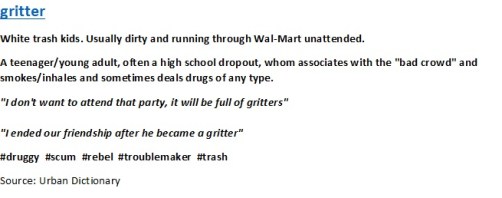
“Gritter.” It was such a completely foreign and wrong word, yet it was also very powerful.
Until I moved to West Virginia as an awkward adolescent, I never knew such words even existed. I was aware that some people used negative words to describe different races, but I didn’t know that there were also words to describe people by their social status. I had certainly witnessed my share of ridicule of the poor and outcast, but I didn’t know there were actual labels for such individuals.
What I did know was that associating with people who wore such labels was social suicide and defending them could be just as dangerous.
I was already teetering on the edge of not belonging, and I was worried that even the slightest mistake would send me hurtling over the edge. I was already considered weird because I had transferred from a state that was thousands of miles away. Then I had made a near fatal error of comparing my old life to my new one. In other words, in the eyes of my peers, I thought I was better than they were.
Nothing was farther from the truth. Maybe, if we hadn’t all been so wrapped up in the complexity of adolescence, my classmates might have recognized how completely alone and alien I felt.
But, they didn’t. Or, if they did, they didn’t care.
And so, I felt a complete urgency to assimilate into a new culture and to adopt a new language, even when it went in the face of everything in which I believed.
I made the mistake of trying out my newly acquired word “gritter” on my family during dinner.
“What does that mean?” my mom asked
I tried my best to explain about the kids on the bus that were gritters and how they wore the same clothes over and over again, lived in the mobile home park and were generally unacceptable.
My parents got really, really angry.
More than 30 years later, I don’t remember much of what my parents said, but I do remember the look on my dad’s face when he said that he would have been a “gritter” in high school. And I remember my ambivalence.
To the depths of my soul, I knew how wrong judging and labeling other people was. But I also knew that I had absolutely no social footing, so standing up against what was a social norm would just further alienate me. My peers had a pecking order, and I wasn’t about to question it.
Until this past week, I’d completely forgotten all about gritters and my parents complete outrage at the ease with which I had used the word.
But then the West Virginia primary election brought it all back.
Donald Trump easily won West Virginia’s nod for President of the United States. While this wasn’t a surprise, the political pundits immediately began analyzing how one of the nation’s poorest states could engage in a love affair with a man who has nothing in common with the people, the culture and, of course, the lack of resources.
And even though I’m personally frustrated by the whole situation, I kind of get it.
West Virginians have been ridiculed for decades. The entire population is often stereotyped as poor, uneducated hillbillies whose culture is defined as being on par with the dueling banjos in the movie Deliverance.
No one wants to be called the equivalent of a gritter. We want people to believe we are better than that, even if that means we point our fingers at other people and blame them, not ourselves, for our problems.
That is Donald Trump’s schtick.
He builds himself up while tearing others down – the poor, the undocumented, women, people with disabilities, people with accents, etc. Basically, he has taken license to belittle anyone who isn’t exactly like him.
No wonder West Virginians are buying it. If elected, they will have a leader who gives them license to call their neighbors gritters and blame others for their problems.
I am only grateful that I am no longer that awkward adolescent that was afraid to speak out or embrace the wisdom of her parents. Now, I’m willing to yell at the top of my lungs “Putting other people down doesn’t make you a leader or a better person. In fact, it does the exact opposite.”
Maybe Donald Trump will never hear me, but at least I know someone will.
And that’s a start.
What Mom Never Said
Here ar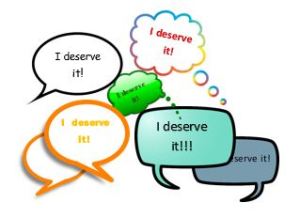 e three truths that guide my life:
1) Perfection is highly overrated. I’ve never met a perfect person, and I certainly wasn’t raised by anyone who met the criteria.
2) We learn more far more from our mistakes than we will ever learn from accomplishments.
3) The best advice we receive isn’t handed to us wrapped in words of wisdom. Instead, the most meaningful lessons are often hidden in what we observe, what we hear, and, in many cases, what we don’t hear.
My mom has spent more than 51 years trying to impart these nuggets of truth on my brother and me.
When I was young, she sometimes interspersed her acquired wisdom into our conversations, but what went unsaid was always more powerful.
For example, my mom never once told me I deserved anything. NEVER.
I was well into adulthood before I realized that.
No matter what I achieved, she never used the word deserve. Of course she encouraged me and told me that I’d earned my successes, but she implied that earning something is entirely different from deserving it.
She never explained this, and we never discussed the matter.
But by not speaking that one word, deserve, she said volumes.
In matters of every day life, human beings don’t have the right, or the ability, to decide who is deserving of something. Because, in doing so, we imply that others are not deserving.
Life is one big poker game in which the draw sometimes determines everything. Yes, some people are better at playing the game. Yes, some people use their cards to gain an advantage. Yes, some people avoid temptations and are able to improve their chances. And yes, some people are so charming and engaging that they can cloud reality to sway the beliefs of others.
But in the end, some people are simply luckier, and luck has nothing to do with their character, their abilities, their fortitude, their courage, or whether they are more “deserving” than others
So even though Mom never talked about why she threw “deserve” into her junk pile of words that are either misused or meaningless, she said everything through the life she’s led.
And for that, I will always be grateful.
Happy Mother’s Day, Mom.
In the Bathroom
 I am a worrier.
I worry about my kids, the decisions they make and if they are happy.
I worry about having enough money to meet my family budget and having enough money to meet my office budget.
I worry about whom our country will select for our next president.
I worry about drugs and crime in our community, individuals who are homeless and people are being abused by a family member or by the system.
And I worry about people who are too self-centered or narrow-minded to care about anything or anyone but themselves and their own self-righteous and generally misguided opinions.
But I have never once worried about the person in the bathroom stall next to me.
Until this year, I never even considered that a birth certificate could prove or disprove whether that person in the next stall posed a risk to me or my children.
Birth certificates are just pieces of paper that capture information provided during one single moment in time and reflect societal norms of the past.
Heck, my own birth certificate isn’t even accurate. My mother’s name is misspelled. Apparently, in the excitement of my arrival, she didn’t put her professional proof reading skills to use.
Even worse, my birth certificate lists my mother’s profession as a housewife. My mother was never married to a house. Neither did she spend the majority of her adult life staying at home cleaning, cooking and caring for kids. She was an extension agent, a Peace Corps volunteer, a substitute teacher, a journalist, an editor and even a librarian.
But, at that time I was born, she was not an earning an income outside the home. At that ONE point in time. So, even though my birth certificate states my mother was married to a house, which I find a frightening thought, I can’t find any information on my birth certificate that indicates whether or not I pose a danger to others. The information on my birth certificate is so irrelevant that I’ve never even considered carrying it with me.
In the past 30 years, the only time I’ve even taken it out of a safe deposit box was when I needed it for proof of identification. If I ever need it to get into a public restroom, I’m out of luck because it stays locked away in a box that won’t burn.
This whole debate over which sex can use which public bathroom seems as ridiculous as the dress code a former employer tried to implement years ago. The man was getting ready to retire and was trying, for one last time, to impose his prehistoric beliefs on those who would be left behind.
(This is the same man who insisted I should never be put in a position of authority because I breastfed during a work-related meeting. He never considered that I attended the meeting while on maternity leave because I was just that committed to my job.)
To provide some perspective about just how prehistoric his dress code was, it required women wear hose with skirts or dresses. It also required women wear appropriate underwear and noted that thongs were not appropriate undergarments for the workplace.
When I read the dress code (which, by the way, I fought against and eventually had overturned) , my first question was how it would be monitored and enforced.
I feel exactly the same about a law that require people to use the public restroom that corresponds with the sex on their birth certificate.
It is, in two words, absolutely ridiculous.
For All I Do Wrong
I felt like a child on the verge of a temper tantrum. I wanted to put my hands over my ears, stomp my feet and tell 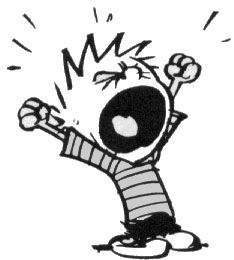 everyone to be quiet.
But, I couldn’t. I was attending a meeting in a professional capacity.
And so, I could only throw an internal temper tantrum during which I raged about how easily people can point fingers.
Maybe, I had just reached my capacity for simplistic thinking. Maybe I was exhausted by all of the people who expend all of their energy finding fault rather than solutions. Maybe I was tired of putting labels on people without taking into consideration all of the external forces that helped shape them. And maybe, just maybe, I was too aware of all of the mistakes I’ve made in my own life.
And so, when I was forced to listen to people make a blanket statement that all homeless people are drug addicts and criminals, I twitched.
Here’s the truth: not all homeless people are criminals or drug addicts and very few drug addicts and criminals are homeless.
Here’s a greater truth: no person arrives at rock bottom on purpose. No one makes decisions with the sole purpose of destroying all of the good things around them. Most important of all, no person can be described by one or two simple adjectives like addict or homeless or loser.
I’m not just saying this because my work involves individuals who struggle with those labels so I have the opportunity to see how complicated people and situations are.
I’m saying this because I make mistakes EVERY SINGLE DAY. Sometimes the mistakes are small and easily forgotten. Sometimes they are significant enough to hurt others, and I carry the guilt and regret with me as though they were an actual physical presence. And, more often than not, I’ve hurt myself with a pattern of wrong decisions that have left scars on both on my body and my soul.
And yet, few, if any people, label me by mistakes. Maybe that’s because I’m able to hide them behind a shield of respectable friends, family and job. Maybe it’s because I am surrounded by people who are not so weighed down by their own mistakes that they still have the energy and ability to help me when I fall. And maybe it’s because I was raised by parents who, even as they reached out a hand to help pick me up, never allowed me to escape the consequences of my mistakes.
But if I ever discovered that, instead of being identified as a unique individual, I was being forced to wear my mistakes as a label, I would not just feel shame. I would also feel less than human. And when I feel bad about myself, I am much more likely to make bad decisions.
Which is why, as I sat in that meeting where blame was being thrown around like baseballs at spring training, I wanted to  remind people of that old saying “when you point a finger at someone, remember there are three pointing back at you.”
In other words, we can’t expect the world to change until each of us changes too. That starts with spending less time finding blame, more time trying to understand the complex issues that cause our biggest community problems, and, most importantly, relying on ourselves rather than others to be part of the solution.
When Silence Kills But Words Destroy
 I never thought I’d spend a Friday night waiting for a prescription drug to prevent someone from dying from heroin.
But then, I never thought heroin would be a part of life. I never gave it much thought at all.
When I did, it was only to shake my head in disbelief. I remember the day River Phoenix died. I was in New Orleans at the time, and I was watching the news in my hotel room as I wondered why he would use a drug that I associated with society’s outcasts.
But that was before heroin started creeping into my life. It made its stealthy entrance during conversations while friends shared their fear for family members who were using. It crept in when a co-worker mentioned the number of years she’d been in recovery.
And then, one day, I realized that it had simply arrived and taken up space as a constant, heartbreaking presence in my life.
Now, every time I hear about another overdose in my small community (as I write this, there have already been 20 this month, and it’s only March 5), I worry that I might know the person. I check the Facebook page that posts all of the overdoses and the location where they occur. Only then can I sit back in relief.
Only last weekend, I couldn’t sit back in relief. I knew one of the addresses and the person who lived there. He wasn’t the person who overdosed, but on Monday morning he admitted that he’d been using with the person who had.
And this sad epidemic has spawned something else in my community: virile hate.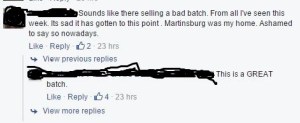
The administrators of the Facebook page that posts the overdose information also express disgust at efforts by emergency responders to save lives. They even encourage followers to post hateful comments.
I just don’t understand
How can the lives of others be so easily dismissed? How can some people fail to realize that addicts have friends, parents, children and others who care about them and might be reading those posts? Most of all, how can people be so cruel?
The individuals making comments on the Facebook page may not approve of the addicts behavior (who does?). But I don’t approve of the haters’ behavior nor their obvious ignorance about the nature of addiction.

While I’m also far from an expert, I do know a few thing these Facebook posters obviously don’t:
- Degrading other people will never make any situation better.
- Pointing fingers doesn’t make a problem disappear. It does make those involved more likely to hide in shame. We can never solve a problem when people are trying to hide it.
- Every single person has potential, even those who have hit rock bottom.
Just last week I was speaking with a former heroin addict who has been clean almost twenty years. She was telling me how her mother never knew she was an addict. She never even informed her mom when she overdosed and was revived by paramedics. “And now look at me,” she said. “Thank God someone thought I was worth saving.”
But because my friend is an addict, she also knows secrets.
“People think they know who addicts are,” she said. “But they really don’t. There are doctors and nurses who got clean and now are helping people every day. No one looks at them and says, they weren’t worth saving.”
Her words have resonated with me.
As my community, like so many others, continues to struggle with the heroin addiction, I have to believe that her voice and the voices of other caring people will continue to raise awareness and interest in solving the problem while simultaneously quieting the hateful voices.
Because silence about the problem will do nothing to stop the epidemic, and cruel voices can only make it worse.
Falling Out of Bed
 When I was a little girl, I fell out of bed on a regular basis.
Sometimes, I’d pick myself up off the floor and climb back under the covers. Sometimes, my father, who must have heard the thud, would come into my bedroom, scoop me up, and tuck me back into my bed.
I don’t remember being particularly concerned or afraid of falling out of bed, nor do I remember my parents worrying about it.
It was just something I did until, one day, I didn’t do it anymore.
Like so many childhood memories, my habit of falling out of bed was locked away in a part of my brain that only opens with the right key. Sometimes that key is a piece of music, sometimes it’s a smell, and sometimes it’s a conversation. But there are times when I have no idea what key unleashed a memory. It just pops into my mind, and I can’t shake it. Those are the moments when I realize my memories have come out of hiding and dusted themselves off because they are trying to teach me something.
And so it was last week with my memories of falling out of bed.
As I thought back to those nights decades ago, I realized they represent all of life’s struggles. Those times I fell out of bed were only a fraction of all the tumbles I’ve taken. And yet, I only remember a very small percentage of them – the ones that left behind scars and a good story.
But almost every time I stumbled or even completely fell, I had the choice to wallow in the pain and humiliation or to pick myself back up. Those few times when my struggles were so great that I couldn’t just pick myself back up, I was fortunate to have someone nearby who heard the thud and immediately responded with a helping hand.
There are so many individuals with no such people nearby. On almost a daily basis, I watch the stream of people coming through my office doors for financial assistance or other social services. I realize that most of them had very few, if any, people nearby listening for their thuds. And I wonder if it’s harder to pick yourself back up when you know that no one else is paying attention to your struggles.
I also wonder if knowing that you are safe and that someone has your back makes it easier to teach yourself not to fall. When you trust that people care and realize that falls are part of the learning process, it’s easier to have the fortitude and the ability to prevent self-inflicted bruises.
My memories were reminding me that I, like everyone else, needs to pay more attention and react to the thuds when someone nearby, no matter who they are, falls.


 Just So You Know