Category Archives: My life

My Brief Encounter With the Perfect Imperfection of Maya Angelou
I am an incredibly imperfect woman living in a society of people who hide their imperfections much better than I do.
Some are better able to hold their tongues. Others have achieved such brilliant success that it hides any inadequacies. And then there are the people who spend a great deal of time and energy covering up any deficiencies.
Since my tongue often seems to engage before my brain, my successes are nothing out of the ordinary and I choose to spend my time and energy just being me, I don’t mind that people know I’m far from perfect.
Despite that, I’m always striving to become a better person. For that, I need inspiration, which most often comes from other admittedly imperfect women.
These are the women who make me believe.
They make me believe that even those of us who are flawed can accomplish great things. They make me believe that past mistakes and missteps are the fundamental ingredients for a rich life. And they make me believe that, despite injustice and unfair odds, believing in possibilities can only result in magic.
My inspiration comes from women who have overcome barriers and have an honest compassion for those who are still struggling.
And, of course, my inspiration comes from women who can express all this in writing — women like Maya Angelou.
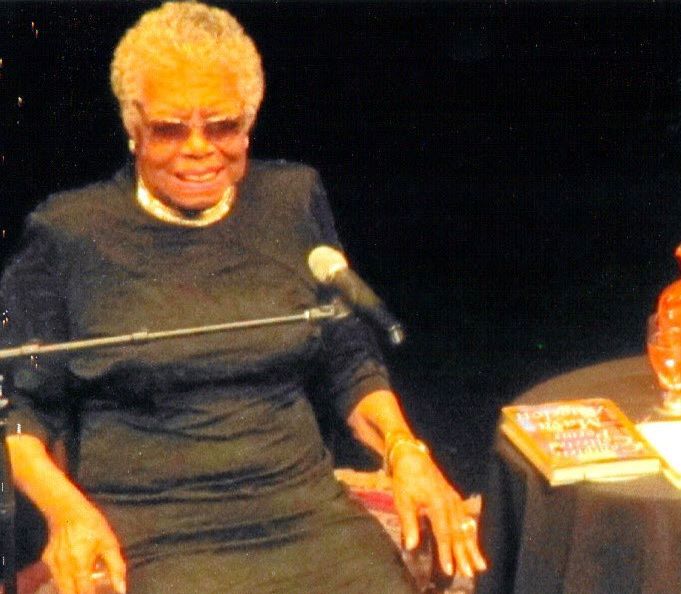
Despite her splendid poetry and prose, her insightful observations of human behavior and the reverence she must encounter everywhere she goes, Maya Angelou doesn’t deny who she is: an imperfect woman who has struggled but, through the support and encouragement of others, done the most she can with the gifts bestowed upon her.
Last week, she shared both her humility and her humor with an audience in Charleston, West Virginia at an event celebrating the 100th anniversary of the YWCA. Thanks to an invitation from a friend, I was fortunate to be in the audience as she poked fun at herself, challenged all of us to empathize with those who are different and encouraged us to think of possibilities.
She talked about her years of silence following the conviction and murder or the man who raped her as a young girl and how poetry freed her. She encouraged us to always find something to make us smile and, when we can’t, to write about something that does. And, she lectured about not blaming others for past injustices but rather thanking those who endured them and taking responsibility for future generations.
In short, she was amazing. I was either laughing or crying the entire time she was speaking.
And then she read her poem “A Brave and Startling Truth,” which she wrote in honor of the 50th anniversary of the United Nations. About halfway into the poem, she lost her place. She faltered, fumbled then regained her composure as she finished.
I know during those moments of silence while she searched for her place, all of us seated at the Clay Center for the Arts and Sciences were holding our breath. She had earlier reminded us that she is 84 years old, and that fact sunk into our brains and into our souls.
The moment was brief, and it passed. But it had still occurred.
Yet, at the end of the evening, Dr. Angelou held her head high, showed appreciation for the applause and ended her talk with dignity.
Some might think she was trying to cover her mistake, but I know she was simply demonstrating why she is so great. Instead of being defined by her mistakes and struggles, she soars through self acceptance and overcoming challenges.
If that’s not inspiration, I don’t know what is.
The Backside of a Bull and a Garden Full of Rodents
 I had an unexpected epiphany after spending time with a bronze bull and a garden full of rodents in the financial district of New York City last month.
The moment came at the end of a long weekend celebrating my daughter’s upcoming birthday. She, her best friend, her best friend’s mother and I packed a lot into 48 hours. By Sunday morning, when we were exploring Lower Manhattan, we had slowed considerably.
The city, on the other hand, wasn’t slowing down at all. People crowded narrow sidewalks under the watchful eyes of police officers on every corner. While the officers graciously responded to requests for photos with tourists, their ability to give good directions was questionable.
Despite their help, we were finally able to locate the Charging Bull on Wall Street. Since the bull had never been on my list of sites to see, I hadn’t expected the frenzy of people mobbing it for photos. Many were lined up behind the bull to touch its anatomically correct underside for good luck.
The eleven-foot-tall bronze sculpture is supposed to symbolize aggressive financial optimism and prosperity. Last year, when the Occupy Wall Street protests began, metal gates were set up around the bull to prevent it from harm. Now, the public can once again touch it, but judging by the police presence, there’s still concern about the safety of the more than 7,000 pound bull.
Personally, I think the concern about vandalism is a bit misplaced. I’m more worried about the almost worship-like reverence people demonstrate for an icon that represents an industry focused more on the value of money than the value of people.
Don’t get me wrong. I like money. I just think that, as a society, we’re too fixated on who has it and who doesn’t.
To me, the bull represents a culture rooted in money and the immense appeal that has. But when people go to great lengths to touch that lifestyle, they may miss seeing what’s really going on around them.
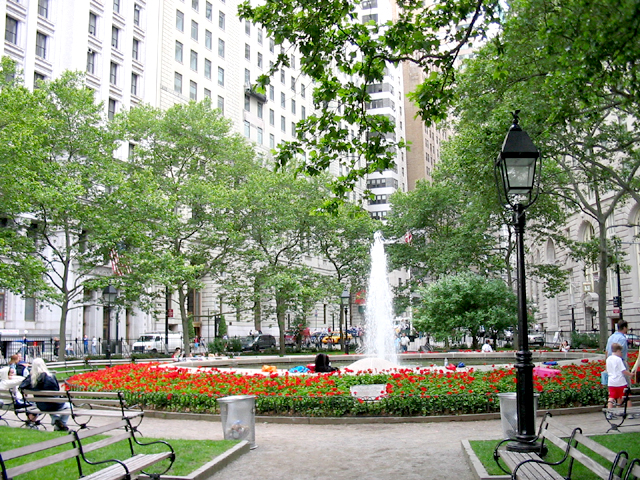 For example, just feet from the Charging Bull, there’s a garden full of rodents living off the crumbs of others. The mice live among the vivid red flowers in the circular garden around the fountain in Bowling Green Park where we ate our lunch.
What seemed like a quiet public garden was actually teaming with dozens, if not hundreds, of mice. When bits of bread, meat, tomatoes and even cucumbers dropped, they would scurry out from under the blossoms, grab their feast then rush back for cover.
Many of the people intent on enjoying the beautiful, late morning sunshine didn’t even notice the mice. Others were completely disgusted by them. No one wanted to touch them, and very few people wanted to feed them.
But my daughter and I were fascinated.
Although seemingly dependent on others for their livelihood, the mice certainly weren’t lazy. In fact, the were quite industrious. And even when vying for the same crumbs, they seemed to respect each other’s efforts.
That’s when I had my epiphany.
The mice represent all the low-income people who live and work right alongside those who are more financially secure and influential. They represent all those people on Wall Street who clean bathrooms and pick up trash instead of buying and selling stocks and bonds.
And even though they live in the shadow of a bull that people fondle for good luck, they also represent a great deal of dignity.
Writing is a Very Dirty Habit
 Some days, writing simply serves as my own muddled version of confession.
I wish I always came to the keyboard with the honorable intention of making people really think.
But more often than not, I write when people disappoint, frustrate or simply anger me.
Fortunately for others, I don’t usually share those thoughts publicly in writing. I do, however, write about them. I’ve always just been compelled to transfer most of my emotions and all of my opinions into the written word.
I scribble them in the margins of meeting agendas when the person speaking is a blowhard. I jot them on notepads when I’m on the phone with someone who is obviously making excuses. And I type pages and pages when I’m forced to sit on the sidelines while someone blatantly lies, manipulates and abuses his position.
I admit there are times when I’m able to quietly call out these people by surreptitiously weaving them into my blog. But, for the most part, I simply let my written words and the space they occupy clutter my desk, my computer, my brain and my life.
And if that clutter weren’t enough, the time I spend writing far exceeds the time I spend cleaning up those or any other messes.
For the record, I do clean. I simply do just enough to ensure my house will never be featured on an episode of Hoarders or that my family isn’t forced to wear dirty and stained clothes.
To me, the task of cleaning is comparable to cooking. While some people take pride in their spotless homes and fabulous meals (as they should), I only see a lot of time spent doing something that won’t last. Clean houses always require more cleaning, and meals that take hours to prepare can be gone in minutes.
Writing can last forever…or at least as long as someone is willing to read what you wrote (even when the reader and the writer are one in the same.)
I know my life would be less messy if I spent more time cleaning and less time writing. It just wouldn’t be as memorable.
I have a box full of diaries dating back to second grade. The spelling is sometimes amusing, but the narrative is always entertaining. The diaries chronicle my life from the first entry (a meeting with Senator Bob Packwood that ended with a reprimand from my mother for offering him my left hand to shake) to the angst of adolescence and the wonder of emerging adulthood.
I have drawers full of cards and letters sent in a time before emails.
And I have bags of notes that were passed between friends and classes in high school. These notes could be an exhibit about an art form that was lost forever with the advent of text messaging.
These items take up space.
Writing takes up time.
And life takes up emotional and physical energy.
We are all defined by how we spend those resources.
Recently, a friend was recalling an obituary published in the Washington Post several years ago. The name in the obituary had been forgotten, but a description of the deceased was seared in my friend’s memory: “She loved to vacuum.”
This statement and the obituary struck a chord in my friend. “Will people remember me because I vacuum or will people remember me for being passionate about something?” she asked.
For me, I hope the answer is easy. I’d rather be remembered for my passions – and even all the emotions they elicited – than to be remembered for whether or note there were dust bunnies under the beds.
Writing, after all, can be a very dirty habit.

A Leap From The Top Step
On May 14, 1972, I got my first real lesson in fear.
That’s the day my uncle, my mother’s only sibling, was killed in a plane crash.
That’s also the day I stopped leaping from the top step.
Before that day, I loved jumping off the front steps of our small rental house on the Indian Reservation where my father worked. The joy of the  jump was partly due to a sense of flying and partly due to the risk I was taking. More often than not, instead of landing on my feet, I’d land on my hands and knees. But the scraped knees and elbows were a small price to pay for bragging rights.
According to my brother and his friends, walking down the steps was a sign of weakness. Jumping was the only acceptable means of getting off the porch, and the jump had to be from the top step. Even jumping from one step down was considered cheating and a more egregious offense than forgetting to jump at all.
So, every time I walked out the front door, I would hurl my short, five-year old legs over five steps and land in various positions on the sidewalk. Then, I’d brush myself off and walk away with a sense of pride.
That all changed when my uncle crashed his twin-engine plane.
That Mother’s Day started in an ominous way. It began when my dad and mom, a burgeoning journalist, woke up my brother and me before dawn and bundled us into the back of our red, Ford pickup. There had been a train wreck, and we were going to the site. My dad, brother and I stayed in the truck while my mom, notepad in hand and camera around her neck, wandered off to interview people. Sitting in the truck, my imagination ran wild with thoughts of who and what Mom was encountering.
Hours after we had returned, the phone ran, and my mother disappeared for a long, long time, When she finally returned to our living room, she told us “Uncle Lowell was in a plane crash.”
My imagination, already quite stirred up from the morning’s adventure, envisioned all of the injuries he could have sustained. For some reason, I became fixed on the idea that he had, at a minimum, broken his leg. The possibility that he’d died never crossed my mind, and I don’t even remember how or when my mother finally told us. I do know that by the time she did, I’d so worked myself up about the horrors of broken bones that dying seemed like a great alternative.
I’d also decided that, based on my lack of coordination, the next time I jumped off the top step, I would most certainly break my leg.
That fear ate at me, and the next time I had to go down the steps, I couldn’t jump. I was frozen, and the ground seemed to be a long, long, long way down. I eventually jumped from the second step from the top, but I would never leap from that from the top step again.
Now, forty years later, a five year-old’s leap, or lack of a leap, seems insignificant. But it’s not.
That experience taught me about regret and about how inane decisions are made out of fear, limited information or both. It’s also taught me that sometimes we get so wrapped up in an imaginary fear that we are blinded from seeing the genuine and more critical facts.
I still fall into the trap of letting unfounded fear affect my decisions. But more often than not, I remind myself of the joy that comes from leaping off the top step and the pride that comes from going outside my comfort zone.
And then I jump.
The Art of the Silent Blog
 The art of silence has always eluded me.
For some people, a lack of words seems profound and noble. For me, a lack of words is simply awkward and frustrating. For the most part, silence has always been just beyond my reach, ability and even my belief system.
Even though I understand that silence is often a sign of respect, I also know that silence can do more damage and cut deeper than the harshest words.
I’m not alone.
Dr. Martin Luther King, Jr. said, “History will have to record that the greatest tragedy of this period of social transition was not the strident clamor of the bad people, but the appalling silence of the good people.” He also said, “In the end, we will remember not the words of our enemies, but the silence of our friends.”
Even the dictionary validates my belief that silence isn’t always golden. While the simple definition is “the absence of sound or noise,” the more complicated definition is “the absence or omission of mention, comment, or expressed concern.”
I’ve straddled and struggled with both definitions my entire life. My battle has less to do with my tendency to talk and more to do with my overwhelming need to call attention to injustice, wrongdoing and inappropriate, self-serving behavior.
I’ve been witnessing a great deal of such behavior recently. Yet, for the most part, I’ve remained silent. Even when people have asked if I’m going to write a blog about certain situations, I’ve said, “No, that’s not my role or responsibility.” Besides, my words could easily be misinterpreted as angry and bitter rather than caring and concerned. So I have decided my silence might be more powerful than words.
And so, the silence continues. This change in tactics is also teaching me a new art form: the silent blog.
I think this one says a lot.
Silence is argument carried out by other means. Che Guevar
My Lifetime Battle with the Big, Yellow School Bus
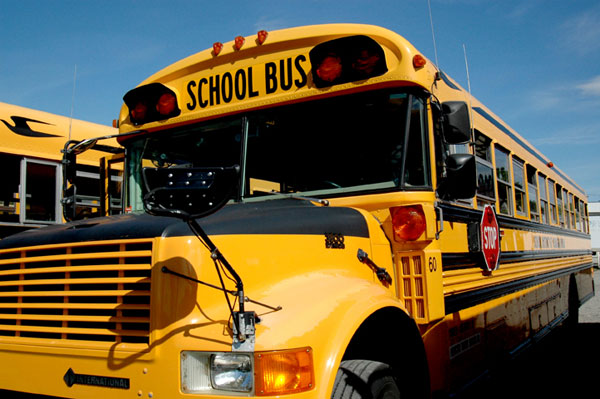 This Monday, my son starts high school and my daughter starts middle school.
I could grieve how quickly the years have flown. I could pull out baby pictures and wallow in nostalgia. I could reminisce about how, just yesterday, my son was starting kindergarten.
Or I could celebrate that, because both of my children are attending school out of district, my epic battle with the big, yellow school bus may just finally be over — permanently.
The battle began when I was in first grade. Having spent kindergarten walking to school, I was ecstatic that we had moved to a house that required riding a school bus.
My enthusiasm didn’t last long.
The problems started on the first day of school when I thought I could handle the bus ride all by myself. And I did. Going to school was simple. The bus picked me up in front of my house and dropped me off at school. My biggest challenge was getting to my classroom.
Going home proved a bit more difficult. I got on bus number 25, rode it to my street and rode it to my house. I then rode it past my house because my timid calls to stop weren’t heard over the din of bus chatter. Even though the bus failed to stop at my house, it did seem to stop at almost every other house in the county. When her route finally ended, the bus driver turned around, gave me a pointed look and asked me where I lived.
I proudly declared my well-memorized address “1910 Bean Drive.”
The bus driver did not look happy. “We went right past there. Why didn’t you get off?”
“Because you didn’t stop,” I replied.
Without a legitimate comeback, the bus driver had to make a decision. She’d take me home on her next run. Surrounded by kids two or three times my age and size, I finally made it home to an almost hysterical mother.
I wasn’t used to my mother being so worried. I was used to my mother being in control of every aspect of my life… including what I ate. And while I pined to have a lunch box with a bologna sandwich on white bread and ding dongs like all the other kids, my mom packed a very different lunch. Ever day I carried a brown bag (that she ask I bring home to be recycled) with a peanut butter (no added sugar) and honey sandwich on home-made wheat bread, carrot sticks, an apple and powdered milk in a square container with a lid (no thermos for me).
I hated that milk. I never drank that milk. But day after day, my mom packed it in a brown paper bag and day after day I carried the brown bag and the container still full of milk home from school.
Then, the inevitable happened, and I dropped the bag onto the floor of the school bus. The milk, which was already at room temperature, spilled everywhere. The bus driver was not at all pleased with me, so I should have known the situation would get even worse. And it did.
Only weeks later, my mother put her car in the shop near my school and needed a ride home. Being practical, she arrived at my school just as classes were ending and climbed onto bus number 25 with the first and second graders. At least she tried to climb on the bus, but the driver wouldn’t let her.
My mother insisted that there was plenty of room and the bus was going right to our house anyway. The driver told her no. After what seemed like the longest argument (and one of the most embarrassing moments of my life), the principal finally came over to settle the matter.
My mother had to find her own way home.
I’m pretty sure that was the day my name was officially added the national school bus “beware of this student” watch list. (That’s the list distributed nationwide to every single school bus driver.)
The list is the only explanation as to why, even after I moved across the country, the new school bus driver didn’t like me either.
In that case, the feeling was mutual. I had no respect for a woman who, instead of looking at the road, was constantly looking in the mirror to see what the kids were doing. After a few very close and dangerous calls on winding, West Virginia roads, my friend and I decided we’d had enough and organized a protest. We told everyone on the bus to duck down below the backs of the seats. The next time the driver looked in the mirror, her bus appeared empty.
We though this was hilarious. Our bus driver didn’t. In fact, she was so angry, she stopped the bus and marched up and down the aisle taking names and phone numbers Once she got mine, she seemed satisfied in learning that the girl on the national watch list was the culprit. What she didn’t expect was that my parents sided with me. They didn’t, however, think the incident warranted a life-time pass from riding the school bus, and I was still forced to ride for a couple more years.
But now, my days on the bus have come to an end, and, except for a few field trips, they have ended for my children as well.
Like so many other parts of childhood, all that is left are the memories and the lessons learned. Now it’s time to make more memories and learn something new. I’m just glad that neither is likely to involve a big, yellow school bus.
Collecting Tiny Pieces of the Soul
 One of the best things about having children is the privilege of serving as a sounding board for the ideas that are constantly bouncing around in their heads.
One of the worst things about having children is being forced to think about the ideas that are constantly bouncing around in their heads.
The other day my daughter said something I simply haven’t been able to shake.
‘Mom,” she said, “I’m worried about the future. What if teleportation actually becomes a reality?”
“Why is that a problem?” I asked.
“In order for teleportation to work, your body gets broken into tiny little pieces that have to be re-assembled perfectly again.” she explained. “If a lot of people are being teleported at the same time, what will prevent the pieces from getting all mixed up?” She sighed, “I don’t want pieces of me mixed up with pieces of someone else!”
Initially, I had visions of my mid-section being swapped with Jennifer Anniston’s. While I’d be delighted, I’m sure Jennifer would be horrified. My daughter interrupted those daydreams. “What if pieces are left behind?”
That was a good question from an almost 11-year old, and it’s come to haunt me over the past week: a week when I know too many people who have lost someone they care about deeply. A week when, for whatever reason, people who should be in the prime of their life are suddenly gone. A week when the power of medicine failed to make all the pieces of a person’s body work correctly. A week when so much has been lost, and yet so much has been left behind.
And some people leave many, many pieces of themselves behind. Those pieces aren’t intended to be re-assembled but to be shared.
I believe that every laugh, every kind thought and every good deed is a tiny piece of our soul that we give away forever with no expectation that it should remain part of us. These are the pieces that shine in our eyes when we smile and that warm our hearts when we hug. These are the pieces we send with our children each time they walk out the door and the pieces we lose when we share a secret.
These are pieces that do get mixed up with the tiny little pieces of others. And then, other people continue to pass them on all mixed up with their own tiny pieces. These are the pieces we collect when we need to paint a picture or compose a song or write a beautiful story. And they are the pieces we collect so we know how to love and embrace all that is beautiful in the world.
I understand why my daughter is worried about her tiny little pieces. I just hope I have collected enough tiny little pieces from others that I have plenty to share with her. And I hope she, in turn, is collecting tiny little pieces that can also pass on.

A Country Road, a Locked Gate and Barriers to Endless Possibilities
 I can be pretty slow at times, especially when I ride my bike. But that’s not necessarily a bad thing. As the only person actually peddling on a road where others are simply pushing a gas pedal, I notice a lot.
For the past couple years, I’ve been regularly riding on a country road that gives me a great deal to think about:
A plowed cornfield with only one stalk left standing;
A barn with what appears to be an old American flag I can’t identify;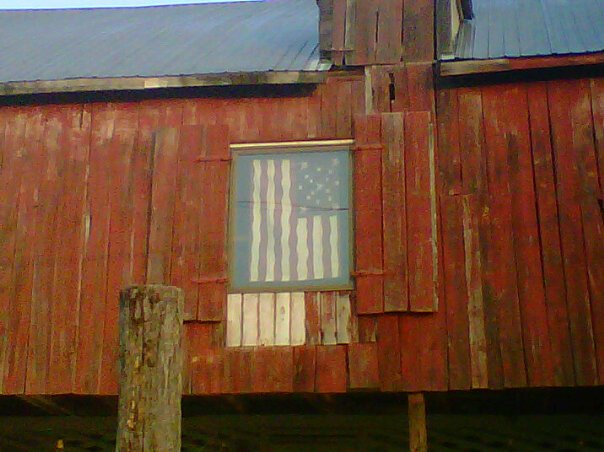
And a gate that, for all I can tell, is completely ineffective.
The gate crosses a gravel road that runs between two fields. Until this week, green stalks of corn filled one of the fields, while the other had no discernible crop. This week, both were plowed. So the road now runs, and eventually dead ends, between two muddy, empty fields.
Other than providing farm workers easy access to the fields, the road doesn’t serve much purpose. It certainly doesn’t lead anywhere interesting or provide enough privacy to be a lovers’ lane. Because of that, the importance of a locked gate with a fading private property sign eludes me. Since there is no fence on either side, the gate isn’t really preventing anyone from simply driving around it.
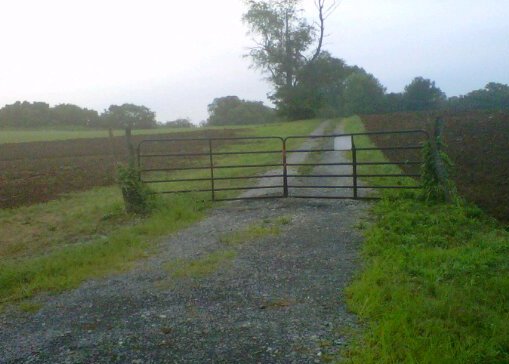 After passing the gate day after day, I finally took a picture and posted it on Facebook with a question about its purpose. I got a variety of responses ranging from people who took the question seriously to those who didn’t.
The general consensus was that there had probably been fences around the fields at some point. When they were torn down, the gate stayed to mark private property.
While this concept still puzzles me, it also reminds me of human behavior in general: we often tear down fences but leave gates standing.
We say we believe in equal rights and demonstrate this by tearing down barriers for others. Yet we still leave up gates to protect what we believe we earned or deserve and fear others may access or take away. Sometimes these gates are words. Sometimes they are the policies we support. And sometimes they are even religious beliefs.
But whatever the reason, the gates are there. And, just liked the locked gate I pass every day on my bike, they provide a false sense of security for some and serve as a challenge for others.
At times, I know I’ve protected my own gates. But the rebel in me also spends a lot of time thinking about how to get around gates. And I admit, there have been many times when riding my bike on the country road, I’ve been tempted to ride around the gate. The silliest thing is I would have no desire to ride on the gravel road if the gate weren’t there. I certainly don’t want to cause any problems or do any damage.
But then, I don’t think people who are seeking greater opportunities have any desire to trample on the achievements of others. They just know the possibilities would be endless if they weren’t constantly slowed down by so many locked gates.
Fools On An Artificial Ladder
 Even though I like to consider myself an open-minded and fairly accepting individual, I haven’t always behaved in a manner that demonstrates this. In fact, there are times when I’ve acted foolishly and treated people horribly.
One of my worst infractions occurred when I was a teenager in a place that was supposed to promote love and acceptance: church.
At the time, our church was predominantly middle class. Parishioners were well-groomed, nicely dressed and carefully coiffed when they arrived on Sunday morning. Most were neighbors or co-workers who socialized with the same general crowd and who shoveled their dirty laundry into the closet to either hide it or pretend it didn’t exist.
Their equilibrium was disrupted one Sunday when a family from a nearby trailer park came to church and then began attending services on a regular basis. The parents and children were certainly wearing their Sunday finest, but they were anything but well-groomed and carefully coiffed. I remember the other adults at church were a bit patronizing but outwardly nice. The kids weren’t. We did our best to exclude the children, and we made fun of them behind their backs.
Eventually, the family stopped coming to church, and until recently, I had forgotten about them.
But I was reminded of them again a couple of weeks ago when a young woman who works at a local restaurant told me about her Sunday regulars. Her customers’ routine is to go out to eat after Sunday service, but the dish they enjoy most isn’t on the menu. Instead, they loudly and openly share what everyone else did wrong during the church service. They complain about children who misbehaved, and they make fun of the appearance of some of the adults. Apparently, they are too busy judging others to hear the sermon.
What I can’t fathom is why, as older adults, they feel the need to act this way.
As an adolescent, I know my behavior was contrary to the way I was raised. But, I was insecure and believed that I wouldn’t be at the bottom of the social ladder if someone else were there instead. As an adult, I realize how inconsequential, meaningless and ridiculous that social construct is. I also realize that there are a lot of adults who still buy into it. They falsely believe some people are superior to others and that asserting their superiority will ensure their place on their senseless social ladder.
For the most part, their behavior isn’t nearly as blatant as the hypocritical, church-going restaurant patrons, but it is still based on their need to affirm their status. Take, for example, a local non-profit leader who complained about business people being asked to attend community meetings at the local Department of Health and Human Resources office. This individual, who also lays claim to being a good Christian, said that community and business leaders shouldn’t have to be in the waiting room with the people asking for help/welfare.
Not to be presumptuous, but I’m pretty sure Jesus would point out that the people in the waiting room are the same people the community leaders see every day at school functions, churches and grocery stores and that the people on the presumed top of the social ladder are no closer to God than the people on the bottom. That’s assuming he would even acknowledge such a foolish concept to begin with.
The Insanity of All This Violence is Driving Me Crazy
Just over two weeks ago, while families gathered to watch Fourth of July fireworks at a park less than a mile from my home, a gun was fired. In addition to shooting the intended victim, the gunman also shot and injured an eight year-old girl.
Just two days ago, a man opened fire in a crowded movie theater in Aurora, Colorado, He killed 12 people and injured dozens more.
While one incident was right down the street and the other was across the country, my initial reaction to both was the same. I wanted to hug my children and thank God they were safe. And then I wanted to scream about the insanity of it all: “Why does such senseless violence keep occurring and, even worse, why is it creeping into my world?”
In “my world,” the only violence we ever witness is in the form of entertainment: on television, in the movies and in video games. It’s not a place where people have to fear actual violence.
In “my world,” safe neighborhoods are easily defined, and we avoid violence by avoiding unsafe locations. It’s not a place where my daughter’s friends tell her “that shooting at the park was in my backyard.”
In “my world,” guns are used for hunting animals and shooting targets – not for shooting people. It’s not a place where people use violence to resolve a dispute or share their rage with the world.
In “my world,” when a horrible crime does occur, we rally around and pray for the victims and their families. It’s not a place where, only hours after a shooting, we try to turn a tragic event into a political advantage.
But I’ve come to realize that “my world” is a complete fantasy, but it’s a fantasy I also want my children to believe.
On July 5, I was driving by the park where the shooting had occurred only hours before. My daughter, sitting in the passenger seat, noticed all the people picnicking and swimming and asked “why are those people even at that park? Don’t they know it’s dangerous.?”
She was talking about a park that she has walked to and played in hundreds of times: a park where I walk my dog every day: a park that is the gathering place for most community events in my town.
And so, I told her that the shooting was an isolated incident and she shouldn’t worry or avoid the park.
What I didn’t tell her was that if we tried to avoid every place where there’s been gun violence, our options would be very limited. At the time, movie theaters weren’t even on my radar.
But theaters are creeping onto my worry list now.
Just last night, while my daughter was performing in a local production of “The Wizard of Oz,” the alarms in the theater unexpectedly went off.
No one in the audience moved, and the youth on the stage continued to perform. We were probably all hoping the same thing: that the smoke on the stage had tripped a fire alarm. We were also probably all just a little worried about the same thing: that someone with a gun had entered the building.
The alarm was turned off, my concerns ebbed and I went back to the fantasy of “my world.” It’s actually a very nice place, and I like living there. If I didn’t, I’d go crazy with worry.
Sadly, I’m having to leave it more and more often. And until we stop arguing about solutions and actually start working together, “my world” never will be a reality.


 Just So You Know