Category Archives: current affairs
A Letter to Abercrombie & Fitch CEO Mike Jeffries
Dear Mr. Jeffries,
Congratulations on recently making headlines with your strategy of only selling clothes to those whom you define as cool, pretty and thin: http://www.businessinsider.com/abercrombie-wants-thin-customers-2013-5#ixzz2SoRlwYlN.
You’ve certainly grabbed a lot of attention and clearly made your point.
As you said, “In every school there are the cool and popular kids, and then there are the not-so-cool kids. Candidly, we go after the cool kids. We go after the attractive all-American kid with a great attitude and a lot of friends. A lot of people don’t belong [in our clothes], and they can’t belong. Are we exclusionary? Absolutely.”
You have every right to your opinion and your business strategy. But here’s what you apparently don’t get: most of us (people who will never set foot in your store) don’t really care whom you define as cool, and we don’t care that you won’t sell us your over-priced clothes. We see you in the same light that we saw the “cool kids” in high school.
We didn’t actually think they were all that cool. Instead, we thought they were self-absorbed and incredibly superficial.
You (as they did) base coolness on appearance, access to money and whom you associate with. Ironically, the only people who hang out with your are also people who only care about superficial appearances.
There’s no depth. There’s no empathy or compassion for others. And there’s no understanding that life is so much bigger than your very small and limited materialistic world.
In the real world, where everyone else lives, life is so much more than what size you wear, how much you paid for your clothes or all the places where your wealth will take you.
It’s about knowing that you can never count on your looks for anything and building upon your other strengths instead.
It’s about walking into a room and being appreciated for what you can contribute to the conversation rather than for what clothes you wear.
And it’s about supporting others rather than rubbing disadvantages in their faces.
Enjoy your fortune while it lasts, Mr. Jeffries, but be warned.
I’ve got two children who won’t ever buy clothes in your store.
I know their current buying habits are of no interest to you (because neither fits your definition of cool), but I think you should know who they are.
They are both very smart and don’t care whether you or anyone else thinks they are popular or cool. They just care that they are happy and making the world a better place.
Such aspirations have never required buying and wearing a certain brand of clothes.
So watch out, Mr. Jeffries. My children represent the next generation of consumers, and they have loud voices.
Sincerely,
Trina Bartlett
Shame is Not a Form of Birth Control
I had to double-check my calendar this morning to assure myself that it was actually 2013 and I hadn’t been sucked into a time warp.
I hadn’t been.
Instead, I was sucked into reading news articles about a school assembly featuring an abstinence-only proponent whose only educational credential is a Psychology Degree from Jerry Falwell’s Liberty University.
See: http://www.dailymail.com/News/201304110267 and http://www.wvgazette.com/News/201304110229 .
I can’t emphasize enough how inappropriate the assembly was.
Almost 20 years ago, when I was working in the field of sex education, experts had already proven that abstinence-only and shame-based tactics don’t work. And promoting a particular religious philosophy in a public school is simply prohibited.
But self-righteous people, who believe they actually know what God is thinking, seem to find a way around these issues.
The speaker, Pam Stenzel, and her sponsors, a religious group called Believe in West Virginia, say her speech wasn’t faith-based. Instead they say it was just a warning about the dangers of sex before marriage.
Those few words should have been enough to keep this woman out of the public schools.
A real sex educator doesn’t pretend that a wedding ring can protect people from a sexually transmitted disease, an unplanned pregnancy or heartache.
A real sex educator doesn’t outright dismiss homosexuals, who are still fighting for the right to even be married.
And a real sex educator doesn’t condemn, judge or shame.
Instead, a real sex educator gives facts – not statistics that have been manipulated to fit a certain dogma.
A real sex educator will agree that sex is the only human behavior that has the potential to create life or to threaten a life. The educator’s job is to help individuals make decisions to prevent unwanted consequences.
And a real sex educator will spend time talking about healthy relationships and about treating others with respect – not condemnation.
Years ago, I was that person, and I will never forget making a presentation about AIDS and HIV in a middle school classroom. As I interacted with the students, the teacher, who was obviously not happy I was there, took out his Bible and placed it open on his desk. He pretended to read, and I pretended to ignore him.
A year later, I had the same assignment and found myself in the same classroom. But instead of taking out his Bible, the teacher made a point of welcoming me and telling his students they should listen. He then privately told me that “a really good person” from his church had been diagnosed with AIDS. Instead of noting that a lot of “really good people” had been diagnosed with AIDS, I was just grateful that he had become a bit more open and less judgmental.
Now, I am hoping the same for all those involved in permitting the recent school assembly at George Washington High School.
A Poor Perspective on Poverty
When I was in elementary school, my mom made most of my clothes. As a child, I loved picking out the patterns and fabric to help design something uniquely for me. And when I outgrew those clothes, we donated them to what my parents called “the needy.”
I had a vague understanding of who “the needy” were. They were the kids who came to school dirty and sometimes smelly. They were the kids whose parents didn’t socialize with our parents. They were the kids that lived in neighborhoods where we were told not to go.
I thought that giving my clothes to “the needy” was some kind of measure of moral superiority.
Then one day, a girl in my class came to school wearing one of the outfits my mother had made.
I was shocked.
She was needy? I talked to her. I played with her at recess. I even sat with her at lunch sometimes.
I was even more shocked when someone asked her about her new clothes, and she described a shopping trip she’d made to Portland with her mother. At that age, I was just as unfamiliar with lying as I was with “the needy.”
I made the mistake of calling her out on her lie, but she didn’t relent and insisted she had bought the outfit at a store in Portland.
After that, I didn’t talk to her, play with her at recess or sit with her at lunch. I started equating “being needy” with being a liar.
Decades later, I still feel guilty about calling the girl out. I wish I could go back in time and go along with her fantasy about clothes shopping at fancy stores. She simply wanted to fit in, and I understand that now.
We live in a society that equates products with social status and success. Just carrying an off-brand purse gets me looks from women who pride themselves on carrying name brands.
And the extent to which our children are buying into that materialistic culture even surprises me. I’m usually not at a loss for words, but there is an exception to everything.
My exception came in the form of a ten-year old boy who lives in a house much larger than mine. His parents drive newer and more expensive cars than my husband and I do. His family seems to be on vacation every time school is out while my family rules the staycation. In other words, I think of his family as being “well-off.”
The boy, however, told me his family is poor.
I didn’t know what to say. Even with money out of the picture, I can’t begin to describe his family as poor.
His parents are attentive and loving to each other and their children, who are involved in numerous extracurricular activities. The family worships together and is actively engaged in community service. Simply put, the family lacks for nothing.
The boy, however, was adamant that his family is of limited means. He was sure because he has friends who not only live in a bigger houses but also have beach houses. Their cars are even more expensive, and their vacations even more extravagant. In his eyes, his family really doesn’t have enough.
I understand how this boy reached his conclusion. It’s called perspective. But that’s not an excuse for him or for all the adults who look into that same short lens that distorts everything.
Recently, a local official asked me why the percentage of children living in poverty had grown while the median household income in his county grew by more than $18,000 during the same ten-year period. Before I could answer, his colleague responded.
“There are more poor people, because the poverty level goes up every year. A family can make more money and still be considered poor.”
I was proud of my reaction. I was appropriate, and I didn’t even make a face. Instead, I noted that the local numbers simply reflect national data that show a growing income gap between the rich and the poor. Then I asked, “have you actually looked at the poverty level?”
When I didn’t get a response, I added, “This year, the poverty level for a family of four is $23,500. Personally, I don’t know how I could live within that.”
The topic quickly changed, and I’m not sure if the discussion had really ended or if a genuine conversation about poverty was just too uncomfortable, as it often is. Instead, we misdirect by categorizing the poor as deserving or undeserving. We dress up and attend charity events that make us feel good about helping. And we pride ourselves in giving to “the needy.”
But there are times when I try to change my perspective and look at how we treat the poor from the eyes of my former classmate. I’m pretty sure she’d tell us to stop pretending that poverty is something that happens to other people. I also think she’d say that we should stop pretending that name brand clothes or a big house reflect on our character or our importance. And I’m positive she’d say that we shouldn’t pretend that charitable giving is more meaningful than really listening to someone who is struggling.
And in return for her opinion, I’d tell her that I think she’s right.
Some People Should Just Shut Up
 Being a parent sometimes means being a hypocrite. If you don’t believe that you are either a) not a parent or b) incredibly (and unbelievably) perfect.
I can provide hundreds of examples of times I’ve behaved in a manner that directly opposes what I’ve told my children. Apparently, my husband is a few steps higher on the parenting evolution ladder than I am. He doesn’t always behave better than I do (although he probably does most of the time), but he’s generally less verbal about certain expectations for our children. That way, his behavior doesn’t seem quite as hypocritical.
I, on the other hand, am constantly setting standards that I can’t even begin to meet myself.
For example, ever since our children started talking, I insisted they use the words “please be quiet” instead of “shut up.”
Yet, I don’t do at all well with that particular language skill.
Recently, I was enduring a painful meeting during which a self-important person was holding forth as though his words were actually meaningful or of interest to anyone but himself. To survive the ordeal, I pretended to take notes while actually scrawling page after page of the words “Shut up. Just shut up.” A few times, I even added a less than flattering description of the person I wanted to be quiet.
But the words “please be quiet” are often inadequate. Quiet means hushed tones and soft voices. Quiet shows a lack of passion or emotion. And quiet doesn’t indicate disagreement when someone else’s words are hurtful or rude or simply pointless.
That’s why I haven’t been thinking “please be quiet” lately when people try to disguise their hate and prejudice with self-righteous statements and stupid jokes. Instead, I want to scream “just shut up” every time someone equates being poor with being lazy. But I haven’t.
I’ve held my tongue as tightly as the man gripping a snow shovel while he rode his bike through my neighborhood on Wednesday.
Wednesday we were supposed to get a blizzard. Schools closed. Government shut down. Businesses even changed their hours of operation. And even though all we got were a few inches of snowy slush, a lot of people with steady jobs and stable employment had a snow day.
The man on the bike didn’t have a day off.
He was looking for work shoveling driveways and sidewalks. He was offering his services to people who most likely judged him on his ragged appearance and his lack of a car. He didn’t have a truck to which he could attach a plow. All he had was a shovel and some muscle.
I’ve seen him selling his shoveling services on other snow days, but this past Wednesday was different.
I was leaving the neighborhood when he rode by me. He didn’t know where I lived or whether I was even a potential customer. I was simply some lady walking a German Shepherd on a cold and windy afternoon.
But, even though I had nothing to offer him, he slowed, gave me a wide smile and told me to enjoy my day. And then, balancing his snow shovel while pedaling his bike, he quickened his pace and was off.
That’s the exact instance I realized that maybe, instead of teaching my children to always say “please be quiet,” I should have been teaching them that sometimes standing up for those without a voice means shutting down those who speak against them. I should have been teaching them that there are times that polite isn’t as important as human rights. And I should have been teaching them that there are times when some people really do need to “just shut up.”
Rockefeller’s Reminder
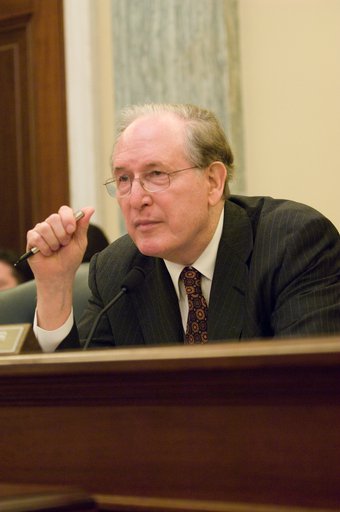 Last week, I had the privilege of attending a community meeting hosted by U.S. Senator Jay Rockefeller about the reauthorization of the Violence Against Women Act (VAWA). Since there was little doubt that our soon-to-retire senator was going to vote for VAWA, the event was really an opportunity to raise awareness about the issue of domestic violence.
Invited guests included survivors, social workers and advocates who work tirelessly to address the issue. A local police officer was the only man selected as a designated speaker for the round table discussion, but he received a great deal of Rockefeller’s attention.
While domestic violence survivors told heart-breaking stories, many of Rockefeller’s questions were directed to the police officer. The Senator seemed absolutely fascinated by the officer’s description of our local police department’s ride-along program, which provides an opportunity for community members to literally ride along with police officers during any shift. Those who participate have the opportunity to really understand what police face and learn about some of the biggest issues facing our community.
At the time, Rockefeller’s intense interest in the program seemed a little off topic. But in retrospect, I think the Senator was demonstrating what true wisdom is.
In a world where people are intentionally inflicting harm on others, where relationships are often about power struggles rather than support and where individuals are suffering on a daily basis, true wisdom is knowing that doing the right thing requires more than simply responding to the needs of others. Maybe because I’ve recently been watching too many people who think doing the right thing means doing things their way without considering all that others have or could contribute, Rockefeller’s reminder has stuck with me:
Doing the right thing means ensuring resources and services are available for those in need, but is also means focusing on what is positive and good.
Doing the right thing means reinforcing and promoting positive and healthy relationships among people and organizations.
And doing the right thing means really listening to others and acknowledging the power of what they are saying and all they are contributing.
That’s the wisdom Senator Rockefeller brought to the table. Unfortunately, he won’t be at the table much longer. Last month, he announced he will not be seeking a sixth term as U.S. Senator after his current term ends in 2014. West Virginia lost Senator Robert Byrd in 2010, and now we are losing Senator Jay Rockefeller. Regardless of political affiliation, all West Virginians should recognize the implications.
The cynical among us might say that caring about the poor was easy for Rockefeller, who was born into one of the richest families in America and never had to worry about money.
But I disagree.
Instead of choosing to live a life devoted to money rather than meaning, he chose to work on behalf of people who live in one of the poorest states in the nation. And even though I live closer to Washington D.C., Baltimore, Philadelphia, Pittsburgh and New York City than I do to our state capitol, I still care about what happens to this state.
And I’m hoping whoever steps into his position is someone who understands the importance of asking a local city police officer to explain a simple program that involves reaching out to others to develop stronger partnerships and healthy relationships.
That’s wisdom and a reminder about how we should all live our lives.
Thank you for your service and your wisdom, Senator Rockefeller.
All Good Superheroes Ask Questions, Don’t They?
 According to some people, I suffer from a very bad habit, and, if I knew what was good for me, I’d have given it up for Lent.
But I didn’t and I probably never will, so my friends and family are forced to deal with my habitual need to ask questions. Lots and lots of questions. About anything and everything.
My husband and kids call me “The Interrogator.”
I’d like to think that means they consider me a superhero who unveils misdeeds, liars and unacceptable behavior by eventually asking so many questions the truth is revealed.
Unfortunately, they aren’t paying me a compliment and instead are simply letting me know they find my all questions annoying. I’ve also been told that people who ask a lot of questions are subconsciously trying to take control of a situation.
There’s probably some truth to that, but I’d rather be annoying than to sit back and just allow people and organizations to get away with actions that affect and sometimes hurt others.

(UPI Photo/Roger L. Wollenberg)
I also like to think that, as an inquisitor, I’m in good company.
This week, at her first Banking, Housing and Urban Affairs Committee hearing, Senator Elizabeth Warren questioned bank regulators about why they hadn’t prosecuted a bank since the financial crisis. Her question seemed simple enough, “Tell me,” she requested “about the last few times you’ve taken the biggest financial institutions on Wall Street to trial. Anybody?”
Instead of simply responding “never,” the regulators tried to explain why there was no need to prosecute.
As with anything political, there are those who agree with Senator Warren and those who don’t.
But her actions, to me, were bigger than pointing out the double standard for big corporations versus average citizens or about ensuring that bank executives don’t continue to pass the repercussions of their behaviors onto the general public. Her actions were about her willingness to ask the tough questions and to not back down. Her actions were about repeating the same question over and over again until someone is forced to answer. And, to be honest, her actions were about validating my own behavior.
I’m not even close to being in Elizabeth Warren’s league much the less in the Justice League, but I do believe heroes have to ask the hard questions. If they don’t, silence persists, and nothing ever changes.
So even though my family insists on calling me “The Interrogator” to try to shut me up, it’s not working. Instead, I’m thinking of getting one of those t-shirts with a big question mark on the front. It may not be the fashion statement superheroes make when wearing their capes, but it just might be a start.
Because if no one questions the status quo, then nothing ever changes or improves. So, far all the
The Boy Scouts Are Misinterpreting the Meaning of Moral
Last year, a fourth grade teacher at my daughter’s intermediate school was arrested for soliciting a 13 year-old girl (or so he thought) online.
Also last year, a teacher at my son’s middle school was arrested for child abuse and identity theft. Two weeks ago, she pleaded guilty to the identify theft, but she is still awaiting trial on 11 counts of child abuse.
Other than the fact that both were teachers in Berkeley County Schools and neither is gay, I don’t think the two have much in common. Yet, they were both engaged in immoral activity because their behavior was harmful. They used their power to hurt, control or take advantage of others, which I think most people would agree is anything but moral. The definition isn’t that fuzzy, at least I’ve never thought it was.
Unfortunately, some people are trying to redefine the meaning in order to fit their own narrow and bigoted views.
This week, the Boy Scouts postponed a decision to “sort of” lift its ban on anyone who is openly gay. I say “sort of” because the potential policy change would simply allow local organizations make their own decisions.

Photo/Richard Rodriguez) NYTCREDIT: Richard W. Rodriguez/Associated Press
I was reading about the situation in the New York Times. While the content of the article bothered me, I was even more disturbed by the accompanying photo, which showed scouts and their parents holding signs that proclaimed “Keep Scouts Moral and Straight.”There was so much wrong with that photo, and I felt sorry for the young boys who are obviously being taught that discrimination is appropriate.
My kids are taught that discrimination is immoral:
Moral people don’t exclude but instead include.
Moral people don’t make broad judgments but instead ensure that every individual is given respect.
And moral people don’t define others by who they choose to love but rather by how they treat others.

Rex C. Curry for The New York Times
Just as important, national organizations that demonstrate moral leadership don’t waffle on potentially controversial issues and, instead of taking a stand, cower by relinquishing their decision-making authority to locals.
Even more importantly, they don’t bow to bigots who make unsubstantiated and untrue generalizations about any group of people. Yet, the decision to delay a decision on the ban on gays came after rallies like the one at the Boy Scout headquarters in Irvine, Texas where protesters claimed that prohibiting gay membership equates to protecting their children.
After the incidents last year at my children’s schools, no one rallied with signs asking the school system to protect my children.
But maybe that’s because there’s no organized effort to rally against straight people who commit immoral acts. But maybe there should be. After all, I’m pretty sure statistics would show that’s where the real “danger’ lies.
I Couldn’t Get a Dog so I Got a Gun
 Conflict among people is normal, and most of us accept it as a routine part of life. Conflict within ourselves is just as normal, but something with which we often struggle.
As a licensed social worker, I couldn’t get out of bed every morning if I didn’t believe people can change, that humans have an innate responsibility to support each other and that no good comes from belittling others.
As a rational human, I couldn’t get through life if I simply tolerated and never called out stupid and ridiculous beliefs and behaviors.
As a licensed social worker, I have to ensure that my conduct is appropriate, that I abide by a code of ethics and that I participate in ongoing continuing education.
As a rational human, I am dumbfounded by people who complain when they are required to meet expectations and criteria before they are provided with opportunities and privileges.
As a licensed social worker, I have an obligation to listen, try to understand the perspective of others and validate their feelings.
As a rational human, I simply cannot understand why others choose to ignore facts, scream conspiracy and throw around accusations that are hurtful. I have to call out people who choose to believe and spread all of the vile, ridiculous and illogical propaganda about gun control that I have been witnessing over the past few weeks.
The rabid followers of the NRA propaganda machine remind me of children blindly hitting a piñata at a birthday party. For most people, hitting the piñata is just fun game that results in children scrambling for a few pieces of candy. But the NRA is turning gun control into a piñata that must be destroyed and is putting the blindfolds on people as they swing at it. Those swinging the sticks are convinced that if they don’t break the piñata, they will never have candy again.
In reality, if the piñata doesn’t break, the children won’t be denied candy. They just won’t get the immediate gratification they are seeking.
Most parents allow their children to have candy, but they don’t want them to make a diet of it. Similarly, gun control advocates are not screaming that everyone’s guns should be confiscated. Instead, they are recognizing that too many lives are being broken and destroyed by guns and that something must be done. To counter that, claims are being made that the gun death statistics in the United States aren’t that bad.
Tell that to someone who has lost a loved one to a gun. For them, one death is too many.
Just ask Jackie Barden, whose son Daniel was killed at Sandy Hook Elementary school in December. Jackie recently noted that the process for adopting a kitten is more difficult than getting a gun.
I don’t know much about adopting kittens, but I do know a lot about adopting dogs. As a volunteer for a dog rescue group, my role is to process applications. In other words, I do background checks. I check national “do not adopt” lists. I do a criminal background check. I conduct property checks. I review living arrangements. I talk to animal control and veterinarians about the applicants. And I call references. If I don’t find any red flags, another volunteer conducts a home visit.
Many families who want to adopt a dog are denied for a variety of reasons: they’ve had pets hit by cars; they haven’t spayed or neutered their current or previous pets; they aren’t home enough to spend quality time with an animal; they don’t have the money or space for a dog; they already have too many pets. The list is long and varied, but the bottom line is the same. Rescue groups want to ensure the dogs have a good quality of life and, most of all, that they are safe.
We should want the same for people. And yet, in the United States, people who are denied adopting a dog can walk into a store or a gun show and buy almost any gun they want.
We might be keeping dogs safe, but I have to wonder about the people.
The Problem With Pretty

(Photo by Matt Cashore, USA TODAY Sports)
Not being much of a football fan, I wasn’t watching when the University of Alabama beat Notre Dame the other night. But being an avid news fan, I couldn’t miss the stories about how sportscaster Brent Musburger raved about Katherine Webb, the beauty queen girlfriend of Alabama quarterback AJ McCarron.
I really didn’t understand all the fuss. Men have been making comments about beautiful women as long as women have been making comments about good looking-men. I may be a feminist, but I also recognize that appreciating beauty is an essential element of human nature.
Initially, I didn’t perceive any problem. At least, I didn’t perceive a problem until I read a story about how Webb and her parents responded to all the fuss.
They weren’t bothered by Musburger’s comments. And why would they have been? Webb is a beauty queen. She struts around in a bikini in front of cameras. She obviously wants to be noticed for her appearance alone, and her subsequent reaction reflected that.
What bothered me was the importance Webb’s parents placed on her being beautiful.
Apparently (according to family), Katherine was once considered an ugly duckling because of a skin condition and her height. Her mother said that being in the Miss USA pageant helped build her daughter’s self-esteem. In other words, her mother believes Katherine’s self-esteem hinges on others’ perceptions of her appearance. And that’s what bothers me about this “news” story.
Self-esteem is complicated. Yet, like so many other issues, people try to simplify it. Several years ago when my children were in elementary school, they attended an assembly about self-esteem.
“What activities did you do? I asked. They looked at me puzzled.
“We didn’t do anything,” my son said. “Some lady just talked to us about how we should have self-esteem.”
We moved on to other subjects, but I was irritated with the school for wasting precious educational hours on some pointless presentation. You can’t teach or preach self-esteem. True and lasting self-esteem is achieved through experiences of success and through overcoming difficult situations. Our responsibility as adults is to provide children with those opportunities.
And self-esteem isn’t an “all or nothing” concept.
People don’t either have or not have self-esteem. Most of us feel confident in one aspect of our life while struggling in others. When I was younger, I had excellent self-esteem about my intelligence and ability to do well in school because I had volumes of success in academics. I had very poor self-esteem in regards to my appearance because I’d been told I looked like a monkey and was a four on a scale of one to ten.
Experience taught me that what others think of my appearance has absolute nothing to do with my value as a human, my capacity to be loved or my ability to be happy.
But those are lessons I learned from decades of life experience. Katherine Webb doesn’t have that yet.
Instead, she is surrounded by people who put an inordinate value on appearance. People who coach her that plastering on makeup to cover a skin condition is essential. People who have convinced her that fitness means being skinny enough to meet society’s standards for wearing a bikini. People who equate being called beautiful with being accepted.
Maybe I’m being a bit judgmental because I was raised to never rely on my appearances for anything. Sometimes that message was delivered in a subtle manner as my mother never bought fashion magazines nor wore makeup. At other times, the message was delivered loud and clear – like the time she told me that I was lucky to be smart rather than pretty. And even though those words hurt at the time, they also held a great deal of wisdom.
When you can’t rely on your appearance open doors for you, you develop other skill sets. And those achievements and successes are what truly build self-esteem.
There is nothing wrong with being beautiful, but there is everything wrong when women allow it to define them.
And that’s the problem with pretty.
When Tears Aren’t Enough
I’m rarely at a loss for words, yet I had nothing to say last week when my daughter asked me the simple question “why?”
Instead of answering, I stood silent as a single tear rolled down my cheek.
 We were visiting the United States Holocaust Memorial Museum.
I’d been there previously, but my daughter hadn’t. She’s been studying the Holocaust in school, so I thought she was mature enough to fully appreciate the exhibits and the message.
For the most part, she was, and we took our time going from floor to floor as the timeline of events leading up to the Holocaust unfolded. Then we got to the floor with evidence of the Holocaust and all its atrocities.
We stood inside one of the small, bare and unheated railroad cars that transported up to 100 people to the concentration camps. We stuck our heads into one of the actual bunks from Auschwitz. And we stood next to piles and piles of shoes that were taken from prisoners right before they were gassed.
But nothing affected my daughter more than a photograph of braids in a larger pile of hair the Nazis had collected. (They stuffed mattresses with the hair collected at concentration camps.)
Braids define my daughter. She almost always wears her long hair in one or two braids, and this month, she taught herself to french braid. That made the photo of the braids very personal.
The photo and her reaction struck me too. They reminded me of how incredibly precious my daughter is, and how incredibly precious all the daughters that died in the Holocaust were.
And because of that, I just couldn’t answer her question “why?”
How can you explain to an 11 year-old girl that some people need to point fingers and find someone to blame for difficult times? She lives in a world where that happens on a daily basis. People find it simpler to blame a person or a group of people than they to understand that situations are complicated and are rarely the fault of one person or group.
How can you explain to an 11 year-old girl that some people will simply accept what they read, see or hear when that message justifies their own belief system? She lives in a world where people spew “facts” that are completely inaccurate just because they were presented as the truth.
How can you explain to an 11 year-old girl that some people place their material possessions and personal bank accounts above the health and safety of others? She lives in a world in which people complain that their tax dollars are being used to help those in need.
How can you explain to an 11 year-old girl that some people are comforted by the belief that there is only one legitimate faith. She lives in a world were so-called Christians condemn other religions while claiming ownership of a morality.
How can you explain to an 11 year-old girl that people are comfortable condemning those with different political beliefs and world views? She lives in a world when people use nasty words to define anyone who thinks differently than they do.
And how can explain to an 11 year-old girl that people who loved each other were killed simply for who they loved? She lives in a world where people still claim that some love is an abomination and sinful.
Any explanation I could provide as to why the Holocaust occurred would simply reflect a world in which she lives. And I didn’t want to scare her.
Instead, I scared myself. And no matter how many tears I cry about the Holocaust, I know they aren’t enough to stop the hate that still exists in the world.


 Just So You Know