Blog Archives
Where Fear Comes From
As I sat in my driveway Thursday night watching fireworks, I was transported back to a July evening more than 40 years ago.
My family and I were sitting in lawn chairs in front of our small rental house on the Warm Springs Indian Reservation in Oregon watching an amateur fireworks show. As a very young girl, I didn’t know the pyrotechnics were less than impressive. All I knew was that my parents were complaining about the long delays between explosions and that Charlie Brown was scared. And I was worried about Charlie.
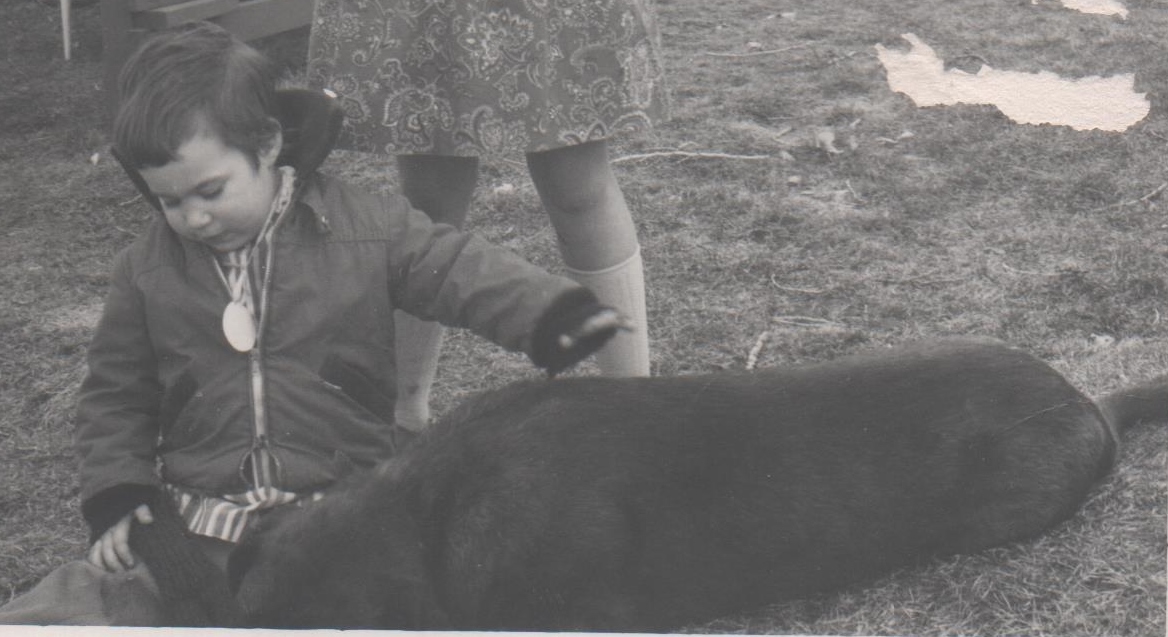
Trina and Charlie Brown 1971
From the day my parents adopted Charlie Brown, they should have known I would fall deeply in love. I was born to be a dog lover the way some people are born to be athletes or musicians. According to my baby book, one of my first words was “doggie,” and, as a toddler, I would search out dog books at the local library.
But until Charlie Brown arrived, my family never had a dog.
Since then, my family has never been complete without a dog.
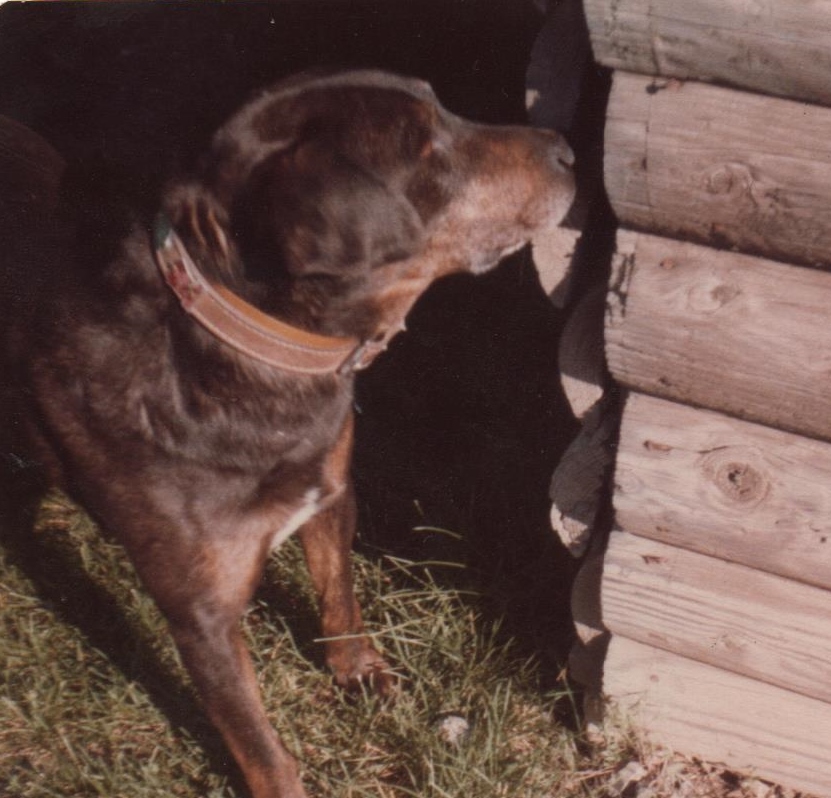
Charlie Brown
And even though we loved Charlie, his early years weren’t easy. He came into our lives at a time when dogs were allowed to roam, and roam he did. When he strayed onto a cattle ranch and started chasing the cows, the rancher shot him. He barely survived, and my parents always blamed his fear of thunder and fireworks on that incident.
Their explanation was reasonable, and I always believed them until I discovered that other dogs, those who have never been shot, also fear thunder and fireworks.
That’s when I began to wonder where the fear comes from. I just couldn’t understand why so many dogs would be afraid of the same thing when their experiences were so varied.
The concept of fear has always fascinated me, especially since I’ve spent my own life overcoming unjustified ones. When I was young, I was afraid to swim in water that was over my head even though I could swim perfectly well when I could touch the bottom. I was afraid to slide down a fireman’s pole, even when all the other kids were expressing sheer joy during the descent. And I’ve always been afraid of rejection and failure to the extent that I avoided potential relationships and challenges.
Then, at one point in my life, I thought I had finally figured out the fear factor.
In college, a Psychology professor discussed the theory of collective memory, and the concept clicked. I might not have experienced an event that would provoke fear, but one of more of my ancestors had. They would have then passed those fears down to me.
That made sense for the dogs as well. They may not have experienced the danger associated with loud noises, but their ancestors had.
For years, as I’ve slowly overcome my fears one by one, I’ve held on to that theory.
Then Rodney entered my life.

Rodney watching the fireworks.
Rodney is the current canine member of my family. He’s a giant German Shepherd with a lot of energy and very little fear. That is, very little fear unless you count his inability to be left alone.
When we first adopted Rodney from a rescue group, he wouldn’t even go into our backyard without someone accompanying him. Over the past three years, he’s improved, but he still hates to be separated from the family, and, yes, particularly from me.
On Thursday night, as the human members of the family sat in the driveway watching fireworks, Rodney sat in the house watching us. He whined, he whimpered and he cried until I brought him out to join us.
And then he was content. While the city fireworks boomed overhead and the neighbors shot off their firecrackers, he simply watched. And my theory about the roots of fear was forgotten.
Because, at that moment, I realized that no matter where fear comes from, there will always be an even greater force.
It’s called love.
The Cost of My Opinion
The bloodiest single-day battle in American history occurred approximately 15 miles from my house. Nearly 23,000 soldiers died, were wounded or went missing after twelve hours of combat on September 17, 1862 at the Battle of Antietam during the Civil War. The lingering echoes and impact of that battle are still felt more than 150 years later.
Both the Union and the Confederacy experienced devastating losses, and historians have never declared a true winner. But for me, my family won. My great, great-grandfather James F. Bartlett (his biography and obituary are on this website right below Edward Bartlett’s) fought with the Massachusetts Infantry and survived. although he did sustain injuries on May 6, 1864, at the Battle of the Wilderness.

John Snyder gravestone Elmwood Cemetery
Ironically, my husband’s great, great-grandfather, John Snyder, died in June 1864 of wounds he sustained at the Battle of the Wilderness while fighting with the Stonewall Brigade.
Years ago, a local historian gave my husband and me a tour of John Snyder’s town and legacy. The tour ended at Elmwood Cemetery in Shepherdstown, where he is buried.
Newly married, I was actually interested in John Snyder until our volunteer tour guide pulled out a Confederate flag for my husband to place on his great, great-grandfather’s grave.
I loudly proclaimed that the Confederate flag had a very specific meaning, and my husband was not allowed to touch it. He tried to explain the flag was meant to honor his great, great grandfather, but I declared that the Confederate flag had nothing to do with honoring anyone. My husband placed the flag on the grave anyway.
Years later, I recognize my words were nothing but rude, and I had absolutely no right to be indignant.
I’ve never put my life on the line for my beliefs, and I have no right to judge those who did. All I can be is thankful.
The passage of time can change perspective and opinion about what is best and sometimes even what is moral, but it will never change what is honorable.
My children carry the blood of two honorable men who fought for what they believed during a time when our nation was completely divided. They also carry the last name of a man who lost his life fighting for what he thought would be a better life for them.
On Memorial Day, I have no right to argue about putting a Confederate flag on a soldier’s grave. Instead, I should simply be grateful that I have the freedom to make those arguments.
That freedom didn’t come without a price, and today we honor those who paid it.
The Graduation Speech I’ll Never Give
 This upcoming week, my husband is scheduled to be the graduation speaker at his high school alma mater. Even though he makes his living talking to millions of people, he actually hates speaking in public.
Because of that, he’s not particularly happy that I encouraged him to go outside of his comfort zone. He thinks I don’t understand his apprehension because I actually enjoy public speaking.
What he doesn’t understand is that I’m simply jealous of the opportunity, and I’m living vicariously through him.
It’s not the spotlight or the attention that make me wish I could stand in his shoes. It’s the privilege of encouraging young people as they take that final step out of childhood and into adulthood.
Ironically, I don’t even remember who spoke at my high school graduation other than it was a white, male politician. Despite that, I still believe that the right words can make a big difference.
If I didn’t, I wouldn’t write.
But since I do write, I’m going to use this space to share my own words with the Class of 2013. What follows are highlights of the commencement speech I’ll never give:
1. As you get older, you will discover that high school wasn’t just a finite period of your life. It was a series of good and bad relationships and events that served as a platform from which you chose to stand still, dive or climb. My advice is to climb. Take the stairs. Rise above the need to be defined by others or the simple accomplishments of youth and discover who you really are. You’ll probably surprise yourself and all the people with whom you once shared the platform.
2. Don’t ever believe that your greatest moments are behind you. There are always opportunities to create more great moments, but they require moving on and doing something different. Many people are uncomfortable with change and will want to force the status quo on you. Don’t let them.
3. Never apologize for your opinions. Ever. Opinions aren’t facts, so you can never be wrong, and you can always change them as circumstances change. But opinions are valuable because they define the essence of who you are. Like any other valuable possession, people will try to take them from you by any means necessary. Don’t ever let them use religion or profits or cultural norms to buy your silence.
4. You’ve probably been told all of your life not to worry about what other people think about you, and in most circumstances, that’s true. But you should worry about what “the future you” will think about you. You are the only person who has to live with you your entire life. You can walk away from other people, but you will still be with yourself. Make sure you are a good companion. Treat yourself with the respect, care and love needed in any long-term relationship.
5. Before you get out of bed each day, think about the calendar. The day you are about to begin is absolutely unique, and in a few short hours it will simply be another day in history. Make sure that day counts in your own life history. Despite the obstacles you may be facing or the hurt you may be feeling, make sure you do something that makes that day memorable and meaningful. If you are stuck in a routine, break it just a little. Eat something unusual. Read something new. Talk to a stranger. Practice a random act of kindness. Your ultimate goal in life is to make every day count, but that sometimes requires a bit of work. Do the work anyway.
Swimming in a Dress
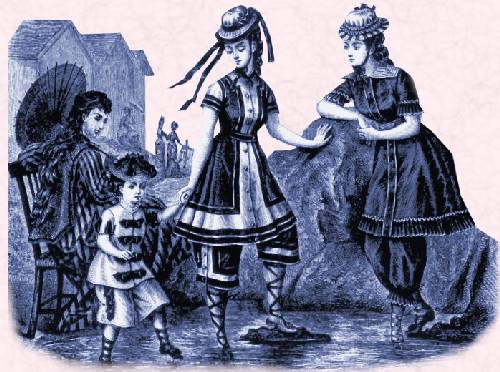
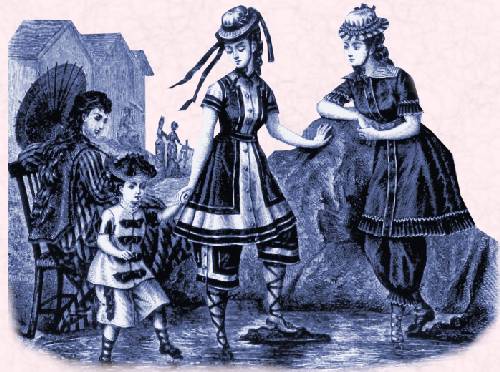
Victoria swim wear – http://www.fashion-era.com/images/SocialHistory/swimpad500.jpg
This week, I had two conversations that morphed into one question about how we live our lives.
The first conversation was with a friend who told me about home-schooled children who were on a field trip at the Shepherd University pool. They were affiliated with a religious group that prohibits females from wearing pants, and, apparently prohibits swimming suits as well. My friend’s son watched astounded as the girls jumped into the pool still in their dresses.
The second conversation occurred on the phone with my mother, who wanted to know if my son had received his birthday check. After telling her yes, I added, “I know, he hasn’t sent a thank you note to acknowledge it. I’m a bad mom.”
My mother disagreed. “No, you aren’t. You are a much better mom than I was.”
Her comment shocked me, because I’m not even close to the type of mother she was.
My mom always made sure we sent thank you notes immediately. She planned menus that met every dietary guideline. And she ensured we did our Saturday chores, our beds were always made and that our laundry was always put away.
Not only do I fail to do all of those things on a regular basis. but my life is a chaotic mess compared to the structure in which I grew up. I told this to my mother in fewer words, but she responded, “You have fun with your kids. You know how to relax and just enjoy them. I never did.”
Not to belabor the point, but she WAS always wound quite tightly, and I’m generally not wound nearly that tight.
But getting unwound wasn’t easy. As I recently told a friend, “I spent the first 15 years of my life being a nerd trying to follow all the rules, and I spent the next 15 years trying to prove I was a rebel. Then I became a mom and had to find a happy medium.”

swimsuits in 1919 – http://old-photos.blogspot.com/2008_01_01_archive.html
In short, I had to break free of restrictive expectations and learn balance so I could enjoy life.
Which brings me back to the girls who jumped into the swimming pool in their dresses and to my question.
“Can anyone really enjoy life fully when they are restricted by a rigid belief system?”
Being in a pool with a dress is probably more fun than not being the pool at all, but I can’t imagine it was all that enjoyable. The water-logged clothing had to make movement difficult and exhausting.
I have absolutely no right to question or judge the beliefs and choices of the girls or their families. If they choose to swim in a dress, they have every right to do so.
But I have every right to question my own choices and the self-imposed restraints I’ve often put on myself – those that prohibit me from enjoying life. Sometimes these have been thinking a work deadline is more important than a few hours with my children. Sometimes they have been my obsession with gaining weight. And sometimes they’ve been my concerns that I will fail when I try something new.
I’ve definitely done my share of swimming in a dress.
But both times and people evolve, and as I’ve aged, I’ve become better and better at shedding my dress. That doesn’t mean I’m going out in public in a string bikini, but it does mean I can enjoy a good swim in a modest tankini.
Slaying the Lizard of Oz
 When my daughter was in preschool, she discovered The Wizard of Oz, and even though she absolutely loved the story, she just couldn’t get the title quite right. She called the classic story “The Lizard of Oz.”
Initially, my husband and I tried to correct her, but nothing worked.
My son, on other hand, never even attempted to point out that a lizard is very different from a wizard. He simply chose to make fun of his sister, and since she didn’t understand his ridicule, she wasn’t really bothered.
Trying to teach my daughter the difference seemed futile. Instead, we decided that allowing her to happily promote the concept of a giant lizard ruling over the Land of Oz made our lives more peaceful.
At least, it was more peaceful until that day she came home dismayed that her parents made her look foolish by allowing her to publicly talk about “The Lizard of Oz.”
I can’t tell this story without thinking of all the adults who also believe in the Lizard of Oz.
These are people who make up their minds about something and only listen to those who validate their beliefs: the politicians who believe that they speak for “all Americans” or the old white guys with money who only listen to other old white guys with money (or to those who pander to them). They, like the Scarecrow in the Wizard of Oz, could easily gain wisdom. All they’d have to do is listen to people who better understand the real issues.
These are the people who only make decisions based on their own paradigm. They ignore that the world is changing, which means their way of doing things should change too. Instead, they, like the Tin Man, appear heartless because of their refusal to adapt with little regard for others.
These are the people who are self-absorbed. Like the Wicked Witch of the East, they believe those seeking help are the problem, and they care more about feeding their own egos than feeding the hungry.
But no matter how hurtful or destructive these people are, they get away with their behavior because there are even more of us who enable it. We act like the Cowardly Lion, who is afraid of everything. We fear calling out those who are wrong. We fear making ourselves look bad. We fear causing too many problems. We fear repercussions. And we fear failure.
But being the Cowardly Lion is outside of my comfort zone. I’m not the type to sit back because trying to change misperceptions and outright mistakes is too difficult.
I’m off to slay the lizard, the problematic Lizard of Oz.
The Problem With Pretty

(Photo by Matt Cashore, USA TODAY Sports)
Not being much of a football fan, I wasn’t watching when the University of Alabama beat Notre Dame the other night. But being an avid news fan, I couldn’t miss the stories about how sportscaster Brent Musburger raved about Katherine Webb, the beauty queen girlfriend of Alabama quarterback AJ McCarron.
I really didn’t understand all the fuss. Men have been making comments about beautiful women as long as women have been making comments about good looking-men. I may be a feminist, but I also recognize that appreciating beauty is an essential element of human nature.
Initially, I didn’t perceive any problem. At least, I didn’t perceive a problem until I read a story about how Webb and her parents responded to all the fuss.
They weren’t bothered by Musburger’s comments. And why would they have been? Webb is a beauty queen. She struts around in a bikini in front of cameras. She obviously wants to be noticed for her appearance alone, and her subsequent reaction reflected that.
What bothered me was the importance Webb’s parents placed on her being beautiful.
Apparently (according to family), Katherine was once considered an ugly duckling because of a skin condition and her height. Her mother said that being in the Miss USA pageant helped build her daughter’s self-esteem. In other words, her mother believes Katherine’s self-esteem hinges on others’ perceptions of her appearance. And that’s what bothers me about this “news” story.
Self-esteem is complicated. Yet, like so many other issues, people try to simplify it. Several years ago when my children were in elementary school, they attended an assembly about self-esteem.
“What activities did you do? I asked. They looked at me puzzled.
“We didn’t do anything,” my son said. “Some lady just talked to us about how we should have self-esteem.”
We moved on to other subjects, but I was irritated with the school for wasting precious educational hours on some pointless presentation. You can’t teach or preach self-esteem. True and lasting self-esteem is achieved through experiences of success and through overcoming difficult situations. Our responsibility as adults is to provide children with those opportunities.
And self-esteem isn’t an “all or nothing” concept.
People don’t either have or not have self-esteem. Most of us feel confident in one aspect of our life while struggling in others. When I was younger, I had excellent self-esteem about my intelligence and ability to do well in school because I had volumes of success in academics. I had very poor self-esteem in regards to my appearance because I’d been told I looked like a monkey and was a four on a scale of one to ten.
Experience taught me that what others think of my appearance has absolute nothing to do with my value as a human, my capacity to be loved or my ability to be happy.
But those are lessons I learned from decades of life experience. Katherine Webb doesn’t have that yet.
Instead, she is surrounded by people who put an inordinate value on appearance. People who coach her that plastering on makeup to cover a skin condition is essential. People who have convinced her that fitness means being skinny enough to meet society’s standards for wearing a bikini. People who equate being called beautiful with being accepted.
Maybe I’m being a bit judgmental because I was raised to never rely on my appearances for anything. Sometimes that message was delivered in a subtle manner as my mother never bought fashion magazines nor wore makeup. At other times, the message was delivered loud and clear – like the time she told me that I was lucky to be smart rather than pretty. And even though those words hurt at the time, they also held a great deal of wisdom.
When you can’t rely on your appearance open doors for you, you develop other skill sets. And those achievements and successes are what truly build self-esteem.
There is nothing wrong with being beautiful, but there is everything wrong when women allow it to define them.
And that’s the problem with pretty.
Happiness Should Be Like a Dog With a Snowball
 The year 2012 ended with a white Christmas, which is fairly unusual here in the Eastern Panhandle of West Virginia. But then, Mother Nature hasn’t been very predictable, or even very kind, over the past twelve months. Her random and sometimes disruptive behavior was fitting for a year when too many people experienced upheaval and loss. But just like Mother Nature, 2012 also brought bright and sunny moments along with the storms. All serve as reminders of the lessons we need to learn and/or remember.
Lesson 1: We Should Experience Happiness Like a Dog with A Snowball My German Shepherd, Rodney, adores the snow. He loves bounding through it. He loves smelling it. He loves eating it. And most of all, he loves playing in it. As a true fanatic for all things that can be thrown and caught, when the white stuff is on the ground, he begs for someone to pack and throw a snowball.
This Christmas, I noted how thrilled he was with every snowball he caught, even though each fell apart or dissolved in his mouth. Instead of being disappointed when a snowball was gone, he was just as eager for another, which he enjoyed with no concern that it too would disappear.
We should all appreciate our happy moments just like my dog appreciates snowballs. They may be fleeting, but instead of worrying that they may not last, we should enjoy each moment and remain steadfast in our belief that there will always be more.
 Lesson 2: We Can’t Always Control Our Circumstances or Protect Those We Love, but Any Attempts To Do So Are Always Good for a Laugh At the end of June, the Eastern Panhandle, like the rest of West Virginia, was hit unexpectedly by a derecho, or a land hurricane. Most of us had never heard of such a storm prior to the event, and since there were no warnings, we didn’t initially realize the severity of what had happened. We discovered the extent of damage the next day when we saw the downed trees and power lines and when many people experienced a loss of electricity for weeks.
The event left its mark, so in October, when meteorologists called for the Eastern Panhandle to be in the path of Hurricane Sandy, most of us wanted to be prepared. Some of us over-prepared. And some of us even freaked out… a bit.
For my part, I decided my family should ride out Sandy in our basement to avoid the hazards of trees crashing through our roof. We were all safely downstairs when I realized that Skitty, our cat, wasn’t with us. Since Skitty has a tendency to hide in unusual and hard-to-find places, I immediately assigned all family members to search for her. As the wind howled and the trees creaked, we took turns calling her name and shaking a bag of cat food, which is usually the best way to get our over-weight feline out of hiding. This time it didn’t work, and I began to worry that my cat, who is generally too lazy to go outside, was battling the elements.
Just as my anxiety got the worst of me, my son, in his usual dry and sarcastic way, told me that the cat was safe. As it turns out, the only thing she was battling was her disdain for a family who didn’t realize that she’d taken shelter in the basement long before the rest of us. My cat had the sense to do what she needed to do and not be bothered by the drama that surrounded her. I should have done the same.
I hadn’t had enough warning to worry about the derecho, and we managed through the storm and the aftermath just fine. I had way too much warning about Sandy, and even though we also managed through that storm and aftermath just fine, my stress level had gotten so high that even my cat chose to ignore me.
Sometimes, we get so wrapped up in either avoiding a situation or in worrying about what might happen, we simply forget that we can only do so much, we must accept that some things are beyond our control and we should believe in the sound judgment and appropriate actions of others. The results won’t always be what we hope for, but too much worry is only good for providing memories that allow us to laugh at ourselves later. 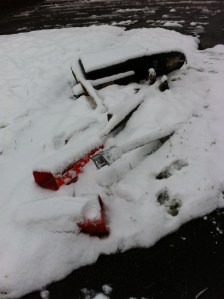
Lesson 3: Life Rarely Goes According to Plan, but When Bad Things Happen, We All Have a Great Capacity for Resiliency and Recovery No one in my family expected the snow that arrived on Christmas Eve, and, even after it began to fall, none of us expected it to last long. But last it did. And in the midst of final preparations for our Christmas celebration, the snow covered the grass and then it covered the roads.
When we realized we were going to have a white Christmas, we celebrated by taking a family walk with Rodney. Unfortunately, Rodney was more excited than all of us, and the jumping, the barking and the lunging, drove my husband crazy to the point he just wanted to go home. Instead of enjoying the beauty of the untouched snow, we were trying to control an overly enthusiastic dog. I worried that our Christmas Eve would become a battle over the dog.
As Rodney began to calm down, we began the climb up the hill on the far side of our neighborhood. When a truck came speeding down the snow-covered hill, we immediately jumped off the road and into a neighbor’s lawn. And then we heard loud thumps and bangs. We turned to see that the truck had gone off the road and taken out two mailboxes and multiple newspaper boxes. Packages littered the ground, and I was relieved that Rodney’s behavior was all but forgotten.
We empathized with the driver and the home owners that such an incident happened on Christmas Eve. But when put in perspective with the loss some families faced this Christmas, the event was far from tragic. For many, Christmas isn’t always just a reminder of family traditions and family warmth. It can also be a reminder of could-have-beens, might-have-beens and regrets. And yet, most of us still believe in the magic of the holidays.
Yesterday, as I was walking up that same hill with Rodney during yet another unexpected snow storm, I noticed the mailboxes were already back up. As is true with human nature, the owners were trying to get everything back to normal. Seeing the mailboxes standing so quickly after witnessing their near demise less than 36 hours earlier was a reminder that no holiday is ever perfect. But planning for perfection only leaves room for disappointment, and planning for disappointment only leaves room for anxiety. But planning to enjoy life’s imperfections only leaves room for joy.
I plan to carry that lesson with me forever and to look forward to whatever the weather, and life, have in store for 2013.
2 and 1/2 Foolish Wishes
 If I had a genie that granted three wishes, I would have almost wasted them this past week.
Instead I only hypothetically wasted two and came very close to wasting the third.
My preoccupation with genies and wishes began when my daughter told me about a recent in-class writing assignment. She and her fellow sixth grade students were given the scenario that they’d released a genie from a lamp and had three wishes to use in a week.
“The only rule,” my daughter explained as I was driving to her dance class, “was that we couldn’t wish for more wishes.”
“What about wishing for magical powers?” I asked.
She thought for a minute then said, “It depends on what kind of magic.” She didn’t elaborate, so we sat in silence for a few minutes.
Then I had to ask, “Well, what were your wishes?”
She turned and gave me an exasperated look. “You’re not going to write about this are you?” she asked.
I didn’t think I would, so I didn’t really lie. “Of course not,” I said.
“I wished for a rainbow-colored unicorn, a black Pegasus like Blackjack from the Percy Jackson books and telepathy,” she said.
At the time, I was simply amused by her choices, but then my imagination took hold and I began to pretend that I too had found a magic lamp with a genie who granted three wishes. I was sure my wishes would be much more meaningful and beneficial to society.
I was wrong. Despite what I thought were good intentions, my wishes were probably more foolish than my daughter’s.
My first was for everyone to see the true colors of a person I’m pretty sure has narcissistic personality disorder. Granted, my clinical training is limited to a few classes in graduate school, but he has most of the of the classic characteristics. He not only lies but also he believes his own lies. He manipulates yet does his best to convey that others are the ones being manipulative. He expects everyone else to go along with his plans, doesn’t listen to anyone he doesn’t deem worthy, takes advantage of others and exaggerates his skills and talents. This week, when I realized how many people either don’t recognize or don’t want to recognize this, I’d had enough. I wished everyone else could see through the bravado. But if that happened, I later realized, his gigantic ego would be injured but he’d still carry on with his life. Others could be hurt much more, and then I’d be as selfish as he is. That was an incredibly foolish wish.
My second wish came after looking at a Facebook news feed and witnessing what I deemed some incredibly stupid posts. Some people were sharing inappropriate details about their personal life and health. Others were posting photos of themselves that screamed “pay attention to me.” And then there were the completely inaccurate and misleading political posts. I wished that Facebook had an automatic editor that screened inane and inaccurate posts then provided genuine feedback as to why the edits were made. I smiled at the thought of opening up Facebook to a much more rationale, intelligent and genuinely humorous news feed. But then I realized what a damaging and self-righteous wish that was. What I was really asking for was a limit on free speech. And no matter how inaccurate, hurtful or stupid the information is that people are now putting on the internet, many Americans fought and even lost their lives for their right to do so. I had wasted another wish.
That’s why my third wish came very close to being a wish to get rid of mirrors.
Mirrors generally don’t benefit society. They either encourage vanity or dissatisfaction. After my first two wishes, I didn’t want to look in the mirror anyway. My avoidance of a mirror had nothing to do with my outward appearance and everything to with lifelong aversion to self-absorbed and self-righteous people. If I looked into the mirror after my first two wishes, I would have been face-to-face with just such a person. But maybe that’s why I wanted mirrors eliminated.
I was on the verge of making the mirror wish when I received an email that jerked me back to reality. The son of a friend had been very seriously injured, and all anyone could do is pray. In comparison, all my wishes seemed trivial and ridiculous. I realized we are all on this planet together and finding fault with each other really doesn’t do us any good in the end. Neither does thinking that we know better than others.
I’m still in the process of learning that lesson the hard way, but I also have one imaginary wish left. If it were real, I’d use it to wish we all had just a bit more patience and understanding. No matter how I look at it, I don’t see how this is foolish. It doesn’t break the rule of wanting more wishes, but it could be magical and transform humanity.
My File Cabinets Full of Men
 I completely appreciate why the internet is buzzing about Governor Romney’s claim during Tuesday’s presidential debate that he had “binders full of women.” But there’s also a part of me that identifies with his statement.
I, after all, have file cabinets full of men.
While Romney said he used the binders to identify qualified candidates for key positions in state government, my file cabinets serve an entirely different purpose.
I use them to store reminders of all the men that are NOT qualified to be in any part of my life.
I started my first file when I was a young girl and a boy told me that men were more important than women because they got to keep their last names when they got married. I was devastated, but I was also angry. As a result, that boy had the honor of being the first male I ever put in a file cabinet.
Over the decades, I’ve filled several file cabinets with men. Some of the most memorable include:
* The minister who insisted my friend keep the word “obey” in her wedding vows.
* The agency director who tried to prevent me from getting a management position because I breastfed my baby during a meeting that I graciously attended while on maternity leave.
* The community leader who always referred to me by using my husband’s last name, even though he knew I had never changed mine.
* The manager who issued a dress code that all female employees must wear pantyhose with skirts or dresses. (For the record, the dress code was issued during the summer when I was eight months pregnant.)
* The nonprofit executive who, with a staff of all women, refused to let mothers take sick leave when a child was ill or had a doctor’s appointment. At that time, we were all granted a set number of days for both vacation and sick leave, but vacation was much more limited. The director’s exact words were, “letting mothers take sick leave for their children isn’t fair to the employees who don’t have children.”
* The supervisor who blatantly promoted young, attractive females over more qualified, middle-aged women.
I’ve recently been considering adding another man to my file cabinets. While this man claims to support women, he’s never demonstrated any real understanding of the often life-long battle many of us have faced. He’s skirted around the issues of equal pay for equal work and reproductive rights. And even when he tries to express his appreciation about the need for equality in the workplace, he falls short by indicating that women don’t want to work long hours because they have to go home and fix dinner.
Yes, this week I’m definitely thinking about adding that man to my file cabinets. I’m just not sure if his binders will fit too.

Lessons in Trees from the View on a Bicycle Seat
 As a child, I always felt at home among the trees and full of exuberance on my bike.
As an adult, not much has changed.
While my father, a forester, no longer teaches me about the secrets hidden in the shape and color of a leaf or in the texture of bark, I am still enamored of trees. And riding a bike is still one of my favorite pastimes. Few things bring me greater joy than taking a lazy bike ride among the beauty and wisdom of the trees.
I had that opportunity this past Sunday when I took advantage of a gorgeous autumn afternoon to ride my bike and attend to the lessons of the trees.

Lesson 1: Sometimes when you blend in, you bring out the best in others. On Sunday, this tree next to the church across from my neighborhood had started to model its fall colors. It was amazingly beautiful, but its splendor didn’t lie simply in its appearance. Even though I drive by that church every day, I’ve never paid much attention to it. But the hue of the red leaves was a perfect match to the color of the bricks, and I was struck by the church’s design.

Lesson 2: Loss and suffering are the best reminders of all that we still have. The past year was a tough one for trees. Almost exactly a year ago, we were hit by a bizarre October snowstorm that knocked down trees still heavy with green leaves, including two in my own yard. In June, we lost even more trees to a land hurricane, also known as a derecho. For weeks, the sound of chainsaws in the morning was as common as the sound of crickets in the evening. I hated that sound. Every time a chainsaw revved up, I knew we were saying goodbye to another tree. But riding my bike on Sunday, I passed hundreds of trees that had never been knocked down, and I felt a deep sense of gratitude for all those still standing.

Lesson 3: Happiness comes from accepting your circumstances and recognizing that, at times, your place might simply be to support someone else. These two trees in an expansive cornfield have always seemed out-of-place to me, yet each year they grow stronger together. From some angles, they are two distinct trees that mirror each other. From other angles they appear to be one. But from all angles, they remind me of two people who hold each other up in a tough environment that could easily defeat someone left all alone.

Lesson 4: The greatest sense of belonging comes from owning your own style and surrounding yourself with people who appreciate differences. Every time I pass these three trees on the edge of a field, I imagine them as a group of women all throwing their arms up in laughter. Each is unique: one is flamboyant, one is plain with a toddler at her knee and one is aging rapidly. Despite their differences, I see them as a united group that delights in life’s simple pleasure of friendship.
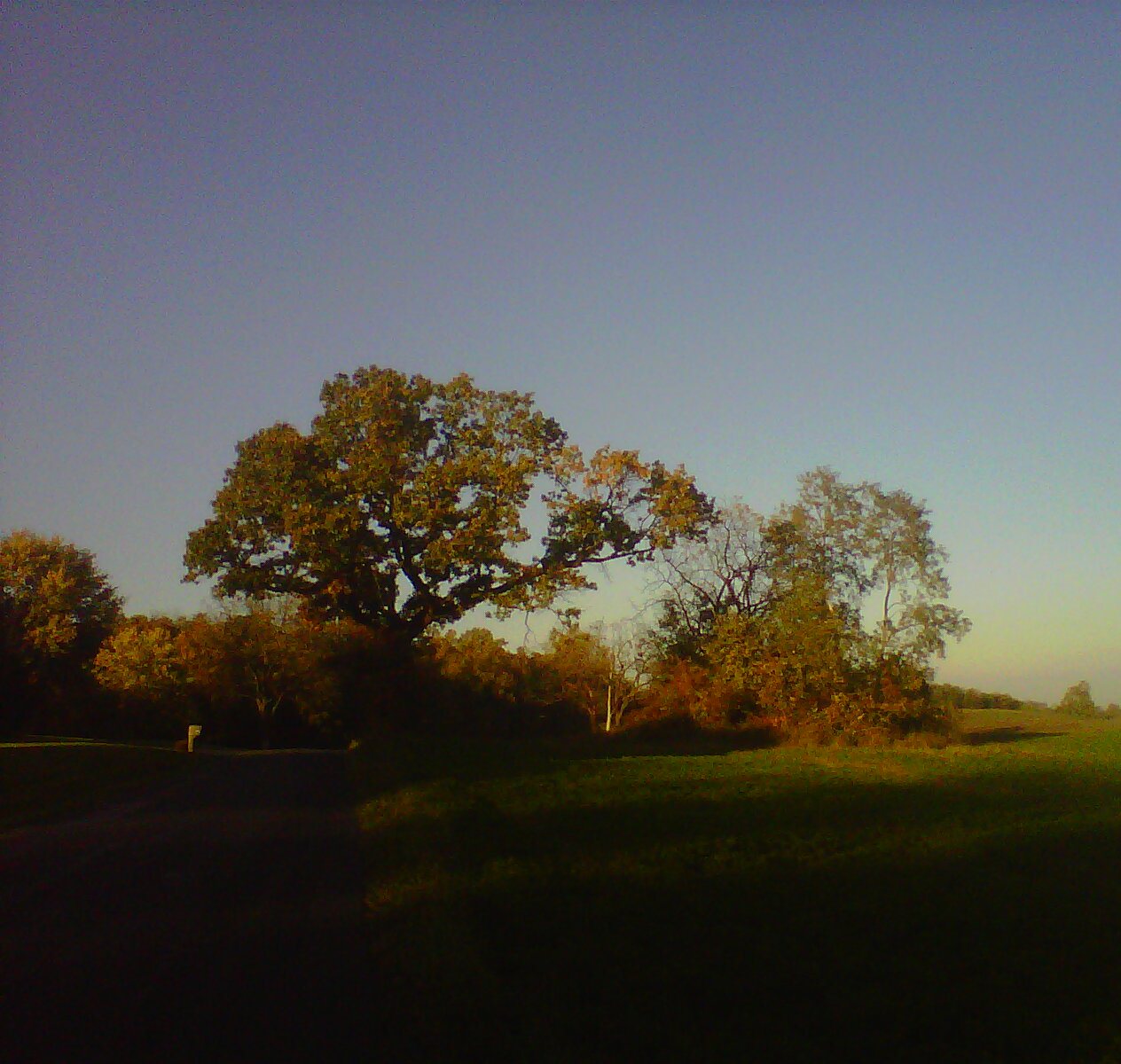
Lesson 5: Everyone has scars, but we can choose to let them weigh us down or strengthen us. Several years ago, I fell in love with a magnificent tree that simply owned the landscape. When it was hit by lightning, I was sure it was damaged beyond repair. About half the tree was dead, and several branches hung black and leafless. But this tree didn’t give up and has slowly recovered. It’s now smaller and has a different shape, but in my eyes, this survivor is a giant.
Yesterday, I took the same bike ride that I did on Sunday. The trees had already changed dramatically. Some displayed brighter colors of red, orange and yellow while others were losing their leaves. Most shone in a different light. But these changes gave me one more lesson: savor every beautiful moment, because nothing will ever be exactly the same again.


 Just So You Know