Blog Archives
The Crap Shoot
 I am fortunate to have a job in which I am constantly reminded that I won the lottery of life and which gifts me with examples of my luck on a daily basis.
Recently, my co-worker rushed to clean the seat of a chair where a schizophrenic homeless man sat unaware that his pants were so low they were no longer covering what should have been covered. When she gently told him to pull up his pants, he apologized and pulled the up. My organization’s ability to serve this young man is limited, and he walks the street every night. Several people are working with him to try to find adequate services that will address his needs and provide him with a safe place to sleep. In the meantime, he has nothing more than what he can carry in his arms.
At the beginning of the month, I spent hours trying to find a way to get a young man back to his family. He had lost his job and with it the income that allowed him to pay rent or buy food. While on the phone with his mother, the operator broke into the conversation with a call from a prison. The prisoner was the young man’s father, who proceeded to tell me what a loser his son was. He also told the woman with whom I was talking that she should not travel the hour to pick up her son because he didn’t deserve it. Sadly, the mother listened, and the young man remained stranded with no support system or resources.
This week, a woman with six children called our offices asking for help. The electricity at her house, a run-down shack, had been shut off, and she had no hot water for baths or showers and no way to cook or heat up food. Her husband, who had lost his job a few months ago, had recently found employment but wouldn’t be receiving a paycheck for several weeks. Since the family had no electricity, and therefore no fans or air conditioning, they leave their windows open in hopes of a breeze. Because of that, the children’s bodies are covered in mosquito bites.
Every day, I hear conversations I cannot understand. My office is right next to that of our immigration attorney, so I listen daily to conversations in foreign language. Occasionally, I understand what is being said, and it is never heartwarming. I listen to families who came to the United States for political or humanitarian reasons and have no place to go. Just the other day, I witnessed a six-year-old child translating for her mother. She was telling our outreach worker about the eviction notice her family had received. At the age of six years, this little girl should be playing with dolls, taking dance lessons and swimming with her friends. Instead, she is doing all she can to prevent her family from being homeless.
Perhaps most controversial and yet most heartbreaking among the clients I encounter daily are the hundreds of people who live in generational poverty in the United States. Of these individuals, some were raised in families in which violence was a norm. Others lived in homes in which education wasn’t a value and in which routines such as dinner and bedtimes were foreign concepts. Some were born to parents who abused drugs and who neglected their children during the most crucial years.
Even though I come face to face with such poverty very day, I am also reminded that for every person who walks through our offices seeking assistance, there is another person who is pointing fingers and placing blame. I’ve heard it all:
“If people tried harder, they would have an education and a job.”
“Our country already has too many problems. Why should we help people from other countries?”
“If I can make it, anyone can make it.”
“I’m tired of my hard-earned dollars going to support woman who had kids just so they could live off the system.”
What many people don’t realize is that, as my co-worker says, “Life is one big crap shot.”
We don’t get to choose who are parents will be or where we will be born. We don’t get to choose how intelligent we will be or whether we will inherit a mental illness. And we certainly don’t get to choose whether we will be raised in an environment that values good judgement or in one where children are just lucky to get through childhood alive.
There are days when I wish I could yell to the world. I want to say that I completely agree we should all do our best and we should all make good decisions. But I also want to yell that some of us are fortunate to have been raise to understand cause, effect and consequences. Some of use are lucky to have been raised with values on which we make good decisions. Some of us were raised to think about the future rather than just the moment at hand. And some of us were raised with people who want us to excel rather than pull us down.
If life is truly a crap shoot, then I was lucky enough to roll a good deal. I may not have a lot of money or the biggest house on the block, but I am an intelligent woman surrounded by people who support me. Even better, I am surrounded by people who will do the same for a stranger who was never handed the same odds that I was.
My real fortune comes not just from having a job but from having a job that allows me to witness people who truly understand that their skills, knowledge, education and general good fortune aren’t just good luck. They received these gifts so they could use them to help and provide for others.
Getting to witness such acts to benefit the less fortunate on a daily basis makes me one of the luckiest woman in the world.
Nellie Oleson and Other Monsters
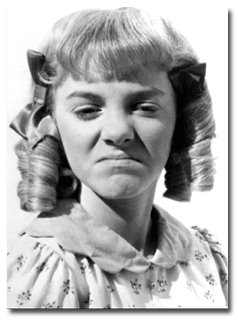 There is nothing worse than realizing your childhood nightmare is actually a reality.
As a child, my monsters were people who thought they were better than others because they were attractive or had money.
As an adult, I’ve discovered that I actually live among such monsters.
Growing up, these monsters were portrayed as fictional characters like Nellie Oleson from the television show Little House on the Prairie.
To most people, that show was about family.
To me, it was an epic battle of good and evil.
Good was represented by the hard-working Ingalls family, and evil was represented by Nellie Oleson and her mother. The ambivalence of society was represented by Nellie’s father who rarely stood up to his wife and his manipulative and self-centered daughter, Nellie.
Nellie thought she was better than others because her family had money and other families didn’t. Not only that, but she actually looked down at people who didn’t have the same resources.
As a child, I never understood how anyone could actually like Nellie, who never did anything to earn her pretty dresses and easy lifestyle.
As an adult, I am amazed that I still have to battle such monsters.
These monsters rear their ugly heads in the form of women who have never had to work to support their family. They have married men with good jobs and depended on their husbands for money. (And for the record, living on a budget in college or in early adulthood isn’t poverty). At the same time, they belittle the working poor and call them lazy. Here’s my advice: If you have never had to support a family on your income alone, you have no right to judge others.
These monsters bear their teeth when their beliefs about social status are challenged. Here’s my advice: Don’t open your mouth about poverty unless you have either experienced it yourself or have spent time with those who have.
Finally, these monsters avoid people who struggle as though they carry some type of disease. Here’s my advice: Surround yourself with people who are different than you. Not only will you become a more well-rounded and educated person, you might discover others have a great deal to offer.
This week, I had a realization that I can never slay the monsters I feel as though I am always battling.
But I did realize I have every right to walk around these monsters and keep going.
And if enough people join me, we can show the monsters how we really feel.
Minimize This
Last week, WV Governor Earl Ray Tomblin signed a bill to raise the minimum wage from $7.25 an hour to $8.00 an hour in 2015 and to $8.75 in 2016.
Opponents of the new law have had multiple complaints:
Teenagers working part-time jobs will be making more money than they really need;
The amount employers will be forced to pay for overtime will increase significantly;
When minimum wage increases, everyone else’s income is worth a little less.
I’m not an economist nor am I a labor expert, so I really can’t disagree with any of these statements.
What I can do is provide a little bit of perspective.
Currently, a full-time minimum-wage employee making $7.25 earns $15,080 annually.
The poverty threshold in the United States for a single person is $11,670 annually. According to that, a person making minimum wage is rolling in the dough since he/she makes $3,410, or nearly 23%, above poverty guidelines. Never mind that this threshold is so low that most social service agencies use guidelines such as 138% or 150% of the poverty level to determine eligibility for services and emergency assistance.
Who couldn’t afford housing, utilities, transportation, groceries, medical bills and clothing with all that extra money? Granted, if there are two people in the household, the poverty guidelines increase to $15,730 a year. That means both people would have to work to keep the family above the poverty line, and one would only have to work part time at minimum wage to do so. Of course, if that household is comprised of one adult and one child, living above the poverty line becomes a bit more tricky.
In my job, I encounter people trying to navigate that tricky situation every day when they are seeking help keeping the electricity on or paying their rent.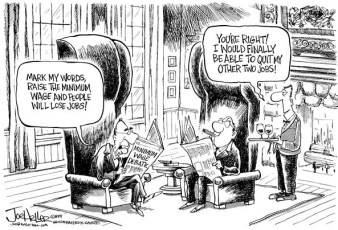
But here’s something you may not realize: you probably encounter them every day too.
They are the people providing services for you behind cash registers and brooms. They are the people caring for your children and you parents. And they are the people who are working long hours for the lowest legal pay and are still often called lazy when they can’t pay their bills.
During the recent debate over the minimum wage in West Virginia, I was reading arguments for and against the increase, and one exchange struck me more than any other.
An individual in favor of the increase stated that he was working two jobs to support his family and that the increase would help.
In response, someone else stated that this person wouldn’t have to work two jobs if he had gotten an education.
As a very educated person, I can personally attest to the fact that an education is not a ticket to a good salary. But even if I hadn’t had to personally struggle with low-paying jobs, I’ve still had many advantages.
I was blessed with a childhood during which my parents cared about my brain development and supported me in school. I was blessed by people who encouraged me when I pursued a higher education. And I’ve been blessed with circumstances that didn’t require me to support others when I was getting that education.
Not everyone has the opportunity or the aptitude to get an education. And even if they did, there would never be enough decent-paying jobs to support everyone who meets the educational requirements.
Besides, many of us depend on people who are willing to work for minimum wage to do the tasks that make our lives easier.
Instead of condemning them, we should thank them.
And a slight increase in their pay is just a start.
Simple Minded
 I used to believe that as we matured, we grew out of our need for simple story lines. The fairy tales we enjoyed as children generally featured characters who were all good or all bad.
As we got older and our brains matured from concrete to abstract thinking, we realized that people and situations are complicated and that life comes at us in a broad spectrum of colors – not just black and white.
That was the paradigm in which I used to believe.
Maybe that’s because I’ve surrounded myself with individuals who have complicated views of the world and I have yet to meet anyone who is even close to perfect. Maybe that’s because my own life and belief systems are complicated. Or maybe it’s because I’m a social worker, which means I see the best and worst in people almost every single day.
For whatever reason, I sometimes forget there are too many people who have unrealistically simple views of the world.
And then life hands me a great big dose of a reality and I am left dumbstruck at how people can justify being judgmental by painting human behavior with broad brushes of right and wrong, good or bad and deserving and undeserving,
Even worse are the people who think they have THE answer for eliminating such complicated issues as poverty and violence.
Just this past week, a colleague asked an individual who works at an organization that serves low-income families what these families need to help them improve their situation. Instead of thoughtful dialogue, the individual began to rant about all the families that “abuse the system.”
Then he suggested that we stop rewarding women for getting pregnant so they can access to benefits.
Call me naïve, but I am highly doubtful that most baby-making situations are the direct result of a female thinking she will be financially secure if she has a baby.
With that said, I’m equally sure that there are women who aren’t concerned about getting pregnant because someone, be it the system or a grandparent or perhaps the father, will step up to help with the situation.
There are women who get pregnant because they don’t think about consequences and there are those who are desperate for love and attention. And there are low-income women who get pregnant because, shocking as it may be, they want to have a family.
And not every mother was single or lacked income when she got pregnant. People lose their jobs, and finding child care is difficult for those who do shift work. People face financial problems because of mental or physical illness every day. Relationships fall apart. Some women are brave enough to leave an abusive relationship only to face financial hardships.
Do you see what I mean about being complicated?
But people who prefer simplistic answers don’t want to consider complicated. They want to devalue the worth of single mothers or low-income families who experience generational poverty.
But my complicated (or mature?) mind can’t understand that way of thinking. Instead, I believe that we are all imperfect humans who have a relatively short time on earth. Some of us are born into better circumstances than others. Some of us had parents who nurtured us and helped our brains develop appropriately. Some of us had role models and grew up in homes where chaos was unusual and unacceptable.
In other words, some of us were just plain lucky, and last I checked, lucky and worthy are two entirely different concepts.
Life is not fair, and instead of wasting precious time and energy trying to balance the scales of fairness (something even my children know will never happen), we should spend our time and energy cheering on and supporting our fellow humans.
That doesn’t mean we should accept that people live poverty or that they have no responsibility for trying to improve their situation – they do. But that does mean that we should provide opportunities to help them improve, and, more importantly, we shouldn’t judge.
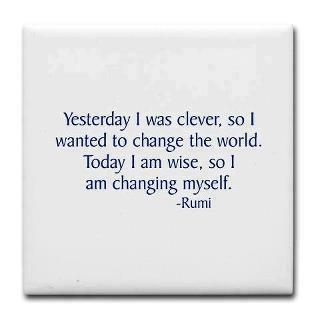
Often, that doesn’t involve changing circumstances or rules for other people. That involves changing ourselves.
That’s not easy. In fact, it’s rather… complicated.
Please, Look in the Mirror!!!
 It’s that time again.
Every year, we Americans set aside the fourth Thursday of November to express gratitude for all we have. This year, I have a very long list, and at the top are friends who are smarter than I am, more generous than I am and stronger than I am. I appreciate these friends not only for their gifts but because they challenge me to be a better person.
Just this week, one such friend put a situation into perspective.
We had just attended an event about childhood poverty. I’d played a small part in helping organize the event, and my friend served as a discussion group facilitator. When the event was over, she called me to debrief.
“Here’s my issue,” she said. “We asked participants to brainstorm ideas about how we could address poverty in our community and you know what members of my group did?
“What?” I asked.
“They identified specific strategies for the families struggling with poverty, for community organizations and for schools,” she said. “What no one discussed is what each of us can personally do It’s like they think caring is enough. That will never be enough. We each have to personal responsibility.”
My friend is smarter than I am, and she is absolutely right.
Personal responsibility has become a catch phrase for people who are facing financial and other crises. It is rarely used regarding “the rest of us” who are paying our bills and are able to manage our lives fairly well.
But until children are no longer living in poverty, we are all facing a crisis and we are all personally responsible.
Yet so many of us want to point fingers and place responsibility on others.
As my friend noted, we have to stop.
We all need to look in the mirror and ask “What can I do?” Not what can my community do? What can my agency do? What can my school do? Or even what can my church do?
Handing responsibility to others is often easier than handing it to ourselves, and this Thanksgiving I am grateful for my friend, and all the other individuals, who truly understand that. When more and more people begin to take such personal responsibility, only then will we be able to truly begin to solve the complex issues of child poverty.
And when that happens, we will have even more reason for thanks giving.
The Empty Box
 The boxes were big – really really big/ And there was one for my brother and one for me. They were among the first gifts to appear under our Christmas tree, and my brother and I couldn’t have been more excited.
We were ten and twelve years old that year – old enough to know that our parents were practical and extremely unlikely to splurge on anything expensive AND impractical. But we were ten and twelve years old that year – young enough to be hopeful and confident that the boxes were too big to actually hold anything practical.
We were wrong.
On Christmas morning, we both tore into the large boxes, which simply revealed what we had known in our hearts all along: our parents were extremely practical.
Inside each large box was a puffy winter coat. To us, the boxes might as well have held nothing at all. My brother and I were both devastated. Our mom had actually wrapped winter coats in beautiful packages with elaborate bows as though the gifts were incredibly special.
As an adult, I can appreciate the presents and that my parents wanted to ensure our warmth. But as a child, I felt like I had been fooled. Sometimes I feel like I’m still being fooled or, just as often, I’m fooling myself.
I still jump to conclusions based on the appearance of a box without knowing what’s inside. For example, I was recently discussing the backpack program, in which food is sent home with students who may not have enough to eat over a weekend. For some reason, the discussion turned to a specific neighborhood, and I said, “Why waste time in that neighborhood, shouldn’t they should focus on neighborhoods where children are really hungry?”
The neighborhood in question has large homes with spacious, well-manicured lawns.
“Because there are hungry children in some of those homes,” I was told. When I started to argue, I was put in my place. “Some families bought those houses in hopes that the value would grow. At the time, they didn’t have enough money to furnish them. Now, their houses are worth considerably less than they owe, and they are struggling just to make the bare minimum payment. They have no furniture and often can’t afford food. There are hungry children in side those big, empty houses.”
And I realized those houses are like pretty boxes. We think we know what is inside, but we are often wrong.
This week is Hunger and Homelessness Awareness Week, and I hope everyone will take some time to think about boxes: empty ones and ones we can fill up with food for hungry families. This year, our help is needed more than ever. SNAP (formerly food stamp) benefits have been cut, and nonprofit organizations are receiving less support from the government than in previous years. That means our hungry and homeless are depending on community members.
Let’s fill up those empty boxes.
Despicable
Last  Tuesday was a V E R Y L O N G day.
I left my parents’ rural home and drove more than an hour to a day-long meeting. When that meeting was over, I drove five more hours home.
The drive got longer after a received then ruminated about a phone call from an angry friend.
“Trina,” she said. “I have to talk to you, because I know you’ll understand.”
Even though I’d been talking to people all day, anyone who strokes my ego always has my attention.
“What’s going on?” I asked.
“I just got the worst phone call I have ever received. It was absolutely horrible.”
At first, I was really concerned for my friend, but as she continued to talk, my concern turned to anger.
The Sheriff’s Association had called asking her to donate to a program to conduct drug education in the schools. Since my friend and her husband had previously supported the organization, she let the man on the other end of the phone talk.
What he said was absolutely despicable.
“We have all these kids whose parents don’t care about them,” the voice said. “All they want to do is sit at home and collect their welfare check. They don’t want to talk to their kids about drugs. They just don’t care enough. That’s why we have such a drug problem.”
According to my friend, she pulled a Trina Bartlett. (I have to give myself a little credit in this story).
She asked the man on the phone if he knew whom he was talking with, gave him an earful and then hung up.
‘I don’t know if he was following a script or if he was just expressing his own opinions,” my friend said. “But either way, the fact that he was trying to raise money by blaming people on welfare for drug abuse was absolutely offensive.”
I agreed.
I was not only offended by the sweeping judgments about anyone who receives public assistance but also by the fact that he was literally preying on the prejudices of other people. Public servants shouldn’t be perpetuating stereotypes. The should be countering them.
Ironically, the man making the fundraising call targeted the wrong person.
She is a parent who knows drug abuse is not an income nor a class issue. She knows that no matter how much parents care, their children sometimes still make poor choices. And she also knows that blaming people is not the best way to approach drug prevention.
The day after she received the fundraising call, my friend called the county sheriff, whom she knows personally.
He has yet to return her call, and something tells me he probably never will.
Yet that’s not the end of this story.
This story only ends when other people also call him and complain. It only ends when other people have the guts to stand up to stereotypes and prejudice. And it only ends when people stopping blaming and simply join together to help and support each other.
I can only hope this story ends sooner rather than later.
Special Stores, Special Schools and Especially Ignorant People
 I always appreciate when someone else gets outraged. That’s not to say I ever want someone to get angry. But since I’m usually the person loudly stating my opinions or expressing indignation at some injustice, I can relate when others do the same.
I was getting my hair done the other day when another woman was waging a battle.
“My unemployed uncle,” she said, “is posting the most ignorant comments on Facebook. “He’s collecting unemployment and complaining about people who use food stamps. He doesn’t even know what he’s talking about.”
The woman typed something into her phone as she talked. “It’s not even food stamps any more. There are no stamps. It’s called SNAP and you get the benefits on a card.”
She typed something else then put down her phone.
“You would think,” she said, “he would know better than to make those comments when he knows I’ll see them.”
The woman who was speaking is knowledgeable, well spoken, hard-working and generous. She recently donated a half-day spa treatment to charity, and she won’t get paid for the hours she provides the service. She made the donation because the charity helped her when she was a teen mom.
“When I was a 17,” she said, “I had a child, was working and going to school. I was anything but lazy.”
A few minutes later, she picked up her phone again.
“Oh this is priceless,” she said. “He just posted that there should be special stores for people who get food stamps. He thinks those stores should be specially stocked with low-price items and no beer or cigarettes.”
As she typed in a response, another woman said, “Well I have to agree that people shouldn’t be allowed to buy beer and cigarettes with food stamps.”
“They aren’t,” several of us said at once.
Granted, SNAP recipients can use their cards to buy food and use cash to buy beer and cigarettes. Unfortunately, those are the minority everyone notices. What we don’t notice are the people like the older woman I saw the other day using coupons with her SNAP card.
The conversation led to a short educational session about how people actually can’t buy beer or cigarettes with their SNAP cards. Neither can they buy toilet paper, laundry detergent, cleaning supplies, toothpaste nor other necessities that aren’t food. Everyone agreed that the federal program would be more beneficial if it operated more like WIC, which provides vouchers for specific, healthy and nutritional food.
“What did you say back to your uncle?” I finally asked.
“I suggested that if he thinks poor people are such a problem, then maybe we should have special schools just for poor kids. Not only that, but we need to stencil the letter “P” for poverty on all their clothes. You know, we should make sure we marginalize them so they don’t have any hope at all.”
For the remainder of my hair appointment, no matter what the topic, we kept coming back to the concept of special stores. People who sing off-key in public? Special stores. Rude people? Special stores. Snobs? Special stores. Wait, they think they already have them.
As I was scheduling my next appointment, I asked the woman if her uncle had responded to her latest comment.
“No,” she said, “He must have figured out that you don’t mess with someone who has received food stamps. Some people might think I was a drain on society and never contributed anything, but I’m pretty sure I have.”
Everyone in the beauty shop agreed with her.
A Poor Perspective on Poverty
When I was in elementary school, my mom made most of my clothes. As a child, I loved picking out the patterns and fabric to help design something uniquely for me. And when I outgrew those clothes, we donated them to what my parents called “the needy.”
I had a vague understanding of who “the needy” were. They were the kids who came to school dirty and sometimes smelly. They were the kids whose parents didn’t socialize with our parents. They were the kids that lived in neighborhoods where we were told not to go.
I thought that giving my clothes to “the needy” was some kind of measure of moral superiority.
Then one day, a girl in my class came to school wearing one of the outfits my mother had made.
I was shocked.
She was needy? I talked to her. I played with her at recess. I even sat with her at lunch sometimes.
I was even more shocked when someone asked her about her new clothes, and she described a shopping trip she’d made to Portland with her mother. At that age, I was just as unfamiliar with lying as I was with “the needy.”
I made the mistake of calling her out on her lie, but she didn’t relent and insisted she had bought the outfit at a store in Portland.
After that, I didn’t talk to her, play with her at recess or sit with her at lunch. I started equating “being needy” with being a liar.
Decades later, I still feel guilty about calling the girl out. I wish I could go back in time and go along with her fantasy about clothes shopping at fancy stores. She simply wanted to fit in, and I understand that now.
We live in a society that equates products with social status and success. Just carrying an off-brand purse gets me looks from women who pride themselves on carrying name brands.
And the extent to which our children are buying into that materialistic culture even surprises me. I’m usually not at a loss for words, but there is an exception to everything.
My exception came in the form of a ten-year old boy who lives in a house much larger than mine. His parents drive newer and more expensive cars than my husband and I do. His family seems to be on vacation every time school is out while my family rules the staycation. In other words, I think of his family as being “well-off.”
The boy, however, told me his family is poor.
I didn’t know what to say. Even with money out of the picture, I can’t begin to describe his family as poor.
His parents are attentive and loving to each other and their children, who are involved in numerous extracurricular activities. The family worships together and is actively engaged in community service. Simply put, the family lacks for nothing.
The boy, however, was adamant that his family is of limited means. He was sure because he has friends who not only live in a bigger houses but also have beach houses. Their cars are even more expensive, and their vacations even more extravagant. In his eyes, his family really doesn’t have enough.
I understand how this boy reached his conclusion. It’s called perspective. But that’s not an excuse for him or for all the adults who look into that same short lens that distorts everything.
Recently, a local official asked me why the percentage of children living in poverty had grown while the median household income in his county grew by more than $18,000 during the same ten-year period. Before I could answer, his colleague responded.
“There are more poor people, because the poverty level goes up every year. A family can make more money and still be considered poor.”
I was proud of my reaction. I was appropriate, and I didn’t even make a face. Instead, I noted that the local numbers simply reflect national data that show a growing income gap between the rich and the poor. Then I asked, “have you actually looked at the poverty level?”
When I didn’t get a response, I added, “This year, the poverty level for a family of four is $23,500. Personally, I don’t know how I could live within that.”
The topic quickly changed, and I’m not sure if the discussion had really ended or if a genuine conversation about poverty was just too uncomfortable, as it often is. Instead, we misdirect by categorizing the poor as deserving or undeserving. We dress up and attend charity events that make us feel good about helping. And we pride ourselves in giving to “the needy.”
But there are times when I try to change my perspective and look at how we treat the poor from the eyes of my former classmate. I’m pretty sure she’d tell us to stop pretending that poverty is something that happens to other people. I also think she’d say that we should stop pretending that name brand clothes or a big house reflect on our character or our importance. And I’m positive she’d say that we shouldn’t pretend that charitable giving is more meaningful than really listening to someone who is struggling.
And in return for her opinion, I’d tell her that I think she’s right.
Some People Should Just Shut Up
 Being a parent sometimes means being a hypocrite. If you don’t believe that you are either a) not a parent or b) incredibly (and unbelievably) perfect.
I can provide hundreds of examples of times I’ve behaved in a manner that directly opposes what I’ve told my children. Apparently, my husband is a few steps higher on the parenting evolution ladder than I am. He doesn’t always behave better than I do (although he probably does most of the time), but he’s generally less verbal about certain expectations for our children. That way, his behavior doesn’t seem quite as hypocritical.
I, on the other hand, am constantly setting standards that I can’t even begin to meet myself.
For example, ever since our children started talking, I insisted they use the words “please be quiet” instead of “shut up.”
Yet, I don’t do at all well with that particular language skill.
Recently, I was enduring a painful meeting during which a self-important person was holding forth as though his words were actually meaningful or of interest to anyone but himself. To survive the ordeal, I pretended to take notes while actually scrawling page after page of the words “Shut up. Just shut up.” A few times, I even added a less than flattering description of the person I wanted to be quiet.
But the words “please be quiet” are often inadequate. Quiet means hushed tones and soft voices. Quiet shows a lack of passion or emotion. And quiet doesn’t indicate disagreement when someone else’s words are hurtful or rude or simply pointless.
That’s why I haven’t been thinking “please be quiet” lately when people try to disguise their hate and prejudice with self-righteous statements and stupid jokes. Instead, I want to scream “just shut up” every time someone equates being poor with being lazy. But I haven’t.
I’ve held my tongue as tightly as the man gripping a snow shovel while he rode his bike through my neighborhood on Wednesday.
Wednesday we were supposed to get a blizzard. Schools closed. Government shut down. Businesses even changed their hours of operation. And even though all we got were a few inches of snowy slush, a lot of people with steady jobs and stable employment had a snow day.
The man on the bike didn’t have a day off.
He was looking for work shoveling driveways and sidewalks. He was offering his services to people who most likely judged him on his ragged appearance and his lack of a car. He didn’t have a truck to which he could attach a plow. All he had was a shovel and some muscle.
I’ve seen him selling his shoveling services on other snow days, but this past Wednesday was different.
I was leaving the neighborhood when he rode by me. He didn’t know where I lived or whether I was even a potential customer. I was simply some lady walking a German Shepherd on a cold and windy afternoon.
But, even though I had nothing to offer him, he slowed, gave me a wide smile and told me to enjoy my day. And then, balancing his snow shovel while pedaling his bike, he quickened his pace and was off.
That’s the exact instance I realized that maybe, instead of teaching my children to always say “please be quiet,” I should have been teaching them that sometimes standing up for those without a voice means shutting down those who speak against them. I should have been teaching them that there are times that polite isn’t as important as human rights. And I should have been teaching them that there are times when some people really do need to “just shut up.”


 Just So You Know