Blog Archives
A Poor Perspective on Poverty
When I was in elementary school, my mom made most of my clothes. As a child, I loved picking out the patterns and fabric to help design something uniquely for me. And when I outgrew those clothes, we donated them to what my parents called “the needy.”
I had a vague understanding of who “the needy” were. They were the kids who came to school dirty and sometimes smelly. They were the kids whose parents didn’t socialize with our parents. They were the kids that lived in neighborhoods where we were told not to go.
I thought that giving my clothes to “the needy” was some kind of measure of moral superiority.
Then one day, a girl in my class came to school wearing one of the outfits my mother had made.
I was shocked.
She was needy? I talked to her. I played with her at recess. I even sat with her at lunch sometimes.
I was even more shocked when someone asked her about her new clothes, and she described a shopping trip she’d made to Portland with her mother. At that age, I was just as unfamiliar with lying as I was with “the needy.”
I made the mistake of calling her out on her lie, but she didn’t relent and insisted she had bought the outfit at a store in Portland.
After that, I didn’t talk to her, play with her at recess or sit with her at lunch. I started equating “being needy” with being a liar.
Decades later, I still feel guilty about calling the girl out. I wish I could go back in time and go along with her fantasy about clothes shopping at fancy stores. She simply wanted to fit in, and I understand that now.
We live in a society that equates products with social status and success. Just carrying an off-brand purse gets me looks from women who pride themselves on carrying name brands.
And the extent to which our children are buying into that materialistic culture even surprises me. I’m usually not at a loss for words, but there is an exception to everything.
My exception came in the form of a ten-year old boy who lives in a house much larger than mine. His parents drive newer and more expensive cars than my husband and I do. His family seems to be on vacation every time school is out while my family rules the staycation. In other words, I think of his family as being “well-off.”
The boy, however, told me his family is poor.
I didn’t know what to say. Even with money out of the picture, I can’t begin to describe his family as poor.
His parents are attentive and loving to each other and their children, who are involved in numerous extracurricular activities. The family worships together and is actively engaged in community service. Simply put, the family lacks for nothing.
The boy, however, was adamant that his family is of limited means. He was sure because he has friends who not only live in a bigger houses but also have beach houses. Their cars are even more expensive, and their vacations even more extravagant. In his eyes, his family really doesn’t have enough.
I understand how this boy reached his conclusion. It’s called perspective. But that’s not an excuse for him or for all the adults who look into that same short lens that distorts everything.
Recently, a local official asked me why the percentage of children living in poverty had grown while the median household income in his county grew by more than $18,000 during the same ten-year period. Before I could answer, his colleague responded.
“There are more poor people, because the poverty level goes up every year. A family can make more money and still be considered poor.”
I was proud of my reaction. I was appropriate, and I didn’t even make a face. Instead, I noted that the local numbers simply reflect national data that show a growing income gap between the rich and the poor. Then I asked, “have you actually looked at the poverty level?”
When I didn’t get a response, I added, “This year, the poverty level for a family of four is $23,500. Personally, I don’t know how I could live within that.”
The topic quickly changed, and I’m not sure if the discussion had really ended or if a genuine conversation about poverty was just too uncomfortable, as it often is. Instead, we misdirect by categorizing the poor as deserving or undeserving. We dress up and attend charity events that make us feel good about helping. And we pride ourselves in giving to “the needy.”
But there are times when I try to change my perspective and look at how we treat the poor from the eyes of my former classmate. I’m pretty sure she’d tell us to stop pretending that poverty is something that happens to other people. I also think she’d say that we should stop pretending that name brand clothes or a big house reflect on our character or our importance. And I’m positive she’d say that we shouldn’t pretend that charitable giving is more meaningful than really listening to someone who is struggling.
And in return for her opinion, I’d tell her that I think she’s right.
My Lazy, Cheating Blog
Just over two years ago, my husband convinced me that I should write a blog. Initially, I was hesitant, but he was persuasive and I decided to take the plunge. I wrote my first entry.
Then, something happened.
People actually read what I wrote. And they commented on my words. And they encouraged me.
They changed everything.
My Type A personality kicked in, and I felt compelled to write regularly. For the most part, this has been a pleasure because I generally have a lot to say. Actually, most of the time I have a lot to say. There are also times when I’m tired, or busy or just not inspired, so finding the motivation to write my blog at least once a week can be difficult. But I tend to be very obsessive, so I write anyway.
Until this week.
This week, I’m cheating.
I’m cheating because I’m spending four days with an amazing group of women in Hatteras, North Carolina. I just want to be lazy and laugh with my friends. I also want to meet my compulsive need to blog every week. So, I’m linking to two of my recent posts for the Charleston Daily Mail:
http://blogs.dailymail.com/mommyhood/2013/03/20/when-homework-goes-to-the-dark-side/
http://blogs.dailymail.com/mommyhood/2013/03/13/advice-from-the-mother-of-a-heroin-addict/
Next week, I’ll be back. This week, I’m not going to feel guilty about my lazy, cheating blog.
Slaying the Lizard of Oz
 When my daughter was in preschool, she discovered The Wizard of Oz, and even though she absolutely loved the story, she just couldn’t get the title quite right. She called the classic story “The Lizard of Oz.”
Initially, my husband and I tried to correct her, but nothing worked.
My son, on other hand, never even attempted to point out that a lizard is very different from a wizard. He simply chose to make fun of his sister, and since she didn’t understand his ridicule, she wasn’t really bothered.
Trying to teach my daughter the difference seemed futile. Instead, we decided that allowing her to happily promote the concept of a giant lizard ruling over the Land of Oz made our lives more peaceful.
At least, it was more peaceful until that day she came home dismayed that her parents made her look foolish by allowing her to publicly talk about “The Lizard of Oz.”
I can’t tell this story without thinking of all the adults who also believe in the Lizard of Oz.
These are people who make up their minds about something and only listen to those who validate their beliefs: the politicians who believe that they speak for “all Americans” or the old white guys with money who only listen to other old white guys with money (or to those who pander to them). They, like the Scarecrow in the Wizard of Oz, could easily gain wisdom. All they’d have to do is listen to people who better understand the real issues.
These are the people who only make decisions based on their own paradigm. They ignore that the world is changing, which means their way of doing things should change too. Instead, they, like the Tin Man, appear heartless because of their refusal to adapt with little regard for others.
These are the people who are self-absorbed. Like the Wicked Witch of the East, they believe those seeking help are the problem, and they care more about feeding their own egos than feeding the hungry.
But no matter how hurtful or destructive these people are, they get away with their behavior because there are even more of us who enable it. We act like the Cowardly Lion, who is afraid of everything. We fear calling out those who are wrong. We fear making ourselves look bad. We fear causing too many problems. We fear repercussions. And we fear failure.
But being the Cowardly Lion is outside of my comfort zone. I’m not the type to sit back because trying to change misperceptions and outright mistakes is too difficult.
I’m off to slay the lizard, the problematic Lizard of Oz.
Some People Should Just Shut Up
 Being a parent sometimes means being a hypocrite. If you don’t believe that you are either a) not a parent or b) incredibly (and unbelievably) perfect.
I can provide hundreds of examples of times I’ve behaved in a manner that directly opposes what I’ve told my children. Apparently, my husband is a few steps higher on the parenting evolution ladder than I am. He doesn’t always behave better than I do (although he probably does most of the time), but he’s generally less verbal about certain expectations for our children. That way, his behavior doesn’t seem quite as hypocritical.
I, on the other hand, am constantly setting standards that I can’t even begin to meet myself.
For example, ever since our children started talking, I insisted they use the words “please be quiet” instead of “shut up.”
Yet, I don’t do at all well with that particular language skill.
Recently, I was enduring a painful meeting during which a self-important person was holding forth as though his words were actually meaningful or of interest to anyone but himself. To survive the ordeal, I pretended to take notes while actually scrawling page after page of the words “Shut up. Just shut up.” A few times, I even added a less than flattering description of the person I wanted to be quiet.
But the words “please be quiet” are often inadequate. Quiet means hushed tones and soft voices. Quiet shows a lack of passion or emotion. And quiet doesn’t indicate disagreement when someone else’s words are hurtful or rude or simply pointless.
That’s why I haven’t been thinking “please be quiet” lately when people try to disguise their hate and prejudice with self-righteous statements and stupid jokes. Instead, I want to scream “just shut up” every time someone equates being poor with being lazy. But I haven’t.
I’ve held my tongue as tightly as the man gripping a snow shovel while he rode his bike through my neighborhood on Wednesday.
Wednesday we were supposed to get a blizzard. Schools closed. Government shut down. Businesses even changed their hours of operation. And even though all we got were a few inches of snowy slush, a lot of people with steady jobs and stable employment had a snow day.
The man on the bike didn’t have a day off.
He was looking for work shoveling driveways and sidewalks. He was offering his services to people who most likely judged him on his ragged appearance and his lack of a car. He didn’t have a truck to which he could attach a plow. All he had was a shovel and some muscle.
I’ve seen him selling his shoveling services on other snow days, but this past Wednesday was different.
I was leaving the neighborhood when he rode by me. He didn’t know where I lived or whether I was even a potential customer. I was simply some lady walking a German Shepherd on a cold and windy afternoon.
But, even though I had nothing to offer him, he slowed, gave me a wide smile and told me to enjoy my day. And then, balancing his snow shovel while pedaling his bike, he quickened his pace and was off.
That’s the exact instance I realized that maybe, instead of teaching my children to always say “please be quiet,” I should have been teaching them that sometimes standing up for those without a voice means shutting down those who speak against them. I should have been teaching them that there are times that polite isn’t as important as human rights. And I should have been teaching them that there are times when some people really do need to “just shut up.”
The Daisy Petal Deception
 Even though people tell me I have a very good memory, I’m not so sure. For every story or incident I remember, I am constantly reminded of all those times about which I have no recollection. And I have no clue who taught me that plucking petals off a daisy is a reliable method of determining whether someone cares about me.
Pluck a petal – he loves me. Pluck another petal – he loves me not. Pluck another – he loves me. And the last petal will supposedly reveal the true nature of his feelings.
A rational person would recognize that the practice is not only ridiculous but that it also promotes the deliberate torture of innocent daisies. Apparently, I haven’t always been particularly rational.
I’m ashamed to admit that, thanks to a long-forgotten tutor, I’ve tortured a lot of daisies in my life.
Most were destroyed in the name of boys and men who never even knew that I cared. (I can only credit myself for the self-taught skill of acting disinterested when I was actually quite interested.) I even began plucking daisy petals for answers to questions that had nothing to do with relationships.
Pluck a petal – I will get what I want. Pluck another petal – I will be disappointed. Pluck a petal – I will get what I want.
Every time I got the answer I wanted, my appreciation for the practice grew. Not because the answer proved to be valid, but because it was an easy way to avoid the ambiguities of life and love.
Unfortunately, a lot of people like avoiding ambiguities. They like simplicity. They crave only two choices, so they can make a quick decision rather than think about alternatives and possibilities:
– They want one religion to be right and any other to be wrong.
– They want one political party to have all the answers and the other to only represent miscreants.
– They want people with a good-paying jobs to represent moral superiority and poverty to represent laziness.
Pluck a petal – you’re good. Pluck a petal – you’re bad.
The problem with plucking daisy petals is there is never a need for a real solution and there’s no call for action. If you don’t get the answer you want, you pick another daisy and try again. Either that, or you accept the answer but sulk and complain.
Sulking and complaining has never made anyone happy. Changing circumstances does, but that usually requires compromise and working with others. It requires putting down the daisies in our own hands, so we can join hands with others.
When we do that, the options grow, and opportunities really start to blossom.
You Can Learn a lot of Interesting Things in 46 Years
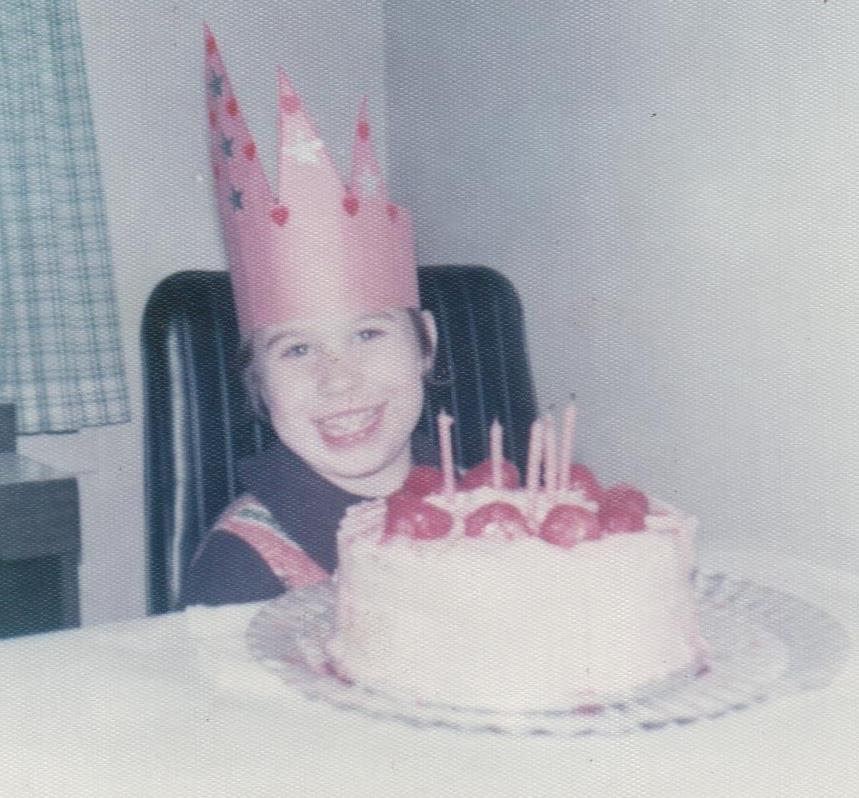 I’m doing things differently for my birthday this year.
When I turned to 29, I was so busy comparing myself to others I thought I hadn’t achieved much. When I turned 35, I wondered why I hadn’t lived up to my potential. And when I turned 40, life got in the way of celebrating.
But I’m turning 46 this week, and instead of worrying about what I may or may not have achieved, I’m embracing everything I’ve learned.
I’m not talking about facts or skills. I’m talking about all the things I’ve learned by really living life. Those lessons that came from experience. Those lessons that have shaped who I am.
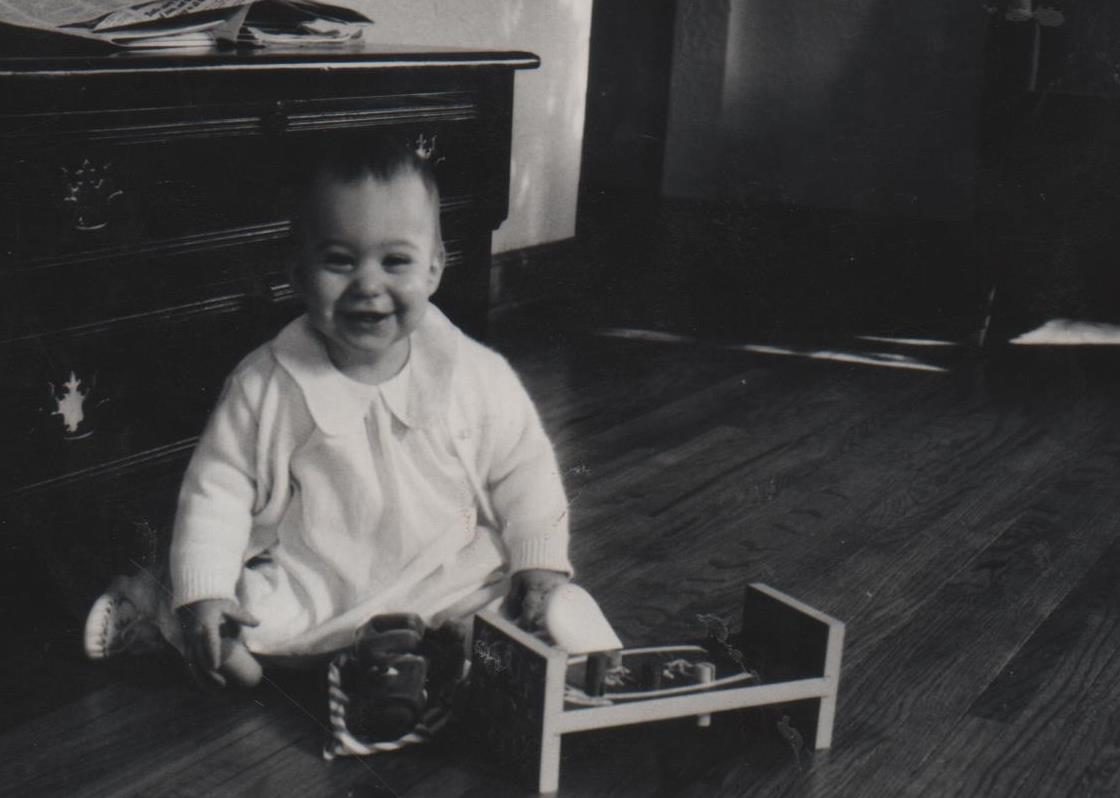 Five Facts Before Age Five
1. Screaming, whining and complaining often get you attention, sometimes get you what you want but never make anyone feel good. Smiling always makes people feel good.
2. Dry dog food does NOT taste just like cereal. Don’t believe anyone who tells you that it does.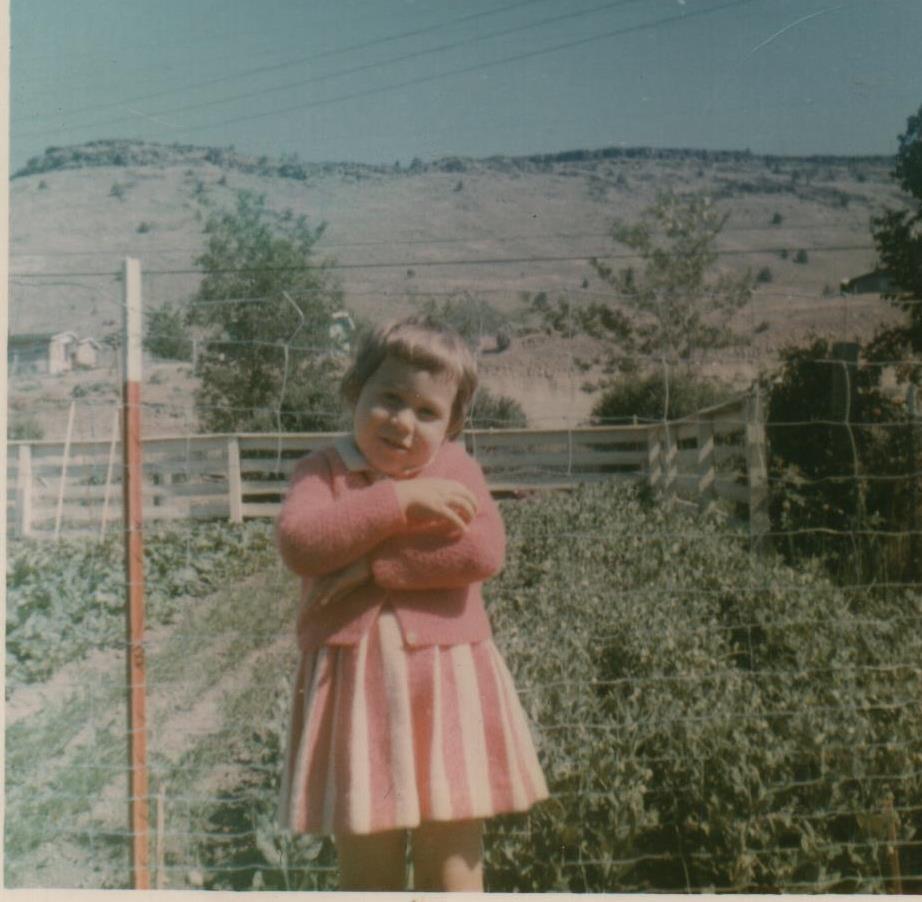
3. Accidents happen when you are laughing uncontrollably with friends.
4. Never trust five year-old boys with scissors, especially when they have little sisters with pony tails.
5. Fashion isn’t everything. Attitude IS everything.
Ten Tenets By Age Ten
 1. You can keep a caterpillar, but you can’t keep the butterfly it becomes.
2. Boy germs are really quite harmless.
3. You will always regret being too afraid to slide down the fire pole.
4. You will never regret staying in at recess to finish the tissue paper corsage for your mom for Mother’s Day.
5. Sometimes people cry when they are happy. But even if they are happy, they probably still need a hug.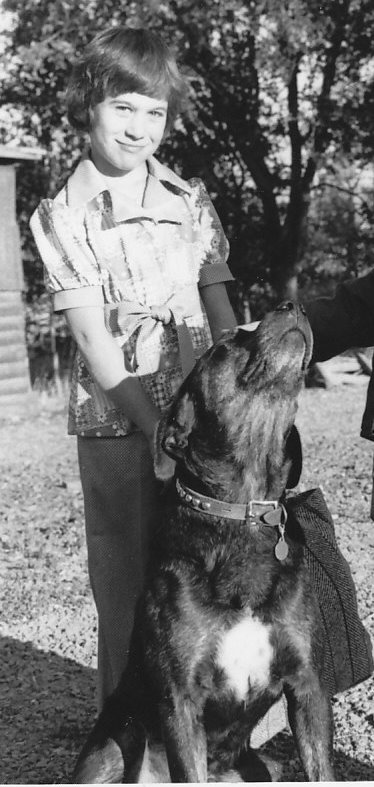
6. Your world can change every time you open a book and read.
7. You have the potential to change someone else’s world every time you pick up a pencil (or a crayon) and write a letter or a story.
8. A dog will always keep your secrets. Always.
9. When you get a present you don’t like, you have to smile and pretend it’s exactly what you wanted. This most likely means you will get more presents you don’t like.
10. Using your imagination is much more entertaining than watching television.
 Eight Adages of Adolescence
1. Being true to yourself can be very, very difficult. But pretending to be someone you’re not is even more difficult.
2. Boy germs may be harmless, but they are also very interesting.
3. Don’t try to grow up too fast. Acting like a kid is actually more fun than acting like an adult.
4. Life is all about change. If you resist it, you’ll just be angry and disappointed. You might as well embrace change and adapt.
5. There is nothing like going through a hard test together to unite people who have absolutely nothing else in common.
6. There will always be people who think they know who you are. All that counts is that you know who you are.
7. Creativity is a necessity if you’re going to break the rules.
8. If you listen to what other people say about you rather than to your inner voice, you’ll never be happy.
A Collection of Collegiate Lessons
 1. There is absolutely nothing better than finally discovering people who think like you think.
2. There is absolutely nothing more educational than living with people who are completely unlike you.
3. First impressions shouldn’t count for much at all. You can never predict the people who will support you when your world is crumbling.
4. At some point, you just have to stop worrying about people who don’t like you and simply surround yourself with those who do.
5. There are times when you have to forget about achieving anything meaningful and just embrace the moment. Life is about creating memorable moments.
6. Fashion CAN be an attitude.
Eight Pieces of Wisdom from Adulthood
 1. Your past will probably catch up with you, but that’s not necessarily a bad thing.
2. The most beautiful moments are often the most quiet ones.
3. Acting like a kid is still more fun than acting like an adult. If you forget how to act like a kid, all you need to do is buy some Play-Doh.
4. If you’ve lost contact with someone who meant a lot to you, have faith. People who are really important will probably reenter your life at some point.
5. A lot of really incompetent people achieve positions of power, but that doesn’t mean others don’t recognize their ineptness.
6. Sometimes failure is the best thing that ever happens to you.
7. Never EVER stop dreaming and believing in possibilities. Just because something doesn’t happen when you want it to happen doesn’t mean it will never happen.
8. We often hate how we look in pictures. But, years later when we look back on those pictures, they will definitely make us smile.
Rockefeller’s Reminder
 Last week, I had the privilege of attending a community meeting hosted by U.S. Senator Jay Rockefeller about the reauthorization of the Violence Against Women Act (VAWA). Since there was little doubt that our soon-to-retire senator was going to vote for VAWA, the event was really an opportunity to raise awareness about the issue of domestic violence.
Invited guests included survivors, social workers and advocates who work tirelessly to address the issue. A local police officer was the only man selected as a designated speaker for the round table discussion, but he received a great deal of Rockefeller’s attention.
While domestic violence survivors told heart-breaking stories, many of Rockefeller’s questions were directed to the police officer. The Senator seemed absolutely fascinated by the officer’s description of our local police department’s ride-along program, which provides an opportunity for community members to literally ride along with police officers during any shift. Those who participate have the opportunity to really understand what police face and learn about some of the biggest issues facing our community.
At the time, Rockefeller’s intense interest in the program seemed a little off topic. But in retrospect, I think the Senator was demonstrating what true wisdom is.
In a world where people are intentionally inflicting harm on others, where relationships are often about power struggles rather than support and where individuals are suffering on a daily basis, true wisdom is knowing that doing the right thing requires more than simply responding to the needs of others. Maybe because I’ve recently been watching too many people who think doing the right thing means doing things their way without considering all that others have or could contribute, Rockefeller’s reminder has stuck with me:
Doing the right thing means ensuring resources and services are available for those in need, but is also means focusing on what is positive and good.
Doing the right thing means reinforcing and promoting positive and healthy relationships among people and organizations.
And doing the right thing means really listening to others and acknowledging the power of what they are saying and all they are contributing.
That’s the wisdom Senator Rockefeller brought to the table. Unfortunately, he won’t be at the table much longer. Last month, he announced he will not be seeking a sixth term as U.S. Senator after his current term ends in 2014. West Virginia lost Senator Robert Byrd in 2010, and now we are losing Senator Jay Rockefeller. Regardless of political affiliation, all West Virginians should recognize the implications.
The cynical among us might say that caring about the poor was easy for Rockefeller, who was born into one of the richest families in America and never had to worry about money.
But I disagree.
Instead of choosing to live a life devoted to money rather than meaning, he chose to work on behalf of people who live in one of the poorest states in the nation. And even though I live closer to Washington D.C., Baltimore, Philadelphia, Pittsburgh and New York City than I do to our state capitol, I still care about what happens to this state.
And I’m hoping whoever steps into his position is someone who understands the importance of asking a local city police officer to explain a simple program that involves reaching out to others to develop stronger partnerships and healthy relationships.
That’s wisdom and a reminder about how we should all live our lives.
Thank you for your service and your wisdom, Senator Rockefeller.
All Good Superheroes Ask Questions, Don’t They?
 According to some people, I suffer from a very bad habit, and, if I knew what was good for me, I’d have given it up for Lent.
But I didn’t and I probably never will, so my friends and family are forced to deal with my habitual need to ask questions. Lots and lots of questions. About anything and everything.
My husband and kids call me “The Interrogator.”
I’d like to think that means they consider me a superhero who unveils misdeeds, liars and unacceptable behavior by eventually asking so many questions the truth is revealed.
Unfortunately, they aren’t paying me a compliment and instead are simply letting me know they find my all questions annoying. I’ve also been told that people who ask a lot of questions are subconsciously trying to take control of a situation.
There’s probably some truth to that, but I’d rather be annoying than to sit back and just allow people and organizations to get away with actions that affect and sometimes hurt others.

(UPI Photo/Roger L. Wollenberg)
I also like to think that, as an inquisitor, I’m in good company.
This week, at her first Banking, Housing and Urban Affairs Committee hearing, Senator Elizabeth Warren questioned bank regulators about why they hadn’t prosecuted a bank since the financial crisis. Her question seemed simple enough, “Tell me,” she requested “about the last few times you’ve taken the biggest financial institutions on Wall Street to trial. Anybody?”
Instead of simply responding “never,” the regulators tried to explain why there was no need to prosecute.
As with anything political, there are those who agree with Senator Warren and those who don’t.
But her actions, to me, were bigger than pointing out the double standard for big corporations versus average citizens or about ensuring that bank executives don’t continue to pass the repercussions of their behaviors onto the general public. Her actions were about her willingness to ask the tough questions and to not back down. Her actions were about repeating the same question over and over again until someone is forced to answer. And, to be honest, her actions were about validating my own behavior.
I’m not even close to being in Elizabeth Warren’s league much the less in the Justice League, but I do believe heroes have to ask the hard questions. If they don’t, silence persists, and nothing ever changes.
So even though my family insists on calling me “The Interrogator” to try to shut me up, it’s not working. Instead, I’m thinking of getting one of those t-shirts with a big question mark on the front. It may not be the fashion statement superheroes make when wearing their capes, but it just might be a start.
Because if no one questions the status quo, then nothing ever changes or improves. So, far all the
Everything I Need to Know About Valentine’s Day, I learned in First Grade
 I always liked school, but I absolutely hated first grade. That’s because I had a very, very, very mean teacher.
Even forty years later, I’m still traumatized by memories of Mrs. Gladwill.
Normally, I’d feel really guilty calling someone out by name but 1) I’m not the only who has scars inflicted by Mrs. Gladwill and, 2) She’s dead. She died in 2008 at the age of 94. I know this because my mother sent me a link to her obituary. My mother, who is a very wise woman, knew I needed closure.
There’s no need to go into all the details of why first grade was difficult. There are just too many of those details, such as:
Watching fellow students have their ears twisted;
Sitting in class in fear of having “accidents” because, instead of giving permission to use the bathroom, Mrs. Gladwill gave lectures about “not planning accordingly”;
Having my desk put in the corner of the room so others couldn’t cheat from my papers.
But my worst memory, by far, is Valentine’s Day.
Back in the early 1970’s, before there were strict dietary guidelines in schools, Valentine’s Day parties were one of the celebrated days of the school year. Preparation began well before the actual day. By the beginning of February, letters were sent home with both the names of classmates and a list of snacks, such as cookies, cupcakes and candy, that parents were asked to contribute. We used that list of names to painstakingly address a card for every single classmate – whether we liked the person or not. But we did pick out “the best” cards and candy (every card had to have candy) for our friends.
In school, we decorated mailboxes (shoeboxes covered with construction paper) in which our Valentine’s Day cards were to be delivered. The actual celebration was to be a festival of sugar and giggles.
The day before the big Valentine’s Day party, I could no longer hide the fact I couldn’t swallow. I’d begun to worry the day before at school when eating lunch was a painful challenge. At breakfast, while I was trying to somehow swallow a spoonful of Cheerios, my mother took one look at me, told me I looked like a chipmunk and declared I had the mumps.
I wasn’t just devastated. I was horrified.
Mrs. Gladwill simply did not tolerate illness. Every day, after she took attendance, she would take a piece of chalk and scrawl the names of the absent on the blackboard. In the eyes of first graders, having your name on the blackboard was equivalent to the adult version of being forced to wear a scarlet letter. Walking into the classroom and seeing your name on the blackboard was the ultimate walk of shame.
Being diagnosed with mumps was not only a sentence to take that walk of shame, but it also meant I was going to miss the Valentine’s Day party. In the eyes of a six-year-old, life couldn’t have been much worse.
That Valentine’s Day was probably one of the longest days of my life as I spent every minute imagining all I was missing. Finally, sometime after 3:00, I heard the squeal of the school bus’ brakes as it stopped in front of my house. When my brother came into the house, he didn’t call me chipmunk or tease me for missing all the festivities. Instead, he handed me the shoebox I had so painstakingly decorated only a few days earlier. But now, it was full of Valentine’s and candy. I spent hours reading and treasuring all of the cards, even the ones I knew weren’t heartfelt.
A few days later when I returned to class, my name was one of many written in dark chalk on the blackboard. Apparently, some nameless person (me?) had come to school with the mumps and shared the virus with everyone else.
Eventually, attendance went back up and our class returned to the same, miserable status quo. But I didn’t. That Valentine’s Day taught me a lot about love:
1. Love is about the memories we treasure because, even though they sometimes grow out of difficult situations, they remind us of people and challenges we’ve overcome.
2.Love is about finding a song that will mean something to you at any age. For me, the Rolling Stones got it exactly right. “You can’t always get what you want, but if you try sometimes, well you just might find, you get what you need.”
3. Love is about having a family whose support will always make the worst day a little bit brighter.
4. Love is learning to treasure all the small gifts, even ones from people who may not realize that they were giving anything of importance.
5. Love is about taking care yourself, even when others will try to make you feel as though their needs should come first.
Most of all, I learned that Valentine’s Day is much more complicated than cards, or candy or having just one special person in your life. It’s about recognizing and acknowledge everything that makes you happy.
And, over the past 40 years, I’ve been immensely blessed with people, memories and circumstances that make me happy.
Which, is why, even though I may not entirely succumb to the sappiness of Valentine’s Day, I certainly embrace the sentiments, and the lessons, it’s taught me.
Did You Just Stick My Jelly Beans Up Your Nose?
 There are those days when I feel as though people are sticking my jelly beans up their noses.
In more innocent times, I never worried about leaving a bowl of jelly beans on my desk. Instead, I was pleased to share with others while regularly snagging a few pieces of candy myself.
I should have known better.
I should have realized that some people will always find a way to sabotage life’s small pleasures because they are so focused on meeting their own needs.
I learned the lessons of jelly beans when I was getting my master’s degree and had classes with someone from high school. I don’t remember ever talking to my fellow student in high school and was honestly surprised he’d even graduated from college.
I had preconceived beliefs about him, and he, in turn had preconceived beliefs about me. I remember the day he told me, “you are actually really funny. In high school, your friends told me you were funny, but I never believed it. I always thought you were just too smart and too serious. You really aren’t that serious at all.”
I couldn’t really fault him for never getting to know me as I’d never made the effort to know him.
Instead, I’d simply thought he was someone who spent a lot of time in the principal’s office.
Turns out, I was wrong.
He rarely spent any time in the principal’s office. Instead, he spent a lot of time with the vice principal, who was in charge of discipline.
“Mr. Tidquist and I,” he said, “were quite familiar with each other. But I really didn’t like him or the jelly beans he always kept on his desk.”
I shouldn’t have asked about the jelly beans, but I couldn’t resist.
“Mr. Tidquist always had a jar of jelly beans on his desk, and sometimes he would grab a handful and eat them while lecturing me,” he told me. “One day, I was sitting in his office alone waiting for him to come in, and I was just so angry. I kept looking at those jelly beans and thinking of Mr. Tidquist eating them. I just couldn’t help myself. I would take few, put them up my nose, put them back in the jar and then stick some more up my nose.”
He smiled.
“I can’t even describe how I felt when Mr. Tidquist came back in his office, sat at his desk, grabbed a handful of jelly beans and ate them.”
After hearing the story, I couldn’t immediately describe how I felt either, other than to say I was relieved that I’d never been in Mr. Tidquist’s office and therefore never been tempted to eat his jelly beans.
But lately, I feel as though my decisions, beliefs and values are like the jelly beans on Mr. Tidquist’s desk. I take pleasure in being a strong and educated woman who can think and act on her own. I like to believe that by sharing and discussing my opinions, I just might help make the world a little bit better.
Instead, when I’m not around, some people choose to express their dislike and misperceptions by judging me, discrediting me or misinterpreting my actions. But they don’t say anything to me directly.
In other words, they are sticking my jelly beans up their noses.
Since I’m human, there’s a part of me that can’t help but be bothered and offended. But there’s another part of me that realizes how their behavior has nothing at all to do with me. Which is why, instead of taking my jelly beans off my desk, I’m thinking of putting a mirror next to them.
That way, when people put my jelly beans up their noses, they are forced to see how their words and behavior only reflect back on them.
In the meantime, I’m going to continue to enjoy sharing my jelly beans with everyone who appreciates them.


 Just So You Know