Blog Archives
The Starfish in the Greenhouse
My dad is a man of nature.
He has a degree in forestry, and even now, on the verge of 80-years-old, he still nurtures gardens full of flowers and vegetables.
 If I had only one word to describe him, that word would be green.
He had a green thumb and, when I was still a child, he even built his own green house. That ensured that when conditions didn’t cooperate with his plans, he could still grow the plants he wanted.
Because he was a man of dirt and seeds, I’ll never be able to think of my dad as a person of sea and surf.
But my mother is.
She’s loves to sit on cliffs over the ocean and watch waves crash into the rocks.
To this day, the only times I remember seeing my mom not being productive were the moments she spent watching the ocean.
Maybe that’s why my dad made sure she had that opportunity at least once a year.
On one of those trips to the Oregon Coast during my childhood, I found a starfish on the beach.
My dad, who was walking with me along the shore when I picked up the starfish, seemed less than delighted that I wanted to keep the starfish. But he let me take it home anyway. He even suggested I put it in the greenhouse so it would dry out.
I took him up on his suggestion, but I grew to regret it.
The starfish may have dried out, but it also stunk up the greenhouse.
For years it stunk up that greenhouse. And every time I entered it, I was reminded of that stinking starfish.
But my dad never mentioned it.
I doubt I’ll ever know why he didn’t, but I’m pretty sure the answer has something to do with love.
Love isn’t about having people in our life who find peace in the same place we do.
Love is about having people in our life who show us how to find joy in places we wouldn’t otherwise look.
365 Reasons to Smile – Day 19
 During a camping trip last summer, my daughter and her friends were getting short-tempered and irritated with each other.
Instead of telling them to get along, I told them to lie down on the grass and look up at the sky.
The other girls looked at me like I was crazy, but my daughter knew what to do.
She started describing what shapes she saw in the clouds. The other girls soon caught on, and their  irritation was replaced with excitement and giggles.
You simply can’t be angry or stressed when you are using your imagination.
And knowing that stress relief trick always makes me smile.
Day 19: Summer Clouds
Day 18: Bartholomew Cubbin’s Victory
Day 17: A Royal Birth Day 16: Creative Kids
Day 15: The Scent of Honeysuckle Day 14: Clip of Kevin Kline Exploring His Masculinity
Day 13: Random Text Messages from My Daughter Day 12: Round Bales of Hay
Day 11: Water Fountains for Dogs Day 10: The Rainier Beer Motorcycle Commercial
Day 9: Four-Leaf Clovers Day 8: Great Teachers We Still Remember
Day 7: Finding the missing sock Day 6: Children’s books that teach life-long lessons
Day 5: The Perfect Photo at the Perfect Moment Day 4: Jumping in Puddles
Day 3: The Ride Downhill after the Struggle Uphill Day 2: Old Photographs
365 Reasons to Smile – Day 18
 I discovered the genius of Dr. Seuss before I knew he was the author of such books as The Cat in the Hat, Horton Hears a Who and Green Eggs and Ham.
The first time I opened the pages of The 500 Hats of Bartholomew Cubbins, I fell in love with the story and its lesson.
Bartholomew Cubbins was poor, but he did his best to follow the law, which required him to take off his hat when in the presence of the king.
Unfortunately for Bartholomew, every time he removed one hat, another immediately took its place. Then, after removing hundreds of similar hats, each new hat started becoming more extravagant than the previous.
After Bartholomew was threatened with death for his inability to go hatless, he finally removed the last hat, which was decorated with gold and jewels.
The king was so impressed that he not only granted Bartholomew a reprieve for wearing a hat in his presence, but he also purchased the last hat for himself.
Even as a child, I got the message: there will always be people who abuse their power in order to make themselves feel important. Often, we are forced to comply to protect ourselves. But eventually, if we persevere and do the right thing, we will prevail while those who worship power continue to struggle with their own weaknesses.
That lesson always makes me smile.
Day 18: Bartholomew Cubbin’s Victory
Day 17: A Royal Birth Day 16: Creative Kids
Day 15: The Scent of Honeysuckle Day 14: Clip of Kevin Kline Exploring His Masculinity
Day 13: Random Text Messages from My Daughter Day 12: Round Bales of Hay
Day 11: Water Fountains for Dogs Day 10: The Rainier Beer Motorcycle Commercial
Day 9: Four-Leaf Clovers Day 8: Great Teachers We Still Remember
Day 7: Finding the missing sock Day 6: Children’s books that teach life-long lessons
Day 5: The Perfect Photo at the Perfect Moment Day 4: Jumping in Puddles
Day 3: The Ride Downhill after the Struggle Uphill Day 2: Old Photographs
Happiness Should Be Like a Dog With a Snowball
 The year 2012 ended with a white Christmas, which is fairly unusual here in the Eastern Panhandle of West Virginia. But then, Mother Nature hasn’t been very predictable, or even very kind, over the past twelve months. Her random and sometimes disruptive behavior was fitting for a year when too many people experienced upheaval and loss. But just like Mother Nature, 2012 also brought bright and sunny moments along with the storms. All serve as reminders of the lessons we need to learn and/or remember.
Lesson 1: We Should Experience Happiness Like a Dog with A Snowball My German Shepherd, Rodney, adores the snow. He loves bounding through it. He loves smelling it. He loves eating it. And most of all, he loves playing in it. As a true fanatic for all things that can be thrown and caught, when the white stuff is on the ground, he begs for someone to pack and throw a snowball.
This Christmas, I noted how thrilled he was with every snowball he caught, even though each fell apart or dissolved in his mouth. Instead of being disappointed when a snowball was gone, he was just as eager for another, which he enjoyed with no concern that it too would disappear.
We should all appreciate our happy moments just like my dog appreciates snowballs. They may be fleeting, but instead of worrying that they may not last, we should enjoy each moment and remain steadfast in our belief that there will always be more.
 Lesson 2: We Can’t Always Control Our Circumstances or Protect Those We Love, but Any Attempts To Do So Are Always Good for a Laugh At the end of June, the Eastern Panhandle, like the rest of West Virginia, was hit unexpectedly by a derecho, or a land hurricane. Most of us had never heard of such a storm prior to the event, and since there were no warnings, we didn’t initially realize the severity of what had happened. We discovered the extent of damage the next day when we saw the downed trees and power lines and when many people experienced a loss of electricity for weeks.
The event left its mark, so in October, when meteorologists called for the Eastern Panhandle to be in the path of Hurricane Sandy, most of us wanted to be prepared. Some of us over-prepared. And some of us even freaked out… a bit.
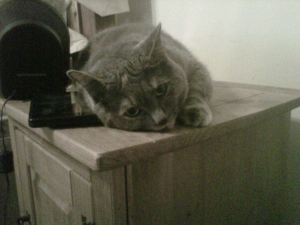
For my part, I decided my family should ride out Sandy in our basement to avoid the hazards of trees crashing through our roof. We were all safely downstairs when I realized that Skitty, our cat, wasn’t with us. Since Skitty has a tendency to hide in unusual and hard-to-find places, I immediately assigned all family members to search for her. As the wind howled and the trees creaked, we took turns calling her name and shaking a bag of cat food, which is usually the best way to get our over-weight feline out of hiding. This time it didn’t work, and I began to worry that my cat, who is generally too lazy to go outside, was battling the elements.
Just as my anxiety got the worst of me, my son, in his usual dry and sarcastic way, told me that the cat was safe. As it turns out, the only thing she was battling was her disdain for a family who didn’t realize that she’d taken shelter in the basement long before the rest of us. My cat had the sense to do what she needed to do and not be bothered by the drama that surrounded her. I should have done the same.
I hadn’t had enough warning to worry about the derecho, and we managed through the storm and the aftermath just fine. I had way too much warning about Sandy, and even though we also managed through that storm and aftermath just fine, my stress level had gotten so high that even my cat chose to ignore me.
Sometimes, we get so wrapped up in either avoiding a situation or in worrying about what might happen, we simply forget that we can only do so much, we must accept that some things are beyond our control and we should believe in the sound judgment and appropriate actions of others. The results won’t always be what we hope for, but too much worry is only good for providing memories that allow us to laugh at ourselves later. 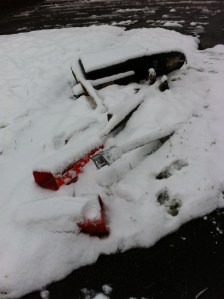
Lesson 3: Life Rarely Goes According to Plan, but When Bad Things Happen, We All Have a Great Capacity for Resiliency and Recovery No one in my family expected the snow that arrived on Christmas Eve, and, even after it began to fall, none of us expected it to last long. But last it did. And in the midst of final preparations for our Christmas celebration, the snow covered the grass and then it covered the roads.
When we realized we were going to have a white Christmas, we celebrated by taking a family walk with Rodney. Unfortunately, Rodney was more excited than all of us, and the jumping, the barking and the lunging, drove my husband crazy to the point he just wanted to go home. Instead of enjoying the beauty of the untouched snow, we were trying to control an overly enthusiastic dog. I worried that our Christmas Eve would become a battle over the dog.
As Rodney began to calm down, we began the climb up the hill on the far side of our neighborhood. When a truck came speeding down the snow-covered hill, we immediately jumped off the road and into a neighbor’s lawn. And then we heard loud thumps and bangs. We turned to see that the truck had gone off the road and taken out two mailboxes and multiple newspaper boxes. Packages littered the ground, and I was relieved that Rodney’s behavior was all but forgotten.
We empathized with the driver and the home owners that such an incident happened on Christmas Eve. But when put in perspective with the loss some families faced this Christmas, the event was far from tragic. For many, Christmas isn’t always just a reminder of family traditions and family warmth. It can also be a reminder of could-have-beens, might-have-beens and regrets. And yet, most of us still believe in the magic of the holidays.
Yesterday, as I was walking up that same hill with Rodney during yet another unexpected snow storm, I noticed the mailboxes were already back up. As is true with human nature, the owners were trying to get everything back to normal. Seeing the mailboxes standing so quickly after witnessing their near demise less than 36 hours earlier was a reminder that no holiday is ever perfect. But planning for perfection only leaves room for disappointment, and planning for disappointment only leaves room for anxiety. But planning to enjoy life’s imperfections only leaves room for joy.
I plan to carry that lesson with me forever and to look forward to whatever the weather, and life, have in store for 2013.
A Perspective From the Backseat of a Car
 I spent some very long hours in the backseat of a car when I was a child. That’s how our parents transported kids from place to place when we weren’t riding in the bed of pickup trucks without toppers.
Riding in the backseat of a car was torturous.
Even though we were never confined to car seats, neither did we have electronic games nor videos to keep us preoccupied. Instead, we entertained ourselves by reading books, playing travel games or irritating each other.
When none of those activities interested me, I simply paid attention to the world around me.
I paid attention to the landscape passing by outside, and I paid attention to my parents’ conversations. I just didn’t participate in the conversations very much.
I used to feel quite grown up when I listened to adult discussions about politics or current events or even us children. And I liked feeling grown up. At least I thought I did until one road trip changed me forever.
We were on our way home from somewhere, and we were very hungry. Knowing my parents, they were probably trying to get home before they wasted money at a restaurant when there was plenty of food at home.
But the hour was late, we were irritable and food was necessary.
So they decided to appease us, and we stopped at what I recall was a ski resort. My family walked past a long line of people waiting to get into the restaurant’s bar. But when we reach the dining area, the host gave my brother and me a disgusted look then turned to my parents and said, “It’s after 9:00. Children aren’t allowed.”
Instead of simply turning around and looking for food elsewhere, my parents chose to argue with the host. And I chose to wish I was a million miles away. The host prevailed, and we had to once again walk by the long line of people.
I honestly don’t remember if we got something to eat elsewhere that night. I do remember the discussion that I heard from the backseat of the car. My parents were frustrated they had faced discrimination because of their children.
I also remember feeling guilty that I was a child who apparently didn’t deserve to eat in a real restaurant. And I remember the look on the host’s face when he sneered “Children aren’t allowed.”
That incident haunted me for years.
I balked every time my parents headed into a restaurant that appeared to be more for adults than for children. I didn’t like going somewhere I wasn’t wanted, and I didn’t want to be in a place where people could single me out as someone who didn’t belong. And I certainly didn’t want to be in a place where people thought I wasn’t worthy or capable of dealing with the situation.
So, when someone asks “what do you think about kids in adult-oriented places?” my immediate answer isn’t “as long as they behave, they should be allowed.” Nor is it “they don’t belong.”
My answer has nothing to do with whether parents think their children are mature enough to handle a situation, whether they are trying to expose their children to culture or whether they just want to parade their children as well-trained little people in front of others.
My answer has everything to do with how the children will feel in that situation and whether they will truly miss anything by not being there. In most cases, the children are probably better served by waiting a few years.
That’s a lesson I learned from all the years I spent in the backseat of a car.
When I was there, I wanted nothing more than to move to the front seat. But in retrospect, I learned a lot in the backseat when I was often forced to observe and listen. When I was finally allowed to ride in the passenger seat, I engaged in conversations with my parents. I also had a clearer picture of where we were headed. A few years later, I even moved into the driver’s seat, where I had to make tough choices on my own. But by then, I was prepared.
The learning process was gradual, not sudden. And it all started with the knowledge gained from riding in the backseat of a car.

A Leap From The Top Step
On May 14, 1972, I got my first real lesson in fear.
That’s the day my uncle, my mother’s only sibling, was killed in a plane crash.
That’s also the day I stopped leaping from the top step.
Before that day, I loved jumping off the front steps of our small rental house on the Indian Reservation where my father worked. The joy of the  jump was partly due to a sense of flying and partly due to the risk I was taking. More often than not, instead of landing on my feet, I’d land on my hands and knees. But the scraped knees and elbows were a small price to pay for bragging rights.
According to my brother and his friends, walking down the steps was a sign of weakness. Jumping was the only acceptable means of getting off the porch, and the jump had to be from the top step. Even jumping from one step down was considered cheating and a more egregious offense than forgetting to jump at all.
So, every time I walked out the front door, I would hurl my short, five-year old legs over five steps and land in various positions on the sidewalk. Then, I’d brush myself off and walk away with a sense of pride.
That all changed when my uncle crashed his twin-engine plane.
That Mother’s Day started in an ominous way. It began when my dad and mom, a burgeoning journalist, woke up my brother and me before dawn and bundled us into the back of our red, Ford pickup. There had been a train wreck, and we were going to the site. My dad, brother and I stayed in the truck while my mom, notepad in hand and camera around her neck, wandered off to interview people. Sitting in the truck, my imagination ran wild with thoughts of who and what Mom was encountering.
Hours after we had returned, the phone ran, and my mother disappeared for a long, long time, When she finally returned to our living room, she told us “Uncle Lowell was in a plane crash.”
My imagination, already quite stirred up from the morning’s adventure, envisioned all of the injuries he could have sustained. For some reason, I became fixed on the idea that he had, at a minimum, broken his leg. The possibility that he’d died never crossed my mind, and I don’t even remember how or when my mother finally told us. I do know that by the time she did, I’d so worked myself up about the horrors of broken bones that dying seemed like a great alternative.
I’d also decided that, based on my lack of coordination, the next time I jumped off the top step, I would most certainly break my leg.
That fear ate at me, and the next time I had to go down the steps, I couldn’t jump. I was frozen, and the ground seemed to be a long, long, long way down. I eventually jumped from the second step from the top, but I would never leap from that from the top step again.
Now, forty years later, a five year-old’s leap, or lack of a leap, seems insignificant. But it’s not.
That experience taught me about regret and about how inane decisions are made out of fear, limited information or both. It’s also taught me that sometimes we get so wrapped up in an imaginary fear that we are blinded from seeing the genuine and more critical facts.
I still fall into the trap of letting unfounded fear affect my decisions. But more often than not, I remind myself of the joy that comes from leaping off the top step and the pride that comes from going outside my comfort zone.
And then I jump.
The Reason I Never Forgot Eddie Pee Pants
 On a beautiful spring day several weeks ago, my kids and I were heading to lunch a few blocks from my husband’s office on the crowded streets of Washington D.C . Dressed in only shorts and t-shirts, we didn’t really fit in with the men and women in business attire who were walking with a great deal more purpose.
But we had one thing in common: we all pretended we didn’t see the homeless person still wrapped in a blanket and sleeping in a doorway on a busy sidewalk.
I saw both of my kids glance over at him, but neither said anything. I didn’t either. Soon, the homeless person was forgotten.
Almost.
Because somewhere in the back of my mind, he stayed with me.
He’s still there.
It’s not that I’ve never seen homeless people before. I see them every day. I even have a semi-relationship with the guy who hangs out at the park where I walk my dog. If I don’t at least wave at him, he coughs or makes some other noise until I acknowledge him.
But the homeless guy sleeping on the steps was different, because he might as well have been invisible. Everyone, including me, blatantly ignored his existence.
I understand why the business people ignored him: they probably see him everyday. He’s as much a part of their daily landscape as the traffic lights, the street signs and the blur of faces they regularly encounter.
But I didn’t have any excuse, and I couldn’t figure out why I didn’t even talk to my kids about him. That’s just not like me at all. If anything, I usually talk way too much about such things.
The only explanation I could find is one I don’t like: I was going along with the crowd. It was just easier.
It’s not the first time I’ve had to make that admission.
When I was in elementary school, I didn’t even know the full name of the boy who rode the school bus. I just knew everyone called him Eddie Pee Pants. You don’t need to be a genius to figure out how he got the name.
I don’t remember calling him that to his face, but that’s the name I used when my peers and I were discussing how to avoid him. No one wanted to have to sit with Eddie Pee Pants on the bus. If you did, you’d not only have to smell him, but you would get “Eddie Pee Pants germs.”
I knew what we were doing was wrong, but I justified my behavior by telling myself that I was never actually mean to his face. But the guilt got worse when Eddie’s life got worse.
One Saturday morning, I joined my dad at the top of our driveway to watch the drama unfold on a hill about a mile from our house. A dilapidated mobile home was on fire. Flames were shooting out the roof, and smoke was turning the sky black.
“That’s a total loss,” my dad commented.
I didn’t know until Monday that the old, junky trailor everyone said was an eyesore was Eddie’s house.
I have no recollection of what happened to him after his house burned. I just know he never rode the bus again, and I don’t remember ever seeing him at school again. I don’t even remember if there were any injuries or fatalities in that fire.
What I do remember is wondering why I wasn’t nicer to Eddie and feeling horrible that I’d never have an opportunity to undo my misdeeds.
Eddie isn’t the only person I’ve ever discounted or belittled. But he’s the first person who taught me three essential life lessons:
1. Treating someone poorly never makes you feel better about yourself.
2. Sometimes you don’t get a second chance to do the right thing.
3. Issues such as poverty, child abuse and homelessness are actually about individuals — people who, regardless of the reason for their circumstances, still have value.
I’ve taken that third lesson to heart. Eddie, like the homeless person in the doorway, gave me something priceless. They taught me to look beyond the unkempt appearances, poor hygiene or odd behavior. They’ve taught me that sometimes the person who needs to change their attitude or perception is me. And they’ve taught me that speaking up feels a lot better than putting someone down.
They were priceless gifts in my life, and I hope I can pass their lessons on to my children. And that, if nothing else, is what makes their lives so valuable to me.
Rocks on the Road and Rocks in Our Heads
 Some of life’s toughest lessons are the ones we learn the hard way.
Some of life’s most important lessons are the ones we sometimes never learn at all.
And some of life’s simplest lessons are the ones we often just ignore – like the problem with rocks in the road.
As a bicyclist, I ride an average of at least 10 miles a day. Because of that, I ride over a lot of rocks. For the most part, I don’t even realize the rocks are there. But every once in a while, my tire hits a rock and – due to speed or angle – I get knocked off course and sometimes even knocked down. Getting knocked down hurts, and sometimes the resulting injuries even leave scars.
Because of that, when I do notice a rock, I try to avoid it. And when there are a lot of rocks, I might even change course.
That’s life on my bike.
But I’ve noticed a lot of “rocks on the road” in the rest of my life too.
These rocks are often comments or actions that people believe are completely normal and appropriate. But to the nearby traveler on the road of life, those same words or actions may be slightly offensive or, at worst, hurtful. Sometimes they can also cause people to change course or fall down.
Just the other day, I was having coffee with a colleague who told me that years ago she had come to my office to talk about the possibility of interning with me. When she dropped by for the unscheduled visit, she was told I was in a meeting but that I was just with my intern and could be interrupted.
That one word “just” was enough to make her turn around and walk out the door. She didn’t want to be “just an intern.”
To be honest, I think I might have been the person who told her not to worry, and she changed the story to make me feel better. I don’t remember, but regardless of who said it, the word “just” became a rock in her life’s road.
Fortunately, for my colleague, her change of course is working for her. But she also had the advantage of already having several life successes under her belt. She could handle that rock.
I worry more about people who have so many rocks in their road that they can’t avoid them: people who have been knocked down so many times that they don’t trust that the road ahead gets any easier. Sometimes they’ve fallen so much, they have permanent scars.
Instead of helping clear the road, many of us are busy putting more rocks in their way. Sometimes those rocks are too big to move or go around. 
For the most part, I don’t think we are doing this on purpose. But, at times, I think we are, especially when we make judgments about people whose circumstances we know nothing about. That’s when we become victim of the rocks in our heads.
I’ve noticed a trend of people posting comments online that belittle others who are “on welfare” or “on food stamps” or that make assumptions about people based on appearance. I don’t know which is the bigger rock: those comments or the bitter ones about people with expensive shoes, phones or cars who are receiving some sort of government assistance.
Here’s the deal. I, like most people I know, don’t believe that government assistance should be a permanent way of life. I also don’t believe that government assistance should be used for anything but basic needs. And I don’t believe smart phones and SUV’s are basic needs. I also agree that some people manipulate the system, and that we need to be diligent about stopping such abuse.
However, I also know that most people who receive assistance have fallen on hard times. Some may have previously afforded a lifestyle that included expensive clothes and cars. But then they lost their job or faced another crisis that caused them to deplete all their available resources, including help from friends and family. After that, they were forced to seek public assistance. That expensive car may be all they have left after losing their home, a spouse or a way of life.
Instead of assuming the rocks in their road are their own fault, maybe we should think about how we can pick some up, roll them out of the way or help these individuals navigate a new course.
Doing this follows the simplest life lesson: do unto others as we wish them to do to us. I know if and when I hit tough times, I don’t want to ridiculed and/or blamed.
But this lesson is so simple that a lot of us ignore it when convenient. Or until there’s a rock in our own road. Or until we get the judgmental rocks out of heads.
Unfortunately, sometimes those rocks in our heads are harder to get rid of than the rocks in our roads.
Say Anything… Except…
I’ve never been good at hiding my thoughts and feelings.
NEVER.
When I was a child my mother used to call me Poker Face. Not because I had one but because I didn’t.
If I didn’t like someone or something, everyone knew it.
Not much has changed in the past few decades.
I’ve tried pretending. I’ve tried changing the subject. I’ve even tried wearing sunglasses during meetings so people couldn’t see my eyes roll.
But regardless, in the end I feel compelled to be genuine. In other words, eventually I always end up letting people know what I REALLY think.
Not that I’m trying to be mean. I generally trying to be helpful by being truthful.
The problem is, a lot of people don’t appreciate it.
I used to worry about that, but, like with so many other things that come with age, I’m over it.
Maybe that’s because I’ve had friends tell that they always know where they stand with me. And if they don’t want to know? Than they probably aren’t really my friend anyway.
Maybe it’s because when I give a compliment, it comes from the heart. It isn’t intended just to ingratiate myself to others.
Or maybe it’s because I’m afraid if I hold my true thoughts in, I’ll eventually implode. At least it feels that way.
But just because I’m o.k. with how I am, that doesn’t mean it’s easy to be who I am.
I’m constantly battling to survive in a world where appearances are often appreciated more than reality. Where people ask for feedback when all they really want is a compliment. And where people prefer to complain behind someone’s back while pretending everything is fine to their face.
But I understand you can’t change people or systems overnight. So all I can do is encourage people to at least be honest with me. Since I’m so blunt, I expect others to be the same.
If I ask for feedback, I want genuine feedback.. not just approval. If I say or do something ridiculous? Let me know. And if I ask if my outfit makes me look fat? Consult with my husband.
He’ll tell you the truth about how well I do when people are brutally honest with me.
Birthday Reflections
With the passing of another birthday last week, I officially reached middle age. That’s according to my nine-year old daughter who provided the specific definition for me: “Middle age is when you are halfway to 88.”
The definition makes as much sense as any other age-related matter. And I’m fine with the label.
That’s because, the older I get, the less important the number is and the more important the richness of the lessons I’ve learned.
I haven’t always felt this way.
I used to view age as something that came with benchmarks. For example, by the time I was 25 I should have a good paying job. By the time I was 30 I’d have written my first book. By the time I was 40, I’d have travelled the world.
The problem was, I never lived up to my own expectations. When I was 25, I had a job that provided wonderful opportunities to be creative, engaged in the community and work with interesting people but, the salary certainly wasn’t good. When I was 30, the only thing I was writing were papers for graduate school. When I turned 40, most of my travelling involved carting kids around from activity to activity.
The whole age thing just wasn’t working for me – at least the way I had mapped it out in my head.
I realized I was never going to be rich of famous. And I was most certainly never going to achieve my aspiration of aging so incredibly well that I would surprise everyone by evolving into a stunning beauty as I got older.
So I changed my philosophy. I decided that maybe growing older isn’t about aspiring to have an impressive resume, a substantial bank account or the most talented, well-rounded kids. I’ve decided maybe it’s about how well we adapt and grow based on lessons learned.
I’m not referring to the advice or platitudes that others feel obliged to pass on to us. I’m talking about the real lessons learned – the ones that result from both the missteps and the great successes, from the awkward moments as well as the triumphant ones and from the poor decisions and the lucky breaks.
These are the lessons we wish we could pass on to future generations, but we just can’t. Life lessons can’t be captured in a simple list of rules to live by. They reflect the unique path each of us has followed based on our flaws, strengths and desires. They reflect who we were and who we’ve become. And they reflect the beauty of aging.
So, now that I’ve reach that time in my life when I’m neither old nor young, I feel like I’m standing halfway up a mountain. I can look down and see an amazing view and the long, winding and sometimes very steep path I took to get here. And I can slow down a bit just to appreciate it. Then I can look up and see there’s still a path ahead of me, and I know the views are going to be even more spectacular. I also know that even though the path may be steeper, the climb is going to be a bit easier because I’ve got a guidebook of life lessons to help me. And, along the way, I know even more lessons are going to be added to it.
Based on that, I think I’m really going to like being middle-aged.


 Just So You Know