Category Archives: News
Minimize This
Last week, WV Governor Earl Ray Tomblin signed a bill to raise the minimum wage from $7.25 an hour to $8.00 an hour in 2015 and to $8.75 in 2016.
Opponents of the new law have had multiple complaints:
Teenagers working part-time jobs will be making more money than they really need;
The amount employers will be forced to pay for overtime will increase significantly;
When minimum wage increases, everyone else’s income is worth a little less.
I’m not an economist nor am I a labor expert, so I really can’t disagree with any of these statements.
What I can do is provide a little bit of perspective.
Currently, a full-time minimum-wage employee making $7.25 earns $15,080 annually.
The poverty threshold in the United States for a single person is $11,670 annually. According to that, a person making minimum wage is rolling in the dough since he/she makes $3,410, or nearly 23%, above poverty guidelines. Never mind that this threshold is so low that most social service agencies use guidelines such as 138% or 150% of the poverty level to determine eligibility for services and emergency assistance.
Who couldn’t afford housing, utilities, transportation, groceries, medical bills and clothing with all that extra money? Granted, if there are two people in the household, the poverty guidelines increase to $15,730 a year. That means both people would have to work to keep the family above the poverty line, and one would only have to work part time at minimum wage to do so. Of course, if that household is comprised of one adult and one child, living above the poverty line becomes a bit more tricky.
In my job, I encounter people trying to navigate that tricky situation every day when they are seeking help keeping the electricity on or paying their rent.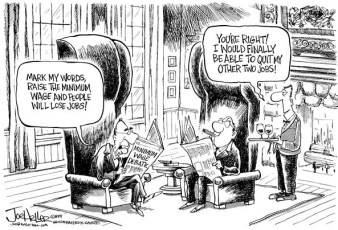
But here’s something you may not realize: you probably encounter them every day too.
They are the people providing services for you behind cash registers and brooms. They are the people caring for your children and you parents. And they are the people who are working long hours for the lowest legal pay and are still often called lazy when they can’t pay their bills.
During the recent debate over the minimum wage in West Virginia, I was reading arguments for and against the increase, and one exchange struck me more than any other.
An individual in favor of the increase stated that he was working two jobs to support his family and that the increase would help.
In response, someone else stated that this person wouldn’t have to work two jobs if he had gotten an education.
As a very educated person, I can personally attest to the fact that an education is not a ticket to a good salary. But even if I hadn’t had to personally struggle with low-paying jobs, I’ve still had many advantages.
I was blessed with a childhood during which my parents cared about my brain development and supported me in school. I was blessed by people who encouraged me when I pursued a higher education. And I’ve been blessed with circumstances that didn’t require me to support others when I was getting that education.
Not everyone has the opportunity or the aptitude to get an education. And even if they did, there would never be enough decent-paying jobs to support everyone who meets the educational requirements.
Besides, many of us depend on people who are willing to work for minimum wage to do the tasks that make our lives easier.
Instead of condemning them, we should thank them.
And a slight increase in their pay is just a start.
A Sense of Power

John Darkow, Columbia Daily Tribune
My junior high social studies teacher, Mr. Bice, once stated, “The two most important jobs in the world don’t require a license: being a parent and being a citizen.”
No truer words were ever said.
Being a parent and being a citizen both require a great deal of responsibility: the responsibility to be knowledgeable and educated; the responsibility to hold others accountable and the responsibility to behave in a way that we want our children to behave.
Even though most American say they are fed up with our elected officials in Washington, I can’t say we are being particularly responsible citizens. And if members of the House of Representatives were in school rather than in Congress, the principal would already have made phone calls to their parents.
Unfortunately, the American public hasn’t been acting like good parents either.
Good parents don’t tolerate bullying and name calling.
Good parents don’t tolerate individuals putting their own wants and desires above those of others.
And most of all, good parents don’t teach their children that money and power are more important than being caring, compassionate and trustworthy.
But that is exactly what is happening. We are letting Corporate America buy politicians and public opinion. Take, for example, Citizens United, which legalized the concept that corporations have the same rights as people. That’s like the school’s giving their business partners the same status as parents.
Unfortunately, too many people equate money with power and power with being important. If we want to change politics, we have to change that perception. I don’t know why that is so difficult as I’m sure I’m not alone in saying that most important people in my life never bought my respect. They earned it by giving their time to help others. They earned it by giving up something they wanted so someone else who needed it more. And they earned it by making choices that weren’t self serving.
None of that requires money, but it does require a sense of being powerful.
There are those who would argue that we lose power when we give something away. But I, for one, am not buying that. I’m not buying it at all. I’m more than willing to give my vote to someone who stands up for what I believe and not for what they think will meet their own desires.
I Am a Product of Head Start
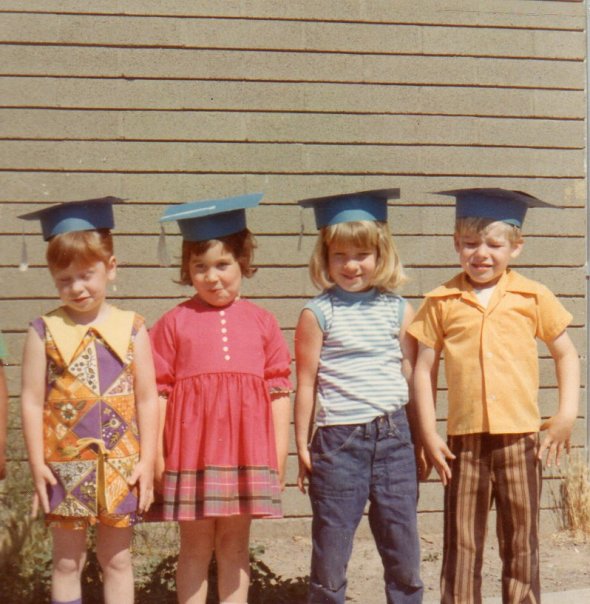
Head Start graduation
In second grade, I was told I should never brag, and I took that admonishment to heart.
I have no recollection why I was boasting, but I do remember Carla Shown looked at me with disdain and said, “No one likes people who brag.”
Her words have stayed with me, but there are times when we have to balance the lessons we learned in our childhood with our experience as adults.
Now is one of those times, and I am going to brag a bit.
I am a product of Head Start.
I feel an obligation to brag, because the voices of low-income children aren’t being heard above the clamor about Syria.
Head Start provides early childhood education, health and nutrition services as well as parent support for low-income children and their families. The services are designed to foster stable family relationships and address early childhood developmental needs.
Research tells us that children who have been through Head Start and Early Head Start are healthier, more academically accomplished, more likely to be employed, commit fewer crimes and contribute more to society.
Common sense tells us that the future of our country hinges on our children, and we should invest in our future.
Unfortunately, common sense often doesn’t prevail on Capitol Hill, and, as a result of sequestration, Head Start has eliminated services for more than 57,000 children this school year. The program is facing even more cuts in the future.
We are going backwards.
Head Start began in 1965, and, because of where I lived, I was enrolled in the program in the early 1970’s. I still have the report cards that documented my progress at mastering a list of tasks and skills and the photos from graduation ceremonies.
At first glance, the photos of my Head Start graduation don’t tell much of a story. There is no indication that the chubby little girl in the red dress would grow up to be the outspoken person I have become. Nor does it indicate that the little boy in the striped pants would someday graduate from Dartmouth.
But it does show what hope looks like, and if we don’t do something to meet the needs of our children now, we will be seeing fewer and fewer of such photos in the future.
A Letter to Abercrombie & Fitch CEO Mike Jeffries
Dear Mr. Jeffries,
Congratulations on recently making headlines with your strategy of only selling clothes to those whom you define as cool, pretty and thin: http://www.businessinsider.com/abercrombie-wants-thin-customers-2013-5#ixzz2SoRlwYlN.
You’ve certainly grabbed a lot of attention and clearly made your point.
As you said, “In every school there are the cool and popular kids, and then there are the not-so-cool kids. Candidly, we go after the cool kids. We go after the attractive all-American kid with a great attitude and a lot of friends. A lot of people don’t belong [in our clothes], and they can’t belong. Are we exclusionary? Absolutely.”
You have every right to your opinion and your business strategy. But here’s what you apparently don’t get: most of us (people who will never set foot in your store) don’t really care whom you define as cool, and we don’t care that you won’t sell us your over-priced clothes. We see you in the same light that we saw the “cool kids” in high school.
We didn’t actually think they were all that cool. Instead, we thought they were self-absorbed and incredibly superficial.
You (as they did) base coolness on appearance, access to money and whom you associate with. Ironically, the only people who hang out with your are also people who only care about superficial appearances.
There’s no depth. There’s no empathy or compassion for others. And there’s no understanding that life is so much bigger than your very small and limited materialistic world.
In the real world, where everyone else lives, life is so much more than what size you wear, how much you paid for your clothes or all the places where your wealth will take you.
It’s about knowing that you can never count on your looks for anything and building upon your other strengths instead.
It’s about walking into a room and being appreciated for what you can contribute to the conversation rather than for what clothes you wear.
And it’s about supporting others rather than rubbing disadvantages in their faces.
Enjoy your fortune while it lasts, Mr. Jeffries, but be warned.
I’ve got two children who won’t ever buy clothes in your store.
I know their current buying habits are of no interest to you (because neither fits your definition of cool), but I think you should know who they are.
They are both very smart and don’t care whether you or anyone else thinks they are popular or cool. They just care that they are happy and making the world a better place.
Such aspirations have never required buying and wearing a certain brand of clothes.
So watch out, Mr. Jeffries. My children represent the next generation of consumers, and they have loud voices.
Sincerely,
Trina Bartlett
Shame is Not a Form of Birth Control
I had to double-check my calendar this morning to assure myself that it was actually 2013 and I hadn’t been sucked into a time warp.
I hadn’t been.
Instead, I was sucked into reading news articles about a school assembly featuring an abstinence-only proponent whose only educational credential is a Psychology Degree from Jerry Falwell’s Liberty University.
See: http://www.dailymail.com/News/201304110267 and http://www.wvgazette.com/News/201304110229 .
I can’t emphasize enough how inappropriate the assembly was.
Almost 20 years ago, when I was working in the field of sex education, experts had already proven that abstinence-only and shame-based tactics don’t work. And promoting a particular religious philosophy in a public school is simply prohibited.
But self-righteous people, who believe they actually know what God is thinking, seem to find a way around these issues.
The speaker, Pam Stenzel, and her sponsors, a religious group called Believe in West Virginia, say her speech wasn’t faith-based. Instead they say it was just a warning about the dangers of sex before marriage.
Those few words should have been enough to keep this woman out of the public schools.
A real sex educator doesn’t pretend that a wedding ring can protect people from a sexually transmitted disease, an unplanned pregnancy or heartache.
A real sex educator doesn’t outright dismiss homosexuals, who are still fighting for the right to even be married.
And a real sex educator doesn’t condemn, judge or shame.
Instead, a real sex educator gives facts – not statistics that have been manipulated to fit a certain dogma.
A real sex educator will agree that sex is the only human behavior that has the potential to create life or to threaten a life. The educator’s job is to help individuals make decisions to prevent unwanted consequences.
And a real sex educator will spend time talking about healthy relationships and about treating others with respect – not condemnation.
Years ago, I was that person, and I will never forget making a presentation about AIDS and HIV in a middle school classroom. As I interacted with the students, the teacher, who was obviously not happy I was there, took out his Bible and placed it open on his desk. He pretended to read, and I pretended to ignore him.
A year later, I had the same assignment and found myself in the same classroom. But instead of taking out his Bible, the teacher made a point of welcoming me and telling his students they should listen. He then privately told me that “a really good person” from his church had been diagnosed with AIDS. Instead of noting that a lot of “really good people” had been diagnosed with AIDS, I was just grateful that he had become a bit more open and less judgmental.
Now, I am hoping the same for all those involved in permitting the recent school assembly at George Washington High School.
Rockefeller’s Reminder
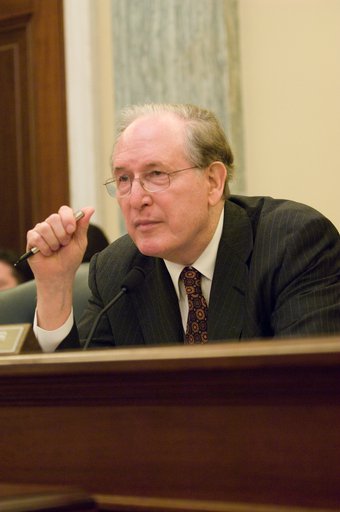 Last week, I had the privilege of attending a community meeting hosted by U.S. Senator Jay Rockefeller about the reauthorization of the Violence Against Women Act (VAWA). Since there was little doubt that our soon-to-retire senator was going to vote for VAWA, the event was really an opportunity to raise awareness about the issue of domestic violence.
Invited guests included survivors, social workers and advocates who work tirelessly to address the issue. A local police officer was the only man selected as a designated speaker for the round table discussion, but he received a great deal of Rockefeller’s attention.
While domestic violence survivors told heart-breaking stories, many of Rockefeller’s questions were directed to the police officer. The Senator seemed absolutely fascinated by the officer’s description of our local police department’s ride-along program, which provides an opportunity for community members to literally ride along with police officers during any shift. Those who participate have the opportunity to really understand what police face and learn about some of the biggest issues facing our community.
At the time, Rockefeller’s intense interest in the program seemed a little off topic. But in retrospect, I think the Senator was demonstrating what true wisdom is.
In a world where people are intentionally inflicting harm on others, where relationships are often about power struggles rather than support and where individuals are suffering on a daily basis, true wisdom is knowing that doing the right thing requires more than simply responding to the needs of others. Maybe because I’ve recently been watching too many people who think doing the right thing means doing things their way without considering all that others have or could contribute, Rockefeller’s reminder has stuck with me:
Doing the right thing means ensuring resources and services are available for those in need, but is also means focusing on what is positive and good.
Doing the right thing means reinforcing and promoting positive and healthy relationships among people and organizations.
And doing the right thing means really listening to others and acknowledging the power of what they are saying and all they are contributing.
That’s the wisdom Senator Rockefeller brought to the table. Unfortunately, he won’t be at the table much longer. Last month, he announced he will not be seeking a sixth term as U.S. Senator after his current term ends in 2014. West Virginia lost Senator Robert Byrd in 2010, and now we are losing Senator Jay Rockefeller. Regardless of political affiliation, all West Virginians should recognize the implications.
The cynical among us might say that caring about the poor was easy for Rockefeller, who was born into one of the richest families in America and never had to worry about money.
But I disagree.
Instead of choosing to live a life devoted to money rather than meaning, he chose to work on behalf of people who live in one of the poorest states in the nation. And even though I live closer to Washington D.C., Baltimore, Philadelphia, Pittsburgh and New York City than I do to our state capitol, I still care about what happens to this state.
And I’m hoping whoever steps into his position is someone who understands the importance of asking a local city police officer to explain a simple program that involves reaching out to others to develop stronger partnerships and healthy relationships.
That’s wisdom and a reminder about how we should all live our lives.
Thank you for your service and your wisdom, Senator Rockefeller.
All Good Superheroes Ask Questions, Don’t They?
 According to some people, I suffer from a very bad habit, and, if I knew what was good for me, I’d have given it up for Lent.
But I didn’t and I probably never will, so my friends and family are forced to deal with my habitual need to ask questions. Lots and lots of questions. About anything and everything.
My husband and kids call me “The Interrogator.”
I’d like to think that means they consider me a superhero who unveils misdeeds, liars and unacceptable behavior by eventually asking so many questions the truth is revealed.
Unfortunately, they aren’t paying me a compliment and instead are simply letting me know they find my all questions annoying. I’ve also been told that people who ask a lot of questions are subconsciously trying to take control of a situation.
There’s probably some truth to that, but I’d rather be annoying than to sit back and just allow people and organizations to get away with actions that affect and sometimes hurt others.

(UPI Photo/Roger L. Wollenberg)
I also like to think that, as an inquisitor, I’m in good company.
This week, at her first Banking, Housing and Urban Affairs Committee hearing, Senator Elizabeth Warren questioned bank regulators about why they hadn’t prosecuted a bank since the financial crisis. Her question seemed simple enough, “Tell me,” she requested “about the last few times you’ve taken the biggest financial institutions on Wall Street to trial. Anybody?”
Instead of simply responding “never,” the regulators tried to explain why there was no need to prosecute.
As with anything political, there are those who agree with Senator Warren and those who don’t.
But her actions, to me, were bigger than pointing out the double standard for big corporations versus average citizens or about ensuring that bank executives don’t continue to pass the repercussions of their behaviors onto the general public. Her actions were about her willingness to ask the tough questions and to not back down. Her actions were about repeating the same question over and over again until someone is forced to answer. And, to be honest, her actions were about validating my own behavior.
I’m not even close to being in Elizabeth Warren’s league much the less in the Justice League, but I do believe heroes have to ask the hard questions. If they don’t, silence persists, and nothing ever changes.
So even though my family insists on calling me “The Interrogator” to try to shut me up, it’s not working. Instead, I’m thinking of getting one of those t-shirts with a big question mark on the front. It may not be the fashion statement superheroes make when wearing their capes, but it just might be a start.
Because if no one questions the status quo, then nothing ever changes or improves. So, far all the
The Boy Scouts Are Misinterpreting the Meaning of Moral
Last year, a fourth grade teacher at my daughter’s intermediate school was arrested for soliciting a 13 year-old girl (or so he thought) online.
Also last year, a teacher at my son’s middle school was arrested for child abuse and identity theft. Two weeks ago, she pleaded guilty to the identify theft, but she is still awaiting trial on 11 counts of child abuse.
Other than the fact that both were teachers in Berkeley County Schools and neither is gay, I don’t think the two have much in common. Yet, they were both engaged in immoral activity because their behavior was harmful. They used their power to hurt, control or take advantage of others, which I think most people would agree is anything but moral. The definition isn’t that fuzzy, at least I’ve never thought it was.
Unfortunately, some people are trying to redefine the meaning in order to fit their own narrow and bigoted views.
This week, the Boy Scouts postponed a decision to “sort of” lift its ban on anyone who is openly gay. I say “sort of” because the potential policy change would simply allow local organizations make their own decisions.

Photo/Richard Rodriguez) NYTCREDIT: Richard W. Rodriguez/Associated Press
I was reading about the situation in the New York Times. While the content of the article bothered me, I was even more disturbed by the accompanying photo, which showed scouts and their parents holding signs that proclaimed “Keep Scouts Moral and Straight.”There was so much wrong with that photo, and I felt sorry for the young boys who are obviously being taught that discrimination is appropriate.
My kids are taught that discrimination is immoral:
Moral people don’t exclude but instead include.
Moral people don’t make broad judgments but instead ensure that every individual is given respect.
And moral people don’t define others by who they choose to love but rather by how they treat others.

Rex C. Curry for The New York Times
Just as important, national organizations that demonstrate moral leadership don’t waffle on potentially controversial issues and, instead of taking a stand, cower by relinquishing their decision-making authority to locals.
Even more importantly, they don’t bow to bigots who make unsubstantiated and untrue generalizations about any group of people. Yet, the decision to delay a decision on the ban on gays came after rallies like the one at the Boy Scout headquarters in Irvine, Texas where protesters claimed that prohibiting gay membership equates to protecting their children.
After the incidents last year at my children’s schools, no one rallied with signs asking the school system to protect my children.
But maybe that’s because there’s no organized effort to rally against straight people who commit immoral acts. But maybe there should be. After all, I’m pretty sure statistics would show that’s where the real “danger’ lies.
I Couldn’t Get a Dog so I Got a Gun
 Conflict among people is normal, and most of us accept it as a routine part of life. Conflict within ourselves is just as normal, but something with which we often struggle.
As a licensed social worker, I couldn’t get out of bed every morning if I didn’t believe people can change, that humans have an innate responsibility to support each other and that no good comes from belittling others.
As a rational human, I couldn’t get through life if I simply tolerated and never called out stupid and ridiculous beliefs and behaviors.
As a licensed social worker, I have to ensure that my conduct is appropriate, that I abide by a code of ethics and that I participate in ongoing continuing education.
As a rational human, I am dumbfounded by people who complain when they are required to meet expectations and criteria before they are provided with opportunities and privileges.
As a licensed social worker, I have an obligation to listen, try to understand the perspective of others and validate their feelings.
As a rational human, I simply cannot understand why others choose to ignore facts, scream conspiracy and throw around accusations that are hurtful. I have to call out people who choose to believe and spread all of the vile, ridiculous and illogical propaganda about gun control that I have been witnessing over the past few weeks.
The rabid followers of the NRA propaganda machine remind me of children blindly hitting a piñata at a birthday party. For most people, hitting the piñata is just fun game that results in children scrambling for a few pieces of candy. But the NRA is turning gun control into a piñata that must be destroyed and is putting the blindfolds on people as they swing at it. Those swinging the sticks are convinced that if they don’t break the piñata, they will never have candy again.
In reality, if the piñata doesn’t break, the children won’t be denied candy. They just won’t get the immediate gratification they are seeking.
Most parents allow their children to have candy, but they don’t want them to make a diet of it. Similarly, gun control advocates are not screaming that everyone’s guns should be confiscated. Instead, they are recognizing that too many lives are being broken and destroyed by guns and that something must be done. To counter that, claims are being made that the gun death statistics in the United States aren’t that bad.
Tell that to someone who has lost a loved one to a gun. For them, one death is too many.
Just ask Jackie Barden, whose son Daniel was killed at Sandy Hook Elementary school in December. Jackie recently noted that the process for adopting a kitten is more difficult than getting a gun.
I don’t know much about adopting kittens, but I do know a lot about adopting dogs. As a volunteer for a dog rescue group, my role is to process applications. In other words, I do background checks. I check national “do not adopt” lists. I do a criminal background check. I conduct property checks. I review living arrangements. I talk to animal control and veterinarians about the applicants. And I call references. If I don’t find any red flags, another volunteer conducts a home visit.
Many families who want to adopt a dog are denied for a variety of reasons: they’ve had pets hit by cars; they haven’t spayed or neutered their current or previous pets; they aren’t home enough to spend quality time with an animal; they don’t have the money or space for a dog; they already have too many pets. The list is long and varied, but the bottom line is the same. Rescue groups want to ensure the dogs have a good quality of life and, most of all, that they are safe.
We should want the same for people. And yet, in the United States, people who are denied adopting a dog can walk into a store or a gun show and buy almost any gun they want.
We might be keeping dogs safe, but I have to wonder about the people.
My Gut Reaction to Senseless Tragedy
 On an intellectual level, I have absolutely no idea why I’m writing this particular blog entry.
On an emotional level, I have to write it.
Over the next few weeks, volumes will be written about the shooting that occurred at Sandy Hook Elementary School in Newtown, Connecticut. My own thoughts will be just a mere drop in a sea of ideas and opinions.
And since I usually write to inform, persuade or sometimes to simply vent, having my voice heard should matter.
But there are times when I write just to get my thoughts in order. This is one of those times.
I, like so many Americans, am overcome with grief and frustration about an event that involved no one I know yet affected everyone I know.
I am also filled with guilt because, initially, I didn’t even take notice of the shootings. I was logging into my email account to send a message about my children’s latest accomplishments when I saw a headline that there had been a shooting at a Connecticut school. Absorbed in my own life, my only thought was, “Here we go again.” And then I forgot about headline until later in the day.
How sad is that?
Shootings have become such common events that I, a person who hates violence, wasn’t initially shocked or curious.
There is something fundamentally wrong with a society in which many of us don’t even pay attention to violence until multiple people are shot to death. We should be upset with every violent word, gesture and action. Instead, we are immune to all but the most heinous of events.
And when such events do occur, we turn to each other and ask, “how could this happen?”
In reality, we already know the reasons. We just fear addressing them because anything we say might turn into a political debate rather than a rational discussion.
The time has come for rational discussion.
We know that too many people suffer from undiagnosed, untreated or mismanaged mental illness. Sometimes the families dealing with such an illness don’t know how to cope or where to get help. Sometimes they can’t get the help anyway. Services are expensive, and waiting lists far exceed the need. Often, mental health services aren’t even integrated with other health and social services. And then there are the people complaining about their tax dollars being used to pay for services for people who can’t hold down a job. Guess what? People with mental health issues often have a very difficult time maintaining employment, and, as a society, we lack a comprehensive system to deal with the complicated issues. Time and time again, the warning signs are obvious, but we either don’t know what to do, don’t know where to turn or realize there simply is no place to turn.
We know that too many people who should never have access to guns obtain them anyway. Yes, sometimes people will find ways to access guns even when barriers are in place to prevent it. Sometimes, there is no way of determining who will use guns inappropriately. And sometimes guns can be used to prevent, rather than commit, a crime. But that doesn’t excuse us from identifying more effective ways to better prevent gun violence.
The bottom line is that gun violence involves two things: people and guns.
Guns are material possessions that can be manufactured, sold and replaced.
People can’t be manufactured, shouldn’t be sold and can never be replaced.
Americans need to make a choice about our priorities and how to balance them. Only then can genuine discussion about preventing future tragedies realistically begin.
If we don’t have those discussions, we won’t develop effective solutions and will continue to believe that our only common ground is providing prayer and support for victims, their families and first responders.
If we continue down the path we are on, we might as well start praying right now for all the future victims who could have been protected.


 Just So You Know