Blog Archives
Rockefeller’s Reminder
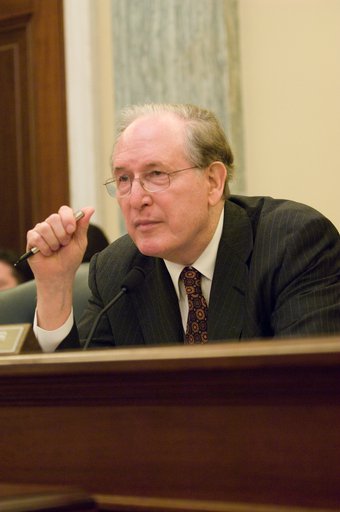 Last week, I had the privilege of attending a community meeting hosted by U.S. Senator Jay Rockefeller about the reauthorization of the Violence Against Women Act (VAWA). Since there was little doubt that our soon-to-retire senator was going to vote for VAWA, the event was really an opportunity to raise awareness about the issue of domestic violence.
Invited guests included survivors, social workers and advocates who work tirelessly to address the issue. A local police officer was the only man selected as a designated speaker for the round table discussion, but he received a great deal of Rockefeller’s attention.
While domestic violence survivors told heart-breaking stories, many of Rockefeller’s questions were directed to the police officer. The Senator seemed absolutely fascinated by the officer’s description of our local police department’s ride-along program, which provides an opportunity for community members to literally ride along with police officers during any shift. Those who participate have the opportunity to really understand what police face and learn about some of the biggest issues facing our community.
At the time, Rockefeller’s intense interest in the program seemed a little off topic. But in retrospect, I think the Senator was demonstrating what true wisdom is.
In a world where people are intentionally inflicting harm on others, where relationships are often about power struggles rather than support and where individuals are suffering on a daily basis, true wisdom is knowing that doing the right thing requires more than simply responding to the needs of others. Maybe because I’ve recently been watching too many people who think doing the right thing means doing things their way without considering all that others have or could contribute, Rockefeller’s reminder has stuck with me:
Doing the right thing means ensuring resources and services are available for those in need, but is also means focusing on what is positive and good.
Doing the right thing means reinforcing and promoting positive and healthy relationships among people and organizations.
And doing the right thing means really listening to others and acknowledging the power of what they are saying and all they are contributing.
That’s the wisdom Senator Rockefeller brought to the table. Unfortunately, he won’t be at the table much longer. Last month, he announced he will not be seeking a sixth term as U.S. Senator after his current term ends in 2014. West Virginia lost Senator Robert Byrd in 2010, and now we are losing Senator Jay Rockefeller. Regardless of political affiliation, all West Virginians should recognize the implications.
The cynical among us might say that caring about the poor was easy for Rockefeller, who was born into one of the richest families in America and never had to worry about money.
But I disagree.
Instead of choosing to live a life devoted to money rather than meaning, he chose to work on behalf of people who live in one of the poorest states in the nation. And even though I live closer to Washington D.C., Baltimore, Philadelphia, Pittsburgh and New York City than I do to our state capitol, I still care about what happens to this state.
And I’m hoping whoever steps into his position is someone who understands the importance of asking a local city police officer to explain a simple program that involves reaching out to others to develop stronger partnerships and healthy relationships.
That’s wisdom and a reminder about how we should all live our lives.
Thank you for your service and your wisdom, Senator Rockefeller.
Another Excuse for Bigotry
Over the past couple years, I’ve been doing my best to hold my tongue and tolerate people who use social networking sites to post rude and mean-spirited comments about specific groups of people. But this week, I finally snapped.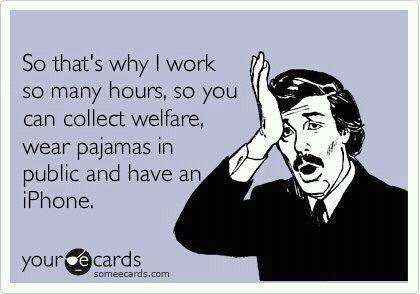
I’m calling out these people for what they are: bigots.
According to the dictionary, a bigot is someone who is obstinately or intolerantly devoted to his or her own opinions and prejudices, especially in regards to members of a group.
As America grows more and more diverse, such attitudes against people of different colors or nationalities has become less and less acceptable.
But bigots are haters and, as my kids tell me on a regular basis, haters hate.
So, the haters have set their sights on poor people, particularly those who have had to depend on government assistance when they face tough times.
I’m not the only person whose been noticing this trend.
This week, a colleague stepped into my office, and during a casual conversation, broke into tears.
“I’m sorry,” she said. “I’m just so angry. I had a relative post the meanest thing on Facebook.”

The post she was referring to was a meme that compared people on welfare to a dog: lazy, unemployed, with no known father.
“I wanted to give her the facts,” she said, “but I know that won’t matter. She just won’t listen.”
I know how she feels. For years, I’ve been trying to share the facts with those who demonize people “on welfare.”
In July 2011, I tried to educate them: my rant about people who rant about welfare. People continued to make judgmental comments.
Last Thanksgiving, when people bragged that they never asked for handouts and didn’t want their tax dollars going to those who aren’t willing to help themselves, I tried to explain that very few people succeed on their own: I’m thankful for the handouts I’ve received. The people who should have read that blog obviously didn’t.
Over time, I’ve come to believe that efforts to educate people who wrap themselves in indignation and self-righteousness are simply ineffective.
And yet I still try.
So, for all those people who continue to point fingers and won’t listen to facts, at least listen to this:
When you are making judgmental comments about any group, you are actually referring to individuals who comprise that group. Unlike skin color and despite your preconceived notions about how people on welfare look, you don’t always know who is part of that group. Some of your friends and acquaintances may have, at some point in their life, depended on social services.
These individuals have feelings. When you laugh at people on welfare, you are doing absolutely nothing to encourage them. When you blame them for taking your hard-earned money, you are doing nothing to help them succeed. And when you call them lazy, you are questioning their integrity and intentions. You are simply making them feel worse than they probably already do.
I am under no illusion that people will change their political opinions or their values based on what I write. But what I am asking is for more kindness and understanding. I’m also making a final plea that people get the facts before they make comments about anyone.
I know there’s a platitude that ignorance is bliss, but given the ignorance I’ve observed recently, I disagree. Instead, I think ignorance is just another excuse for bigotry. And that’s just not acceptable.
On this Thanksgiving, I’m Thankful for All the Handouts I’ve Received
There are times when I just want to scream out loud. But that doesn’t necessarily solve any problems, so sometimes I choose to scream through writing.
Now is one of those times.
While I can’t emphasize enough that I believe in the First Amendment, that everyone is entitled to their own opinions and that everyone should be allowed to express them, there are times when those opinions just seem so off base.
Take, for example, the number of people who complain about others who take “handouts” and/or boast that they have never done so themselves. They often say this as though they are morally superior.
I just don’t get that, because I have yet to meet a person who hasn’t received a handout.
Personally, I’ve received more handouts than I ever deserved. And this Thanksgiving, I am so grateful for them.
The handouts I’ve received may not have been in the form of government assistance for low-income individuals, but they are the reason I haven’t had to depend on such help when I’ve hit a rough patch.
I am grateful that I received the handout of a mother who didn’t abuse alcohol or drugs and had a healthy diet while she was pregnant. Her decisions provided me with a giant advantage in life. I was born healthy and had parents who ensured I maintained my health. Too many people start life without that handout and spend the rest of their life trying to catch up.
I am grateful for the handout of parents who were concerned about my education from the day I was born. They shared their love of the written word by reading out loud to me. They didn’t set me in front of a television so they could go on with the lives they wanted. They provided me with books, crayons and the opportunity to express myself. Too many people spent the first three years of their lives without any of those handouts – handouts that greatly influence their ability to learn and process information.
I am grateful for the handout of being a child that never knew what it was like to be truly scared or cold or hungry. There was always food on the table, in the cupboard, in the refrigerator and in the freezer. I never went to bed afraid that there wouldn’t be heat in the morning or that I wouldn’t have a coat to wear in cold weather. Too many people grow up without the simple handout of having those basic needs met – which creates a completely different perspective of how the world works.
I am grateful for the handout of parents who made their children and their family a priority. I always felt wanted. I always felt like I belonged and I always felt like I helped make my family complete. I was never told I was a mistake. I was never told I was a burden. And I was never told that my parents’ life would be easier if I wasn’t around. Just as importantly, I wasn’t hit, kicked burned or assaulted in my own home. Too many people grow up abused and wondering why they even exist. The handout of love is powerful, and without it, people often seek affection and attention in the wrong places and in the wrong ways.
I am grateful for the handout of having parents who wanted me to succeed and who demonstrated self-discipline and good decision-making skills. They required my brother and me to take responsibility for our actions. They also ensured that we were exposed to a wide variety of opportunities and activities. They were never in jail, they never dragged us into unsafe locations and they didn’t bring a variety of unsavory characters into our home. Too many people grow up without the handout of positive role models. Their parents or caretakers or community members are stumbling through life attempting to meet their own needs without even considering those of their children. Our ability to make choices and understand consequences is a skill… and like all skills it needs to be demonstrated and practiced.
I am grateful for the handouts I received that were beyond human control. I’m not dyslexic, I’m not disabled and I’m not disadvantaged. I am surrounded by people who can lend a helping hand. When I faced a real emergency, there were always people in my life who had the resources to help me. Too many people are surrounded by people who are facing their own crises and don’t have the ability to help anyone else.
I am truly saddened by people who view poverty as a simple issue. It isn’t.
And I am bothered that some people think life is an even playing field and everyone has equal opportunities. We don’t.
And I worry about the belief that low-income people have flawed characters rather than an unbelievable set of obstacles to overcome.
I agree that there are success stories.There are people who have beaten the odds, overcome horrible situations and gone on to live very productive lives. I am privileged to know such people.
And I also know that somewhere along their life path, they got some handouts – generally in the form of a caring person or persons who wanted to share all they had been given: whether material or spiritual. People who wanted to pay it forward rather than to hold it tight. People who understood the value of offering their hearts and their hands out to others.
On this Thanksgiving, I am not only grateful for the all of the hands that have been held out to me, I am grateful for the role models and heroes who continue to do this for others on a daily basis.
Holding your hands out can be a miracle for others.
Opening your heart to others can be a miracle for you.
I hope everyone has the opportunity to do both this Thanksgiving and into the upcoming holiday season.
A Bit of a Rant About People Who Rant About “Welfare”
I am all for letting people have their own opinions.
I better be, especially since I have a lot of them myself. And I’m also all for letting people express their opinions, because I’m pretty sure I’d explode if I couldn’t express mine once in a while.
But here’s the thing.
I don’t pretend I know about everything. In fact, I’ll be the first to admit that I don’t know much at all.
The recent debate over the national debt? While I have an opinion about how our “leaders” behaved, I certainly never thought I had the answer. That’s because math, finance and anything to do with numbers was never my thing. Same with legal issues. While I can give a small amount of advice to nonprofits about issues they should consider, I would certainly never try to pretend I actually understand the legalities involved. And when it comes to anything medical, technical or mechanical? Forget it. I can’t contribute anything.
But I do know a thing about social services and about issues facing people in poverty. Which is why my blood starts boiling when I hear people ranting about the “welfare” system, the” lazy people who use it” and how people who “get welfare” should be drug tested. I’m pretty sure I’ve seen these topics come up on Facebook at least once a week for the past couple years.
I sometimes wonder if people who make these comments really understand the issues at all. Or if they realize that some of “those people” might be people they sit next to in church, or who care for their children or who are members of the PTA. I also wonder if they’ve ever considered that any of us, through some series of unfortunate circumstances, could have been – or still could become-one of “those people.”
I’m not going to use this space to elaborate on the multitude of reasons, some of them societal, that people end up “on welfare.” What I really want to do is set people straight about what “welfare” actually is. However, I do spend a lot of time at our local Department of Health and Human Resources (DHHR), often called the “welfare office,” and I highly recommend that everyone spend some time there. It’s very enlightening.
It’s also not a happy place to be.
First, the waiting room is always crammed full of people who are down on their luck. Secondly, because people often have to wait all day just to see a worker, many arrive before 7:30 in the morning so they don’t have to come back the next day and wait again. And third, there is no specific profile for people who need assistance. When I’ve seen people I know in the waiting room, I’m generally surprised and they are they are generally embarrassed.
With that said, I’ll be the first to admit that there will always be people who want something for nothing. And there are always be people who try to work the system. But, in my experience, about 90% of the people seeking assistance are honest and have simply fallen on hard times. Those people “driving cars nicer than yours?” That car might be the last asset they are holding on to after losing everything else, including a good paying job. They may have gone through their savings and exhausted all help from relatives only to be in a place they never imagined. That woman with three young kids? She may have just escaped a domestic violence situation in which the controlling husband or boyfriend didn’t allow her to work. Now that she’s finally left him, she’s left with nothing. And then there are those people who’ve never had any support or resources their entire life.
Based on what I know, I wouldn’t say these individuals are taking the easy way out. But a lot of people seem to think that. I recently had a friend call and ask me what to tell a family member who told her son, “There’s no reason you should go to college or worry about getting a job. You can just go to the welfare office and the taxpayers will support you. You’ll get a free place to live, a free car and a free phone.” The family member wasn’t actually encouraging this. They were simply complaining about how their tax dollars are supporting people who can live a good life without working.
Not true.
Just for the record, there is no actual assistance called welfare any more. What used to be called welfare is now Temporary Assistance to Needy Families, or TANF. TANF is a federal program and is only available for families with children. Single people or childless couples cannot receive TANF, because the purpose of it is not to help people live comfortably but rather to ensure that the children in those families have their basic needs met. It also intended help recipients become more employable. If you actually look at how much money TANF recipients receive, I can’t imagine how you think they can live comfortably.
Also, TANF recipients don’t get something for nothing. Anyone who receives TANF must participate in some kind of job training and work activity. If they can’t find a job, they have to volunteer. If they don’t participate in these activities, they are sanctioned.
And TANF isn’t a lifetime deal. A person can only receive a LIFETIME maximum of 60 months of assistance. And because TANF is a federal program, they can’t get assistance in WV then move to Maryland and start over. The assistance they received in WV is counted toward the 60 months. Many, many, many TANF recipients never even reach 60 months, because they are able to get back on their feet months, and sometimes even years, before their benefits run out.
As for the free housing? Free car? Free phone? First of all, housing is a completely different program than TANF and has its own set of guidelines. In West Virginia’s Eastern Panhandle, where the cost of housing is much, much higher than the rest of the state, there is virtually no public housing available. Last I heard, the two-year waiting list was closed because of high demand and limited resources.
There is a non-profit program that provides donated cars to TANF recipients, but the purpose of these vehicles is to provide a way for people to get to the work they are required to do while receiving assistance. There’s not much public transportation in rural West Virginia, and without a car, they can’t get to work. Also, the availability of these cars if very limited. These are donated, used cars. If people don’t donate, there are no cars. The cell phones are provided by a private company, and there are no taxpayer dollars involved.
I’m sure by now, someone who is reading this is thinking, “I know someone who doesn’t have children, and they still got welfare.” Granted, there are other financial assistance programs out there. Some serve people with disabilities, and many disabilities aren’t obvious. Also, West Virginia has a program called Emergency Assistance that low-income individuals can receive during a one-month period only once a year. And when I say low-income, I mean really low-income. The income eligibility guidelines haven’t changed since the early 1980’s. Which basically means the limited financial assistance is like putting a band-aid on a wound that requires surgery.
I also know there are people who feel that churches and charities should be providing the bulk of the charitable support. I think that would be great if only it were actually feasible. But, it’s not. I encourage you to 1)take a look at the budgets or nonprofit organizations that serve low-income individuals and families, and 2) review the amount of assistance they can actually provide. Most only provide a very small amount of assistance and limit assistance to once a year. There are simply more people who are hurting than there are dollars or donations to help. And most organizations have criteria for assistance, just as DHHR does.
Which brings me to the issue of drug testing those who receive “welfare.” To be honest, I really don’t have a strong opinion when it comes to the issue of civil rights and drug testing. As I said before, I’m not a lawyer and I would never pretend to be.
But, as my husband is constantly pointing out, I’m a very practical person. And drug testing individuals who receive TANF… or Emergency Assistance or whatever people consider welfare… just isn’t practical. First, DHHR officials report that they just don’t see much evidence of drug use among the economic services or “welfare” clients. (They do, however, see a lot of evidence of it with families who are involved with Child Protective Services). Secondly, drug testing requires resources: every drug test costs money. It has to be administered, it has to analyzed, and the reports have to be given to the clients. I doubt DHHR workers could provide the results because of a conflict of interest. If there were a positive test, I’m sure there would also be a complaint that “DHHR told me I tested positive so they wouldn’t have to give me money.” So in addition to personnel costs, there might also be legal costs.
I’m not sure where the money for drug testing would come from. For those of you who say it could come from the TANF dollars that the clients would receive if they didn’t test positive? I refer you again to my first point… there’s no evidence indicating that the majority of individuals who receive economic assistance use drugs. I’m just not sure the dollars would be there – even if they could even be used for that purpose.
And, let’s say I’m wrong and a lot of people did have positive results. What then? These are low-income individuals to begin with. Should they just be left to fend for themselves or would treatment be provided? If treatment is provided, where would the money for that come from? Treatment services are already very under-funded and have long wait lists.
Finally, since helping individuals develop the skills, knowledge and habits to gain and maintain employment is one of the primary purposes of TANF programs, I don’t understand why we would put up barriers to participating. Don’t we want to help people improve their situation?
So I rant. And I am sure there are those who are going to disagree with everything I say. Feel free. As I said before, I think everyone is required to an opinion.
I just don’t think those opinions should involve blaming or marginalizing any segment of our population. And I don’t understand why people who have more than enough to meet their basic needs– food, housing, clothing, and health care– feel that they are being punished by being asked to help their fellow-man. To me, that’s a privilege. Besides, as the saying goes, you can’t take it with you. But I’m pretty sure good deeds stick with you forever.


 Just So You Know