Blog Archives
365 Reasons to Smile – Day 3
 As a child, I was never been much of a risk taker.
For years, I didn’t jump off the high dive even though I knew how to swim. I didn’t skip school for fear of being caught. And always managed to avoid the roller coaster that went upside down.
But when I rode my bike, I was fearless. I could ride without my hands on the handlebars and believe I was the most courageous girl in the world. And when I rode down a steep hill with no brakes, I felt like nothing would ever stop me again.
I am a little more cautious these days, but I still love riding my bike down steep hills. But my joy doesn’t come from my ability to let go and be a little reckless. It comes from the fact that every steep hill I go down is one that I just struggled going up.
As in life, the tough times help us appreciate the easier ones, and realizing that always makes me smile.
Day 3: The Ride Downhill after the Struggle Uphill
Day 2: Old Photographs
Day 1: The Martians on Sesame Street
Entitled
I’d be lying if I claimed I never stereotype people. But I am being completely truthful when I say I come by those unfair stereotypes honestly.
That is, they aren’t based on propaganda or how I was raised. They are based on experience.
Take, for my example, my instant assumption about women who wear fur coats and multiple diamond rings on their fingers. There’s a reason I automatically label them as being self-centered.
Years ago, on a bitter cold December day when I was in my twenties and living just on the right side of poverty, I spent my entire lunch hour  waiting in line at the post office. I was hungry and irritated, which are generally interchangeable for me. I was also uncomfortable and sweating. The temperature in the post office had been bumped up to fight against the frigid temperature outside, but I was wearing my winter coat. I was also carrying numerous packages and simply hoping the line would suddenly advance.
It didn’t. Every customer had multiple packages, and, even though we were smack in the middle of the holiday rush, there were only two clerks working at the counter. As we inched forward, I tried to find ways to amuse myself. Since this was in the days before smart phones, I counted the tiles on the floor and made up stories about the other customers. I even tried to strike up a conversation with the person in front of me, but he was even more irritable than I was.
And then, she arrived.
The woman wearing the fur coat and lots of diamonds swept (yes, she really swept) into the post office with an armful of packages like the rest of us. Only, unlike the rest of us, she took one look at the line and loudly announced, “I don’t have time to wait in line. I have a lunch appointment.” And then she simply walked to the counter and insisted she be served immediately.
She was.
While the rest of us stood with our mouths hanging open, the clerk accepted her demands and began processing her packages. She swept out in a manner similar to the way she had swept in. Only now, unlike the rest of us, she no longer carried packages.
And she never apologized.
From that time on, I labeled women who wore furs and diamonds as entitled.
In years to come, I would hear others use that same word to describe individuals and families who have depended on government assistance. And I would always cringe.
 But this week, I had an eye-opening experience.
I was picking up a few things at the grocery store and was checking out in the express line with my seven (yes, I counted them) items. As the customer in front of me finished checking out, a women walked in the door of the store.
She had rather straggly hair and was dressed in cheap clothes. The little girl tagging along behind her didn’t look much better.
Instead of getting in line, she glanced at me then entered the check out line where most people exit. She simply walked between me and the man who was checking out. The clerk also glanced at me, as though unsure what to do. But the woman took control of the situation. She ordered three packs of cigarettes and then, when asked if she was using a debit or credit, almost rebelliously said “credit.”
I was disgusted. She had blatantly cut in front of me to charge cigarettes. And she had done it with a child in tow. She behaved as though she were…entitled.
And that’s when I got it. I understood how one experience can easily shape our opinion about all people who look or act in a certain way. And I understood that entitlement has absolutely nothing to do with social or economic class and has everything to do with individuals who think more about themselves than about others.
And neither one is right.
The Bridge that Mrs. Henderson Built
Life speeds by as a changing tide of both small and big events that leaves in its wake only memories and eventual acceptance that nothing ever stays the same.
It also allows us to witness what others will someday study as history.

Mrs. Henderson and Trina 1979
When I was young, I truly believed that the distance between me and any historical events was immense. Even though I loved studying history and was a voracious reader of biographies, I still thought that events simply happened, were over and everyone moved on.
And then I met Mrs. Henderson.
Born on February 5, 1885, Blanche Henderson was literally a pioneer. In 1904, at the age of 19, she graduated from the Oregon Agricultural College (now Oregon State University) with a degree in pharmacy.
A few years later and on her own, she became a homesteader near Madras, Oregon. After she married fellow homesteader, Perry Henderson, she surprised herself by becoming a teacher.
As far as I know, she never had any of her own children, but she obviously loved kids. And she showed that love to me.
By the time I met her, she was a widow living alone in a small, two-bedroom house with minimal furniture. She was also well over 90 years old.
I have absolutely no recollection how our friendship began, although I’m guessing my mother, a journalist, introduced us.
Once those introductions were made, the unlikely relationship began. My mother would take me to visit Mrs. Henderson, and she would always serve me half-melted ice cream from a freezer that wasn’t keeping her food cold enough.
Neither of us cared.
What I did care about was listening to her stories, and what she cared about was sharing them.
As I thumbed through her coffee table book of Norman Rockwell prints, she told me about attending the 1905 World’s Fair in Portland. She even gave me a fan from it, a souvenir she’d kept all those years and that I still treasure.
She told me about witnessing a stagecoach robbery when she was a little girl. “I thought the men had dunce caps on their heads,” she said. “My father had to tell me they were holding their arms about their heads because they were being robbed.”
As Mrs. Henderson talked about her experiences and about how the world had changed, I began to recognize that, what was history to me, was simply life to her. And wanted me to be able to touch it too.
Mrs. Henderson died shortly after my family left Oregon, but the lesson she taught me has stayed with me: each person can be a bridge between the past and 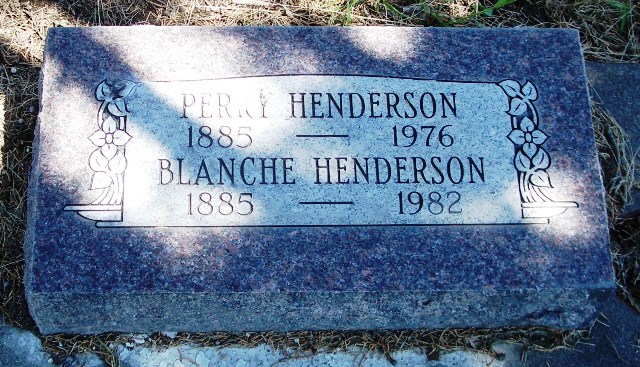 the future. But that only happens when we reach out to future generations and develop relationships with those whom we may think we have little in common.
Thanks to Mrs. Henderson, I’ve actually touched the historical 1800’s. If I stretch myself far enough, I might be able to reach the 2100’s too.
A Piece of Your Dad

Summer 1998
A message to my 15 year-old son:
The moment you were born, your dad grinned wider than I’ve ever seen. Then he said,”This is the best day of my life.”
And he meant it.
While my mind was spinning with worry, and I wasn’t even sure if I was even cut out to be a mother, your dad knew he had arrived at the place he was always meant to be – fatherhood.
Since then, he’s never left that place. Not even once. And that hasn’t always been an easy thing to do.
Not all men have the fortitude to be a father, and, and as you should well know, it is often a thankless job. It’s even harder when you grow up without much of a role model.
But your father has something a lot of men don’t – the ability to put his ego aside and focus on what he believes is most important – always being available for you and your sister.
From the moment you were born, you have been his priority. He’s never stopped believing in you or being your number one champion. Ever.
At those times when I’ve cried over your behavior or questioned what I did wrong, your dad always spoke up for you. And he was always the voice of reason.
On those days when I worried that you weren’t like other boys – that you weren’t particularly interested in playing sports or being overly social – he always praised you for being comfortable in your own skin and being true to yourself. And he was always right.

Summer 2013
And all those times when you were being the total and complete goof you are, he was proud of you and never hid his face in embarrassment.
Well, almost never.
I know we often joke about your blood line and about your genealogy, but, in all honesty, you should be proud of being your father’s son.
You may not have his brown eyes or his poker straight hair, but you have something much more important.
You have pieces of his heart and pieces of his soul.
Treasure them and make good use of them. Your dad sacrificed a great deal so you could have them.
The Cost of My Opinion
The bloodiest single-day battle in American history occurred approximately 15 miles from my house. Nearly 23,000 soldiers died, were wounded or went missing after twelve hours of combat on September 17, 1862 at the Battle of Antietam during the Civil War. The lingering echoes and impact of that battle are still felt more than 150 years later.
Both the Union and the Confederacy experienced devastating losses, and historians have never declared a true winner. But for me, my family won. My great, great-grandfather James F. Bartlett (his biography and obituary are on this website right below Edward Bartlett’s) fought with the Massachusetts Infantry and survived. although he did sustain injuries on May 6, 1864, at the Battle of the Wilderness.

John Snyder gravestone Elmwood Cemetery
Ironically, my husband’s great, great-grandfather, John Snyder, died in June 1864 of wounds he sustained at the Battle of the Wilderness while fighting with the Stonewall Brigade.
Years ago, a local historian gave my husband and me a tour of John Snyder’s town and legacy. The tour ended at Elmwood Cemetery in Shepherdstown, where he is buried.
Newly married, I was actually interested in John Snyder until our volunteer tour guide pulled out a Confederate flag for my husband to place on his great, great-grandfather’s grave.
I loudly proclaimed that the Confederate flag had a very specific meaning, and my husband was not allowed to touch it. He tried to explain the flag was meant to honor his great, great grandfather, but I declared that the Confederate flag had nothing to do with honoring anyone. My husband placed the flag on the grave anyway.
Years later, I recognize my words were nothing but rude, and I had absolutely no right to be indignant.
I’ve never put my life on the line for my beliefs, and I have no right to judge those who did. All I can be is thankful.
The passage of time can change perspective and opinion about what is best and sometimes even what is moral, but it will never change what is honorable.
My children carry the blood of two honorable men who fought for what they believed during a time when our nation was completely divided. They also carry the last name of a man who lost his life fighting for what he thought would be a better life for them.
On Memorial Day, I have no right to argue about putting a Confederate flag on a soldier’s grave. Instead, I should simply be grateful that I have the freedom to make those arguments.
That freedom didn’t come without a price, and today we honor those who paid it.
Swimming in a Dress
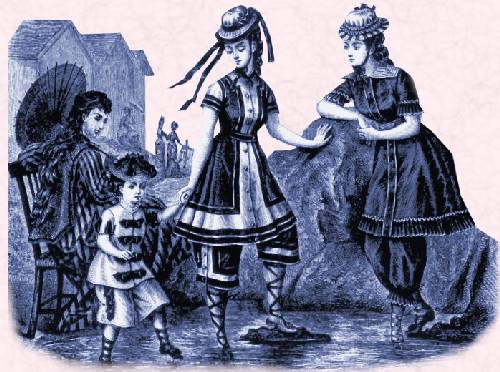
Victoria swim wear – http://www.fashion-era.com/images/SocialHistory/swimpad500.jpg
This week, I had two conversations that morphed into one question about how we live our lives.
The first conversation was with a friend who told me about home-schooled children who were on a field trip at the Shepherd University pool. They were affiliated with a religious group that prohibits females from wearing pants, and, apparently prohibits swimming suits as well. My friend’s son watched astounded as the girls jumped into the pool still in their dresses.
The second conversation occurred on the phone with my mother, who wanted to know if my son had received his birthday check. After telling her yes, I added, “I know, he hasn’t sent a thank you note to acknowledge it. I’m a bad mom.”
My mother disagreed. “No, you aren’t. You are a much better mom than I was.”
Her comment shocked me, because I’m not even close to the type of mother she was.
My mom always made sure we sent thank you notes immediately. She planned menus that met every dietary guideline. And she ensured we did our Saturday chores, our beds were always made and that our laundry was always put away.
Not only do I fail to do all of those things on a regular basis. but my life is a chaotic mess compared to the structure in which I grew up. I told this to my mother in fewer words, but she responded, “You have fun with your kids. You know how to relax and just enjoy them. I never did.”
Not to belabor the point, but she WAS always wound quite tightly, and I’m generally not wound nearly that tight.
But getting unwound wasn’t easy. As I recently told a friend, “I spent the first 15 years of my life being a nerd trying to follow all the rules, and I spent the next 15 years trying to prove I was a rebel. Then I became a mom and had to find a happy medium.”

swimsuits in 1919 – http://old-photos.blogspot.com/2008_01_01_archive.html
In short, I had to break free of restrictive expectations and learn balance so I could enjoy life.
Which brings me back to the girls who jumped into the swimming pool in their dresses and to my question.
“Can anyone really enjoy life fully when they are restricted by a rigid belief system?”
Being in a pool with a dress is probably more fun than not being the pool at all, but I can’t imagine it was all that enjoyable. The water-logged clothing had to make movement difficult and exhausting.
I have absolutely no right to question or judge the beliefs and choices of the girls or their families. If they choose to swim in a dress, they have every right to do so.
But I have every right to question my own choices and the self-imposed restraints I’ve often put on myself – those that prohibit me from enjoying life. Sometimes these have been thinking a work deadline is more important than a few hours with my children. Sometimes they have been my obsession with gaining weight. And sometimes they’ve been my concerns that I will fail when I try something new.
I’ve definitely done my share of swimming in a dress.
But both times and people evolve, and as I’ve aged, I’ve become better and better at shedding my dress. That doesn’t mean I’m going out in public in a string bikini, but it does mean I can enjoy a good swim in a modest tankini.
A Poor Perspective on Poverty
When I was in elementary school, my mom made most of my clothes. As a child, I loved picking out the patterns and fabric to help design something uniquely for me. And when I outgrew those clothes, we donated them to what my parents called “the needy.”
I had a vague understanding of who “the needy” were. They were the kids who came to school dirty and sometimes smelly. They were the kids whose parents didn’t socialize with our parents. They were the kids that lived in neighborhoods where we were told not to go.
I thought that giving my clothes to “the needy” was some kind of measure of moral superiority.
Then one day, a girl in my class came to school wearing one of the outfits my mother had made.
I was shocked.
She was needy? I talked to her. I played with her at recess. I even sat with her at lunch sometimes.
I was even more shocked when someone asked her about her new clothes, and she described a shopping trip she’d made to Portland with her mother. At that age, I was just as unfamiliar with lying as I was with “the needy.”
I made the mistake of calling her out on her lie, but she didn’t relent and insisted she had bought the outfit at a store in Portland.
After that, I didn’t talk to her, play with her at recess or sit with her at lunch. I started equating “being needy” with being a liar.
Decades later, I still feel guilty about calling the girl out. I wish I could go back in time and go along with her fantasy about clothes shopping at fancy stores. She simply wanted to fit in, and I understand that now.
We live in a society that equates products with social status and success. Just carrying an off-brand purse gets me looks from women who pride themselves on carrying name brands.
And the extent to which our children are buying into that materialistic culture even surprises me. I’m usually not at a loss for words, but there is an exception to everything.
My exception came in the form of a ten-year old boy who lives in a house much larger than mine. His parents drive newer and more expensive cars than my husband and I do. His family seems to be on vacation every time school is out while my family rules the staycation. In other words, I think of his family as being “well-off.”
The boy, however, told me his family is poor.
I didn’t know what to say. Even with money out of the picture, I can’t begin to describe his family as poor.
His parents are attentive and loving to each other and their children, who are involved in numerous extracurricular activities. The family worships together and is actively engaged in community service. Simply put, the family lacks for nothing.
The boy, however, was adamant that his family is of limited means. He was sure because he has friends who not only live in a bigger houses but also have beach houses. Their cars are even more expensive, and their vacations even more extravagant. In his eyes, his family really doesn’t have enough.
I understand how this boy reached his conclusion. It’s called perspective. But that’s not an excuse for him or for all the adults who look into that same short lens that distorts everything.
Recently, a local official asked me why the percentage of children living in poverty had grown while the median household income in his county grew by more than $18,000 during the same ten-year period. Before I could answer, his colleague responded.
“There are more poor people, because the poverty level goes up every year. A family can make more money and still be considered poor.”
I was proud of my reaction. I was appropriate, and I didn’t even make a face. Instead, I noted that the local numbers simply reflect national data that show a growing income gap between the rich and the poor. Then I asked, “have you actually looked at the poverty level?”
When I didn’t get a response, I added, “This year, the poverty level for a family of four is $23,500. Personally, I don’t know how I could live within that.”
The topic quickly changed, and I’m not sure if the discussion had really ended or if a genuine conversation about poverty was just too uncomfortable, as it often is. Instead, we misdirect by categorizing the poor as deserving or undeserving. We dress up and attend charity events that make us feel good about helping. And we pride ourselves in giving to “the needy.”
But there are times when I try to change my perspective and look at how we treat the poor from the eyes of my former classmate. I’m pretty sure she’d tell us to stop pretending that poverty is something that happens to other people. I also think she’d say that we should stop pretending that name brand clothes or a big house reflect on our character or our importance. And I’m positive she’d say that we shouldn’t pretend that charitable giving is more meaningful than really listening to someone who is struggling.
And in return for her opinion, I’d tell her that I think she’s right.
My Lazy, Cheating Blog
Just over two years ago, my husband convinced me that I should write a blog. Initially, I was hesitant, but he was persuasive and I decided to take the plunge. I wrote my first entry.
Then, something happened.
People actually read what I wrote. And they commented on my words. And they encouraged me.
They changed everything.
My Type A personality kicked in, and I felt compelled to write regularly. For the most part, this has been a pleasure because I generally have a lot to say. Actually, most of the time I have a lot to say. There are also times when I’m tired, or busy or just not inspired, so finding the motivation to write my blog at least once a week can be difficult. But I tend to be very obsessive, so I write anyway.
Until this week.
This week, I’m cheating.
I’m cheating because I’m spending four days with an amazing group of women in Hatteras, North Carolina. I just want to be lazy and laugh with my friends. I also want to meet my compulsive need to blog every week. So, I’m linking to two of my recent posts for the Charleston Daily Mail:
http://blogs.dailymail.com/mommyhood/2013/03/20/when-homework-goes-to-the-dark-side/
http://blogs.dailymail.com/mommyhood/2013/03/13/advice-from-the-mother-of-a-heroin-addict/
Next week, I’ll be back. This week, I’m not going to feel guilty about my lazy, cheating blog.
Slaying the Lizard of Oz
 When my daughter was in preschool, she discovered The Wizard of Oz, and even though she absolutely loved the story, she just couldn’t get the title quite right. She called the classic story “The Lizard of Oz.”
Initially, my husband and I tried to correct her, but nothing worked.
My son, on other hand, never even attempted to point out that a lizard is very different from a wizard. He simply chose to make fun of his sister, and since she didn’t understand his ridicule, she wasn’t really bothered.
Trying to teach my daughter the difference seemed futile. Instead, we decided that allowing her to happily promote the concept of a giant lizard ruling over the Land of Oz made our lives more peaceful.
At least, it was more peaceful until that day she came home dismayed that her parents made her look foolish by allowing her to publicly talk about “The Lizard of Oz.”
I can’t tell this story without thinking of all the adults who also believe in the Lizard of Oz.
These are people who make up their minds about something and only listen to those who validate their beliefs: the politicians who believe that they speak for “all Americans” or the old white guys with money who only listen to other old white guys with money (or to those who pander to them). They, like the Scarecrow in the Wizard of Oz, could easily gain wisdom. All they’d have to do is listen to people who better understand the real issues.
These are the people who only make decisions based on their own paradigm. They ignore that the world is changing, which means their way of doing things should change too. Instead, they, like the Tin Man, appear heartless because of their refusal to adapt with little regard for others.
These are the people who are self-absorbed. Like the Wicked Witch of the East, they believe those seeking help are the problem, and they care more about feeding their own egos than feeding the hungry.
But no matter how hurtful or destructive these people are, they get away with their behavior because there are even more of us who enable it. We act like the Cowardly Lion, who is afraid of everything. We fear calling out those who are wrong. We fear making ourselves look bad. We fear causing too many problems. We fear repercussions. And we fear failure.
But being the Cowardly Lion is outside of my comfort zone. I’m not the type to sit back because trying to change misperceptions and outright mistakes is too difficult.
I’m off to slay the lizard, the problematic Lizard of Oz.
The Daisy Petal Deception
 Even though people tell me I have a very good memory, I’m not so sure. For every story or incident I remember, I am constantly reminded of all those times about which I have no recollection. And I have no clue who taught me that plucking petals off a daisy is a reliable method of determining whether someone cares about me.
Pluck a petal – he loves me. Pluck another petal – he loves me not. Pluck another – he loves me. And the last petal will supposedly reveal the true nature of his feelings.
A rational person would recognize that the practice is not only ridiculous but that it also promotes the deliberate torture of innocent daisies. Apparently, I haven’t always been particularly rational.
I’m ashamed to admit that, thanks to a long-forgotten tutor, I’ve tortured a lot of daisies in my life.
Most were destroyed in the name of boys and men who never even knew that I cared. (I can only credit myself for the self-taught skill of acting disinterested when I was actually quite interested.) I even began plucking daisy petals for answers to questions that had nothing to do with relationships.
Pluck a petal – I will get what I want. Pluck another petal – I will be disappointed. Pluck a petal – I will get what I want.
Every time I got the answer I wanted, my appreciation for the practice grew. Not because the answer proved to be valid, but because it was an easy way to avoid the ambiguities of life and love.
Unfortunately, a lot of people like avoiding ambiguities. They like simplicity. They crave only two choices, so they can make a quick decision rather than think about alternatives and possibilities:
– They want one religion to be right and any other to be wrong.
– They want one political party to have all the answers and the other to only represent miscreants.
– They want people with a good-paying jobs to represent moral superiority and poverty to represent laziness.
Pluck a petal – you’re good. Pluck a petal – you’re bad.
The problem with plucking daisy petals is there is never a need for a real solution and there’s no call for action. If you don’t get the answer you want, you pick another daisy and try again. Either that, or you accept the answer but sulk and complain.
Sulking and complaining has never made anyone happy. Changing circumstances does, but that usually requires compromise and working with others. It requires putting down the daisies in our own hands, so we can join hands with others.
When we do that, the options grow, and opportunities really start to blossom.


 Just So You Know