Blog Archives
Twisted
Have you ever had one of those light bulb moments when something you haven’t been able to wrap your brain around suddenly comes into focus? You become so blinded by your realization that you’re convinced other people can actually see a cartoon light bulb floating above your head.
I experienced one of those moments this week.
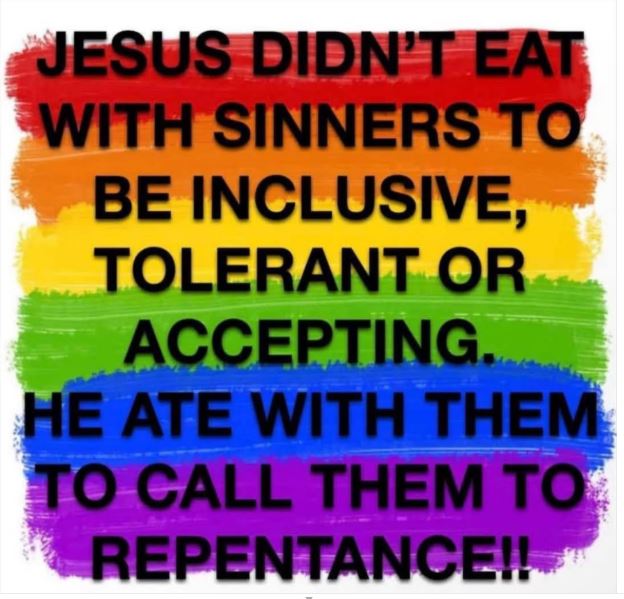
I was mindlessly scrolling through social media when I saw an absolutely disgusting post by an individual who calls themselves a “Christian.” And yes, I put Christian in quotes for a reason.
The crap this person was spouting was the exact opposite of what what I was taught about how Jesus wants us to behave, which is to care for our fellow human beings. Period.
But according to this “Christian,” the only thing Jesus cared about was that people repent for…well, I’m not sure for what. I mean, I’d say sin, but since their post was in rainbow colors and stated that Jesus didn’t believe in being inclusive, accepting, or tolerant, I’m fairly certain they were saying that being a member of the LGBTQ community is a sin.
Um.. no. How is loving another person, whether or not they are the same sex or the same color, a sin? So, what the post really was about was twisting the words of Jesus into the exact opposite of how he wanted us to live our lives.
And that was when the light bulb moment happened.
For years, I just couldn’t understand how people who call themselves Christians have embraced Donald Trump, a convicted felon, sex offender, and hate monger. But then I got it.
They have twisted the teachings of Jesus to validate their own hatred of and discomfort with anyone who is different than they are. They have turned Jesus into someone who had a clear definition of who a sinner is (anyone who believes in something they don’t or thinks differently than they do). They also believe Donald Trump was chosen by God because he validates their discomfort with anyone who challenges their belief system.
If Trump actually was chosen by God to be president, I prefer the perspective of a friend. I was struggling with a conflict that involved following social work ethics that are in direct opposition to a gubernatorial executive order. My friend, an attorney, said that the real challenge is choosing what is right or choosing what is safe.
“You know,” she said. “Maybe all of these “Christians” who think Trump was ordained by God have it right but for the wrong reason. Instead of God choosing Trump because he is following the teachings of Jesus – which he’s not – maybe it was to test Christians to see if they can actually do the right thing when they are challenged by someone who is so evil.”
I like that perspective, and it is one I need to hold onto tightly. Can I continue to do the right thing in the midst of so much wrong? I hope so. And I hope putting this in writing is the right thing to do.
There was a part of me that was nervous this post would offend someone. And then, I had another of those light bulb moments. If someone is offended that I am calling them out for their hateful beliefs, then I don’t care. I’m confident that Jesus would have called them out too.
Special Stores, Special Schools and Especially Ignorant People
 I always appreciate when someone else gets outraged. That’s not to say I ever want someone to get angry. But since I’m usually the person loudly stating my opinions or expressing indignation at some injustice, I can relate when others do the same.
I was getting my hair done the other day when another woman was waging a battle.
“My unemployed uncle,” she said, “is posting the most ignorant comments on Facebook. “He’s collecting unemployment and complaining about people who use food stamps. He doesn’t even know what he’s talking about.”
The woman typed something into her phone as she talked. “It’s not even food stamps any more. There are no stamps. It’s called SNAP and you get the benefits on a card.”
She typed something else then put down her phone.
“You would think,” she said, “he would know better than to make those comments when he knows I’ll see them.”
The woman who was speaking is knowledgeable, well spoken, hard-working and generous. She recently donated a half-day spa treatment to charity, and she won’t get paid for the hours she provides the service. She made the donation because the charity helped her when she was a teen mom.
“When I was a 17,” she said, “I had a child, was working and going to school. I was anything but lazy.”
A few minutes later, she picked up her phone again.
“Oh this is priceless,” she said. “He just posted that there should be special stores for people who get food stamps. He thinks those stores should be specially stocked with low-price items and no beer or cigarettes.”
As she typed in a response, another woman said, “Well I have to agree that people shouldn’t be allowed to buy beer and cigarettes with food stamps.”
“They aren’t,” several of us said at once.
Granted, SNAP recipients can use their cards to buy food and use cash to buy beer and cigarettes. Unfortunately, those are the minority everyone notices. What we don’t notice are the people like the older woman I saw the other day using coupons with her SNAP card.
The conversation led to a short educational session about how people actually can’t buy beer or cigarettes with their SNAP cards. Neither can they buy toilet paper, laundry detergent, cleaning supplies, toothpaste nor other necessities that aren’t food. Everyone agreed that the federal program would be more beneficial if it operated more like WIC, which provides vouchers for specific, healthy and nutritional food.
“What did you say back to your uncle?” I finally asked.
“I suggested that if he thinks poor people are such a problem, then maybe we should have special schools just for poor kids. Not only that, but we need to stencil the letter “P” for poverty on all their clothes. You know, we should make sure we marginalize them so they don’t have any hope at all.”
For the remainder of my hair appointment, no matter what the topic, we kept coming back to the concept of special stores. People who sing off-key in public? Special stores. Rude people? Special stores. Snobs? Special stores. Wait, they think they already have them.
As I was scheduling my next appointment, I asked the woman if her uncle had responded to her latest comment.
“No,” she said, “He must have figured out that you don’t mess with someone who has received food stamps. Some people might think I was a drain on society and never contributed anything, but I’m pretty sure I have.”
Everyone in the beauty shop agreed with her.
A Letter to Abercrombie & Fitch CEO Mike Jeffries
Dear Mr. Jeffries,
Congratulations on recently making headlines with your strategy of only selling clothes to those whom you define as cool, pretty and thin: http://www.businessinsider.com/abercrombie-wants-thin-customers-2013-5#ixzz2SoRlwYlN.
You’ve certainly grabbed a lot of attention and clearly made your point.
As you said, “In every school there are the cool and popular kids, and then there are the not-so-cool kids. Candidly, we go after the cool kids. We go after the attractive all-American kid with a great attitude and a lot of friends. A lot of people don’t belong [in our clothes], and they can’t belong. Are we exclusionary? Absolutely.”
You have every right to your opinion and your business strategy. But here’s what you apparently don’t get: most of us (people who will never set foot in your store) don’t really care whom you define as cool, and we don’t care that you won’t sell us your over-priced clothes. We see you in the same light that we saw the “cool kids” in high school.
We didn’t actually think they were all that cool. Instead, we thought they were self-absorbed and incredibly superficial.
You (as they did) base coolness on appearance, access to money and whom you associate with. Ironically, the only people who hang out with your are also people who only care about superficial appearances.
There’s no depth. There’s no empathy or compassion for others. And there’s no understanding that life is so much bigger than your very small and limited materialistic world.
In the real world, where everyone else lives, life is so much more than what size you wear, how much you paid for your clothes or all the places where your wealth will take you.
It’s about knowing that you can never count on your looks for anything and building upon your other strengths instead.
It’s about walking into a room and being appreciated for what you can contribute to the conversation rather than for what clothes you wear.
And it’s about supporting others rather than rubbing disadvantages in their faces.
Enjoy your fortune while it lasts, Mr. Jeffries, but be warned.
I’ve got two children who won’t ever buy clothes in your store.
I know their current buying habits are of no interest to you (because neither fits your definition of cool), but I think you should know who they are.
They are both very smart and don’t care whether you or anyone else thinks they are popular or cool. They just care that they are happy and making the world a better place.
Such aspirations have never required buying and wearing a certain brand of clothes.
So watch out, Mr. Jeffries. My children represent the next generation of consumers, and they have loud voices.
Sincerely,
Trina Bartlett


 Just So You Know