Blog Archives
I Am a Product of Head Start
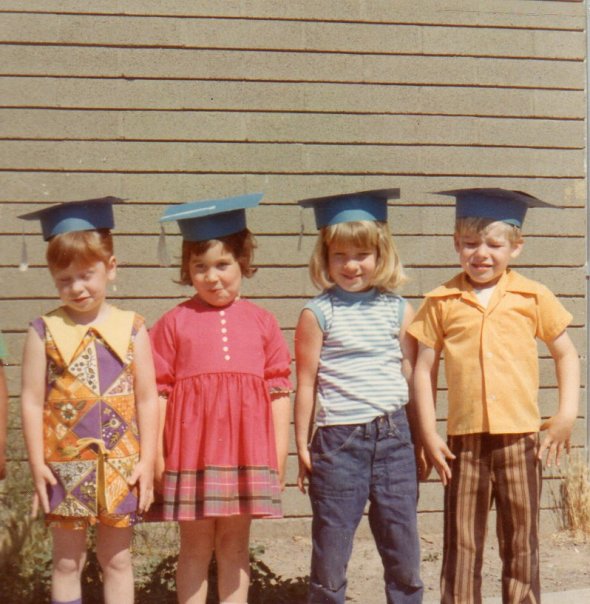
Head Start graduation
In second grade, I was told I should never brag, and I took that admonishment to heart.
I have no recollection why I was boasting, but I do remember Carla Shown looked at me with disdain and said, “No one likes people who brag.”
Her words have stayed with me, but there are times when we have to balance the lessons we learned in our childhood with our experience as adults.
Now is one of those times, and I am going to brag a bit.
I am a product of Head Start.
I feel an obligation to brag, because the voices of low-income children aren’t being heard above the clamor about Syria.
Head Start provides early childhood education, health and nutrition services as well as parent support for low-income children and their families. The services are designed to foster stable family relationships and address early childhood developmental needs.
Research tells us that children who have been through Head Start and Early Head Start are healthier, more academically accomplished, more likely to be employed, commit fewer crimes and contribute more to society.
Common sense tells us that the future of our country hinges on our children, and we should invest in our future.
Unfortunately, common sense often doesn’t prevail on Capitol Hill, and, as a result of sequestration, Head Start has eliminated services for more than 57,000 children this school year. The program is facing even more cuts in the future.
We are going backwards.
Head Start began in 1965, and, because of where I lived, I was enrolled in the program in the early 1970’s. I still have the report cards that documented my progress at mastering a list of tasks and skills and the photos from graduation ceremonies.
At first glance, the photos of my Head Start graduation don’t tell much of a story. There is no indication that the chubby little girl in the red dress would grow up to be the outspoken person I have become. Nor does it indicate that the little boy in the striped pants would someday graduate from Dartmouth.
But it does show what hope looks like, and if we don’t do something to meet the needs of our children now, we will be seeing fewer and fewer of such photos in the future.
Picking My Battles Part 2: Validation, Lessons Learned and Being a Role Model
 Yesterday evening, I walked my dog through a section of the public park near my house. Children screamed with joy as they chased each other and played on playground equipment. Youth shot basketballs as parents watched from benches, and individuals waded in the creek. A young man with an accent rested his bike against the pavilion and joked with me about my dog.
And I smiled.
Had I not followed my gut and taken a risk of making a lot of people mad at me, none of those individuals would have had the opportunity to enjoy their evening in the same way. They would have been prevented from entering that part of the park by caution tape and overly eager volunteers.
But because I instinctively knew that no one had a right to prevent the public from enjoying that space, these people enjoyed a beautiful Friday evening.
But they didn’t enjoy it without a price – a price I paid.
There’s no need to recap my story of the Boy Scouts telling me I couldn’t walk in a public park since I’ve already written about that (see blog here). But if anyone is interested in the epilogue to the story, here’s a condensed version:
After being told by a staff person with our local parks and recreation office that the Boy Scouts had not received permission to section off and prevent others from entering that area of the park, I once again attempted to take my dog for his usual evening walk. And I was once again confronted and told I wasn’t allowed. After basically being accused of being a liar, I walked through the marked off section of the park anyway. And (shocker), I didn’t bother anyone or provoke any tragedy. In fact, the only tragedy that occurred that evening was all of the people who were once again chased away.
I later ran into the director of Parks and Recreation who apologized and reinforced that the group had not been given permission to close off that section of the park. In fact, groups were never allowed to be close that section of the park. In other words, my instincts were correct, and my resistance was justified.
When I told the director that the caution tape was still up and that bright orange signs proclaiming the area to be off-limits had been added, he promised he would address the issue with the group.
Unfortunately, the whole situation was a result of miscommunication. The local parks and recreation office had booked the Boy Scouts for the wrong park, and, because of that, the Boy Scouts really did think they had permission to seize control of that area of the park.
But, despite that, I have to question where the common sense was in this whole situation. Why would anyone think that particular section of the park was appropriate for an event that the organizers believed required a great deal of security? And why hadn’t other people who had been chased off spoken up? (I’ve since heard from plenty of other people who were angry but didn’t question anyone.)
If I hadn’t asked the tough questions and pursued the matter, the people I saw enjoying the park last night wouldn’t have been enjoying it.
The situation is resolved, and I finally received an email from the Boy Scout executive with whom I had been trying to communicate. He didn’t apologize but neither was he rude, and since I was becoming increasingly rude with the group, he deserves credit for that. He did emphasise that safety of their scouts was a top priority.
I understand that. Over the years, I’ve had responsibility for thousands of young people. I just didn’t bully others to ensure their safety.
Which goes back to my question about why a group so concerned about the safety of young people would hold an event in such a well-used and public section of the park.
I, and many others, use that part of the park as a point of entry, and hundreds of others enjoy it every day. It is also the only area that provides access to a public stream (although the stream wasn’t roped off by the Boy Scouts, and people could still use it if they walked around the park to get to it.)
The bottom line is, if security were such a concern at the park, the Boy Scouts should not have chosen that particular location for the event unless they had another purpose, such as training volunteers to be guard dogs. The only other obvious benefit was the visibility of their recruitment signs.
But, regardless, the whole situation is now behind all of us, and the boys who were participating in the event weren’t hurt or prevented from enjoying their activities. In fact, as I walked my dog by (not through) their new and much more appropriate spot in the park last night, I was stopped by one young camper. (Just for clarification, he was outside the roped off area.)
“Is that your dog?” he asked. “He’s really big.”
“He is,” I said. “He also gets really excited so you don’t want to get too close because he jumps.”
“O.K.” the boy said, and then he changed subjects. “Hey, do you know what I’m doing here?”
“No,” I responded. “What are you doing?”
“I’m at Twilight Camp. And the Webelos get to spend the night.”
“That’s awesome,” I replied as the woman with the boy looked at me skeptically, as though I were lying and really didn’t want the boy to have fun.
‘Yeah,” the boy said. “It is awesome.”
“Well, have fun and be safe,” I said.
“I will,” he responded, then he and the woman in the orange vest walked away. But I was fortunate to hear the rest of the conversation.
“Do you want to know who that was?” the boy asked.
“Yes, I do,” the woman in the orange vest responded.
“That,” he said with obvious pride, “Was my Sunday school teacher.”
And I couldn’t help but smile. In the same week I had been labeled a security risk, a young boy was proud that I was his Sunday School teacher.
And that made all the trouble of the week completely disappear. It also reminded me that I am a role model, and sometimes being a role model doesn’t mean succumbing to the pressure or demands of others. It also doesn’t mean I have to be perfect or always use the exact right words.
Sometimes it simply means following my heart and doing what I know is for the greater good, even when people get angry with me or question my methods.
In the end, the smile and respect of a child is simply worth it.
Entitled
I’d be lying if I claimed I never stereotype people. But I am being completely truthful when I say I come by those unfair stereotypes honestly.
That is, they aren’t based on propaganda or how I was raised. They are based on experience.
Take, for my example, my instant assumption about women who wear fur coats and multiple diamond rings on their fingers. There’s a reason I automatically label them as being self-centered.
Years ago, on a bitter cold December day when I was in my twenties and living just on the right side of poverty, I spent my entire lunch hour  waiting in line at the post office. I was hungry and irritated, which are generally interchangeable for me. I was also uncomfortable and sweating. The temperature in the post office had been bumped up to fight against the frigid temperature outside, but I was wearing my winter coat. I was also carrying numerous packages and simply hoping the line would suddenly advance.
It didn’t. Every customer had multiple packages, and, even though we were smack in the middle of the holiday rush, there were only two clerks working at the counter. As we inched forward, I tried to find ways to amuse myself. Since this was in the days before smart phones, I counted the tiles on the floor and made up stories about the other customers. I even tried to strike up a conversation with the person in front of me, but he was even more irritable than I was.
And then, she arrived.
The woman wearing the fur coat and lots of diamonds swept (yes, she really swept) into the post office with an armful of packages like the rest of us. Only, unlike the rest of us, she took one look at the line and loudly announced, “I don’t have time to wait in line. I have a lunch appointment.” And then she simply walked to the counter and insisted she be served immediately.
She was.
While the rest of us stood with our mouths hanging open, the clerk accepted her demands and began processing her packages. She swept out in a manner similar to the way she had swept in. Only now, unlike the rest of us, she no longer carried packages.
And she never apologized.
From that time on, I labeled women who wore furs and diamonds as entitled.
In years to come, I would hear others use that same word to describe individuals and families who have depended on government assistance. And I would always cringe.
 But this week, I had an eye-opening experience.
I was picking up a few things at the grocery store and was checking out in the express line with my seven (yes, I counted them) items. As the customer in front of me finished checking out, a women walked in the door of the store.
She had rather straggly hair and was dressed in cheap clothes. The little girl tagging along behind her didn’t look much better.
Instead of getting in line, she glanced at me then entered the check out line where most people exit. She simply walked between me and the man who was checking out. The clerk also glanced at me, as though unsure what to do. But the woman took control of the situation. She ordered three packs of cigarettes and then, when asked if she was using a debit or credit, almost rebelliously said “credit.”
I was disgusted. She had blatantly cut in front of me to charge cigarettes. And she had done it with a child in tow. She behaved as though she were…entitled.
And that’s when I got it. I understood how one experience can easily shape our opinion about all people who look or act in a certain way. And I understood that entitlement has absolutely nothing to do with social or economic class and has everything to do with individuals who think more about themselves than about others.
And neither one is right.
The Graduation Speech I’ll Never Give
 This upcoming week, my husband is scheduled to be the graduation speaker at his high school alma mater. Even though he makes his living talking to millions of people, he actually hates speaking in public.
Because of that, he’s not particularly happy that I encouraged him to go outside of his comfort zone. He thinks I don’t understand his apprehension because I actually enjoy public speaking.
What he doesn’t understand is that I’m simply jealous of the opportunity, and I’m living vicariously through him.
It’s not the spotlight or the attention that make me wish I could stand in his shoes. It’s the privilege of encouraging young people as they take that final step out of childhood and into adulthood.
Ironically, I don’t even remember who spoke at my high school graduation other than it was a white, male politician. Despite that, I still believe that the right words can make a big difference.
If I didn’t, I wouldn’t write.
But since I do write, I’m going to use this space to share my own words with the Class of 2013. What follows are highlights of the commencement speech I’ll never give:
1. As you get older, you will discover that high school wasn’t just a finite period of your life. It was a series of good and bad relationships and events that served as a platform from which you chose to stand still, dive or climb. My advice is to climb. Take the stairs. Rise above the need to be defined by others or the simple accomplishments of youth and discover who you really are. You’ll probably surprise yourself and all the people with whom you once shared the platform.
2. Don’t ever believe that your greatest moments are behind you. There are always opportunities to create more great moments, but they require moving on and doing something different. Many people are uncomfortable with change and will want to force the status quo on you. Don’t let them.
3. Never apologize for your opinions. Ever. Opinions aren’t facts, so you can never be wrong, and you can always change them as circumstances change. But opinions are valuable because they define the essence of who you are. Like any other valuable possession, people will try to take them from you by any means necessary. Don’t ever let them use religion or profits or cultural norms to buy your silence.
4. You’ve probably been told all of your life not to worry about what other people think about you, and in most circumstances, that’s true. But you should worry about what “the future you” will think about you. You are the only person who has to live with you your entire life. You can walk away from other people, but you will still be with yourself. Make sure you are a good companion. Treat yourself with the respect, care and love needed in any long-term relationship.
5. Before you get out of bed each day, think about the calendar. The day you are about to begin is absolutely unique, and in a few short hours it will simply be another day in history. Make sure that day counts in your own life history. Despite the obstacles you may be facing or the hurt you may be feeling, make sure you do something that makes that day memorable and meaningful. If you are stuck in a routine, break it just a little. Eat something unusual. Read something new. Talk to a stranger. Practice a random act of kindness. Your ultimate goal in life is to make every day count, but that sometimes requires a bit of work. Do the work anyway.
Swimming in a Dress
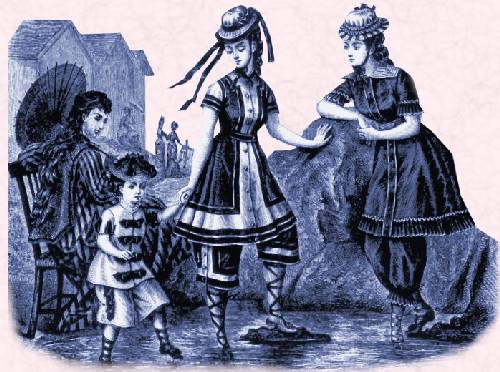
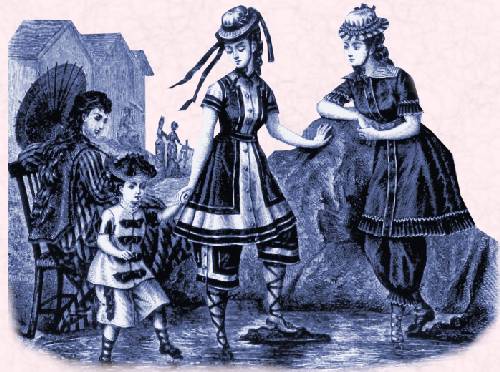
Victoria swim wear – http://www.fashion-era.com/images/SocialHistory/swimpad500.jpg
This week, I had two conversations that morphed into one question about how we live our lives.
The first conversation was with a friend who told me about home-schooled children who were on a field trip at the Shepherd University pool. They were affiliated with a religious group that prohibits females from wearing pants, and, apparently prohibits swimming suits as well. My friend’s son watched astounded as the girls jumped into the pool still in their dresses.
The second conversation occurred on the phone with my mother, who wanted to know if my son had received his birthday check. After telling her yes, I added, “I know, he hasn’t sent a thank you note to acknowledge it. I’m a bad mom.”
My mother disagreed. “No, you aren’t. You are a much better mom than I was.”
Her comment shocked me, because I’m not even close to the type of mother she was.
My mom always made sure we sent thank you notes immediately. She planned menus that met every dietary guideline. And she ensured we did our Saturday chores, our beds were always made and that our laundry was always put away.
Not only do I fail to do all of those things on a regular basis. but my life is a chaotic mess compared to the structure in which I grew up. I told this to my mother in fewer words, but she responded, “You have fun with your kids. You know how to relax and just enjoy them. I never did.”
Not to belabor the point, but she WAS always wound quite tightly, and I’m generally not wound nearly that tight.
But getting unwound wasn’t easy. As I recently told a friend, “I spent the first 15 years of my life being a nerd trying to follow all the rules, and I spent the next 15 years trying to prove I was a rebel. Then I became a mom and had to find a happy medium.”

swimsuits in 1919 – http://old-photos.blogspot.com/2008_01_01_archive.html
In short, I had to break free of restrictive expectations and learn balance so I could enjoy life.
Which brings me back to the girls who jumped into the swimming pool in their dresses and to my question.
“Can anyone really enjoy life fully when they are restricted by a rigid belief system?”
Being in a pool with a dress is probably more fun than not being the pool at all, but I can’t imagine it was all that enjoyable. The water-logged clothing had to make movement difficult and exhausting.
I have absolutely no right to question or judge the beliefs and choices of the girls or their families. If they choose to swim in a dress, they have every right to do so.
But I have every right to question my own choices and the self-imposed restraints I’ve often put on myself – those that prohibit me from enjoying life. Sometimes these have been thinking a work deadline is more important than a few hours with my children. Sometimes they have been my obsession with gaining weight. And sometimes they’ve been my concerns that I will fail when I try something new.
I’ve definitely done my share of swimming in a dress.
But both times and people evolve, and as I’ve aged, I’ve become better and better at shedding my dress. That doesn’t mean I’m going out in public in a string bikini, but it does mean I can enjoy a good swim in a modest tankini.
Shame is Not a Form of Birth Control
I had to double-check my calendar this morning to assure myself that it was actually 2013 and I hadn’t been sucked into a time warp.
I hadn’t been.
Instead, I was sucked into reading news articles about a school assembly featuring an abstinence-only proponent whose only educational credential is a Psychology Degree from Jerry Falwell’s Liberty University.
See: http://www.dailymail.com/News/201304110267 and http://www.wvgazette.com/News/201304110229 .
I can’t emphasize enough how inappropriate the assembly was.
Almost 20 years ago, when I was working in the field of sex education, experts had already proven that abstinence-only and shame-based tactics don’t work. And promoting a particular religious philosophy in a public school is simply prohibited.
But self-righteous people, who believe they actually know what God is thinking, seem to find a way around these issues.
The speaker, Pam Stenzel, and her sponsors, a religious group called Believe in West Virginia, say her speech wasn’t faith-based. Instead they say it was just a warning about the dangers of sex before marriage.
Those few words should have been enough to keep this woman out of the public schools.
A real sex educator doesn’t pretend that a wedding ring can protect people from a sexually transmitted disease, an unplanned pregnancy or heartache.
A real sex educator doesn’t outright dismiss homosexuals, who are still fighting for the right to even be married.
And a real sex educator doesn’t condemn, judge or shame.
Instead, a real sex educator gives facts – not statistics that have been manipulated to fit a certain dogma.
A real sex educator will agree that sex is the only human behavior that has the potential to create life or to threaten a life. The educator’s job is to help individuals make decisions to prevent unwanted consequences.
And a real sex educator will spend time talking about healthy relationships and about treating others with respect – not condemnation.
Years ago, I was that person, and I will never forget making a presentation about AIDS and HIV in a middle school classroom. As I interacted with the students, the teacher, who was obviously not happy I was there, took out his Bible and placed it open on his desk. He pretended to read, and I pretended to ignore him.
A year later, I had the same assignment and found myself in the same classroom. But instead of taking out his Bible, the teacher made a point of welcoming me and telling his students they should listen. He then privately told me that “a really good person” from his church had been diagnosed with AIDS. Instead of noting that a lot of “really good people” had been diagnosed with AIDS, I was just grateful that he had become a bit more open and less judgmental.
Now, I am hoping the same for all those involved in permitting the recent school assembly at George Washington High School.
A Poor Perspective on Poverty
When I was in elementary school, my mom made most of my clothes. As a child, I loved picking out the patterns and fabric to help design something uniquely for me. And when I outgrew those clothes, we donated them to what my parents called “the needy.”
I had a vague understanding of who “the needy” were. They were the kids who came to school dirty and sometimes smelly. They were the kids whose parents didn’t socialize with our parents. They were the kids that lived in neighborhoods where we were told not to go.
I thought that giving my clothes to “the needy” was some kind of measure of moral superiority.
Then one day, a girl in my class came to school wearing one of the outfits my mother had made.
I was shocked.
She was needy? I talked to her. I played with her at recess. I even sat with her at lunch sometimes.
I was even more shocked when someone asked her about her new clothes, and she described a shopping trip she’d made to Portland with her mother. At that age, I was just as unfamiliar with lying as I was with “the needy.”
I made the mistake of calling her out on her lie, but she didn’t relent and insisted she had bought the outfit at a store in Portland.
After that, I didn’t talk to her, play with her at recess or sit with her at lunch. I started equating “being needy” with being a liar.
Decades later, I still feel guilty about calling the girl out. I wish I could go back in time and go along with her fantasy about clothes shopping at fancy stores. She simply wanted to fit in, and I understand that now.
We live in a society that equates products with social status and success. Just carrying an off-brand purse gets me looks from women who pride themselves on carrying name brands.
And the extent to which our children are buying into that materialistic culture even surprises me. I’m usually not at a loss for words, but there is an exception to everything.
My exception came in the form of a ten-year old boy who lives in a house much larger than mine. His parents drive newer and more expensive cars than my husband and I do. His family seems to be on vacation every time school is out while my family rules the staycation. In other words, I think of his family as being “well-off.”
The boy, however, told me his family is poor.
I didn’t know what to say. Even with money out of the picture, I can’t begin to describe his family as poor.
His parents are attentive and loving to each other and their children, who are involved in numerous extracurricular activities. The family worships together and is actively engaged in community service. Simply put, the family lacks for nothing.
The boy, however, was adamant that his family is of limited means. He was sure because he has friends who not only live in a bigger houses but also have beach houses. Their cars are even more expensive, and their vacations even more extravagant. In his eyes, his family really doesn’t have enough.
I understand how this boy reached his conclusion. It’s called perspective. But that’s not an excuse for him or for all the adults who look into that same short lens that distorts everything.
Recently, a local official asked me why the percentage of children living in poverty had grown while the median household income in his county grew by more than $18,000 during the same ten-year period. Before I could answer, his colleague responded.
“There are more poor people, because the poverty level goes up every year. A family can make more money and still be considered poor.”
I was proud of my reaction. I was appropriate, and I didn’t even make a face. Instead, I noted that the local numbers simply reflect national data that show a growing income gap between the rich and the poor. Then I asked, “have you actually looked at the poverty level?”
When I didn’t get a response, I added, “This year, the poverty level for a family of four is $23,500. Personally, I don’t know how I could live within that.”
The topic quickly changed, and I’m not sure if the discussion had really ended or if a genuine conversation about poverty was just too uncomfortable, as it often is. Instead, we misdirect by categorizing the poor as deserving or undeserving. We dress up and attend charity events that make us feel good about helping. And we pride ourselves in giving to “the needy.”
But there are times when I try to change my perspective and look at how we treat the poor from the eyes of my former classmate. I’m pretty sure she’d tell us to stop pretending that poverty is something that happens to other people. I also think she’d say that we should stop pretending that name brand clothes or a big house reflect on our character or our importance. And I’m positive she’d say that we shouldn’t pretend that charitable giving is more meaningful than really listening to someone who is struggling.
And in return for her opinion, I’d tell her that I think she’s right.
Slaying the Lizard of Oz
 When my daughter was in preschool, she discovered The Wizard of Oz, and even though she absolutely loved the story, she just couldn’t get the title quite right. She called the classic story “The Lizard of Oz.”
Initially, my husband and I tried to correct her, but nothing worked.
My son, on other hand, never even attempted to point out that a lizard is very different from a wizard. He simply chose to make fun of his sister, and since she didn’t understand his ridicule, she wasn’t really bothered.
Trying to teach my daughter the difference seemed futile. Instead, we decided that allowing her to happily promote the concept of a giant lizard ruling over the Land of Oz made our lives more peaceful.
At least, it was more peaceful until that day she came home dismayed that her parents made her look foolish by allowing her to publicly talk about “The Lizard of Oz.”
I can’t tell this story without thinking of all the adults who also believe in the Lizard of Oz.
These are people who make up their minds about something and only listen to those who validate their beliefs: the politicians who believe that they speak for “all Americans” or the old white guys with money who only listen to other old white guys with money (or to those who pander to them). They, like the Scarecrow in the Wizard of Oz, could easily gain wisdom. All they’d have to do is listen to people who better understand the real issues.
These are the people who only make decisions based on their own paradigm. They ignore that the world is changing, which means their way of doing things should change too. Instead, they, like the Tin Man, appear heartless because of their refusal to adapt with little regard for others.
These are the people who are self-absorbed. Like the Wicked Witch of the East, they believe those seeking help are the problem, and they care more about feeding their own egos than feeding the hungry.
But no matter how hurtful or destructive these people are, they get away with their behavior because there are even more of us who enable it. We act like the Cowardly Lion, who is afraid of everything. We fear calling out those who are wrong. We fear making ourselves look bad. We fear causing too many problems. We fear repercussions. And we fear failure.
But being the Cowardly Lion is outside of my comfort zone. I’m not the type to sit back because trying to change misperceptions and outright mistakes is too difficult.
I’m off to slay the lizard, the problematic Lizard of Oz.
Some People Should Just Shut Up
 Being a parent sometimes means being a hypocrite. If you don’t believe that you are either a) not a parent or b) incredibly (and unbelievably) perfect.
I can provide hundreds of examples of times I’ve behaved in a manner that directly opposes what I’ve told my children. Apparently, my husband is a few steps higher on the parenting evolution ladder than I am. He doesn’t always behave better than I do (although he probably does most of the time), but he’s generally less verbal about certain expectations for our children. That way, his behavior doesn’t seem quite as hypocritical.
I, on the other hand, am constantly setting standards that I can’t even begin to meet myself.
For example, ever since our children started talking, I insisted they use the words “please be quiet” instead of “shut up.”
Yet, I don’t do at all well with that particular language skill.
Recently, I was enduring a painful meeting during which a self-important person was holding forth as though his words were actually meaningful or of interest to anyone but himself. To survive the ordeal, I pretended to take notes while actually scrawling page after page of the words “Shut up. Just shut up.” A few times, I even added a less than flattering description of the person I wanted to be quiet.
But the words “please be quiet” are often inadequate. Quiet means hushed tones and soft voices. Quiet shows a lack of passion or emotion. And quiet doesn’t indicate disagreement when someone else’s words are hurtful or rude or simply pointless.
That’s why I haven’t been thinking “please be quiet” lately when people try to disguise their hate and prejudice with self-righteous statements and stupid jokes. Instead, I want to scream “just shut up” every time someone equates being poor with being lazy. But I haven’t.
I’ve held my tongue as tightly as the man gripping a snow shovel while he rode his bike through my neighborhood on Wednesday.
Wednesday we were supposed to get a blizzard. Schools closed. Government shut down. Businesses even changed their hours of operation. And even though all we got were a few inches of snowy slush, a lot of people with steady jobs and stable employment had a snow day.
The man on the bike didn’t have a day off.
He was looking for work shoveling driveways and sidewalks. He was offering his services to people who most likely judged him on his ragged appearance and his lack of a car. He didn’t have a truck to which he could attach a plow. All he had was a shovel and some muscle.
I’ve seen him selling his shoveling services on other snow days, but this past Wednesday was different.
I was leaving the neighborhood when he rode by me. He didn’t know where I lived or whether I was even a potential customer. I was simply some lady walking a German Shepherd on a cold and windy afternoon.
But, even though I had nothing to offer him, he slowed, gave me a wide smile and told me to enjoy my day. And then, balancing his snow shovel while pedaling his bike, he quickened his pace and was off.
That’s the exact instance I realized that maybe, instead of teaching my children to always say “please be quiet,” I should have been teaching them that sometimes standing up for those without a voice means shutting down those who speak against them. I should have been teaching them that there are times that polite isn’t as important as human rights. And I should have been teaching them that there are times when some people really do need to “just shut up.”
The Daisy Petal Deception
 Even though people tell me I have a very good memory, I’m not so sure. For every story or incident I remember, I am constantly reminded of all those times about which I have no recollection. And I have no clue who taught me that plucking petals off a daisy is a reliable method of determining whether someone cares about me.
Pluck a petal – he loves me. Pluck another petal – he loves me not. Pluck another – he loves me. And the last petal will supposedly reveal the true nature of his feelings.
A rational person would recognize that the practice is not only ridiculous but that it also promotes the deliberate torture of innocent daisies. Apparently, I haven’t always been particularly rational.
I’m ashamed to admit that, thanks to a long-forgotten tutor, I’ve tortured a lot of daisies in my life.
Most were destroyed in the name of boys and men who never even knew that I cared. (I can only credit myself for the self-taught skill of acting disinterested when I was actually quite interested.) I even began plucking daisy petals for answers to questions that had nothing to do with relationships.
Pluck a petal – I will get what I want. Pluck another petal – I will be disappointed. Pluck a petal – I will get what I want.
Every time I got the answer I wanted, my appreciation for the practice grew. Not because the answer proved to be valid, but because it was an easy way to avoid the ambiguities of life and love.
Unfortunately, a lot of people like avoiding ambiguities. They like simplicity. They crave only two choices, so they can make a quick decision rather than think about alternatives and possibilities:
– They want one religion to be right and any other to be wrong.
– They want one political party to have all the answers and the other to only represent miscreants.
– They want people with a good-paying jobs to represent moral superiority and poverty to represent laziness.
Pluck a petal – you’re good. Pluck a petal – you’re bad.
The problem with plucking daisy petals is there is never a need for a real solution and there’s no call for action. If you don’t get the answer you want, you pick another daisy and try again. Either that, or you accept the answer but sulk and complain.
Sulking and complaining has never made anyone happy. Changing circumstances does, but that usually requires compromise and working with others. It requires putting down the daisies in our own hands, so we can join hands with others.
When we do that, the options grow, and opportunities really start to blossom.


 Just So You Know