Blog Archives
Ten Lessons about Love for My Ten Year-old Daughter
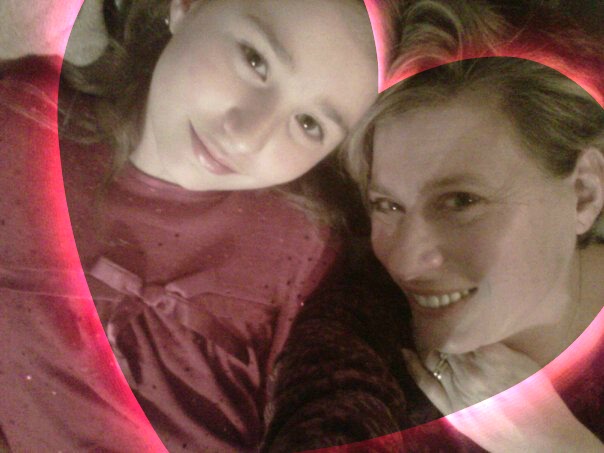 Being a very practical person, I’m extremely fortunate to have a pragmatic daughter. Unlike many of her peers, she’s shown little concern about romance and relationships. Other than incessantly listening to Taylor Swift songs and keeping tabs on Taylor’s love life, she just doesn’t seem to care.
And while I hope that doesn’t change, I also know that, eventually, it will.
I can’t imagine that she’ll ever be the type of person who feels incomplete without a significant other, but I do know that she will start dating at some point.
And that also means she’ll have her heart broken.
But before that happens, I feel obligated to share ten lessons I’ve learned (sometimes the hard way) about love:
1. You can’t truly love someone else unless you love who you are. And who you are is an imperfect person who makes mistakes, gets mad and will sometimes say and do very stupid things. Love yourself anyone. How you handle your mistakes and flaws is more important than trying to hide them.
2. Love is only genuine when you are being true to yourself. Don’t pretend to enjoy something when you don’t. That doesn’t mean you shouldn’t compromise. You should. Love requires a great deal of compromise. But compromise doesn’t mean you should pretend to be someone you’re not. If you do, you’ll wind up being miserable.
3. Love isn’t a competition, and you can’t make someone love you. You will always be loved for being the unique person you are and not because you are prettier, smarter, funnier, sexier or nicer than someone else. Therefore, you should never worry about what others are doing to attract attention or affection. Being yourself is enough.
4. You don’t fall in love. That indescribable feeling of “falling in love'” is usually a combination of infatuation and physical attraction. Love is something that is grounded in mutual respect, grows slowly and doesn’t necessarily bloom as much as it thrives.
5. Love isn’t about romance. It’s about experiencing someone at their very worst and realizing that walking away would still be more devastating than dealing with a tough situation.
6. Love is about having passion in your life – but not necessarily in the way you might think. Never invest so much of yourself in a relationship that you don’t have time for everything else you love. Be passionate about a hobby. Be passionate about a cause. Be passionate about your family and friends. And also be passionate about your love.
7. True love means you aren’t worried about what other people think about your relationship. If you spend time worrying about what others are thinking or saying, you likely have concerns yourself. If you’re confident about your relationship and the integrity of your significant other, you won’t care what others say. Always stay in tune with your inner voice and be honest with yourself.
8. Love means saying you’re sorry. Unlike the quote “love means never having to say you’re sorry” made popular in the 1970’s movie “Love Story,” love means that you’re willing to let go of your ego. Admit when you are wrong or when you’ve said or done something hurtful. And when you are in a relationship, you will say and do hurtful things at times.
9. Don’t expect love to always feel exciting and new. Just like life, love can sometimes be dull and boring and predictable. Relationships are like roller coasters: sometimes they can be difficult and sometimes they can be easy and fun. But being able to work together during the uphill battles is what makes the downhill ride so enjoyable.
10. People do change, and that can affect your relationship. Our experiences shape who we become. The person who you fell in love with several years ago will probably be different from the person you know today. And you will be different too. Many times, you can join hands while you grow. Sometimes, you drop your hands and grow apart. Often, the decision is yours, but sometimes it isn’t.
As I share these lessons with my daughter, I realize that I could add so many more. But I figure one for every year of her life is enough for now. Besides, she often doesn’t listen to me anyway. Despite that, I do want her to hear one message loud and clear: even though she will ALWAYS have her mother’s heart, I hope she is also able to follow her own.
The Myth of the Same 24 Hours

I admit that I’m generally a sucker for adages, quotes and platitudes. They often make sense, and sometimes they even speak directly to me. Sometimes.
And then there are sayings that get my blood boiling, because they are simply unfair and obviously perpetuated by people trying to make themselves feel good.
“We all have the same 24 hours” is one of those sayings.
O.K., technically, there are only 24 hours in each day, and as far as I know, no one gets rewarded with extra hours for doing good deeds or has hours subtracted for bad behavior. But the SAME 24 hours? It’s not even close.
For people who want to feel self-righteous, the saying works. After all, they’ve achieved “success” with only 24 hours in a day. If others haven’t, then they obviously haven’t used their 24 hours wisely. This logic is similar to the myth that if low-income people just worked harder, they too could be financially secure. Ironically, some of the hardest working people I know are working two jobs and still can’t make ends meet. And when they aren’t working to earn meager paychecks? They are spending time on tasks that middle and upper class people generally don’t.
In other words, when you don’t have a high income, you just have less time.
You have less time because you spend hours in a laundromat rather than throwing your clothes into a washing machine at home.
You have less time because you can’t simply jump in your car when you need to go to the grocery store, to a child’s school program or to work. You depend, and wait, on public transportation.
You have less time because you don’t have social connections with doctors who can “get you right in” as a favor. Instead, you wait just to get an appointment . . . then you wait in the waiting room.
I first became aware of the “24 hour myth” through my own struggles. I spent hours trying to do things myself that friends with bigger paychecks paid someone else to do.
And sadly, because I bought into the myth that not having extra money meant I wasn’t successful enough or working hard enough, I would pretend that I took satisfaction in “doing it myself.”
Then, at some point, I realized that “doing it myself” was the epitome of hard work. It just didn’t equate to having more money in my pocket, a bigger house or a nicer car. But neither did it equate to being a failure. It did increase my understanding the value of time, and how people who can afford to buy it, do.
They buy it by paying babysitters to watch their children. They buy it by paying people to clean their homes. They buy it by eating at restaurants instead of cooking. And sometimes they can even buy time by working for businesses that allow them to go on golf outings or to participate in charitable events to build their network and their resume (while lower-income people are generally required to stay at the work site while on the job.)
I can’t judge whether people who have higher salaries use their time more or less wisely than people with lower incomes any more than I can judge whether they work harder. Like everything else, individual behaviors run the spectrum. But I do know people with more money have more discretionary time to spend on working more or playing more. And just like discretionary money, it can be wasted or well spent.
As Carl Sandburg said, “Time is the coin of your life. It is the only coin you have, and only you can determine how it will be spent. Be careful lest you let other people spend it for you.”
And that is saying I CAN definitely buy into.
Ghosts of Christmas Past
Halloween may be the most ghostly holiday, but like Ebenezer Scrooge, I have always found Christmas to be more haunting. 
And just as with Scrooge, my Christmas ghosts remind me of what used to be and what I still hold dear.
Unlike Scrooge, my ghosts don’t necessarily encourage me to reconsider my life path. They are simply reminders about change, about being a parent and about how the best Christmas gifts often go unopened for years and sometimes even decades.
And every holiday season, my ghosts remind me of when I was an adolescent and received gifts that I didn’t unwrap or appreciate until years later.
They were given to me when I was struggling with the usual angst and therefore oblivious to anything my parents were dealing with.
And they were dealing with a lot.
My dad was unhappy with his current employment and seeking a new job. My mom was happy and fulfilled with her role in the community, but supportive of my dad. Therefore, the needs of my dad, the family breadwinner, won out and he accepted a job almost all the way across the country from our Oregon home.
Shortly after accepting the new job, he packed up his Ford truck and our family dog and drove cross-country to West Virginia. And my mother, my brother and I were left behind.
He made the move in early fall, and even through my self-absorbed haze, I knew much my mom didn’t want to move.
She even insisted that no one was going to buy our house anytime soon. But it sold almost immediately, and plans were made for the rest of the family to move to West Virginia over the Christmas holiday.
I continued my life as usual, pretending the change wouldn’t occur. My mother appeared to do the same. And with the holidays approaching, she made sure all the family traditions were kept. We decorated the house and the tree. We participated in holiday events. And we baked Christmas cookies and breads. Our house was warm, festive and inviting. In fact, there were very few indications that our life would soon be disrupted in ways that would take me years to understand.
But that Christmas WAS different.
My dad wasn’t around, and my mom’s eyes would tear up every time ‘”I’ll be Home For Christmas” came on the radio.
Too soon, school was out for winter break, my dad came home to help with the move, we hurriedly celebrated Christmas and just as quickly packed the house. Then we left. Forever.
Initially, I thought I would never adapt to my new life. Everything was different – the way people talked, how they viewed the world and what their priorities were. But I was young, and I eventually adjusted. But because I was young, I was also self-absorbed. So, the fact that my mother was facing the same issues at the “real-world” level didn’t seem important.
I knew she was unhappy. I knew that she went from being a community leader to being someone fairly unknown. And I knew that she just couldn’t conform to the suburban culture that we suddenly found ourselves in.
But I also thought she was “old” and just wasn’t affected by things the way I was. Or at least she knew how to deal with everything better.
I’m now even older than she was at that time, and I know we “old” people don’t always know how to deal. At least I don’t. And I don’t always hide my frustrations and imperfections… not even from my children. And during the holidays, I sometimes simply choke.
But my mom never choked. Even when she was going through one of the hardest times of her life, she never put her own issues, concerns and needs before those of her kids. She pretended that whatever her children were going through was a much greater priority. And she knew the importance of making us feel like we were home, even if she didn’t feel like she was.
That’s why, the Christmas after “the big move” felt just like every other Christmas. We decorated the house with the same decorations that we’d put out in years past. We baked the same cookies and breads that we baked in the past. And we listened to Christmas carols on the scratchy records we’d always listened to. It felt like we were home for Christmas.
I actually received several unwrapped gifts those two Christmas holidays. I received the gift of learning to move forward with my life while still embracing the past. I received the gift of understanding the importance of traditions at Christmas. And I received the gift of a role model who gave of herself at a time when there was often little left to give.
I unwrapped those gifts years ago, but I’ve held onto them. Every year when we hang the decorations on the tree… some which go back to my childhood…these Ghosts of Christmas Past come back to haunt me. And they remind me that life is constantly changing: new people arrive while others leave. Circumstances sometimes improve and sometimes get worse. And sometimes, even the entire culture seems to dramatically shift. But amid these changes, we can still appreciate the Ghosts of Christmas Past, celebrate the Ghosts of Christmas Present and hope that the Ghost of Christmas Yet To Come provide opportunities for our children to open the unwrapped gifts we’ve given them. And that they too are haunted by Ghosts of Christmas Past.
The Addams Family Has Nothing On My Family
One of the stories that gets told and re-told every time my family is together is how I was switched at birth.
Truth be told, the story really isn’t all that interesting. I never actually got sent home with the wrong family. There were only two babies born in the rural Montana hospital that day, and I was over eight pounds while the other baby girl was much smaller. So in reality, there was never any significant confusion. The hospital was just so small and births were so infrequent that wristbands weren’t used. As a result, my parents were handed the wrong baby when they were getting ready to leave.
But even though the circumstances weren’t all that dramatic, there were times growing up when I was convinced that I was living with the wrong family. I was sure my dad made a mistake when he told hospital staff that they had given him the wrong baby. At least, I really, really wished this, and I fantasized that someday my real family, the ranchers in Montana, would come rescue me from my plight.
Putting aside the obvious family resemblances, I was convinced that there was no way I could actually be related to the people I was being forced to live with. They were just too weird, and even worse, they were making me weird. I knew this because I spent a lot of time comparing our family to other families.
There was simply no doubt. We were abnormal: my parents didn’t care about the things other parents cared about; they had different expectations and priorities for my brother and me; they didn’t listen to popular music; they rarely watched any television other than PBS; they didn’t care about pop culture and they would express opinions that were outside the norm of suburbia. Even the food we ate was weird.
There were times when the hopelessness of my situation got so bad that I would secretly watch an episode of the Addams Family just because it made me feel a little bit better. But only a little bit, because I knew the Addams Family was fictional, while my family was real. Besides, my mother never approved of such frivolous shows.
But, like so many other situations in life, I grew up and got some perspective.
I’m not saying I completely overcame my compulsive need to compare myself to others and to worry that I was a bit off kilter (I always have been and always will be), but I did realize that there really is no such thing as normal. Most people spend a lot of time and energy putting up appearances rather than truly engaging in the world. I was raised in a family that just didn’t worry about what other people thought and lived accordingly. Because of that, it took me a long time to figure out how much other people were trying to cover up.
I’ll never forget an incident that occurred when my children were small. They had been invited to a birthday party at the home of someone who I thought had it all together. Not only did she have a career, but she was always talking about the amazing meals she cooked, how she was decorating her home and how her children were exceeding at a variety of activities. At that point in my life, I was feeling accomplished if I arrived at work with matching shoes and if my children were fed before I collapsed in the evening.
Needless to say, I didn’t want to go to the party. But I did.
I don’t remember much about the actual event. What I do remember is trying to find the bathroom and opening a door to a bedroom instead. At least, I think it was a bedroom. I couldn’t tell from all the junk that had been thrown in and piled up to get it out of view. This was obviously the mother’s attempt to make her home and her life appear perfect.
At that moment, staring at all that junk piled to the ceiling, I realized how many people spend too much time and energy trying to create an image of who they think they should be rather than simply being who they really are.
My family may have been weird, but at least they taught me the importance of embracing and accepting differences and imperfections, especially our own. They also taught me that no great discoveries or great works of art were the result of simply following the crowd or doing what everyone else was doing. Great advances come from thinking outside the box and having the conviction to do things differently.
My parents innate ability to do this may have skipped me, but it went right to my children. Neither of them seems to care about doing what is considered to be popular or the “in” thing. They are simply happy pursuing their own interests and are comfortable in their own skin. I admit that I sometimes forget what I’ve learned and start comparing them to other kids.
Then I remember the Addams Family. Their neighbors and community members may have thought them strange, but not only were they oblivious to what other people thought, they were also incredibly happy.
I like to think my family is too.
On this Thanksgiving, I’m Thankful for All the Handouts I’ve Received
There are times when I just want to scream out loud. But that doesn’t necessarily solve any problems, so sometimes I choose to scream through writing.
Now is one of those times.
While I can’t emphasize enough that I believe in the First Amendment, that everyone is entitled to their own opinions and that everyone should be allowed to express them, there are times when those opinions just seem so off base.
Take, for example, the number of people who complain about others who take “handouts” and/or boast that they have never done so themselves. They often say this as though they are morally superior.
I just don’t get that, because I have yet to meet a person who hasn’t received a handout.
Personally, I’ve received more handouts than I ever deserved. And this Thanksgiving, I am so grateful for them.
The handouts I’ve received may not have been in the form of government assistance for low-income individuals, but they are the reason I haven’t had to depend on such help when I’ve hit a rough patch.
I am grateful that I received the handout of a mother who didn’t abuse alcohol or drugs and had a healthy diet while she was pregnant. Her decisions provided me with a giant advantage in life. I was born healthy and had parents who ensured I maintained my health. Too many people start life without that handout and spend the rest of their life trying to catch up.
I am grateful for the handout of parents who were concerned about my education from the day I was born. They shared their love of the written word by reading out loud to me. They didn’t set me in front of a television so they could go on with the lives they wanted. They provided me with books, crayons and the opportunity to express myself. Too many people spent the first three years of their lives without any of those handouts – handouts that greatly influence their ability to learn and process information.
I am grateful for the handout of being a child that never knew what it was like to be truly scared or cold or hungry. There was always food on the table, in the cupboard, in the refrigerator and in the freezer. I never went to bed afraid that there wouldn’t be heat in the morning or that I wouldn’t have a coat to wear in cold weather. Too many people grow up without the simple handout of having those basic needs met – which creates a completely different perspective of how the world works.
I am grateful for the handout of parents who made their children and their family a priority. I always felt wanted. I always felt like I belonged and I always felt like I helped make my family complete. I was never told I was a mistake. I was never told I was a burden. And I was never told that my parents’ life would be easier if I wasn’t around. Just as importantly, I wasn’t hit, kicked burned or assaulted in my own home. Too many people grow up abused and wondering why they even exist. The handout of love is powerful, and without it, people often seek affection and attention in the wrong places and in the wrong ways.
I am grateful for the handout of having parents who wanted me to succeed and who demonstrated self-discipline and good decision-making skills. They required my brother and me to take responsibility for our actions. They also ensured that we were exposed to a wide variety of opportunities and activities. They were never in jail, they never dragged us into unsafe locations and they didn’t bring a variety of unsavory characters into our home. Too many people grow up without the handout of positive role models. Their parents or caretakers or community members are stumbling through life attempting to meet their own needs without even considering those of their children. Our ability to make choices and understand consequences is a skill… and like all skills it needs to be demonstrated and practiced.
I am grateful for the handouts I received that were beyond human control. I’m not dyslexic, I’m not disabled and I’m not disadvantaged. I am surrounded by people who can lend a helping hand. When I faced a real emergency, there were always people in my life who had the resources to help me. Too many people are surrounded by people who are facing their own crises and don’t have the ability to help anyone else.
I am truly saddened by people who view poverty as a simple issue. It isn’t.
And I am bothered that some people think life is an even playing field and everyone has equal opportunities. We don’t.
And I worry about the belief that low-income people have flawed characters rather than an unbelievable set of obstacles to overcome.
I agree that there are success stories.There are people who have beaten the odds, overcome horrible situations and gone on to live very productive lives. I am privileged to know such people.
And I also know that somewhere along their life path, they got some handouts – generally in the form of a caring person or persons who wanted to share all they had been given: whether material or spiritual. People who wanted to pay it forward rather than to hold it tight. People who understood the value of offering their hearts and their hands out to others.
On this Thanksgiving, I am not only grateful for the all of the hands that have been held out to me, I am grateful for the role models and heroes who continue to do this for others on a daily basis.
Holding your hands out can be a miracle for others.
Opening your heart to others can be a miracle for you.
I hope everyone has the opportunity to do both this Thanksgiving and into the upcoming holiday season.
The Gift of a Dead Bee
I’ve finally figured out how to deal with the gift of a dead bee.
It’s only taken most of my life, since no one ever told me what to do with one. Or, at least if someone did, per usual I ignored the advice.
Like most of valuable lessons, I’ve had to learn the hard way – through experience. And, to quote Randy Pausch, “Experience is what you get when you didn’t get what you wanted.”
I’m a very experienced woman. And I’ve been given a lot of dead bees.
 I’m not simply referring to the dead bees, or any other small critters, that my cat brings me as gifts. I’m referring to all the times I’ve been given something that was intended to be a gift – a piece of advice, a kind thought or even responsibility – that I didn’t want. Not only did I not want the gift, but I overreacted to it – if not outwardly then inwardly.
Unfortunately, I’ve wasted a lot of time and energy on dead bees.
My mother was a master at giving them. To be fair, just like my cat, she was giving dead bees out of love. But, unlike my cat’s gifts, hers were harder to deal with.
Even before I hit adolescence, I remember her telling me to accept my body type since it wasn’t going to meet society’s standards for the female form. “It’s o.k. to be a big-boned girl,” she told me. ” I always wanted to be small too, but it’s just not how we are built.”
Really? I don’t remember worrying about my body type. I remember complaining that I wasn’t cool, but I didn’t think that had anything to do with my size. In fact, I never thought my 11-year old body was particularly big… kind of dorky, maybe, but not big. But from that moment on, I was sure my hips were going to grow so large that I wouldn’t be able to walk through doors.
I was almost thirty before a doctor finally convinced me I simply didn’t fit the definition of “big-boned.”
But that was nothing compared to the dead bee my mom gave me when I was 16.
The gift came during a conversation in her car. She had been covering something for the newspaper and was all worked up about the unfair treatment of a female official.
“They just won’t listen to her.” she told me. “They won’t take her seriously because she’s attractive.”
And then my mother did something she rarely ever did. She actually turned and looked at me, instead of looking at the road, while she was driving. It was brief, but it was still memorable.
“You are so lucky,” she told me, “that you are smart rather than pretty.”
That bee stung even though it was already dead. Those are just words no 16 year-old girl wants to hear. Not only did they linger when they came out of her mouth, they hung in the air long enough for me to grab hold of them and carry them with me for years.
Since them, I’ve collected hundreds more dead bees from very well-intentioned people. But only recently have I understood that these dead bees were actually gifts.
My mother’s comments about my looks and my body helped shape who I am: someone who recognizes that character is far more important than appearance.
Dead bees also make good stories. And those who know me best know I’m always telling a story – whether the listener cares or not.
Finally, they shine a spotlight on what’s really important: the relationship with the giver.
A few weeks ago I was making the bed when I flipped up a blanket to find a dead bee on the sheet. My cat had brought me another gift. But instead of freaking out over the fact that I’d been sleeping with a bee, I just laughed. You see, Skitty isn’t the most affectionate cat in the world. My husband calls her mean, but I disagree. Every night, after she thinks we’ve all gone to sleep, she jumps onto the bed and curls up next to me. I love the fact she does that, and if it means dealing with a few dead bees in bed, I’ll accept the trade-off.
In fact, I’m getting really good at dealing with dead bees in general. All it takes is focusing on the intent of the giver rather than on the gift itself.
I say this in recognition of the biggest dead bee my mother ever gave me: the tendency to give them myself. I’m pretty sure I’ve exceeded her abilities at giving dead bees, and I’ve already given a lot of them to my own children.
I can only hope I’ve also passed on how to accept and even embrace them.
Is that a Compliment or Are You Just Trying to Confuse Me?
 I used to think a compliment was a compliment.
Of course I also used to think that life was like a math equation.
That is, I thought that if you did the right thing, then good things would happen to you. And, if you were greedy, mean or cold-hearted, then bad things would happen. In other words, in the balance sheet of life, everything would add up.
I also believed that if you watched what you ate and exercised on a regular basis, there was no reason you shouldn’t be able to fit in the same sized jeans you wore in high school.
I was clearly delusional.
Now that I’m older, I’m a bit more realistic.
I also find myself analyzing every compliment I receive.
Don’t get me wrong. I’m not one of those people who thinks all compliments are back-handed or have some hidden meaning.
I’ve simply found that compliments say more about the people who give them than about the people who receive them. They provide great insight into motivations and personalities.
For example, I used to go absolutely crazy with friends who would criticize people behind their back only to make insincere compliments to their faces.
Not that I necessarily felt the need to be rude to people whom I disliked or didn’t respect (at least most of the time), but I certainly didn’t feel the need to lavish them with phony compliments.
But, to be fair, that’s a trait that can actually be very beneficial. Personally, my lack of it has cost me dearly at times. Because what I figured out was that the people who give such compliments simply want to keep the peace. It’s more important to them than being self-righteous. That’s very admirable.
Not that I’ve been able to change my ways all that much, but at least I understand.
What I’m still trying to understand are the compliments that come from my own family.
I didn’t grow up in a family that threw compliments around. And I didn’t marry into one either.
That’s not a bad thing at all, because the compliments that I did receive are definitely memorable…not necessarily ones to treasure.. but definitely memorable.
Take my husband.
Nearly 20 years ago, before we were married, he told me that I was “a worker.” He then explained. “That’s the highest compliment you could receive from my mom’s side of the family. ”
The effect of this compliment was short-lived when I realized that, while his grandmother may have appreciated “a worker,” my husband had higher regard for people who can sit back, relax, enjoy life, and watch the same episodes of a favorite television show over and over and over.. AND OVER again. Based on that, I’m surprised he married a woman who has a hard time sitting still for five minutes and feels guilty if she’s not accomplishing something 24 hours a day.
More recently, I was confused by what, I think, was intended as a compliment from him.
We were discussing why married couples complain about their spouse’s personality traits. My comment was that personality traits don’t change no matter how long you are married, so they shouldn’t have gotten married to begin with if they were that annoyed.
This led to the question as to whether people can and do change and inevitably to my asking “have I changed?”
My husband thought about it a minute, then told me I had. When I asked how, he said “You’re more mature.”
To put this in perspective, my husband has complete disdain for women whom he considers “immature.” I’m not exactly clear what his exact definition of immature is, but I think it has something to do with people who get upset when the world doesn’t revolve around them, or who expect life to constantly be exciting or who put their own wants and desires above all else. That’s based solely on my keeping a list of all the people, mostly women, who he has identified as “immature.”
Logically, one would think that the definitions of mature and immature would be exact opposites.
But, in this case, I’m not so sure. Because after considering if I had ever been one of those women, I realized that, for the most part, I hadn’t been. So his definition had to mean something else. But when I asked him what he meant, he couldn’t explain, and I was a bit worried.
Maybe because when I hear the word mature, I immediately picture a matronly woman buying clothes in the “old lady” section of the local department store.
I’m not there.. yet.
So, I gave up trying to figure out exactly what my husband meant and just decided to take it as a compliment. After, all, as I said before, compliments say a lot about the person who gives them. And my husband is a great judge of a character, so he had to mean something positive.
At least I’m pretty sure.
Valentines Day 2011: Genes, Family, Love and, of Course, Dogs
 I never grew up with really warm and fuzzy feelings for my grandfather. The strained relationship was more than just a matter of not clicking. It was more an issue of two head strong people who were so sure they were in the right, the other person had to be wrong.
When I first began complaining about him to my mother, she tried to convince me he had a lot of great qualities. And, if I look at the matter objectively, I can see that he did. As a child growing up in Oregon, he and my grandmother made sure that, even in their seventies, they travelled from Michigan to visit us twice a year. No matter what. Even after my uncle died in a plane crash, they still made the trip via air at times, which I now realize was extremely hard on them.
And when it came to matters of giving gifts of money or material possessions, he went beyond the call of duty to be fair.
But when it came to matters of who he respected and held in high regards, I never measured up. Not because I wasn’t smart or determined. I was both. What I didn’t have was the ability to keep my mouth shut, a natural respect for my elders or, most importantly, a Y chromosome. And nothing was ever going to change that. And therefore, nothing was going to change about my relationship with him. Or so I thought.
But time and perspective have a way of altering our views. Admittedly, when my grandfather died of Alzheimer’s in 1998, my relationship with him hadn’t changed. But now in my mid-forties, I’ve bumped along the path of life long enough to accept some of the hard lessons it teaches.
And one of the toughest for me was recognizing how much I am like my grandfather.
Granted, I think I could teach him a thing or two about tolerance and about not taking life too seriously, but other than that? I’m definitely his granddaughter. No doubt about it. I’m no scientist, but I have no question that the helix of DNA he passed on to me carried the genes for being outspoken, strong-willed, and impatient. That same blue print is also completely missing the genes for being calm, detached and deferential.
I may not care about the same things he cared about, but I don’t think that matters. At least not to me. Granted, my conservative grandfather is probably rolling over in his grave at some of my beliefs and loyalties, but that’s all right. What’s shaped my passions and values isn’t part of the DNA. I get those from my life experiences and the choices I’ve made.
But in remembering my grandfather, I realize there was one passion we shared. And, even though there may be no scientific proof, I’m pretty sure it is an inherited trait. I’m positive that there is a gene for undying love and compassion for animals, particularly dogs.
I know my rigid, self-controlled grandfather was beholden to the pull of the “dog gene.” His absolute adoration of dogs above people is only matched by my own. When my children or husband comment about how I love dogs more than I love them, I smile. I know I should be denying it, but instead, I think of my grandfather: a man who would fly or even drive a couple thousand miles to visit his daughter and grandchildren. Or so everyone else thought.
But even as a young girl, I knew differently. When he and my grandmother would arrive at our house, it wasn’t me or my brother that would make his face light up. It was the sight of our lab/German Short hair mix, Charlie Brown, that would make his eyes twinkle and his usually stern mouth break into a smile. And, if you look back through family photo albums, I think there are more pictures of grandfather with Charlie Brown than there with any of the rest of us.
I never saw my grandfather get enthusiastic about much, but he was always enthusiastic about animals. And even though a lot of things about my grandfather bothered me,that never did. And now I know why.
Because I was exactly like him. I still am. And, now, I appreciate all the traits he passed on to me.
Now, on this Valentine’s Day when we are supposed to let those we love know, I don’t have the opportunity to tell my grandfather what I’ve learned. That I loved his passion for animals, and, after all these years, I know I also loved him for that passion… not as much as I love my dog, but I still loved him.
Happy Valentine’s Day, Grandpa.


 Just So You Know
