Blog Archives
My “Liberal” Brain May Not Believe What You Think It Does

I’m getting very tired of being told what I think. Partly because I already know, and partly because what other people say is often not accurate.
But that doesn’t seem to matter to a lot of people, especially in today’s political environment. Sound bites, snarky comments and misinformation appear to be the norm when it comes to influencing opinion.
And sadly, many people prefer to make generalizations rather than to look at the complexities of almost every issue.
In other words, clarifying what my “liberal” beliefs are won’t matter to those who prefer spoon-fed ideology that paints everything in black and white terms.
Despite the fact that people who should hear what I really believe won’t bother to read this, I’m sharing anyway:
1. I believe in personal responsibility and hard work. I can’t stand laziness and I don’t think it’s the taxpayers responsibility to support people who abuse the system. I also know that the majority of people seeking help have fallen on hard times, are not lazy and/or have a legitimate need. Most have children, who will suffer if their needs aren’t met. I also know that only about 10% of those receiving help also attempt to abuse the system. I know that charitable giving doesn’t begin to cover the need, that the implications of not helping those in need are severe and that funding social services is an essential use of taxpayer dollars.
2. I believe that people who receive assistance from social services should be held accountable for what they receive by taking steps to help themselves. Apparently, a lot of other “liberals” believe the same thing, which is why most social workers and social service providers spend most of their time helping people build skills to improve their circumstances … not “handing out” money. I also believe that people can change, which is why they need others to support and encourage them rather than to criticize and judge. And I believe that people who complain about lazy people on welfare don’t know the basic facts about eligibility requirements, what people actually receive and what is required of them. I know the majority of people who point fingers really don’t want to learn more anyway, because if they did, they wouldn’t be so judgmental in the first place.
3. I believe in the Constitution and its Amendments, particularly the First Amendment and Freedom of Speech. I also believe that these rights should equally apply to all Americans, not just those who have more money or connections. When you have more resources, you have greater opportunity to use and abuse these rights. Ensuring equal access is important. I don’t believe that microphones only belong in the hands of the elected, and I don’t believe Constitution was written with the concept that corporations are people.
4. I believe in freedom of religion and the power of prayer. I also believe that religion is personal and shouldn’t be used to further a political or any other agenda. Historically, people have abused religion to gain power and influence and to promote their own causes. The results can be extremely harmful.
5. I believe in one nation under God, but I don’t believe in a nation of only one religion. I don’t believe that people of one faith are any more moral than people of any other faith or even people of no faith.
6. I believe that people who want to own a gun should have the right to do so. I also believe that the use of guns should be regulated and monitored, just like the use and operation of a motor vehicle. The primary purpose of a gun is to harm another living being, and I believe everyone who picks one up should fully understand and consider that potential. I don’t understand why any private citizen needs to own a semi-automatic weapon, and I know when that happens, there is always the potential that a criminal will steal or gain access to it. I also know the gun industry wants to sell as many guns as they can because their goal is to make a big profit, not to protect anyone. That’s why it spends spend big bucks on propaganda to make the issue black and white.
7. I believe in fairness, just as one of the most revered Republicans ever, Abraham Lincoln, did when he proclaimed, “These men ask for just the same thing, fairness, and fairness only. This, so far as in my power, they, and all others, shall have” I also realize, that since his time, we recognize that inequality exists beyond just race. I believe that love is love, and if you want to commit your life to someone else, the sex of that other person shouldn’t matter. I believe that race, income and religion shouldn’t predict your outcomes in life. And I believe that people who discriminate, judge or make harsh comments on the basis of race, religion, socio-economic status or sexual orientation are either fearful or selfish.
8. I believe that having money is a good thing, but I also believe that there is something wrong with a country when the distribution of wealth and power is so unequal. I know that this unequal distribution is NOT a result of some people working harder than others. I also know that raising this issue threatens people who are happy with the status quo, with their bank accounts and with the power that gives them. And I know that people who are threatened tend to point fingers and find fault with others so they deflect attention from the real issues. Whenever issues of inequality become part of the political landscape, people who have nothing to lose may not fight for the rights of those who have everything to gain. But when they do? The country benefits.
9. I believe that people CAN “pull them up from the bootstraps,” and I’m privileged to know people who have accomplished just that. I also know that the odds are against this. When your parent abuse drugs, when they don’t value education and when they don’t encourage hard work, you already have three strikes against you. And when you’re low-income, the chances are that you aren’t attending the best schools. Low-income children should have the best teachers and the best schools. But they can’t pay for them, so middle and upper class children get the educational benefits and the advantage in life instead. Children are our future, and we have to invest in them… all of them. Early education provided through Head Start and other programs is essential.
10. I believe people are more important than money. There’s no other way to say it. I believe that worshiping money and power more than God violates the First Commandment. I believe that our current political system allows people, and corporations, to buy politicians and policies that in turn allows them to buy more power and money. I believe something has to change, and if it doesn’t, the majority of Americans will suffer.
I also believe that everyone has the right to his/her own opinion, and I’m grateful to have the opportunity to express mine on Martin Luther King Jr. Day. As the great man said, “Our lives begin to end the day we become silent about things that matter.”
The Myth of the Same 24 Hours

I admit that I’m generally a sucker for adages, quotes and platitudes. They often make sense, and sometimes they even speak directly to me. Sometimes.
And then there are sayings that get my blood boiling, because they are simply unfair and obviously perpetuated by people trying to make themselves feel good.
“We all have the same 24 hours” is one of those sayings.
O.K., technically, there are only 24 hours in each day, and as far as I know, no one gets rewarded with extra hours for doing good deeds or has hours subtracted for bad behavior. But the SAME 24 hours? It’s not even close.
For people who want to feel self-righteous, the saying works. After all, they’ve achieved “success” with only 24 hours in a day. If others haven’t, then they obviously haven’t used their 24 hours wisely. This logic is similar to the myth that if low-income people just worked harder, they too could be financially secure. Ironically, some of the hardest working people I know are working two jobs and still can’t make ends meet. And when they aren’t working to earn meager paychecks? They are spending time on tasks that middle and upper class people generally don’t.
In other words, when you don’t have a high income, you just have less time.
You have less time because you spend hours in a laundromat rather than throwing your clothes into a washing machine at home.
You have less time because you can’t simply jump in your car when you need to go to the grocery store, to a child’s school program or to work. You depend, and wait, on public transportation.
You have less time because you don’t have social connections with doctors who can “get you right in” as a favor. Instead, you wait just to get an appointment . . . then you wait in the waiting room.
I first became aware of the “24 hour myth” through my own struggles. I spent hours trying to do things myself that friends with bigger paychecks paid someone else to do.
And sadly, because I bought into the myth that not having extra money meant I wasn’t successful enough or working hard enough, I would pretend that I took satisfaction in “doing it myself.”
Then, at some point, I realized that “doing it myself” was the epitome of hard work. It just didn’t equate to having more money in my pocket, a bigger house or a nicer car. But neither did it equate to being a failure. It did increase my understanding the value of time, and how people who can afford to buy it, do.
They buy it by paying babysitters to watch their children. They buy it by paying people to clean their homes. They buy it by eating at restaurants instead of cooking. And sometimes they can even buy time by working for businesses that allow them to go on golf outings or to participate in charitable events to build their network and their resume (while lower-income people are generally required to stay at the work site while on the job.)
I can’t judge whether people who have higher salaries use their time more or less wisely than people with lower incomes any more than I can judge whether they work harder. Like everything else, individual behaviors run the spectrum. But I do know people with more money have more discretionary time to spend on working more or playing more. And just like discretionary money, it can be wasted or well spent.
As Carl Sandburg said, “Time is the coin of your life. It is the only coin you have, and only you can determine how it will be spent. Be careful lest you let other people spend it for you.”
And that is saying I CAN definitely buy into.
A Tale of Two Teachers and Blank Sheets of Paper
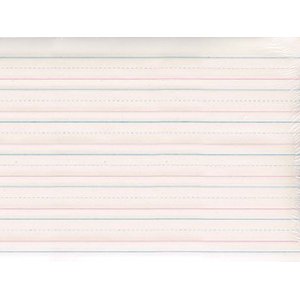
With the current year fading fast and all of the potential of a new year on the horizon, I’d like to suggest a resolution for everyone: don’t write on someone else’s blank sheet of paper.
Whether or not you let someone write on YOUR paper is up to you, but please don’t write on someone else’s.
Personally, I’m resolving to avoid both. For such an outwardly head strong, opinionated person, you might think the first will be more difficult. But, for the unsure, worried and perpetually questioning me inside, the second will be just as challenging.
For years, I’ve let way too many people write on my paper. . . altering my story with their advice, opinions and standards. And the difference between someone who writes on your paper and someone who cheers as you write is long-lasting.
I learned this from two teachers and the blank sheets of paper they expected their students to fill.
I absolutely loved those blank sheets of paper. I loved the smell. I loved the look. And I loved the endless possibilities.
During my grade school years, the paper wasn’t white. It was an indescribable shade of grey and tan with space for a picture above and a combination of dotted and solid lines below. The purpose of the lines was to ensure appropriate hand-writing form.
I never worried about my handwriting (and was generally graded down accordingly). I was much more worried about content. I was fascinated by how I could string words together to say something that nobody else had ever said. I adored the feeling of putting pencil to paper and creating something. And I loved being able to express myself.
What I didn’t love was having parameters placed on me.
And those parameters were set forth quite firmly by my first grade teacher, Mrs. Gladwill. Unfortunately, I can’t really say anything nice about the woman. I could write pages about the horrors of that school year –about the times I was stuck in the corner so other students wouldn’t cheat off me; about how needing to go to the bathroom was a nightmare because it was prohibited during class time (Mrs. Gladwill’s theory was that if you didn’t have the sense to go during recess or lunch, then you should wait); about how Mrs. Gladwill liberally used harsh words and a ruler on knuckles; and, most of all, about how Mrs. Gladwill required conformity.
For a “spirited” child, there’s no wonder that I didn’t thrive in first grade. I simply survived. And was beholden to a series of lessons that led me to believe that sometimes it’s easier to just let others control what goes on your blank sheet of paper.
That became evident when Mrs. Gladwill gave all of her students the assignment of writing (and drawing) an answer to the question “what do you want to be when you grow up?”
At first, I was very excited about the assignment. With Mrs. Gladwill as a teacher, I should have known better.
I wanted to write about becoming a trapeze artist. My father had built and hung a trapeze from a juniper tree in our backyard, and I was already practicing my act.
The problem was, I didn’t know how to spell trapeze.
When I asked Mrs. Gladwill, her only advice was to look it up in the “book of careers” she had provided us.
Needless to say, trapeze artist wasn’t listed.
So I had to ask Mrs. Gladwill again.
Instead of helping me spell out my dream, she advised me to write about something “normal”, like becoming a nurse.
I had no desire to be nurse, but I recognized the authority she had. So, I reluctantly looked up nurse in the career book and wrote about how I wanted to be one. I even remember drawing the picture with particularly harsh strokes: I was angry that Mrs. Gladwill had taken control of MY piece of paper. At the same time, I did not want to be in trouble. So my blank sheet of paper became a full sheet of paper that was a lie.
Turning in that paper marked the end of my dreams of becoming a trapeze artist. Mrs. Gladwill had made it clear: if it wasn’t in the book about careers, there was no sense in pursuing it.
By second grade, my dreams had evolved anyway. My new ambition was to become a writer.
Much to my surprise, my teacher, Mrs. Roth, never told me to look up writer in the “career book.” In fact, she didn’t even have a career book. She simply encouraged me to write stories whenever I had extra time. She even taped my stories on the outside of her classroom door where others could read them. And they did.
I remember swelling with pride when fourth graders stopped by our classroom to read my stories.
Since then, that dream of being a writer has never died. I can’t say I’ve fully achieved that goal, but I never gave it up. It’s hard to give up something when others, particular teachers, believe in you.
So as 2012 approaches, I’m raising a glass to toast the blank sheets of paper everyone will receive in the new year. And I’m toasting the opportunity we all have to continue writing our own unique story without being told what the plot should be. I’m also raising a glass to how we can all cheer each other on. And most of all, I’m raising a glass to the great teachers who lead the way. Not only do they encourage so many of us, but they also serve as examples for other teachers by acknowledging that sometimes the most meaningful lessons aren’t the ones that are taught but are the ones that are observed.
Here’s to that! Cheers!
Ghosts of Christmas Past
Halloween may be the most ghostly holiday, but like Ebenezer Scrooge, I have always found Christmas to be more haunting. 
And just as with Scrooge, my Christmas ghosts remind me of what used to be and what I still hold dear.
Unlike Scrooge, my ghosts don’t necessarily encourage me to reconsider my life path. They are simply reminders about change, about being a parent and about how the best Christmas gifts often go unopened for years and sometimes even decades.
And every holiday season, my ghosts remind me of when I was an adolescent and received gifts that I didn’t unwrap or appreciate until years later.
They were given to me when I was struggling with the usual angst and therefore oblivious to anything my parents were dealing with.
And they were dealing with a lot.
My dad was unhappy with his current employment and seeking a new job. My mom was happy and fulfilled with her role in the community, but supportive of my dad. Therefore, the needs of my dad, the family breadwinner, won out and he accepted a job almost all the way across the country from our Oregon home.
Shortly after accepting the new job, he packed up his Ford truck and our family dog and drove cross-country to West Virginia. And my mother, my brother and I were left behind.
He made the move in early fall, and even through my self-absorbed haze, I knew much my mom didn’t want to move.
She even insisted that no one was going to buy our house anytime soon. But it sold almost immediately, and plans were made for the rest of the family to move to West Virginia over the Christmas holiday.
I continued my life as usual, pretending the change wouldn’t occur. My mother appeared to do the same. And with the holidays approaching, she made sure all the family traditions were kept. We decorated the house and the tree. We participated in holiday events. And we baked Christmas cookies and breads. Our house was warm, festive and inviting. In fact, there were very few indications that our life would soon be disrupted in ways that would take me years to understand.
But that Christmas WAS different.
My dad wasn’t around, and my mom’s eyes would tear up every time ‘”I’ll be Home For Christmas” came on the radio.
Too soon, school was out for winter break, my dad came home to help with the move, we hurriedly celebrated Christmas and just as quickly packed the house. Then we left. Forever.
Initially, I thought I would never adapt to my new life. Everything was different – the way people talked, how they viewed the world and what their priorities were. But I was young, and I eventually adjusted. But because I was young, I was also self-absorbed. So, the fact that my mother was facing the same issues at the “real-world” level didn’t seem important.
I knew she was unhappy. I knew that she went from being a community leader to being someone fairly unknown. And I knew that she just couldn’t conform to the suburban culture that we suddenly found ourselves in.
But I also thought she was “old” and just wasn’t affected by things the way I was. Or at least she knew how to deal with everything better.
I’m now even older than she was at that time, and I know we “old” people don’t always know how to deal. At least I don’t. And I don’t always hide my frustrations and imperfections… not even from my children. And during the holidays, I sometimes simply choke.
But my mom never choked. Even when she was going through one of the hardest times of her life, she never put her own issues, concerns and needs before those of her kids. She pretended that whatever her children were going through was a much greater priority. And she knew the importance of making us feel like we were home, even if she didn’t feel like she was.
That’s why, the Christmas after “the big move” felt just like every other Christmas. We decorated the house with the same decorations that we’d put out in years past. We baked the same cookies and breads that we baked in the past. And we listened to Christmas carols on the scratchy records we’d always listened to. It felt like we were home for Christmas.
I actually received several unwrapped gifts those two Christmas holidays. I received the gift of learning to move forward with my life while still embracing the past. I received the gift of understanding the importance of traditions at Christmas. And I received the gift of a role model who gave of herself at a time when there was often little left to give.
I unwrapped those gifts years ago, but I’ve held onto them. Every year when we hang the decorations on the tree… some which go back to my childhood…these Ghosts of Christmas Past come back to haunt me. And they remind me that life is constantly changing: new people arrive while others leave. Circumstances sometimes improve and sometimes get worse. And sometimes, even the entire culture seems to dramatically shift. But amid these changes, we can still appreciate the Ghosts of Christmas Past, celebrate the Ghosts of Christmas Present and hope that the Ghost of Christmas Yet To Come provide opportunities for our children to open the unwrapped gifts we’ve given them. And that they too are haunted by Ghosts of Christmas Past.
I’m Tired of Walking the Tightrope
 I’m walking a tightrope in my life. The tightrope may not be physically dangerous, but it’s dangerous none the less. And the only thing that prevents me from making that one deadly misstep is the realization that letting go requires perfect timing. Otherwise, the results can be unpleasant at best and horrific at worst.
The tightrope I’m talking about is one of convention – – of not calling people out when they speak with authority that their religious beliefs make them more moral than or superior to people of a different faith.
As I write this, I’m pretty sure my balance is getting very, very shaky. But that’s nothing new for me.
In fact, I came very close to stepping off that tight rope the other day. A meeting was wrapping up when the conversation turned toward politics. That led to a discussion about the nation’s morals and values. Or rather, the values and morals of the American public.
I was already standing up and collecting my things when the woman who had been sitting quietly next to me during the entire meeting stood up and proclaimed, “I’m a Christian. It’s so sad that so many people in our country aren’t.”
It took all of my willpower not to turn to her and say, “So, what you’re saying is because I’m Jewish, I don’t have any morals or values?”
(For the record, I’m not Jewish. I’m Lutheran. And faith plays a very important role in my life. I just don’t think that my version of faith is the only one God smiles upon.)
Instead of confronting the woman, I said nothing. But her comment bothered me –mostly because I’ve been hearing different versions of it for years. People are holding Christianity up as though it were membership card to a club that scorns non-members. It’s almost as though their club is actively recruiting new members while holding its nose up at those who choose to join a different club instead.
To me, this behavior is in direct opposition to what Jesus taught. He preached acceptance and love of everyone. Period. And I’m pretty sure his message was primarily about how we treat each other rather than what we call ourselves.
I say this because I have friends of a different faith, or even of no faith, who behave more like Christ than a lot of people who call themselves “Christians.” They help without judgement. They give without expectations. They accept without an agenda. Most importantly, they simply care about other people.
I recognize there are people of non-Christian faiths who have committed horrible acts in the name of their religion. But, if you look at history, a lot of Christians have done the same.
At the same time, there are many, many, many more people who have committed acts of compassion in the name of religion – all types of religion.
Faith is a beautiful gift. But giving to others – regardless of faith – is also a beautiful gift.
As my friend Holly so eloquently stated, “If a Christian, a Hindu, a Muslim, a Jew and an atheist all working together on a Habitat for Humanity House, what’s the end result? The house gets built and a family that didn’t have its own home now has one.”
To me, that’s the value that America needs: the value of appreciating our differences while working together to care for everyone – the poor in resources and the poor in spirit. It’s a value of judging less and caring more.
What America doesn’t need are people proclaiming that there is only one religion with the right values and/or that only Christians are moral.
So, there you go.
If I haven’t fallen off my tightrope by now, I’m pretty sure there’s someone who wants or is willing to push me.
But, just so you know, I’m going to get right back up.
On this Thanksgiving, I’m Thankful for All the Handouts I’ve Received
There are times when I just want to scream out loud. But that doesn’t necessarily solve any problems, so sometimes I choose to scream through writing.
Now is one of those times.
While I can’t emphasize enough that I believe in the First Amendment, that everyone is entitled to their own opinions and that everyone should be allowed to express them, there are times when those opinions just seem so off base.
Take, for example, the number of people who complain about others who take “handouts” and/or boast that they have never done so themselves. They often say this as though they are morally superior.
I just don’t get that, because I have yet to meet a person who hasn’t received a handout.
Personally, I’ve received more handouts than I ever deserved. And this Thanksgiving, I am so grateful for them.
The handouts I’ve received may not have been in the form of government assistance for low-income individuals, but they are the reason I haven’t had to depend on such help when I’ve hit a rough patch.
I am grateful that I received the handout of a mother who didn’t abuse alcohol or drugs and had a healthy diet while she was pregnant. Her decisions provided me with a giant advantage in life. I was born healthy and had parents who ensured I maintained my health. Too many people start life without that handout and spend the rest of their life trying to catch up.
I am grateful for the handout of parents who were concerned about my education from the day I was born. They shared their love of the written word by reading out loud to me. They didn’t set me in front of a television so they could go on with the lives they wanted. They provided me with books, crayons and the opportunity to express myself. Too many people spent the first three years of their lives without any of those handouts – handouts that greatly influence their ability to learn and process information.
I am grateful for the handout of being a child that never knew what it was like to be truly scared or cold or hungry. There was always food on the table, in the cupboard, in the refrigerator and in the freezer. I never went to bed afraid that there wouldn’t be heat in the morning or that I wouldn’t have a coat to wear in cold weather. Too many people grow up without the simple handout of having those basic needs met – which creates a completely different perspective of how the world works.
I am grateful for the handout of parents who made their children and their family a priority. I always felt wanted. I always felt like I belonged and I always felt like I helped make my family complete. I was never told I was a mistake. I was never told I was a burden. And I was never told that my parents’ life would be easier if I wasn’t around. Just as importantly, I wasn’t hit, kicked burned or assaulted in my own home. Too many people grow up abused and wondering why they even exist. The handout of love is powerful, and without it, people often seek affection and attention in the wrong places and in the wrong ways.
I am grateful for the handout of having parents who wanted me to succeed and who demonstrated self-discipline and good decision-making skills. They required my brother and me to take responsibility for our actions. They also ensured that we were exposed to a wide variety of opportunities and activities. They were never in jail, they never dragged us into unsafe locations and they didn’t bring a variety of unsavory characters into our home. Too many people grow up without the handout of positive role models. Their parents or caretakers or community members are stumbling through life attempting to meet their own needs without even considering those of their children. Our ability to make choices and understand consequences is a skill… and like all skills it needs to be demonstrated and practiced.
I am grateful for the handouts I received that were beyond human control. I’m not dyslexic, I’m not disabled and I’m not disadvantaged. I am surrounded by people who can lend a helping hand. When I faced a real emergency, there were always people in my life who had the resources to help me. Too many people are surrounded by people who are facing their own crises and don’t have the ability to help anyone else.
I am truly saddened by people who view poverty as a simple issue. It isn’t.
And I am bothered that some people think life is an even playing field and everyone has equal opportunities. We don’t.
And I worry about the belief that low-income people have flawed characters rather than an unbelievable set of obstacles to overcome.
I agree that there are success stories.There are people who have beaten the odds, overcome horrible situations and gone on to live very productive lives. I am privileged to know such people.
And I also know that somewhere along their life path, they got some handouts – generally in the form of a caring person or persons who wanted to share all they had been given: whether material or spiritual. People who wanted to pay it forward rather than to hold it tight. People who understood the value of offering their hearts and their hands out to others.
On this Thanksgiving, I am not only grateful for the all of the hands that have been held out to me, I am grateful for the role models and heroes who continue to do this for others on a daily basis.
Holding your hands out can be a miracle for others.
Opening your heart to others can be a miracle for you.
I hope everyone has the opportunity to do both this Thanksgiving and into the upcoming holiday season.


 Just So You Know