It’s Not an Afternoon, or a Morning or Any Other Delight
I’ve never considered myself a snob. Not an “I want to feel more important than someone else” snob, or a food snob or a music snob.
Especially not a music snob. How could I be when you can find me listening to just about anything on my Ipod? And when I say anything, I really do mean anything. The music on my beloved Ipod ranges from musical theater to punk and just about everything in between.
But even I, the person who knows all the lyrics to every song in the musical “Oklahoma,” have my limits.
And they were reached this week at the local Sheetz station.
I admit that I generally enjoy the music playing over the speakers while I pump gas. It tends to be fairly retro, so I can happily sing along to the Eagles or Lynard Skynard or Bob Segar while ignoring the dollar amounts flying by on the gas pump.
I used to think it was a great marketing strategy dreamed up by someone half my age: “Play old-time music, and those middle-aged people with their gas-guzzling SUV’s will be so distracted they won’t care about the cost of gas. They might even buy a made-to-order food item because they aren’t paying attention to the cost.”
I was wrong. Either that, or someone who developed the playlist for Sheetz had absolutely no clue what they were doing.
Because this time, as I swiped my debit card, I heard the strains of a song that took me back – but not in a good way. Instead, it was more like a fingernails scraping on a blackboard way. (For those of you who don’t know what a blackboard is – it’s the prehistoric version of a smart board.)
At first, I couldn’t believe I was actually hearing it. “Gonna f ind my baby gonna hold her tight. Gonna grab some afternoon delight. My motto has always been when it’s right it right. Why wait until the middle of the cold dark night.”
Really? It was only 7:30 in the morning and I was taking my 13-year old son to school.
Instead of putting me in a good mood, the song was irritating me. Really irritating me. Because, even though I don’t like the song, I know the words. So when I went inside to buy a coffee, I actually found myself singing along.
Singing along to one of the most obnoxious songs in history.
I tried voicing my complaint about the music selection to the clerk, but she gave me a completely blank stare, ignored my complaint and asked if I needed anything else. When I told her that what I really needed was for her to change the music, I got another blank stare.
So I reverted to my only other option.
I posted my complaint about the music on Facebook.
By the time I got to the office, there were several comments about my Facebook post, including one trying to convince me the song was actually about the menu at a restaurant and not about an afternoon tryst. But others were eager to set that person straight. And while I appreciated the support, none of the comments were helping get the song out of my head. It was just there.. repeating over and over again.
And since I was suffering, I felt the need to make others suffer. So, I brought the song up on an office computer and made my co-worker listen to it.
Not only was she not happy, but my boss, who had been in an executive committee meeting, took that exact moment to leave the meeting and come into our office. He sauntered over to the computer and asked what I was doing.
What could I say? There, in all its glory was the Starland Vocal Band, singing about rubbing sticks and stones together and making sparks ignite. If the lyrics weren’t bad enough, the band members’ horrible hair and the bell-bottoms were.
My boss glanced at my computer and said, “Hey, I remember that kind of music,” then walked away.
I decided Facebook was safer. I clicked off the video and back onto Facebook. I decided to “like” the comment from the person who said she thought she saw a blog coming on.
And, to her credit, there was.
Not Just Another Walk in the Park
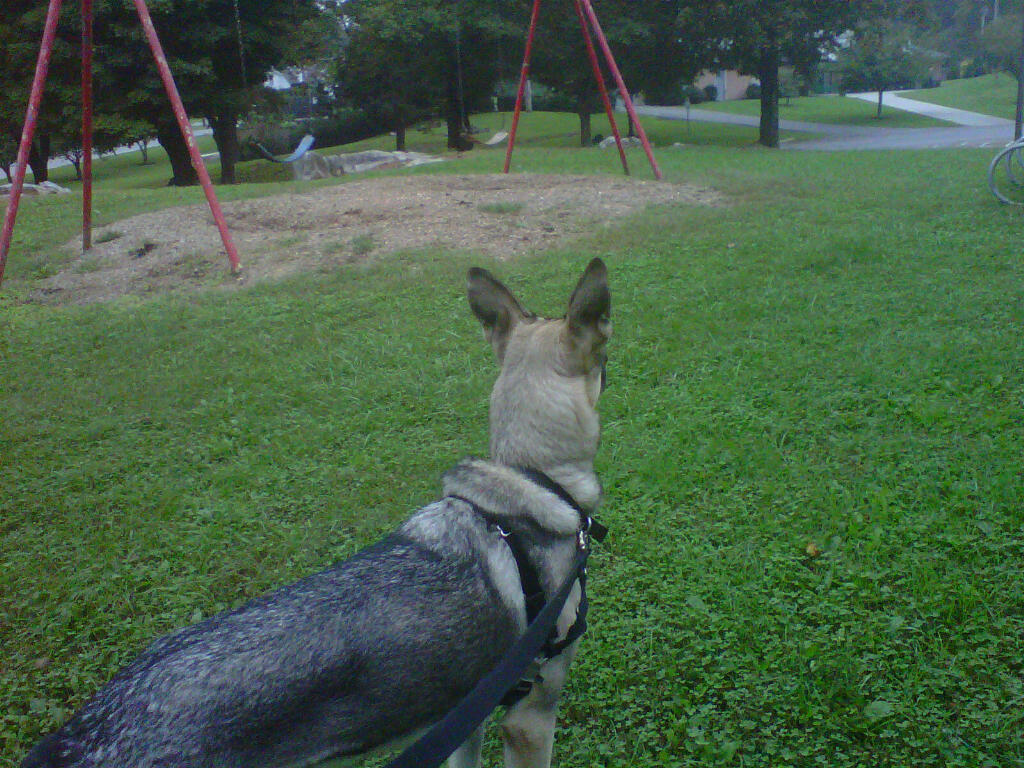
My dog Rodney on a daily walk in the park
I’ve got a habit.
It’s a habit that’s opened my eyes to a side of my town that many people aren’t even aware of. It’s a side of our town that some people look right through – maybe because they don’t want to see it or maybe because they simply don’t know what they are looking at. It’s a side of our town that shows disparity, inequality and absurdity.
But it’s there right out in the open – in the park down the street from my neighborhood. It’s a park where I’ve spent hours and hours of my time.
My husband calls my behavior obsessive. I call it maintaining a routine. But, whatever you call it, I am compelled to take our dog Rodney for a walk in the park at least once, and sometimes twice, a day depending on the weather and how busy my schedule is.
No matter what, we always go in the morning. Always.
On weekdays this means my alarm goes off at 5:00 and we’re in the park by 5:30. On weekends, we’re generally there a bit later.
But no matter the time, those visits to the park provide a glimpse into what’s going on in my town.
This time of year, it’s still dark when I get to the park. But that doesn’t bother me. I’m walking a big German Shepherd, and anyone would be crazy to mess with him. He’s a nice dog, but he isn’t exactly a fan anything, human or otherwise, that he sees moving in the dark.
Besides, just like I have a routine, so do others.
There’s the group of joggers that come running through every other day. There’s the two middle-aged women whose exercise routine is a little less strenuous and who simply walk through the park gossiping. There are always the other dog walkers, although I don’t think they are quite as committed to the whole dog walking thing as I am because they are only there sporadically.
And on Mondays, Wednesdays and Fridays, there’s the group of bankers, accountants, lawyers and others being barked at by an ex-Marine putting them through “boot camp.” I’m always amused by the fact that these professionals pay to have someone tell them to run the bleachers and jump rope at the crack of dawn. But, then, I guess they probably wouldn’t get out of bed for the torture if they weren’t paying for it.
And as the sun begins to rise, I also see what other people have left behind. Clean-up crews haven’t arrived yet, so there’s always quite a bit left from the previous days’ activities and events. There are sweatshirts and shoes; I don’t understand how anyone can leave the park without shoes, but it happens all the time. There are balls and toys; I imagine some of those the parents were happy to leave some of those toys behind. And worst of all, there is litter – lots and lots of litter. Bottles, cans, cups, fast food wrappers, tin foil and popped balloons often lie on picnic tables and on the ground, usually near one of the dozens of trash cans that dot the park.
And, also as the sun rises, I see a man walking through the park. I never know where he’s spent the night, but I do know it’s not in the comfort of a warm home and bed. He’s always carrying his life on his back and something to read in his hand.
Just like many of us, he has his own morning routine. He settles at his favorite table at the shelter by the creek. He takes a water bottle from his backpack and lays his reading materials out before him. He then heads to the restroom, where I assume he grooms as best he can. And then he goes back to his table and reads. He is usually there for a few hours but is always gone by mid-morning. I don’t know where he goes, although at times I have seen him walking the streets of my town during the day.
I’ve come to think of this man as an acquaintance, even though I don’t know his name or his story. But, like any other acquaintance, we always greet each other. I’ve also come to respect this man – not because he is obviously surviving any way he can, but because he’s earned my respect.
Unlike many other patrons of the park, he alway leaves his space cleaner than when he got there. If that means throwing away his trash as well as the trash of others, he does. I’ve seen him do it many, many times.
It might seem like a simple thing, but it’s not simple at all to me. In fact, it seems very complicated.
Because people who can afford to leave behind shoes and sweatshirts have more than this man… a lot more. At the same time, many people who have sufficient material possessions are quick to judge and label those who don’t as lazy. Yet, to me, someone who throws away trash is NOT lazy, and someone who leaves it behind is.
That’s a puzzle I’ll have to ponder on yet another walk through the park.
Tattered Flags
 Like many Americans, I’ve been reflecting about the events that shook our nation ten years ago today.
And, even though my memories of the following days aren’t nearly as vivid, I remember one thing very clearly.
There were American flags everywhere.
They were flying on private homes. They adorned t-shirts and other articles of clothing. And they were fluttering on moving vehicles.
I found this fascinating. Not just because I’d never before seen American flags flying on automobiles as though they were paraphernalia for a sports team, but because the flags were so easily damaged, which seemed to defeat the purpose of flying them.
As a child in Girl Scouts, I remember being taught all the rules about how to handle and treat a flag. As a young adult, I remembered the national debate over the issue of defacing and even burning flags as a sign of protest.
And yet, in the days after 911, people were damaging their flags in the name of patriotism.
At the time, I wasn’t particularly upset by this phenomena; I simply found it interesting. But now, ten years later, the tattered flags represent something much greater to me: while America initially came together after 9 11, we’ve since been tearing apart – kind of like those flags waving on the cars.
I think that’s because some people equate patriotism with pride, pride with winning and winning with defeating an enemy.
There have been and always will be plenty of enemies to our country, we don’t need to be creating them.
But some people seem intent on doing so by pointing fingers at immigrants, people with different religious beliefs, people with different political ideas, people who are poor, etc. The list goes on and on.
Each time fingers point, I hear the American flag rip a bit more. That’s because our flag represents a country that was founded by immigrants. A country that welcomed people who didn’t have the same religious beliefs as the establishment. A country that encouraged diverse ways of thinking. A country that has a rich tradition of helping those who are down on their luck.
Rip.
Rip.
Rip.
Rip.
As the tenth anniversary of September 11 draws to a close, I hope that people focus not only on all the lives that were lost on that horrible day but also on the possibilities that we initially found that day.
The possibility that we could come together as a country to help each other.
The possibility that we were better united than we are divided.
The possibility that we use our diverse strengths to support each other rather than to tear each other down.
The possibility that we live can live up to ideals represented by our flag: a flag that may be a bit torn and ripped but still stands for a compassionate, caring and idealistic country.
A flag we can all fly with pride.
Say Anything… Except…
I’ve never been good at hiding my thoughts and feelings.
NEVER.
When I was a child my mother used to call me Poker Face. Not because I had one but because I didn’t.
If I didn’t like someone or something, everyone knew it.
Not much has changed in the past few decades.
I’ve tried pretending. I’ve tried changing the subject. I’ve even tried wearing sunglasses during meetings so people couldn’t see my eyes roll.
But regardless, in the end I feel compelled to be genuine. In other words, eventually I always end up letting people know what I REALLY think.
Not that I’m trying to be mean. I generally trying to be helpful by being truthful.
The problem is, a lot of people don’t appreciate it.
I used to worry about that, but, like with so many other things that come with age, I’m over it.
Maybe that’s because I’ve had friends tell that they always know where they stand with me. And if they don’t want to know? Than they probably aren’t really my friend anyway.
Maybe it’s because when I give a compliment, it comes from the heart. It isn’t intended just to ingratiate myself to others.
Or maybe it’s because I’m afraid if I hold my true thoughts in, I’ll eventually implode. At least it feels that way.
But just because I’m o.k. with how I am, that doesn’t mean it’s easy to be who I am.
I’m constantly battling to survive in a world where appearances are often appreciated more than reality. Where people ask for feedback when all they really want is a compliment. And where people prefer to complain behind someone’s back while pretending everything is fine to their face.
But I understand you can’t change people or systems overnight. So all I can do is encourage people to at least be honest with me. Since I’m so blunt, I expect others to be the same.
If I ask for feedback, I want genuine feedback.. not just approval. If I say or do something ridiculous? Let me know. And if I ask if my outfit makes me look fat? Consult with my husband.
He’ll tell you the truth about how well I do when people are brutally honest with me.
Please Don’t Feed the Drama Queen
 My house was invaded by bees this month. Well, according to my husband, they are yellow jackets. But to me? Anything that has stripes, wings and a stinger is a bee.
But regardless of their taxonomy, they invaded my basement and my life.
We eventually got rid of them thanks to our hero, Gary the Exterminator Guy. But, in the meantime, they created a bit of drama in the house.
I should have expected that. I live with a drama queen. The invasion of the stinging beasts simply emphasized that fact.
I warned my kids that the bees, make that yellow jackets, dying in the basement could still sting. My son, per normal, didn’t listen. Instead, he went barefoot into the Kid Cave, stepped on a yellow jacket and got stung. He then calmly came upstairs to tell me he’d been stung and his foot hurt. That was it. The incident was over, and he never mentioned it again.
My daughter, on the other hand, over reacted as usual.
She was already perturbed that I didn’t share her belief that the start of school also marks the beginning of Halloween season. She was insistent that the time to decorate had come. When I didn’t respond to her demands to bring up the tub of Halloween decorations up from the basement, she took matters into her own hands.
But, a dying yellow jacket had found the tub first. Keep in mind, it had died. It could have been easily flicked away. But, that would have been under normal circumstances when a drama queen wasn’t involved.
A drama queen changes everything.
My daughter ALMOST touched the yellow jacket, and the subsequent scream traveled farther than the recent earthquake that shook the East Coast.
I absolutely love my daughter, but about eight years ago I came to the inevitable conclusion that Shakespeare knew a girl just like her when he said “all the world’s a stage.”
On the positive side, there are benefits to being the mother of a drama queen. It not only helps you to be less reactive, it also helps you to completely ignore it.
Which is a good thing considering what’s going on in our country right now. We’ve got a lot of drama queens and people who encourage them. I’m not sure which is worse.
Anyone who has lived or worked with a drama queen, knows this is someone who blows things way out of proportion. A drama queen often views the world in absolutes. In short, drama queens are all about creating crisis out of any situation. And the more people pay attention, the more drama ensues.
If you pay any attention to the news, you probably think the world is being taken over by drama queens. If the invasion of the yellow jackets had made the news? I’m pretty sure there would be a world-wide scare and a call to exterminate every flying insect.
Sadly, I’m pretty sure that a lot of people pay more attention to drama queens than they are to the facts.
I’m not saying our country is perfect or that changes don’t need to be made.
But I am saying that using fear or emotional blackmail to drive the political process is completely ridiculous. Very few matters or situations are black and white, but drama queens love black and white.
They thrive on it.
But, as the mom of a drama queen , I’ve learned that one of the best way to deal with faux drama is to simply complicate matters. Add facts, variables and diverse opinions. Instead of creating drama, create genuine discussion.
And if the drama continues anyway? Simply do what I do with my daughter – ignore it.
I’m pretty sure it works with most drama queens.
I’d like to create some more buzz about the issue. But, the moment, I’ve had enough of both buzz and drama.
A Bit of a Rant About People Who Rant About “Welfare”
I am all for letting people have their own opinions.
I better be, especially since I have a lot of them myself. And I’m also all for letting people express their opinions, because I’m pretty sure I’d explode if I couldn’t express mine once in a while.
But here’s the thing.
I don’t pretend I know about everything. In fact, I’ll be the first to admit that I don’t know much at all.
The recent debate over the national debt? While I have an opinion about how our “leaders” behaved, I certainly never thought I had the answer. That’s because math, finance and anything to do with numbers was never my thing. Same with legal issues. While I can give a small amount of advice to nonprofits about issues they should consider, I would certainly never try to pretend I actually understand the legalities involved. And when it comes to anything medical, technical or mechanical? Forget it. I can’t contribute anything.
But I do know a thing about social services and about issues facing people in poverty. Which is why my blood starts boiling when I hear people ranting about the “welfare” system, the” lazy people who use it” and how people who “get welfare” should be drug tested. I’m pretty sure I’ve seen these topics come up on Facebook at least once a week for the past couple years.
I sometimes wonder if people who make these comments really understand the issues at all. Or if they realize that some of “those people” might be people they sit next to in church, or who care for their children or who are members of the PTA. I also wonder if they’ve ever considered that any of us, through some series of unfortunate circumstances, could have been – or still could become-one of “those people.”
I’m not going to use this space to elaborate on the multitude of reasons, some of them societal, that people end up “on welfare.” What I really want to do is set people straight about what “welfare” actually is. However, I do spend a lot of time at our local Department of Health and Human Resources (DHHR), often called the “welfare office,” and I highly recommend that everyone spend some time there. It’s very enlightening.
It’s also not a happy place to be.
First, the waiting room is always crammed full of people who are down on their luck. Secondly, because people often have to wait all day just to see a worker, many arrive before 7:30 in the morning so they don’t have to come back the next day and wait again. And third, there is no specific profile for people who need assistance. When I’ve seen people I know in the waiting room, I’m generally surprised and they are they are generally embarrassed.
With that said, I’ll be the first to admit that there will always be people who want something for nothing. And there are always be people who try to work the system. But, in my experience, about 90% of the people seeking assistance are honest and have simply fallen on hard times. Those people “driving cars nicer than yours?” That car might be the last asset they are holding on to after losing everything else, including a good paying job. They may have gone through their savings and exhausted all help from relatives only to be in a place they never imagined. That woman with three young kids? She may have just escaped a domestic violence situation in which the controlling husband or boyfriend didn’t allow her to work. Now that she’s finally left him, she’s left with nothing. And then there are those people who’ve never had any support or resources their entire life.
Based on what I know, I wouldn’t say these individuals are taking the easy way out. But a lot of people seem to think that. I recently had a friend call and ask me what to tell a family member who told her son, “There’s no reason you should go to college or worry about getting a job. You can just go to the welfare office and the taxpayers will support you. You’ll get a free place to live, a free car and a free phone.” The family member wasn’t actually encouraging this. They were simply complaining about how their tax dollars are supporting people who can live a good life without working.
Not true.
Just for the record, there is no actual assistance called welfare any more. What used to be called welfare is now Temporary Assistance to Needy Families, or TANF. TANF is a federal program and is only available for families with children. Single people or childless couples cannot receive TANF, because the purpose of it is not to help people live comfortably but rather to ensure that the children in those families have their basic needs met. It also intended help recipients become more employable. If you actually look at how much money TANF recipients receive, I can’t imagine how you think they can live comfortably.
Also, TANF recipients don’t get something for nothing. Anyone who receives TANF must participate in some kind of job training and work activity. If they can’t find a job, they have to volunteer. If they don’t participate in these activities, they are sanctioned.
And TANF isn’t a lifetime deal. A person can only receive a LIFETIME maximum of 60 months of assistance. And because TANF is a federal program, they can’t get assistance in WV then move to Maryland and start over. The assistance they received in WV is counted toward the 60 months. Many, many, many TANF recipients never even reach 60 months, because they are able to get back on their feet months, and sometimes even years, before their benefits run out.
As for the free housing? Free car? Free phone? First of all, housing is a completely different program than TANF and has its own set of guidelines. In West Virginia’s Eastern Panhandle, where the cost of housing is much, much higher than the rest of the state, there is virtually no public housing available. Last I heard, the two-year waiting list was closed because of high demand and limited resources.
There is a non-profit program that provides donated cars to TANF recipients, but the purpose of these vehicles is to provide a way for people to get to the work they are required to do while receiving assistance. There’s not much public transportation in rural West Virginia, and without a car, they can’t get to work. Also, the availability of these cars if very limited. These are donated, used cars. If people don’t donate, there are no cars. The cell phones are provided by a private company, and there are no taxpayer dollars involved.
I’m sure by now, someone who is reading this is thinking, “I know someone who doesn’t have children, and they still got welfare.” Granted, there are other financial assistance programs out there. Some serve people with disabilities, and many disabilities aren’t obvious. Also, West Virginia has a program called Emergency Assistance that low-income individuals can receive during a one-month period only once a year. And when I say low-income, I mean really low-income. The income eligibility guidelines haven’t changed since the early 1980’s. Which basically means the limited financial assistance is like putting a band-aid on a wound that requires surgery.
I also know there are people who feel that churches and charities should be providing the bulk of the charitable support. I think that would be great if only it were actually feasible. But, it’s not. I encourage you to 1)take a look at the budgets or nonprofit organizations that serve low-income individuals and families, and 2) review the amount of assistance they can actually provide. Most only provide a very small amount of assistance and limit assistance to once a year. There are simply more people who are hurting than there are dollars or donations to help. And most organizations have criteria for assistance, just as DHHR does.
Which brings me to the issue of drug testing those who receive “welfare.” To be honest, I really don’t have a strong opinion when it comes to the issue of civil rights and drug testing. As I said before, I’m not a lawyer and I would never pretend to be.
But, as my husband is constantly pointing out, I’m a very practical person. And drug testing individuals who receive TANF… or Emergency Assistance or whatever people consider welfare… just isn’t practical. First, DHHR officials report that they just don’t see much evidence of drug use among the economic services or “welfare” clients. (They do, however, see a lot of evidence of it with families who are involved with Child Protective Services). Secondly, drug testing requires resources: every drug test costs money. It has to be administered, it has to analyzed, and the reports have to be given to the clients. I doubt DHHR workers could provide the results because of a conflict of interest. If there were a positive test, I’m sure there would also be a complaint that “DHHR told me I tested positive so they wouldn’t have to give me money.” So in addition to personnel costs, there might also be legal costs.
I’m not sure where the money for drug testing would come from. For those of you who say it could come from the TANF dollars that the clients would receive if they didn’t test positive? I refer you again to my first point… there’s no evidence indicating that the majority of individuals who receive economic assistance use drugs. I’m just not sure the dollars would be there – even if they could even be used for that purpose.
And, let’s say I’m wrong and a lot of people did have positive results. What then? These are low-income individuals to begin with. Should they just be left to fend for themselves or would treatment be provided? If treatment is provided, where would the money for that come from? Treatment services are already very under-funded and have long wait lists.
Finally, since helping individuals develop the skills, knowledge and habits to gain and maintain employment is one of the primary purposes of TANF programs, I don’t understand why we would put up barriers to participating. Don’t we want to help people improve their situation?
So I rant. And I am sure there are those who are going to disagree with everything I say. Feel free. As I said before, I think everyone is required to an opinion.
I just don’t think those opinions should involve blaming or marginalizing any segment of our population. And I don’t understand why people who have more than enough to meet their basic needs– food, housing, clothing, and health care– feel that they are being punished by being asked to help their fellow-man. To me, that’s a privilege. Besides, as the saying goes, you can’t take it with you. But I’m pretty sure good deeds stick with you forever.
Is that a Compliment or Are You Just Trying to Confuse Me?
 I used to think a compliment was a compliment.
Of course I also used to think that life was like a math equation.
That is, I thought that if you did the right thing, then good things would happen to you. And, if you were greedy, mean or cold-hearted, then bad things would happen. In other words, in the balance sheet of life, everything would add up.
I also believed that if you watched what you ate and exercised on a regular basis, there was no reason you shouldn’t be able to fit in the same sized jeans you wore in high school.
I was clearly delusional.
Now that I’m older, I’m a bit more realistic.
I also find myself analyzing every compliment I receive.
Don’t get me wrong. I’m not one of those people who thinks all compliments are back-handed or have some hidden meaning.
I’ve simply found that compliments say more about the people who give them than about the people who receive them. They provide great insight into motivations and personalities.
For example, I used to go absolutely crazy with friends who would criticize people behind their back only to make insincere compliments to their faces.
Not that I necessarily felt the need to be rude to people whom I disliked or didn’t respect (at least most of the time), but I certainly didn’t feel the need to lavish them with phony compliments.
But, to be fair, that’s a trait that can actually be very beneficial. Personally, my lack of it has cost me dearly at times. Because what I figured out was that the people who give such compliments simply want to keep the peace. It’s more important to them than being self-righteous. That’s very admirable.
Not that I’ve been able to change my ways all that much, but at least I understand.
What I’m still trying to understand are the compliments that come from my own family.
I didn’t grow up in a family that threw compliments around. And I didn’t marry into one either.
That’s not a bad thing at all, because the compliments that I did receive are definitely memorable…not necessarily ones to treasure.. but definitely memorable.
Take my husband.
Nearly 20 years ago, before we were married, he told me that I was “a worker.” He then explained. “That’s the highest compliment you could receive from my mom’s side of the family. ”
The effect of this compliment was short-lived when I realized that, while his grandmother may have appreciated “a worker,” my husband had higher regard for people who can sit back, relax, enjoy life, and watch the same episodes of a favorite television show over and over and over.. AND OVER again. Based on that, I’m surprised he married a woman who has a hard time sitting still for five minutes and feels guilty if she’s not accomplishing something 24 hours a day.
More recently, I was confused by what, I think, was intended as a compliment from him.
We were discussing why married couples complain about their spouse’s personality traits. My comment was that personality traits don’t change no matter how long you are married, so they shouldn’t have gotten married to begin with if they were that annoyed.
This led to the question as to whether people can and do change and inevitably to my asking “have I changed?”
My husband thought about it a minute, then told me I had. When I asked how, he said “You’re more mature.”
To put this in perspective, my husband has complete disdain for women whom he considers “immature.” I’m not exactly clear what his exact definition of immature is, but I think it has something to do with people who get upset when the world doesn’t revolve around them, or who expect life to constantly be exciting or who put their own wants and desires above all else. That’s based solely on my keeping a list of all the people, mostly women, who he has identified as “immature.”
Logically, one would think that the definitions of mature and immature would be exact opposites.
But, in this case, I’m not so sure. Because after considering if I had ever been one of those women, I realized that, for the most part, I hadn’t been. So his definition had to mean something else. But when I asked him what he meant, he couldn’t explain, and I was a bit worried.
Maybe because when I hear the word mature, I immediately picture a matronly woman buying clothes in the “old lady” section of the local department store.
I’m not there.. yet.
So, I gave up trying to figure out exactly what my husband meant and just decided to take it as a compliment. After, all, as I said before, compliments say a lot about the person who gives them. And my husband is a great judge of a character, so he had to mean something positive.
At least I’m pretty sure.
My Bookshelf is Going to the Dogs
Despite the image I lamely attempt to portray, I really do care what other people think of me. I care a lot. And there is nothing I hate more than disappointing people who have invested something, whether it’s their time, money or emotion, in me.
Unfortunately one of my greatest talents (or lack of talent depending on how you look at it) is my inability to be fake, or as I’ve been told many, many, many, many, many times (can we say almost on a daily basis?), I’m extremely blunt.
Combine those two personality traits, and you have a recipe for disaster when it comes to any gift-giving occasion.
But here’s the deal. People who know me well enough to give me a gift should also know my quirks. And one of my biggest quirks is an aversion to any book or movie about animals.
Unfortunately, people seem to forget this, because I have enough animal books to fill an entire bookcase. Logically, the gifts make perfect sense. I am passionate about animals, particularly dogs, and I also love to read. So, in a rational world, a book about animals seems ideal.
The problem is I’m not exactly the most rational person in the world, especially when animals are involved.
I think my issues began when I was as a child, and almost every animal story ended with the animal dying. And the movies weren’t any better: Sounder? Where the Red Fern Grows? Old Yeller? The heroes always died in the end. And, simply put, that left me with emotional scars.
My husband has tried for years to get me to watch animal movies. “The animals don’t die anymore,” he’s told me. “They almost always have happy endings now.”
I just can’t bring myself to believe him. I simply don’t trust Hollywood. And for good reason.
While I never read Marley and Me (although I have a hardback copy that was a gift from my mother if anyone ever wants to borrow it), I refused to see the movie because I was
pretty sure it would end with tears. I’ve been told that it does. I’ve also been told the book is better than the movie,and I should read it anyway.
But despite that, I don’t care because I’m pretty sure the dog still dies. And I refuse to have to deal with the grief issues.
I’ve had to deal with my own dogs dying. I think that’s enough. I really don’t need to grieve for a dog I’ve never met.
My husband doesn’t understand why I’m so adamant about the whole “animal movie/book” thing. After all, I read mysteries, and people always die in those books. The same is true with the television shows and the movies I like.
I try to explain to him the difference between animals and people dying, but he just doesn’t get it. He simply fast forwards to his own death and tells me that I probably won’t grieve for him like I’ve grieved for our pets. He even thinks that, at his funeral, I’ll be preoccupied worrying about how I’ll fit walking the dog into the chaos his death has created.
He’s probably got a point there.
But his accusations have got me thinking. Maybe I should address my aversion to the animal movies and books. My concerns are limiting my entertainment options. Also, my behavior reminds me a bit of my former neighbor, Jimmy.
Jimmy absolutely adored my dogs and welcomed them into his home. But Jimmy also refused to get his own dog because he’d had one once, and it died. He simply didn’t want to have to go through that grief again. I was always sad at how much love and joy Jimmy was missing for fear of heartache.

- Gusty 1994 – August 2010. I still miss him.

While I completely understand how difficult losing a canine family member is, their deaths are a small price to pay for all the pleasure they bring to a home. Maybe the books and movies are the same. Maybe the sad endings are worth it.
So I am now re-considering the whole issue, and I may even pick up one of those many unread books on my bookshelf. Maybe. But it’s going to take some time to get up my nerve.
In the meantime, if you are thinking of sending me a gift, just remember that you can never go wrong with jewelry.
The Secret to Happiness: Sing Off-key and Dance Off-beat
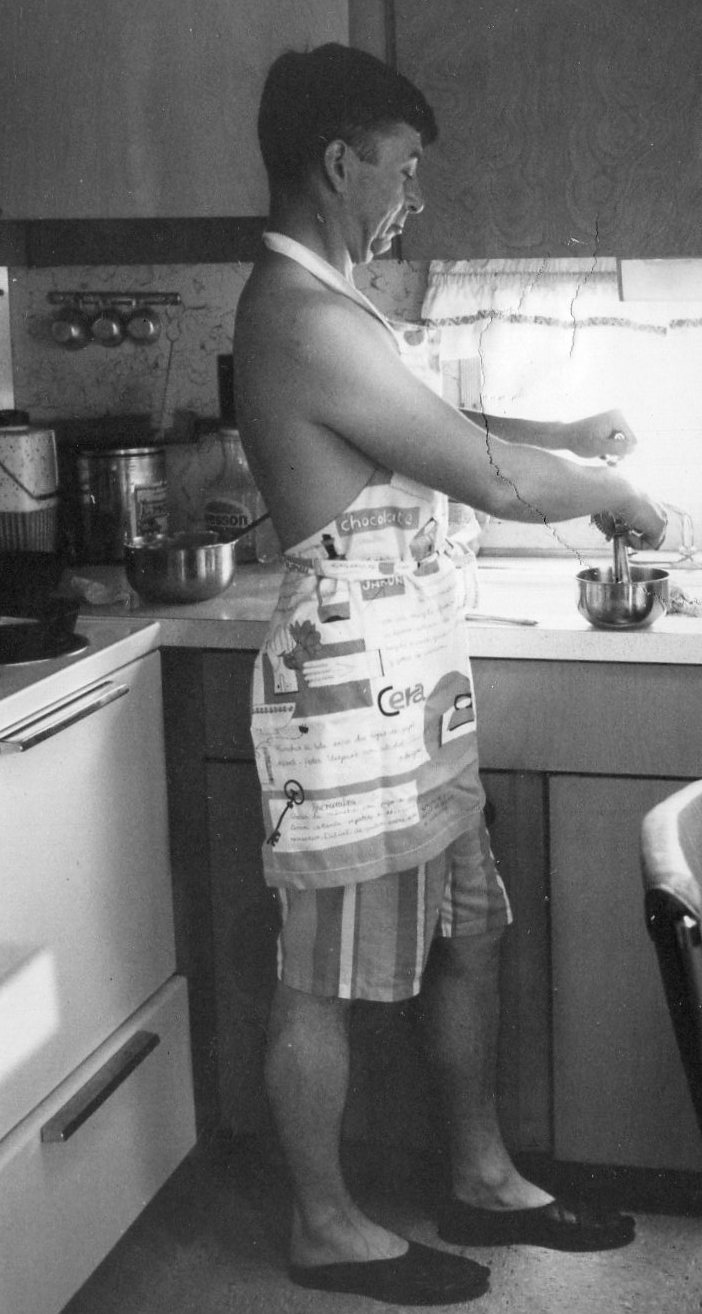
I’ve been thinking a lot about dancing this week. And it’s no wonder. I spent eight hours… yes, I counted them…. eight hours … hemming a dance costume with a full skirt and a design on the bottom that required creative hemming.
There are people who would say I wasted eight hours of my life when I could have paid a seamstress who would have prevented any worry about uneven edges or stitches that show.
But, I think those were eight well-spent hours. First, they required me to slow down and concentrate on a skill I learned over thirty years ago and have done my best to avoid ever since. Second, they required me to think about a talent I never had and a type of performance that I never really enjoyed watching.
As my daughter just told me, “Mom, you don’t dance.”
To the best of her – and most people’s knowledge – she’s right. Except for time spent in clubs in my younger days, I don’t dance. Maybe it’s because I’ve been told since I was very small that I don’t have any rhythm. Maybe it’s because I’m one of those people whose intellectual abilities don’t translate into a mind-body connection. And maybe it’s because I’ve always been hesitant, with the exception of taking belly dancing in college, to try anything at which I’m not positive I can excel.
Whatever the reason, I’ve never been one to dance in public.
But dancing in private is entirely different.
I love to dance when no one is watching. When there are no specific moves I have to know. When I can just feel the music and go with it.
I remember spending hours as an adolescent dancing in my basement while I listened to my favorite songs. I would have been horrified if anyone had seen me. But at the time? I was joyful.
The same goes for singing. I love to sing. I love to belt songs at the top of my lungs or to sing softly when I’m feeling an intimate connection to lyrics.
But I only do that in private.
In church, I generally mouth the hymns for fear of frightening the people in the pews in front of me. And one of my recurring nightmares is having to sing on stage.
But my daughter? She sings. She really sings. She just belts out songs at the top of her lungs regardless of the location, but especially in church.
I think she’s started singing before she could even talk. In pre-school, the teachers said they always knew exactly where she was because all they had to do was follow the music. She narrated her life through songs she made up.
And now she’s dancing too.
And, while she does both much better than I ever dreamed of, I also know she’s not the most talented child in either department.
But what she lacks in talent she makes up for in passion. And sheer joy.
Which serves as a reminder to me about what life is all about.
It’s not about doing everything perfectly. And it’s not about worrying about what other people think. And it’s not about excelling.
It’s about making the most of every minute. It’s about It’s about expressing yourself. And it’s about just being happy with what life hands you.
And sometimes that means that it’s about singing off-key and dancing out of rhythm.
Because at those moments, when you are living life to its fullest without worrying about living it perfectly? That’s the true secret of happiness.


 Just So You Know