Blog Archives
A Perspective From the Backseat of a Car
 I spent some very long hours in the backseat of a car when I was a child. That’s how our parents transported kids from place to place when we weren’t riding in the bed of pickup trucks without toppers.
Riding in the backseat of a car was torturous.
Even though we were never confined to car seats, neither did we have electronic games nor videos to keep us preoccupied. Instead, we entertained ourselves by reading books, playing travel games or irritating each other.
When none of those activities interested me, I simply paid attention to the world around me.
I paid attention to the landscape passing by outside, and I paid attention to my parents’ conversations. I just didn’t participate in the conversations very much.
I used to feel quite grown up when I listened to adult discussions about politics or current events or even us children. And I liked feeling grown up. At least I thought I did until one road trip changed me forever.
We were on our way home from somewhere, and we were very hungry. Knowing my parents, they were probably trying to get home before they wasted money at a restaurant when there was plenty of food at home.
But the hour was late, we were irritable and food was necessary.
So they decided to appease us, and we stopped at what I recall was a ski resort. My family walked past a long line of people waiting to get into the restaurant’s bar. But when we reach the dining area, the host gave my brother and me a disgusted look then turned to my parents and said, “It’s after 9:00. Children aren’t allowed.”
Instead of simply turning around and looking for food elsewhere, my parents chose to argue with the host. And I chose to wish I was a million miles away. The host prevailed, and we had to once again walk by the long line of people.
I honestly don’t remember if we got something to eat elsewhere that night. I do remember the discussion that I heard from the backseat of the car. My parents were frustrated they had faced discrimination because of their children.
I also remember feeling guilty that I was a child who apparently didn’t deserve to eat in a real restaurant. And I remember the look on the host’s face when he sneered “Children aren’t allowed.”
That incident haunted me for years.
I balked every time my parents headed into a restaurant that appeared to be more for adults than for children. I didn’t like going somewhere I wasn’t wanted, and I didn’t want to be in a place where people could single me out as someone who didn’t belong. And I certainly didn’t want to be in a place where people thought I wasn’t worthy or capable of dealing with the situation.
So, when someone asks “what do you think about kids in adult-oriented places?” my immediate answer isn’t “as long as they behave, they should be allowed.” Nor is it “they don’t belong.”
My answer has nothing to do with whether parents think their children are mature enough to handle a situation, whether they are trying to expose their children to culture or whether they just want to parade their children as well-trained little people in front of others.
My answer has everything to do with how the children will feel in that situation and whether they will truly miss anything by not being there. In most cases, the children are probably better served by waiting a few years.
That’s a lesson I learned from all the years I spent in the backseat of a car.
When I was there, I wanted nothing more than to move to the front seat. But in retrospect, I learned a lot in the backseat when I was often forced to observe and listen. When I was finally allowed to ride in the passenger seat, I engaged in conversations with my parents. I also had a clearer picture of where we were headed. A few years later, I even moved into the driver’s seat, where I had to make tough choices on my own. But by then, I was prepared.
The learning process was gradual, not sudden. And it all started with the knowledge gained from riding in the backseat of a car.
My Lifetime Battle with the Big, Yellow School Bus
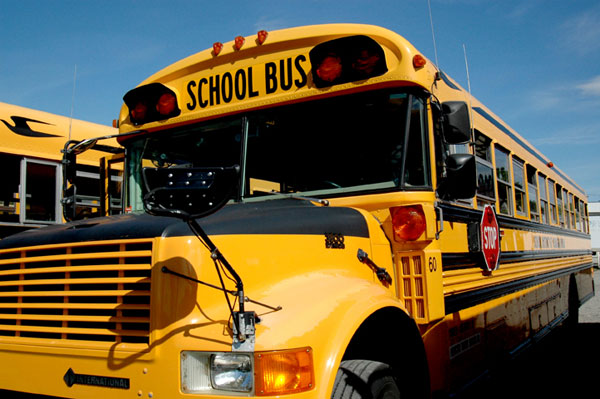 This Monday, my son starts high school and my daughter starts middle school.
I could grieve how quickly the years have flown. I could pull out baby pictures and wallow in nostalgia. I could reminisce about how, just yesterday, my son was starting kindergarten.
Or I could celebrate that, because both of my children are attending school out of district, my epic battle with the big, yellow school bus may just finally be over — permanently.
The battle began when I was in first grade. Having spent kindergarten walking to school, I was ecstatic that we had moved to a house that required riding a school bus.
My enthusiasm didn’t last long.
The problems started on the first day of school when I thought I could handle the bus ride all by myself. And I did. Going to school was simple. The bus picked me up in front of my house and dropped me off at school. My biggest challenge was getting to my classroom.
Going home proved a bit more difficult. I got on bus number 25, rode it to my street and rode it to my house. I then rode it past my house because my timid calls to stop weren’t heard over the din of bus chatter. Even though the bus failed to stop at my house, it did seem to stop at almost every other house in the county. When her route finally ended, the bus driver turned around, gave me a pointed look and asked me where I lived.
I proudly declared my well-memorized address “1910 Bean Drive.”
The bus driver did not look happy. “We went right past there. Why didn’t you get off?”
“Because you didn’t stop,” I replied.
Without a legitimate comeback, the bus driver had to make a decision. She’d take me home on her next run. Surrounded by kids two or three times my age and size, I finally made it home to an almost hysterical mother.
I wasn’t used to my mother being so worried. I was used to my mother being in control of every aspect of my life… including what I ate. And while I pined to have a lunch box with a bologna sandwich on white bread and ding dongs like all the other kids, my mom packed a very different lunch. Ever day I carried a brown bag (that she ask I bring home to be recycled) with a peanut butter (no added sugar) and honey sandwich on home-made wheat bread, carrot sticks, an apple and powdered milk in a square container with a lid (no thermos for me).
I hated that milk. I never drank that milk. But day after day, my mom packed it in a brown paper bag and day after day I carried the brown bag and the container still full of milk home from school.
Then, the inevitable happened, and I dropped the bag onto the floor of the school bus. The milk, which was already at room temperature, spilled everywhere. The bus driver was not at all pleased with me, so I should have known the situation would get even worse. And it did.
Only weeks later, my mother put her car in the shop near my school and needed a ride home. Being practical, she arrived at my school just as classes were ending and climbed onto bus number 25 with the first and second graders. At least she tried to climb on the bus, but the driver wouldn’t let her.
My mother insisted that there was plenty of room and the bus was going right to our house anyway. The driver told her no. After what seemed like the longest argument (and one of the most embarrassing moments of my life), the principal finally came over to settle the matter.
My mother had to find her own way home.
I’m pretty sure that was the day my name was officially added the national school bus “beware of this student” watch list. (That’s the list distributed nationwide to every single school bus driver.)
The list is the only explanation as to why, even after I moved across the country, the new school bus driver didn’t like me either.
In that case, the feeling was mutual. I had no respect for a woman who, instead of looking at the road, was constantly looking in the mirror to see what the kids were doing. After a few very close and dangerous calls on winding, West Virginia roads, my friend and I decided we’d had enough and organized a protest. We told everyone on the bus to duck down below the backs of the seats. The next time the driver looked in the mirror, her bus appeared empty.
We though this was hilarious. Our bus driver didn’t. In fact, she was so angry, she stopped the bus and marched up and down the aisle taking names and phone numbers Once she got mine, she seemed satisfied in learning that the girl on the national watch list was the culprit. What she didn’t expect was that my parents sided with me. They didn’t, however, think the incident warranted a life-time pass from riding the school bus, and I was still forced to ride for a couple more years.
But now, my days on the bus have come to an end, and, except for a few field trips, they have ended for my children as well.
Like so many other parts of childhood, all that is left are the memories and the lessons learned. Now it’s time to make more memories and learn something new. I’m just glad that neither is likely to involve a big, yellow school bus.
Collecting Tiny Pieces of the Soul
 One of the best things about having children is the privilege of serving as a sounding board for the ideas that are constantly bouncing around in their heads.
One of the worst things about having children is being forced to think about the ideas that are constantly bouncing around in their heads.
The other day my daughter said something I simply haven’t been able to shake.
‘Mom,” she said, “I’m worried about the future. What if teleportation actually becomes a reality?”
“Why is that a problem?” I asked.
“In order for teleportation to work, your body gets broken into tiny little pieces that have to be re-assembled perfectly again.” she explained. “If a lot of people are being teleported at the same time, what will prevent the pieces from getting all mixed up?” She sighed, “I don’t want pieces of me mixed up with pieces of someone else!”
Initially, I had visions of my mid-section being swapped with Jennifer Anniston’s. While I’d be delighted, I’m sure Jennifer would be horrified. My daughter interrupted those daydreams. “What if pieces are left behind?”
That was a good question from an almost 11-year old, and it’s come to haunt me over the past week: a week when I know too many people who have lost someone they care about deeply. A week when, for whatever reason, people who should be in the prime of their life are suddenly gone. A week when the power of medicine failed to make all the pieces of a person’s body work correctly. A week when so much has been lost, and yet so much has been left behind.
And some people leave many, many pieces of themselves behind. Those pieces aren’t intended to be re-assembled but to be shared.
I believe that every laugh, every kind thought and every good deed is a tiny piece of our soul that we give away forever with no expectation that it should remain part of us. These are the pieces that shine in our eyes when we smile and that warm our hearts when we hug. These are the pieces we send with our children each time they walk out the door and the pieces we lose when we share a secret.
These are pieces that do get mixed up with the tiny little pieces of others. And then, other people continue to pass them on all mixed up with their own tiny pieces. These are the pieces we collect when we need to paint a picture or compose a song or write a beautiful story. And they are the pieces we collect so we know how to love and embrace all that is beautiful in the world.
I understand why my daughter is worried about her tiny little pieces. I just hope I have collected enough tiny little pieces from others that I have plenty to share with her. And I hope she, in turn, is collecting tiny little pieces that can also pass on.
Ten Lessons about Love for My Ten Year-old Daughter
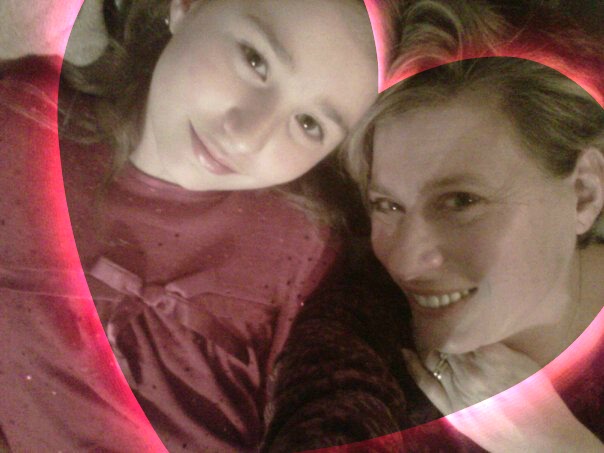 Being a very practical person, I’m extremely fortunate to have a pragmatic daughter. Unlike many of her peers, she’s shown little concern about romance and relationships. Other than incessantly listening to Taylor Swift songs and keeping tabs on Taylor’s love life, she just doesn’t seem to care.
And while I hope that doesn’t change, I also know that, eventually, it will.
I can’t imagine that she’ll ever be the type of person who feels incomplete without a significant other, but I do know that she will start dating at some point.
And that also means she’ll have her heart broken.
But before that happens, I feel obligated to share ten lessons I’ve learned (sometimes the hard way) about love:
1. You can’t truly love someone else unless you love who you are. And who you are is an imperfect person who makes mistakes, gets mad and will sometimes say and do very stupid things. Love yourself anyone. How you handle your mistakes and flaws is more important than trying to hide them.
2. Love is only genuine when you are being true to yourself. Don’t pretend to enjoy something when you don’t. That doesn’t mean you shouldn’t compromise. You should. Love requires a great deal of compromise. But compromise doesn’t mean you should pretend to be someone you’re not. If you do, you’ll wind up being miserable.
3. Love isn’t a competition, and you can’t make someone love you. You will always be loved for being the unique person you are and not because you are prettier, smarter, funnier, sexier or nicer than someone else. Therefore, you should never worry about what others are doing to attract attention or affection. Being yourself is enough.
4. You don’t fall in love. That indescribable feeling of “falling in love'” is usually a combination of infatuation and physical attraction. Love is something that is grounded in mutual respect, grows slowly and doesn’t necessarily bloom as much as it thrives.
5. Love isn’t about romance. It’s about experiencing someone at their very worst and realizing that walking away would still be more devastating than dealing with a tough situation.
6. Love is about having passion in your life – but not necessarily in the way you might think. Never invest so much of yourself in a relationship that you don’t have time for everything else you love. Be passionate about a hobby. Be passionate about a cause. Be passionate about your family and friends. And also be passionate about your love.
7. True love means you aren’t worried about what other people think about your relationship. If you spend time worrying about what others are thinking or saying, you likely have concerns yourself. If you’re confident about your relationship and the integrity of your significant other, you won’t care what others say. Always stay in tune with your inner voice and be honest with yourself.
8. Love means saying you’re sorry. Unlike the quote “love means never having to say you’re sorry” made popular in the 1970’s movie “Love Story,” love means that you’re willing to let go of your ego. Admit when you are wrong or when you’ve said or done something hurtful. And when you are in a relationship, you will say and do hurtful things at times.
9. Don’t expect love to always feel exciting and new. Just like life, love can sometimes be dull and boring and predictable. Relationships are like roller coasters: sometimes they can be difficult and sometimes they can be easy and fun. But being able to work together during the uphill battles is what makes the downhill ride so enjoyable.
10. People do change, and that can affect your relationship. Our experiences shape who we become. The person who you fell in love with several years ago will probably be different from the person you know today. And you will be different too. Many times, you can join hands while you grow. Sometimes, you drop your hands and grow apart. Often, the decision is yours, but sometimes it isn’t.
As I share these lessons with my daughter, I realize that I could add so many more. But I figure one for every year of her life is enough for now. Besides, she often doesn’t listen to me anyway. Despite that, I do want her to hear one message loud and clear: even though she will ALWAYS have her mother’s heart, I hope she is also able to follow her own.
Paving the Way to a Better Educated America
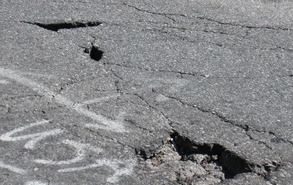
I’m beginning to think that our country is like a complex highway system that is riddled with potholes.
Very intelligent people designed the system. It has served a great purpose, and a lot of people are better off because of it.
Unfortunately, the potholes are getting bigger, and the damage they’re causing is far reaching.
To address the pothole problems, Americans keep patching them one at a time. It’s not effective and is generally a temporary solution. The potholes might disappear for a while, but the patches usually break up and the potholes get even bigger.
To really address the pothole problem, whole sections of the highway need an overhaul.
But overhauls require significant changes and shifts in how we think. That’s something a lot of people, particularly those who have easy access to planes and who don’t even experience potholes, do their best to avoid.
I’m not one of those people, and I’m tired of dealing with the potholes in politics, social services and education. Especially education.
All you have to do is look at America’s dismal statistics to realize that our education system is not helping those children who need it the most.
Nearly 1 million kids who start high school every year in the United States don’t make it to graduation. The dropout rate of students living in low-income families is about four and one-half times greater than the rate of their peers from high-income families (http://nces.ed.gov/pubs2011/dropout08/findings1.asp). The problem is cyclical: parents with limited education often had poor experiences in school and are less likely to emphasize its importance.
For years, community activists, business leaders and education experts have been discussing the problem and trying to develop solutions. millions of dollars have gone into innovative programs. Some communities have decided charter schools are the answer. Others have provided alternative opportunities for youth who don’t do well in the typical public school. And others have simply been too busy pointing fingers.
Even when rates improve, the problem is still extensive.
That’s because most of the solutions center around patching potholes: pouring resources into programs for children who are already at a disadvantage when it comes to learning.
Extensive research on brain development indicates that what happens between the ages of zero and three affects our ability to learn: (http://www.ag.ndsu.edu/pubs/yf/famsci/fs609w.htm)
Forget about being ready to learn in kindergarten. Children from an environment with little stimulation or interaction are behind before they even enter a Pre-K classroom.
But, as a nation, we are doing very little to address true early education (birth to three.) Right now, we are simply trying to help many kids whose brains were never wired to learn because of what happened during their first three years. If our education system shifted its resources and focus to the very young, children might actually be better prepared for academic learning.
And yes, the cost would be high. But people always think the cost of preventive programs is high until they look at the cost when there is no prevention.
According to a recent series on NPR (http://www.npr.org/2011/07/24/138653393/school-dropout-rates-adds-to-fiscal-burden) a high school drop out will earn $200,000 less than a high school graduate over his or her lifetime, and almost a million dollars less than a college graduate. And the cost to taxpayers? The estimate is anywhere from 320 to 350 billion dollars as a result of lost wages, taxable income, health, welfare and incarceration costs.
Can you imagine the difference if our education system actually began to address the critical link between early childhood brain development and academic success? Not only would we begin cutting the costs attributed to the high school drop out rate, but we’d have a whole generation that would be better prepared to contribute to society.
Making that change would require a significant paradigm shift in how Americans think about public education and who we think should receive it. And it would mean education systems would have to partner with other sectors to work with families, since that’s where much early education is or is not occurring.
This overhaul wouldn’t solve all of our country’s education issues. Like anything else, there’s not one magic bullet.
But it’s certainly a start to paving the way for future generations.


 Just So You Know