Category Archives: My life
Good Books, Bad Endings, and Why I Never Had a Genuine Relationship with Nancy Drew
 Sometimes, finishing a good book feels similar to ending a tragic love affair. From the beginning, I know it’s going to end, but I dive in anyway believing the pleasure between the covers will be worth all the pain of separation later.
My obsession with a really good book is often like being in the throes of a passionate affair: I think about it all the time, I ignore responsibilities so I can spend time with it, and almost every conversation reminds me of it.
That’s not surprising. My relationships with books have often mirrored my relationships with people.
While I have a lot of acquaintances, I’ve found that when I truly need support I generally fall back on the same trusted few people again and again.Similarly, I fall back on the same book or a favorite author when I just want to escape with a good read.
A good read, to me, isn’t an implausible plot that is moved forward with simple sentences and a lot of action. Just as I prefer complex, yet genuine, people, I prefer complex stories that can make me believe the unbelievable.
In other words, content is more important than showmanship, and flawed characters are more interesting than heroes who always say and do the right thing.
That’s probably why, as a girl, I just could never relate to Nancy Drew. As a lifelong mystery lover, I don’t recall having much issue with the plots of her books, but I definitely remember having issues with Nancy herself. She was too one-dimensional, and I could never relate to a girl who had it all: good looks, a boyfriend, a chic wardrobe, and popularity.
As an awkward kid who struggled with getting through each day without too much turmoil, I don’t know what bothered me more – the ease with which she went through life or that her perfection was incredibly boring.
I still don’t do boring or predictable well. And because of that, I’ve been known to play the field with a lot of books. I’ve even developed a reputation for dumping many before I make it past the fifth chapter.
But at least those books didn’t suck me in before it was too late. There is absolutely nothing worse than a book that gets me all excited throughout only to fail to deliver at the very end. I don’t know if the authors just don’t plan well, get bored with the writing process, or have to meet a deadline, but they seem to be meeting their own needs rather than that of their reader.
I’ve been encountering more and more such books lately. They start off with a well-developed plot and characters that capture me completely through most of the pages. But then, they end quickly by tying up all the loose ends in a neat package that leaves me feeling disappointed and unsatisfied.
Such books used to leave me doubting my own judgement. But not anymore. Just as we grow with both our successful and our failed relationships, I’ve come to believe we can also grow with each book we read no matter how it ends.
At least that’s what I’m telling myself as I find myself completely immersed in my latest book. And just as with the start of any relationship, I have high hopes that it will be both satisfying and leave me wanting more.
Ten Lessons about Love for My Ten Year-old Daughter
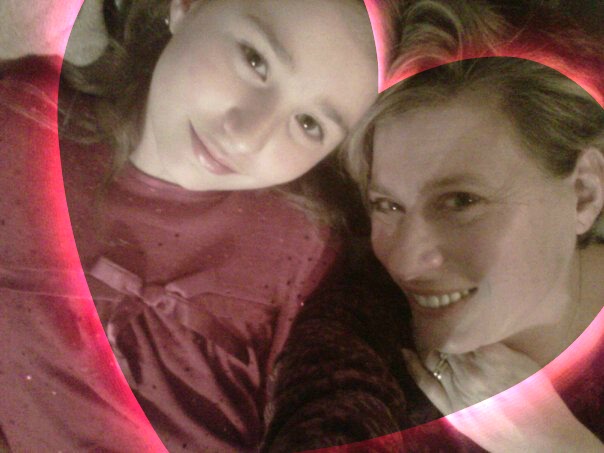 Being a very practical person, I’m extremely fortunate to have a pragmatic daughter. Unlike many of her peers, she’s shown little concern about romance and relationships. Other than incessantly listening to Taylor Swift songs and keeping tabs on Taylor’s love life, she just doesn’t seem to care.
And while I hope that doesn’t change, I also know that, eventually, it will.
I can’t imagine that she’ll ever be the type of person who feels incomplete without a significant other, but I do know that she will start dating at some point.
And that also means she’ll have her heart broken.
But before that happens, I feel obligated to share ten lessons I’ve learned (sometimes the hard way) about love:
1. You can’t truly love someone else unless you love who you are. And who you are is an imperfect person who makes mistakes, gets mad and will sometimes say and do very stupid things. Love yourself anyone. How you handle your mistakes and flaws is more important than trying to hide them.
2. Love is only genuine when you are being true to yourself. Don’t pretend to enjoy something when you don’t. That doesn’t mean you shouldn’t compromise. You should. Love requires a great deal of compromise. But compromise doesn’t mean you should pretend to be someone you’re not. If you do, you’ll wind up being miserable.
3. Love isn’t a competition, and you can’t make someone love you. You will always be loved for being the unique person you are and not because you are prettier, smarter, funnier, sexier or nicer than someone else. Therefore, you should never worry about what others are doing to attract attention or affection. Being yourself is enough.
4. You don’t fall in love. That indescribable feeling of “falling in love'” is usually a combination of infatuation and physical attraction. Love is something that is grounded in mutual respect, grows slowly and doesn’t necessarily bloom as much as it thrives.
5. Love isn’t about romance. It’s about experiencing someone at their very worst and realizing that walking away would still be more devastating than dealing with a tough situation.
6. Love is about having passion in your life – but not necessarily in the way you might think. Never invest so much of yourself in a relationship that you don’t have time for everything else you love. Be passionate about a hobby. Be passionate about a cause. Be passionate about your family and friends. And also be passionate about your love.
7. True love means you aren’t worried about what other people think about your relationship. If you spend time worrying about what others are thinking or saying, you likely have concerns yourself. If you’re confident about your relationship and the integrity of your significant other, you won’t care what others say. Always stay in tune with your inner voice and be honest with yourself.
8. Love means saying you’re sorry. Unlike the quote “love means never having to say you’re sorry” made popular in the 1970’s movie “Love Story,” love means that you’re willing to let go of your ego. Admit when you are wrong or when you’ve said or done something hurtful. And when you are in a relationship, you will say and do hurtful things at times.
9. Don’t expect love to always feel exciting and new. Just like life, love can sometimes be dull and boring and predictable. Relationships are like roller coasters: sometimes they can be difficult and sometimes they can be easy and fun. But being able to work together during the uphill battles is what makes the downhill ride so enjoyable.
10. People do change, and that can affect your relationship. Our experiences shape who we become. The person who you fell in love with several years ago will probably be different from the person you know today. And you will be different too. Many times, you can join hands while you grow. Sometimes, you drop your hands and grow apart. Often, the decision is yours, but sometimes it isn’t.
As I share these lessons with my daughter, I realize that I could add so many more. But I figure one for every year of her life is enough for now. Besides, she often doesn’t listen to me anyway. Despite that, I do want her to hear one message loud and clear: even though she will ALWAYS have her mother’s heart, I hope she is also able to follow her own.
A Tale of Two Teachers and Blank Sheets of Paper
With the current year fading fast and all of the potential of a new year on the horizon, I’d like to suggest a resolution for everyone: don’t write on someone else’s blank sheet of paper.
Whether or not you let someone write on YOUR paper is up to you, but please don’t write on someone else’s.
Personally, I’m resolving to avoid both. For such an outwardly head strong, opinionated person, you might think the first will be more difficult. But, for the unsure, worried and perpetually questioning me inside, the second will be just as challenging.
For years, I’ve let way too many people write on my paper. . . altering my story with their advice, opinions and standards. And the difference between someone who writes on your paper and someone who cheers as you write is long-lasting.
I learned this from two teachers and the blank sheets of paper they expected their students to fill.
I absolutely loved those blank sheets of paper. I loved the smell. I loved the look. And I loved the endless possibilities.
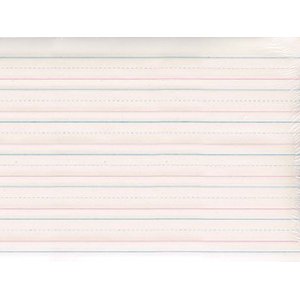
During my grade school years, the paper wasn’t white. It was an indescribable shade of grey and tan with space for a picture above and a combination of dotted and solid lines below. The purpose of the lines was to ensure appropriate hand-writing form.
I never worried about my handwriting (and was generally graded down accordingly). I was much more worried about content. I was fascinated by how I could string words together to say something that nobody else had ever said. I adored the feeling of putting pencil to paper and creating something. And I loved being able to express myself.
What I didn’t love was having parameters placed on me.
And those parameters were set forth quite firmly by my first grade teacher, Mrs. Gladwill. Unfortunately, I can’t really say anything nice about the woman. I could write pages about the horrors of that school year –about the times I was stuck in the corner so other students wouldn’t cheat off me; about how needing to go to the bathroom was a nightmare because it was prohibited during class time (Mrs. Gladwill’s theory was that if you didn’t have the sense to go during recess or lunch, then you should wait); about how Mrs. Gladwill liberally used harsh words and a ruler on knuckles; and, most of all, about how Mrs. Gladwill required conformity.
For a “spirited” child, there’s no wonder that I didn’t thrive in first grade. I simply survived. And was beholden to a series of lessons that led me to believe that sometimes it’s easier to just let others control what goes on your blank sheet of paper.
That became evident when Mrs. Gladwill gave all of her students the assignment of writing (and drawing) an answer to the question “what do you want to be when you grow up?”
At first, I was very excited about the assignment. With Mrs. Gladwill as a teacher, I should have known better.
I wanted to write about becoming a trapeze artist. My father had built and hung a trapeze from a juniper tree in our backyard, and I was already practicing my act.
The problem was, I didn’t know how to spell trapeze.
When I asked Mrs. Gladwill, her only advice was to look it up in the “book of careers” she had provided us.
Needless to say, trapeze artist wasn’t listed.
So I had to ask Mrs. Gladwill again.
Instead of helping me spell out my dream, she advised me to write about something “normal”, like becoming a nurse.
I had no desire to be nurse, but I recognized the authority she had. So, I reluctantly looked up nurse in the career book and wrote about how I wanted to be one. I even remember drawing the picture with particularly harsh strokes: I was angry that Mrs. Gladwill had taken control of MY piece of paper. At the same time, I did not want to be in trouble. So my blank sheet of paper became a full sheet of paper that was a lie.
Turning in that paper marked the end of my dreams of becoming a trapeze artist. Mrs. Gladwill had made it clear: if it wasn’t in the book about careers, there was no sense in pursuing it.
By second grade, my dreams had evolved anyway. My new ambition was to become a writer.
Much to my surprise, my teacher, Mrs. Roth, never told me to look up writer in the “career book.” In fact, she didn’t even have a career book. She simply encouraged me to write stories whenever I had extra time. She even taped my stories on the outside of her classroom door where others could read them. And they did.
I remember swelling with pride when fourth graders stopped by our classroom to read my stories.
Since then, that dream of being a writer has never died. I can’t say I’ve fully achieved that goal, but I never gave it up. It’s hard to give up something when others, particular teachers, believe in you.
So as 2012 approaches, I’m raising a glass to toast the blank sheets of paper everyone will receive in the new year. And I’m toasting the opportunity we all have to continue writing our own unique story without being told what the plot should be. I’m also raising a glass to how we can all cheer each other on. And most of all, I’m raising a glass to the great teachers who lead the way. Not only do they encourage so many of us, but they also serve as examples for other teachers by acknowledging that sometimes the most meaningful lessons aren’t the ones that are taught but are the ones that are observed.
Here’s to that! Cheers!
Ghosts of Christmas Past
Halloween may be the most ghostly holiday, but like Ebenezer Scrooge, I have always found Christmas to be more haunting. 
And just as with Scrooge, my Christmas ghosts remind me of what used to be and what I still hold dear.
Unlike Scrooge, my ghosts don’t necessarily encourage me to reconsider my life path. They are simply reminders about change, about being a parent and about how the best Christmas gifts often go unopened for years and sometimes even decades.
And every holiday season, my ghosts remind me of when I was an adolescent and received gifts that I didn’t unwrap or appreciate until years later.
They were given to me when I was struggling with the usual angst and therefore oblivious to anything my parents were dealing with.
And they were dealing with a lot.
My dad was unhappy with his current employment and seeking a new job. My mom was happy and fulfilled with her role in the community, but supportive of my dad. Therefore, the needs of my dad, the family breadwinner, won out and he accepted a job almost all the way across the country from our Oregon home.
Shortly after accepting the new job, he packed up his Ford truck and our family dog and drove cross-country to West Virginia. And my mother, my brother and I were left behind.
He made the move in early fall, and even through my self-absorbed haze, I knew much my mom didn’t want to move.
She even insisted that no one was going to buy our house anytime soon. But it sold almost immediately, and plans were made for the rest of the family to move to West Virginia over the Christmas holiday.
I continued my life as usual, pretending the change wouldn’t occur. My mother appeared to do the same. And with the holidays approaching, she made sure all the family traditions were kept. We decorated the house and the tree. We participated in holiday events. And we baked Christmas cookies and breads. Our house was warm, festive and inviting. In fact, there were very few indications that our life would soon be disrupted in ways that would take me years to understand.
But that Christmas WAS different.
My dad wasn’t around, and my mom’s eyes would tear up every time ‘”I’ll be Home For Christmas” came on the radio.
Too soon, school was out for winter break, my dad came home to help with the move, we hurriedly celebrated Christmas and just as quickly packed the house. Then we left. Forever.
Initially, I thought I would never adapt to my new life. Everything was different – the way people talked, how they viewed the world and what their priorities were. But I was young, and I eventually adjusted. But because I was young, I was also self-absorbed. So, the fact that my mother was facing the same issues at the “real-world” level didn’t seem important.
I knew she was unhappy. I knew that she went from being a community leader to being someone fairly unknown. And I knew that she just couldn’t conform to the suburban culture that we suddenly found ourselves in.
But I also thought she was “old” and just wasn’t affected by things the way I was. Or at least she knew how to deal with everything better.
I’m now even older than she was at that time, and I know we “old” people don’t always know how to deal. At least I don’t. And I don’t always hide my frustrations and imperfections… not even from my children. And during the holidays, I sometimes simply choke.
But my mom never choked. Even when she was going through one of the hardest times of her life, she never put her own issues, concerns and needs before those of her kids. She pretended that whatever her children were going through was a much greater priority. And she knew the importance of making us feel like we were home, even if she didn’t feel like she was.
That’s why, the Christmas after “the big move” felt just like every other Christmas. We decorated the house with the same decorations that we’d put out in years past. We baked the same cookies and breads that we baked in the past. And we listened to Christmas carols on the scratchy records we’d always listened to. It felt like we were home for Christmas.
I actually received several unwrapped gifts those two Christmas holidays. I received the gift of learning to move forward with my life while still embracing the past. I received the gift of understanding the importance of traditions at Christmas. And I received the gift of a role model who gave of herself at a time when there was often little left to give.
I unwrapped those gifts years ago, but I’ve held onto them. Every year when we hang the decorations on the tree… some which go back to my childhood…these Ghosts of Christmas Past come back to haunt me. And they remind me that life is constantly changing: new people arrive while others leave. Circumstances sometimes improve and sometimes get worse. And sometimes, even the entire culture seems to dramatically shift. But amid these changes, we can still appreciate the Ghosts of Christmas Past, celebrate the Ghosts of Christmas Present and hope that the Ghost of Christmas Yet To Come provide opportunities for our children to open the unwrapped gifts we’ve given them. And that they too are haunted by Ghosts of Christmas Past.
I’m Tired of Walking the Tightrope
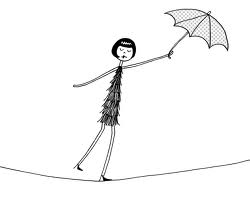 I’m walking a tightrope in my life. The tightrope may not be physically dangerous, but it’s dangerous none the less. And the only thing that prevents me from making that one deadly misstep is the realization that letting go requires perfect timing. Otherwise, the results can be unpleasant at best and horrific at worst.
The tightrope I’m talking about is one of convention – – of not calling people out when they speak with authority that their religious beliefs make them more moral than or superior to people of a different faith.
As I write this, I’m pretty sure my balance is getting very, very shaky. But that’s nothing new for me.
In fact, I came very close to stepping off that tight rope the other day. A meeting was wrapping up when the conversation turned toward politics. That led to a discussion about the nation’s morals and values. Or rather, the values and morals of the American public.
I was already standing up and collecting my things when the woman who had been sitting quietly next to me during the entire meeting stood up and proclaimed, “I’m a Christian. It’s so sad that so many people in our country aren’t.”
It took all of my willpower not to turn to her and say, “So, what you’re saying is because I’m Jewish, I don’t have any morals or values?”
(For the record, I’m not Jewish. I’m Lutheran. And faith plays a very important role in my life. I just don’t think that my version of faith is the only one God smiles upon.)
Instead of confronting the woman, I said nothing. But her comment bothered me –mostly because I’ve been hearing different versions of it for years. People are holding Christianity up as though it were membership card to a club that scorns non-members. It’s almost as though their club is actively recruiting new members while holding its nose up at those who choose to join a different club instead.
To me, this behavior is in direct opposition to what Jesus taught. He preached acceptance and love of everyone. Period. And I’m pretty sure his message was primarily about how we treat each other rather than what we call ourselves.
I say this because I have friends of a different faith, or even of no faith, who behave more like Christ than a lot of people who call themselves “Christians.” They help without judgement. They give without expectations. They accept without an agenda. Most importantly, they simply care about other people.
I recognize there are people of non-Christian faiths who have committed horrible acts in the name of their religion. But, if you look at history, a lot of Christians have done the same.
At the same time, there are many, many, many more people who have committed acts of compassion in the name of religion – all types of religion.
Faith is a beautiful gift. But giving to others – regardless of faith – is also a beautiful gift.
As my friend Holly so eloquently stated, “If a Christian, a Hindu, a Muslim, a Jew and an atheist all working together on a Habitat for Humanity House, what’s the end result? The house gets built and a family that didn’t have its own home now has one.”
To me, that’s the value that America needs: the value of appreciating our differences while working together to care for everyone – the poor in resources and the poor in spirit. It’s a value of judging less and caring more.
What America doesn’t need are people proclaiming that there is only one religion with the right values and/or that only Christians are moral.
So, there you go.
If I haven’t fallen off my tightrope by now, I’m pretty sure there’s someone who wants or is willing to push me.
But, just so you know, I’m going to get right back up.
The Addams Family Has Nothing On My Family
One of the stories that gets told and re-told every time my family is together is how I was switched at birth.
Truth be told, the story really isn’t all that interesting. I never actually got sent home with the wrong family. There were only two babies born in the rural Montana hospital that day, and I was over eight pounds while the other baby girl was much smaller. So in reality, there was never any significant confusion. The hospital was just so small and births were so infrequent that wristbands weren’t used. As a result, my parents were handed the wrong baby when they were getting ready to leave.
But even though the circumstances weren’t all that dramatic, there were times growing up when I was convinced that I was living with the wrong family. I was sure my dad made a mistake when he told hospital staff that they had given him the wrong baby. At least, I really, really wished this, and I fantasized that someday my real family, the ranchers in Montana, would come rescue me from my plight.
Putting aside the obvious family resemblances, I was convinced that there was no way I could actually be related to the people I was being forced to live with. They were just too weird, and even worse, they were making me weird. I knew this because I spent a lot of time comparing our family to other families.
There was simply no doubt. We were abnormal: my parents didn’t care about the things other parents cared about; they had different expectations and priorities for my brother and me; they didn’t listen to popular music; they rarely watched any television other than PBS; they didn’t care about pop culture and they would express opinions that were outside the norm of suburbia. Even the food we ate was weird.
There were times when the hopelessness of my situation got so bad that I would secretly watch an episode of the Addams Family just because it made me feel a little bit better. But only a little bit, because I knew the Addams Family was fictional, while my family was real. Besides, my mother never approved of such frivolous shows.
But, like so many other situations in life, I grew up and got some perspective.
I’m not saying I completely overcame my compulsive need to compare myself to others and to worry that I was a bit off kilter (I always have been and always will be), but I did realize that there really is no such thing as normal. Most people spend a lot of time and energy putting up appearances rather than truly engaging in the world. I was raised in a family that just didn’t worry about what other people thought and lived accordingly. Because of that, it took me a long time to figure out how much other people were trying to cover up.
I’ll never forget an incident that occurred when my children were small. They had been invited to a birthday party at the home of someone who I thought had it all together. Not only did she have a career, but she was always talking about the amazing meals she cooked, how she was decorating her home and how her children were exceeding at a variety of activities. At that point in my life, I was feeling accomplished if I arrived at work with matching shoes and if my children were fed before I collapsed in the evening.
Needless to say, I didn’t want to go to the party. But I did.
I don’t remember much about the actual event. What I do remember is trying to find the bathroom and opening a door to a bedroom instead. At least, I think it was a bedroom. I couldn’t tell from all the junk that had been thrown in and piled up to get it out of view. This was obviously the mother’s attempt to make her home and her life appear perfect.
At that moment, staring at all that junk piled to the ceiling, I realized how many people spend too much time and energy trying to create an image of who they think they should be rather than simply being who they really are.
My family may have been weird, but at least they taught me the importance of embracing and accepting differences and imperfections, especially our own. They also taught me that no great discoveries or great works of art were the result of simply following the crowd or doing what everyone else was doing. Great advances come from thinking outside the box and having the conviction to do things differently.
My parents innate ability to do this may have skipped me, but it went right to my children. Neither of them seems to care about doing what is considered to be popular or the “in” thing. They are simply happy pursuing their own interests and are comfortable in their own skin. I admit that I sometimes forget what I’ve learned and start comparing them to other kids.
Then I remember the Addams Family. Their neighbors and community members may have thought them strange, but not only were they oblivious to what other people thought, they were also incredibly happy.
I like to think my family is too.
On this Thanksgiving, I’m Thankful for All the Handouts I’ve Received
There are times when I just want to scream out loud. But that doesn’t necessarily solve any problems, so sometimes I choose to scream through writing.
Now is one of those times.
While I can’t emphasize enough that I believe in the First Amendment, that everyone is entitled to their own opinions and that everyone should be allowed to express them, there are times when those opinions just seem so off base.
Take, for example, the number of people who complain about others who take “handouts” and/or boast that they have never done so themselves. They often say this as though they are morally superior.
I just don’t get that, because I have yet to meet a person who hasn’t received a handout.
Personally, I’ve received more handouts than I ever deserved. And this Thanksgiving, I am so grateful for them.
The handouts I’ve received may not have been in the form of government assistance for low-income individuals, but they are the reason I haven’t had to depend on such help when I’ve hit a rough patch.
I am grateful that I received the handout of a mother who didn’t abuse alcohol or drugs and had a healthy diet while she was pregnant. Her decisions provided me with a giant advantage in life. I was born healthy and had parents who ensured I maintained my health. Too many people start life without that handout and spend the rest of their life trying to catch up.
I am grateful for the handout of parents who were concerned about my education from the day I was born. They shared their love of the written word by reading out loud to me. They didn’t set me in front of a television so they could go on with the lives they wanted. They provided me with books, crayons and the opportunity to express myself. Too many people spent the first three years of their lives without any of those handouts – handouts that greatly influence their ability to learn and process information.
I am grateful for the handout of being a child that never knew what it was like to be truly scared or cold or hungry. There was always food on the table, in the cupboard, in the refrigerator and in the freezer. I never went to bed afraid that there wouldn’t be heat in the morning or that I wouldn’t have a coat to wear in cold weather. Too many people grow up without the simple handout of having those basic needs met – which creates a completely different perspective of how the world works.
I am grateful for the handout of parents who made their children and their family a priority. I always felt wanted. I always felt like I belonged and I always felt like I helped make my family complete. I was never told I was a mistake. I was never told I was a burden. And I was never told that my parents’ life would be easier if I wasn’t around. Just as importantly, I wasn’t hit, kicked burned or assaulted in my own home. Too many people grow up abused and wondering why they even exist. The handout of love is powerful, and without it, people often seek affection and attention in the wrong places and in the wrong ways.
I am grateful for the handout of having parents who wanted me to succeed and who demonstrated self-discipline and good decision-making skills. They required my brother and me to take responsibility for our actions. They also ensured that we were exposed to a wide variety of opportunities and activities. They were never in jail, they never dragged us into unsafe locations and they didn’t bring a variety of unsavory characters into our home. Too many people grow up without the handout of positive role models. Their parents or caretakers or community members are stumbling through life attempting to meet their own needs without even considering those of their children. Our ability to make choices and understand consequences is a skill… and like all skills it needs to be demonstrated and practiced.
I am grateful for the handouts I received that were beyond human control. I’m not dyslexic, I’m not disabled and I’m not disadvantaged. I am surrounded by people who can lend a helping hand. When I faced a real emergency, there were always people in my life who had the resources to help me. Too many people are surrounded by people who are facing their own crises and don’t have the ability to help anyone else.
I am truly saddened by people who view poverty as a simple issue. It isn’t.
And I am bothered that some people think life is an even playing field and everyone has equal opportunities. We don’t.
And I worry about the belief that low-income people have flawed characters rather than an unbelievable set of obstacles to overcome.
I agree that there are success stories.There are people who have beaten the odds, overcome horrible situations and gone on to live very productive lives. I am privileged to know such people.
And I also know that somewhere along their life path, they got some handouts – generally in the form of a caring person or persons who wanted to share all they had been given: whether material or spiritual. People who wanted to pay it forward rather than to hold it tight. People who understood the value of offering their hearts and their hands out to others.
On this Thanksgiving, I am not only grateful for the all of the hands that have been held out to me, I am grateful for the role models and heroes who continue to do this for others on a daily basis.
Holding your hands out can be a miracle for others.
Opening your heart to others can be a miracle for you.
I hope everyone has the opportunity to do both this Thanksgiving and into the upcoming holiday season.
Veterans Day, a Wounded Marine, and the Other Side of the Door
On Monday, October 31, 2011, I left work earlier than usual because it was Halloween and I had important issues to deal with. At least, they seemed important at the time. I needed to make sure my daughter was dressed in her costume, that the jack-o-lanterns were lit and appropriately placed and that we had a plan to ensure the dog behaved himself during trick-or-treat activities.
On that same day, Marine Lance Corporal Brian Felber, was severely wounded in Afghanistan when he stepped on an IED and lost both his legs.
My concerns on Halloween seem unimportant in comparison. But, like most Americans, I was oblivious to the events that changed his and his family’s life forever. I was absorbed in the trivial details of my own life.
But the next day, I was sitting in my office when Jan Callen’s cell phone rang. Like everyone else in the office, I knew the call was from his wife Susie since she has her own ring tone. What we didn’t know was that she was calling to tell Jan about Brian, the husband of their 22 year-old niece.
As a retired Army Colonel, Jan reacted in true military fashion. He adjusted his plans accordingly and took the most appropriate course of action: instead of going to Nashville for the week, he and Susie would go to the Walter Reed in Bethesda to do what they could for Brian and the rest of his family.
In the meantime, I did what I thought was appropriate. I took Jan’s suggestion and liked a Facebook page supporting Brian: https://www.facebook.com/pages/Support-Combat-Wounded-Marine-Brian-Felber/281745445190900.
I admit, at first I did this because it was just what I thought was expected of me in such a situation. I’d never met Brian and didn’t really relate his situation to my own life.
But then I looked at the Facebook page and the photos.
He appears to be a guy I would genuinely like. In one photo, he has his arm around his young wife. In another, he has his arm around a dog. And in yet another, he’s playing with a band.
Dogs and music? Brian seems like my kind of guy.
That Facebook page made him more than just another news story or statistic. He’s become real to me. He is a person with a family and a life outside the military. Yet his service in the military will shape the rest of his life: a life that’s changed forever.
For most of us, our lives are going on as they always do. We pay attention to those things we think directly affect us with very little consideration to those that don’t.
As Jan said when reflecting about the time he spent with Brian and his family this past weekend, “When we were at the hospital, we saw all these young guys with lost limbs and young wives by their side. We saw an entire floor of a parking garage for handicapped parking. And then we went home, and the world goes on like nothing happened.”
His words remind me of lyrics from the Cat Stevens song “Sitting.” They are lyrics I’ve always loved. “Life is like a maze of doors, and they all open from the side you’re on. Just keep on pushing hard boy, try as you may you’re going to wind up where you started from. ”
The meaning of those lyrics can be debated, but to me, they’ve always meant that to move forward, we not only have to think beyond our own circumstances, but we also need to approach life from a perspective other than our own. We need to turn around and walk through the doors from the other direction.
When we do this, we just might actually see and appreciate all the people we never met who have been helping hold doors open for us: people who are contributing to our lives. As someone who didn’t grow up with close family or friends in the military, I’ve too often failed to recognize how members of the military help hold my doors open.
I hope Brian knows that his circumstances have served as a reminder to me. A couple of years ago, my son, Shepherd, also reminded me.
My husband and I were in a parent-teacher conference when Shepherd’s teacher told us she was very impressed with his thoughtful writing. We were surprised and asked what she meant. Apparently, he’d been charged with writing an essay in answer to the question “If you could change places with anyone for one day, who would it be?”
My son had answered a soldier. His reasoning was that, while he never wanted to be a soldier, as an American, he needed to understand what they are going through.
Wise words from a sixth grader and words to think about on this Veteran’s Day.
I hope we all take time think about the side of the door that our active troops and our veterans are facing. Members of our military do what they are asked, and they respond to some horrendous situations. And, most importantly, they do their duty out of love for our country.
On this Veterans Day, we should all consider what we can do to help hold THEIR doors open.
The Gift of a Dead Bee
I’ve finally figured out how to deal with the gift of a dead bee.
It’s only taken most of my life, since no one ever told me what to do with one. Or, at least if someone did, per usual I ignored the advice.
Like most of valuable lessons, I’ve had to learn the hard way – through experience. And, to quote Randy Pausch, “Experience is what you get when you didn’t get what you wanted.”
I’m a very experienced woman. And I’ve been given a lot of dead bees.
 I’m not simply referring to the dead bees, or any other small critters, that my cat brings me as gifts. I’m referring to all the times I’ve been given something that was intended to be a gift – a piece of advice, a kind thought or even responsibility – that I didn’t want. Not only did I not want the gift, but I overreacted to it – if not outwardly then inwardly.
Unfortunately, I’ve wasted a lot of time and energy on dead bees.
My mother was a master at giving them. To be fair, just like my cat, she was giving dead bees out of love. But, unlike my cat’s gifts, hers were harder to deal with.
Even before I hit adolescence, I remember her telling me to accept my body type since it wasn’t going to meet society’s standards for the female form. “It’s o.k. to be a big-boned girl,” she told me. ” I always wanted to be small too, but it’s just not how we are built.”
Really? I don’t remember worrying about my body type. I remember complaining that I wasn’t cool, but I didn’t think that had anything to do with my size. In fact, I never thought my 11-year old body was particularly big… kind of dorky, maybe, but not big. But from that moment on, I was sure my hips were going to grow so large that I wouldn’t be able to walk through doors.
I was almost thirty before a doctor finally convinced me I simply didn’t fit the definition of “big-boned.”
But that was nothing compared to the dead bee my mom gave me when I was 16.
The gift came during a conversation in her car. She had been covering something for the newspaper and was all worked up about the unfair treatment of a female official.
“They just won’t listen to her.” she told me. “They won’t take her seriously because she’s attractive.”
And then my mother did something she rarely ever did. She actually turned and looked at me, instead of looking at the road, while she was driving. It was brief, but it was still memorable.
“You are so lucky,” she told me, “that you are smart rather than pretty.”
That bee stung even though it was already dead. Those are just words no 16 year-old girl wants to hear. Not only did they linger when they came out of her mouth, they hung in the air long enough for me to grab hold of them and carry them with me for years.
Since them, I’ve collected hundreds more dead bees from very well-intentioned people. But only recently have I understood that these dead bees were actually gifts.
My mother’s comments about my looks and my body helped shape who I am: someone who recognizes that character is far more important than appearance.
Dead bees also make good stories. And those who know me best know I’m always telling a story – whether the listener cares or not.
Finally, they shine a spotlight on what’s really important: the relationship with the giver.
A few weeks ago I was making the bed when I flipped up a blanket to find a dead bee on the sheet. My cat had brought me another gift. But instead of freaking out over the fact that I’d been sleeping with a bee, I just laughed. You see, Skitty isn’t the most affectionate cat in the world. My husband calls her mean, but I disagree. Every night, after she thinks we’ve all gone to sleep, she jumps onto the bed and curls up next to me. I love the fact she does that, and if it means dealing with a few dead bees in bed, I’ll accept the trade-off.
In fact, I’m getting really good at dealing with dead bees in general. All it takes is focusing on the intent of the giver rather than on the gift itself.
I say this in recognition of the biggest dead bee my mother ever gave me: the tendency to give them myself. I’m pretty sure I’ve exceeded her abilities at giving dead bees, and I’ve already given a lot of them to my own children.
I can only hope I’ve also passed on how to accept and even embrace them.
Reality Shows, Sports Competitions and Really Confused “Christians”
Either I’m really confused, or a lot of other people are really confused.
Not surprisingly, my sensibilities and my ego lean toward the latter.
Because even though I’m far from being a Biblical scholar, I consider myself a fairly intelligent person. And based on everything I’ve read and been taught, being a Christian means believing and following the teachings of Christ.
Period.
But there seem to be a lot of people who think that being a Christian doesn’t have as much to do with what you do, but instead has everything to do with what you profess to believe. On top of that, these same people seem to think that calling themselves Christian means God will give them what they want based on this “badge of honor” they proudly wear.
While this seems completely off base to me, there are a lot of people who believe the concept.
Just watch reality TV or sports competitions.
I’m not particularly proud of the fact, but being the dork that I am, I’m a fan of the television shows “Survivor” and “The Amazing Race.”
(As a disclaimer, I watch these shows because I’m fascinated by the personal dynamics and contestant interactions. In other words I’m simply doing research for the book I’m going to write someday. At least that’s my story and I’m sticking to it.)
But in watching these shows, I’ve also noticed a trend: every season, there are contestants who not only proclaim that they are Christian, but believe that because of this, they’ve got some kind of upper hand in the competition. In subsequent episodes, they continue to pray and claim that God is on their side and, therefore, they have the advantage.
Call me a cynic, but I’m pretty sure God’s top priorities have nothing to do with who wins a reality TV show.
I’m beginning to wonder if I’m in the minority, though, since a lot of people are buying into this whole “Christians have the upper hand in pretty much pointless competitions” theory.
I’ve seen it time and time again in sports. Athletes describe themselves as “a Christian,” and because of that, they claim God is on their side.
Really?
For some reason, I seriously doubt that God is spending precious time ensuring that the team that prays the most or has the most self-proclaimed Christians is THE team that wins a championship.
Instead, I’m thinking that God’s top priorities have something to do with how we treat and care for each other.
But then again, maybe I’m interpreting Jesus’ message differently. Because I completely buy into the simplified version shared by a friend the other day: “Love God and love each other.”
I don’t think that winning a competition for money or fame falls under either of these commands. I also don’t think prayers are intended to be wish lists for everything we want in life.
As my mother once told me “Don’t pray for what you want. Pray that God gives you the strength, the skills and the direction to deal with the situations you are handed.”
Makes perfect sense to me.
But then, I’m not trying to win a reality TV show or a major sports competition.
I’m just stumbling through life trying to figure out how to spend less time irritated with people and more time doing what I think Jesus meant by “being Christian.”
It’s hard, but on those days when I feel like I’ve made a bit of progress, I feel like a winner.
And that’s the kind of winner I think God is hoping we strive to be.


 Just So You Know