Category Archives: Uncategorized
A Bit of a Rant About People Who Rant About “Welfare”
I am all for letting people have their own opinions.
I better be, especially since I have a lot of them myself. And I’m also all for letting people express their opinions, because I’m pretty sure I’d explode if I couldn’t express mine once in a while.
But here’s the thing.
I don’t pretend I know about everything. In fact, I’ll be the first to admit that I don’t know much at all.
The recent debate over the national debt? While I have an opinion about how our “leaders” behaved, I certainly never thought I had the answer. That’s because math, finance and anything to do with numbers was never my thing. Same with legal issues. While I can give a small amount of advice to nonprofits about issues they should consider, I would certainly never try to pretend I actually understand the legalities involved. And when it comes to anything medical, technical or mechanical? Forget it. I can’t contribute anything.
But I do know a thing about social services and about issues facing people in poverty. Which is why my blood starts boiling when I hear people ranting about the “welfare” system, the” lazy people who use it” and how people who “get welfare” should be drug tested. I’m pretty sure I’ve seen these topics come up on Facebook at least once a week for the past couple years.
I sometimes wonder if people who make these comments really understand the issues at all. Or if they realize that some of “those people” might be people they sit next to in church, or who care for their children or who are members of the PTA. I also wonder if they’ve ever considered that any of us, through some series of unfortunate circumstances, could have been – or still could become-one of “those people.”
I’m not going to use this space to elaborate on the multitude of reasons, some of them societal, that people end up “on welfare.” What I really want to do is set people straight about what “welfare” actually is. However, I do spend a lot of time at our local Department of Health and Human Resources (DHHR), often called the “welfare office,” and I highly recommend that everyone spend some time there. It’s very enlightening.
It’s also not a happy place to be.
First, the waiting room is always crammed full of people who are down on their luck. Secondly, because people often have to wait all day just to see a worker, many arrive before 7:30 in the morning so they don’t have to come back the next day and wait again. And third, there is no specific profile for people who need assistance. When I’ve seen people I know in the waiting room, I’m generally surprised and they are they are generally embarrassed.
With that said, I’ll be the first to admit that there will always be people who want something for nothing. And there are always be people who try to work the system. But, in my experience, about 90% of the people seeking assistance are honest and have simply fallen on hard times. Those people “driving cars nicer than yours?” That car might be the last asset they are holding on to after losing everything else, including a good paying job. They may have gone through their savings and exhausted all help from relatives only to be in a place they never imagined. That woman with three young kids? She may have just escaped a domestic violence situation in which the controlling husband or boyfriend didn’t allow her to work. Now that she’s finally left him, she’s left with nothing. And then there are those people who’ve never had any support or resources their entire life.
Based on what I know, I wouldn’t say these individuals are taking the easy way out. But a lot of people seem to think that. I recently had a friend call and ask me what to tell a family member who told her son, “There’s no reason you should go to college or worry about getting a job. You can just go to the welfare office and the taxpayers will support you. You’ll get a free place to live, a free car and a free phone.” The family member wasn’t actually encouraging this. They were simply complaining about how their tax dollars are supporting people who can live a good life without working.
Not true.
Just for the record, there is no actual assistance called welfare any more. What used to be called welfare is now Temporary Assistance to Needy Families, or TANF. TANF is a federal program and is only available for families with children. Single people or childless couples cannot receive TANF, because the purpose of it is not to help people live comfortably but rather to ensure that the children in those families have their basic needs met. It also intended help recipients become more employable. If you actually look at how much money TANF recipients receive, I can’t imagine how you think they can live comfortably.
Also, TANF recipients don’t get something for nothing. Anyone who receives TANF must participate in some kind of job training and work activity. If they can’t find a job, they have to volunteer. If they don’t participate in these activities, they are sanctioned.
And TANF isn’t a lifetime deal. A person can only receive a LIFETIME maximum of 60 months of assistance. And because TANF is a federal program, they can’t get assistance in WV then move to Maryland and start over. The assistance they received in WV is counted toward the 60 months. Many, many, many TANF recipients never even reach 60 months, because they are able to get back on their feet months, and sometimes even years, before their benefits run out.
As for the free housing? Free car? Free phone? First of all, housing is a completely different program than TANF and has its own set of guidelines. In West Virginia’s Eastern Panhandle, where the cost of housing is much, much higher than the rest of the state, there is virtually no public housing available. Last I heard, the two-year waiting list was closed because of high demand and limited resources.
There is a non-profit program that provides donated cars to TANF recipients, but the purpose of these vehicles is to provide a way for people to get to the work they are required to do while receiving assistance. There’s not much public transportation in rural West Virginia, and without a car, they can’t get to work. Also, the availability of these cars if very limited. These are donated, used cars. If people don’t donate, there are no cars. The cell phones are provided by a private company, and there are no taxpayer dollars involved.
I’m sure by now, someone who is reading this is thinking, “I know someone who doesn’t have children, and they still got welfare.” Granted, there are other financial assistance programs out there. Some serve people with disabilities, and many disabilities aren’t obvious. Also, West Virginia has a program called Emergency Assistance that low-income individuals can receive during a one-month period only once a year. And when I say low-income, I mean really low-income. The income eligibility guidelines haven’t changed since the early 1980’s. Which basically means the limited financial assistance is like putting a band-aid on a wound that requires surgery.
I also know there are people who feel that churches and charities should be providing the bulk of the charitable support. I think that would be great if only it were actually feasible. But, it’s not. I encourage you to 1)take a look at the budgets or nonprofit organizations that serve low-income individuals and families, and 2) review the amount of assistance they can actually provide. Most only provide a very small amount of assistance and limit assistance to once a year. There are simply more people who are hurting than there are dollars or donations to help. And most organizations have criteria for assistance, just as DHHR does.
Which brings me to the issue of drug testing those who receive “welfare.” To be honest, I really don’t have a strong opinion when it comes to the issue of civil rights and drug testing. As I said before, I’m not a lawyer and I would never pretend to be.
But, as my husband is constantly pointing out, I’m a very practical person. And drug testing individuals who receive TANF… or Emergency Assistance or whatever people consider welfare… just isn’t practical. First, DHHR officials report that they just don’t see much evidence of drug use among the economic services or “welfare” clients. (They do, however, see a lot of evidence of it with families who are involved with Child Protective Services). Secondly, drug testing requires resources: every drug test costs money. It has to be administered, it has to analyzed, and the reports have to be given to the clients. I doubt DHHR workers could provide the results because of a conflict of interest. If there were a positive test, I’m sure there would also be a complaint that “DHHR told me I tested positive so they wouldn’t have to give me money.” So in addition to personnel costs, there might also be legal costs.
I’m not sure where the money for drug testing would come from. For those of you who say it could come from the TANF dollars that the clients would receive if they didn’t test positive? I refer you again to my first point… there’s no evidence indicating that the majority of individuals who receive economic assistance use drugs. I’m just not sure the dollars would be there – even if they could even be used for that purpose.
And, let’s say I’m wrong and a lot of people did have positive results. What then? These are low-income individuals to begin with. Should they just be left to fend for themselves or would treatment be provided? If treatment is provided, where would the money for that come from? Treatment services are already very under-funded and have long wait lists.
Finally, since helping individuals develop the skills, knowledge and habits to gain and maintain employment is one of the primary purposes of TANF programs, I don’t understand why we would put up barriers to participating. Don’t we want to help people improve their situation?
So I rant. And I am sure there are those who are going to disagree with everything I say. Feel free. As I said before, I think everyone is required to an opinion.
I just don’t think those opinions should involve blaming or marginalizing any segment of our population. And I don’t understand why people who have more than enough to meet their basic needs– food, housing, clothing, and health care– feel that they are being punished by being asked to help their fellow-man. To me, that’s a privilege. Besides, as the saying goes, you can’t take it with you. But I’m pretty sure good deeds stick with you forever.
Is that a Compliment or Are You Just Trying to Confuse Me?
 I used to think a compliment was a compliment.
Of course I also used to think that life was like a math equation.
That is, I thought that if you did the right thing, then good things would happen to you. And, if you were greedy, mean or cold-hearted, then bad things would happen. In other words, in the balance sheet of life, everything would add up.
I also believed that if you watched what you ate and exercised on a regular basis, there was no reason you shouldn’t be able to fit in the same sized jeans you wore in high school.
I was clearly delusional.
Now that I’m older, I’m a bit more realistic.
I also find myself analyzing every compliment I receive.
Don’t get me wrong. I’m not one of those people who thinks all compliments are back-handed or have some hidden meaning.
I’ve simply found that compliments say more about the people who give them than about the people who receive them. They provide great insight into motivations and personalities.
For example, I used to go absolutely crazy with friends who would criticize people behind their back only to make insincere compliments to their faces.
Not that I necessarily felt the need to be rude to people whom I disliked or didn’t respect (at least most of the time), but I certainly didn’t feel the need to lavish them with phony compliments.
But, to be fair, that’s a trait that can actually be very beneficial. Personally, my lack of it has cost me dearly at times. Because what I figured out was that the people who give such compliments simply want to keep the peace. It’s more important to them than being self-righteous. That’s very admirable.
Not that I’ve been able to change my ways all that much, but at least I understand.
What I’m still trying to understand are the compliments that come from my own family.
I didn’t grow up in a family that threw compliments around. And I didn’t marry into one either.
That’s not a bad thing at all, because the compliments that I did receive are definitely memorable…not necessarily ones to treasure.. but definitely memorable.
Take my husband.
Nearly 20 years ago, before we were married, he told me that I was “a worker.” He then explained. “That’s the highest compliment you could receive from my mom’s side of the family. ”
The effect of this compliment was short-lived when I realized that, while his grandmother may have appreciated “a worker,” my husband had higher regard for people who can sit back, relax, enjoy life, and watch the same episodes of a favorite television show over and over and over.. AND OVER again. Based on that, I’m surprised he married a woman who has a hard time sitting still for five minutes and feels guilty if she’s not accomplishing something 24 hours a day.
More recently, I was confused by what, I think, was intended as a compliment from him.
We were discussing why married couples complain about their spouse’s personality traits. My comment was that personality traits don’t change no matter how long you are married, so they shouldn’t have gotten married to begin with if they were that annoyed.
This led to the question as to whether people can and do change and inevitably to my asking “have I changed?”
My husband thought about it a minute, then told me I had. When I asked how, he said “You’re more mature.”
To put this in perspective, my husband has complete disdain for women whom he considers “immature.” I’m not exactly clear what his exact definition of immature is, but I think it has something to do with people who get upset when the world doesn’t revolve around them, or who expect life to constantly be exciting or who put their own wants and desires above all else. That’s based solely on my keeping a list of all the people, mostly women, who he has identified as “immature.”
Logically, one would think that the definitions of mature and immature would be exact opposites.
But, in this case, I’m not so sure. Because after considering if I had ever been one of those women, I realized that, for the most part, I hadn’t been. So his definition had to mean something else. But when I asked him what he meant, he couldn’t explain, and I was a bit worried.
Maybe because when I hear the word mature, I immediately picture a matronly woman buying clothes in the “old lady” section of the local department store.
I’m not there.. yet.
So, I gave up trying to figure out exactly what my husband meant and just decided to take it as a compliment. After, all, as I said before, compliments say a lot about the person who gives them. And my husband is a great judge of a character, so he had to mean something positive.
At least I’m pretty sure.
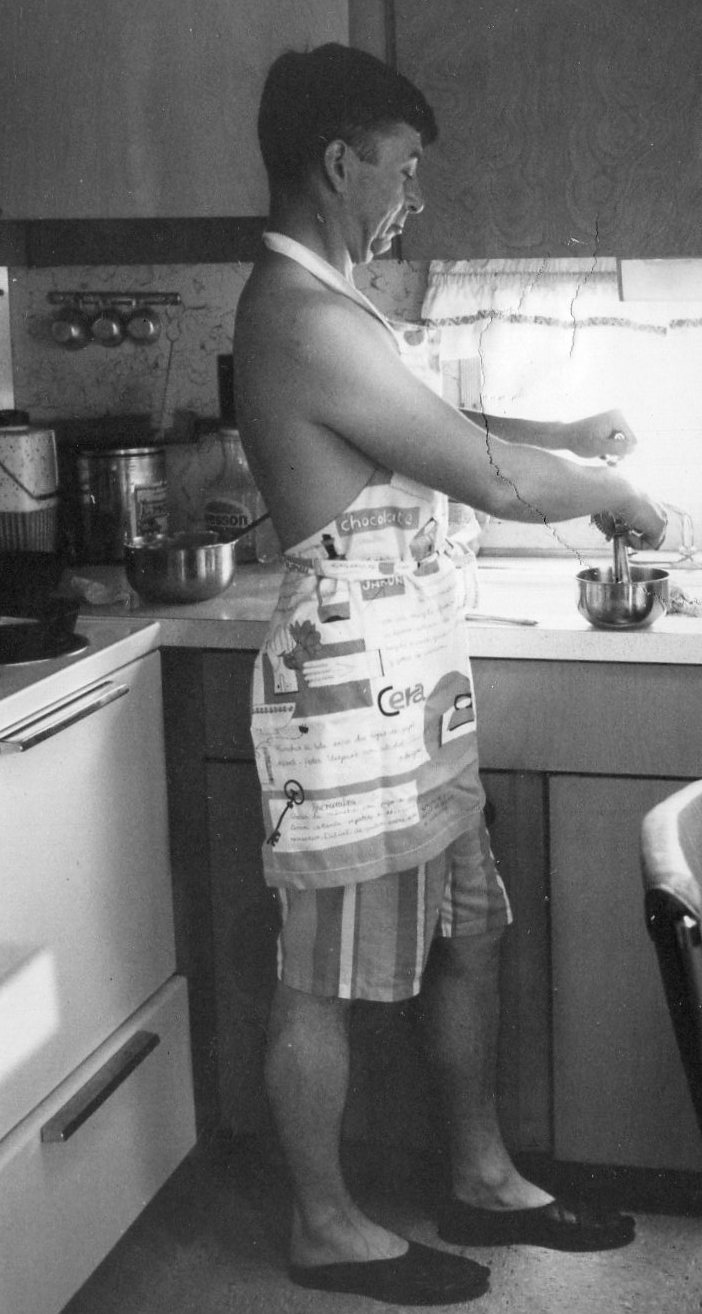
I’m Pretty Sure There’s a Gene for That

My grandmother spent her entire life thinking she wasn't attractive.
There are times when I truly believe I am the most self-critical person on earth. At the same time, I also believe that, for the most part, I’ve become pretty good at hiding that trait from all but those who know me best.
(And yes, I also know those people are doubled over laughing at that idea that I think I can hide anything I’m feeling or thinking. But, believe it or not, I really don’t reveal everything. Really, I don’t).
But here’s the thing. I’ve begun to wonder if there might be a gene for self-criticism.
I say this in all seriousness.
While many women point out their flaws more often than they point out their strengths, there are those who take it to a whole new level.
My mother, the over achiever, is a prime example. For all her accomplishments, I don’t remember her ever being satisfied with what she had achieved. Instead, she was always comparing herself to others and thinking she didn’t measure up.
For skeptics of my self-criticism gene theory who believe it’s simply a learned behavior, let me go on the record saying my mother tried her hardest to ensure she didn’t pass that characteristic on to me.
Her efforts didn’t work. And neither did her mother’s.
I’m fairly certain that my grandmother carried a self-criticism gene that weakened upon passage to future generations. There’s simply no other explanation for why my grandmother would have been critical of herself.
First of all, she was beautiful. I look at photos of her and wonder how she ever could have any self doubts about her appearance. But she never thought she was attractive
Secondly, she was one of the strongest and most intelligent women I’ve ever known. She grew up on a farm in Michigan. I’m told she held the record for the hundred yard dash at her high school for decades. And she, like her three other siblings was so determined to get a college education that worked hard to pay her own way through Michigan State University.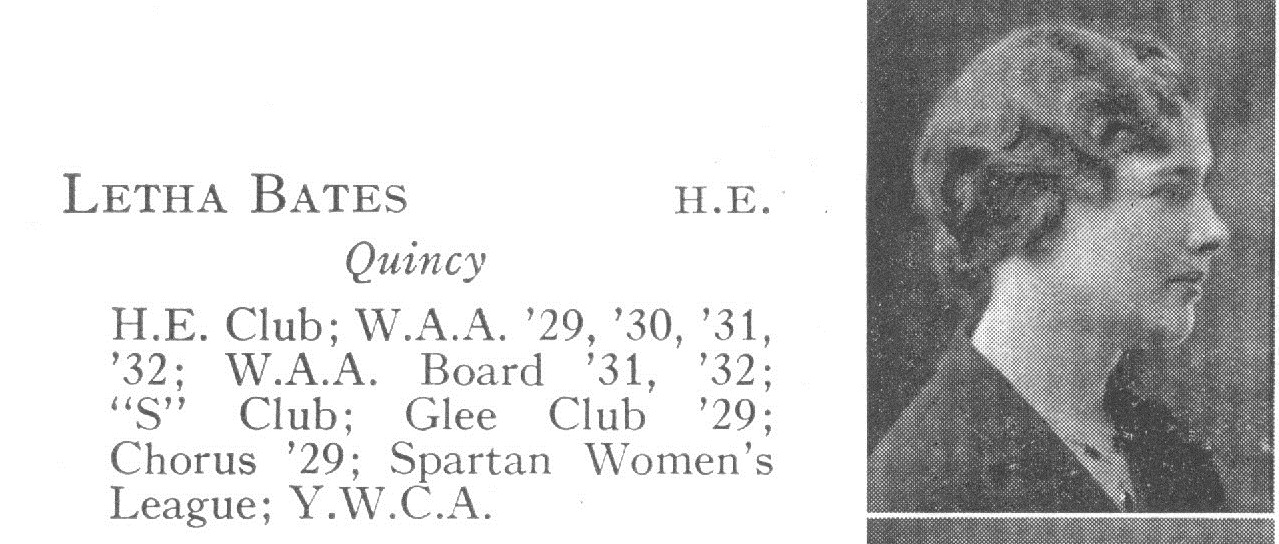
In the early 1930’s.
As a female.
During the Great Depression.
And not only did she graduate, she excelled.
But, like my mother and like me, instead of seeing her accomplishments, she often focused on her perceived failures. And she constantly compared herself to others, particularly her older sister Sylvia.
I never understood why. I always thought my grandmother was prettier than and just as accomplished as my Aunt Sylvia. I also thought Aunt Sylvia was a really cool lady who lived her life in a manner completely foreign to me.
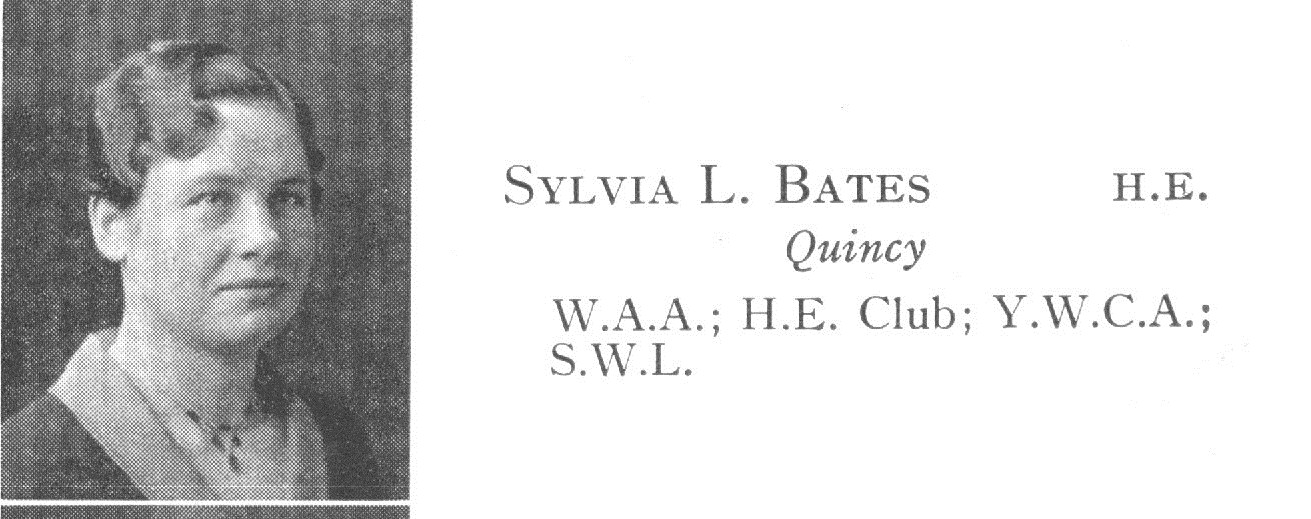 Sylvia, by all accounts, completely lacked the self-criticism gene.
What Sylvia didn’t lack was a passion for living and a limited fear of failure: all things my grandmother strived for.
While my grandmother thought she was too skinny, Sylvia carried a few extra pounds.
While my grandmother was cautious, Sylvia embraced life.
While my grandmother aimed for perfection, Aunt Sylvia aimed for laughter, love and music.
And while my grandmother always felt like she was being judged, Sylvia never seemed to worry what others thought.
Admittedly I can relate too well to my grandmother. I have battled some of these issues all my life (with the obvious exception of thinking I’m too skinny. I have NEVER had that concern.)
But, here’s the really cool thing about genetics. They combine with those of our other ancestors to create some really remarkable combinations.
So if you can buy into the whole “self-criticism gene” theory, you can also accept that there are genes for compassion. And humor. And tenacity
All traits I think I got from some of my amazing relatives.
Which means while I believe “there’s a gene for that,” I also believe that “there’s a family for that.”
And I got one heck of a great family.
I don’t want advice. . . I just want answers
If someone were to ask me the absolutely best thing about getting older, I wouldn’t even hesitate to answer that I actually expect less of myself even though I am capable of accomplishing more than I ever have. But ask me the worst thing about getting older?
Once I wade through all the usual complaints about my body not being what it used to be or that I don’t even know what cool is (according to my nine-year old daughter), I can say, without a doubt, it’s the expectation that as I age, I am expected to become wise. And with wisdom comes the ability to give great advice.
Not that I am incapable of giving advice. I give it every day… whether people want to hear it or not. But as is true with so many things, I can dish it out much better than I can take it.
I HATE getting advice. I took a dislike to it as a child, and my opinion hasn’t changed much since then. In other words, if someone suggests I go left, I often go right just to prove I’m not stupid or incapable of making my own decisions.
Unfortunately, in most cases, I really should have gone left. Eventually, I figure that out. But that doesn’t happen without first getting a lot of bumps, bruises and even major injuries. Needless to say I have a lot of scars… and even a few wounds that still need to completely heal.
But, here’s the thing. Those scars are great reminders of the mistakes I’ve made. And I do give myself credit for being someone who learns from her mistakes. And yes, I’ve learned a lot. But there are still a lot of things I’d like to know.
So instead of getting advice, what I really want is answers:
- I want to know why people who have money are given more power and attention than people who care for and teach our children or people who help those who are disadvantaged.
- I want to know why some parents treat their children as extensions of themselves and insist on rubbing all their accomplishments in your face while blaming others for their child’s mistakes.
- I want to know why some people insist they have a right to own dogs, but then keep them tied up all day and don’t give them the love and attention they need.
- I want to know why some people call themselves Christians , but then spend so much time and energy judging others.
- I want to know why some people think that tearing others down serves to build themselves up.
- And most of all? I want to know why people believe their way of thinking or doing things is THE way. Why don’t they recognize that each of us is different, and, because of that, there is no right way. We all have different needs, wants and desires.
And my personal desire? As I get older, I just want genuine answers to these questions.


 Just So You Know